
Review · VATICAN & SISTINE CHAPEL TOURS
Vatican, Sistine Chapel & St. Peter’s Skip-the-Line Tour
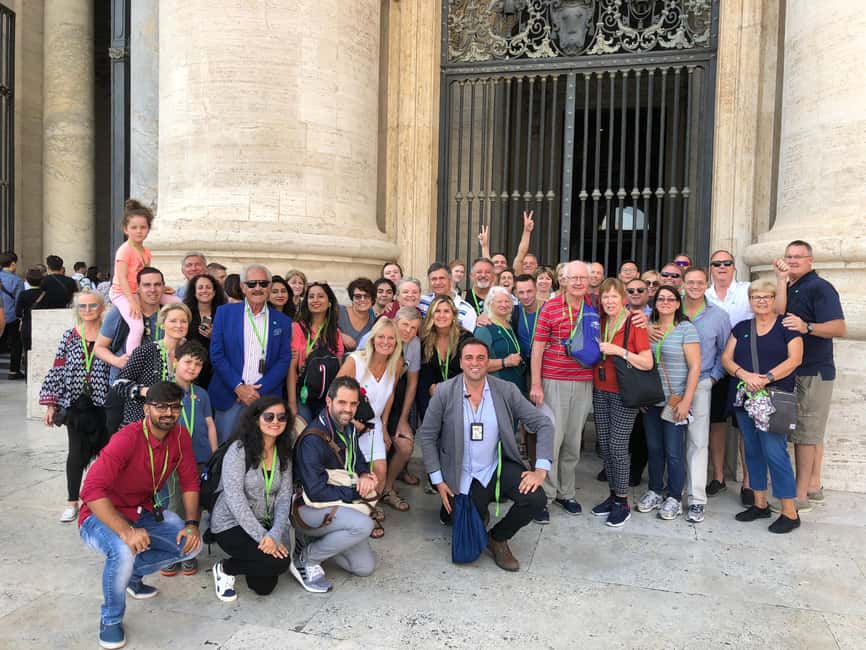
The biggest advantage here is simple: you get past the Vatican’s famously long ticket queue and into a guided route through rooms that can feel confusing on your own. You’ll see Raphael’s Rooms, Michelangelo’s Sistine Chapel ceiling and Last Judgment, and the grand halls of the Vatican Museums in one visit.
I like the small group size, capped at 18 people, and the way the route hits the Vatican’s main artistic sights without asking you to plan every turn. I also like that guides such as Francesca, Alfredo, Anna, Inger, and Matias have been praised for clear explanations, good pacing, and humor. The drawback is the crowd: even with skip-the-line entry, the Sistine Chapel and main galleries can be very packed.
In This Review
- Key points to know before booking
- Why skip-the-line entry matters at the Vatican
- A small group with a human guide
- The Vatican Museums and the Pinecone Courtyard
- The gallery of maps and the long corridors
- Raphael’s Rooms and Renaissance politics
- The Sistine Chapel and Michelangelo’s ceiling
- St. Peter’s Basilica and the end of the route
- How long the tour feels in practice
- Is the $81.85 price good value?
- Dress, bags, and other practical rules
- Who should book this Vatican tour?
- Should you book it?
- FAQ
- Where does the Vatican tour meet?
- How do I reach the meeting point by metro?
- How long does the tour last?
- What places are included?
- Is skip-the-line entry included?
- What languages are available?
- Is the Sistine Chapel currently open?
- What should I wear?
- Can I bring a backpack or large bag?
- Is the tour wheelchair accessible?
Key points to know before booking
- Skip the long museum ticket queue: You still pass through airport-style security, but the reserved entry saves valuable Rome sightseeing time.
- A small group makes a difference: Groups are limited to 18 people, with some departures much smaller.
- The route covers the Vatican highlights: Expect the Pinecone Courtyard, Pio Clementine Museum, Raphael’s Rooms, map gallery, woven wall-hanging gallery, Sistine Chapel, and St. Peter’s Basilica.
- Guides add the needed context: The art is easier to understand when someone explains the symbols, patrons, artists, and Roman setting.
- Plan for dress and security rules: Your knees and shoulders must be covered, and large bags, backpacks, umbrellas, and luggage are not allowed.
- Check the Sistine Chapel status carefully: The supplied booking information says it closed on April 28, 2025, until a new pope is elected, so the advertised route may change during that period.
Why skip-the-line entry matters at the Vatican
The Vatican Museums are not a quick stop where you wander into one building, see one masterpiece, and leave. The complex contains long galleries, courtyards, sculptures, painted ceilings, classical antiquities, and rooms filled with works from different periods.
That scale is part of the thrill, but it can also make a first visit tiring and disorganized. The ticket queue outside can be huge, especially when several groups arrive at once. This tour’s reserved entry lets you bypass the ticket line, though you still need to pass airport-style security.
That distinction matters. Skip the line does not mean walk straight through every entrance without a check. You should arrive ready for security and allow enough time to find the meeting point.
The meeting point is at the corner of Viale Giulio Cesare and Via Leone IV, next to a flower stand. Ottaviano Metro station on Line A is the nearest useful landmark. After leaving the station, take the second exit on the left, turn left, pass the newsstand, and continue to the corner of Via Leone IV.
More Rome trips worth a second look
- Vatican Museums & Sistine Chapel Skip-the-Line Entry Ticket
★ 4.4 · 13,838 reviews - Skip-the-Line Group Tour of the Vatican, Sistine Chapel & St. Peter’s Basilica
★ 4.5 · 12,779 reviews - Rome: Vatican Museums & Sistine Chapel Skip-The-Line Ticket
★ 4.2 · 11,708 reviews
A small group with a human guide
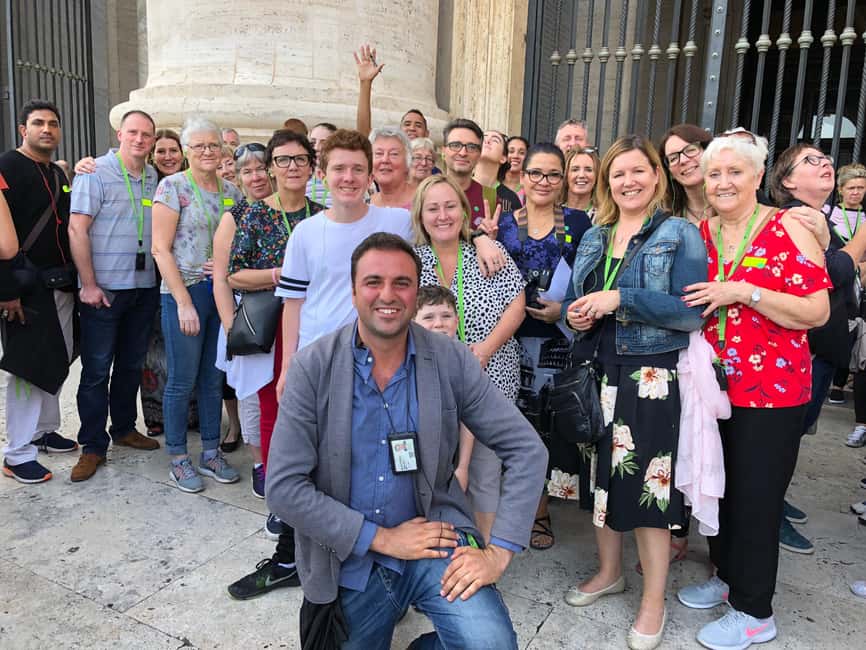
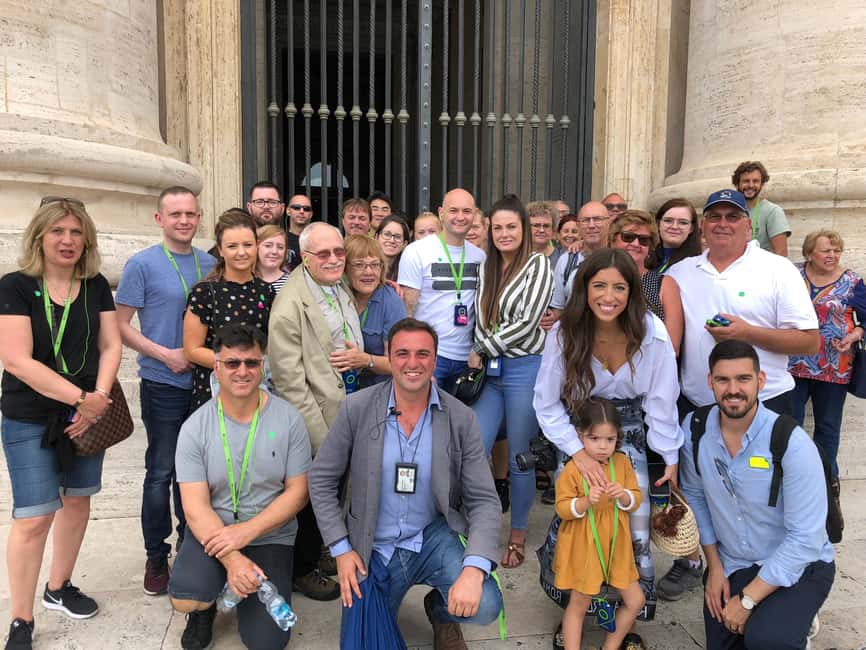
The group limit of 18 is one of the tour’s strongest features. That is still large enough to feel like a group tour, but far more manageable than a coach-sized crowd. You can usually hear the guide more easily, keep track of the route, and ask questions without stopping the entire Vatican.
The quality of the experience depends heavily on the guide. Named guides connected with this tour include Inger, Elizabeth, Alfredo, Anna, Matias, Francesca, Valeria, Priscilla, and Jo. Their styles vary, as you would expect, but the strongest departures combine art knowledge with practical timing.
Inger, for example, has been associated with an English-language group of nine and a steady pace that worked well for an 80-year-old participant. Francesca has been praised for her energy, detail, and ability to keep the group involved. Alfredo is known for taking time with questions, while Matias brings a more dynamic style.
You receive headsets when needed. This is important inside the Vatican, where many groups are moving through the same corridors and the noise level can rise quickly. The equipment has not always been perfect. Some headsets have slipped or sounded unclear, so keep close to the guide and speak up if you cannot hear.
The Vatican Museums and the Pinecone Courtyard
The tour begins inside the Vatican Museums, a vast collection built up by generations of popes. You will see Roman, Greek, and Egyptian antiquities along with later paintings, sculptures, frescoes, and decorative arts.
The Pinecone Courtyard is an easy first landmark. Its name comes from the huge bronze pinecone placed there, a striking object that once had a connection to ancient Rome. The open courtyard gives you a little breathing room before the route leads back into the museum corridors.
The Pio Clementine Museum follows as one of the major sculpture sections. This part of the Vatican is especially useful for understanding how Renaissance and later artists studied ancient sculpture. You will see classical works and famous marble figures, though the amount of time available depends on the guide, crowd flow, and group pace.
The Gallery of the Candelabra is another long ceremonial corridor. Its name comes from the large candelabra displayed along the route. Look up as often as you look straight ahead. The ceilings and decorative details can be just as important as the objects placed at eye level.
The gallery of maps and the long corridors
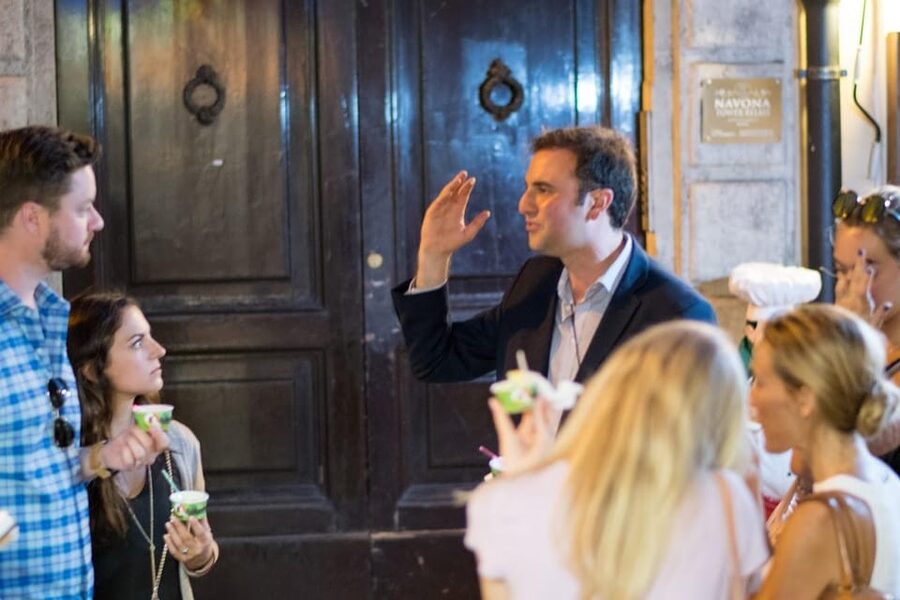
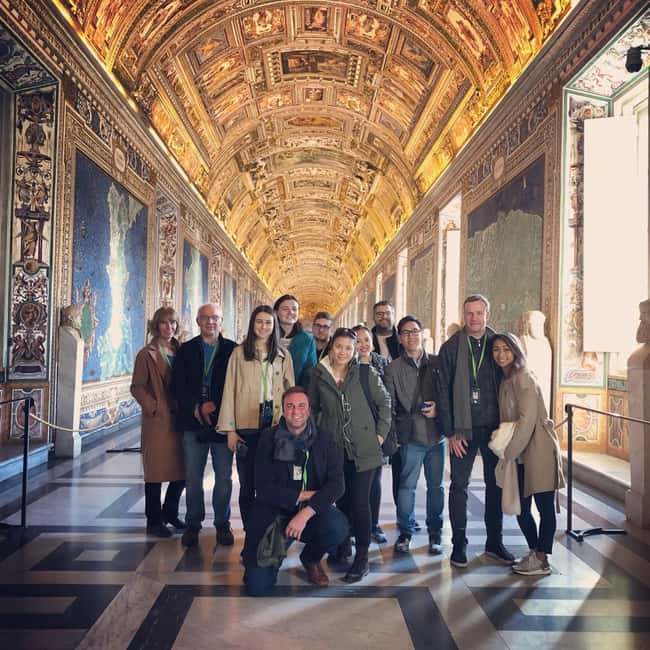
The Gallery of Maps is one of the Vatican’s most memorable passages. Its walls show large painted maps of Italy, created before modern cartography and satellite images changed how people picture the country.
You are not simply looking at old geography. The maps show how Italy was understood and represented in the late Renaissance. They also make the country’s regions feel connected in a way that is easy to miss when you only visit Rome, Florence, or Venice separately.
This corridor can be crowded, and you may need to keep moving. That is a normal part of the Vatican experience. A guide helps by pointing out details before the group advances, but you will not have unlimited time at every map.
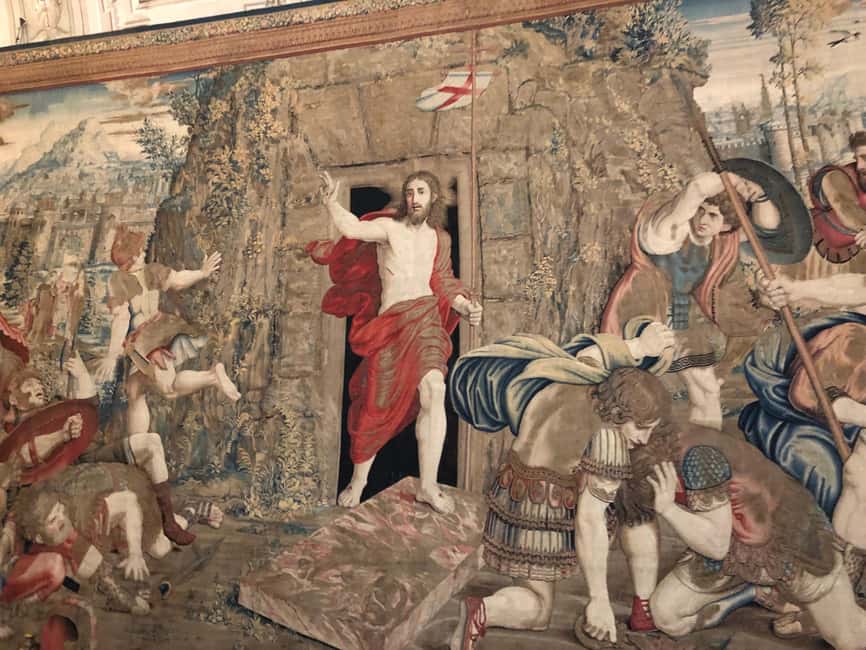
The gallery of woven wall hangings adds a different kind of decoration. Instead of painted walls and marble sculpture, you see detailed cloth work made for grand interiors. The designs reward a closer look, but the route is often a passage toward the more famous rooms ahead.
I suggest taking a few seconds to notice how much labor went into these works. They were not background decorations in their own time. They were costly, carefully designed objects meant to signal wealth, power, and religious authority.
A different way to spend the day, same part of Italy:
- Vatican: Museums & Sistine Chapel Entrance Ticket
★ 4.5 · 144,003 reviews - Vatican Museums & Sistine Chapel Tour with Optional Basilica
★ 4.3 · 67,413 reviews - Colosseum, Roman Forum & Palatine Guided Tour
★ 4.7 · 63,148 reviews - Vatican Museums, Sistine Chapel & St Peter’s Basilica Guided Tour
★ 4.5 · 39,149 reviews
Raphael’s Rooms and Renaissance politics
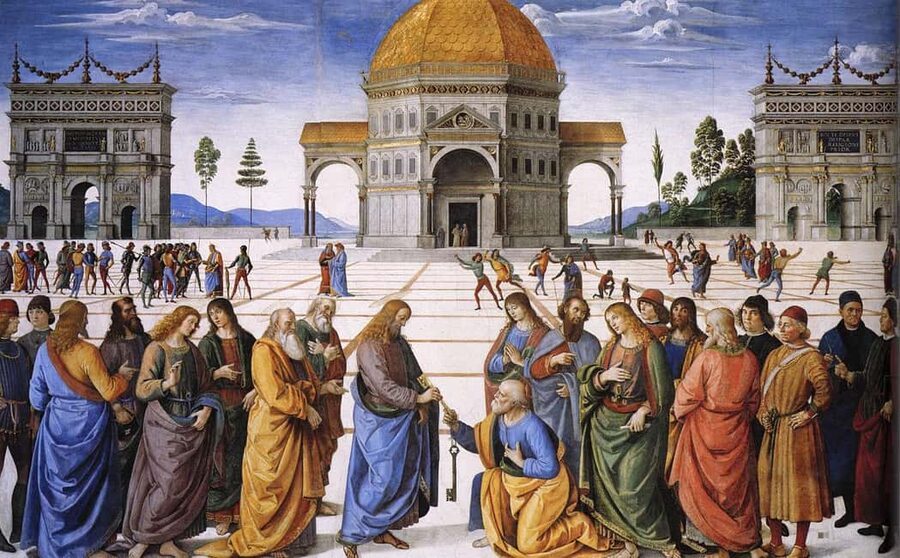
Raphael’s Rooms are among the tour’s main reasons to book. These rooms contain frescoes by Raphael and his workshop, including some of the most important Renaissance paintings in the Vatican.
The best-known images are not simply pretty wall decorations. They present ideas about philosophy, theology, learning, and the role of the Church. The School of Athens, for example, brings major thinkers into one imagined architectural setting. A guide can explain who is represented and why the fresco mattered to the people who commissioned it.
This is where the tour’s teaching value becomes clear. Without context, you might admire the colors and crowded compositions, then move on. With a guide, you can understand how the paintings were planned, how viewers were meant to read the scenes, and how Raphael’s work fits into the rivalry and ambition of Renaissance Rome.
Crowds can make these rooms feel rushed. Stay aware of the group and listen for the guide’s main points before trying to study every figure. You will not see everything in detail during a single short visit.
The Sistine Chapel and Michelangelo’s ceiling
The Sistine Chapel is the emotional center of the route. It is also the part most affected by crowds, noise, and current access rules.
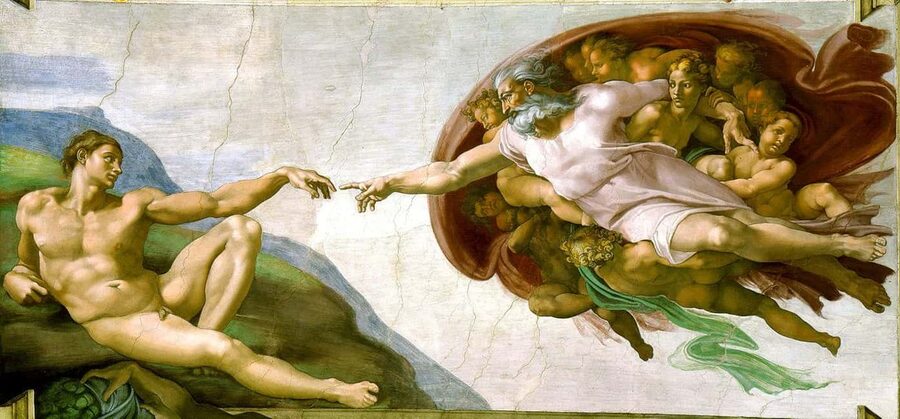
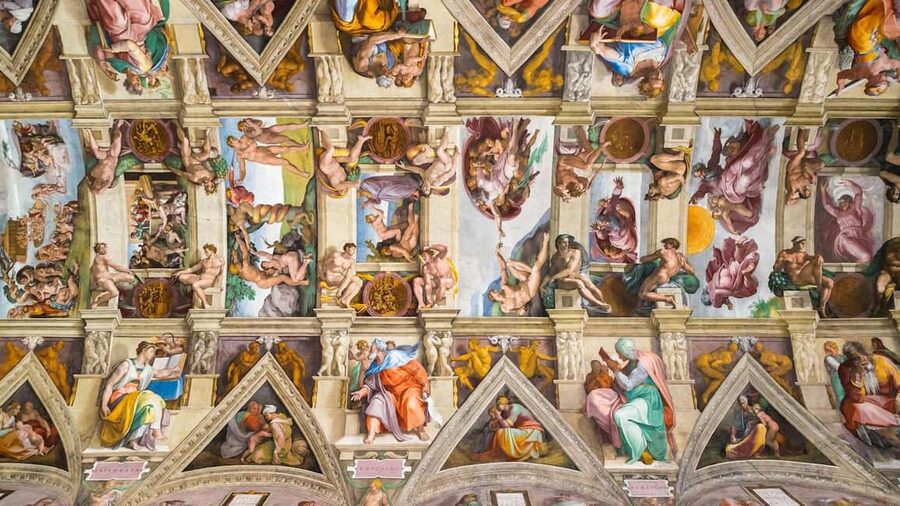
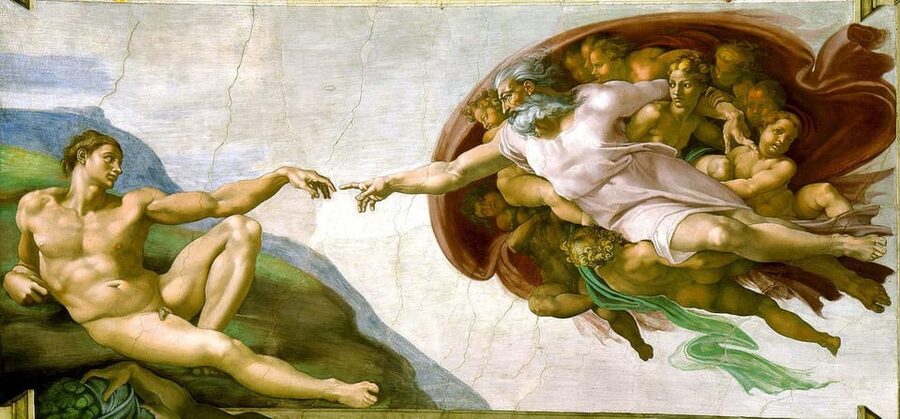
Inside, you can look up at Michelangelo’s ceiling and study The Creation of Adam. At the far wall, The Last Judgment fills the space with a much darker and more dramatic vision. These are among the most familiar images in Western art, but seeing them in the chapel gives them a different scale and weight.
Your guide normally explains the chapel before entry because guided commentary is restricted inside. You should expect silence rules, although those rules are not always followed by everyone in the room. That can make the chapel less peaceful than you hope.
The chapel is also not a place to linger freely with your group. It is a major passage point for visitors, and congestion is common. Set realistic expectations: the goal is to see the works, hear the essential background, and take in the room, not to have a quiet private viewing.
There is an important date warning. The supplied activity information says the Sistine Chapel closed on April 28, 2025, and would remain closed until a new pope was elected, expected by mid-May. If you are booking around that period, check the current status before paying. The ticket description says the Sistine Chapel is included, but access can change during a conclave or other official closure.
St. Peter’s Basilica and the end of the route
The advertised itinerary includes St. Peter’s Basilica after the Sistine Chapel. This gives you a chance to connect the museum collections with the working heart of Vatican City.
The basilica is on a scale that can be difficult to grasp from photographs. Even after several hours in the museums, its size and ceremonial character provide a strong final impression. The route ends at the meeting point according to the practical details, while the stop list also identifies the Sistine Chapel as the finish. Because these details do not fully match, confirm the exact ending point with the operator on the day.
Access to St. Peter’s can depend on security, religious services, official events, and crowd movement. Do not build a tight appointment immediately afterward. The tour is listed as 2.5 to 3 hours, but one departure lasted more than 3.5 hours, and the pace can change with congestion and extra explanation.
How long the tour feels in practice
A 2.5 to 3-hour Vatican visit is enough for the main route, but it is not enough for every gallery and every masterpiece. You are choosing orientation and priority sights over a slow, independent museum day.
The walk can feel long, particularly in hot weather or when the galleries are full. One departure included rain, heat, and ponchos, yet the guide kept the group moving. That is a reminder to wear comfortable shoes and bring only what the rules allow.
The route works best if you treat it as an introduction. You will see the major rooms, learn what you are looking at, and leave with a better sense of where you would return for a longer visit.
The pace has also worked for families and older visitors. A seven-year-old enjoyed one departure, and an 80-year-old was able to manage the route at a comfortable speed. Still, this is a walking tour through a huge museum, not a seated sightseeing activity.
Is the $81.85 price good value?
At $81.85 per person, this is not the cheapest way to enter the Vatican Museums. The value comes from combining reserved entry, a live guide, headsets when needed, and a route through several major sections in one booking.
For a first visit to Rome, I think the price can make sense. The Vatican is easy to misread on your own, and a guide saves you from spending your limited time figuring out where to go next. The entry advantage also matters when the regular line is long.
The price is less appealing if you prefer to move at your own speed, spend an hour with one painting, or avoid group timing. You may also feel the cost more sharply if the Sistine Chapel is closed or if the route changes because of official restrictions.
Children aged five and under join free. Hotel pickup and drop-off are not included, so you must reach the meeting point yourself.
Dress, bags, and other practical rules
Dress for a religious site, not a beach day. Knees and shoulders must be covered, so shorts, short skirts, sleeveless shirts, and similar clothing can cause trouble at entry.
Large bags, luggage, backpacks, and umbrellas are not allowed under the supplied rules. Bring your passport or identification card. Everyone must pass through security, so avoid arriving with items that could slow you down.
The activity is not wheelchair accessible and is not suitable for wheelchair users. If anyone in your party has mobility limits, this is a major consideration before booking.
Guided departures are offered in Portuguese, Italian, Spanish, French, and English. Check the selected language and starting time when you reserve, since the available times vary.
Free cancellation is available up to 24 hours in advance for a full refund, and the reserve-now, pay-later option can help if your Rome schedule is still shifting.
Who should book this Vatican tour?
I would choose this tour for a first-time Vatican visitor who wants the main sights explained without spending the day planning a route. It is also a good fit for families, older adults who can walk steadily, and anyone who values getting through the ticket entrance quickly.
It suits you especially well if you want to understand what you are seeing. Raphael’s frescoes, the map gallery, classical sculpture, and Michelangelo’s chapel are far more rewarding when you know what to look for.
I would think twice if you dislike crowds, need wheelchair access, want a quiet Sistine Chapel, or prefer a very slow museum visit. Even a strong guide cannot control the number of people inside the Vatican.
Should you book it?
Book this tour if your Rome schedule is tight and you want an efficient first look at the Vatican’s major rooms. The combination of skip-the-line entry, a group of 18 or fewer, and guides who can explain the art gives you real value beyond the ticket itself.
Before booking, confirm that the Sistine Chapel is open for your date, check the language, wear suitable clothing, and leave extra time after the tour. If those conditions work for you, this is a practical way to make sense of one of Rome’s biggest and busiest sights.
FAQ
Where does the Vatican tour meet?
The meeting point is at the corner of Viale Giulio Cesare and Via Leone IV, next to the flower stand.
How do I reach the meeting point by metro?
Take Metro Line A to Ottaviano station. After leaving the station, take the second exit on the left, turn left, pass the newsstand, and continue to the corner of Via Leone IV.
How long does the tour last?
The listed duration is 2.5 to 3 hours. Some departures may run longer, depending on crowd conditions and the guide’s pace.
What places are included?
The route includes the Vatican Museums, Gallery of the Candelabra, Gallery of Tapestries, Gallery of Maps, Pio Clementine Museum, Sistine Chapel, and St. Peter’s Basilica.
Is skip-the-line entry included?
Yes. Skip-the-line entry to the Vatican Museums and Sistine Chapel is included, although all visitors must still pass through airport-style security.
What languages are available?
The live guide may be available in Portuguese, Italian, Spanish, French, or English. Check availability for your chosen departure.
Is the Sistine Chapel currently open?
The supplied information says the chapel closed on April 28, 2025, until a new pope was elected, expected by mid-May. Check the current status for your date because access can change.
What should I wear?
Your knees and shoulders must be covered. Shorts, short skirts, and sleeveless shirts are not allowed.
Can I bring a backpack or large bag?
No. Luggage, large bags, backpacks, and umbrellas are listed as prohibited items. Bring a passport or identification card.
Is the tour wheelchair accessible?
No. The activity is not wheelchair accessible and is not suitable for wheelchair users.
Recently reviewed around Rome
- Ancient Rome at Twilight Walking Tour★ 5.0 · 276 reviews
- Domus Aurea Guided Tour: The Golden House of Nero★ 4.5 · 199 reviews
- Early Vatican Museums & Sistine Chapel Small Group Tour★ 4.5 · 314 reviews
- Early Vatican Museums Tour: The Best of the Sistine Chapel★ 4.5 · 900 reviews
- Jewish Ghetto & Piazza Navona: Food, Wine & Sightseeing Rome Tour★ 5.0 · 460 reviews
- 3 Days in Sorrento, Capri & Pompeii: la Dolce Vita★ 4.0 · 595 reviews
- Tivoli Villas Full Day Trip From Rome with Lunch★ 4.0 · 443 reviews
- Cook With Us in Rome: A Hands-On Cooking Experience 09:20AM class★ 5.0 · 234 reviews
Vatican & Sistine Chapel Tours, compared.

Vatican: Museums & Sistine Chapel Entrance Ticket
Read our review →
Vatican Museums & Sistine Chapel Tour with Optional Basilica
Read our review →
Vatican Museums, Sistine Chapel & St Peter’s Basilica Guided Tour
Read our review →
Vatican Museums, Sistine Chapel & Basilica Tour
Read our review →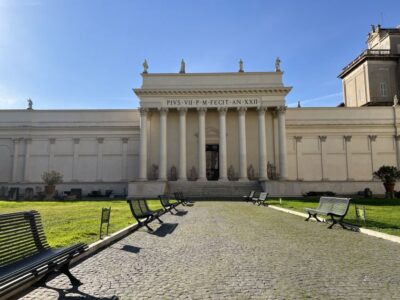
Vatican Museums & Sistine Chapel Skip-the-Line Entry Ticket
Read our review →Vatican Museums, Sistine Chapel & Basilica Tour
Read our review →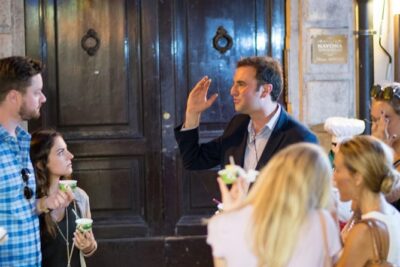
Skip-the-Line Group Tour of the Vatican, Sistine Chapel & St. Peter’s Basilica
Read our review →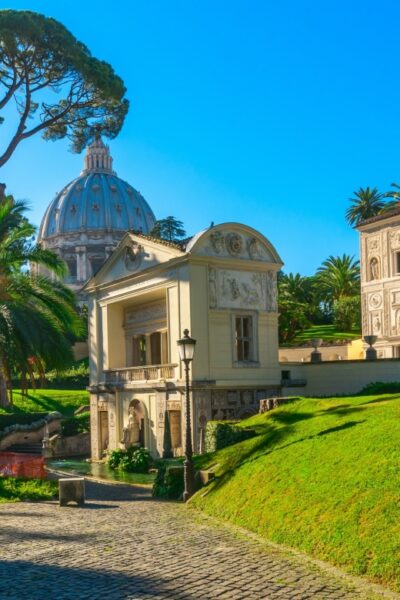
Vatican Museums & Sistine Chapel Guided Tour
Read our review →Browse the lists this tour appears in