
Review · VATICAN & SISTINE CHAPEL TOURS
Vatican, Sistine Chapel & St. Peter’s Skip-the-Line Tour
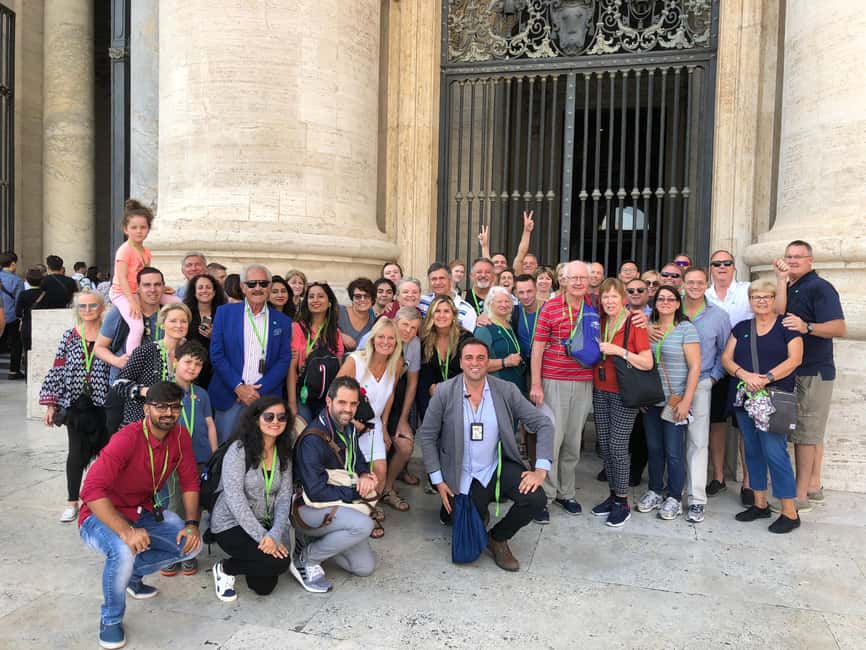
The Vatican’s enormous queues are the first thing this tour solves. For $58, you get a guide, reserved entry, and a brisk route through the Vatican Museums, Sistine Chapel, and St. Peter’s Basilica. I like the walk through Borgo Pio and across St. Peter’s Square, since it gives you useful context before the art begins. I also like that the guides, including Carl, Shak, Maura, Giada, and Giovanni, bring humor and clear explanations to a place that can otherwise feel overwhelming.
The main consideration is time. Three hours is enough for the highlights, not every room in the Vatican Museums. You must still pass airport-style security, and St. Peter’s Basilica can close for a special event, even after you have booked.
In This Review
- Key points to know before you book
- Why the $58 price can make sense
- Starting in Borgo Pio near Via Plauto 17/A
- Walking along Via della Conciliazione
- St. Peter’s Square and Bernini’s design
- Entering the Vatican Museums
- The Gallery of Maps deserves your attention
- The Sistine Chapel and Michelangelo
- The direct route to St. Peter’s Basilica
- What the guides add to the visit
- Pace, crowds, and what you may miss
- Dress and security rules
- Who will get the most from this tour
- Should you book the Vatican skip-the-line tour?
- FAQ
- How much does the Vatican, Sistine Chapel, and St. Peter’s tour cost?
- How long does the tour last?
- Which sites are included?
- Is skip-the-line access included?
- Do I still need to pass security?
- Where is the meeting point?
- How early should I arrive?
- What language is the tour conducted in?
- What clothing is not allowed?
- What happens if St. Peter’s Basilica closes?
Key points to know before you book
- Reserved entry saves serious time: You bypass the regular ticket queue, though security is still required.
- The route covers the big three: Vatican Museums, Sistine Chapel, and St. Peter’s Basilica are included.
- Borgo Pio adds a useful beginning: You meet near Via Plauto 17/A and walk through one of the Vatican area’s oldest neighborhoods.
- The Gallery of Maps is a highlight: It is one of the most memorable rooms on the route, but time there can be limited.
- Guiding is the main value: The art is easier to understand with explanations about Michelangelo, Bernini, the Vatican, and the collections.
- Dress rules are strict: Short skirts, sleeveless shirts, weapons, and sharp objects are not allowed.
Why the $58 price can make sense
At $58 per person, this is not the cheapest way into the Vatican. The value comes from combining admission, reserved access, and a live English-speaking guide in one visit.
The Vatican Museums are not difficult because the art is hard to admire. They are difficult because there is so much of it, and because the route can feel confusing without a plan. A guide helps you decide what deserves your attention and explains why a room or object matters before you move on.
The time saving also matters. On busy days, the ordinary queue can stretch far beyond what you want to give up in Rome. This tour uses a separate entrance for groups, so you avoid the long ticket line. You will not walk straight past every delay, though. Security remains mandatory, and crowded museum corridors can still slow the group.
I consider $58 fair for a first Vatican visit, especially if you have only a few days in Rome. Independent visitors may prefer to set their own pace, linger over one painting, or skip the guided route. For most first-time visitors, the guide and saved time are worth paying for.
More Rome trips worth a second look
- Vatican Museums & Sistine Chapel Skip-the-Line Entry Ticket
★ 4.4 · 13,838 reviews - Skip-the-Line Group Tour of the Vatican, Sistine Chapel & St. Peter’s Basilica
★ 4.5 · 12,779 reviews - Rome: Vatican Museums & Sistine Chapel Skip-The-Line Ticket
★ 4.2 · 11,708 reviews
Starting in Borgo Pio near Via Plauto 17/A
You meet at the tour office at Via Plauto 17/A, in Borgo Pio near St. Peter’s Square. Arrive 20 minutes before the start time for check-in, and check your booking carefully for the English tour time.
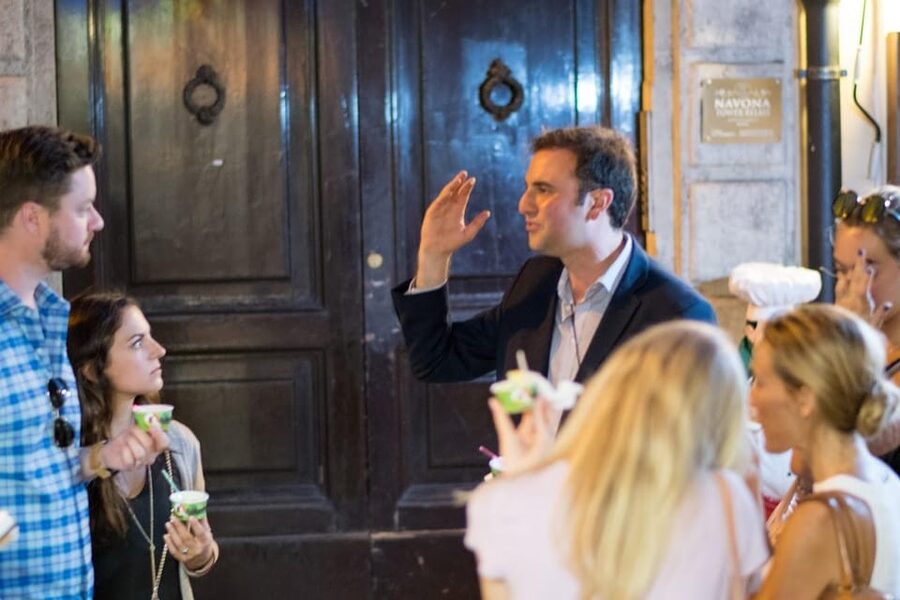
Borgo Pio is a pleasant place to begin. Its small shops and local businesses offer a softer introduction to the Vatican than the grand entrance on the museum side. Your guide gives an introduction and may offer tips about eating and sightseeing in Rome before the group sets off.
This opening walk is useful for more than orientation. You get a sense of the neighborhood where people connected with the Vatican live and work, rather than arriving only as a ticket holder at a museum gate. Keep your group together, since the streets lead quickly toward the crowded area around St. Peter’s Square.
Walking along Via della Conciliazione
From Borgo Pio, the group walks toward St. Peter’s Square along Via della Conciliazione. This broad avenue is the main approach to the square, lined with flags, embassies, and views toward the basilica.
The walk gives your guide a chance to explain the Vatican as both a religious center and a sovereign state. You also begin learning about the Sistine Chapel before seeing it, which helps you understand its purpose and Michelangelo’s work later in the tour.
This part is not a major sightseeing stop, so do not book the tour expecting a long walking tour of Rome. It is a short, purposeful route that connects the meeting point with the Vatican landmarks.
St. Peter’s Square and Bernini’s design
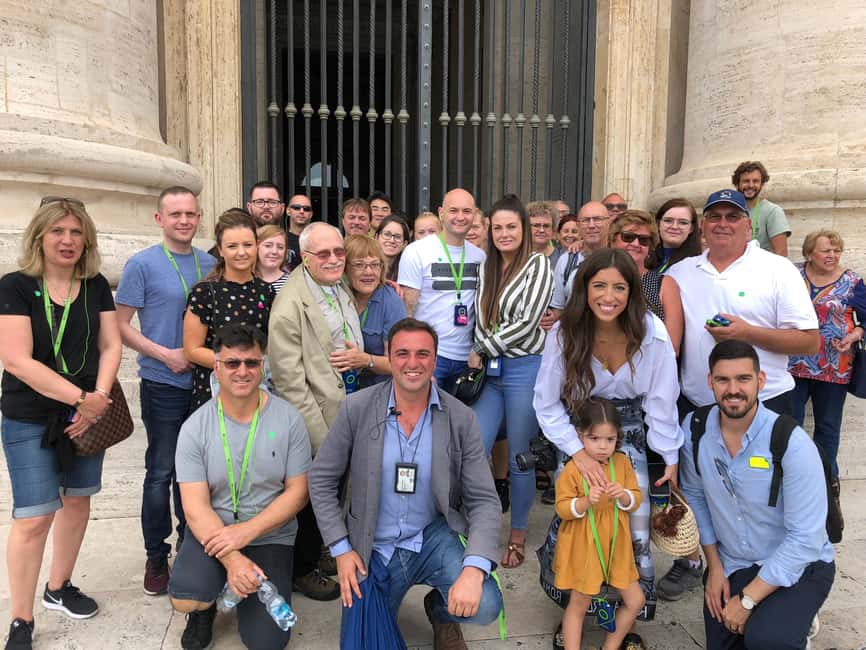
St. Peter’s Square is one of the tour’s most powerful outdoor moments. An Egyptian obelisk rises at its center, while sweeping columns and statues of saints surround the space.
Your guide explains the square and the work of Gian Lorenzo Bernini, whose design helps make the vast area feel ordered rather than empty. Look up and around as you walk. The columns, statues, obelisk, and basilica are meant to be understood as one setting.
The square also helps you grasp the scale of St. Peter’s Basilica before going inside. You get a sense of the entrance, the long public queue, and the way the basilica dominates the area.
The route may also pass near the Swiss Guards. Their distinctive Renaissance-style uniforms make a memorable photograph, though you should follow your guide’s directions and any restrictions in place.
A different way to spend the day, same part of Italy:
- Vatican: Museums & Sistine Chapel Entrance Ticket
★ 4.5 · 144,003 reviews - Vatican Museums & Sistine Chapel Tour with Optional Basilica
★ 4.3 · 67,413 reviews - Colosseum, Roman Forum & Palatine Guided Tour
★ 4.7 · 63,148 reviews - Vatican Museums, Sistine Chapel & St Peter’s Basilica Guided Tour
★ 4.5 · 39,149 reviews
Entering the Vatican Museums
After the square, you head toward the Vatican Museums and join the reserved-entry route for groups. This is where the tour’s practical value becomes clear. You still pass through security, but you avoid waiting in the ordinary ticket line.
Inside, the focus is on major sections rather than every gallery. The collection includes Roman and Greek statues, rooms filled with sculpture, the Gallery of Tapestries, and the Gallery of Maps.
The ancient sculpture rooms can be hard to absorb quickly. A guide helps you notice the difference between classical Greek originals, Roman copies, and later works influenced by ancient models. You may not remember every name, but you will have a better sense of how the Vatican assembled and displayed its collection.
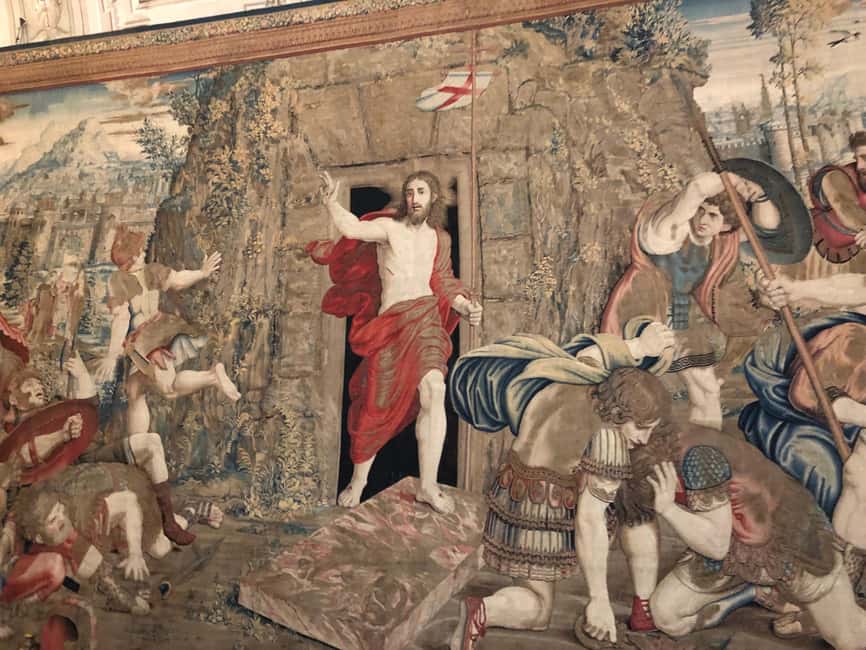
The Gallery of Tapestries is another important passage, with large woven scenes designed for visual impact. Since the tour keeps moving, listen for the details your guide chooses to explain rather than trying to inspect every piece.
The Gallery of Maps deserves your attention
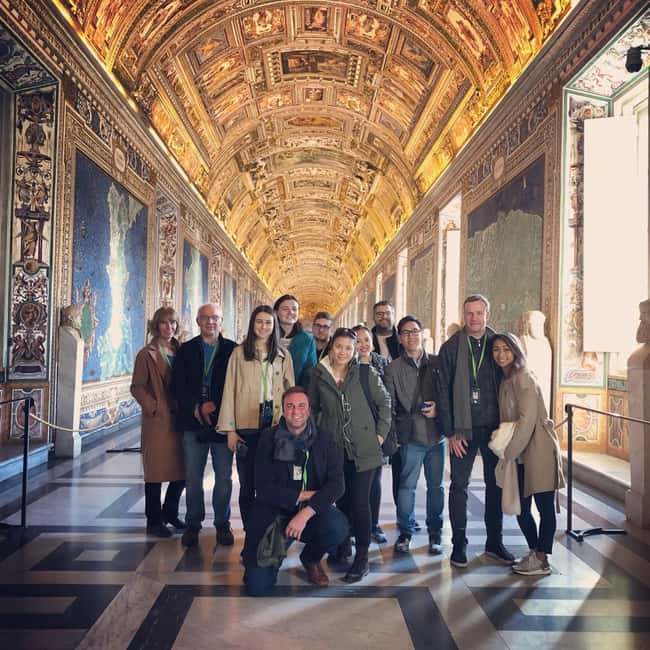
The Gallery of Maps is one of the most appealing parts of the route. Long painted maps cover the walls, turning geography into art and showing how earlier mapmakers pictured Italy.
It is a room where you can easily walk past without understanding what you are seeing. Your guide can point out the purpose of the gallery and help you read it as more than decoration.
One practical warning: the Gallery of Maps may leave you wishing for more time. The Vatican route is large, and a three-hour visit has to keep moving. If maps and decorative interiors are your main interest, note the room carefully and return on a longer independent visit if your schedule allows.
The Sistine Chapel and Michelangelo
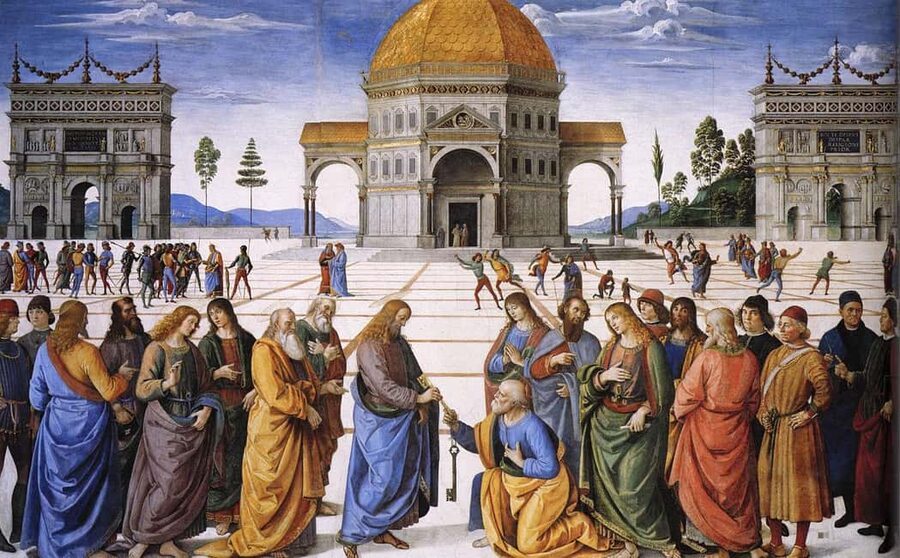
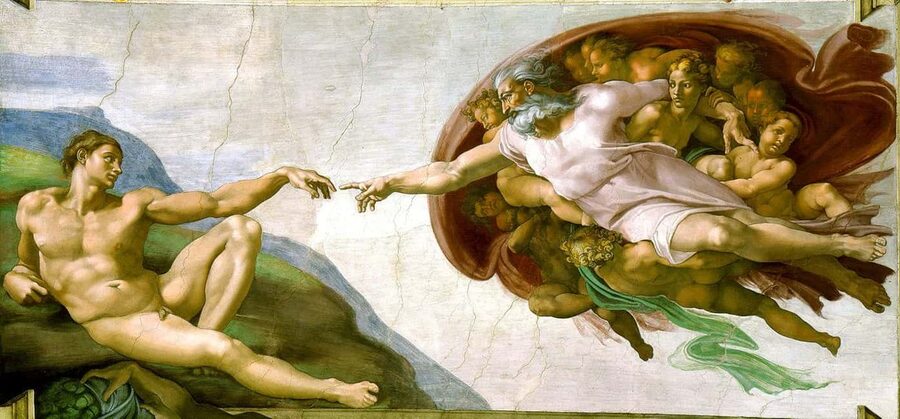
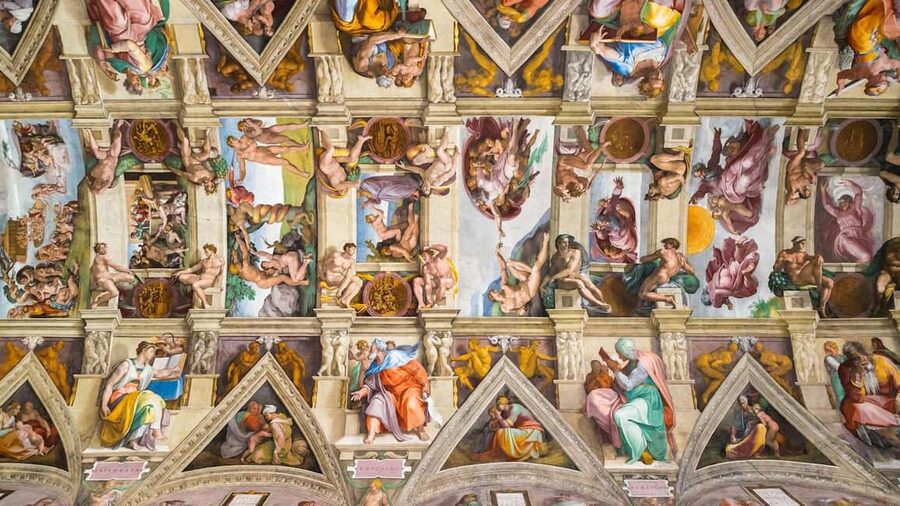
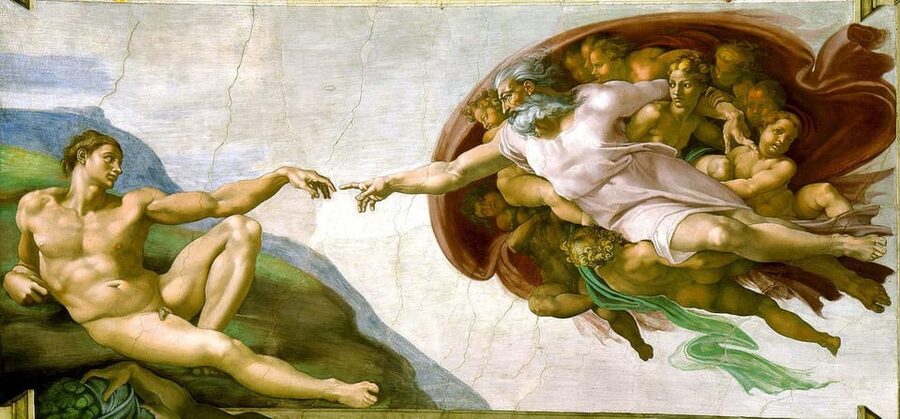
The Sistine Chapel is the emotional center of the visit. You see Michelangelo’s Creation of Adam on the ceiling and the Last Judgement on the altar wall, along with the larger program of frescoes around them.
A good guide prepares you before you enter. The chapel is not a place for a long running commentary once inside, so the explanation you receive beforehand matters. You learn how to look at the ceiling, where to find key scenes, and why the frescoes have such lasting force.
The Creation of Adam is famous for the near-touching hands, but the chapel offers far more than one familiar image. The ceiling presents biblical scenes, while the Last Judgement fills the altar wall with figures facing the final accounting of human life.
Expect a busy, tightly controlled setting. The Sistine Chapel is a place of silence and rules, and groups cannot behave as if they are in an ordinary gallery. You may have only a limited period to look around, so listen carefully before entering and use the time inside to observe rather than photograph.
The guide’s role is especially valuable here. Without context, the frescoes can become a huge field of figures and color. With a clear explanation, you can connect the scenes, symbols, and artistic choices.
The direct route to St. Peter’s Basilica
The tour finishes at St. Peter’s Basilica, normally using a special entrance from the museum area. This lets you enter directly instead of leaving the museum complex and joining the public queue in the square.
That connection saves both time and energy. After several museum galleries, you do not need to retrace your steps outside. You move from the Vatican collection into one of the world’s most famous churches.
Inside, the focus is on the basilica’s architecture, size, and major artistic features. The building is impressive even if you are tired, since the height and scale change the whole mood of the visit.
The basilica is also where the tour’s three-hour schedule can feel tight. You see the main areas, but you should not expect a full architectural study or time for every chapel and detail. Visitors who want to climb the dome, visit the tombs, or explore at length need to make separate plans. Those additions are not included in the information for this tour.
A closure is possible because the Vatican may reserve the basilica for a special event. This is rare, but it is important to understand the arrangement. If the basilica cannot be entered, the guide extends the visit within the Vatican Museums, and the museums and Sistine Chapel remain included.
What the guides add to the visit
The strongest part of this experience is the guiding. The tour is conducted in English, and recent guide names include Carl, Shak, Maura, Giada, Giovanni, Francesca, Paula, Mario, Susanna, and Alessandra.
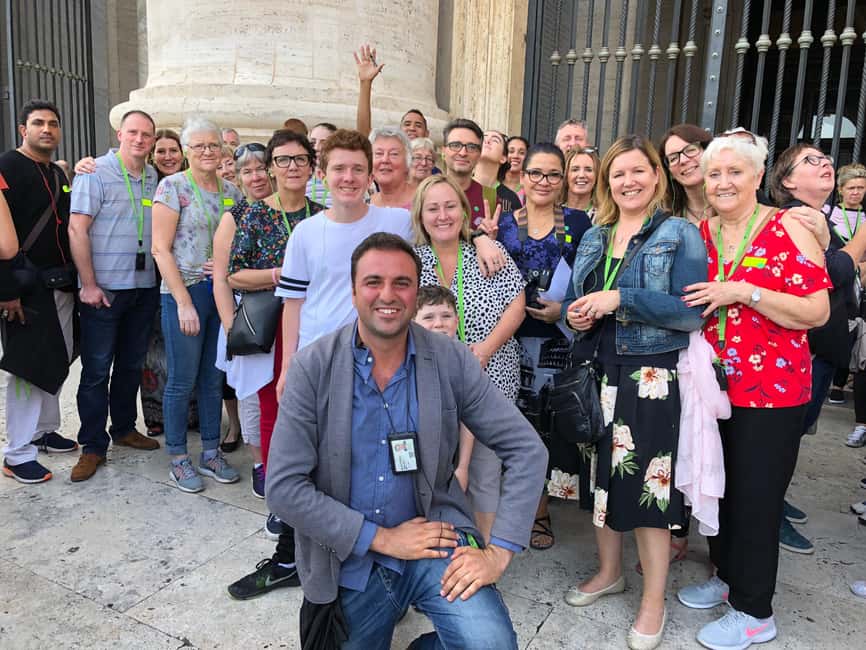
The best guides do more than recite dates. They explain what you are looking at, connect art with Vatican history, answer questions, and keep the group moving. Carl is repeatedly praised for mixing facts and humor, while Shak is noted for storytelling and clear explanations about history, art, and architecture.
Maura, Giada, Giovanni, Paula, Mario, and Susanna are also named as friendly and effective guides. That range matters because the guide shapes the day. The route is fixed, but the tone can feel formal, lively, funny, or highly focused depending on who leads it.
The group also needs to stay together. Guides such as Maura are careful about keeping everyone in one group, which is important in crowded corridors. If you tend to wander off to inspect one statue, a guided visit may feel restrictive. If you want to see the major works without losing your way, that structure is helpful.
Pace, crowds, and what you may miss
The tour lasts about three hours and is described as a relaxed walk rather than a race. That does not mean it is slow. The Vatican Museums are vast, and the group must cover several major sections before reaching St. Peter’s Basilica.
You will see highlights, not the entire museum. The route includes ancient sculpture, the textile gallery, the Gallery of Maps, the Sistine Chapel, and the basilica. You may not have enough time to study every room or return to a favorite work.
This tradeoff is sensible for a first visit. The Vatican can easily consume a full day, and many people leave tired without being sure what they saw. A three-hour route gives you the main experience and leaves room for other parts of Rome.
Crowds remain part of the setting. Skip-the-line access removes one major wait, but it does not make the Vatican quiet. Museum passages, security areas, and the chapel can still be busy. Keep your belongings close, listen for the guide, and do not assume that reserved access means instant entry at every point.
Dress and security rules
Dress for a religious site, not just a museum. Short skirts and sleeveless shirts are not allowed, so choose clothing that covers your shoulders and knees.
Weapons and sharp objects are prohibited. You also must pass airport-style security even with skip-the-line access. Give yourself enough time to arrive 20 minutes early, since late arrival can create stress before the group enters.
The tour is not suitable for wheelchair users. If mobility is a major concern, this is a reason to choose a different Vatican arrangement rather than trying to adapt this walking route.
Who will get the most from this tour
I would choose this tour for a first visit to the Vatican, especially if you have limited time in Rome or do not want to study museum maps and entry procedures on your own.
It suits adults, families with older children, and anyone who wants the major sights explained in plain English. The guide-led format also helps if art museums usually leave you unsure where to look.
It is less suitable for independent art specialists who want to spend a long time with one painting. It is also not the best fit for wheelchair users, or for anyone who wants a quiet visit with no group pacing.
The cancellation terms add useful flexibility. You can cancel up to 24 hours ahead for a full refund, and the reserve-now, pay-later option lets you hold a place without paying immediately.
Should you book the Vatican skip-the-line tour?
Book it if you want the Vatican’s essential sights in one organized three-hour visit. At $58, the guide, reserved entry, and direct route to St. Peter’s Basilica offer solid value, especially when ordinary queues are long.
Go in with realistic expectations. You will still pass security, share the museums with crowds, and move on before seeing everything. But with a strong guide such as Carl, Shak, Maura, or Giada, the Vatican becomes easier to read and far less tiring.
If this is your first Vatican visit, I would book the tour and arrive early at Via Plauto 17/A. Wear appropriate clothing, keep your expectations focused on the highlights, and save a longer return visit for the works you did not have time to study.
FAQ
How much does the Vatican, Sistine Chapel, and St. Peter’s tour cost?
The tour costs $58 per person.
How long does the tour last?
The scheduled duration is three hours.
Which sites are included?
Admission includes the Vatican Museums, the Sistine Chapel, and St. Peter’s Basilica.
Is skip-the-line access included?
Yes. The ticket provides access through a separate entrance for groups, allowing you to bypass the regular ticket queue.
Do I still need to pass security?
Yes. Skip-the-line access does not remove the airport-style security check.
Where is the meeting point?
The meeting point is at Via Plauto 17/A in Borgo Pio, near St. Peter’s Square.
How early should I arrive?
Arrive 20 minutes before the scheduled start time for check-in.
What language is the tour conducted in?
The tour is conducted in English with a live guide.
What clothing is not allowed?
Short skirts and sleeveless shirts are not allowed. Weapons and sharp objects are also prohibited.
What happens if St. Peter’s Basilica closes?
The Vatican may close the basilica for a special event. If that happens, the guide extends the tour within the Vatican Museums. The Vatican Museums and Sistine Chapel remain included.
Recently reviewed around Rome
- Ancient Rome at Twilight Walking Tour★ 5.0 · 276 reviews
- Domus Aurea Guided Tour: The Golden House of Nero★ 4.5 · 199 reviews
- Early Vatican Museums & Sistine Chapel Small Group Tour★ 4.5 · 314 reviews
- Early Vatican Museums Tour: The Best of the Sistine Chapel★ 4.5 · 900 reviews
- Tivoli Villas Full Day Trip From Rome with Lunch★ 4.0 · 443 reviews
- Jewish Ghetto & Piazza Navona: Food, Wine & Sightseeing Rome Tour★ 5.0 · 460 reviews
- 3 Days in Sorrento, Capri & Pompeii: la Dolce Vita★ 4.0 · 595 reviews
- Cook With Us in Rome: A Hands-On Cooking Experience 09:20AM class★ 5.0 · 234 reviews
Vatican & Sistine Chapel Tours, compared.
Vatican: Museums & Sistine Chapel Entrance Ticket
Read our review →
Vatican Museums & Sistine Chapel Tour with Optional Basilica
Read our review →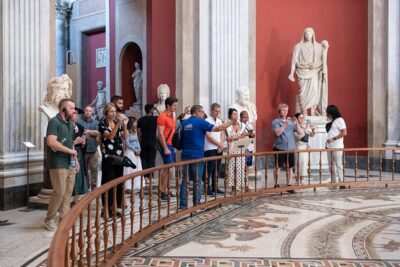
Vatican Museums, Sistine Chapel & St Peter’s Basilica Guided Tour
Read our review →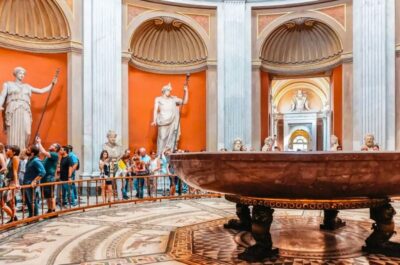
Vatican Museums, Sistine Chapel & Basilica Tour
Read our review →
Vatican Museums & Sistine Chapel Skip-the-Line Entry Ticket
Read our review →Vatican Museums, Sistine Chapel & Basilica Tour
Read our review →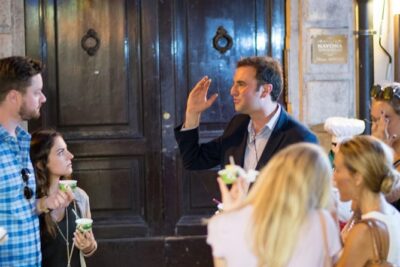
Skip-the-Line Group Tour of the Vatican, Sistine Chapel & St. Peter’s Basilica
Read our review →
Vatican Museums & Sistine Chapel Guided Tour
Read our review →Browse the lists this tour appears in