
Review · WALKING TOURS
Verona: History and Hidden Gems Guided Walking Tour
Verona’s best stories are often above eye level, tucked beside a doorway, or hidden in the pattern of an old façade. This two-hour walk with Fabio Massimo Rapanà, a licensed guide born and raised in Verona, connects the Arena, medieval squares, Roman gates, and quieter corners that are easy to miss on your own.
I especially like the small groups of up to 10 and the supplied headsets. Fabio can explain a building without shouting over the street, and you can ask questions without being lost in a crowd. The tradeoff is that two hours goes quickly: you see many places, but most are viewed from outside and some stops last only a few minutes.
In This Review
- Key points at a glance
- Starting beneath the Italian flag in Piazza Bra
- From Roman walls to Porta Borsari
- River views at Castelvecchio and Ponte Scaligero
- Piazza delle Erbe and Verona’s oldest market square
- Public power in Piazza dei Signori
- The dramatic Arche Scaligere and medieval Verona
- Romeo, Juliet, and the city behind the legend
- What two hours really allows
- Fabio’s guiding style and the small-group setup
- Is $41 a fair price?
- Who should book this Verona walk?
- FAQ
- Where does the Verona walking tour meet?
- How long does the tour last?
- What sights are included?
- Do I enter the Arena or Juliet’s House?
- How large is the group?
- Which languages are offered?
- Is the tour wheelchair accessible?
- What should I bring?
- Should you book it?
Key points at a glance
- A local guide with a personal connection: Fabio grew up in Verona and brings the city’s past and present together.
- Roman and medieval Verona in one walk: The route links the Arena, Porta Borsari, Piazza delle Erbe, Piazza dei Signori, and the Scaliger monuments.
- Overlooked details receive real attention: Expect side streets, old foundations, architectural features, and small corners you might otherwise pass without a glance.
- Clear commentary in a busy city: Headsets make it easier to hear Fabio near traffic, crowds, and open squares.
- A practical first-day orientation: The route finishes near Juliet’s House, giving you a useful map of central Verona for the rest of your stay.
- Good flexibility: You can cancel up to 24 hours ahead, reserve now and pay later, and choose from English, German, Italian, or Spanish tours.
Starting beneath the Italian flag in Piazza Bra
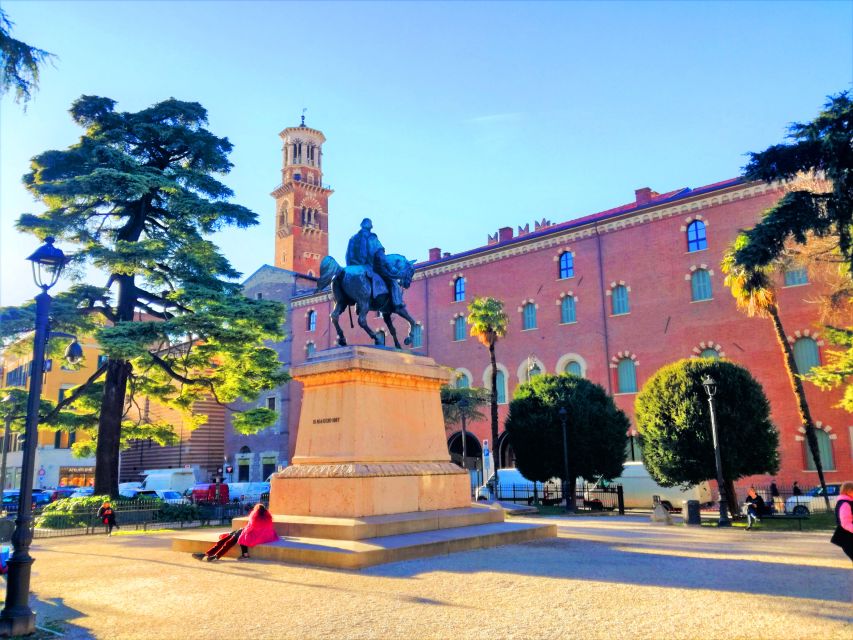
You meet the guide beneath the Italian flag at Verona’s Town Hall, Palazzo Barbieri, in Piazza Bra. This is a sensible meeting point because the square is easy to recognize and the Arena rises directly ahead.
The walk begins with a short look at Piazza Bra, then turns to Verona’s Roman amphitheater. Fabio uses the Arena as more than a photo stop. He explains the gladiatorial contests held here and points out how the building’s design has allowed it to remain one of Verona’s defining landmarks.
You spend about 10 minutes around the Arena. That is enough to hear the main story, study the exterior, and take pictures, but not enough for an interior visit or a performance. Entry is not included, so plan a separate visit if you want to walk inside.
The Arena is one of the places you could easily admire without help. The value here is the context. Fabio’s role is to show how this Roman monument fits into the city around it, rather than treating it as an isolated landmark.
More Walking Tours in Verona
- Verona: Small Group Guided Walking Tour with Arena Tickets
★ 4.9 · 848 reviews - Verona walking tour:food, wine, legends, lunch/dinner & cable car
★ 5.0 · 386 reviews - Verona All in one: Food Walking Tour, Lunch & Wine
★ 5.0 · 342 reviews
From Roman walls to Porta Borsari
The route follows traces of Verona’s early medieval walls toward the Corso, one of the city’s oldest streets. This is where the walk shifts from the obvious to the easily overlooked.
Porta Borsari is a highlight. The elegant Roman gateway once marked an entrance into the city, and its surviving stone façade gives you a clear sense of Verona’s ancient street plan. You get time for photographs and a short explanation, not a long formal stop.
Along the way, you pass smaller architectural details and less celebrated corners. The supplied route lists several brief stops marked only as secret or overlooked locations. That wording reflects the nature of the experience: Fabio does not simply march between famous squares. He pauses to point out things that have no large sign or ticket booth.
I like this part of the tour because it teaches you how to look. After Fabio draws attention to old stonework, foundations, façades, and changes in the street plan, you are more likely to notice similar clues later in the day.
River views at Castelvecchio and Ponte Scaligero
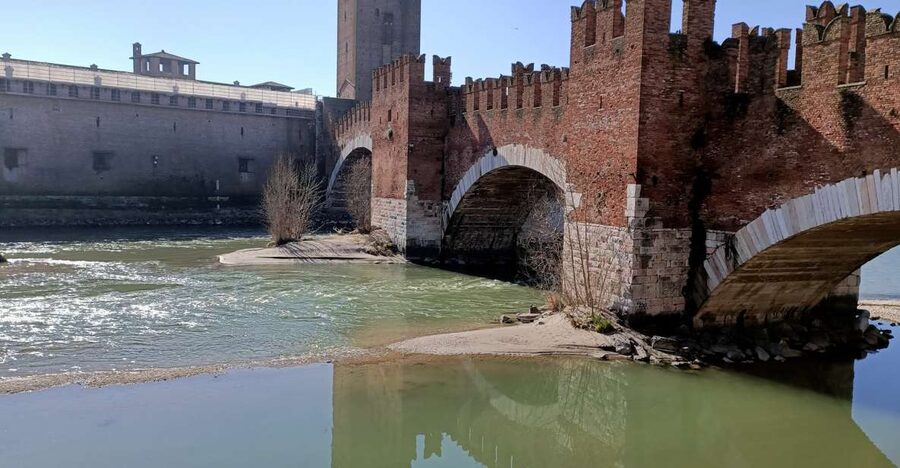
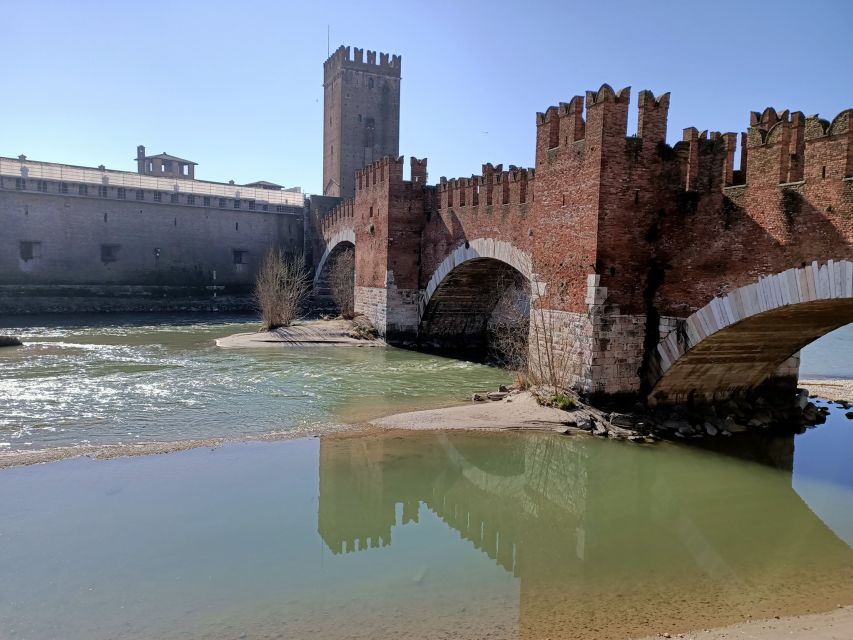
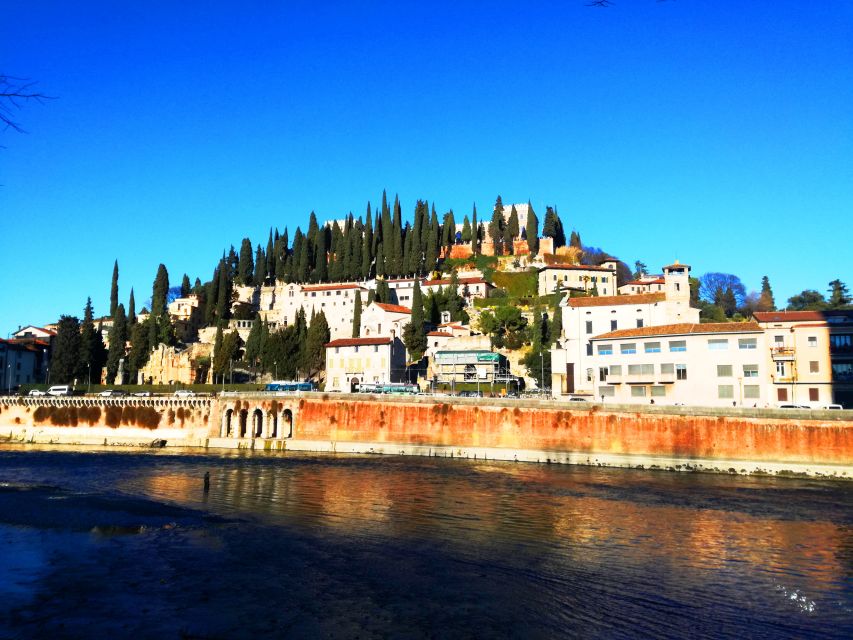
At Riva San Lorenzo, the walk opens toward the Adige River. You see views of Castelvecchio and the Ponte Scaligero, the striking medieval bridge connected with Verona’s ruling della Scala family.
This is one of the more scenic portions of the route. It also gives the history some physical scale. Verona is not just a collection of handsome squares. The river shaped the city’s movement, defenses, and development, and the bridge shows how power could be expressed through practical public works.
Expect a photo stop and views along the way rather than a museum visit. Transport is not part of the experience, and there is no vehicle transfer between sights. You walk throughout, so comfortable shoes and water matter.
The headsets are useful here. Open river areas and nearby city noise can make ordinary group commentary hard to catch. With the audio equipment, you can look at the bridge or turn toward the river without losing the explanation.
Piazza delle Erbe and Verona’s oldest market square
The route continues through small streets and past San Giovanni in Foro before reaching Piazza delle Erbe. This is one of Verona’s most attractive public spaces, with historic façades, market activity, and the city’s oldest fountain.
Fabio explains the history of the local market and helps you read the buildings around the square. The stop lasts about 10 minutes, giving you time for photographs and a closer look at the façades.
Piazza delle Erbe can feel crowded and visually busy, especially when market stalls are active. That is precisely where a guide earns his fee. Instead of seeing only a pretty square, you get a framework for understanding how it functioned as a civic and commercial center.
The tour does not include food or drinks, so this is not a tasting walk. You can return later for a longer look, a café stop, or shopping. I would note the places Fabio highlights, then revisit the square after the group has moved on.
More history-led days around Verona & Lake Garda:
- Venice: St. Mark Basilica Ticket, Audioguide+History Gallery
★ 3.9 · 4,780 reviews - Venice’s Best: Basilica, Doge’s Palace, Gondola & History Gallery
★ 4.5 · 2,478 reviews - Historic Milan Tour with Skip-the-Line Last Supper Ticket
★ 4.5 · 1,976 reviews - Venice: City Center Historical Guided Walking Tour
★ 4.2 · 1,873 reviews
Public power in Piazza dei Signori
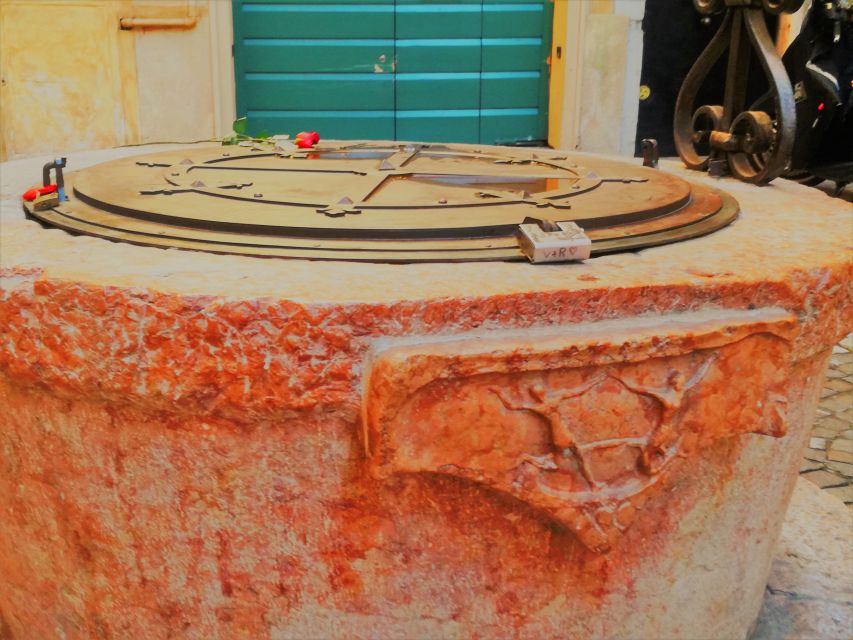
A short walk leads to Piazza dei Signori, surrounded by major public buildings. You see Palazzo della Ragione, Palazzo della Scala, and Palazzo del Capitano, along with Verona’s highest tower.
This square gives Fabio room to explain the medieval city as a place of government, family power, and civic display. The buildings are not just backdrops for photographs. Their arrangement shows how Verona’s ruling institutions shaped the center.
The stop lasts roughly five minutes, though the approach includes several brief pauses. That pace works well for orientation, but it can feel quick if you want to study every façade in detail. I would treat the tour as a guided introduction, then return to your favorite places afterward.
The route’s strength is the connection between sites. You do not receive a string of unrelated facts. The Arena, Roman gate, river bridge, market square, tower, and civic palaces become chapters in one story about Verona changing over time.
The dramatic Arche Scaligere and medieval Verona
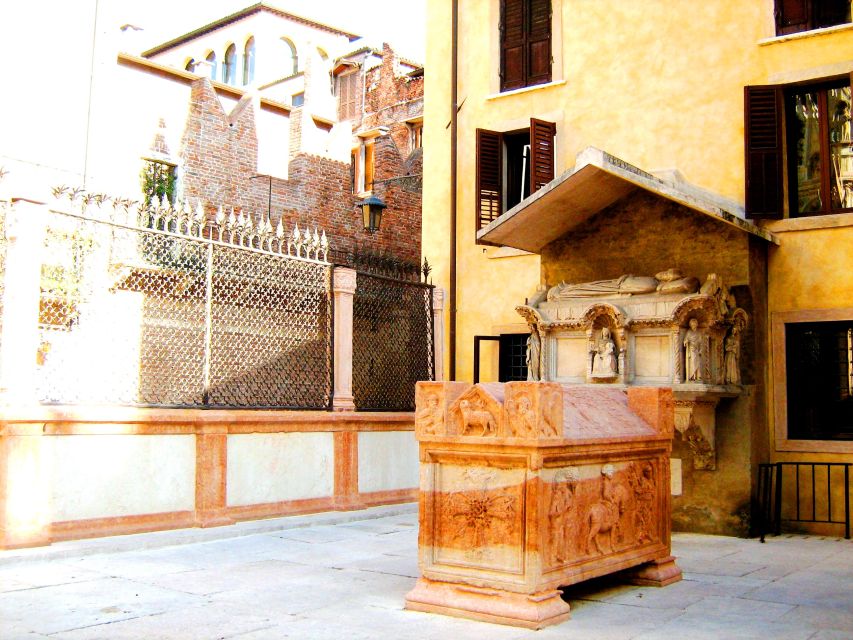
Near Piazza dei Signori, you reach the Arche Scaligere, the ornate mausoleums of the della Scala family. Their delicate stonework and theatrical form contrast sharply with the sturdy Roman monuments seen earlier.
This is one of the most visually memorable stops. You view the tombs from outside and hear about the medieval rulers associated with them. The visit is brief, around five minutes, but the monuments reward a slower return visit if medieval sculpture and architecture interest you.
The nearby Basilica di Santa Anastasia also receives a photo stop. You do not go inside as part of the tour, and admission is not included. That is important if you want church interiors, art, or a longer architectural study. The walking tour helps you decide which places deserve your own entry later.
A few additional stops, including Piazza Indipendenza and the Courtyard of the Old Market, add texture to this section. These are not headline attractions, but they help you see how Verona’s grand public spaces connect with smaller passages and working corners.
Romeo, Juliet, and the city behind the legend
The route includes Casa di Romeo and Juliet’s House, including the famous balcony area. Fabio explains the historical inspiration behind Shakespeare’s tragedy and separates the literary story from Verona’s actual past.
Juliet’s House is a short photo stop, not a full interior visit. The courtyard and balcony can be crowded, and this part of Verona is more commercial and heavily visited than the side streets earlier in the walk. You should not book this experience expecting a quiet or private encounter with the Romeo and Juliet story.
Still, the placement of the stop makes sense. By the time you reach Juliet’s House, you have already seen the political families, medieval streets, and old urban fabric that give the legend a setting. The famous balcony becomes one small piece of Verona, rather than the whole reason for visiting.
You also pass the Jewish synagogue, the former convent of Santa Maria della Scala of the Servants of Mary, and Via Dietro Anfiteatro. These short pauses are part of the tour’s broader point: Verona’s story includes more than Roman spectacle and Shakespearean romance.
What two hours really allows
The route includes more than 30 named points, but many are passed on the way or receive only two to five minutes. That is not a flaw if you want a lively orientation. It would be a problem only if you expect a detailed interior tour of every landmark.
I see this as a story-led city walk, not a checklist of admissions. Fabio keeps the route moving while adding short explanations at doors, corners, squares, and monuments. The result is a broad introduction to central Verona with enough specific detail to guide your later exploring.
The walk returns to Palazzo Barbieri after about two hours. Since the route begins and ends in Piazza Bra, it is easy to continue toward the Arena, shops, restaurants, or a separate museum visit. You also finish with a better sense of which lanes and squares deserve another look.
Walking speed is worth considering. The route is wheelchair accessible, but you should still expect continuous movement through city streets and standing at stops. One practical review from the tour describes Fabio adjusting his pace for slower walkers, while other feedback notes that he sought shade and water breaks during very hot weather. These are useful qualities, but weather comfort can vary by departure time and season.
Fabio’s guiding style and the small-group setup
Fabio receives the strongest praise for three things: his local roots, his command of Verona’s past, and his storytelling. He mixes dates and architecture with anecdotes, humor, and links between different periods of history.
That style suits you if you like to understand why a place matters. If you prefer to wander silently and take photographs at your own pace, a guided walk may feel busy.
The group limit of 10 is a real advantage. You can hear the guide, ask questions, and stay close without following a flag through a large crowd. Several people particularly appreciated the external earpieces, including those with some hearing difficulty.
Fabio also provides local suggestions during the walk. You can ask about places to eat or areas to revisit, though food and drinks are not included. His communication before the tour has also been praised, which can make the meeting arrangements feel less uncertain.
Tours are offered in English, German, Italian, and Spanish. Private or small-group options are available, so check the booking choice carefully if you want a private experience rather than the standard small group.
Is $41 a fair price?
At $41 per person, the tour is not the cheapest way to stroll through Verona. You can walk around Piazza Bra, Piazza delle Erbe, the river, and Juliet’s House without paying a guide.
The price makes more sense if you value interpretation. You are paying for a licensed local guide, a route designed around storytelling, headsets, and a group capped at 10. The walk also saves you from spending your first hours trying to work out how Roman, medieval, civic, and literary Verona fit together.
There are no entry fees, meals, or transport included. If you want the Arena interior, a church visit, or Juliet’s House interior, budget for those separately. Even so, the tour can be good value at the start of a short Verona stay because it helps you choose where to spend the rest of your time.
The free cancellation period extends to 24 hours before the tour, and you can reserve now and pay later. The walk runs rain or shine, so bring water and comfortable shoes, and carry weather protection when the forecast looks uncertain.
Who should book this Verona walk?
I would recommend it most strongly for a first visit, especially if you have only a day or two in Verona. It gives you a fast but thoughtful map of the historic center and helps you notice details on your own afterward.
It is also a strong match for people who enjoy architecture, city history, and local stories. Families can do well with it too. Fabio has adapted his explanations to keep a younger participant engaged, and the changing scenery helps prevent the walk from feeling like a classroom.
You may want a different experience if your priority is entering major monuments, spending long periods at one site, or focusing only on Shakespeare. This tour shows Juliet’s House, but its main subject is Verona itself.
FAQ
Where does the Verona walking tour meet?
Meet beneath the Italian flag at Palazzo Barbieri, Verona’s Town Hall, in Piazza Bra.
How long does the tour last?
The guided walking tour lasts two hours.
What sights are included?
The route includes Piazza Bra, the Arena, Porta Borsari, views of Castelvecchio and Ponte Scaligero, Piazza delle Erbe, Piazza dei Signori, the Arche Scaligere, Casa di Romeo, Juliet’s House, and several smaller historic locations.
Do I enter the Arena or Juliet’s House?
No. The tour includes exterior visits and photo stops. Entry fees are not included.
How large is the group?
The standard small group is limited to 10 participants. Private options are also available.
Which languages are offered?
The tour is available in English, German, Italian, and Spanish.
Is the tour wheelchair accessible?
Yes, the activity is listed as wheelchair accessible.
What should I bring?
Bring comfortable shoes and water. The tour takes place rain or shine, so suitable weather protection is also sensible.
Should you book it?
Book this tour if you want Verona to make sense, not just look pretty. Fabio’s local knowledge, clear storytelling, small groups, and headsets give the walk more substance than a basic landmark circuit.
The main limitation is the pace. You will see many places from the outside, with several short stops, so leave time afterward to return to the Arena, a church, the market square, or Juliet’s House. For a first morning in Verona, $41 is a reasonable spend for a well-structured introduction, especially when you want the overlooked details that a self-guided stroll can easily miss.
More Walking Tours in Verona & Lake Garda
- Milan: Guided Walking Tour & Last Supper Visit with Ticket
★ 4.7 · 5,409 reviews - Naples: Street Food Walking Tour with Local Guide
★ 4.8 · 4,256 reviews - Venice Walking Tour and Gondola Ride
★ 3.5 · 3,630 reviews - Venice: Rialto Bridge & Offbeat Unusual Venice Walking Tour
★ 4.2 · 3,538 reviews
Recently reviewed around Verona & Lake Garda
- Full-Day Padua to Venice Burchiello Brenta Riviera Boat Cruise★ 4.5 · 198 reviews
- Tasting Prosecco with appetizers★ 5.0 · 217 reviews
- Wine and Food Tasting in the Vineyards in Lazise★ 5.0 · 187 reviews
- Sunset Tour in Sirmione★ 5.0 · 263 reviews
- Venice Full-Day Tour from Lake Garda★ 4.5 · 264 reviews
- Dolomites Full-day Tour from Lake Garda★ 4.5 · 279 reviews
- Lake Garda Mini Cruise: Sirmione Peninsula★ 4.5 · 443 reviews
- Boat Tour of Isola del Garda★ 5.0 · 296 reviews
Walking Tours, compared.
Guided Walking Tour & Last Supper Visit with Ticket
Read our review →
Rialto Bridge & Offbeat Unusual Venice Walking Tour
Read our review →
Private 3 hrs Venice Tour: St Mark’s, Walking tour & Boat tour
Read our review →
Skip the line: Uffizi and Accademia Small Group Walking Tour
Read our review →
Trastevere & Campo de Fiori Street Food Walking Tour
Read our review →Browse the lists this tour appears in