
Review · VERONA & LAKE GARDA TOURS
Verona: Hop-on Hop-off Tour 24 or 48-Hour Ticket
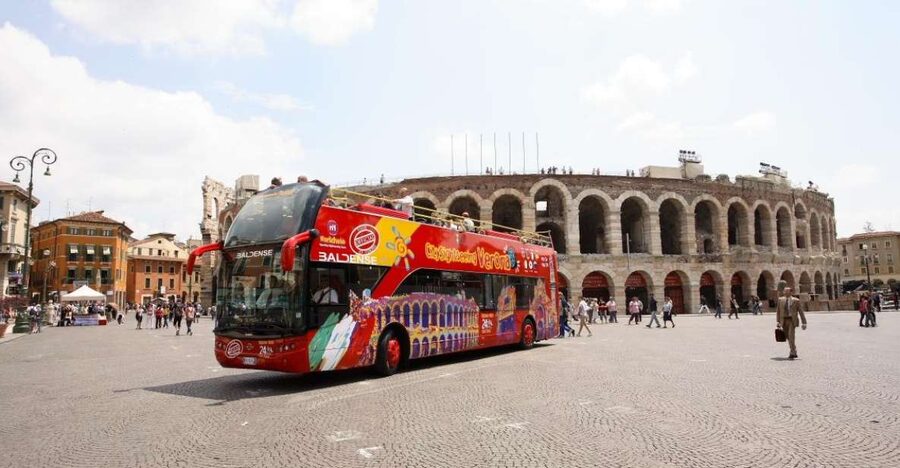
Verona reveals itself quickly from the top deck of this red sightseeing bus. In one ride, you can connect the Roman Arena, medieval walls, San Zeno, the old center, and the hill above the city without spending your first day studying a map. I especially like the two-route design and the chance to use the ticket across parts of two days.
I also like that the bus stops at both Verona Porta Nuova station and Piazza Bra, making it useful when you arrive by train. The main catch is timing: buses run about once an hour on each route, so a short hop-off can turn into a long wait. The audio is helpful, but it can repeat information and may sound better on one bus than another.
In This Review
- Key points to know before you board
- Why this bus works well for a first look at Verona
- Piazza Bra and the Arena: the natural place to begin
- The red route: station, San Zeno, and the western old city
- The blue route: Teatro Romano and the hill above Verona
- What to see at the main stops
- Is the 24-hour ticket enough?
- How to plan a one-day visit
- Comfort, weather, and the small practical details
- Who should book this Verona bus tour?
- Should you book it?
- FAQ
- Where do both bus routes begin?
- How long is the ticket valid?
- Can I get off and board again?
- How often do the buses run?
- Is admission to the Arena or other attractions included?
- What languages are available for the audio commentary?
- Is the service available on Wednesday October 15?
Key points to know before you board
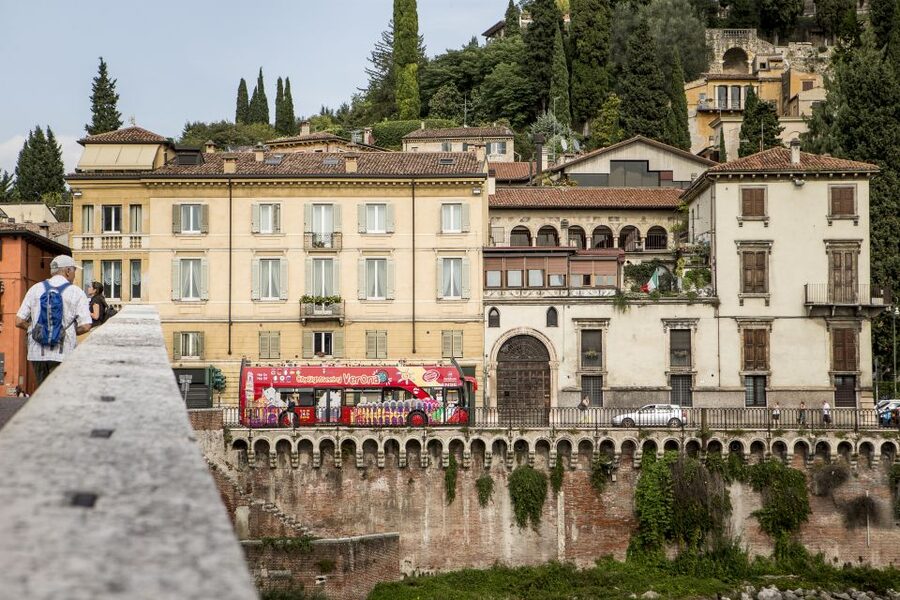
- Two routes, two different views: The red line covers major central sights and San Zeno, while the blue line climbs toward Castel San Pietro and Verona’s best city view.
- Piazza Bra is the starting point: Both routes begin beside the Arena, Verona’s great Roman landmark.
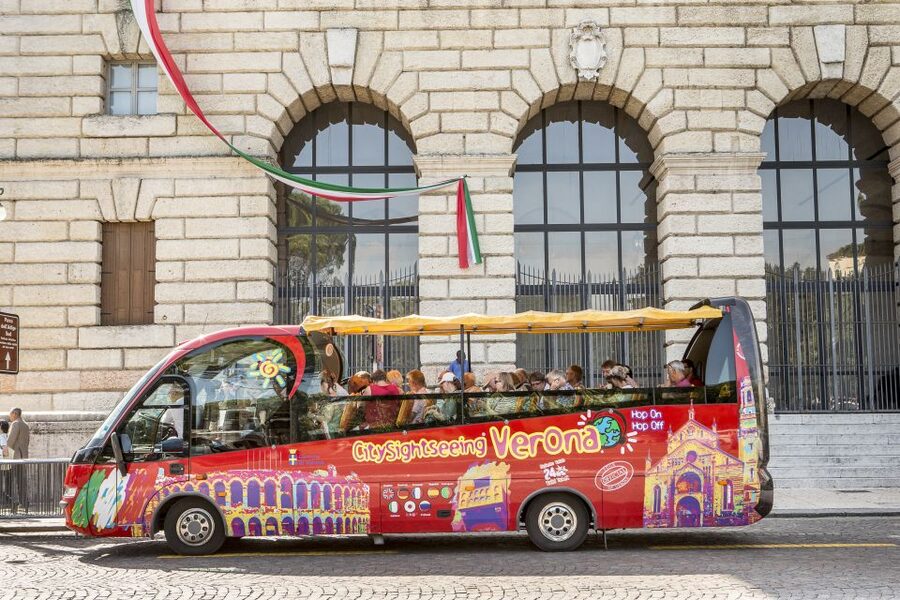
- The blue route uses a smaller bus: This lets it handle tighter streets and the hill above the city, but it can fill up.
- A station stop adds real value: You can board at Stazione FS Porta Nuova, handy for a short visit or a hotel near the railway station.
- The ticket lasts 24 or 48 hours: Used well, it can cover part of two calendar days rather than only one sightseeing session.
- Attraction entry is separate: The ticket carries you to places such as the Arena and Teatro Romano, but it does not include admission.
Why this bus works well for a first look at Verona
Verona is compact enough to walk, but its sights are spread across both banks of the Adige River and up toward the hill of Castel San Pietro. That makes a sightseeing bus useful at the start of your stay. I would use it to understand the city’s shape before choosing where to spend your time on foot.
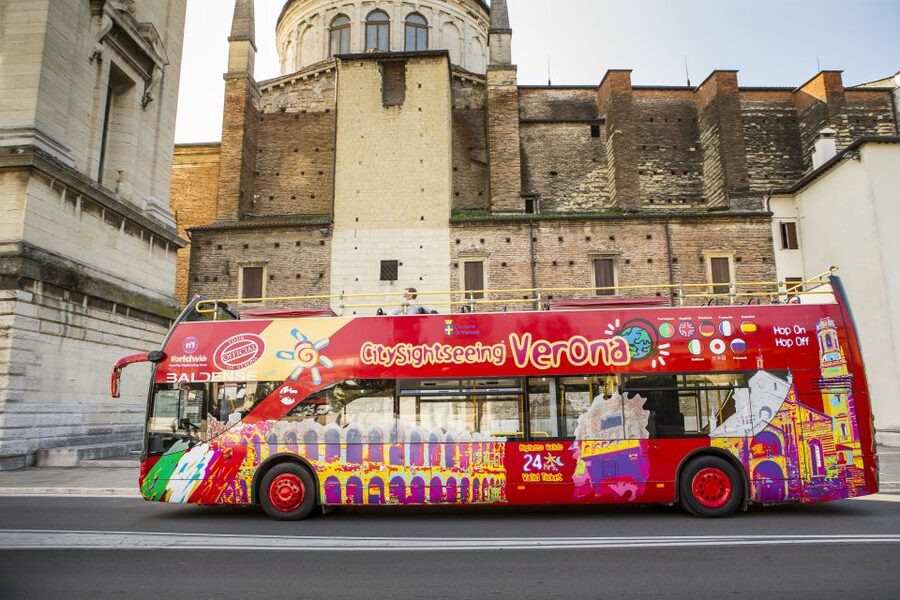
The open-top deck gives you a broad view of Verona’s old roofs, church towers, stone bridges, and defensive walls. You are not locked into a guide’s walking pace, either. Ride one full loop, note the places that catch your eye, then get off on the next circuit.
The recorded commentary is available in English, Italian, Spanish, French, German, Portuguese, Japanese, Russian, Arabic, Chinese, Danish, and Dutch. It covers Verona’s Roman past, its medieval center, and its connection with Shakespeare’s Romeo and Juliet. I would treat it as useful background rather than a substitute for a local guide. Some information repeats between the two routes, and the commentary has been described as clearer on the red line than on the blue line.
The staff are another practical plus. The boarding point at Piazza Bra is easy to recognize, and the stop near the railway station makes the service simple to find when you arrive. If you have luggage, the station stop can also save you a walk before beginning your sightseeing.
More Verona & Lake Garda trips worth a second look
- Gardaland Park: Open Date Entry Ticket
★ 4.6 · 2,189 reviews - Verona: Small Group Guided Walking Tour with Arena Tickets
★ 4.9 · 848 reviews - Gardaland SEA LIFE Aquarium: Open Date Entry Ticket
★ 4.1 · 728 reviews
Piazza Bra and the Arena: the natural place to begin
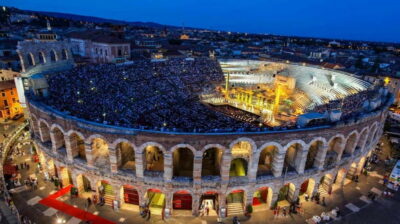
Both lines start in Piazza Bra, the wide square facing the Arena di Verona. This is the most logical first stop because the Arena gives you an immediate sense of Verona’s age and scale.
The bus lets you look at the Arena from the outside, but your ticket does not include entry. If you want to visit the Roman amphitheater, you will need a separate admission ticket or a Verona Card. One useful plan is to take a complete bus ride first, then return to Piazza Bra for the Arena once you know how the rest of the city fits together.
Piazza Bra is also a good place to pause between routes. You can step off, walk around the square, and board the other line later. Since each route runs about once an hour, check the next departure before leaving the stop.
The first bus of the day has not always been as early as some visitors expected. One account noted a 10 a.m. first departure rather than 9 a.m., and another pointed out that service ended around 5 p.m. These details can change, so check the current timetable before building your day around the bus.
The red route: station, San Zeno, and the western old city
The red route is the larger city circuit. From Piazza Bra, it travels along Corso Porta Nuova and stops at Giardini Pradaval before reaching Stazione FS Porta Nuova. This section is especially useful if you are making a short stop in Verona or staying close to the station.
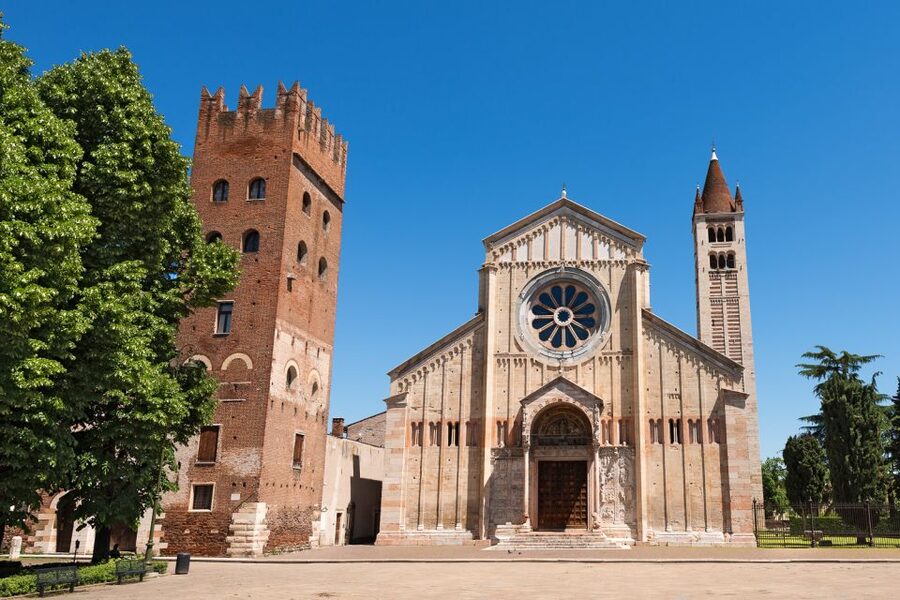
From the station, the route turns toward Piazza Pozza and the San Zeno area. San Zeno is one of Verona’s most rewarding districts because it feels less tied to the Romeo and Juliet story and more connected to the city’s religious and medieval past. The Basilica of San Zeno is the main reason to get off here. Entry is not part of the bus fare, but the stop puts you close enough to make a visit practical.
The bus then reaches Castelvecchio, Verona’s old fortress and a major city landmark. Even if you do not enter the museum, the fortress walls help explain how Verona was defended and controlled. Nearby Via Diaz leads toward Porta Borsari and the central streets, with shops along the upscale Via Diaz for anyone who wants a little retail time.
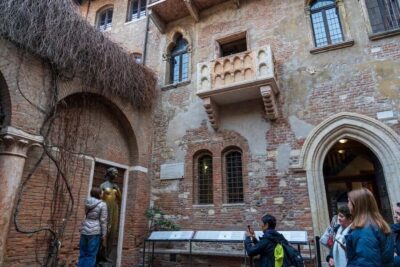
The red line also includes Teatro Romano, Porta Leoni, and Piazza Leoni near Juliet’s House. Teatro Romano sits across the river and is tied to the blue route as well, so you can use whichever circuit fits your timing. Porta Leoni is a Roman gateway, while the stop near Juliet’s House puts you close to Verona’s most famous literary connection.
I find the red route best for getting your bearings and linking the train station with the Arena and western old city. It is less useful if you want a quiet look at narrow lanes, since the bus mainly shows you the city from its main roads. That is not a flaw so much as a reminder to save time for walking.
The blue route: Teatro Romano and the hill above Verona
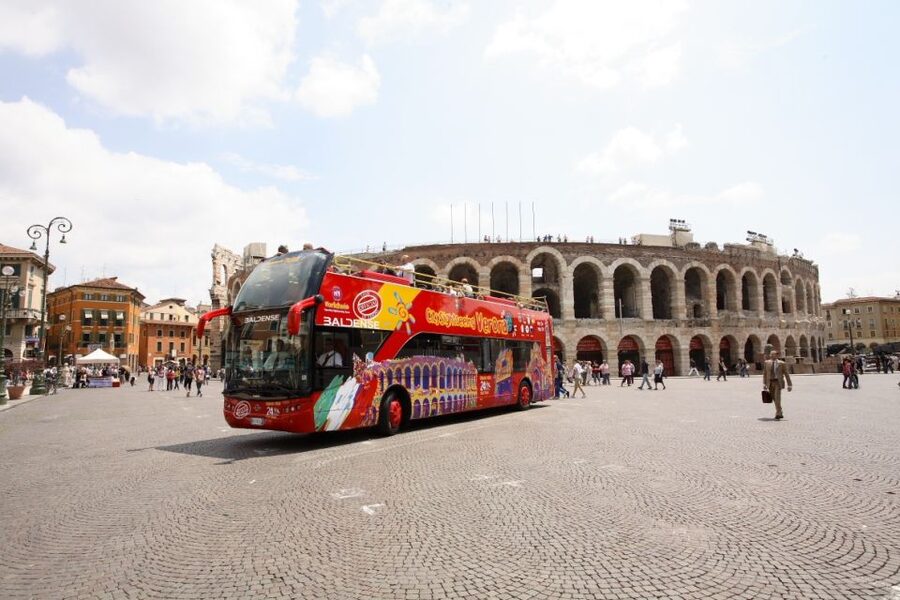
The blue route is the more distinctive of the two. It passes Via Pallone and Tomba Giulietta before heading through Via G. Giusti toward San Stefano and Teatro Romano. According to the available experience details, this line uses a smaller bus because of the terrain and narrower streets.
That smaller vehicle is part of the route’s appeal. It can reach places the larger bus cannot, but space may be tighter. One account found the blue-line bus crowded enough that not everyone could board. If the hilltop view matters to you, arrive at the stop early and avoid assuming the next bus will have room.
The highlight is Castel San Pietro. The route climbs toward the hill above Verona, giving you a wide view over the old city, the river, and the rooftops around the Arena. The bus may pause for several minutes so you can take photographs. This is one place where the hop-on hop-off format is especially useful, since the climb would add effort to an already full walking day.
The blue route also serves the Duomo, Piazza Erbe, Casa Giulietta, Porta Leoni, and Piazza Leoni. Piazza Erbe is the heart of Verona’s old center, with historic buildings and a lively market setting. The Duomo offers another worthwhile stop for anyone interested in Verona’s churches.
I would not ride the blue line only for its recorded narration. Its real strength is the route itself, especially the hilltop and smaller streets. The commentary may repeat material heard on the red line, but the view from Castel San Pietro gives this circuit a character of its own.
A different way to spend the day, same part of Italy:
- Sirmione: 25 Minute Boat Cruise around the Peninsula
★ 4.7 · 2,887 reviews - Verona: History and Hidden Gems Guided Walking Tour
★ 5.0 · 1,379 reviews - Sirmione: Sunset Boat Cruise with Local Wine
★ 4.8 · 824 reviews - Verona: Arena di Verona Opera Ticket
★ 4.6 · 721 reviews
What to see at the main stops
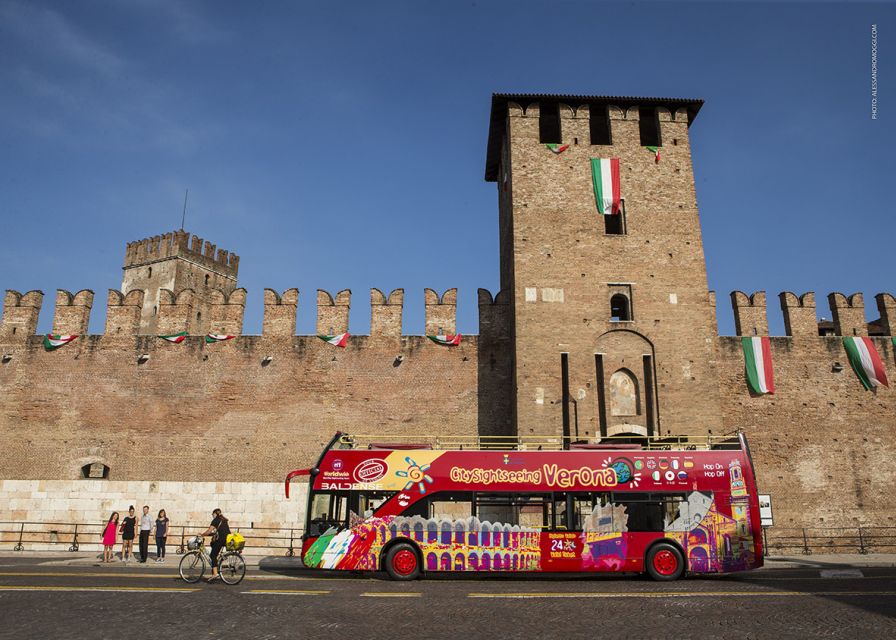
The stop list can look like a string of names, so here is how I would think about the major ones:
- Stazione FS Porta Nuova: The best stop for train arrivals and for anyone staying near the station. It also makes the bus useful as a simple connection to the Arena.
- Basilica S. Zeno: Get off for one of Verona’s major churches and the San Zeno district. This is a good choice when you want something beyond the central Romeo and Juliet sights.
- Castelvecchio: Use this stop for the fortress and its museum area. It is also well placed for walking toward the river and central Verona.
- Via Diaz and Porta Borsari: Choose this section for shopping, Roman remains, and a walk toward the old center.
- Teatro Romano: This Roman theater sits across the river and pairs naturally with the blue route and Castel San Pietro.
- Castel San Pietro: Make this your priority for photographs and a view over Verona. Check the bus capacity before boarding the smaller blue-line vehicle.
- Piazza Erbe and the Duomo: These stops place you in the historic core, where you can continue on foot.
- Casa Giulietta and Porta Leoni: These are convenient stops for Verona’s Shakespeare connection and Roman gateway remains.
The bus does not replace walking at these places. It gets you close, saves energy, and helps you choose. That matters in summer, when the heat can make the distance between the Arena, the river, San Zeno, and the hill feel longer than it appears on a map.
Is the 24-hour ticket enough?
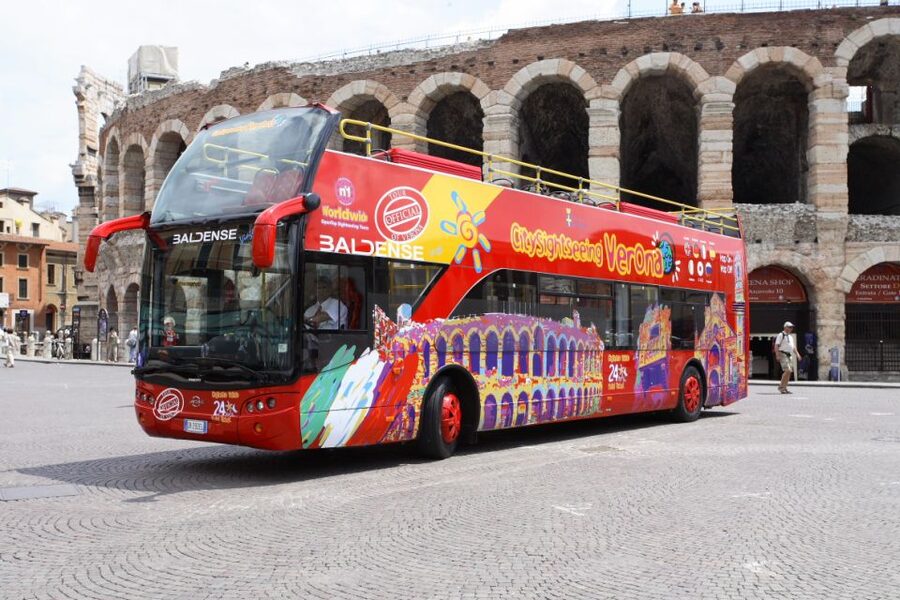
For many people, yes. A 24-hour ticket works well if you have one full day in Verona or only a short visit. You can ride part of the red route, change to the blue route, and get off at the places that interest you most. If you start early enough, you can use the ticket over portions of two days.
The key is not to treat hop-on hop-off as a taxi arriving whenever you want. With buses roughly an hour apart on each line, plan around the schedule. A quick visit to a church or viewpoint may require more patience than expected, especially if you miss a departure.
The 48-hour option makes better sense if you want a relaxed pace, are traveling with a young child, or want to combine bus rides with museum and church visits. It also gives you a second chance at the hilltop if weather is poor on the first day. One practical combination is to use the bus with a Verona Card, which can help cover admissions while the sightseeing ticket handles the longer connections.
At $29 per person, the price is reasonable when you use both lines and make several rides. It is less compelling if you plan to walk the entire center and visit only one or two sights. The value comes from the route to San Zeno, the station connection, the hill above the city, and the rest you get between walks.
How to plan a one-day visit
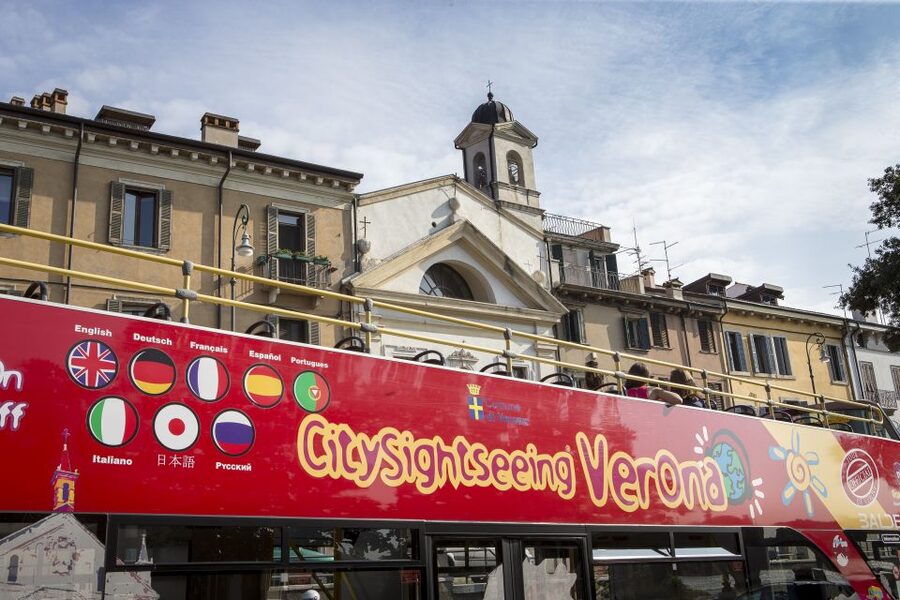
Start at Piazza Bra if you are already in the center. If you arrive by train, board at Porta Nuova and ride toward the Arena. I would first take enough of the red route to understand the city, then choose one or two stops rather than trying to see every landmark from the bus.
Next, take the blue route toward Teatro Romano and Castel San Pietro. Give yourself extra time for the smaller bus, and make the hilltop the priority if the sky is clear. The view is one of the best reasons to choose this tour instead of simply taking a central walking loop.
Return toward Piazza Erbe, Casa Giulietta, or Porta Leoni and continue on foot. Save the Arena for a separate visit if you want to go inside. This plan avoids spending the whole day seated while still using the bus to cover the parts of Verona that are farther apart.
For a five-hour stop, stay on for a full overview, then hop off at the Arena or one central stop. You will not see every interior, but you will get a useful introduction and a feel for what deserves a return visit.
Comfort, weather, and the small practical details
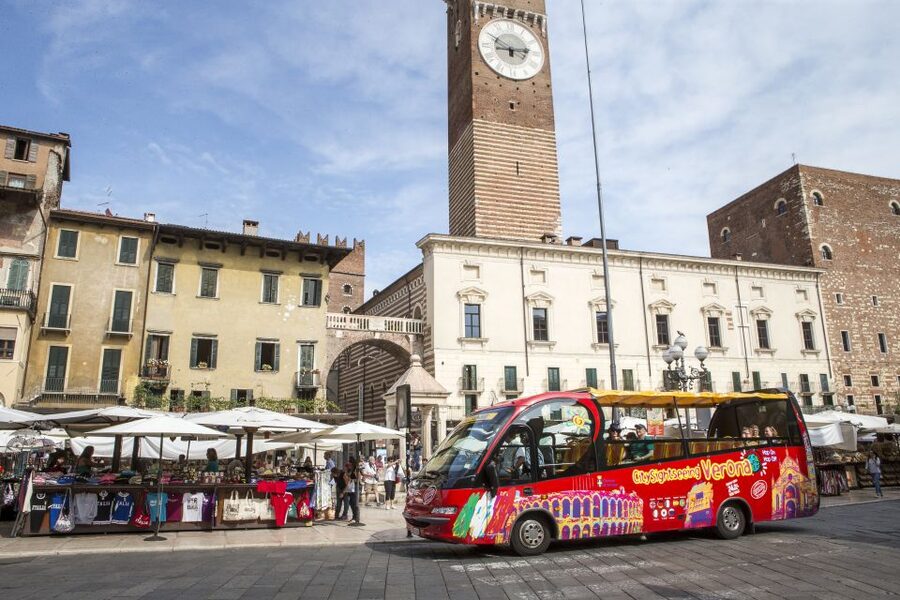
The open top is the point of the experience, giving you better views than a regular city bus. It also exposes you to sun, heat, and rain. In August, the ride can be a welcome break from walking in the heat. On rainy days, the bus still provides shelter, though the clearest panoramic views will be limited.
The buses have been described as clean and comfortable, but the two lines are not identical. The larger red bus generally feels more spacious. The blue route’s smaller minibus is better suited to its streets and hill, but it may feel crowded.
Bring your own headphones if you have them. Complimentary headphones are provided, but they have been criticized as poor quality. This small detail can make a real difference if you want to follow the commentary.
Finding a stop after getting off can be tricky, even with a map. Before leaving the bus, look around and note the exact side of the street and nearby landmarks. Since the next bus may not arrive for an hour, a little attention at the moment you leave can save a frustrating wait.
The service is flexible from a booking point of view: you can cancel up to 24 hours ahead for a full refund, and reserve now while paying later. One date, Wednesday October 15, has a listed suspension because of a cycling race, so check availability if your visit falls on that day.
Who should book this Verona bus tour?
I would recommend it most strongly to first-time visitors, short-stay visitors, families with children, older visitors, and anyone who wants to limit long walks. It also suits you if you arrive by train and want a simple way to reach the central sights.
The tour is less necessary if you enjoy wandering every side street and have several days in Verona. The old center is walkable, and the bus cannot take you into every lane. You will still need to walk for the Arena, churches, markets, museums, and viewpoints.
Should you book it?
Book this tour if you want a broad first look at Verona, need transport between the station and central sights, or value the hilltop view at Castel San Pietro. The blue route is the stronger sightseeing circuit, while the red route is more useful for the main city connections, San Zeno, Castelvecchio, and Porta Borsari.
Choose 24 hours for a focused one-day visit. Choose 48 hours if you prefer pauses, have children with you, want to combine the bus with paid attractions, or expect hot weather. Just plan around the hourly frequency, bring better headphones, and treat the bus as a way to connect Verona’s highlights, not as a replacement for exploring them on foot.
FAQ
Where do both bus routes begin?
Both the red and blue routes begin at Piazza Bra, also called Arena Square, beside the Arena di Verona.
How long is the ticket valid?
You can choose either a 24-hour or 48-hour ticket, depending on the option selected.
Can I get off and board again?
Yes. You can hop off to explore and re-board the bus as often as you like while your ticket remains valid.
How often do the buses run?
Each route operates about once an hour.
Is admission to the Arena or other attractions included?
No. The ticket includes the sightseeing bus and multilingual audio commentary, but attraction admission is separate.
What languages are available for the audio commentary?
Commentary is available in English, Italian, Spanish, French, German, Portuguese, Japanese, Russian, Arabic, Chinese, Danish, and Dutch.
Is the service available on Wednesday October 15?
The service is scheduled to be suspended on Wednesday October 15 because of a cycling race. Check availability for your date before booking.
Recently reviewed around Verona & Lake Garda
- Full-Day Padua to Venice Burchiello Brenta Riviera Boat Cruise★ 4.5 · 198 reviews
- Tasting Prosecco with appetizers★ 5.0 · 217 reviews
- Wine and Food Tasting in the Vineyards in Lazise★ 5.0 · 187 reviews
- Sunset Tour in Sirmione★ 5.0 · 263 reviews
- Venice Full-Day Tour from Lake Garda★ 4.5 · 264 reviews
- Lake Garda Mini Cruise: Sirmione Peninsula★ 4.5 · 443 reviews
- Dolomites Full-day Tour from Lake Garda★ 4.5 · 279 reviews
- Boat Tour of Isola del Garda★ 5.0 · 296 reviews
Verona & Lake Garda Tours, compared.

Sirmione: 25 Minute Boat Cruise around the Peninsula
Read our review →
Small Group Guided Walking Tour with Arena Tickets
Read our review →


Peschiera: Half-Day Lake Garda Cruise with Lunch
Read our review →Browse the lists this tour appears in