
Review · SICILY TOURS
Benedictine Monastery of Catania – English Guided Tour
Catania’s Benedictine Monastery is far more than a pretty church complex. Beneath its late-Baroque halls, you’ll find Roman houses, lava-built cellars, and a 16th-century cellar now used as a university library. The monastery is still part of daily academic life, so the tour connects old religious power with modern student life in a wonderfully unexpected way.
I like the way the 75-minute route moves through 2,000 years of Catania’s past without feeling like a dry architecture lecture. I also like the guides’ lively style, especially the clear English and good humor reported from guides including Carmen, Giovanni, and Nicola. The main consideration is that not every departure appears to include the viewing platform, so check the available time if that upper view matters to you.
In This Review
- Key points to know before booking
- Why this monastery is worth your time in Catania
- Meeting the guide at Piazza Dante
- The two cloisters and the monastery’s late-Baroque scale
- The Roman house beneath the student mezzanine
- The 16th-century cellar and library
- The novices’ garden and the famous kitchens
- Lava-built cellars and Catania’s volcanic setting
- Vaccarini’s work and the monumental staircase
- A 30-year restoration and a modern university
- What the guides do well
- Is $11 good value for 75 minutes?
- Who should book this tour?
- Should you book the Benedictine Monastery tour?
- FAQ
- How long is the Benedictine Monastery tour?
- What is the price?
- Where does the tour meet?
- Is the tour conducted in English?
- Can I get written translations?
- What areas are included?
- Can I access areas that are usually closed?
- Is baggage storage available?
- Is the tour wheelchair accessible?
- Can I cancel the booking?
Key points to know before booking
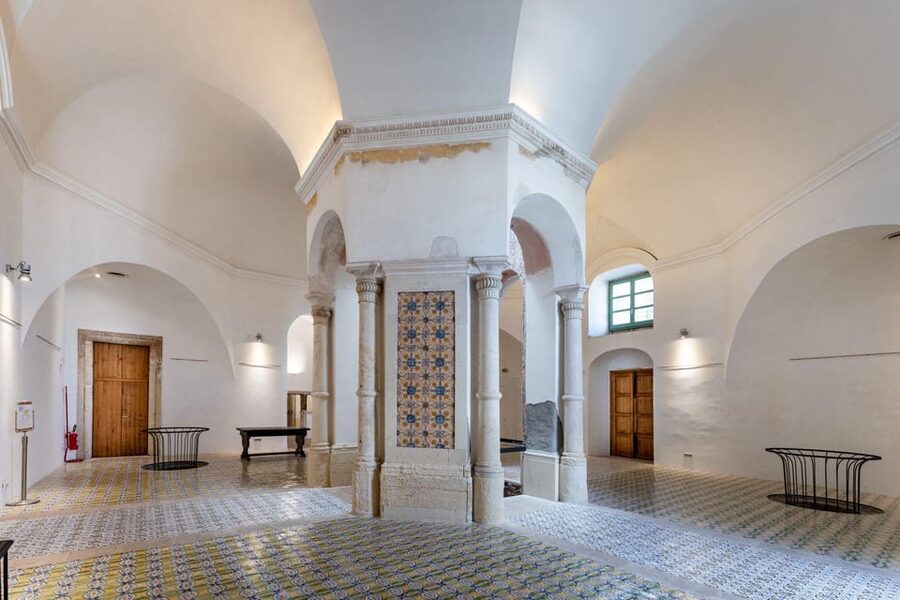
- Roman remains under a university library: Look down from a modern student mezzanine into a Roman house preserved beneath the monastery.
- A monastery on a huge scale: The late-Baroque complex is among Europe’s largest, with grand stairways, corridors, courtyards, and service rooms.
- Real access beyond the obvious rooms: The guided route can include areas that are not normally open for casual visits.
- A cellar built over lava: The lower level offers a cooler, archaeological side of the building, especially welcome during Catania’s hot summer.
- A lively English tour: Guides such as Carmen, Giovanni, and Nicola are praised for clear explanations, humor, and patience with questions.
- Strong value at $11: For a 75-minute guided visit, the price is modest, especially if you want context rather than a quick look at empty rooms.
Why this monastery is worth your time in Catania
Catania can be hard to read at first. Roman remains, medieval traces, Baroque façades, volcanic stone, and modern university buildings all sit close together. The Benedictine Monastery gives you a tidy way to understand that mixture.
The complex began long before its current appearance. The tour presents a timeline from the Roman age through the monastery’s religious period and into its present role as part of the University of Catania. That broad sweep is the real attraction. You are not simply looking at decorated walls. You are seeing how one site changed use, survived upheaval, and adapted to a new civic role.
The monastery is associated with the Benedictine order, whose wealth allowed the construction of a very large and elaborate complex. You’ll see that wealth in the scale of the rooms, the formal courtyards, the monumental staircase, and the practical spaces built to support a substantial religious community.
At the same time, the building is not preserved as a frozen museum. Students use parts of it today, including the library area. I find that contrast especially useful: a modern desk or mezzanine beside ancient masonry makes the passage of time easier to grasp than a row of display cases ever could.
More Catania trips worth a second look
- Catania: Mount Etna Adventurous Tour with a Volcano Guide
★ 4.7 · 736 reviews - Catania: Heart of the City Guided Walking Tour
★ 4.6 · 708 reviews - Catania: Underground Catania Tickets and Guided Tour
★ 4.6 · 536 reviews
Meeting the guide at Piazza Dante
Enter through the main gate on Piazza Dante. The information point is in the courtyard on your right, just after you pass through the gate. This is the place to arrive for the English tour and the included baggage storage.
The meeting point is easy to describe, but give yourself enough time to find Piazza Dante and enter the correct courtyard. The activity returns to the same monastery, so there is no transport between stops and no complicated route to follow afterward.
The tour lasts 75 minutes. That is long enough for a proper introduction but short enough to fit into a morning or afternoon of sightseeing. I would treat it as a focused visit rather than a half-day attraction. You will see a lot, but the route is designed to keep moving through the complex.
The tour includes access to parts that are not normally accessible. That matters here because the monastery’s appeal is not concentrated in one grand room. Its character comes from the sequence of spaces: courtyard, cloister, service area, archaeological remains, garden, library, and corridor.
The two cloisters and the monastery’s late-Baroque scale
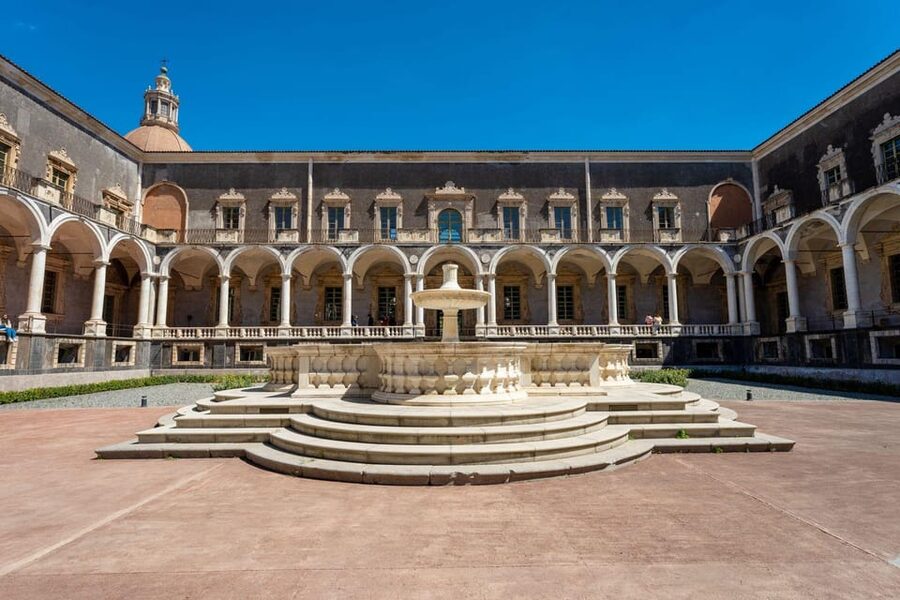
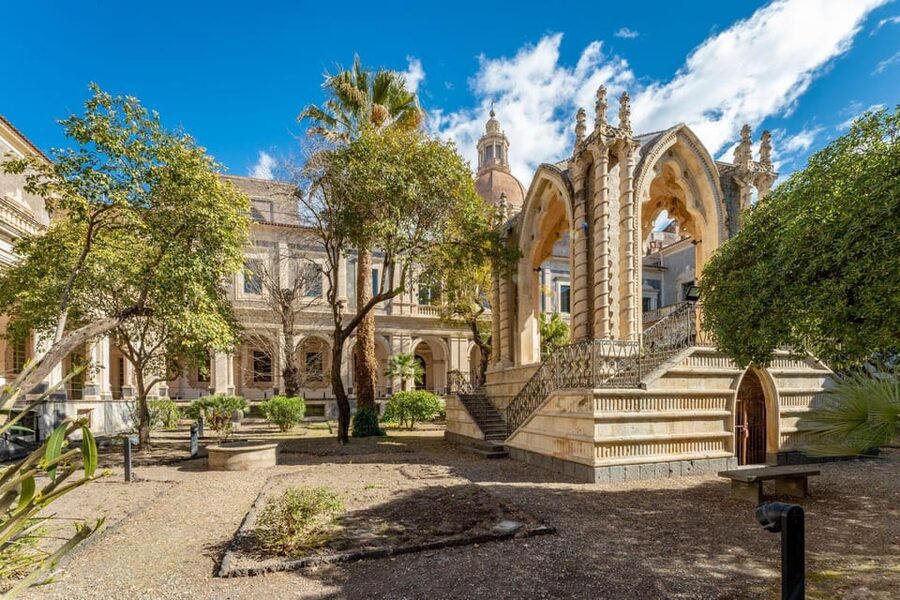
The cloisters provide the clearest introduction to the monastery’s size and design. These enclosed courtyards brought light and air into a building otherwise made up of long corridors and interior rooms. They also show how the monastery was organized around communal life rather than a single ceremonial space.
Look for the way the architecture frames movement. Arches, columns, walkways, and open courtyards create a rhythm that makes the complex feel larger as you go. Your guide helps explain which areas served religious, domestic, educational, or practical purposes.
The late-Baroque design is grand without being limited to church decoration. Here, the style appears in the building’s proportions, staircases, stonework, and formal layout. The monastery is one of Europe’s biggest, and the scale is easiest to appreciate when you are standing in a courtyard and seeing several wings extend around you.
This is also where a guide earns the admission price. Without context, the cloisters can blur into a series of handsome architectural details. With an explanation of how the monks lived and how the building functioned, the spaces become easier to read.
The Roman house beneath the student mezzanine
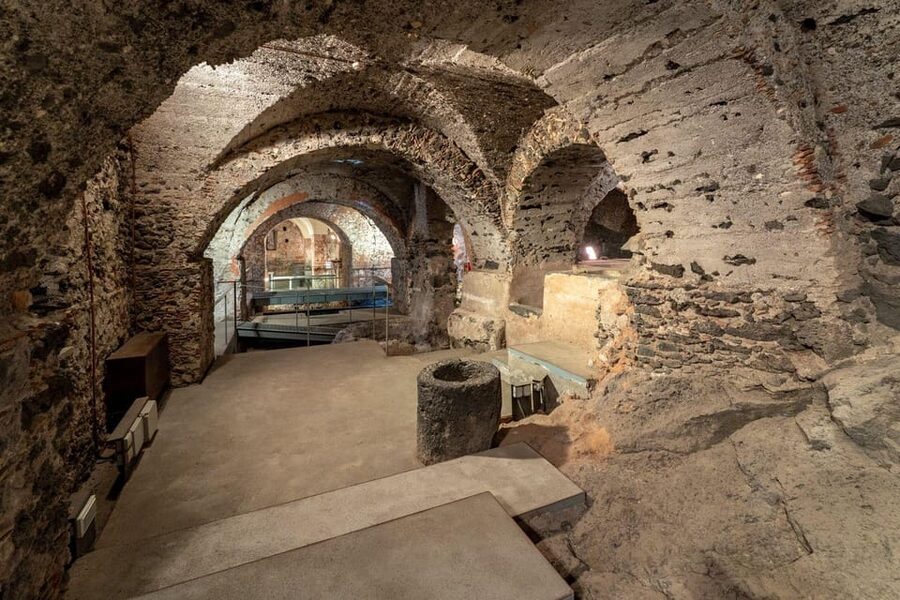
One of the most memorable stops is the Roman House. It is visible beneath a modern mezzanine used by students as part of the library. This is the kind of detail that makes the monastery different from a standard palace or church tour.
The arrangement lets you see several periods at once. Ancient Roman remains sit below a contemporary university structure, while the surrounding monastery belongs to a later chapter of Catania’s story. The building becomes a vertical timeline.
You may find this area especially interesting if you enjoy archaeology, but it also works for anyone curious about how Catania has been rebuilt and reused. The Roman remains are not separated from modern life. Students study above them, and the old structure forms part of the working university.
The tour does not ask you to treat the monastery as a single-period monument. Instead, it shows how different layers coexist. That approach gives the visit more substance than admiring a Baroque façade from outside.
A different way to spend the day, same part of Italy:
- Catania: Mount Etna Morning or Sunset Day Trip with Tasting
★ 4.8 · 4,028 reviews - Catania: Sunset Jeep Tour of Mount Etna and Lava Flow Caves
★ 4.8 · 2,113 reviews - Sicily: Etna and Alcantara Gorges Full-Day Tour with Lunch
★ 4.8 · 1,766 reviews - Catania: Etna Sunset Tour with Pickup and Drop-off
★ 4.8 · 1,348 reviews
The 16th-century cellar and library
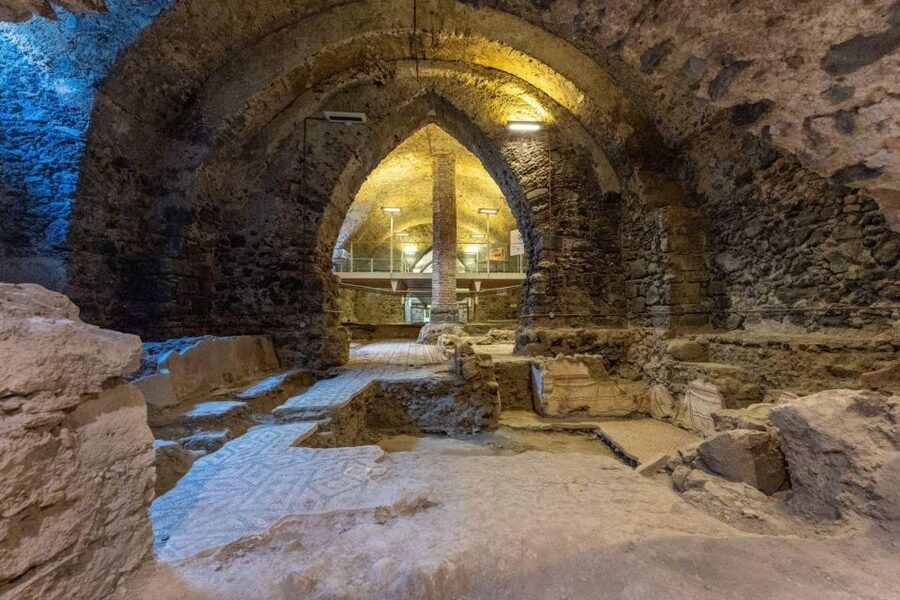
The former 16th-century cellar now serves as the Library of the Department of Humanities at the University of Catania. It is a striking example of adaptive use: a room once connected with monastic storage now supports study and research.
This stop also explains why the monastery restoration took more than 30 years. The work was not simply a matter of repainting walls or replacing a few roof tiles. A huge historic complex had to be repaired and made useful for modern academic life while keeping its old fabric visible.
The library setting may surprise you. Instead of finding a silent historic room preserved behind a barrier, you see a place with a current purpose. That makes the monastery feel connected to Catania now, not just to the monks who once lived there.
The route may include areas that are usually closed to casual access. That is one reason I would not try to treat this as a quick self-guided stop. The guide can point out how the old structure and contemporary refurbishment work together.
The novices’ garden and the famous kitchens
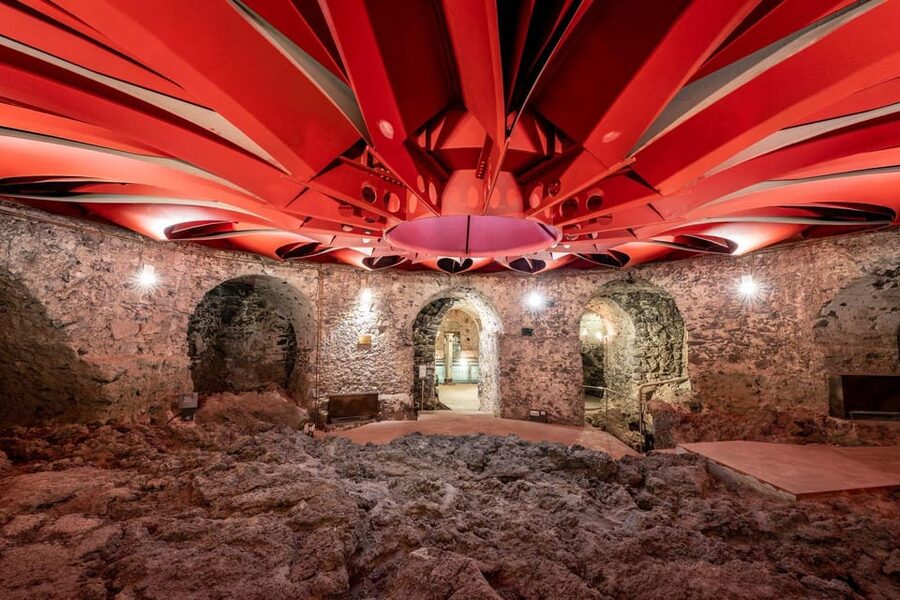
The Garden of the Novices offers a different mood from the grand courtyards. It helps you picture the routine side of monastic life, especially the training and daily discipline associated with new members of the order.
The kitchens are one of the tour’s most distinctive spaces. These 18th-century rooms reveal the practical needs of a large and wealthy religious community. Grand architecture can tell you about status, but kitchens tell you about scale: how many people lived here, how meals were organized, and how much work was required to keep the institution running.
The tour also visits dining rooms. Together, the kitchens and dining areas help balance the formal beauty of the cloisters and staircases. You get a look at both public grandeur and behind-the-scenes operation.
Guides often use stories and anecdotes in these rooms, and that is where the tour’s tone matters. Carmen has been praised for presenting information with humor and a good sense of proportion. Giovanni and Nicola are also noted for making the history lively rather than overloaded with dates.
Lava-built cellars and Catania’s volcanic setting
The cellars built on lava connect the monastery to the physical forces that shaped Catania. Mount Etna is not just a distant scenic backdrop here. Volcanic material forms part of the city’s building tradition, and the lower levels show how architecture adapted to the ground beneath it.
The cellar is also a practical stop in summer. One visitor specifically noted how refreshing the lower level felt in hot weather. You should not book the tour only for relief from the heat, but the cooler underground rooms are a welcome pause during a warm day.
The lower spaces may feel more archaeological and less polished than the Baroque rooms above. That is part of their value. They show the rougher, older side of the site, where construction, lava, and earlier remains meet.
I like this part of the route because it keeps the tour from becoming a parade of elegant interiors. The monastery has grand rooms, but it also has foundations, storage areas, and traces of earlier Catania.
Vaccarini’s work and the monumental staircase
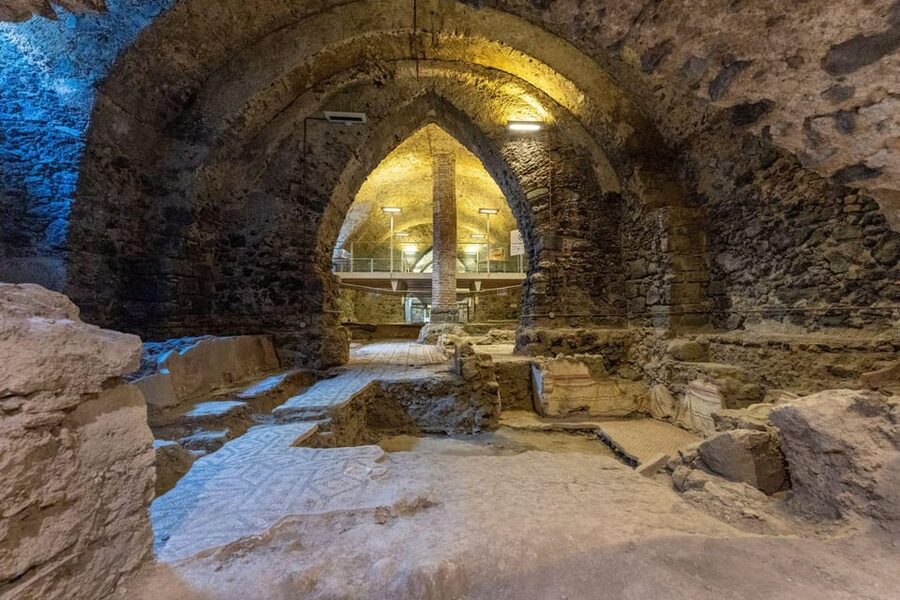
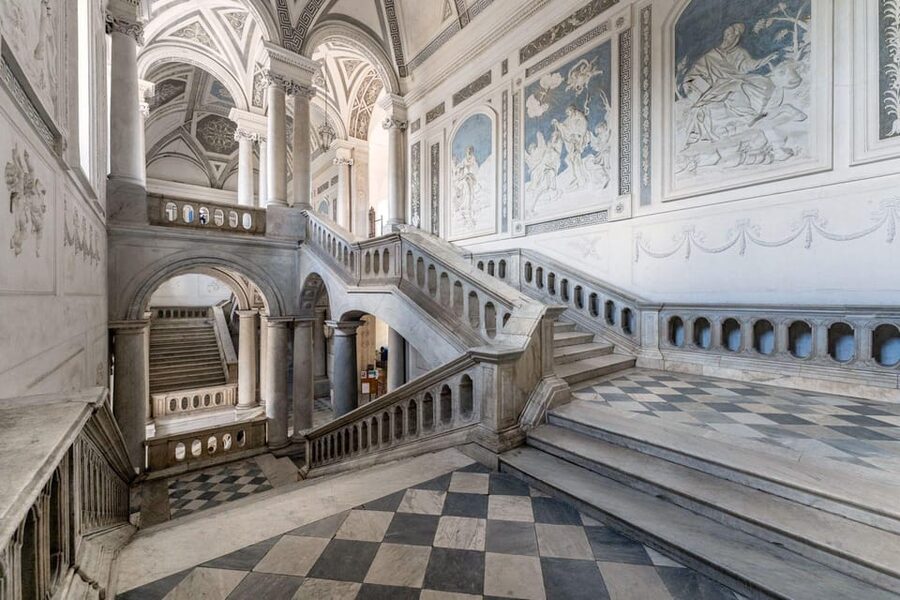
The architect Vaccarini is part of the monastery’s architectural story, and the monumental staircase gives you a strong visual example of the complex’s ambition. This is not a modest entrance built only to move people between floors. It is architecture designed to impress.
Take time to look at how the staircase controls the visitor’s sense of arrival. Its scale reflects the status of the monastery and the resources behind it. Your guide can place Vaccarini’s work within the wider development of Catania’s Baroque architecture.
The staircase is also a useful reminder that the monastery was designed as a whole. Courtyards, corridors, gardens, service rooms, and grand circulation routes all had a part to play. The building’s beauty comes from the way these pieces fit together.
Some rooms will appeal more to you than others. If you love ornate architecture, the staircase and cloisters may be the highlights. If you prefer archaeology or social history, the Roman house, cellars, kitchens, and library may leave the stronger impression.
A 30-year restoration and a modern university
The restoration project led by architect Giancarlo De Carlo lasted more than 30 years. That long timeline is important because it explains the monastery’s unusual feel. The goal was not to make every surface look new. It was to give an old complex a workable modern role while respecting evidence from different periods.
You will see contemporary refurbishment alongside ancient and historic material. A modern mezzanine may sit above Roman remains. University facilities occupy former monastic spaces. The result is not always visually uniform, but it is honest about change.
I consider this one of the tour’s strongest ideas. Many historic buildings are presented as if they stopped evolving centuries ago. Here, the university use makes the building part of present-day Catania. Students pass through rooms that once served monks, and the complex continues to support learning.
The restoration story also gives you a better way to judge the building. A repaired wall, an adapted room, or a modern intervention is not necessarily a flaw. It may show the practical work needed to keep a massive historic site in use.
What the guides do well
The English guide makes a real difference. The most consistent strength is clear delivery, with guides described as easy to understand, well paced, and willing to answer questions. That is useful in a complex building where the significance of each room is not obvious.
Carmen is praised for explaining the material clearly and adding humor without losing focus. Giovanni is noted for making the tour fun and for bringing archaeological areas to life. Nicola is described as engaging and funny, with a talent for telling stories about the rooms.
You may be led by another guide, so the exact personality will vary. Still, the tour format clearly favors a conversational style rather than a rigid speech. That suits the monastery because there are many small details and odd turns in its history.
The best guides also connect the monastery to Catania beyond the gate. You may hear about the city’s wider history, its architecture, its relationship with Etna, and the way local people think about their volcano. One memorable local comparison describes Etna like a stern but loving mother, an image that gives a human touch to the city’s geography.
If English is not your first language, written translations in French or Spanish can be provided. The live tour itself is in English.
Is $11 good value for 75 minutes?
At $11 per person, this is an easy activity to recommend on value alone, provided you have an interest in history, architecture, archaeology, or Catania’s unusual mix of old and new. The ticket includes entry, a live English guide, access to areas not normally open, and baggage storage at the meeting point.
A self-guided visit might show you attractive courtyards, but it would be much harder to understand the Roman house, the old cellar, the restoration, and the university conversion without help. The low price buys interpretation, not just admission.
The tour is also a good choice when your schedule is tight. Seventy-five minutes gives you a useful introduction to the monastery without taking over your day. It can fit well between other sights in central Catania.
The one value-related caution is that the route may not include every possible viewpoint at every departure. A June booking specifically noted that the viewing platform was not available on that tour and suggested that later departures may differ. If the upper view is a priority, ask before booking or check the departure details.
Who should book this tour?
I would choose this tour if you want to understand Catania rather than simply photograph it. It suits first-time visitors, architecture fans, anyone interested in archaeology, and people who like historic buildings still used for modern life.
It is also a smart choice for anyone who tends to lose patience with long formal lectures. The guides are praised for humor, energy, and a relaxed pace. You should still expect plenty of information, but the presentation is designed to keep the story moving.
Families with older children may enjoy the Roman remains, underground rooms, and hidden-feeling corridors. Students and university visitors may find the conversion from monastery to campus especially interesting.
You may want to skip it if you have only a few minutes in Catania and want a purely outdoor sightseeing route. The monastery rewards attention, and the value comes from seeing several connected spaces with explanation. A quick unscheduled glance will not give you the full point of the place.
The activity is wheelchair accessible, though the information provided does not describe specific routes or facilities within every historic area. If you need precise access details, confirm them with the provider before arrival.
Should you book the Benedictine Monastery tour?
Yes, if you can spare 75 minutes. At $11, this is one of the more useful short cultural stops in Catania, particularly because the guide takes you beyond the obvious Baroque interiors.
Book it for the Roman house, lava-built cellars, working university library, and large monastic layout. Choose it for the guides too, especially if Carmen, Giovanni, or Nicola is listed for your time. Just check whether the viewing platform is included if that detail affects your plans.
The monastery is impressive on its own, but the guided explanation turns it into a readable story about religion, wealth, volcanic building, archaeology, restoration, and modern education. That is a lot of Catania in one compact visit.
FAQ
How long is the Benedictine Monastery tour?
The guided tour lasts 75 minutes.
What is the price?
The price is $11 per person.
Where does the tour meet?
Enter the main gate on Piazza Dante. The information point is in the courtyard on the right after you pass through the gate.
Is the tour conducted in English?
Yes. The live tour guide speaks English.
Can I get written translations?
If English is not your main language, written translations can be provided in French or Spanish.
What areas are included?
The route includes the two cloisters, the 16th-century cellar now used as a humanities library, the Roman House, the Garden of the Novices, the 18th-century kitchens, dining rooms, cellars, Vaccarini’s work, and the monumental staircase.
Can I access areas that are usually closed?
Yes. The tour includes access to parts of the monastery that are not normally accessible.
Is baggage storage available?
Yes. Baggage storage is included at the meeting point.
Is the tour wheelchair accessible?
Yes, the activity is listed as wheelchair accessible.
Can I cancel the booking?
You can cancel up to 24 hours in advance for a full refund. You can also reserve now and pay later, keeping your plans flexible.
Recently reviewed around Catania
- Etna, Wine and Alcantara Tour – From Taormina★ 5.0 · 464 reviews
- The Original Catania Street Food and Market Tour by Streaty★ 5.0 · 345 reviews
- The Godfather Movie Tour★ 5.0 · 275 reviews
- Syracuse, Ortigia and Noto walking tour from Catania★ 5.0 · 273 reviews
- Etna and Alcantara Gorges Excursion★ 4.5 · 256 reviews
- Etna Tour in 4×4★ 5.0 · 583 reviews
- Etna Morning Jeep Tour★ 4.5 · 241 reviews
- Mt. Etna and Taormina village full day tour from Catania★ 5.0 · 1,155 reviews
Sicily Tours, compared.
Mount Etna Morning or Sunset Day Trip with Tasting
Read our review →
Mount Etna: Guided Volcano Summit Hiking Tour with Cable Car
Read our review →
Sunset Jeep Tour of Mount Etna and Lava Flow Caves
Read our review →
Palermo Original Street Food Walking Tour by Streaty
Read our review →
Mount Etna: Trek to 3000m with cable car and jeep
Read our review →Browse the lists this tour appears in