
Review · WALKING TOURS
Catacombs and Roman Countryside Half-Day Walking Tour
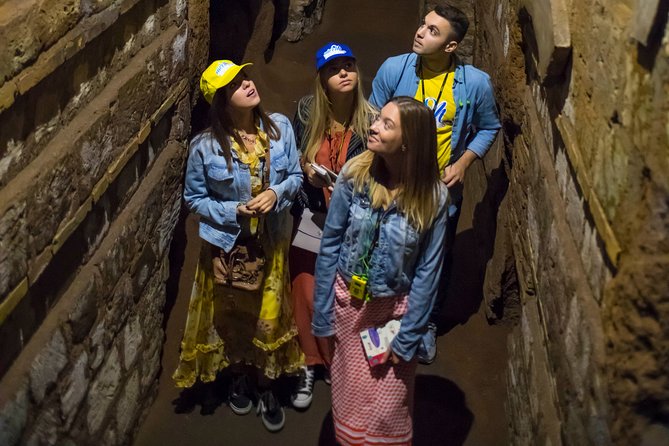
The most surprising part of this tour is how quickly Rome gives way to open fields, old stone roads, and giant aqueduct arches. In one morning, you move from the underground Christian cemetery of San Callisto to the Appian Way, then on to the Roman countryside where ancient engineering still dominates the view.
I like the efficient mix of coach transport and short walks, since the Appian Way archaeological area is too spread out for a casual stroll from central Rome. I also like the guides who bring personality to the history. Marcelo, Marcello, Tatia, Mariah, Anna, Francesca, and Mario have all been singled out for clear explanations, humor, patience, and personal attention.
The main caution is that the tour can run longer than its advertised three hours, especially in traffic. A past departure also involved two vans and poor headset sound, so audio quality and group arrangements may not always be perfect.
In This Review
- Key points to know before booking
- Why this half-day gets you out of central Rome
- From Via Cavour to the Roman countryside
- Catacombs of San Callisto: the morning’s strongest stop
- Circus of Maxentius and Cecilia Metella
- Walking the Appian Way
- Ancient aqueducts and Roman engineering
- Guides can make or break the experience
- Time, comfort, and practical limits
- Who should book this Rome outing
- Should you book the Catacombs and Roman Countryside Tour?
- FAQ
- Where does the tour start and end?
- How long does the tour last?
- Which catacombs does the tour visit?
- Is catacomb admission included?
- What should I wear?
- Is transportation included?
- Can I cancel for a refund?
Key points to know before booking
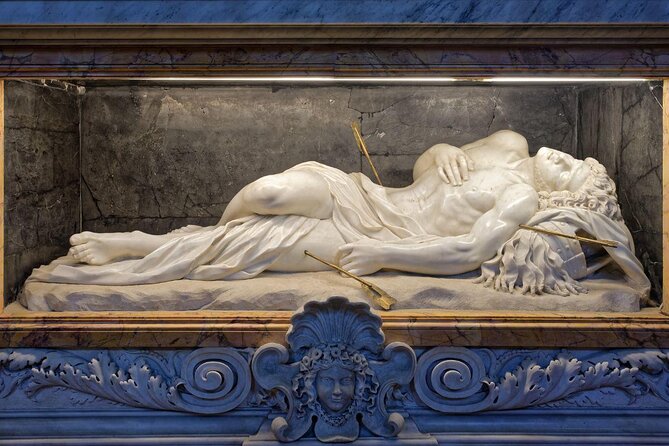
- The catacombs are the main attraction: Spend about an hour underground at San Callisto, one of Italy’s largest early Christian burial sites.
- You see Rome beyond the center: The route reaches the Appian Way, Caffarella Park, Cecilia Metella’s tomb, and ancient aqueduct remains.
- Transport saves time: A coach or van covers the longer distances between scattered archaeological sites.
- The walk is moderate, not strenuous: Expect about 30 minutes on the Appian Way and another short walk near the tomb and aqueducts.
- Dress carefully for the catacombs: Shoulders and knees must be covered for everyone, and the rule is strictly enforced.
- Plan for possible delays: Traffic can add 30 to 60 minutes, and luggage storage is not available.
Why this half-day gets you out of central Rome
Rome’s famous center is packed with monuments, churches, fountains, and crowds. This tour gives you a useful change of pace. Instead of spending another morning among busy streets, you head south along the ancient route that once carried soldiers, merchants, and officials out of the city.
The countryside is not far away. Within the length of a short coach ride, the view opens up around the Appian Way Archaeological Park. You see grass, old stone, burial monuments, and long lines of brick aqueduct arches. This is a less polished side of Rome, and that is the appeal.
The tour costs about $78.44 per person. That is fair if you want transportation, a guide, and catacomb admission without piecing the route together yourself. The archaeological sites are spread across a large area, and public transport does not make this combination especially simple.
You are paying less for luxury than for coordination. The vehicle saves you from working out connections between the catacombs, Appian Way, Cecilia Metella, and aqueducts. If you are comfortable arranging transport and reading site information on your own, you could spend less independently. If you have only a few days in Rome, the guided format makes good use of a morning.
More Walking Tours in Rome
- Rome: Trastevere & Campo de Fiori Street Food Walking Tour
★ 4.9 · 2,768 reviews - Rome: Paranormal Night Walking Tour & Secret Backstreets
★ 4.9 · 1,921 reviews - Rome by Night Walking Tour – Legends & Criminal Stories
★ 4.5 · 1,003 reviews
From Via Cavour to the Roman countryside
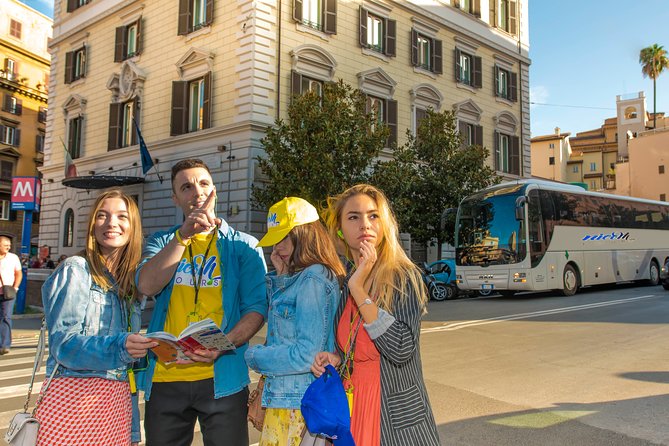
The tour starts at 9:45 a.m. on Via Cavour, 224, in central Rome. The meeting point is near public transportation, but allow extra time to find the exact spot. One past experience involved confusion about which side of the nearby bus stop was correct, so check the confirmation details carefully and do not arrive at the last minute.
The vehicle may be a bus or van. The stated maximum is 25 people, though the group can sometimes be divided between two vans. Most of the ride is useful simply because it gets you to places that are awkward to reach on foot from the historic center.
The guide usually provides commentary during the drive and at each stop. Headsets are available if needed, which can help in a larger group. Still, keep expectations sensible. One poor experience involved a hot, stuffy vehicle and a headset that transmitted only fragments of the guide’s narration after the group was split.
That seems to be an operational problem rather than the purpose of the tour, but it is worth keeping in mind. If you have hearing concerns, stand near the guide when possible and ask for a headset at the start.
Catacombs of San Callisto: the morning’s strongest stop
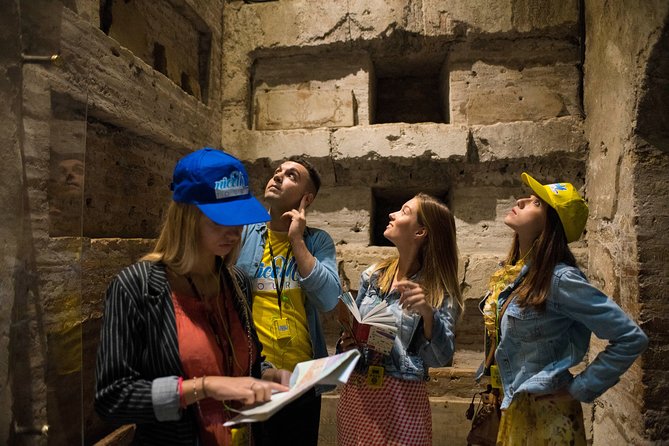
The Catacombs of San Callisto are the heart of the outing. This vast underground cemetery is associated with about 500,000 Christian burials, along with dozens of martyrs and popes. It includes the Crypt of Saint Cecilia and the Crypt of the Popes, two areas that help explain the importance of the site to early Christianity.
You spend about an hour here, with admission included. The guide helps you understand how underground burial areas were organized and explains the symbols and practices connected with the early Christian community.
Do not arrive expecting rows of bones. The catacombs are not a horror attraction, and there are no bones on display in the manner many first-time visitors imagine. Their value comes from the tunnels, chambers, inscriptions, symbols, and the sense of how people created a cemetery below ground when surface space and religious freedom were limited.
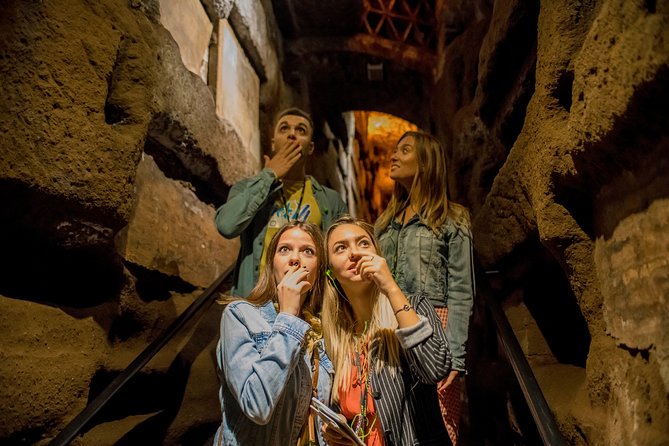
The underground setting can feel tight, and anyone with claustrophobia should think about personal comfort. A thoughtful guide can make a big difference here. One guide was praised for helping a nervous participant feel secure, while another used drawings before the descent to explain what the group would see.
The site can also be crowded. When several groups are moving through the passageways, it may be difficult to hear every word. That makes a strong guide and working audio equipment especially important.
The supplied route centers on San Callisto, though the general tour description also mentions San Sebastiano as a possible catacomb site. Confirm the exact cemetery for your date if one particular location matters to you. Both are associated with Rome’s ancient burial heritage, but the visit may not be identical.
Wear the correct clothes from the start. Both men and women must cover their shoulders and knees. This is not a casual suggestion. Entry can be refused if you do not meet the rule.
Circus of Maxentius and Cecilia Metella
After the catacombs, the vehicle continues through the Roman countryside toward the remains of the Circus of Maxentius in Caffarella Park. This is not the famous Circus Maximus in central Rome. It is a separate, better-preserved complex connected with the emperor Maxentius.
The stop helps place the Appian Way in its wider setting. Ancient Rome was not just a collection of buildings inside the city walls. Roads, burial monuments, arenas, villas, and water systems extended far beyond the center.
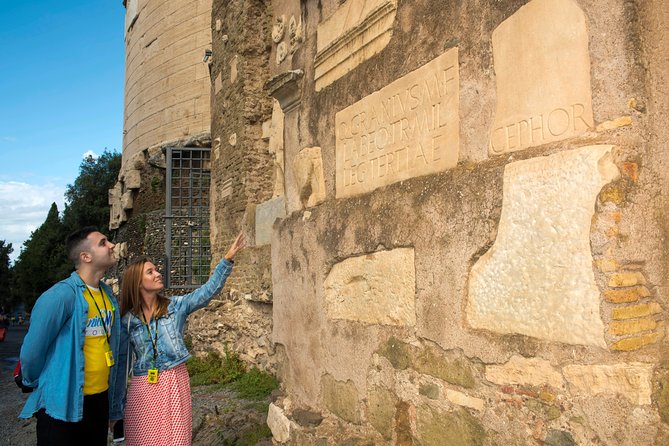
The itinerary then includes an external visit to the Mausoleum of Cecilia Metella and the Castrum Caetani. The tomb was built in the first century B.C. for a Roman noblewoman and sits on a rise beside the Appian Way.
You do not enter the mausoleum on this outing, but the exterior is impressive. Its solid circular form and elevated position make it easy to understand why the monument has become one of the road’s most recognizable landmarks. The visit lasts about 30 minutes and admission is included for the listed stops.
This part of the tour is best for people who enjoy context and atmosphere. If you need every stop to feel like a major headline attraction, the exterior visit may seem brief. For me, the reward is seeing how Roman memorials were placed along a major road, where the dead were remembered by anyone passing through.
More Rome walks with a guide:
- Rome: Guided City Center Evening Sightseeing Walking Tour
★ 4.4 · 953 reviews - Best of Rome Walking Tour including Trevi Fountain
★ 4.5 · 923 reviews - Rome: Under the Moonlight Evening Walking Tour
★ 4.8 · 852 reviews - Rome: Forbidden History Walking Tour & Pub Crawl with Drinks
★ 4.9 · 688 reviews
Walking the Appian Way
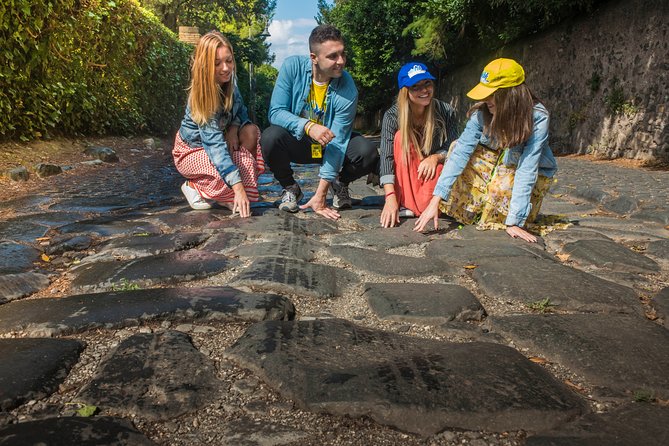
The Via Appia Antica, often called the Queen of Roads, was begun in 312 B.C. It eventually linked Rome with Brindisi in southern Italy, creating a major route toward Greece and the eastern Mediterranean.
You walk for about 30 minutes along part of this ancient road. That is enough to appreciate the rough paving stones, the width of the route, and the quiet setting without turning the morning into a long hike.
The road is important not just because it is old. It shows the practical side of Roman power. A road built for military movement also carried trade, administration, and news. Its construction required planning, labor, drainage, and durable materials. Your guide’s explanation adds meaning to what might otherwise look like a worn stretch of stone.
Wear firm, comfortable shoes. The walk is described as moderate, but ancient paving is not as easy underfoot as a modern sidewalk. Sun can also be a factor. One account described about four hours in the sun, which suggests that the full experience can feel longer than the formal three-hour estimate, especially if traffic or crowding slows the route.
The Appian Way is also a good place for photographs. You get a broader view than in central Rome, with archaeological remains and open countryside rather than dense traffic and apartment buildings. Rain does not necessarily ruin the outing, but the road and paths will be less comfortable when wet.
Ancient aqueducts and Roman engineering
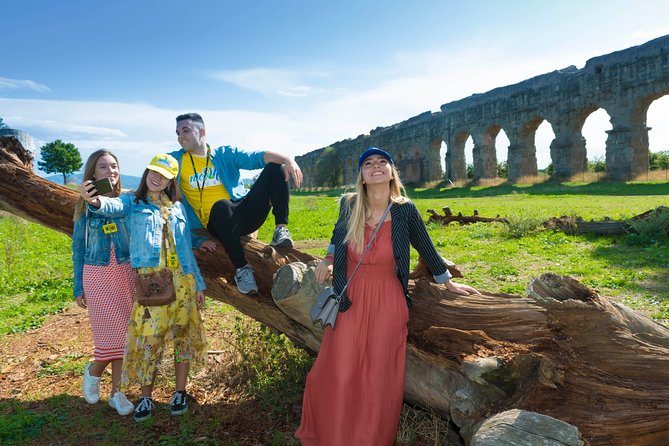
The final major sight is a section of Roman aqueduct. These high arches carried water toward Rome from distant sources, using a carefully measured slope rather than modern pumps.
The guide explains why the aqueducts were built in this area. The location allowed the structures to approach the city while crossing open ground, and the height of the arches helped maintain the water’s course. Even after centuries of damage, the scale is hard to miss.
You get time to walk near the remains and take photographs. The aqueduct stop is not an elaborate museum visit. It is a chance to see the structure directly, understand its purpose, and appreciate the planning behind a system that supported baths, fountains, homes, and public life.
Some people will find the aqueducts awe-inspiring. Others may consider them interesting but less exciting than the catacombs. That difference usually comes down to what you want from the morning. I would book this tour for the combination, not for the aqueducts alone.
The stop also gives the day a fitting finish. Underground burial tunnels show the private side of Roman life, while the aqueducts show the massive public works that kept the city functioning.
Guides can make or break the experience
The strongest part of the tour is often the guide. Marcelo and Marcello have been praised for humor, clear historical explanations, and an easy way with questions. Tatia was described as a history major who gave patient narration and personal attention in a small group.
Mariah was appreciated for speaking several languages and helping with restaurant suggestions after the tour. Cathia and Mario were noted for being warm and patient with a family traveling with a toddler. Anna was praised for explaining the catacombs, Appian Way, aqueducts, and Christian symbols in a clear way.
Guide assignments can change, so you should not book on the assumption that one particular person will lead your date. Still, the range of positive comments points to the importance of the human side of this experience. A good guide turns old stones into a connected story. A weak audio setup or a split group can do the opposite.
The group maximum is 25 people. That is manageable, though not truly intimate. A smaller group can make the underground visit easier, especially when the guide is answering questions or trying to keep everyone together.
Time, comfort, and practical limits
The advertised duration is about three hours, starting at 9:45 a.m. and ending back at the central meeting point. In practice, allow extra time. Traffic may add 30 to 60 minutes, and the road between sites takes longer when the city is busy.
There is no hotel pickup or drop-off. Food and drinks are not included, so bring water and eat before or after the tour. Luggage storage is not available, which matters if you are checking out of a hotel or heading straight to a train station.
You should have a moderate level of fitness. The tour uses a vehicle for the longer stretches, but you still walk on uneven historic surfaces, stand during explanations, and enter underground passages. It is not a demanding hike, but it is not a purely seated sightseeing ride either.
The tour is offered in English and includes a mobile ticket. Free cancellation is available up to 24 hours before the start time. Changes or cancellations inside that window are not accepted for a refund, and the operator may cancel if the minimum group size is not reached, offering another date or a full refund.
Who should book this Rome outing
I would recommend it to you if you have already seen the central highlights or want a break from Rome’s crowded core. It is especially useful for history fans, families with older children or teens, and anyone who wants to see the Appian Way without figuring out the rural bus network.
It also suits you if you prefer a guided explanation to reading signs on your own. The catacombs are easier to understand with context, and the aqueducts make more sense when someone explains how they supplied the city.
I would be more cautious if you dislike underground spaces, have difficulty walking on uneven ground, or have a tightly scheduled afternoon. The tour can run late, and the catacombs require strict clothing. It may also disappoint you if you expect dramatic bones or a long interior visit at every archaeological site.
Should you book the Catacombs and Roman Countryside Tour?
Book it if your ideal Rome morning includes early Christian tunnels, an ancient road, a Roman tomb, and aqueduct arches, all connected by a guide and vehicle. At $78.44, the price is reasonable for the admission, transport, and historical explanation, especially on a first visit.
Skip it if you only want Rome’s headline monuments or need a guaranteed three-hour finish. For the best experience, wear covered shoulders and knees, bring water, leave luggage behind, arrive early at Via Cavour, and keep your afternoon flexible.
FAQ
Where does the tour start and end?
The tour starts at Via Cavour, 224, 00184 Rome, at 9:45 a.m. It ends back at the same meeting point.
How long does the tour last?
The stated duration is approximately three hours. Traffic can make the experience 30 to 60 minutes longer.
Which catacombs does the tour visit?
The listed itinerary includes the Catacombs of San Callisto. The general tour details also mention San Sebastiano as an alternative, so confirm the site assigned to your date if this matters to you.
Is catacomb admission included?
Yes. Admission to the Catacombs of San Callisto is included in the tour price.
What should I wear?
Your shoulders and knees must be covered, for both men and women. The dress code is strictly enforced, and you can be refused entry if your clothing does not comply.
Is transportation included?
Yes. Bus or van transfers between central Rome and the countryside sites are included. Hotel pickup and drop-off are not included.
Can I cancel for a refund?
You can cancel up to 24 hours before the start time for a full refund. Cancellations or changes made less than 24 hours before the experience are not accepted for a refund.
More Half-Day in Rome
- From Rome: Ostia Antica Guided Half-Day Trip by Train
★ 4.8 · 486 reviews - From Rome: Half-Day Frascati Wine Tour with Farmhouse Lunch
★ 4.9 · 372 reviews - Murano, Burano and Torcello Half-Day Sightseeing Tour
★ 3.5 · 7,928 reviews - Milan’s Must See: Half-Day Tour of Last Supper, Duomo & La Scala
★ 4.0 · 4,193 reviews
Recently reviewed around Rome
- Ancient Rome at Twilight Walking Tour★ 5.0 · 276 reviews
- Domus Aurea Guided Tour: The Golden House of Nero★ 4.5 · 199 reviews
- Early Vatican Museums & Sistine Chapel Small Group Tour★ 4.5 · 314 reviews
- Early Vatican Museums Tour: The Best of the Sistine Chapel★ 4.5 · 900 reviews
- Jewish Ghetto & Piazza Navona: Food, Wine & Sightseeing Rome Tour★ 5.0 · 460 reviews
- 3 Days in Sorrento, Capri & Pompeii: la Dolce Vita★ 4.0 · 595 reviews
- Tivoli Villas Full Day Trip From Rome with Lunch★ 4.0 · 443 reviews
- Cook With Us in Rome: A Hands-On Cooking Experience 09:20AM class★ 5.0 · 234 reviews
Walking Tours, compared.

Guided Walking Tour & Last Supper Visit with Ticket
Read our review →
Rialto Bridge & Offbeat Unusual Venice Walking Tour
Read our review →
Private 3 hrs Venice Tour: St Mark’s, Walking tour & Boat tour
Read our review →

Skip the line: Uffizi and Accademia Small Group Walking Tour
Read our review →
Trastevere & Campo de Fiori Street Food Walking Tour
Read our review →Browse the lists this tour appears in