
Review · WALKING TOURS
Discover Lucca’s Secrets on a Guided Walking Tour
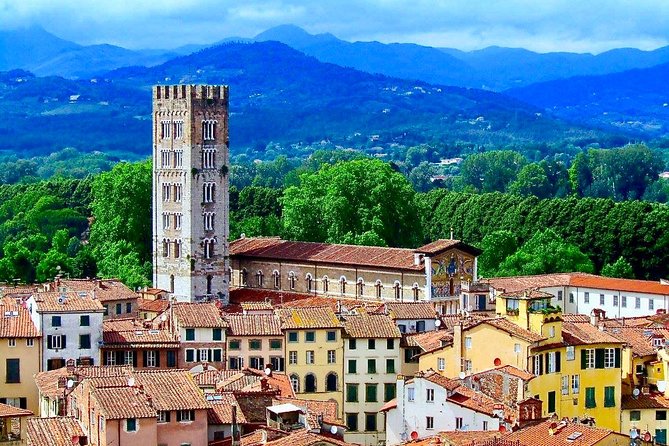
Lucca reveals itself best on foot, and this tour follows a smart route through the old center. You begin by the Renaissance walls, trace the line of an ancient Roman road, pass Puccini’s birthplace, then reach the amphitheater square and San Martino Cathedral. It gives you the city’s basic story without eating up a whole afternoon.
I like the clear route through Lucca’s major sights and the chance to connect today’s streets with the Roman forum and amphitheater beneath them. I also like the guide-led details: the mosaic on San Frediano, the trees on Torre Guinigi, and the Holy Face inside the cathedral. The main concern is group size. With as many as 50 people and no audio equipment, it can be hard to hear if the guide moves ahead.
In This Review
- Key points to know before booking
- Why this route works for a first look at Lucca
- Starting at Porta San Donato and the Renaissance walls
- Walking the Roman line along Via San Paolino
- Piazza San Michele and the old Roman forum
- San Frediano, Via Fillungo, and Lucca’s tall towers
- Piazza Anfiteatro and the shape of ancient Lucca
- Finishing at San Martino Cathedral
- The guide makes the difference
- Group size, sound, and the real value
- Timing, family details, and practical planning
- Who should book this Lucca walk?
- Should you book it?
- FAQ
- Where does the Lucca walking tour start?
- What time does the tour begin?
- Where does the tour end?
- How long does the tour last?
- Is the tour offered in English?
- Is admission to the cathedral included?
- Are children charged the adult rate?
- How many people can join the tour?
- Can I cancel for a full refund?
Key points to know before booking
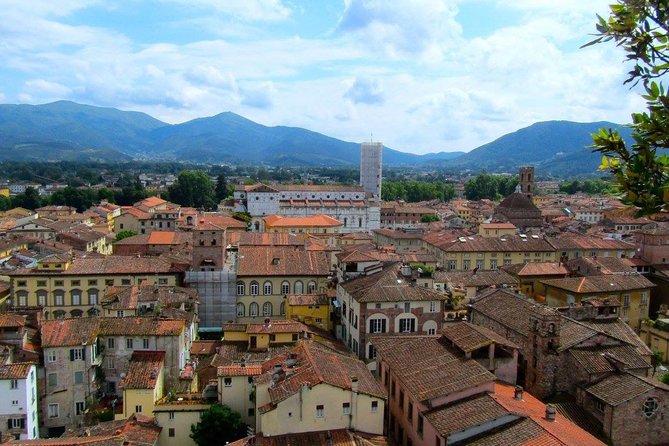
- Roman Lucca in two hours: Follow the ancient Decumanus Maximus along Via San Paolino and visit the former forum at Piazza San Michele.
- A strong first-day orientation: The route links the walls, shopping street, churches, towers, amphitheater, and cathedral.
- English guided walk: The tour is offered in English, though the guide may be multilingual.
- The cathedral interior costs extra: San Martino can be visited inside for €3, if you have the time and energy.
- The meeting point needs care: Start directly in front of the Tourist Information Centre at Piazzale Verdi, by Porta San Donato.
- Best value for first-time visitors: At $18.14 per person, the price is modest if you want context as you walk.
Why this route works for a first look at Lucca
Lucca’s old center is compact, but its layers are easy to miss. A medieval street may follow a Roman road. A graceful square may keep the outline of an ancient arena. A church facade may tell you more about local taste than a museum label does.
This walk puts those pieces in order. It starts at Porta San Donato, moves through the western side of the historic center, heads toward San Michele and San Frediano, then finishes at the cathedral. You are not simply checking off monuments. You are learning how Lucca grew from a Roman town into a medieval and Renaissance city.
The pace is usually comfortable, with regular stops for explanations and photos. The route is also useful for finding your bearings. Afterward, you can return to places that caught your eye, such as Via Fillungo, Piazza Anfiteatro, or the cathedral complex.
At $18.14, I consider this a good-value introduction for a first visit. A private guide would give you more flexibility, but this tour covers the central sights for a small fee. It is especially useful if Lucca is one stop on a packed Tuscany itinerary.
More Pisa & Lucca walks with a guide:
- Lucca: 2-Hour City Center Walking Tour
★ 4.7 · 1,314 reviews - Livorno: Florence Optional Walking Tour and Accademia Entry
★ 4.3 · 671 reviews - Pisa: Guided Walking Tour with Optional Leaning Tower Ticket
★ 3.8 · 225 reviews
Starting at Porta San Donato and the Renaissance walls
The meeting point is Piazzale Giuseppe Verdi, at the old Porta San Donato. The Tourist Information Centre is next to the gate and the historic Renaissance walls, making it the most useful landmark for finding the group.
Here is the practical tip I would follow: aim for the Tourist Information Centre itself, not just the broad piazza address. The map pin has caused confusion, and some people have waited in the wrong part of the square. The written meeting details are more useful than relying on the map alone.
The tour starts at 2:00 pm. You spend about 10 minutes here, with no admission charge. This opening stop gives the guide a chance to explain the wall system and set the scene before you enter the center.
Lucca’s walls are not just a backdrop. They form a broad ring around the old city, and the raised walkway is one of the city’s signature public spaces. This tour introduces you to the walls, but it does not include a full circuit. If you want that experience, set aside extra time for a walk or bike ride on the level path after the tour.
Walking the Roman line along Via San Paolino
From Porta San Donato, you follow Via San Paolino. This street corresponds to the ancient Roman Decumanus Maximus, the east-west road that helped organize the original town.
That connection is one of the tour’s best teaching moments. Lucca does not always announce its Roman past with large ruins. Instead, the old street plan survives under later buildings and roads. A guide helps you notice that the city’s shape is part of its history.
You pass the church dedicated to San Paolino, Lucca’s patron saint, before reaching Piazza San Michele. Along the way, the walk also touches the city’s musical legacy by showing the exterior of the building where Giacomo Puccini was born.
The Puccini stop is brief and exterior only, but it adds a personal thread to the walk. Lucca is not just a collection of churches and towers. It is also tied to an opera composer whose works still reach audiences far beyond Tuscany.
Piazza San Michele and the old Roman forum
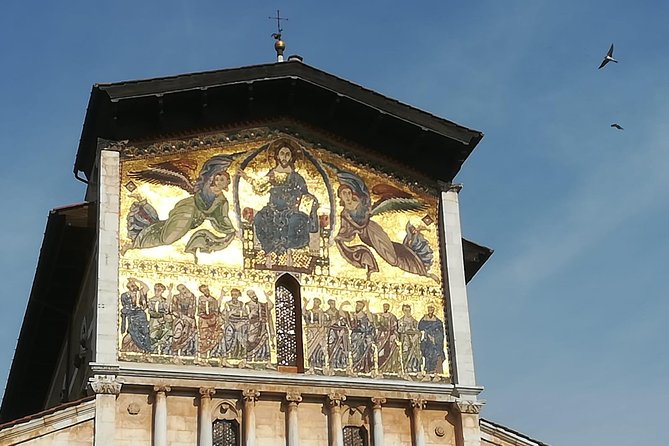
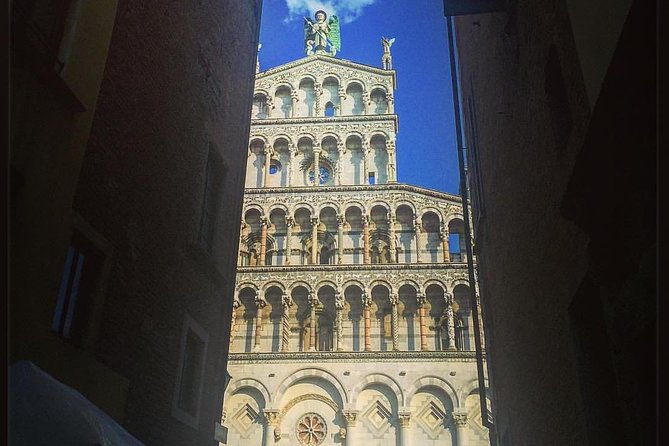
Piazza San Michele occupies the site of Lucca’s ancient Roman forum. Today, the square is dominated by the church of San Michele in Foro, with its striking 12th-century facade.
Give yourself a moment to look up. The facade is full of Romanesque detail, and the church’s position makes clear how the old civic center was reused by later generations. The guide stops here for photographs and explanation, with roughly 20 minutes devoted to the area.
The church interior is not included in the tour price, so this portion focuses on the outside. That is reasonable for a short orientation walk, but you should know that the tour cannot explore every interior along the route.
For me, Piazza San Michele is where the Roman and medieval parts of Lucca begin to make sense together. You see the location of the ancient forum, then encounter a church that reflects the city’s later power and style.
More Pisa & Lucca trips worth a second look
- Pisa: Cathedral Guided Tour & Optional Leaning Tower Ticket
★ 4.7 · 1,036 reviews - Lucca: Guided Winery Tour with Wine Tasting
★ 4.7 · 611 reviews - Pisa all inclusive: Baptistery, Cathedral and Leaning Tower guided tour
★ 4.5 · 473 reviews - Pisa: Tower and Miracle Square with Skip-Line & Audio Guide
★ 4.3 · 259 reviews
San Frediano, Via Fillungo, and Lucca’s tall towers
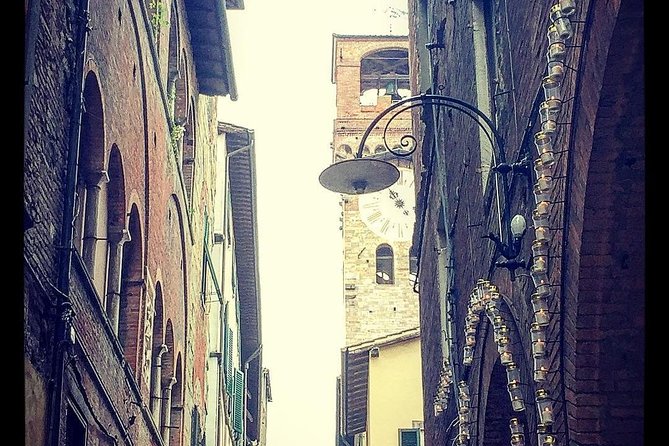
The route continues toward Via Fillungo, the main shopping street in the old center. This is where daily Lucca takes over from the grand monuments. Traditional shops occupy the same compact streets as medieval tower houses, and the walk gives you a quick look at both.
The guide also points out two important civic towers. Torre delle Ore is the clock tower. Torre Guinigi is the more unusual of the pair, crowned with seven holm oak trees.
Those trees are a memorable Lucca detail, and they help you read the city from street level. The towers are not simply tall structures to photograph. They reflect the old competition among powerful families and the city’s medieval habit of building upward.
The next major stop is the Basilica of San Frediano. Its facade carries a beautiful Byzantine-style mosaic, one of the most recognizable church exteriors in Lucca. You have about 30 minutes in this part of the route.
The mosaic is worth careful attention, especially if you have already seen the more stone-heavy Romanesque style elsewhere in Tuscany. It gives San Frediano a different character from San Michele and San Martino.
Admission to the church is not included. If the group does not go inside, you still receive the main visual reward from the facade and the guide’s explanation. If church interiors are a priority for you, ask the guide what time allows on the day.
Piazza Anfiteatro and the shape of ancient Lucca
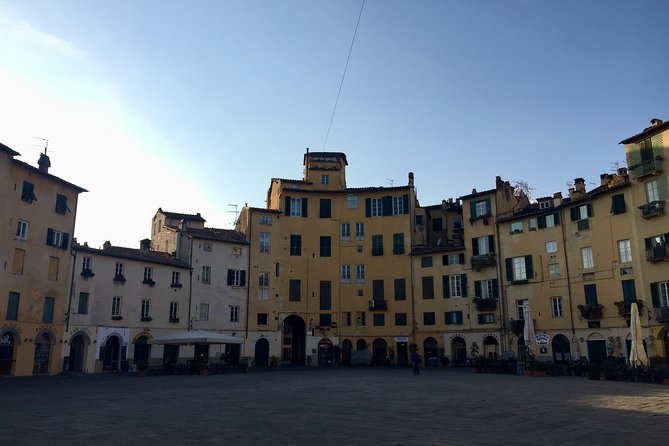
A short walk from San Frediano brings you to Piazza Anfiteatro, one of Lucca’s most memorable spaces. Its oval shape follows the foundations of the ancient Roman amphitheater, while the surrounding buildings were added over and around the old structure.
This is an ideal stop for a guide because the Roman arena is easier to understand from the square’s unusual outline than from a standard sign. Look around the full curve rather than focusing on one building. The shape tells the story.
The piazza is free to enter, and the tour allows about 30 minutes here. That gives you time for photos and a short explanation without rushing straight through.
It is also a good place to return later. The tour gives you the historical frame, while a second visit lets you enjoy the square at your own pace. The walk does not turn into a long café break, so keep your attention on the architecture during the scheduled stop.
Finishing at San Martino Cathedral
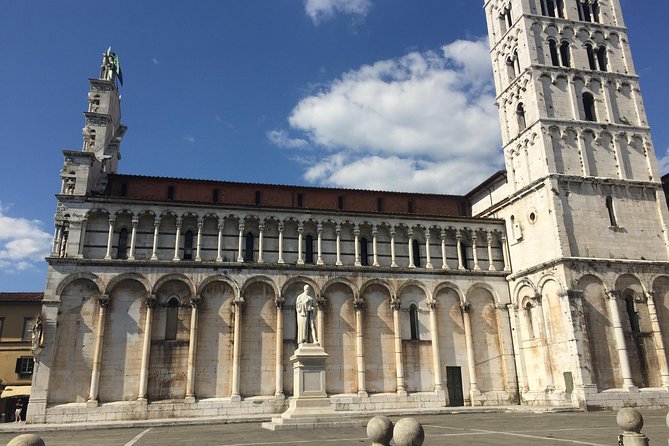
The final section leads through more medieval streets to Lucca Cathedral, or Duomo di San Martino. The tour ends at Piazza Antelminelli, outside the cathedral.
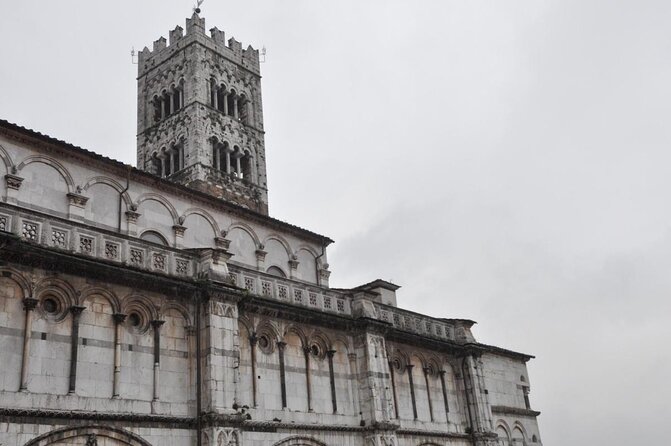
San Martino’s facade has an unusual Pisa-Lucca Romanesque character. That style is one reason the cathedral makes a strong final stop: it brings together the city’s local artistic identity and its place within the wider Tuscan tradition.
The exterior viewing is part of the main tour, but the interior requires an additional €3 entrance fee. If you choose to continue inside with the guide, allow about 30 minutes.
The interior contains several of Lucca’s most important works. You can see the Volto Santo, a wooden crucifix honored for centuries and treated as a symbol of the city. You can also find Tintoretto’s Last Supper and Jacopo della Quercia’s marble sarcophagus for Ilaria del Carretto in the sacristy.
That extra visit can make the ending much stronger, especially if you care about sculpture and religious art. It is not included in the $18.14 price, so bring a few euros if you want the option. The guide’s offer to continue is also dependent on the group’s timing and energy.
The guide makes the difference
The strongest part of this experience is the human element. Guides named Nadia, Vittoria, Roberta, Marta, and Gabrielle have led versions of the walk, and the best accounts describe guides who explain clearly, add humor, answer questions, and share local suggestions.
That matters in Lucca because many of the most interesting details are easy to pass without context. A good guide can connect Puccini to the city, explain why Piazza Anfiteatro is oval, and point out the meaning behind the towers instead of giving only dates.
The experience is not perfectly consistent. Some groups have had guides who let the group spread out or began speaking before everyone arrived at the next stop. One guide was also described as less engaging, with too much walking and too little explanation.
Your position in the group can affect the experience. Stay near the guide, especially at busy streets and large squares. If you have difficulty hearing, ask early for the group to gather before the explanation begins.
Group size, sound, and the real value
The stated maximum is 50 people. That is a wide range. Some departures have been small, with only six people, while others have reached 40 or more.
A small group should feel personal and easy to follow. A large group can still cover the route well, but the lack of headsets or radios becomes a real weakness. Several people have found it hard to hear the commentary when the guide stood ahead of the group.
This is the main trade-off behind the low price. At $18.14, you are paying for a broad introduction, not a private conversation. The tour is a sensible buy if you want the major sights explained and you are comfortable with a standard group format.
If you prefer quiet, detailed discussion, or close access to a guide, you may want a smaller and more expensive option. If you mainly want an efficient orientation, this walk offers solid value.
Timing, family details, and practical planning
The tour lasts about two hours and begins in the afternoon. Wear comfortable shoes, since the route includes ordinary city streets and frequent standing stops. The center is walkable, but the tour does not include a ride around the walls or transport between sights.
Children ages 0 to 14 are free with a paying adult. The adult rate applies from age 15. Most people can take part, and service animals are allowed. The meeting point is near public transportation.
The tour may be led by a multilingual guide, though the activity is offered in English. Confirmation is sent at booking. Free cancellation is available up to 24 hours before the start time, while changes or cancellations inside that period are not accepted.
Who should book this Lucca walk?
I would choose this tour for a first visit, a short stay, or an arrival day when I want the city explained before exploring alone. It is also a good fit if you enjoy architecture but would otherwise walk past the churches without knowing what to look for.
Families may appreciate the free child policy. The route also suits people who want a guided introduction without committing to a half-day program.
I would think twice if you dislike large groups or need every word to be easy to hear. In that case, check the group size if possible, stay close to the guide, and be ready for the experience to vary by departure.
Should you book it?
Book this walking tour if you want an inexpensive, well-planned introduction to Lucca’s Roman, medieval, musical, and religious sides. The route is strong, the stops are well chosen, and the cathedral add-on gives you a worthwhile option at the end.
The best way to improve your odds of a good experience is simple: meet directly at the Tourist Information Centre, arrive early, stay near the guide, and bring €3 for San Martino. If you want a small group and guaranteed easy listening, spend more elsewhere. For most first-time visitors with two hours to spare, this tour is a practical way to get oriented.
FAQ
Where does the Lucca walking tour start?
It starts at Piazzale Giuseppe Verdi, by the old Porta San Donato. The Tourist Information Centre is the key landmark and is next to the historic Renaissance walls.
What time does the tour begin?
The scheduled start time is 2:00 pm.
Where does the tour end?
The tour ends at Duomo di San Martino, in Piazza Antelminelli, Lucca.
How long does the tour last?
The walking tour lasts approximately two hours. The guide may continue inside the cathedral if time and energy allow.
Is the tour offered in English?
Yes. The activity is offered in English, although it may be led by a multilingual guide.
Is admission to the cathedral included?
No. Cathedral admission costs €3. The main tour price does not include this fee.
Are children charged the adult rate?
Children ages 0 to 14 are free with a paid adult. The adult rate applies to people aged 15 and older.
How many people can join the tour?
The maximum group size is 50 people.
Can I cancel for a full refund?
Yes, if you cancel at least 24 hours before the experience start time. Cancellations or changes made less than 24 hours before the start are not accepted for a refund.
Recently reviewed around Pisa & Lucca
- Pisa all inclusive: Baptistery, Cathedral and Leaning Tower guided tour★ 4.5 · 473 reviews
- Pisa: Beyond the Tower (1h round-trip tour)★ 5.0 · 238 reviews
- PRIVATE tour in Carrara marble quarries with 4×4 vehicles★ 4.5 · 233 reviews
- Best of Pisa: Small Group Tour with Admission Tickets★ 4.5 · 267 reviews
- Pisa’s Ultimate Food Tour: Full Tuscan Meal by Do Eat Better★ 5.0 · 263 reviews
- Tuscan Wine Tour in Lucca by van★ 5.0 · 200 reviews
- Lucca Bikes and Bites with food tastings for Small Groups or Private★ 5.0 · 249 reviews
- From Livorno to Pisa on your own with optional Leaning Tower Ticket★ 4.0 · 219 reviews
Walking Tours, compared.

Guided Walking Tour & Last Supper Visit with Ticket
Read our review →
Rialto Bridge & Offbeat Unusual Venice Walking Tour
Read our review →
Private 3 hrs Venice Tour: St Mark’s, Walking tour & Boat tour
Read our review →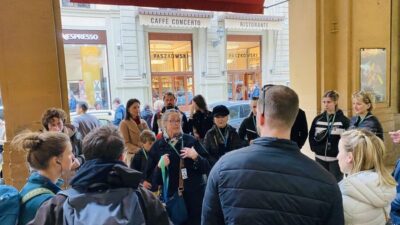

Skip the line: Uffizi and Accademia Small Group Walking Tour
Read our review →
Trastevere & Campo de Fiori Street Food Walking Tour
Read our review →Browse the lists this tour appears in