
Review · WALKING TOURS
Lucca: 2-Hour City Center Walking Tour
Lucca’s great pleasure is how much history fits inside a calm, walkable old town. This two-hour city-center tour takes you from the Tourist Information Center through grand piazzas, medieval streets, Romanesque churches, historic towers, and the ancient walls, finishing at Lucca Cathedral.
I like the gentle pace and the chance to hear local stories rather than just dates. I also like the value: at $17 per person, you get a licensed guide and a useful introduction to the city, while the only extra cost is the €3 cathedral entry. The main consideration is that the guide speaks English and Italian during the same walk, so some explanations may take longer than on a single-language tour.
In This Review
- Key points to know before you book
- Why this is a smart first look at Lucca
- Starting at Porta San Donato and Piazza Verdi
- Piazza San Michele and Lucca’s Romanesque character
- Piazza Napoleone and Lucca’s public spaces
- Via Fillungo, towers, and the old city skyline
- San Frediano and Piazza Anfiteatro
- Walking beside the sixteenth-century walls
- Lucca Cathedral and the optional €3 visit
- The bilingual guide format and group experience
- Price, timing, and who gets the best value
- Booking details worth knowing
- Should you book the Lucca walking tour?
- FAQ
- How long does the Lucca walking tour last?
- Where does the tour begin?
- Which languages are offered?
- Is Lucca Cathedral included?
- What sights are included?
- Is the tour wheelchair accessible?
- What should I bring?
- Can I cancel the booking?
Key points to know before you book
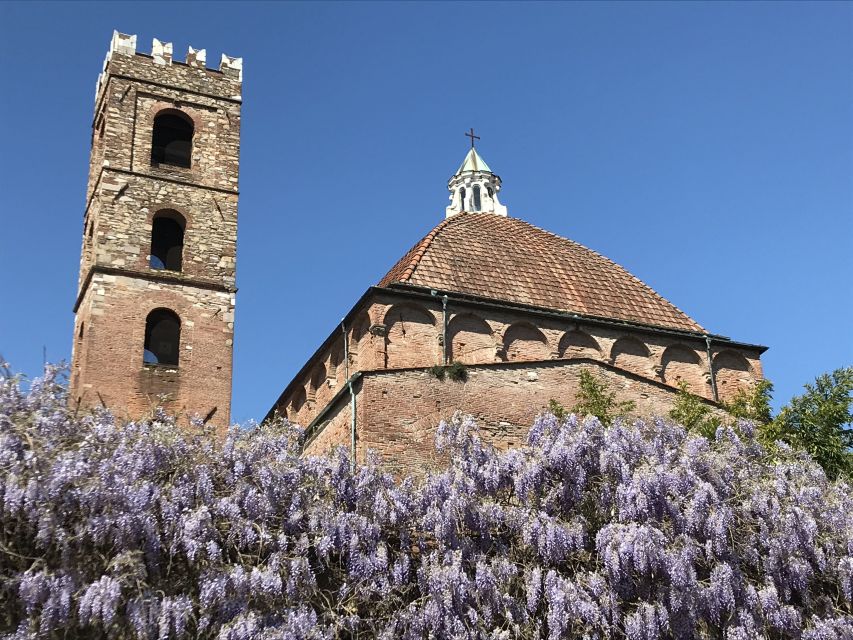
- Lucca’s main sights fit into two hours: See Piazza San Michele, Piazza Napoleone, Via Fillungo, Torre delle Ore, Torre Guinigi, San Frediano, Piazza Anfiteatro, the sixteenth-century walls, and the cathedral.
- The walk begins at Porta San Donato: Meet at the Tourist Information Office on Piazzale Giuseppe Verdi, a practical starting point at the edge of the old center.
- The bilingual format shapes the pace: Your guide explains the tour in English and Italian, so you should expect a measured walk rather than a rapid march between sights.
- Local guides add personality: Guides including Roberta, Lucia, Vittoria, Paola, Giorgio, and Gregorio have been praised for humor, warmth, stories, and clear explanations.
- The cathedral visit is optional: The walk ends at Lucca Cathedral, and you can pay the €3 entrance fee if you want your guide to show you the interior.
- It works well as a first activity in Lucca: The route helps you decide where to return later, including the walls, towers, churches, shops, cafés, and Piazza Anfiteatro.
Why this is a smart first look at Lucca
Lucca is easy to like, but its quiet streets can make its past easy to miss. A church facade may look decorative until someone explains its Roman roots, a tower may seem like a simple landmark until you learn why medieval families built upward, and the city walls may appear to be a pleasant green walkway until you understand how they protected an independent city-state.
That context is what makes this walk useful. You are not simply pointed toward a church and told its name. The guide connects Lucca’s architecture with its long independence, its cautious political choices, and the fact that the old town escaped the destruction that damaged many other European cities.
The tour also gives you a practical map in your head. After two hours, you should know the main route along Via Fillungo, the location of the key piazzas, the position of the towers, and where to return for a longer walk on the walls or a meal in the amphitheater square.
Guides vary, but the strongest part of the experience is their personal connection with the city. Roberta has been praised for adding stories about food, local customs, and even the origin of the Vespa name. Vittoria brings humor and a proud Luccese point of view. Lucia is known for stories about people who lived in Lucca, while Giorgio and Paola have been singled out for clear, engaging presentations.
You should not expect a formal lecture. The best guides make the city feel more personal, using anecdotes to explain why a place matters.
More Pisa & Lucca walks with a guide:
- Livorno: Florence Optional Walking Tour and Accademia Entry
★ 4.3 · 671 reviews - Discover Lucca’s Secrets on a Guided Walking Tour
★ 4.5 · 485 reviews - Pisa: Guided Walking Tour with Optional Leaning Tower Ticket
★ 3.8 · 225 reviews
Starting at Porta San Donato and Piazza Verdi
The meeting point is the Tourist Information Office at Vecchia Porta San Donato, on Piazzale Giuseppe Verdi. This is a sensible place to begin because it puts you near one of the historic entrances to the walled city.
Arrive with comfortable shoes. The route is only two hours, but it includes old streets, open squares, and the city walls. The walk is described as gentle rather than strenuous, yet Lucca is best enjoyed on foot, and hard shoes will make the experience less pleasant.
Starting near Porta San Donato also gives the tour a natural sense of entry. You move from the edge of the old city into the historic center, rather than meeting deep inside the maze of streets and spending time finding the first sight.
The activity information lists the meeting point as the end point as well, while the route description says the tour finishes at Lucca Cathedral. Plan on the cathedral being the final featured stop, and confirm the precise end arrangement when you book.
Piazza San Michele and Lucca’s Romanesque character
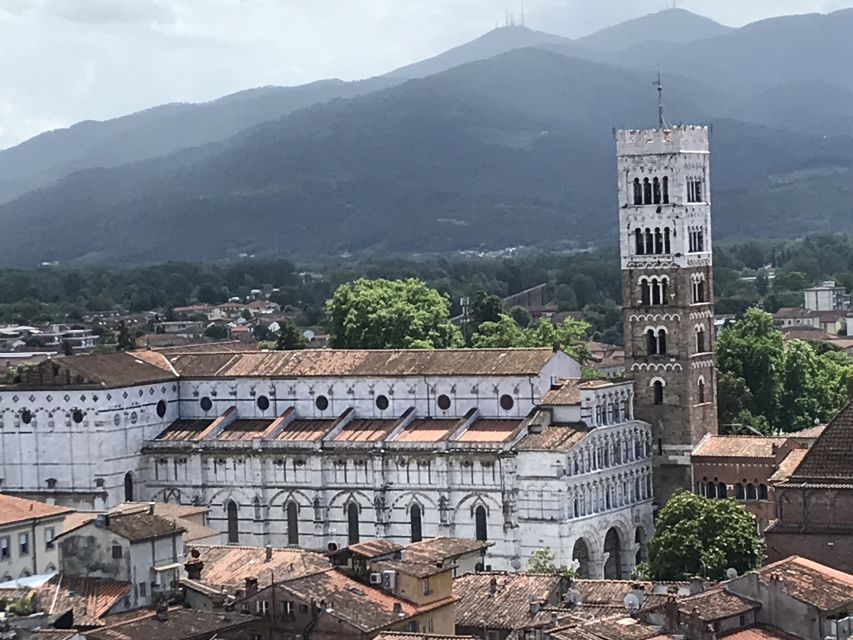
One of the early highlights is Piazza San Michele, dominated by the Church of San Michele. The church is more than 1,000 years old and offers an immediate lesson in Lucca’s style.
Look closely at the facade as your guide explains it. The elaborate stonework, arches, columns, and decorative details show how much care medieval Lucca put into its religious buildings. This is a good place to pause because the church is not an isolated monument. It sits in a public square that has long been part of city life.
A guide adds value here by showing you what to notice. Without help, you may admire the facade and move on. With a local explanation, you begin to see how architecture, religion, trade, and civic pride overlap in the old center.
The bilingual format matters at a church like San Michele. The guide speaks first in one language and then the other, so you will hear the same main points repeated. That can reduce the amount of time available for extended questions, but it also makes the tour accessible to English- and Italian-speaking participants together.
Piazza Napoleone and Lucca’s public spaces
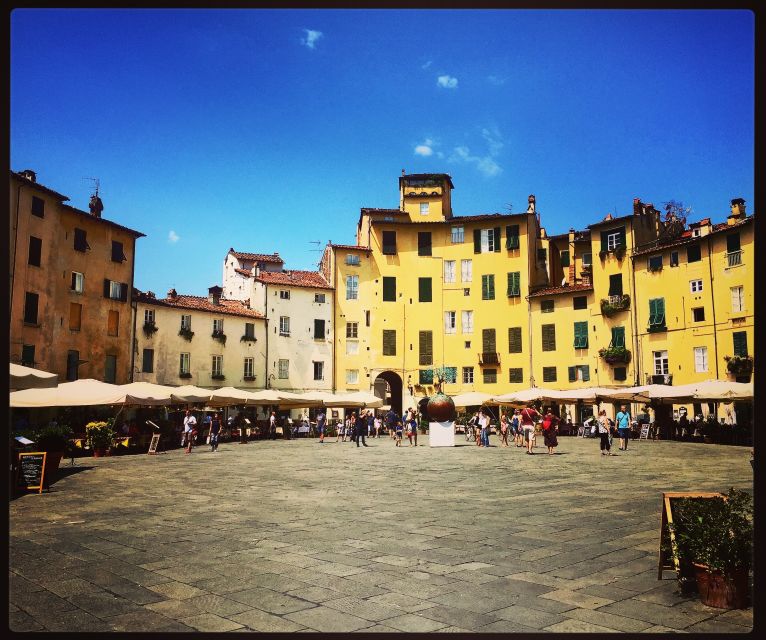
The walk continues to Piazza Napoleone, one of Lucca’s principal squares. Its name recalls Napoleon’s influence, and the space helps show that Lucca’s story did not end in the medieval period.
This is one of the places where a guide can help you read the city as a sequence of political changes. Lucca preserved its independence for centuries through cautious decisions, then passed through later periods that left their mark on its squares and institutions.
You will not spend the whole tour inside churches. That is a strength. The open piazzas give you room to step back, orient yourself, and understand how the city’s buildings relate to one another.
If you are visiting for only a day, this overview is especially useful. You can note the squares that appeal to you, then return later for a slower look, a café stop, or photographs.
More Pisa & Lucca trips worth a second look
- Milan Duomo and Rooftop 2-Hour Guided Tour
★ 4.6 · 1,076 reviews - Florence: 2-Hour Guided Sightseeing Bike Tour
★ 4.5 · 1,004 reviews - Alberobello: 2-Hour Guided Trulli Tour
★ 4.6 · 727 reviews - Florence: 2-Hour Guided Bike Tour
★ 4.7 · 646 reviews
Via Fillungo, towers, and the old city skyline
Via Fillungo is Lucca’s central historic street and one of the best places to feel the old town’s everyday rhythm. It links major sights with shops and side streets, giving you a sense of how Lucca functions as a living city rather than a collection of preserved monuments.
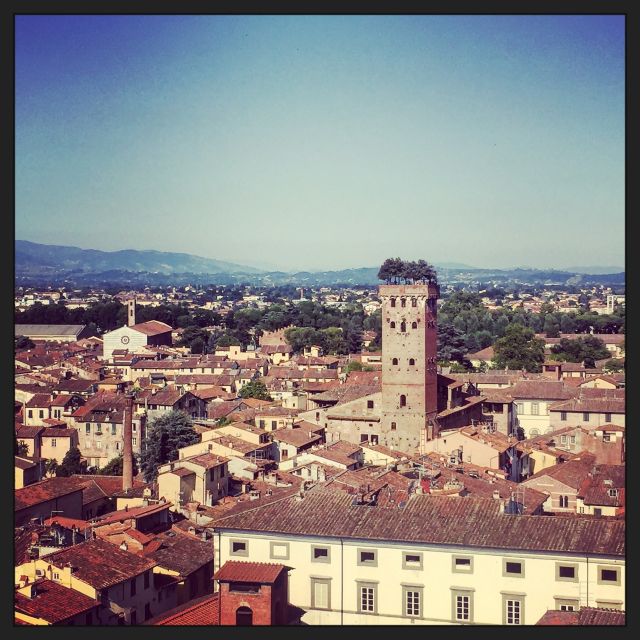
The route includes Torre delle Ore, the Clock Tower, and Torre Guinigi. These towers are among Lucca’s most recognizable landmarks. They also help explain the competitive medieval city, when prominent families used tall towers to display status and strengthen their homes.
Torre Guinigi is especially memorable because of the trees growing at its top. The tour does not include a climb, and no tower entrance is listed, but your guide can place the tower in the larger story of Lucca’s skyline and family power.
Torre delle Ore gives a different impression. Its clock function connects the city to practical public life, not just noble display. Seeing both towers during the same walk helps you compare their roles.
You should not expect long interior visits at every monument. This is an orientation tour, not a full archaeological or church-inspection program. The benefit is coverage: you see many important places in a short time and learn which ones deserve a return visit.
San Frediano and Piazza Anfiteatro
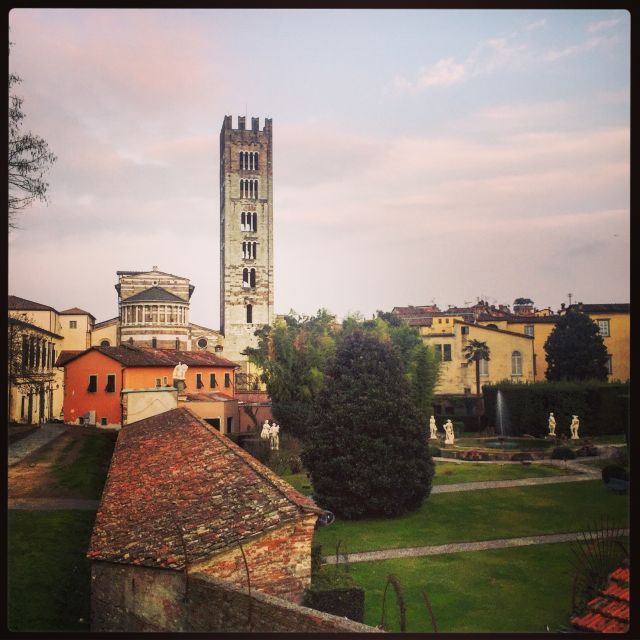
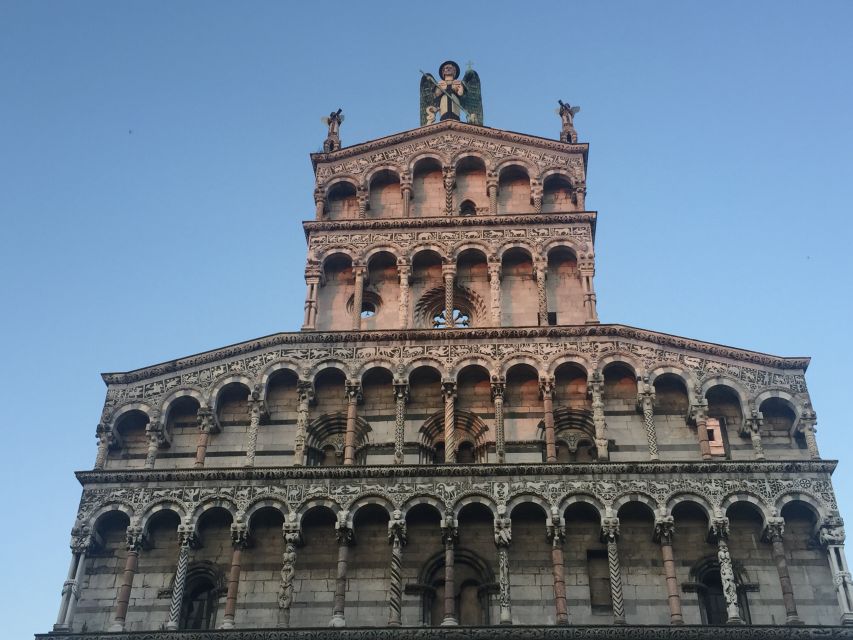
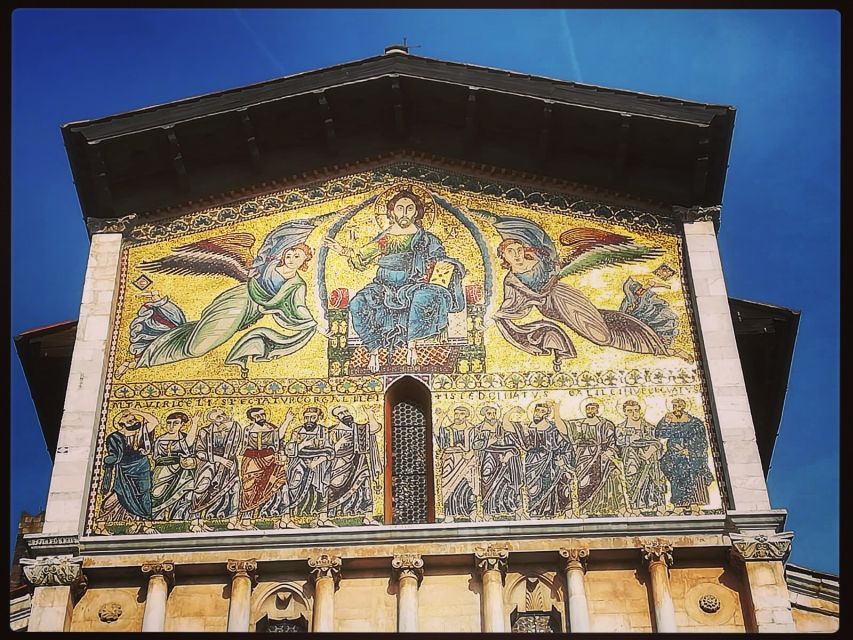
The Church of San Frediano brings another major religious building into the route. Its facade and position in the old city add to the picture of Lucca as a center of art and worship.
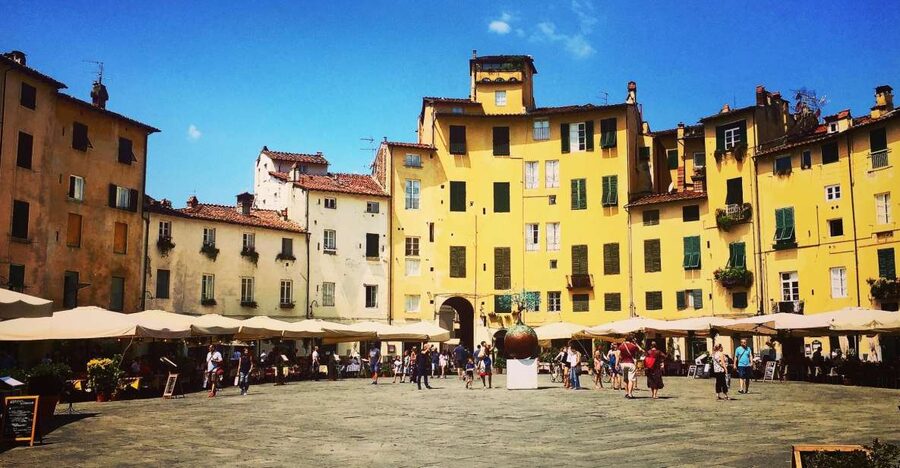
The walk then reaches Piazza Anfiteatro, one of Lucca’s most distinctive spaces. Its oval shape follows the outline of the Roman amphitheater that once occupied the site. The original Roman structure is no longer a functioning arena, but its footprint remains easy to read in the curved buildings around the square.
This is one of the stops where the guide’s stories can make a real difference. The shape is visible, but the explanation helps you understand why the square curves the way it does and how an ancient public building became part of the later city.
Piazza Anfiteatro is also a useful place to mark for later. The square has cafés and restaurants, and one visitor combined a walking tour with an outdoor dinner there. You may prefer to return after the tour, when you can sit down and enjoy the unusual oval setting without trying to listen and take photographs at the same time.
Walking beside the sixteenth-century walls
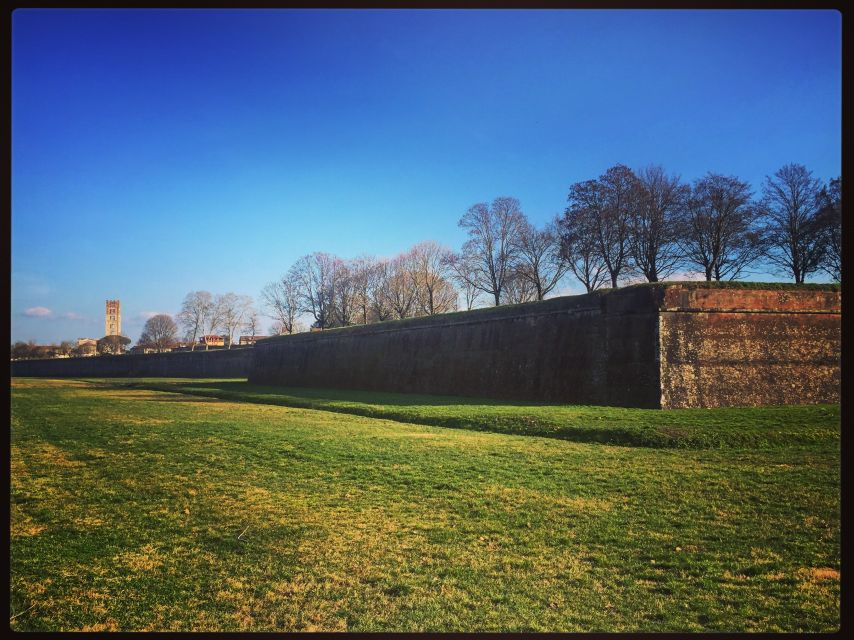
Lucca’s walls are not just a surviving defense system. They are one of the city’s defining public spaces and a key reason Lucca feels so open despite its compact center.
The tour includes the sixteenth-century walls, giving you a chance to understand their scale and purpose. The fortifications helped protect Lucca’s independence, and their survival gives the city a clear boundary between the historic center and the world beyond it.
The walk does not promise a full circuit. If you want to explore the entire wall promenade, plan extra time before or after the tour. A visitor who arrived from Florence by train walked for about 20 minutes along the wall before reaching the meeting point, and another used a sunrise walk the following morning as a follow-up. Those examples point to a good strategy: use the tour to understand the walls, then return when you want a longer, quieter stroll.
The walls are also useful for orientation. From them, you can better understand the compact shape of the city and how the streets inside fit together. If you have only one day, even a short introduction here helps you make better choices with the rest of your time.
Lucca Cathedral and the optional €3 visit
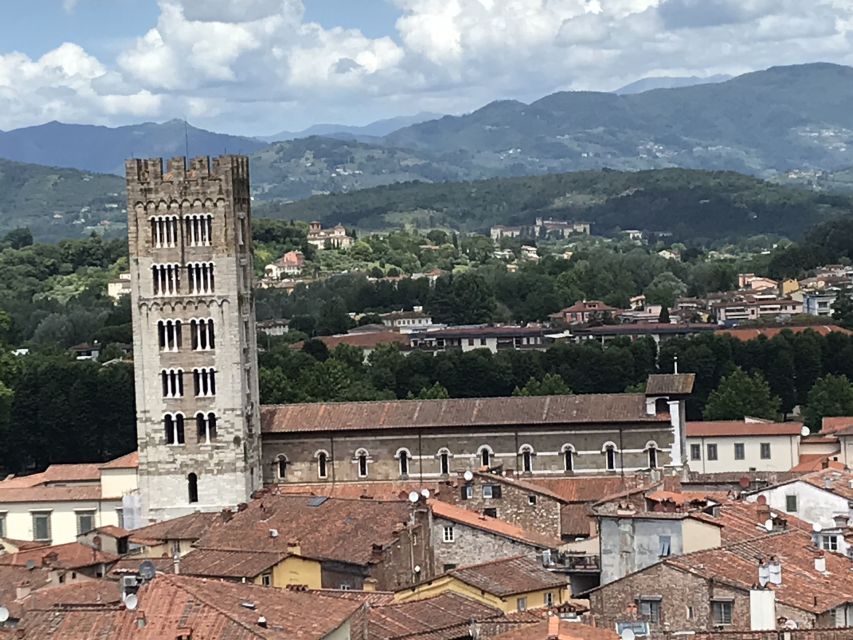
The route finishes at Lucca Cathedral, an important final stop because it gives the tour a clear conclusion inside the religious and artistic center of town.
The €3 entrance fee is not included. You can end the tour outside, take a drink at a café, and continue exploring on your own. Or you can pay the small fee and ask your guide to continue inside and explain the cathedral’s interior.
That choice is helpful. Not every visitor wants another church visit after two hours of walking, while others value having a guide explain details they might otherwise miss. Roberta, for example, has been praised for spending extra time in the cathedral and adding stories that enriched the visit.
If the cathedral matters to you, bring the extra €3 and take advantage of the guide’s help. If you are tired or have a tight schedule, the outdoor portion already covers a lot, and you can use the remaining time for coffee or independent sightseeing.
The bilingual guide format and group experience
The tour is conducted in English and Italian at the same time. That makes it practical for mixed-language groups, but you should know what it means for the experience.
The guide will repeat key explanations, so the pace is measured. Some people will appreciate hearing important points twice. Others may find the bilingual structure less efficient than a tour conducted only in English.
The individual guides make a difference. Paola has been praised for detailed explanations delivered with humor. Anna is described as a warm ambassador who kept the group moving while telling stories. Vittoria handled the two-language format well and added humor, while Giorgio communicated clearly between the English- and Italian-speaking participants.
One group had about 15 people and found it easy to hear Roberta. Group size can vary, so I would still position yourself near the guide if you want every detail. The strongest comments consistently focus on clear English, warmth, humor, and a genuine love of Lucca.
Price, timing, and who gets the best value
At $17 per person, this is a modest price for a licensed two-hour city tour. The value is strongest if you are new to Lucca and want a quick, organized introduction before exploring alone.
You are paying for local interpretation, not simply transportation or access to a monument. The guide helps you connect San Michele, the towers, the walls, the Roman amphitheater, and the cathedral into one understandable story.
The tour also works well for a day trip from Florence. One visitor arrived by train, reached the meeting point on foot, took the guided walk, and later had dinner in Piazza Anfiteatro. The route gives you structure without filling an entire day.
The two-hour length suits most schedules. It is long enough to cover the main center, but short enough to leave room for lunch, shopping, the walls, or a cathedral visit. A few guides may spend extra time with the group, but you should book based on the stated two-hour duration rather than expecting a longer outing.
This tour is a good match for:
- First-time visitors who want a clear introduction
- Day trippers with limited time
- People interested in architecture, local stories, and city history
- Mixed English and Italian-speaking groups
- Anyone who prefers a gentle walk to a fast sightseeing route
- Visitors who want advice on what to see next
It may be less suitable if you want long interior visits, a private guide, or a tour conducted only in English.
Booking details worth knowing
The tour costs $17 per person, with a €3 cathedral entrance fee if you choose to continue inside. English and Italian are included, and the activity is wheelchair accessible.
You can cancel up to 24 hours in advance for a full refund. A reserve-now, pay-later option is also available, which helps if your Tuscany plans are still shifting.
Check the available starting times before booking. Meet at the Tourist Information Office at Vecchia Porta S. Donato, Piazzale Giuseppe Verdi, 55100 Lucca. Wear comfortable shoes, arrive ready to walk, and remember that the guide will speak both languages during the tour.
Should you book the Lucca walking tour?
I would book this if you are visiting Lucca for the first time, especially on a short stay or day trip. The route covers the city’s essential landmarks, and the local guides add the stories and humor that make those places easier to remember.
The best reason to go is not simply the list of sights. It is the way the walk gives Lucca a shape: San Michele and San Frediano explain its religious art, the towers show its medieval ambitions, Piazza Anfiteatro preserves a Roman outline, and the walls explain the city’s long independence.
Skip it only if you already know Lucca well or prefer to wander without a schedule. For most visitors, $17 is a fair price for two hours of orientation, local context, and practical ideas for the rest of the day.
FAQ
How long does the Lucca walking tour last?
The tour lasts two hours. Starting times vary, so check availability when you book.
Where does the tour begin?
Meet at the Tourist Information Office, Ufficio Informazioni, at Vecchia Porta S. Donato, Piazzale Giuseppe Verdi, 55100 Lucca LU, Italy.
Which languages are offered?
The live guide speaks English and Italian. The tour is conducted in both languages at the same time.
Is Lucca Cathedral included?
The route ends at Lucca Cathedral, but entry is not included. The entrance fee is €3, and you can pay it if you want your guide to show you the interior.
What sights are included?
The route includes Piazza San Michele, Piazza Napoleone, Via Fillungo, Torre delle Ore, Torre Guinigi, San Frediano, Piazza Anfiteatro, the sixteenth-century walls, and Lucca Cathedral.
Is the tour wheelchair accessible?
Yes, the activity is listed as wheelchair accessible.
What should I bring?
Bring comfortable shoes for walking around Lucca’s old town and walls.
Can I cancel the booking?
Yes. You can cancel up to 24 hours in advance for a full refund. A reserve-now, pay-later option is also available.
Recently reviewed around Pisa & Lucca
- Pisa all inclusive: Baptistery, Cathedral and Leaning Tower guided tour★ 4.5 · 473 reviews
- Pisa: Beyond the Tower (1h round-trip tour)★ 5.0 · 238 reviews
- Best of Pisa: Small Group Tour with Admission Tickets★ 4.5 · 267 reviews
- Pisa’s Ultimate Food Tour: Full Tuscan Meal by Do Eat Better★ 5.0 · 263 reviews
- PRIVATE tour in Carrara marble quarries with 4×4 vehicles★ 4.5 · 233 reviews
- Tuscan Wine Tour in Lucca by van★ 5.0 · 200 reviews
- Lucca Bikes and Bites with food tastings for Small Groups or Private★ 5.0 · 249 reviews
- From Livorno to Pisa on your own with optional Leaning Tower Ticket★ 4.0 · 219 reviews
Walking Tours, compared.

Guided Walking Tour & Last Supper Visit with Ticket
Read our review →
Rialto Bridge & Offbeat Unusual Venice Walking Tour
Read our review →
Private 3 hrs Venice Tour: St Mark’s, Walking tour & Boat tour
Read our review →

Skip the line: Uffizi and Accademia Small Group Walking Tour
Read our review →
Trastevere & Campo de Fiori Street Food Walking Tour
Read our review →Browse the lists this tour appears in