
Review · COOKING CLASSES
Fettuccine and Tiramisu Masterclass in the Heart of Rome
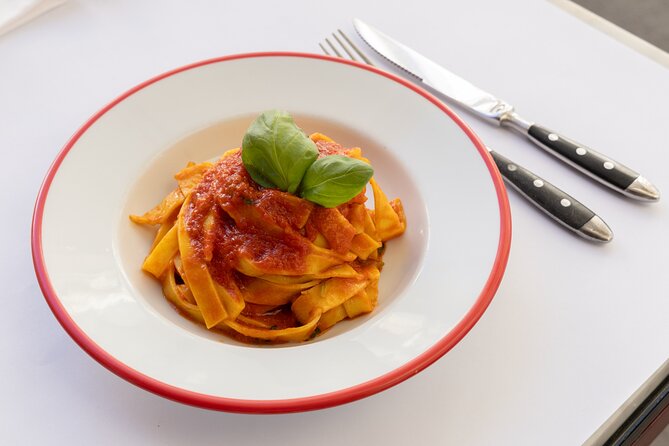
Fresh pasta is the star here, but the best part is that you make it by hand, starting with nothing more than flour and eggs. A chef guides you through kneading, rolling, shaping, and cutting the dough, then the restaurant cooks your fettuccine while you sit down to eat.
I like two things in particular: the class is small, with no more than 14 people, and the meal includes wine, tiramisu, and a choice of limoncello or coffee. Chefs such as Leo, Furio, and Carlotta have been praised for clear, friendly teaching. The main consideration is that you do not make the sauce, so this is more about pasta and dessert than a full Roman cooking course.
In This Review
- Key points to know before booking
- Why this Rome cooking class works so well
- Starting with tiramisu and mascarpone cream
- Turning flour and eggs into fettuccine
- Choosing between Amatriciana, Cacio e Pepe, and tomato basil
- Sitting down to eat what you made
- Tiramisu, limoncello, and coffee at the finish
- The chefs and the tone of the lesson
- Who gets the best value from the $67.75 price
- Location, timing, and the practical details
- Should you book this pasta class?
- FAQ
- How long does the fettuccine and tiramisu class last?
- Where does the class begin and end?
- Is the cooking class taught in English?
- What sauces can I choose for my fettuccine?
- Are drinks included?
- Do I make the pasta sauce?
- What is the cancellation policy?
Key points to know before booking

- You make fresh egg pasta from scratch: Knead, roll, shape, and cut your own dough into fettuccine.
- Tiramisu comes first: You whip eggs and mascarpone, then layer the cream with biscuits and cocoa.
- Three classic sauces are offered: Choose Amatriciana, Cacio e Pepe, or Pomodoro e Basilico for your pasta.
- The chef cooks the pasta for you: You can focus on the meal instead of timing a pot of fresh noodles.
- The class is capped at 14 people: That keeps the hands-on work more manageable than a large demonstration.
- Wine, coffee, and limoncello are included: You get a drink with the meal and a final choice of digestif or coffee.
Why this Rome cooking class works so well
Rome has no shortage of food tours, but a cooking class gives you something different. Instead of simply eating carbonara or cacio e pepe, you learn one small part of the craft behind Italian meals. You also get a seated meal at the end, which makes this a welcome change from a day spent walking between monuments.
This experience lasts about two and a half hours and takes place at a historic Roman restaurant on Via Giuseppe Zanardelli, 14. The address is in central Rome, near public transportation, so it can fit neatly into a sightseeing day around the city center.
The group limit of 14 matters. Pasta making is a hands-on job, and a very large class can leave you watching someone else work. Here, the chef can guide the room while still giving attention to individual tables. The class is offered in English, and no previous cooking skill is required.
I would think of this as a relaxed food lesson with dinner included, not as professional culinary training. You will learn useful basics, but you will also spend time chatting, eating, and meeting the other people at your table.
More Cooking Classes in Rome
- 3 in 1 Cooking Class near Navona: Fettuccine, Ravioli & Tiramisu
★ 5.0 · 7,376 reviews - Rome: Pasta & Tiramisu Class with Fine Wine by the Vatican
★ 4.9 · 4,852 reviews - Rome: Pasta Making Class with Wine, Limoncello, and Dessert
★ 4.9 · 3,177 reviews
Starting with tiramisu and mascarpone cream
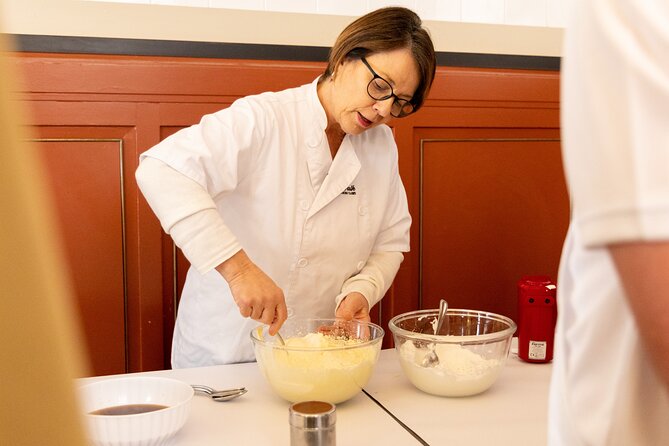
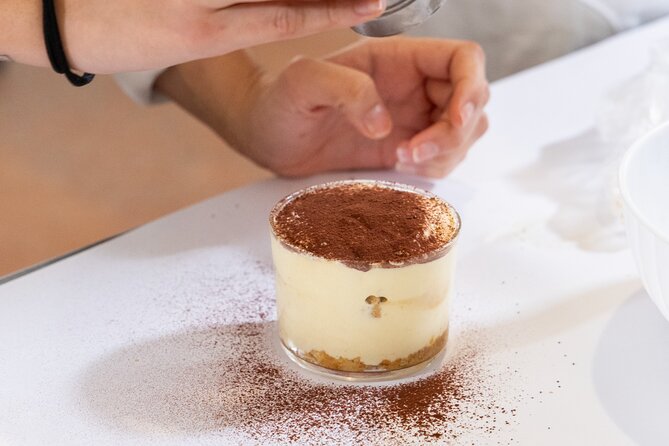
The class begins with tiramisu. You whip eggs and mascarpone into a smooth, creamy mixture, then layer it with biscuits and cocoa. This order is sensible because the dessert needs time to rest while you work on the pasta.
Tiramisu is also a good opening recipe. The steps are easy to follow, and you get an early success before handling dough. If you are cooking with children or with someone who has never taken a class, this helps set a comfortable pace.
The finished dessert is yours to enjoy later with the meal. That gives you a clear connection between the work at the table and what arrives at the end. It is not just a chef demonstration followed by a dessert selected from a menu.
The recipe is classic rather than showy. You should expect the familiar combination of mascarpone, eggs, biscuits, and cocoa, not a modern restaurant version with unusual flavors. That is part of the appeal. You leave with a dish you can reasonably try again at home.
Turning flour and eggs into fettuccine
Next comes the main lesson: fresh egg pasta. The dough uses flour and eggs, and the chef shows you how to bring it together before you knead it by hand.
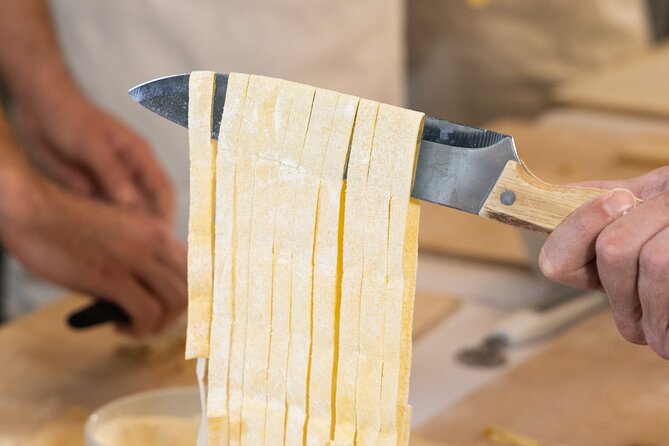
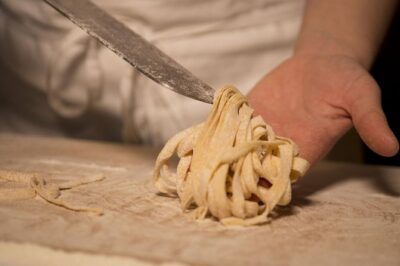
This is where the class becomes more physical. You will work the dough, roll it out, and shape it before cutting it into fettuccine. The process can feel awkward at first, especially if your dough is too firm or sticky, but that is exactly when having a chef nearby helps.
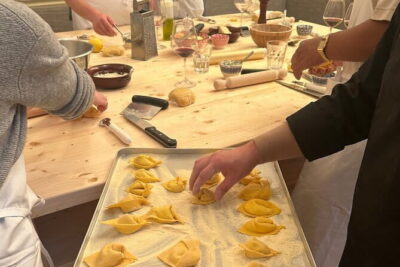
You also get an introduction to other traditional pasta shapes. The exact amount of time spent on these shapes can vary with the class, but the extra explanation gives you a better sense of how Italian pasta differs from one region and recipe to another.
The lesson does not promise a full survey of Italian pasta. It focuses on one useful shape, fettuccine, and gives you a practical starting point. You learn enough to understand the basic method without turning the afternoon into a technical workshop.
A useful tip comes from the class format: the chef cooks your finished pasta for you. That means you do not have to worry about how long fresh noodles should boil or how to manage several portions at once. You can take your seat and enjoy the result.
Choosing between Amatriciana, Cacio e Pepe, and tomato basil
You choose the sauce for your fettuccine from three Roman and Italian favorites:
- Amatriciana: A savory tomato sauce with a stronger, more robust character.
- Cacio e Pepe: A simple cheese and pepper preparation that depends on good technique.
- Pomodoro e Basilico: Tomato and basil, a straightforward choice that lets the fresh pasta show through.
The sauce choice is important because it gives you some control over the final meal. If you like a red sauce, Amatriciana or Pomodoro e Basilico may suit you best. Cacio e Pepe is the most stripped-down option and works well if you want to taste the pasta with a classic Roman pairing.
There is one limit to keep in mind: you choose the sauce, but you do not prepare it. The chefs cook the selected sauce and combine it with your fettuccine. That keeps the class moving and makes the meal easier, but it also means you will not learn the full recipe or technique for the sauce itself.
One useful detail emerged from a class that also included ravioli: the ravioli was paired with butter and sage, so choosing a red sauce for the fettuccine created more variety in the meal. Ravioli is not listed as a standard part of this experience, so do not book expecting it, but the pairing advice is still sensible if your session includes another pasta shape.
A different way to spend the day, same part of Italy:
- Vatican: Museums & Sistine Chapel Entrance Ticket
★ 4.5 · 144,003 reviews - Vatican Museums & Sistine Chapel Tour with Optional Basilica
★ 4.3 · 67,413 reviews - Colosseum, Roman Forum & Palatine Guided Tour
★ 4.7 · 63,148 reviews - Vatican Museums, Sistine Chapel & St Peter’s Basilica Guided Tour
★ 4.5 · 39,149 reviews
Sitting down to eat what you made
Once the cooking is finished, you sit down to eat the fettuccine with your selected sauce. Your meal includes one glass of red or white wine, or a non-alcoholic drink, along with water.
That drink is a small but meaningful part of the value. At $67.75 per person, you are not paying only for ingredients and instruction. You are also paying for a prepared meal in a restaurant setting, a glass of wine or soft drink, and an organized activity in central Rome.
The pasta is cooked by the staff, which also helps keep the final dish consistent. Fresh pasta can become heavy or undercooked if handled poorly, so having the kitchen finish it lets you enjoy the texture without worrying about the last technical step.
The shared meal is another strength. You are likely to sit with the people who took part in the class, and the format gives you time to talk about the recipes and compare results. This makes the activity a good fit for couples, families, and solo visitors who like a little social contact built into a meal.
It is not the right choice if you want a private table or a quiet, formal dinner. The point is the shared class, and the social atmosphere is part of what you are buying.
Tiramisu, limoncello, and coffee at the finish
The tiramisu you prepared earlier returns as dessert. You can finish with a shot of limoncello or hot coffee, including espresso-style Italian coffee.
This final choice gives the meal a distinctly Italian rhythm. Pasta comes first, dessert follows, and a small digestif or coffee closes the table. The portions and exact presentation are not specified, so it is best to see this as a satisfying class meal rather than a long tasting menu.
The dessert has received especially strong praise, and it makes sense why. Tiramisu is forgiving enough for beginners, but the combination of mascarpone cream, biscuits, and cocoa still feels special when you made it yourself. If you enjoy desserts, this may be the most immediately rewarding part of the class.
Limoncello is a good choice if you want a traditional after-dinner drink. Coffee is better if you still have an evening walk ahead of you and would rather skip alcohol.
The chefs and the tone of the lesson
The teaching style is a major part of the experience. Chef Leo has been praised for making a large group feel comfortable and well looked after. Chef Furio has been noted for a warm approach and clear guidance, while Chef Carlotta has been singled out for bringing energy and personality to the session.
The specific chef may depend on the date and class schedule, so do not book with the expectation of one particular instructor unless the provider confirms it. Still, the repeated pattern is useful: this is designed as a friendly class for ordinary people, not as a test of cooking ability.
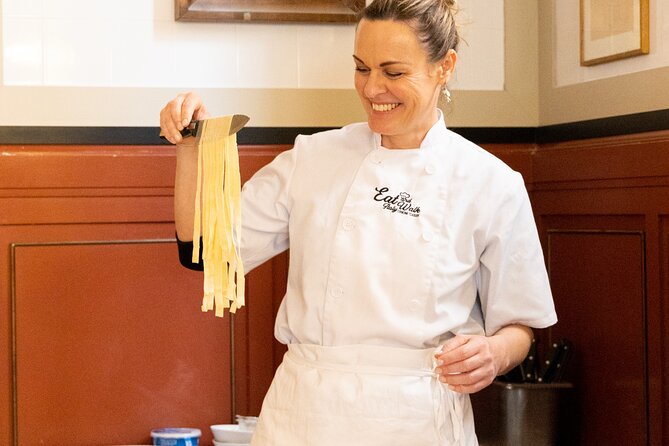
You should be able to follow along even if you have zero experience. The chef demonstrates the steps, helps during the work, and keeps the mood light. That makes this a strong family activity, especially for older children and adults who enjoy doing something together rather than sitting through a long talk.
The instruction is in English. If you want highly technical explanations of pasta chemistry or advanced knife work, this class may feel basic. If you want to learn a recognizable Italian recipe and eat it soon after, the level is about right.
Who gets the best value from the $67.75 price
At $67.75, the price sits in a useful middle range for a central Rome food activity. You receive about two and a half hours of instruction, fresh pasta, a full serving with sauce, tiramisu, water, wine or a soft drink, and limoncello or coffee.
I see the value in the combination. A standard meal would give you food and a drink, but not the activity or the chance to make your own pasta. A more advanced cooking school might offer deeper instruction, but it could cost more and demand more time.
The price is less appealing if you mainly want a cheap meal. You are paying for the class, the chef’s guidance, and the social setting. If you would rather spend two and a half hours sightseeing, the cost may not feel worthwhile.
I would book this for a couple looking for a shared activity, a family wanting a break from museums, or a solo visitor who enjoys meeting people over food. It is also a smart choice for anyone who wants a recipe they can repeat at home.
You should also remember that extra food and drinks are not included. The listed meal and beverages are covered, but additional orders will cost more.
Location, timing, and the practical details
The meeting point is Via Giuseppe Zanardelli, 14, 00186 Rome. The class finishes at the same location, and the address is near public transportation.
Allow time to reach the restaurant. A central Rome address can be easy to find on a map but still slow to reach on foot when streets are crowded or when you are coming from another neighborhood. A mobile ticket is provided, and booking confirmation is sent at the time of booking.
The group maximum is 14 people. That is small enough for hands-on work but large enough that the meal will have a social feel.
The class is offered in English, which is important for following dough instructions. If someone in your party has food allergies or dietary restrictions, the supplied information does not explain how substitutions are handled, so ask the provider before booking rather than assuming the menu can change.
Free cancellation is available up to 24 hours before the start time for a full refund. Changes or cancellations made less than 24 hours before the start time are not accepted for a refund, and the cut-off uses Rome’s local time.
Should you book this pasta class?
Book it if you want to make fresh pasta, eat a complete meal, and learn a classic dessert without giving up half a day. The small group, English-speaking instruction, friendly chefs, and included drinks make it a practical choice for a first cooking class in Rome.
I would be less eager to book if your main goal is to learn sauce recipes, prepare several different pasta dishes, or take an advanced chef-led course. You make the fettuccine and tiramisu, but the kitchen handles the sauce and final cooking.
For most visitors, the strongest reason to go is the mix of work and reward. You knead and cut the dough, then sit down with wine, pasta, tiramisu, and either limoncello or coffee. That is a pleasant way to trade Rome’s usual crowds for a table, a chef, and a meal you helped create.
FAQ
How long does the fettuccine and tiramisu class last?
The class lasts approximately 2 hours and 30 minutes.
Where does the class begin and end?
It begins at Via Giuseppe Zanardelli, 14, 00186 Rome, Italy, and ends back at the same meeting point.
Is the cooking class taught in English?
Yes. The experience is offered in English.
What sauces can I choose for my fettuccine?
You can choose Amatriciana, Cacio e Pepe, or Pomodoro e Basilico, also described as tomato and basil.
Are drinks included?
Yes. The meal includes water and one glass of red or white wine, or another non-alcoholic beverage. You can also choose limoncello or hot coffee afterward.
Do I make the pasta sauce?
No. You make the fettuccine, but the kitchen prepares the sauce and cooks the pasta.
What is the cancellation policy?
You can cancel at least 24 hours before the start time for a full refund. Cancellations or changes made less than 24 hours before the start time are not accepted for a refund.
Recently reviewed around Rome
- Ancient Rome at Twilight Walking Tour★ 5.0 · 276 reviews
- Domus Aurea Guided Tour: The Golden House of Nero★ 4.5 · 199 reviews
- Early Vatican Museums & Sistine Chapel Small Group Tour★ 4.5 · 314 reviews
- Early Vatican Museums Tour: The Best of the Sistine Chapel★ 4.5 · 900 reviews
- Jewish Ghetto & Piazza Navona: Food, Wine & Sightseeing Rome Tour★ 5.0 · 460 reviews
- 3 Days in Sorrento, Capri & Pompeii: la Dolce Vita★ 4.0 · 595 reviews
- Tivoli Villas Full Day Trip From Rome with Lunch★ 4.0 · 443 reviews
- Cook With Us in Rome: A Hands-On Cooking Experience 09:20AM class★ 5.0 · 234 reviews
Cooking Classes, compared.
3 in 1 Cooking Class near Navona: Fettuccine, Ravioli & Tiramisu
Read our review →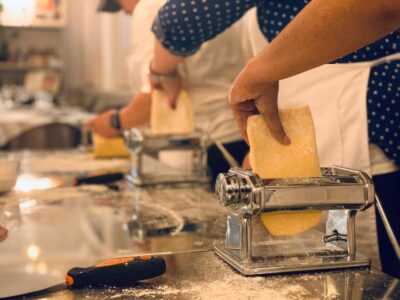
Pasta & Tiramisu Cooking Class with Unlimited Wine
Read our review →
Pasta & Tiramisu Class with Fine Wine by the Vatican
Read our review →
Cooking Class and Lunch at a Tuscan Farmhouse with Local Market Tour from Florence
Read our review →
Authentic Pizza Making Class in Naples with Appetizers and Drink
Read our review →
Pasta Making Class with Wine, Limoncello, and Dessert
Read our review →Browse the lists this tour appears in