Review · WORKSHOPS
Florence Small-Group Pasta Class with Seasonal Ingredients
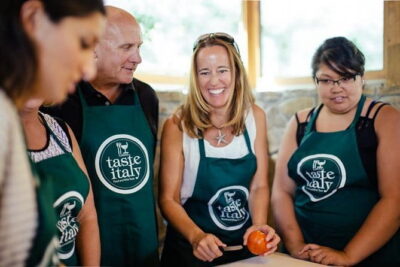
The best part of this Florence cooking class is that you do the work. You knead the dough, shape ravioli or other pasta, prepare sauces, and help cook the meal instead of watching a chef perform a cooking show. Seasonal ingredients guide the menu, so pumpkin, figs, porcini, zucchini, or sweet tomatoes may appear depending on the time of year.
I like the small maximum of 12 people, which gives the chef room to help with dough texture and pasta shapes. I also like the relaxed finish: bruschetta and an aperitivo first, then the pasta you prepared, served at the table with wine. The main drawback is the strict food policy. Gluten-free, egg-free, lactose-free, and vegan cooking is not available, and allergies must be reported in advance.
In This Review
- Key points to know before booking
- A real pasta workshop on Via Romana
- Choosing a seasonal menu with the chef
- Making dough by feel, not by stopwatch
- Preparing sauces, bruschetta, and possible cheese fillings
- Sitting down to eat what you prepared
- What the strongest teaching looks like
- Is the $126.98 price fair?
- Important food and access restrictions
- Who should book this Florence pasta class?
- Should you book it?
- FAQ
- Where does the pasta class meet?
- How long does the class last?
- What food might I prepare?
- Is wine included?
- Can I book as one person?
- Can the class accommodate dietary restrictions?
Key points to know before booking
- You make the food yourself: This is a true hands-on class with no cooking demonstration in place of participation.
- The menu is chosen together: Your group and the chef decide among seasonal pasta dishes, based on preferences and available ingredients.
- Expect several pasta styles: Ravioli, tagliatelle, spaghetti, gnocchi, cavatelli, and other shapes may be included.
- The meal is part of the class: You eat the pasta you helped prepare, along with bruschetta, water, and wine.
- The group stays small: The class has a maximum of 12 people, though at least two people are required to book.
- Food restrictions matter: No gluten-free, egg-free, lactose-free, cheese-free, or vegan options are offered.
A real pasta workshop on Via Romana
The class meets at Via Romana 41r, on the south side of Florence’s historic center. The activity returns to the same place, making the logistics simple. It is near public transportation, but if you drive, plan carefully: there is no parking at the venue, and Florence’s limited-traffic zone makes street parking a poor bet. Use a paid garage outside or within the permitted area.
The class lasts about two and a half hours. That is long enough to make several dishes without turning the evening into a full-day cooking course. You should arrive ready to work, not dressed for a formal restaurant. Smart casual clothing is requested, and high heels are not allowed.
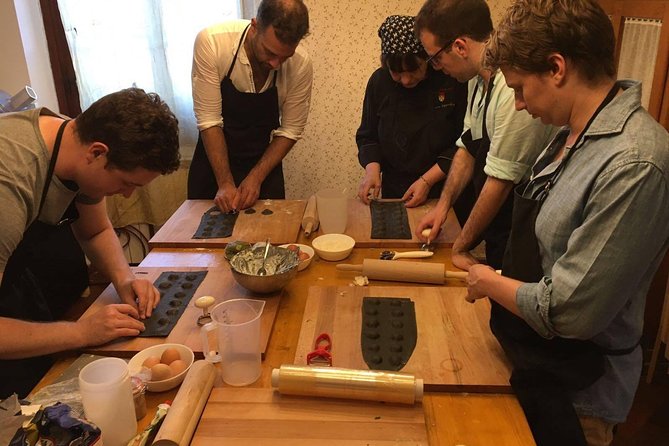
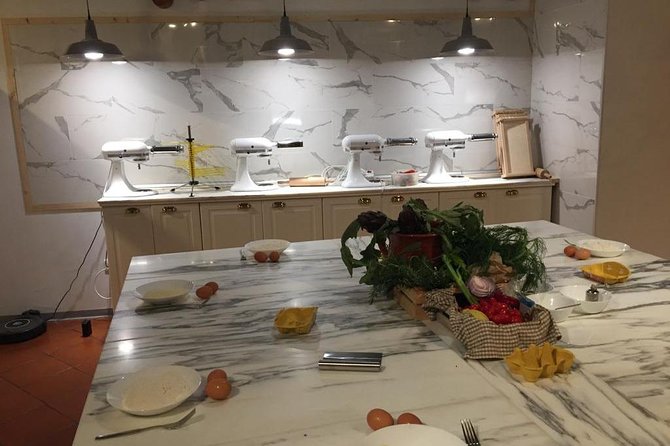
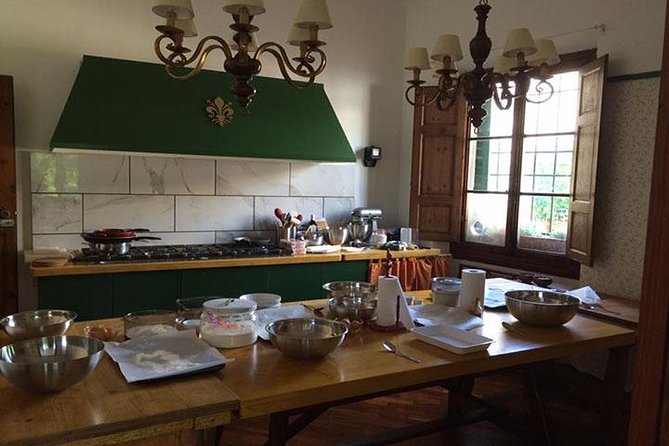
The kitchen has a home-style feel rather than the polished atmosphere of a television studio. That can be a plus if you want an informal Italian evening. You are working at close range with the chef, asking questions as you go, and sharing the table with the rest of the group.
The class is offered in English. Chef Vary’s team may include chefs such as Giulio, Roberto, Irene, or Vary herself. The personality of your instructor will shape the evening, but the repeated pattern is clear: the teaching is lively, social, and focused on practical skills.
More Florence trips worth a second look
- Florence: Pasta Cooking Class with Unlimited Wine
★ 4.9 · 10,285 reviews - Florence Pizza or Pasta Class with Gelato Making at a Tuscan Farm
★ 5.0 · 6,801 reviews - Florence: Pasta & Tiramisu Cooking Class with Unlimited Wine
★ 4.9 · 6,708 reviews
Choosing a seasonal menu with the chef
At the beginning, the chef explains the possible menu and asks what the group likes. This matters because the class is shared, not a private lesson built around one person’s menu. Speak up early about foods you dislike, allergies, or dietary needs.
Possible dishes include ravioli filled with pumpkin, caramelized pear, lemon, figs, or another seasonal ingredient. Tagliatelle may be paired with sweet tomatoes, meat sauce, duck sauce, sausage, or a Bolognese-style preparation. Spaghetti might come with traditional pesto, Sicilian pesto made with sun-dried tomatoes and almonds, celery pesto, or arugula pesto.
Zucchini and lemon may accompany bi fusilli, while porcini mushrooms appear only when they are in season. That seasonal approach gives the class a useful Tuscan lesson: pasta is a flexible base, and the sauce changes with what is good at the market.
You may also prepare gnocchi, cavatelli, linguini, or other shapes selected by the group. Several class combinations have included three different dishes, such as tagliatelle, ravioli, and gnocchi. You should not expect to make every item on the sample menu in one evening. The point is to create a manageable set of dishes and learn the method behind them.
Making dough by feel, not by stopwatch
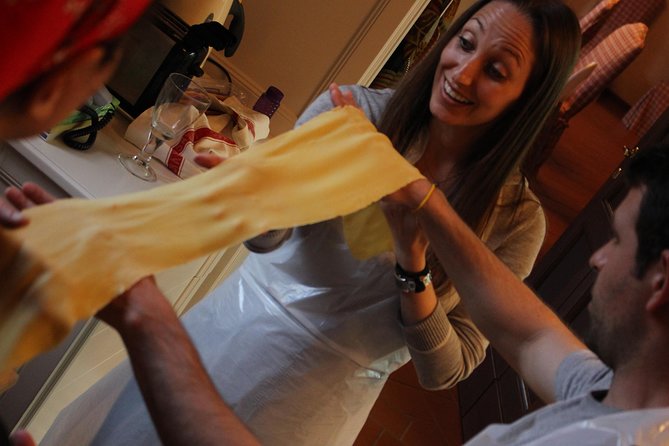
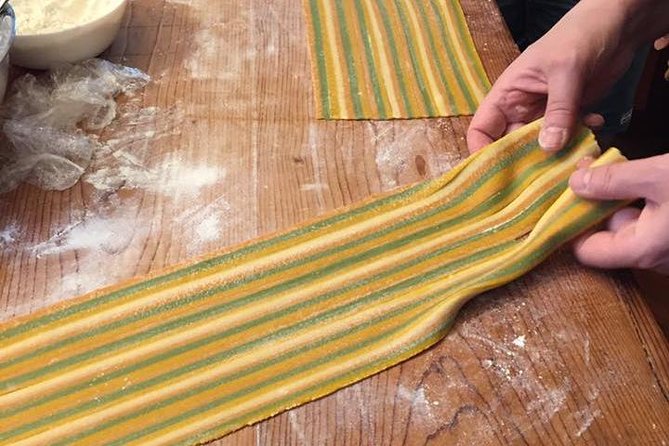
The pasta portion begins with dough. You help combine and work the ingredients, then learn to judge the dough by touch. This is one of the most useful skills to take home because pasta dough rarely behaves in exactly the same way every time.
Humidity, egg size, flour, and handling all affect the result. A good chef can show you when the dough is too dry, too sticky, or ready to rest. The class also teaches you that pasta does not require a kitchen full of expensive machines. Several dishes can be made with basic equipment and careful hands.
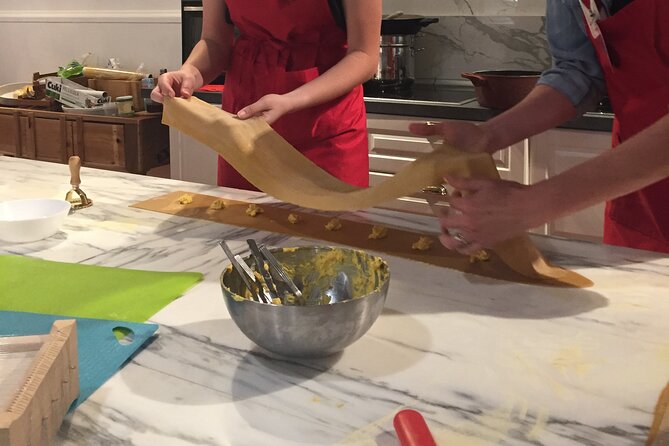
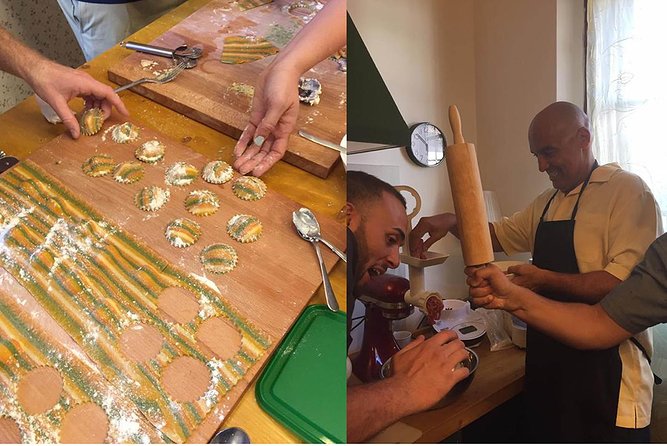
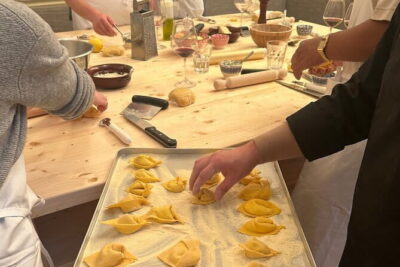
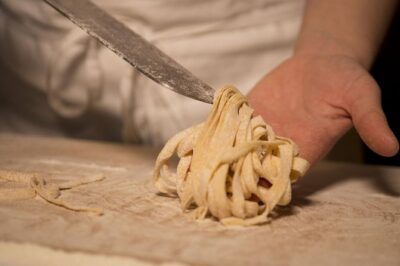
From there, the dough is rolled and shaped. Tagliatelle and linguini teach you about cutting long ribbons. Ravioli requires more care, since the filling must be placed neatly and the edges sealed without trapping too much air. Cavatelli and gnocchi bring a different rhythm, with smaller pieces shaped by hand.
Chef Giulio has been praised for explaining technique clearly and patiently, including how to create lighter gnocchi. One especially useful lesson is learning to chop fresh herbs with a mezzaluna and how to adjust a traditional pesto with different ingredients. This is not advanced restaurant training. It is home cooking with enough detail to help you repeat the results later.
Preparing sauces, bruschetta, and possible cheese fillings
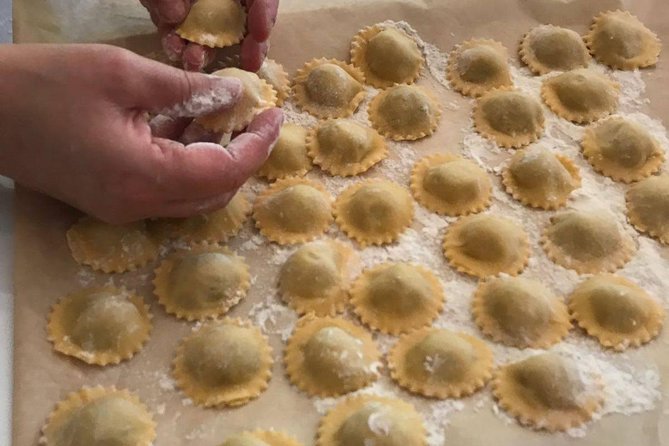
The pasta is only half the lesson. You also help prepare sauces from scratch and make bruschetta before the main meal. The bruschetta and aperitivo give you something to enjoy while the pasta cooks and help break up the hands-on work.
Sauce preparation changes with the selected menu. You might work with tomatoes, meat, duck, sausage, pesto, mushrooms, zucchini, lemon, or fruit-based fillings. The combinations are more varied than the usual tourist menu of plain tomato sauce and basic pasta.
Some classes may include making cheese for a ravioli filling. That is not guaranteed, but it shows the type of activity possible in the kitchen. If your group chooses a filled pasta, the chef may guide you through a ricotta-style or other filling, then help you balance seasoning and texture.
The teaching also covers judgment. You learn when a sauce needs more seasoning, how a filling should feel, and how the finished pasta should be cooked. Those small decisions are worth more than a stack of rigid instructions because they help you adapt recipes at home.
A different way to spend the day, same part of Italy:
- Florence: Skip-The-Line Uffizi Gallery Timed Entry Ticket
★ 4.5 · 27,832 reviews - Tuscany Day Trip from Florence: Siena, San Gimignano, Pisa and Lunch at a Winery
★ 5.0 · 21,634 reviews - Florence: Timed Entrance Ticket to Michelangelo’s David
★ 4.6 · 16,983 reviews - Florence: Michelangelo’s David Skip-the-Line Entry Ticket
★ 4.5 · 12,764 reviews
Sitting down to eat what you prepared
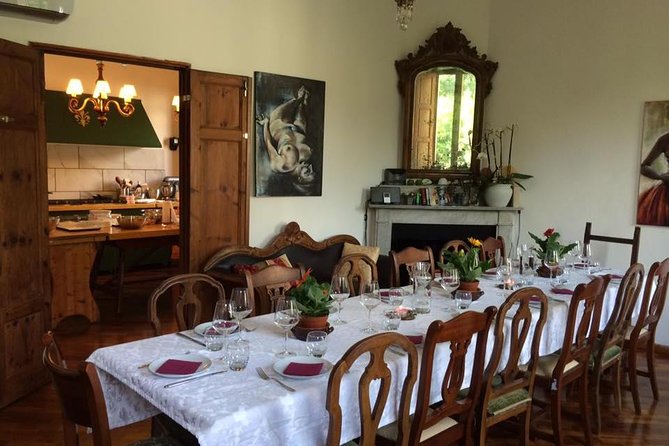
After the cooking, the class becomes dinner. You sit at a shared table and eat the dishes the group made. The meal includes bottled water and wine, with two glasses per person or one bottle for every four people. Soda and beer are not included.
The format gives the evening a natural ending. You are not rushed out as soon as the last pan is washed. Instead, you get time to taste the pasta, talk with the chef, and compare the different shapes and sauces. For many people, this meal is the strongest part of the experience because it connects the work at the counter with the food on the plate.
There is also a social side. The class is designed for a shared group, so you may be cooking with couples, friends, or independent visitors. The minimum booking is two people, and the maximum is 12. That is small enough for direct help but large enough to create a dinner-party mood.
I would choose this class for a date night, a family outing with older teenagers, or an evening with friends. The minimum age is 16, and the minimum drinking age is 18. Children under 16 are not admitted.
What the strongest teaching looks like
The best outcome depends partly on the chef assigned to your session. Names that have appeared in the class include Giulio, Roberto, Irene, and Chef Vary. Giulio has been praised for humor, patience, and clear explanations. Roberto is noted for making techniques easy to understand. Irene is described as energetic and highly interactive, especially with young adults.
That variety can be an advantage. You are not signing up for a silent technical workshop. The atmosphere is meant to be warm and conversational, with room for questions and jokes. Several sessions have included three pasta dishes, and the chef stays involved as the group mixes dough, prepares fillings, shapes pasta, and cooks.
Still, this is a group class, so you should expect shared decisions. If one person wants meat sauce and another prefers vegetables, the chef must find a menu that works for everyone. The description specifically asks participants to help make the group happy, which means flexibility is part of the deal.
One negative account describes a chef as demanding and condescending. The provider disputed the authenticity of that booking, and the wider pattern of feedback points strongly toward friendly instruction. Even so, cooking classes vary by instructor and group chemistry. If you want total control over the pace, dishes, and teaching style, a private class would be the safer choice.
Is the $126.98 price fair?
At $126.98 per person, this is not a cheap meal. But it includes a two-and-a-half-hour hands-on class, a professional chef, the ingredients, the pasta dinner afterward, water, wine, taxes, fees, and online recipes.
The value depends on how you think about the evening. If you only want a plate of pasta, Florence offers less expensive choices. If you want dinner plus instruction and a social activity, the price is easier to justify. You are paying for the meal, but also for the chef’s guidance, the kitchen setup, and the chance to learn several techniques.
The class is booked about 53 days ahead on average, which suggests you should not leave it until the final days of your trip. That is especially true if you need a particular evening. Confirmation is normally sent at booking, although reservations made within 12 hours of the start time are confirmed as soon as possible, subject to availability.
Free cancellation is available until 24 hours before the start time. After that, you generally do not receive a refund, and last-minute changes are not accepted. The class also requires a minimum number of participants, so a cancellation by the provider may result in another date, another experience, or a full refund.
Important food and access restrictions
Read the food rules before you pay. The kitchen cannot accommodate gluten-free, egg-free, lactose-free, cheese-free, or vegan cooking. Garlic and onion allergies are also specifically excluded, and any allergy or ingredient restriction must be communicated in advance.
Vegetarian cooking is possible only when you reserve the special vegetarian option. Do not assume that mentioning vegetarian preferences at the door will be enough. The menu is shared, and the chef needs advance notice to plan the ingredients.
Pets are not allowed. People with motor or cognitive difficulties are not admitted for safety reasons, although a private booking may be possible. No separate accessibility details are provided, so contact the provider before booking if you have a mobility concern.
Who should book this Florence pasta class?
I would choose this experience if you want a practical introduction to Italian cooking and like the idea of eating your own work. It fits people who enjoy learning by doing, including beginners who have never made fresh pasta.
It is also a good pick for confident home cooks. The class covers dough texture, pasta shapes, fresh herbs, pesto variations, fillings, and sauce balance. You may already know the basics and still pick up useful ideas, especially from the seasonal combinations.
The class is less suitable if you have strict dietary needs, dislike shared meals, or want a private lesson. It is also not the right choice if you want a market tour as a guaranteed part of the itinerary. One particularly praised session included a market visit, but the standard description for this experience focuses on the kitchen class, not a promised market stop.
Should you book it?
Book this class if you want a social, hands-on evening rather than a passive food demonstration. The small group, seasonal menu, several pasta shapes, and included dinner make it a strong choice for couples, friends, and curious cooks who can eat eggs, gluten, cheese, and dairy.
Skip it if you need gluten-free, vegan, egg-free, or lactose-free food, or if you prefer complete control over the menu. For everyone else, reserve ahead, wear practical shoes, report every restriction early, and arrive ready to work. The payoff is not just a good meal in Florence. It is the confidence to roll out dough and make pasta again when you get home.
FAQ
Where does the pasta class meet?
The class begins and ends at Via Romana 41r, 50125 Florence, Italy.
How long does the class last?
The experience lasts approximately two hours and 30 minutes, including the cooking session and the meal afterward.
What food might I prepare?
The menu can include ravioli, tagliatelle, spaghetti, gnocchi, cavatelli, sauces, and bruschetta. Examples include pumpkin ravioli, caramelized pear ravioli, pesto spaghetti, tagliatelle with meat sauce, and seasonal vegetable or mushroom dishes.
Is wine included?
Yes. Wine is included, with two glasses per person or one bottle for every four people. Bottled water is also included, but soda and beer are not.
Can I book as one person?
No. The minimum booking is two people. The class can include a maximum of 12 participants.
Can the class accommodate dietary restrictions?
Vegetarian cooking is available when you reserve the special vegetarian option. Gluten-free, egg-free, lactose-free, cheese-free, and vegan cooking are not allowed. Garlic and onion allergies cannot be accommodated, and all allergies or ingredient restrictions must be reported in advance.
Recently reviewed around Florence
- Walking Food Tour of Florence with Tastings and Wine★ 5.0 · 518 reviews
- Florence Sunset Food Tour with Wine & Dine at a Tuscan farmhouse★ 5.0 · 194 reviews
- Wine Experience In Chianti Hills from Florence★ 4.5 · 195 reviews
- Uffizi Gallery Timed Entry Admission Tickets★ 4.0 · 392 reviews
- Val d’Orcia Brunello Wine Tour with Montalcino and Montepulciano★ 4.5 · 359 reviews
- Wine Tasting Experience in Ponte Vecchio: Best Tuscany selection!★ 5.0 · 197 reviews
- Early Access Guided Uffizi Gallery Tour Skip-the-Line Small Group★ 4.5 · 707 reviews
- Uffizi Gallery Small Group Tour with Guide★ 4.5 · 879 reviews
Workshops, compared.
3 in 1 Cooking Class near Navona: Fettuccine, Ravioli & Tiramisu
Read our review →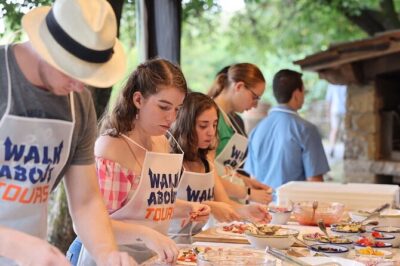
Florence Pizza or Pasta Class with Gelato Making at a Tuscan Farm
Read our review →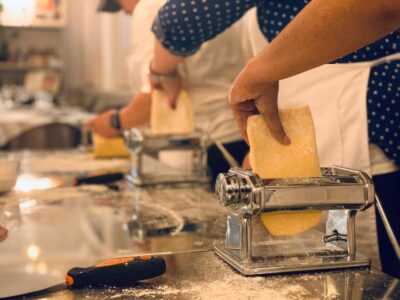
Pasta & Tiramisu Cooking Class with Unlimited Wine
Read our review →
Pizza-Making Workshop with Drink and Appetizer
Read our review →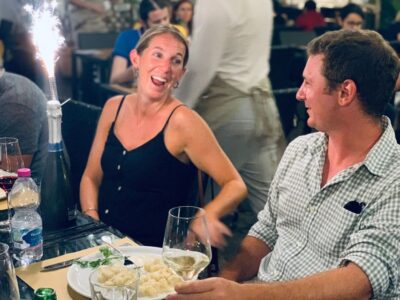
Pasta & Tiramisu Class with Fine Wine by the Vatican
Read our review →