
Review · SKIP THE LINE
Florence: Michelangelo’s David Skip-the-Line Entry Ticket
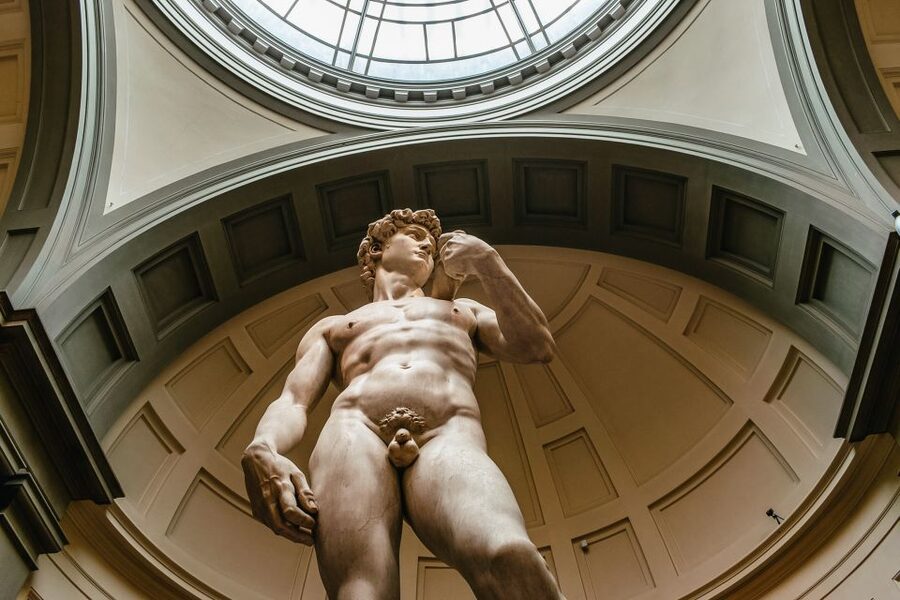
Michelangelo’s David is the reason most people come to Florence’s Accademia Gallery, and seeing the original in person is a very different thing from seeing a photograph. The statue fills the room with its size and detail, from the tense hands to the alert expression. Skip-the-line entry matters here because the ordinary queue can stretch along the block.
I like two things about this experience: you can explore without being tied to a guide, and the ticket covers every section of the museum, not just the David room. The optional audio guide adds useful context if you want more than labels. The main catch is that this is usually self-guided, and even the reserved entrance can involve a wait for security or your time slot.
In This Review
- Key points to know before you book
- Why David deserves more than a quick photograph
- Entering the Accademia with a reserved ticket
- The Hall of Michelangelo and the Four Prisoners
- Renaissance paintings beyond the famous statue
- The Museum of Musical Instruments
- Gipsoteca Bartolini and the museum’s quieter side
- Is $45 worth paying for Accademia entry?
- Audio guide or no audio guide?
- Accessibility, children, and arrival tips
- Who should book this David experience?
- Final verdict: pay for the time savings?
- FAQ
- Is this a guided tour of the Accademia Gallery?
- Does the ticket include all sections of the museum?
- Can I really skip the entire line?
- How long can I stay inside the Accademia?
- What should I bring?
- Is the Accademia accessible by wheelchair?
Key points to know before you book

- David is only part of the visit: The Accademia also holds Michelangelo’s unfinished Prisoners, Renaissance paintings, musical instruments, and the Gipsoteca Bartolini.
- The ticket saves time, not every minute: You skip the main ticket queue, but metal-detector checks and crowd control can still cause a delay of around 15 minutes or more.
- You explore at your own pace: There is no standard museum tour guide included with the basic option.
- The audio guide is optional: Bring your own headphones if you select this version, and check the instructions before arriving.
- Ticket collection is nearby: The meeting office is generally about one block from the museum, though it can be inside an arts and crafts shop and may be hard to spot.
- Plan around a timed entrance: Arrive about 15 minutes early, especially during busy periods, and follow the host to the correct queue.
Why David deserves more than a quick photograph
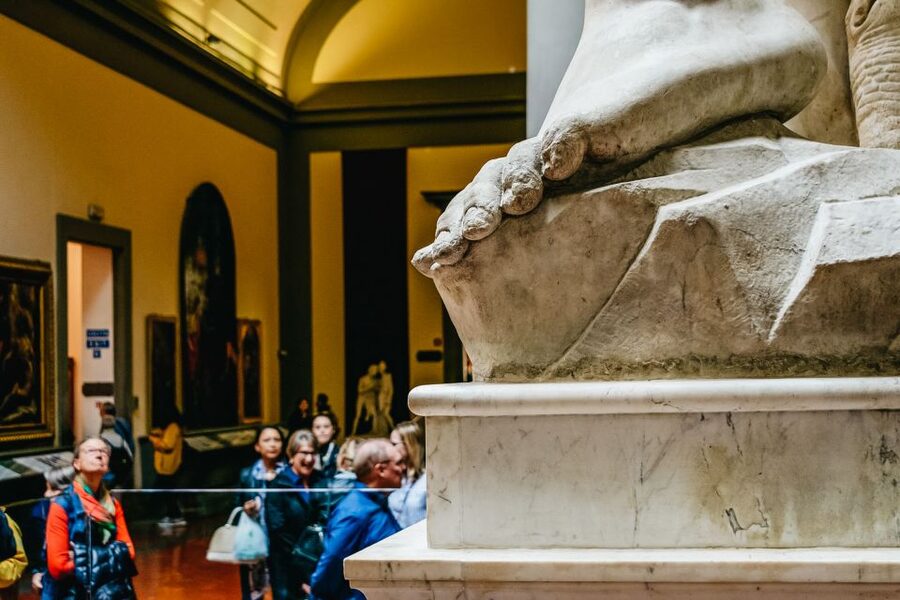
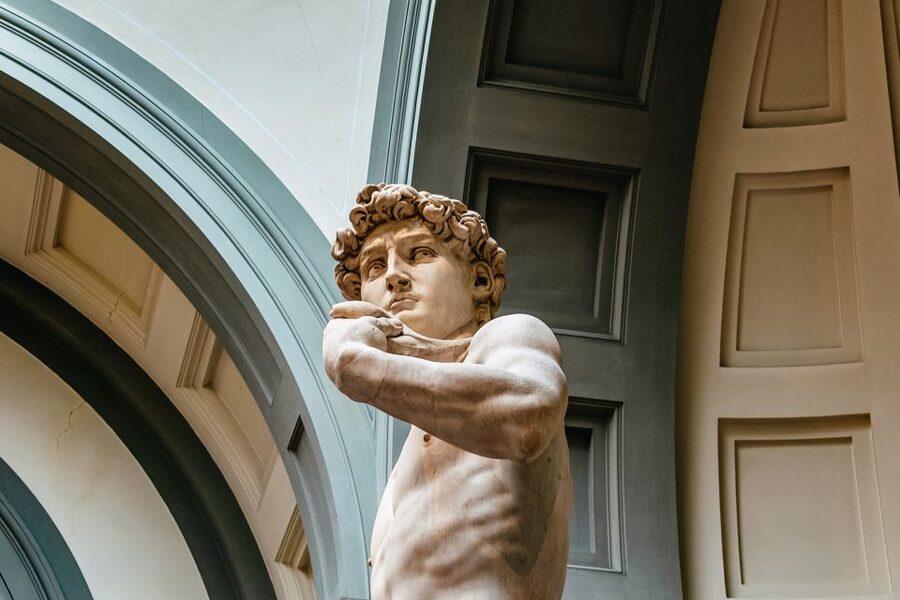
Michelangelo’s David is one of those artworks that has become almost too familiar. You have likely seen the statue on posters, souvenirs, and screens. Inside the Accademia, though, the original has a force that reproductions cannot convey.
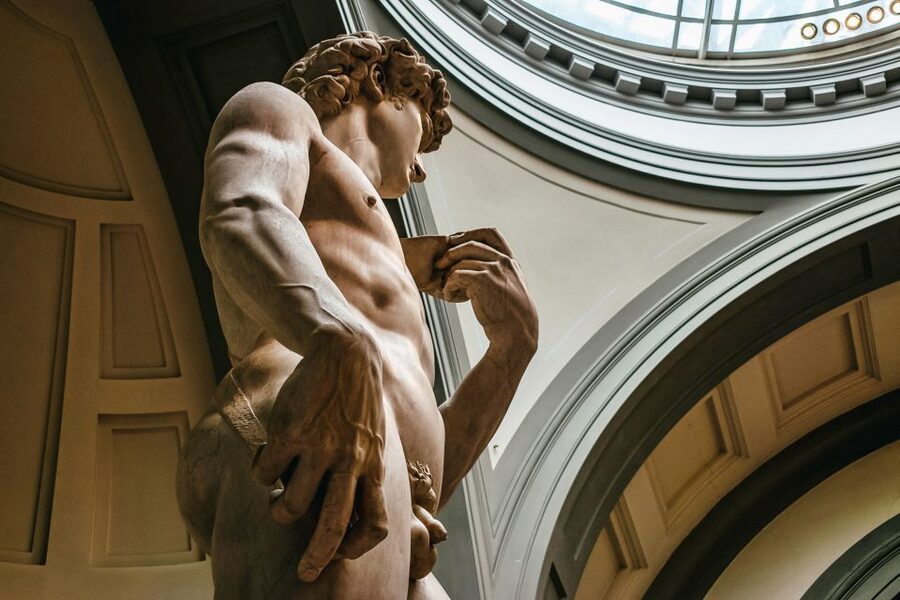
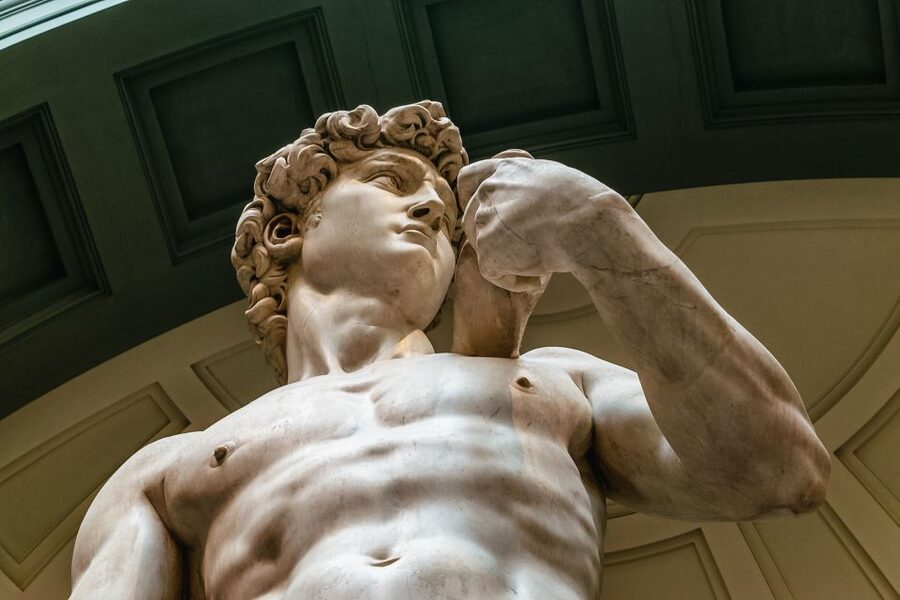
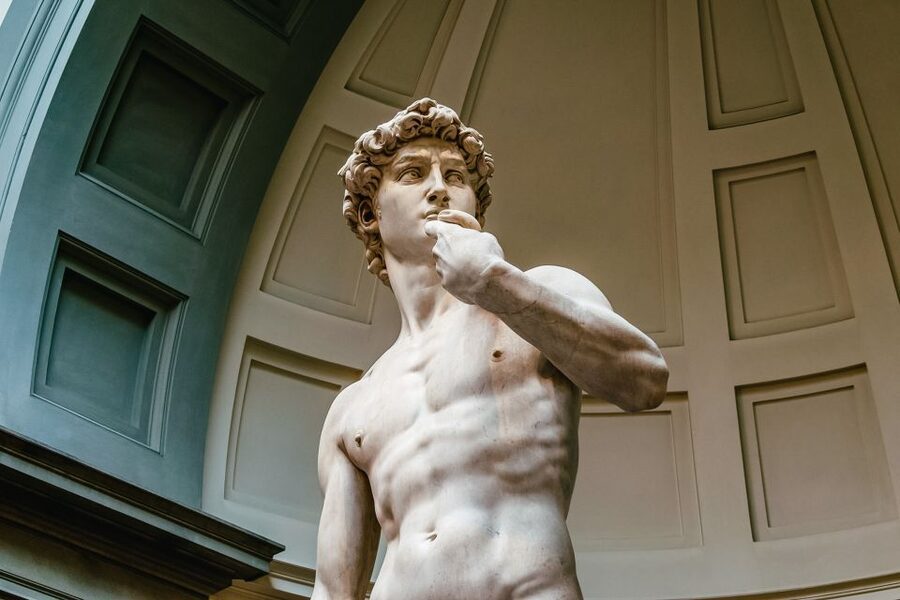
The sculpture is more than five meters tall and was carved from a single block of marble. You can see the care in the surface: the curl of the hair, the veins on the hands, and the small tension in David’s face as he prepares to face Goliath. The statue is not a picture of victory. It captures the moment before action, which gives it much of its power.
The Hall of Michelangelo is designed around this experience. David is the main event, but the unfinished Four Prisoners and San Matteo help you understand the artist’s process. These figures seem to be emerging from the marble, with sections still rough and incomplete.
That makes the room especially useful if you want to see how sculpture develops from stone. You are not just looking at a finished heroic figure. You are also looking at works that reveal the material, the blocked-out forms, and the struggle between artist and marble.
You will have time to pause, move around the statue, and study details from different angles. Photography is part of the experience for many people, but do not rush straight to the selfie. Give yourself a few minutes to look upward, check the proportions, and notice how different the sculpture appears as you change position.
More Florence trips worth a second look
- Florence: Skip-The-Line Uffizi Gallery Timed Entry Ticket
★ 4.5 · 27,832 reviews - Florence: Skip-the-Line Uffizi Small Group Tour
★ 4.6 · 5,926 reviews - Skip the line: Uffizi and Accademia Small Group Walking Tour
★ 4.5 · 3,135 reviews
Entering the Accademia with a reserved ticket
The practical purpose of this booking is simple: it replaces the ordinary ticket line with a reserved entry process. You usually meet a host or greeter at an office close to the Accademia, collect or validate your ticket, and walk to the museum entrance at your assigned time.
The office is often described as being directly across from or around the corner from the gallery, roughly one block away. That sounds easy, and it usually is, but the exact meeting point can vary by booking option. One important detail is that the office may be located inside an arts and crafts shop. Look carefully at the address and allow extra time to find it.
Arrive around 15 minutes before your slot. Hosts have sometimes helped early arrivals enter sooner when space allowed, but you should not count on that. Your reserved time remains the important part of the arrangement.
At the museum, you pass through security with a metal detector. This is not a private door straight into the galleries. Security can create a delay of about 15 minutes, and a reserved queue may still look busy at popular times. Even so, the time saved can be substantial when the regular line runs down the street.
The best times are generally early in the day, before large walking groups gather. The museum is not enormous, so crowd levels affect the visit more than the total size of the collection. A calmer entrance gives you a better chance to spend time with David instead of being pushed along by a packed room.
The Hall of Michelangelo and the Four Prisoners
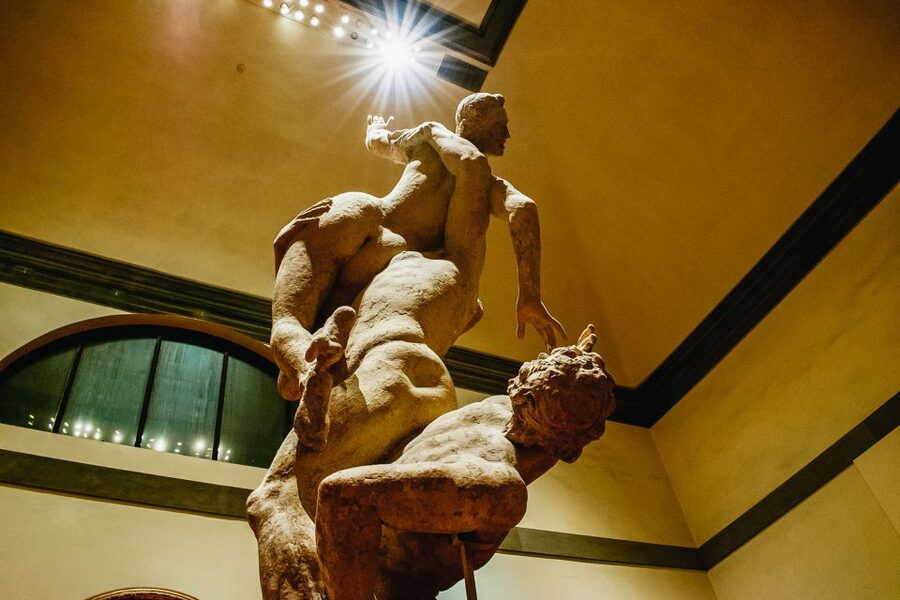
After entering, make your way toward the Hall of Michelangelo. The route through the gallery gives you a chance to see other works first, but David is the point where most people naturally slow down.
The Four Prisoners are particularly important. Michelangelo created these figures for the tomb of Pope Julius II, but they were never finished. Their rough surfaces and partial forms let you see the artist’s method in a way that a polished statue cannot.
I would spend time here before settling in front of David. The contrast is the key. The Prisoners appear trapped in the stone, while David has been released from it with remarkable precision. The pairing turns the room into a lesson in Michelangelo’s work, not merely a display of famous sculpture.
San Matteo adds another unfinished work to the same story. You might find the rough marble more interesting than expected, especially if you enjoy seeing how a work was made. If you are not an art specialist, the optional audio guide can explain why these pieces matter without requiring you to read every label.
The basic admission is self-guided. A host may take you to the correct entrance, but the person does not normally walk through the museum explaining each artwork. This suits you if you prefer freedom and already know what you want to see. If you want a formal explanation from a live guide, you need to select a guided option when available rather than assume it comes with the ticket.
Renaissance paintings beyond the famous statue
The Accademia is not only a Michelangelo museum. Its collection includes paintings by artists who worked in Florence during the Renaissance, including Botticelli, Filippino Lippi, Pietro Perugino, and Paolo Uccello.
These works give you a wider view of the city’s artistic culture. David is a single, overwhelming sculpture, while the paintings show religious scenes, figures, color, and composition in a different medium. If you hurry directly to the statue and leave, you will miss much of what your admission covers.
The museum is compact enough that you can see the main rooms in a short visit. A focused visit may take about an hour, while an all-day access period lets you take more time if your schedule allows. The stated duration ranges from one hour to one day because the ticket is designed around museum access rather than a fixed guided itinerary.
I suggest seeing David first if the gallery is crowded, then returning to the paintings. That way, you have handled the main purpose of the visit and can look at the rest without worrying about missing your chance at the central room.
If you have little interest in art, the sculpture alone may justify the entry fee. If you enjoy museums, plan for at least another half hour for the surrounding collection. The Accademia is smaller than some first-time visitors expect, but its highlights are concentrated.
A different way to spend the day, same part of Italy:
- Tuscany Day Trip from Florence: Siena, San Gimignano, Pisa and Lunch at a Winery
★ 5.0 · 21,634 reviews - Florence: Timed Entrance Ticket to Michelangelo’s David
★ 4.6 · 16,983 reviews - The Best tour in Florence: Renaissance & Medici Tales – guided by a STORYTELLER
★ 5.0 · 12,316 reviews - Florence: Leonardo Interactive Museum Entry Ticket
★ 4.5 · 11,763 reviews
The Museum of Musical Instruments
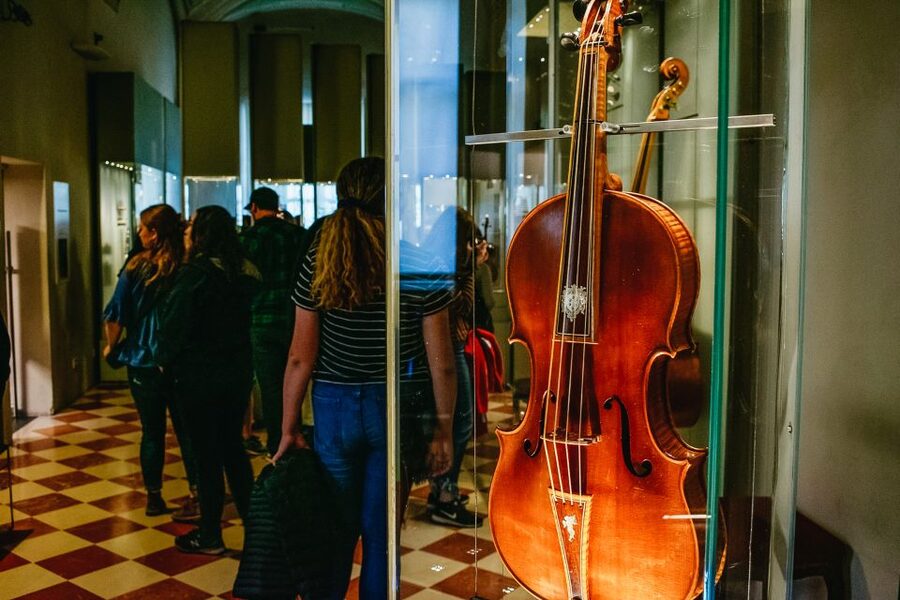
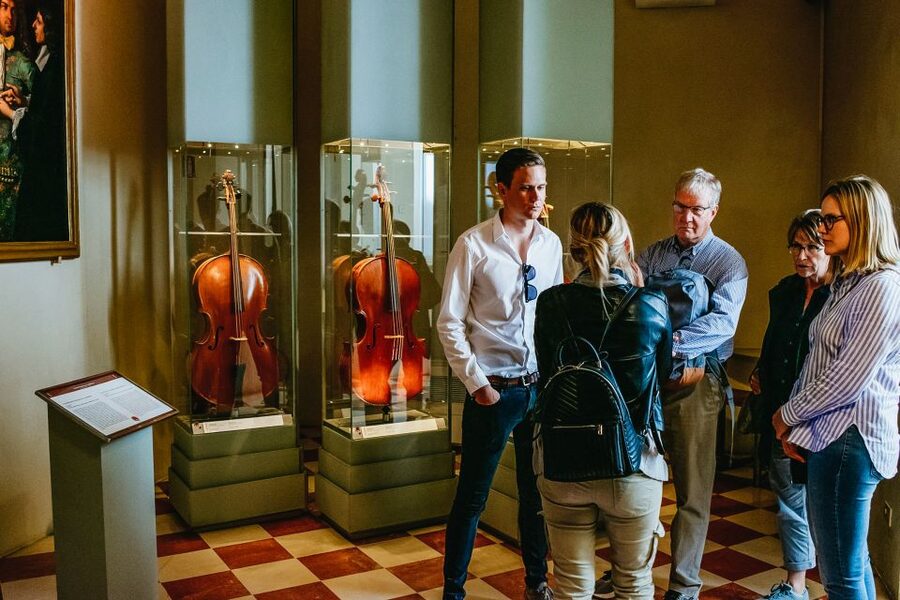
One of the less expected parts of the Accademia is the Museum of Musical Instruments. It adds a different kind of interest to a visit dominated by marble and Renaissance painting.
The collection includes a piano described as the oldest existing piano in the world, along with the Viola Stradivari made for Grand Prince Ferdinando de’ Medici. These objects connect art with court life, craftsmanship, and sound.
You may not spend as long here as in the David room, but it is worth including in your route. The instruments show that Florence’s cultural story was not limited to painting and sculpture. They also offer a welcome change of pace after the intensely visual galleries.
The audio guide can be useful in this section because instruments are easy to pass without context. Bring headphones if your selected option requires them. The instructions for the audio guide can vary, and it is wise to check whether you need to download or prepare an app before you arrive.
Gipsoteca Bartolini and the museum’s quieter side
Before leaving, make time for the renovated Gipsoteca Bartolini. This showroom contains sculptures and busts connected with Lorenzo Bartolini, one of the leading Italian sculptors of the nineteenth century.
The room has a different feel from the Hall of Michelangelo. Instead of one giant centerpiece, you see rows of sculptural studies, portrait busts, and plaster models. It is a useful reminder that museums often contain more than their single famous masterpiece.
This section may appeal most if you like portrait sculpture or want a slower final room. It can also be easy to skip when everyone in your group is focused on David. I would not make it the priority for a one-hour visit, but it is a worthwhile addition if you have time.
The collection works best when you move at your own pace. You can give David twenty minutes, the Prisoners ten minutes, and the other rooms as much or as little attention as your interests allow. That freedom is the strongest feature of the self-guided format.
Is $45 worth paying for Accademia entry?
The listed price is $45 per person. Standard museum admission is much lower, so most of the extra cost pays for the reserved ticket service and the time saved.
That makes the value depend on your schedule. If you have only one day in Florence, or if your visit falls during a busy period, skipping a long outdoor queue can be worth the premium. A missed hour in Florence is not just lost museum time. It can mean less time for the Duomo, the Uffizi, a meal, or simply walking through the city.
If you are visiting in a quiet season and can accept a wait, the price may feel harder to justify. One person who expected a direct entrance still waited about 30 minutes because of the queue and security process. Another found the extra cost worthwhile because the normal line stretched for a full block.
The important point is to think of this as a convenience purchase, not a luxury tour. You are paying for access planning and a host who gets you to the correct line. You are not automatically paying for a personal art historian.
The high overall rating reflects strong satisfaction with the entry process and the museum itself, but the service is not perfect. The main complaints concern unclear directions to the collection office, confusion among people waiting at the meeting point, and the fact that skip-the-line does not eliminate all waiting.
Audio guide or no audio guide?
Choose the audio guide if you want background while moving through the museum but do not want a live group tour. It lets you stop, listen, and continue when you are ready.
This option is especially helpful for the unfinished Michelangelo works and the Renaissance paintings. Labels can tell you an artist’s name and a title, but a good explanation helps connect the piece to Florence and to the artist’s working methods.
Skip the audio guide if you already prefer reading labels or want a quiet, fast visit. Some people enjoy simply looking at David without a running commentary. The self-guided structure works well for both styles.
Bring headphones. This is listed as something to have with you, and one practical issue is that you may need to prepare an app in advance, depending on the audio guide version. Do not wait until you are standing at the entrance to discover that your phone needs an update or download.
There is no need to spend the entire day inside. The ticket allows all-day access, but the museum’s manageable size means most people can see its main rooms in one to two hours. The longer access window is useful if you want a relaxed pace or need to fit the visit around the rest of your Florence plans.
Accessibility, children, and arrival tips
The museum is wheelchair accessible. If you are visiting with children under 18, bring an ID card or a photocopy showing their age. Children must also have a passport or ID card available as required for the booking.
All visitors pass through a security metal detector. Avoid arriving at the last second, especially if you have a tight schedule afterward. A 15-minute security delay is possible, and busy periods can add more waiting.
The available host languages include English, German, Italian, French, and Chinese. Remember that language support at the meeting point does not necessarily mean you receive a guided tour inside the museum. The standard arrangement remains self-guided unless you book a live guide option.
A few small habits can make the visit easier:
- Save the meeting-point address and booking details before leaving your hotel.
- Arrive about 15 minutes early.
- Check the exact office location because it may be inside a shop.
- Bring headphones if using the audio guide.
- Keep children’s identification easy to reach.
- Go early if you want the calmest conditions.
- Allow extra time for security, even with a reserved ticket.
Who should book this David experience?
I would recommend it to anyone with limited time in Florence, anyone visiting during a crowded season, and anyone who does not want to gamble on finding a same-day ticket. It is also a good fit if you prefer exploring independently and want the option of audio commentary.
It suits couples, families, and mixed-interest groups. An art lover can spend time with the Prisoners and paintings, while a less enthusiastic companion can see David and finish quickly. The all-day access gives you some flexibility, though the entry itself remains tied to a selected time.
I would think twice if your budget is tight and you are willing to wait. The museum admission itself costs much less, and the premium is mainly for convenience. I would also choose a formal guided visit instead if your main goal is detailed instruction from an art expert.
The service has generally been organized, and hosts such as Camilla and Alessandria have received praise for clear, engaging help. Still, the basic product should be understood correctly: the host helps you enter, then you continue on your own. A photographer option has also been available in some bookings, with Mary praised for being accommodating, but that is not part of the standard ticket.
Final verdict: pay for the time savings?
Book this if David is high on your Florence list and your schedule matters. The original statue is extraordinary, the museum includes far more than its headline attraction, and skipping the ordinary ticket queue can save a large slice of your day.
Just keep your expectations clear. You may still wait at security, the meeting office can be difficult to identify, and the basic ticket does not include a live guide. If you accept those limits, the $45 price is a reasonable convenience fee for a busy Florence itinerary.
If you arrive early, follow the meeting instructions carefully, and allow at least an hour or two inside, this is a practical way to see one of Italy’s essential artworks without sacrificing half your day to a street queue.
FAQ
Is this a guided tour of the Accademia Gallery?
No. The standard experience is self-guided. A host or greeter helps with ticket collection and entry, while an optional audio guide provides commentary inside the museum. A live guided option may require a different booking.
Does the ticket include all sections of the museum?
Yes. The ticket includes access to all museum sections, including the Hall of Michelangelo, the Renaissance paintings, the Museum of Musical Instruments, and the Gipsoteca Bartolini.
Can I really skip the entire line?
You can skip the regular ticket line through the reserved entry process, but you still need to pass security and follow crowd-control procedures. Metal-detector checks can cause delays of around 15 minutes, and a reserved queue may still be busy.
How long can I stay inside the Accademia?
The activity duration is listed from one hour to one day. You receive all-day access, so you can choose a short visit or take more time with the museum’s different collections.
What should I bring?
Bring your booking information, headphones if you select the audio guide, and identification for children under 18. Children may need a passport, ID card, or photocopy proving their age.
Is the Accademia accessible by wheelchair?
Yes. The museum is wheelchair accessible. All visitors, including wheelchair users, must still pass through the required security check.
Recently reviewed around Florence
- Florence Sunset Food Tour with Wine & Dine at a Tuscan farmhouse★ 5.0 · 194 reviews
- Walking Food Tour of Florence with Tastings and Wine★ 5.0 · 518 reviews
- Wine Experience In Chianti Hills from Florence★ 4.5 · 195 reviews
- Uffizi Gallery Timed Entry Admission Tickets★ 4.0 · 392 reviews
- Val d’Orcia Brunello Wine Tour with Montalcino and Montepulciano★ 4.5 · 359 reviews
- Wine Tasting Experience in Ponte Vecchio: Best Tuscany selection!★ 5.0 · 197 reviews
- Uffizi Gallery Small Group Tour with Guide★ 4.5 · 879 reviews
- Early Access Guided Uffizi Gallery Tour Skip-the-Line Small Group★ 4.5 · 707 reviews
Skip the Line, compared.
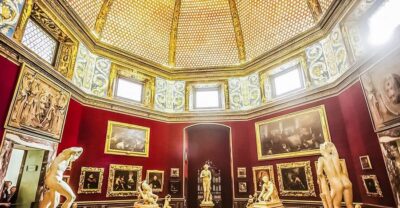
Skip-The-Line Uffizi Gallery Timed Entry Ticket
Read our review →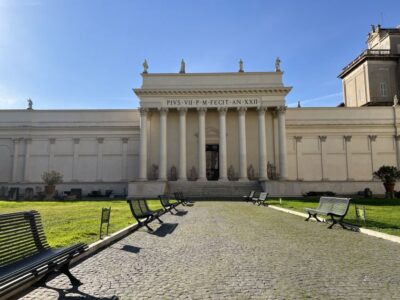
Vatican Museums & Sistine Chapel Skip-the-Line Entry Ticket
Read our review →
Skip-the-Line Group Tour of the Vatican, Sistine Chapel & St. Peter’s Basilica
Read our review →
Vatican Museums & Sistine Chapel Skip-The-Line Ticket
Read our review →
Vatican, Sistine Chapel & St. Peter’s Skip-the-Line Tour
Read our review →
Skip-the-Line Vatican, Sistine Chapel & St. Peter’s | Small Group
Read our review →
Vatican: Vatican Museums Sistine Chapel Skip-the-Line Ticket
Read our review →
Browse the lists this tour appears in