
Review · UFFIZI GALLERY TOURS
Florence: Walking Tour with David, Duomo & Uffizi Gallery
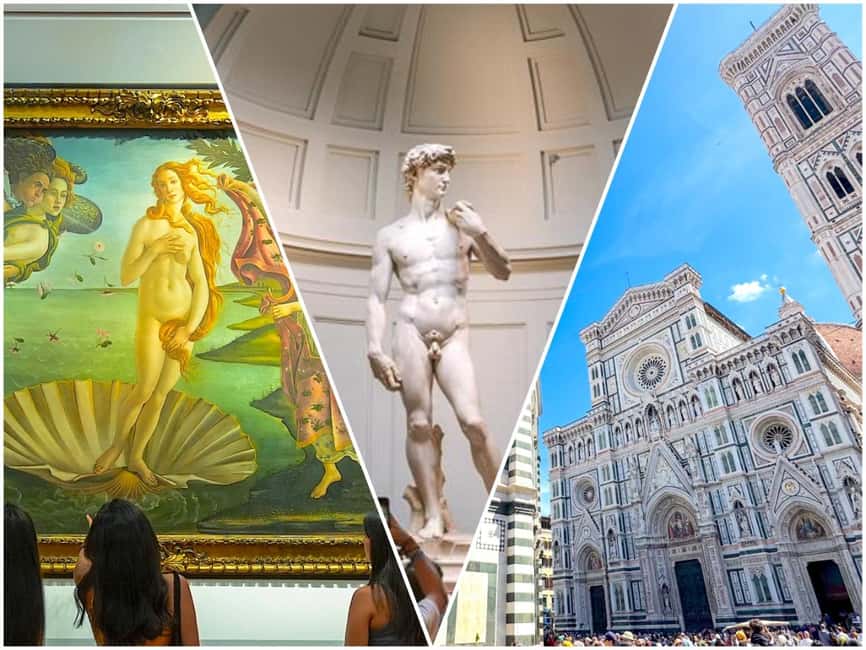
Michelangelo’s David is the star here, but the smart part of this Florence tour is the way it connects the statue to the city around it. You see David at the Accademia, then walk through Medici territory, past the Duomo and Palazzo Vecchio, before finishing with Botticelli, Leonardo, and other Renaissance masters at the Uffizi.
I like the small-group limit of 15, which makes it easier to hear the guide and ask questions. I also like having a guide inside both museums. Florence’s collections can feel like an avalanche of paintings, and a good guide helps you focus on the works that matter most. The main drawback is the length: a full-day version can run six or seven hours, with plenty of walking and a lot of art to absorb.
In This Review
- Key points to know before booking
- Why this Florence tour works well in one day
- Entering the Accademia and meeting David
- From Medici power to the Duomo
- Porcellino, Signoria, and the Ponte Vecchio
- Lunch break and the second museum
- Finding Botticelli and Leonardo inside the Uffizi
- The guides make the difference
- How demanding is the day?
- Half-day or full-day?
- Who should book this experience?
- Should you book it?
- FAQ
- Where does the Florence walking tour begin?
- Where does the tour finish?
- Are the Accademia and Uffizi tickets included?
- Is entry to the Duomo included?
- How long does the experience last?
- What languages are available?
- Can I bring a large bag or water bottle?
- Is the tour suitable for wheelchair users?
Key points to know before booking
- David gets the close-up treatment: Expect time to study Michelangelo’s statue from different angles, with attention to details you could easily miss alone.
- Two major museums, one planned route: Reserved entry at the Accademia and Uffizi saves time, though security checks can still create short waits.
- Florence’s historic center fills the gaps: The walk links the museums with the Duomo, Mercato del Porcellino, Piazza della Signoria, and Ponte Vecchio.
- Small groups make the guide count: The maximum group size is 15, and audio equipment is generally used so you can hear in crowded areas.
- Choose the right tour length: The full-day option includes the walking tour and lunch break. Check the selected option carefully, since the half-day version is shorter.
- Come ready to walk: Comfortable shoes are essential. Large bags and drinks are not allowed inside the museums, and the Uffizi does not permit ordinary water bottles.
Why this Florence tour works well in one day
Florence is compact, but its greatest sights are packed with people, art, and competing details. You can walk between the main sites easily, yet the museums are harder to handle without a plan. This tour gives you a sensible route and a person who can explain what you are seeing.
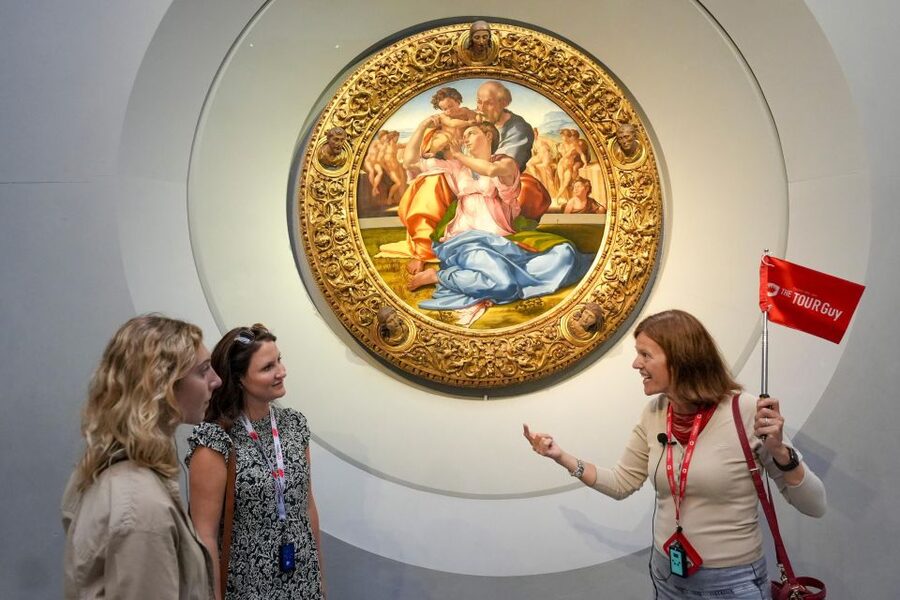
The day begins at Piazza Santissima Annunziata, in front of the equestrian statue of Ferdinando I de’ Medici. Look for a representative holding a sign marked The Tour Guy. The meeting point is central, but give yourself time to find the exact statue. Florence has several grand squares and more than one Medici landmark, so arriving early is wise.
The advertised price is $111 per person. That is not the cheapest way to see Florence, but the value comes from the reserved museum access, guided visits to both galleries, and several hours of city touring. Buying entry alone would not give you the historical thread between Michelangelo, the Medici family, the cathedral, and the Uffizi collection. If you want to understand the art rather than simply pass it, the price can make sense.
More Museum Tours in Florence
- Florence: Skip-The-Line Uffizi Gallery Timed Entry Ticket
★ 4.5 · 27,832 reviews - Florence: Leonardo Interactive Museum Entry Ticket
★ 4.5 · 11,763 reviews - Florence Accademia Gallery Tour with Entrance Ticket Included
★ 4.5 · 6,148 reviews
Entering the Accademia and meeting David
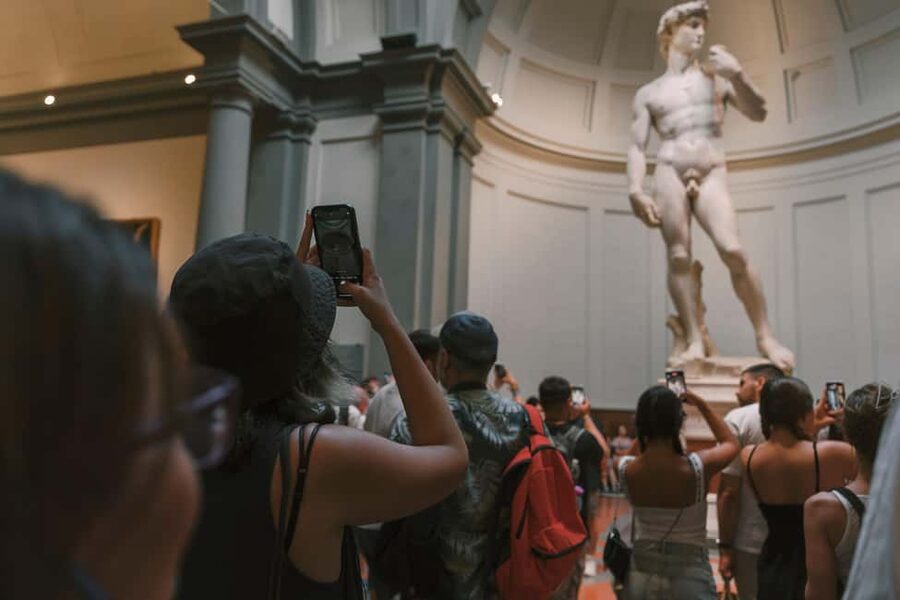
The Accademia is the first major stop, with about 45 minutes of guided touring before a focused visit to David. Reserved entry helps you avoid the long public ticket queue, one of the clearest practical benefits of booking ahead.
Do not expect the Accademia to take an entire morning on this tour. The guide concentrates on the key works, with David receiving the most attention. That approach suits first-time visitors who want the essential pieces without trying to memorize every room.
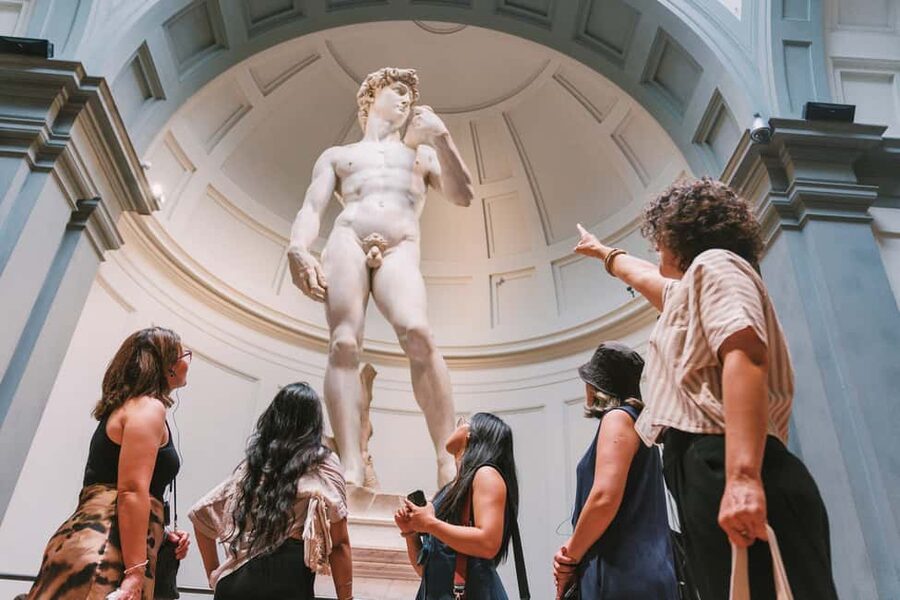
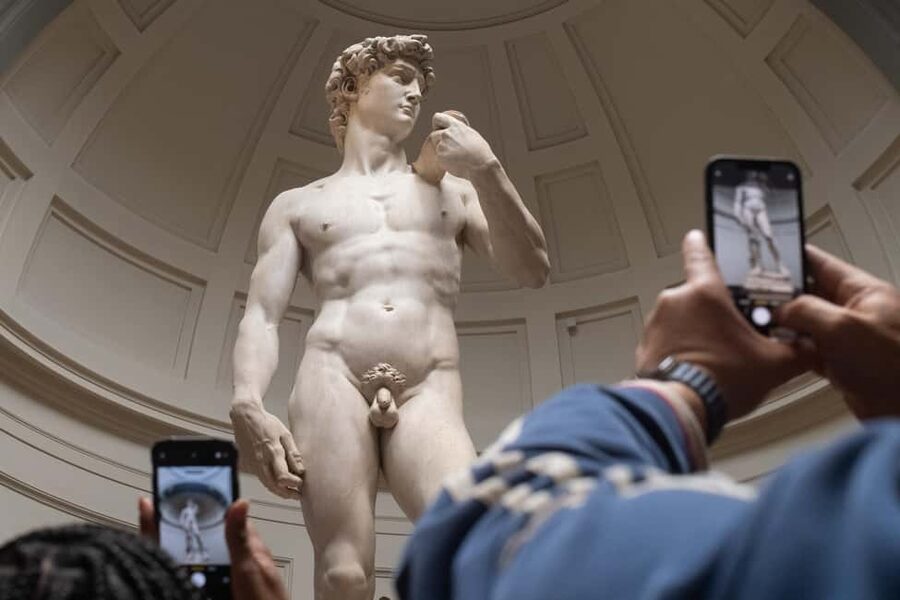
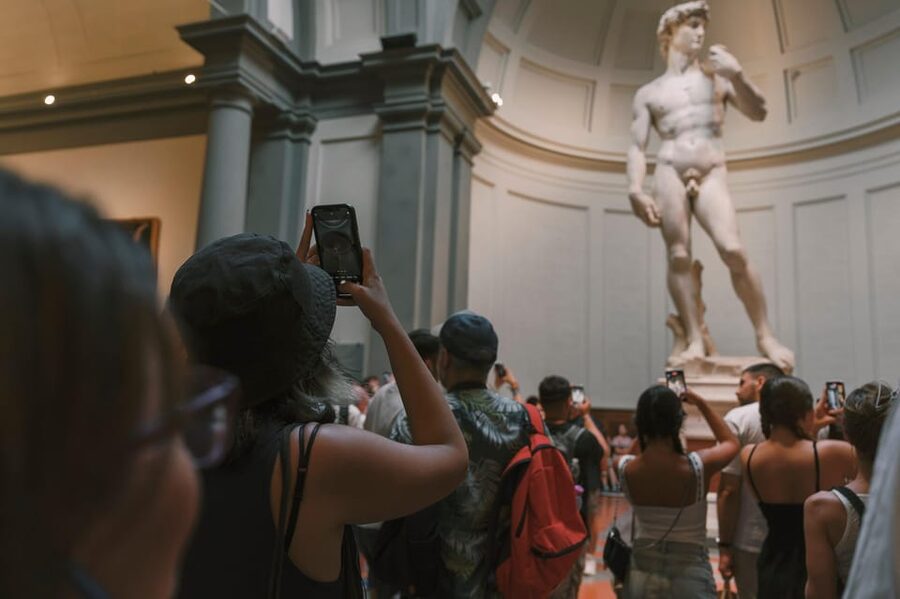
David deserves more than a quick photograph. The guide may point out the statue’s proportions, pose, facial expression, and the way the figure changes as you move around it. One guide, Angela, was especially praised for having the group view David from several angles and notice details that might otherwise disappear in the crowd.
This is also where a guide can add useful background about Michelangelo and the statue’s role in Florentine identity. You are not simply looking at a famous naked man carved from marble. You are seeing a political symbol that became tied to Florence’s idea of independence and civic pride.
The gallery can be crowded, and the time near David may feel short if you want long, quiet contemplation. Still, the focused format is useful. A self-guided visit can leave you wondering where to begin, while a guide gives you a clear order and a reason to look closely.
From Medici power to the Duomo
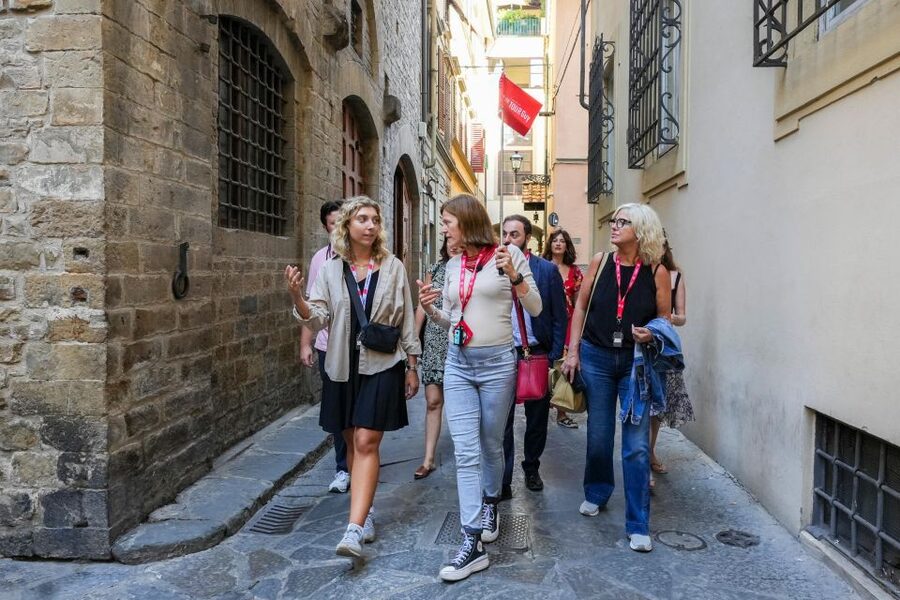
After the Accademia, the route moves through central Florence. Palazzo Medici Riccardi appears as an exterior sight, a reminder of how one family helped shape the city’s government, art, and public life. You do not enter the palace on this tour, but the stop helps connect the people who commissioned art with the art itself.
The Florence Duomo Complex follows, with the cathedral and its enormous red dome viewed from outside. This is an important distinction: entry to the Duomo is not included. You get an exterior look, photographs, and an explanation of its place in Florentine history, but not a climb into the dome or a visit inside Santa Maria del Fiore.
That limitation is not necessarily a problem. The outside of the cathedral is one of Florence’s great visual moments, and the guide can help you read its Gothic design instead of treating it as a backdrop for a selfie. If you want to climb the dome or enter the cathedral, plan that separately.
The walk also passes the House of Dante, Orsanmichele, and other central landmarks. These stops are brief, generally around ten minutes, so think of them as orientation points rather than full visits. They give you a better sense of how tightly packed Florence’s medieval and Renaissance center really is.
Porcellino, Signoria, and the Ponte Vecchio
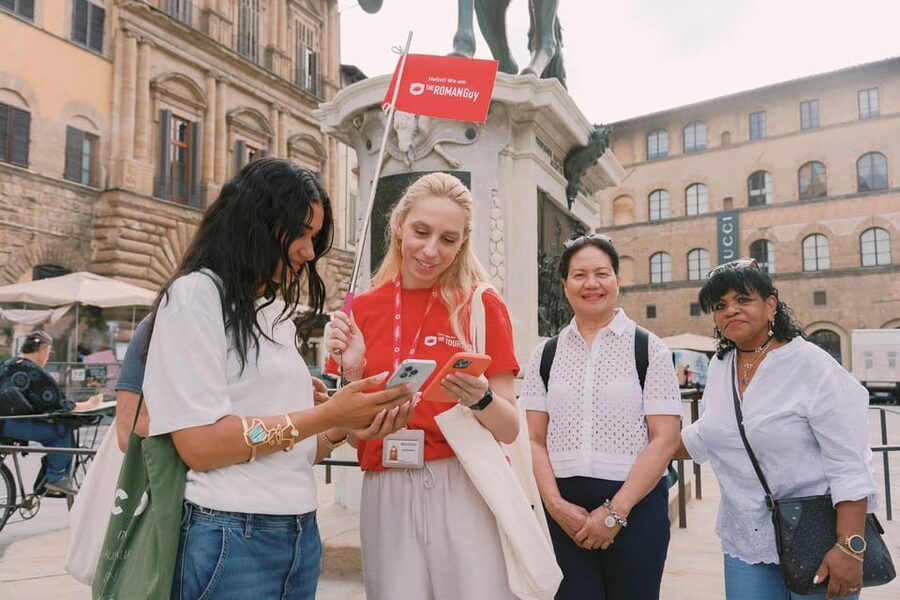
At Mercato del Porcellino, you get a short break to look at leather goods and the famous bronze boar. Your guide will likely remind you of the local custom: rub the boar’s snout for luck, then toss a coin into the fountain to help ensure a return to Florence.
This stop adds a bit of ordinary city life to a day otherwise centered on grand museums. It is also a useful place to browse, though you should keep your shopping expectations sensible and take care with personal belongings in crowded areas.
The route continues to Piazza della Signoria, one of Florence’s most important outdoor spaces. The square brings Medici politics, sculpture, and civic life together. You will see the Loggia dei Lanzi and the exterior of Palazzo Vecchio, with short photo stops rather than interior visits.
The Loggia is particularly useful for understanding how Florence displays sculpture in public. You can see works without entering a museum, and the guide can explain how the square functioned as a stage for power and public ceremony.
Then comes Ponte Vecchio. Its jewelry shops and narrow span over the Arno make it one of Florence’s easiest sights to recognize. The stop is brief, so you will not have time for a slow shopping session unless you use your free time wisely. Still, walking across the bridge gives the day a welcome change of pace after the dense museum rooms.
More Walking Tours in Florence
- Florence: Guided Walking Tour
★ 4.5 · 3,334 reviews - Skip the line: Uffizi and Accademia Small Group Walking Tour
★ 4.5 · 3,135 reviews - Florence: Guided Walking Tour
★ 4.6 · 1,602 reviews - Florence: Renaissance and Medici Tales Guided Walking Tour
★ 4.8 · 1,549 reviews
Lunch break and the second museum
The full-day version includes about an hour of free time for lunch. Food and drinks are not included, so you choose and pay for your own meal. Guides such as Brianne’s guide and several others have been praised for offering restaurant and gelato suggestions, which can help when you do not want to waste the break studying menus.
An hour is enough for a straightforward lunch, but it is not a leisurely Tuscan feast. Florence restaurants can be busy, and you will need to watch the time. If you prefer to eat slowly, this schedule may feel tight. If you want fuel before another two-hour museum visit, the break does its job.
The Uffizi follows lunch and is usually the intellectual centerpiece of the second half. Reserved entry means you bypass the main ticket queue, but you still pass through security. One important rule: the Uffizi does not allow ordinary liquids inside, so leave your water bottle behind. Baby bottles and medicine liquids are accepted. Large bags must be checked, and the Accademia has similar restrictions.
Finding Botticelli and Leonardo inside the Uffizi
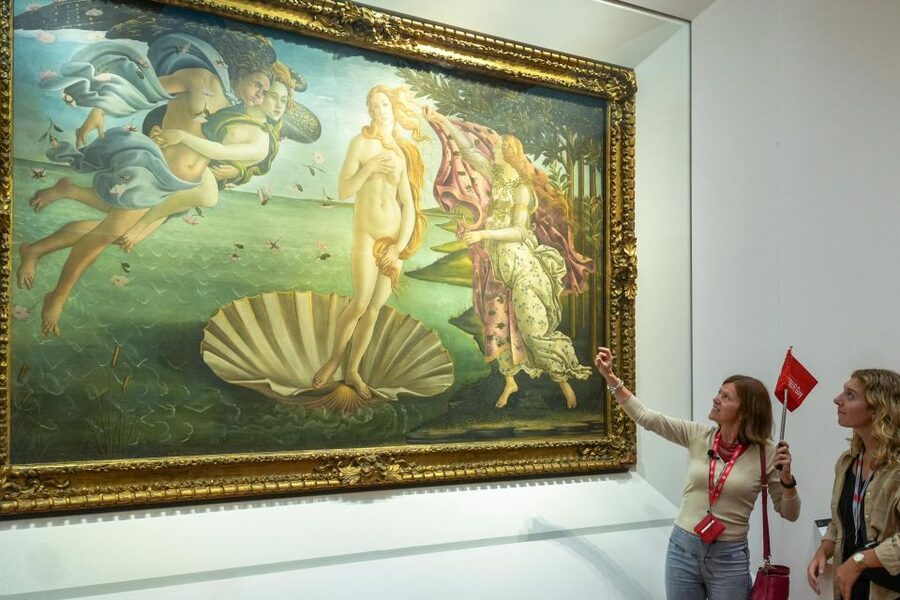
A guided Uffizi visit lasts about two hours. That is long enough to see major rooms and famous works, but not long enough to cover everything. This is a good thing. The Uffizi can overwhelm even art lovers, and the guide’s job is to select the essential works and explain why they matter.
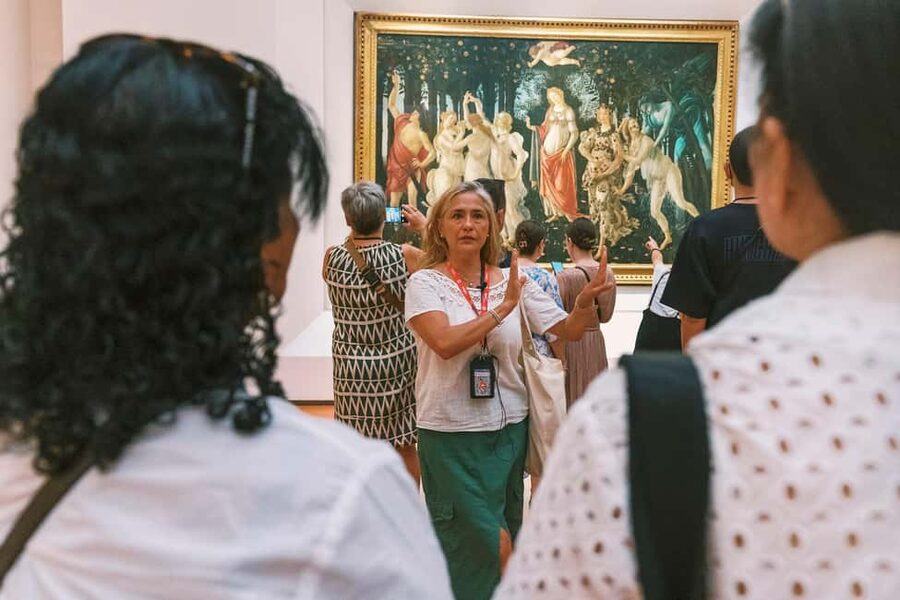
Expect to see Botticelli’s Birth of Venus, Leonardo da Vinci’s Annunciation, and other major Renaissance paintings. The best guides do more than provide dates and names. They explain how artists handled perspective, light, movement, religious themes, mythology, and the human body.
Several guides have been praised for balancing art history with stories about the people and politics behind the works. That balance matters. Florence becomes easier to understand when you see that its paintings were shaped by patrons, rival families, religious ideas, and civic competition.
The Uffizi can be noisy. Most groups use headsets or an audio system, which helps, though one particularly useful warning is that audio quality can vary. In crowded rooms, position yourself close to the guide and speak up if you cannot hear. A small group helps, but it cannot remove the museum’s crowds.
Two hours may leave you wanting more, especially if you already know Renaissance art. The advantage is that you finish with a strong list of paintings to revisit later, rather than wandering until every room blurs together.
The guides make the difference
The tour is sold around David and the Uffizi, but the guide determines how much you take away. The strongest feedback centers on guides who combine art history with Florence’s daily culture and practical advice.
Names that received especially warm praise include Francesca, Cosetta, Alma, Claudia, Lori, Lucia, Angela, and Cristiano. Cosetta was praised for keeping detail at the right level, while Alma was noted for explaining art clearly to both children and adults. Claudia brought energy to stories about art, history, and gelato. Cristiano received special praise for his discussion of David and the surrounding works.
You may not receive a specific guide by name, so book this for the structure and subject, not for a guaranteed personality. The available languages are English and Spanish. Private and small-group options are offered, but group size and language depend on the option you select.
Headsets are especially useful in the Accademia and Uffizi, where other groups and general museum noise can make ordinary conversation difficult. One audio complaint did appear, so tell the guide right away if your earpiece is faint or cutting out.
How demanding is the day?
The walking itself is not described as a strenuous hike, but the day involves standing, city streets, museum floors, and extended periods on your feet. Comfortable shoes are not optional. The experience is not suitable for wheelchair users or people with mobility impairments.
The full-day tour can last roughly six to seven hours, depending on the selected schedule and pace. Breaks are built in, including lunch, and one family said the rhythm worked well for both children and adults. Even so, young children or anyone who tires quickly may prefer the shorter option.
Crowds also affect the pace. Reserved entry avoids the long ticket line, but it does not remove museum security or visitor congestion. One useful expectation is that the morning entry may feel quicker than the afternoon Uffizi visit.
The tour ends at the Uffizi Galleries, not back at the starting point. That is convenient if you want to continue around the Arno or explore the historic center afterward. It is less convenient if you need to return to a hotel on the other side of town, so check the route before booking.
Half-day or full-day?
The full-day option is the better choice if this is your first Florence visit and you want the city overview as well as the two museums. It includes the walking tour, exterior stops, lunch break, and Uffizi visit.
The half-day option is better if you already know the center, have limited energy, or want to reserve time for your own plans. Sites described as optional are viewed externally during the full-day walking route and are not part of the shorter version. Read the selected option carefully, since the duration can range from four to seven hours.
I would choose the full day for a first visit, especially if you have not booked separate museum tickets. I would choose half-day for a return visit focused mainly on David and the Uffizi.
Who should book this experience?
You should consider it if you want:
- A first look at Florence’s major sights in one organized day
- Context for Michelangelo, Botticelli, Leonardo, and the Medici family
- Help choosing the most important rooms and artworks
- Reserved entry rather than gambling on same-day museum tickets
- A small group instead of a large flag-following crowd
- Restaurant, gelato, and sightseeing suggestions from a local guide
You may want another plan if you prefer to explore museums at your own speed, dislike fixed schedules, or want to spend hours inside the Duomo. This tour does not include the cathedral interior, dome climb, food, hotel pickup, or transport.
Free cancellation is available up to 24 hours before the activity for a full refund, and you can reserve now and pay later. On the first Sunday of each month, museum entry is free, but advance tickets cannot be reserved for that day, so entry is not guaranteed.
Should you book it?
For most first-time visitors, yes, especially if David and Renaissance art are high on your list. The combination of reserved entry, a maximum group size of 15, and a guide who can connect paintings to Florentine politics gives you much more than a simple highlight reel.
Book the full-day version if you want the city walk and can handle a long day on foot. Pick the half-day option if you need a lighter schedule. Either way, wear good shoes, bring a small bag, and treat the guide as your key to seeing the important works without getting lost in Florence’s art overload.
FAQ
Where does the Florence walking tour begin?
Meet in Piazza Santissima Annunziata, in front of the equestrian statue of Ferdinando I de’ Medici. A representative will hold a sign marked The Tour Guy.
Where does the tour finish?
The tour finishes at the Uffizi Galleries.
Are the Accademia and Uffizi tickets included?
Yes. The tour includes skip-the-line entry and guided visits to both the Accademia Gallery and Uffizi Gallery.
Is entry to the Duomo included?
No. The Duomo and Cathedral of Santa Maria del Fiore are visited externally on the walking route. Entry inside is not included.
How long does the experience last?
The listed duration is four to seven hours. The exact length depends on the selected option and schedule. The full-day version includes the city walk, lunch break, and Uffizi visit.
What languages are available?
Live guides are available in English and Spanish.
Can I bring a large bag or water bottle?
Avoid large bags because the Accademia and Uffizi require them to be checked. The Uffizi does not permit ordinary liquids or water bottles inside. Baby bottles and medicine liquids are allowed.
Is the tour suitable for wheelchair users?
No. The experience is not suitable for wheelchair users or people with mobility impairments.
Recently reviewed around Florence
- Walking Food Tour of Florence with Tastings and Wine★ 5.0 · 518 reviews
- Florence Sunset Food Tour with Wine & Dine at a Tuscan farmhouse★ 5.0 · 194 reviews
- Wine Experience In Chianti Hills from Florence★ 4.5 · 195 reviews
- Uffizi Gallery Timed Entry Admission Tickets★ 4.0 · 392 reviews
- Val d’Orcia Brunello Wine Tour with Montalcino and Montepulciano★ 4.5 · 359 reviews
- Wine Tasting Experience in Ponte Vecchio: Best Tuscany selection!★ 5.0 · 197 reviews
- Uffizi Gallery Small Group Tour with Guide★ 4.5 · 879 reviews
- Early Access Guided Uffizi Gallery Tour Skip-the-Line Small Group★ 4.5 · 707 reviews
Uffizi Gallery Tours, compared.
Skip-The-Line Uffizi Gallery Timed Entry Ticket
Read our review →
Uffizi Priority Ticket & Masterpieces Audio App
Read our review →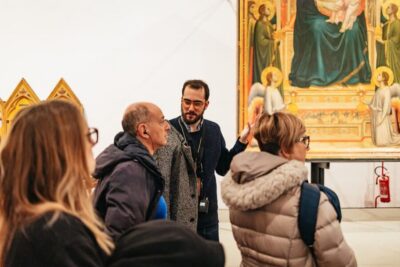

Skip the line: Uffizi and Accademia Small Group Walking Tour
Read our review →
Uffizi Gallery and Accademia Gallery Guided Tour
Read our review →
Uffizi Gallery Small-Group Guided Tour with Ticket
Read our review →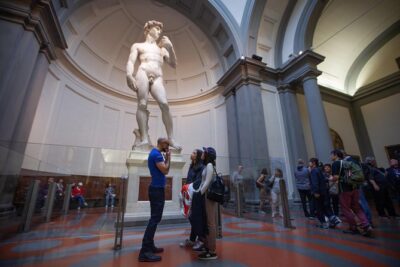
Michelangelo’s David, Accademia & Uffizi Small Group Tour
Read our review →Browse the lists this tour appears in