
Review · WALKING TOURS
Florence Walking Tour
Florence reveals itself quickly on foot, and this two-and-a-half-hour orientation walk packs the city’s main sights into one useful first look. You move from the Medici quarter to the Duomo, across the historic center, past the Uffizi, and onward to Ponte Vecchio and Santa Croce. Guides such as Armando, Alessandro, Gino, and Barbara add stories, restaurant suggestions, and practical advice along the way.
I like the very low upfront cost and the small maximum group of four. I also like the timing: take it near the start of your stay, then use the guide’s advice to choose which museums, churches, food stops, and neighborhoods deserve more of your own time. The main caution is communication. A few people found a guide’s microphone garbled or a quick delivery and strong accent hard to follow.
In This Review
- Key points to know before you book
- Why this walk works well on your first day
- Starting at Piazza dell’Unità Italiana
- San Lorenzo, the Medici, and Florence’s power base
- The Duomo and Baptistery, Florence’s famous center
- Repubblica Square and Orsanmichele Church
- Porcellino and the route through Florence’s old center
- Signoria Square and the Uffizi exterior
- Ponte Vecchio and the walk toward Santa Croce
- What the guide adds beyond a map
- Who should book this Florence walking tour
- Should you book it?
- FAQ
- How long does the Florence walking tour last?
- What sights are included on the route?
- Does the tour include admission tickets?
- How much does the tour cost?
- Where does the tour begin?
- Where does the tour end?
- Is cancellation allowed?
Key points to know before you book
- A fast Florence orientation: Cover the Duomo, Medici landmarks, Uffizi exterior, Ponte Vecchio, and Santa Croce in about 2 hours and 30 minutes.
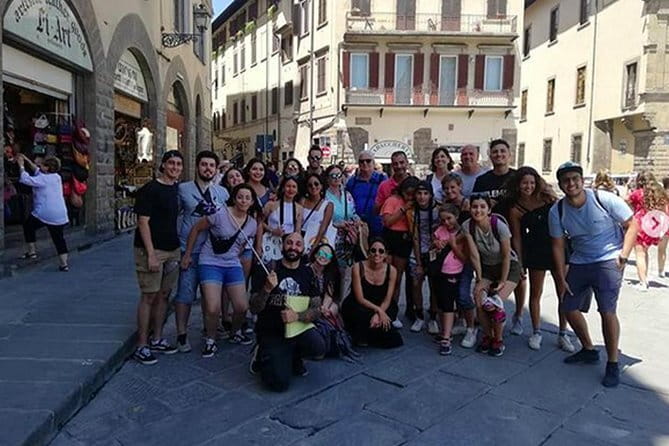
- Small group size: The activity lists a maximum of four participants, which should make questions and conversation easier than on a large city walk.
- Local practical advice: Guides have offered suggestions for restaurants, sandwich shops, gelato, shopping, public restrooms, opening hours, and getting around.
- Tip-based pricing: The booking price is listed as $3.63 per person, with a voluntary tip expected at the end if you feel the tour earned it.
- English-language walk: The tour is offered in English, though audio quality and speaking style may affect how clearly you hear every detail.
- Best taken early: Use it on arrival day or near the beginning of your Florence visit, when a city overview has the most value.
Why this walk works well on your first day
Florence is compact, but the center can feel like a maze of churches, palace facades, market stalls, narrow lanes, and grand squares. A map tells you where things are. A good guide explains why they are there and helps you connect the pieces.
This walk gives you that basic framework without asking you to spend a full day inside museums. You see the key buildings from outside, hear the main stories, and learn how the city’s central sights fit together. That makes it a useful first step before booking time at the Uffizi Gallery, climbing the Duomo, visiting the Medici Chapels, or returning to Santa Croce.
I would place this tour early in a Florence itinerary, ideally on your first or second day. Several guides have also shared food and shopping ideas, which can save you from choosing a restaurant at random when you are tired and hungry.
The booking price is remarkably low at $3.63 per person. This is not the full cost in the same way as a conventional paid tour, since the format includes a voluntary tip at the end. Think of the listed amount as a small reservation charge, then decide what the guide’s time and effort were worth after the walk.
More Walking Tours in Florence
- Florence: Guided Walking Tour
★ 4.5 · 3,334 reviews - Skip the line: Uffizi and Accademia Small Group Walking Tour
★ 4.5 · 3,135 reviews - Florence: Guided Walking Tour
★ 4.6 · 1,602 reviews
Starting at Piazza dell’Unità Italiana
The meeting point is Piazza dell’Unità Italiana, at 50123 Firenze FI. This places you near the eastern side of Florence’s central rail station area and close to the San Lorenzo district, a practical starting point for the route.
You receive confirmation at booking, and the mobile ticket makes it easy to keep the details on your phone. Check the meeting time carefully before setting out. One person arrived after a time change and missed the group because the updated notice was not seen. That problem is avoidable, but it is a good reminder to check your booking message on the day of the tour.
The walk ends at a different location, with the precise end details supplied through the booking information. Plan to carry only what you need. Comfortable shoes matter more than stylish ones here, since the route covers much of the historic center on foot.
San Lorenzo, the Medici, and Florence’s power base
The early part of the walk introduces you to the San Lorenzo area, one of the best places to understand Florence’s mix of religion, commerce, and political power.
You see San Lorenzo Market, where the surroundings bring a more everyday feel than the formal squares farther south. The route also includes San Lorenzo Church, a major Medici church, and the Medici Chapels. These stops help explain how one family shaped Florence through banking, politics, art, and patronage.
The Medici Chapels are especially useful to see from the outside before deciding if you want to pay for entry later. A guide can give you the basic context, while you save your museum time for the interiors that most interest you.
The walk also passes the Medici Riccardi Palace. Its facade is a reminder that Florence’s grand palaces were not simply homes. They announced status, wealth, and control of the city. A guide can turn an attractive building into a clue about how Florence worked.
This section is one reason the tour is more useful than a simple photo walk. You are not just collecting famous facades. You are getting an outline of who financed the city, who ruled it, and how art became part of public life.
The Duomo and Baptistery, Florence’s famous center
The route then reaches the Duomo Cathedral and the Baptistery, the most recognizable pair of sights in Florence. The cathedral’s patterned marble exterior is impressive from every angle, and the open space around it gives you time to take in the scale of the complex.
The walk does not include admission tickets, so you should not expect to enter the cathedral, climb the dome, or visit the Baptistery interiors as part of this activity. That is a limitation, but also a practical advantage if you have separate timed reservations. You can hear the basic story here, then return for a longer visit without holding up the group.
This is the point where a guide’s explanation matters most. The Duomo area can seem like one enormous monument, but it is a group of related buildings with different functions and histories. A well-paced explanation gives you a better sense of what you are looking at before you return on your own.
The stop can also be crowded and noisy. The tour information notes no special audio arrangement beyond the guide’s equipment, and one person found the microphone and speaker system difficult to hear. Stay close, especially during the busiest part of the route, and ask the guide to repeat anything you miss.
More Florence walks with a guide:
- Florence: Renaissance and Medici Tales Guided Walking Tour
★ 4.8 · 1,549 reviews - Florence: Uffizi & Accademia Small Group Walking Tour
★ 4.7 · 1,380 reviews - Skip-the-Line Florence Highlights and David Walking Tour
★ 5.0 · 1,127 reviews - Florence: Dark Mysteries and Legends Guided Walking Tour
★ 4.6 · 1,081 reviews
Repubblica Square and Orsanmichele Church
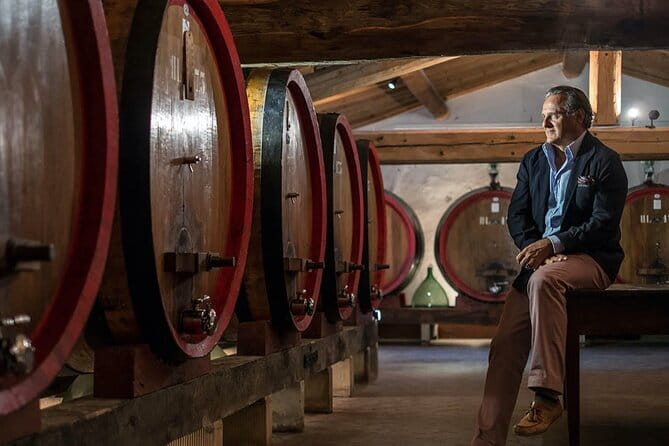
From the cathedral area, the walk continues toward Repubblica Square. This broad central space feels different from the older, tighter streets around San Lorenzo and the Duomo. It offers a useful change of scale and helps you see how Florence’s central district developed over time.
The next important stop is Orsanmichele Church. Its unusual origins and decorated exterior make it one of the city’s more interesting buildings, even though many people pass it without knowing what they are seeing. The church connects religious devotion with the guilds and trades that held power in medieval Florence.
I appreciate stops like Orsanmichele because they add texture to a standard Florence route. The Duomo and Ponte Vecchio are essential, but smaller or less familiar buildings often explain how ordinary civic life worked around the major monuments.
Your guide may tell stories about local customs, personalities, and the way Florentines use the historic center today. The tone of the walk varies by guide. Armando is described as funny, patient, and generous with practical tips, while Alessandro has been praised for personal knowledge gained from living in the city most of his life. Guides such as Simone, Deb, Elizabeth, and Samona have also been described as lively and easy to follow.
Porcellino and the route through Florence’s old center
The stop at Porcellino brings you into one of Florence’s most familiar street scenes. The name refers to the famous bronze boar statue near the market area. It is a quick stop, but it helps connect the city’s commercial past with the present-day habit of pausing for a photograph or a bit of local tradition.
This is a good place to pay attention to the guide’s small details. The best part of a walking tour is often not the headline fact. It is learning which streets are useful shortcuts, where public restrooms are located, what time major sights close, or which food shops deserve a return visit.
Armando’s advice has included restaurants, sightseeing hours, and public facilities. Alessandro has pointed people toward a sandwich shop and a gelato stop that became highlights of a longer Italy trip. Those tips have practical value because they come from seeing Florence as a working city, not just a collection of monuments.
Do not expect an extended food tasting on this particular walk. The route can lead you to places to try later, but the central purpose is orientation, history, and city layout.
Signoria Square and the Uffizi exterior

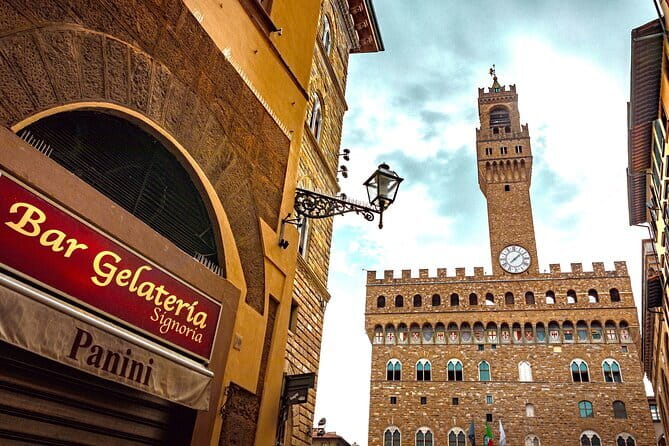
Signoria Square is one of the tour’s strongest visual stops. The square functions as an outdoor display of sculpture and civic power, with the Palazzo Vecchio and the Uffizi nearby. Even if you have no museum reservation, this area gives you a clear sense of Florence’s political center.
The Uffizi is seen from outside. That distinction matters. You will learn where the gallery is and why it matters, but admission is not included and the tour does not replace a visit inside. If Renaissance painting is a priority, use the walk to understand the location, then plan a separate timed entry.
A guide can also help you decide how to spend limited museum time. The city offers more art than most short visits can absorb, and a first look at the main buildings helps you choose instead of trying to see everything.
The square is also one of the liveliest points on the route. Groups may pause close together, and surrounding noise can make a fast-speaking guide harder to understand. Ask questions when the group stops, rather than trying to catch every word while walking.
Ponte Vecchio and the walk toward Santa Croce
Ponte Vecchio is the route’s most instantly recognizable crossing. The bridge links the two sides of the Arno and offers a classic Florence view, though the bridge itself can be crowded. A guide helps you move beyond the photograph by explaining its place in the city’s story and pointing out what to notice around the river.
You may not have much time for shopping or lingering here, since this is a walking orientation rather than a private photo session. If you want quiet pictures, note the best angles during the tour and return later at your own pace.
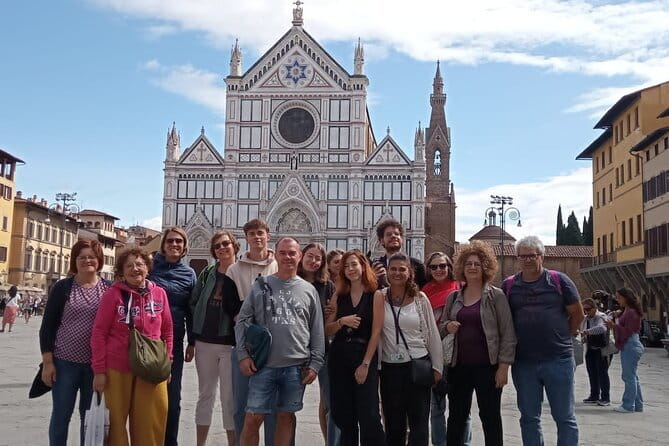
The final listed sight is Santa Croce Square. The square and its basilica mark a different part of central Florence, with a broad public space and an important church at its center. Like the Duomo and Medici Chapels, Santa Croce is best treated as a place to revisit if you want to go inside.
The activity ends at a different location from the meeting point. Since the exact endpoint is not provided in the tour details here, check it before booking dinner or arranging another timed activity immediately afterward.
What the guide adds beyond a map
The strongest part of this experience is the human layer. You get the basic history of major buildings, but you also get a sense of how to use Florence during the rest of your stay.
Guides have given advice on restaurants, sandwich shops, gelato, shopping, public toilets, opening and closing times, and getting around town. That is exactly the sort of information that can improve a short visit. You can ask where to return, which museum deserves your limited time, or how to avoid wasting an hour between reservations.
The guide names connected with especially warm praise include Armando, Alessandro, Gino, Barbara, Simone, Deb, Elizabeth, and Samona. The quality of a walking tour can depend on the individual guide, so expectations should remain sensible. One guide may tell more jokes and personal stories, while another may focus more tightly on dates and buildings.
Most of the feedback is highly positive, with a 4.8 rating from 621 ratings and a recommendation rate of 95 percent. The repeated strengths are clear: friendly delivery, strong city knowledge, humor, patience, and useful local suggestions.
The recurring weakness is also clear: hearing every detail may not be easy for everyone. One person found the sound system garbled, while another had trouble with a heavy accent and quick delivery. If you have hearing difficulties, stay near the guide and speak up early.
Who should book this Florence walking tour
I would choose this walk if you want a quick first map of Florence rather than a long museum lecture. It suits first-time visitors, people arriving for a short stay, and anyone who prefers to see the outside of major sights before paying for admission.
It also works well for people who want a low-cost introduction and do not mind the voluntary-tip format. The maximum of four participants is appealing for anyone who wants a more personal walk and a better chance to ask questions.
You may want something else if your main goal is entering the Duomo, Uffizi, Medici Chapels, or Santa Croce. None of the admission tickets is included, and the walk is designed to show you where these places are rather than provide an interior visit.
The 2.5-hour length is manageable, but it is still a substantial walk. Wear comfortable shoes, keep water handy, and leave room in your schedule afterward if you want to return to one of the sights.
Free cancellation is available up to 24 hours before the start time for a full refund. Changes or cancellations inside that window are not accepted for a refund, and poor weather or failure to meet the minimum group size can lead to a different date or a full refund.
Should you book it?
Book this Florence walking tour if you want to get your bearings quickly, hear the main stories behind the city’s famous buildings, and collect practical food and sightseeing advice at a tiny upfront price.
I would especially recommend it for the beginning of a Florence stay. The route covers enough ground to help you plan the rest of your visit, while the small group and tip-based format keep the experience personal and inexpensive.
Skip it if you need museum entry, a slow photography walk, or guaranteed audio clarity in a noisy city center. For most first-time visitors, though, this is a sensible way to meet Florence on foot before exploring its interiors in greater detail.
FAQ
How long does the Florence walking tour last?
The tour lasts approximately 2 hours and 30 minutes.
What sights are included on the route?
The route includes the Medici Chapels, San Lorenzo Market, Medici Riccardi Palace, San Lorenzo Church, Duomo Cathedral, Baptistery, Repubblica Square, Orsanmichele Church, Porcellino, Signoria Square, the exterior of the Uffizi, Ponte Vecchio, and Santa Croce Square.
Does the tour include admission tickets?
No. The listed itinerary states that admission is free, and the Uffizi is viewed from the outside. Separate admission is needed for attractions you choose to enter.
How much does the tour cost?
The listed price is $3.63 per person. The format also includes a voluntary tip at the end of the walk.
Where does the tour begin?
The meeting point is Piazza dell’Unità Italiana, 50123 Firenze FI, Italy.
Where does the tour end?
The activity ends at a different location from the starting point. The specific end details are provided through the booking information.
Is cancellation allowed?
Yes. You can cancel at least 24 hours before the start time for a full refund. Cancellations and changes made less than 24 hours before the start time are not accepted for a refund. Poor weather or failure to meet the minimum number of participants may result in another date or a full refund.
Recently reviewed around Florence
- Walking Food Tour of Florence with Tastings and Wine★ 5.0 · 518 reviews
- Florence Sunset Food Tour with Wine & Dine at a Tuscan farmhouse★ 5.0 · 194 reviews
- Wine Experience In Chianti Hills from Florence★ 4.5 · 195 reviews
- Uffizi Gallery Timed Entry Admission Tickets★ 4.0 · 392 reviews
- Val d’Orcia Brunello Wine Tour with Montalcino and Montepulciano★ 4.5 · 359 reviews
- Wine Tasting Experience in Ponte Vecchio: Best Tuscany selection!★ 5.0 · 197 reviews
- Uffizi Gallery Small Group Tour with Guide★ 4.5 · 879 reviews
- Early Access Guided Uffizi Gallery Tour Skip-the-Line Small Group★ 4.5 · 707 reviews
Walking Tours, compared.

Guided Walking Tour & Last Supper Visit with Ticket
Read our review →
Rialto Bridge & Offbeat Unusual Venice Walking Tour
Read our review →
Private 3 hrs Venice Tour: St Mark’s, Walking tour & Boat tour
Read our review →

Skip the line: Uffizi and Accademia Small Group Walking Tour
Read our review →
Trastevere & Campo de Fiori Street Food Walking Tour
Read our review →Browse the lists this tour appears in