
Review · MUSEUMS
Milan: Leonardo3 The World of Leonardo Museum Entry Ticket
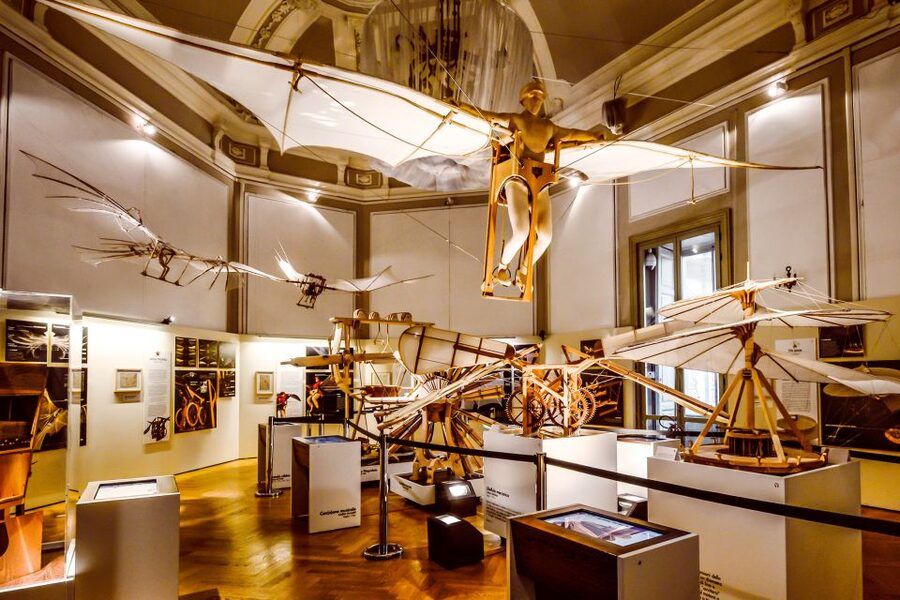
Leonardo3 turns Leonardo da Vinci’s cramped manuscript sketches into machines you can actually see working. The exhibition includes more than 200 interactive 3D models, from a mechanical dragonfly and self-supporting bridge to military devices, canal designs, theatrical machines, and studies of flight.
I like the way the museum connects each model to Leonardo’s notes, rather than presenting his inventions as mysterious magic. I also like the digital treatment of the Last Supper, which lets you inspect details of the famous painting without the pressure and viewing limits of the original church.
The main drawback is space. Some displays sit close together, and popular interactive stations can be awkward to reach. You may also find the rooms warm, so this works best as a focused one-and-a-half to two-hour visit rather than an all-day museum outing.
In This Review
- Key points about Leonardo3 in Milan
- Entering through Milan’s grand Galleria
- Leonardo’s notebooks become working machines
- From a mechanical dragonfly to military machines
- Digital codices make difficult drawings readable
- The Last Supper without the church’s strict limits
- Leonardo the artist, engineer, and city planner
- Hands-on stations that work well for families
- How the audio guide changes the experience
- Timing, comfort, and the museum’s compact layout
- Is $18 a fair price?
- Who should book Leonardo3?
- FAQ
- Where is Leonardo3 located?
- How much does admission cost?
- How long is the ticket valid?
- Is an audio guide included?
- What languages are used in the interactive exhibits?
- Is Leonardo3 wheelchair accessible?
- Are food and drinks allowed inside?
- Can I take photographs?
- Does the ticket include transportation?
- Should you book Leonardo3?
Key points about Leonardo3 in Milan
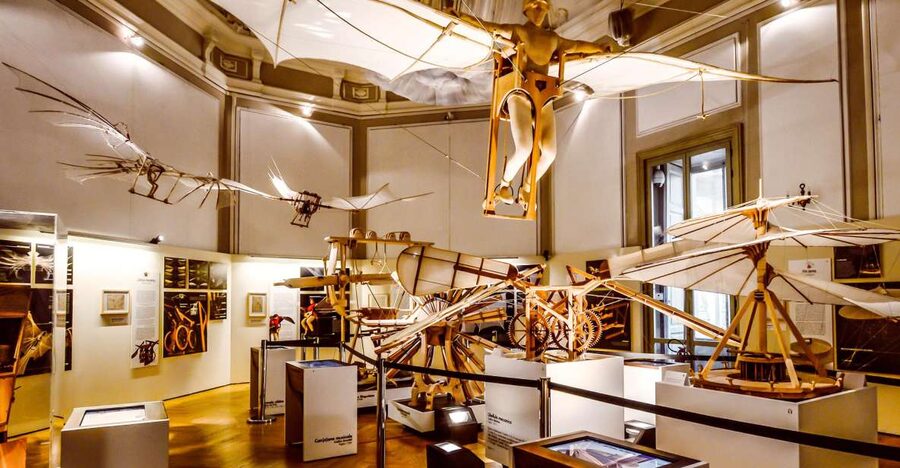
- More than 200 working reconstructions: See machines rebuilt from Leonardo’s manuscripts, including a mechanical dragonfly, bridge, weapons, and engineering devices.
- Digital Last Supper: Examine Leonardo’s wall painting through a digital restoration, with an optional three-dimensional reconstruction of its setting.
- Audio guide option: Hear explanations in English, Italian, Russian, German, French, Spanish, Portuguese, or Chinese.
- Hands-on family activities: Children can assemble a wooden bridge and print an inventor’s certificate.
- Central Milan location: Enter through the Galleria Vittorio Emanuele II from Piazza della Scala.
- Good value at $18: The ticket covers entry for one day, and the bookshop offers 10 percent off books when you show your voucher.
Entering through Milan’s grand Galleria
Leonardo3 is easy to combine with a day in central Milan. The entrance is through the Galleria Vittorio Emanuele II, the elegant covered arcade beside Piazza della Scala. You show your ticket at the ticket office, then enter the exhibition from this central meeting point.
That location matters. You do not need to plan a separate journey to a far-off museum or spend part of your day crossing the city. You can pair Leonardo3 with La Scala, the Duomo, the Galleria itself, or a walk through Milan’s historic center.
Transportation to and from the museum is not included, so you make your own way there. The activity ends back at the same meeting point, and the museum is wheelchair accessible.
There is one practical restriction worth noting: food and drinks are not allowed, and cameras are not permitted. Leave your snacks and camera equipment elsewhere before entering. Your phone may still be useful for ordinary travel needs, but follow the museum’s rules once inside.
More Museum Tours in Milan
- Milan: Science and Technology Leonardo da Vinci Museum Entry
★ 4.5 · 7,169 reviews - Official San Siro Stadium and Museum Guided Tour
★ 4.4 · 3,573 reviews - Milan: La Scala Theater & Museum Guided Experience
★ 4.1 · 2,931 reviews
Leonardo’s notebooks become working machines
The heart of Leonardo3 is its method. Leonardo left behind detailed drawings and notes, but many of his ideas were never built in his lifetime. The exhibition team studies those manuscripts and creates physical and digital reconstructions based on them.
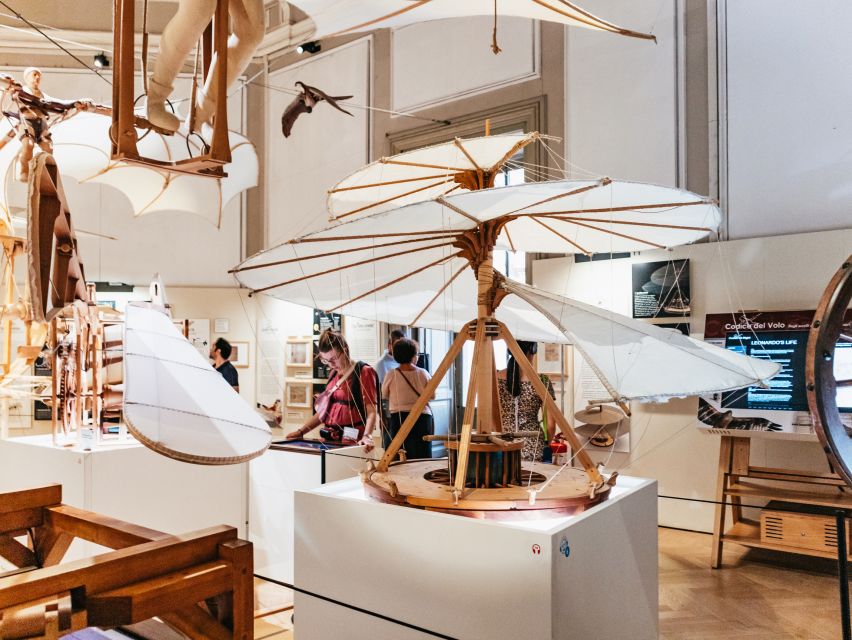
That process gives you something more useful than a wall of translated text. You can look at the original idea, then see how the machine might work in three dimensions. Move an interactive display, examine a mechanism, and connect the drawing with the physical result.
Some machines are fully functioning models. This does not mean Leonardo built them exactly as displayed. It means the exhibition has interpreted his plans and produced working versions to help you understand the design.
That distinction is important. You are not looking at original sixteenth-century machines. You are looking at modern reconstructions based on Leonardo’s codices. The value comes from seeing how experts turn flat, often difficult notes into understandable mechanisms.
From a mechanical dragonfly to military machines
The exhibition covers a wide range of Leonardo’s interests. You might begin with mechanical devices and then move into his studies of flight, war, water management, theater, music, and city planning.
The mechanical dragonfly is one of the memorable hands-on models. It shows how Leonardo studied movement and tried to transfer ideas from nature into machinery. You can see why his drawings still feel modern: he was not simply sketching objects, he was working out how forces, gears, motion, and balance might interact.
Military designs add a different mood. Leonardo’s notes include devices connected with defense and warfare, including crossbows, machine guns, and submarine concepts. These models show his engineering ability, but they also place his work in the political setting of Renaissance Italy, when cities and states were concerned with protection and military power.
The exhibition also includes theatrical inventions. These are easy to overlook if you visit only to see flying machines, but they reveal a more playful side of Leonardo’s work. He designed for spectacle as well as for war, transport, and practical engineering.
You may want to use the audio guide here. The models are interesting on sight alone, but their purpose is not always obvious. Audio explanations help clarify what Leonardo was trying to solve and how the reconstruction was made.
Digital codices make difficult drawings readable
Leonardo’s notebooks can be hard to read in their original form. His handwriting, reversed script, technical sketches, and unfinished ideas demand patience. Leonardo3’s digital displays make those pages easier to inspect.
You can see details from the codices in three dimensions and follow how a drawing becomes a model. This is one of the exhibition’s strongest features because it gives you access to Leonardo’s thinking, not just the polished image of a genius.
I especially like this approach for visitors who find traditional manuscript displays frustrating. Instead of standing in front of a small page behind glass, you can examine a digital version and see the relationship between separate parts of a design.
The exhibits also show that Leonardo was interested in systems. He studied motion and gravity, water and canals, machines and urban life. His work was not limited to painting or one famous invention. The museum lets you move between art, science, architecture, engineering, and performance.
A small amount of orientation at the start would make the visit easier. The exhibition contains a lot of information, and some visitors may want a short introduction before choosing which sections deserve the most time. If you use the audio guide, begin with its general explanations before rushing toward the larger models.
More Milan museums and collections:
- Milan: Pinacoteca Ambrosiana & da Vinci Codex Exhibition
★ 4.6 · 1,816 reviews - Milan: La Scala Theater and Museum Tour with Entry Tickets
★ 4.7 · 1,722 reviews - Milan: Cathedral, Archeological Area and Museum Ticket
★ 4.5 · 1,093 reviews - Casa Milan: Museum Entry Ticket
★ 4.6 · 969 reviews
The Last Supper without the church’s strict limits
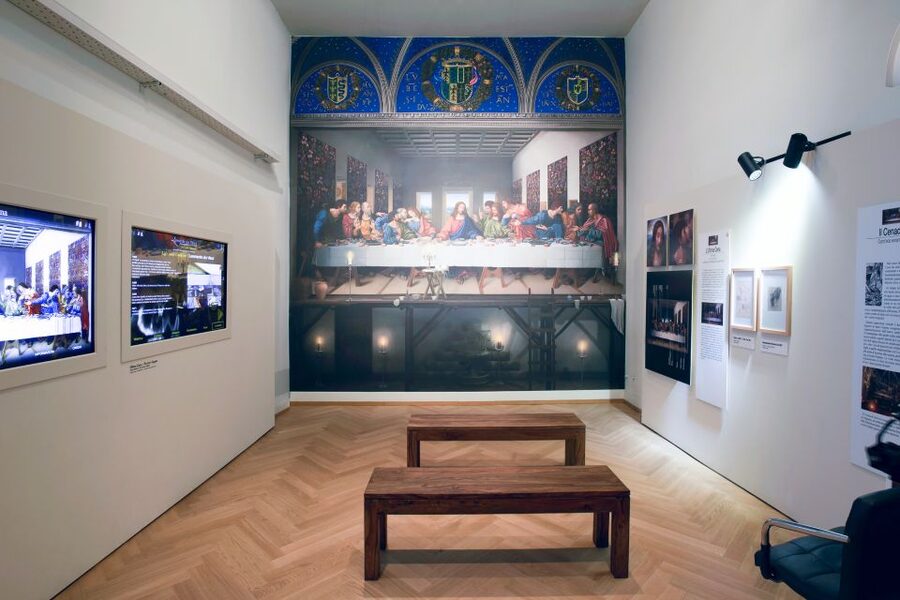
Leonardo’s Last Supper is in Milan, at the church and convent of Santa Maria delle Grazie. Seeing the original requires a separate reservation and a tightly controlled visit. Leonardo3 cannot replace that experience, but its digital version offers a different advantage.
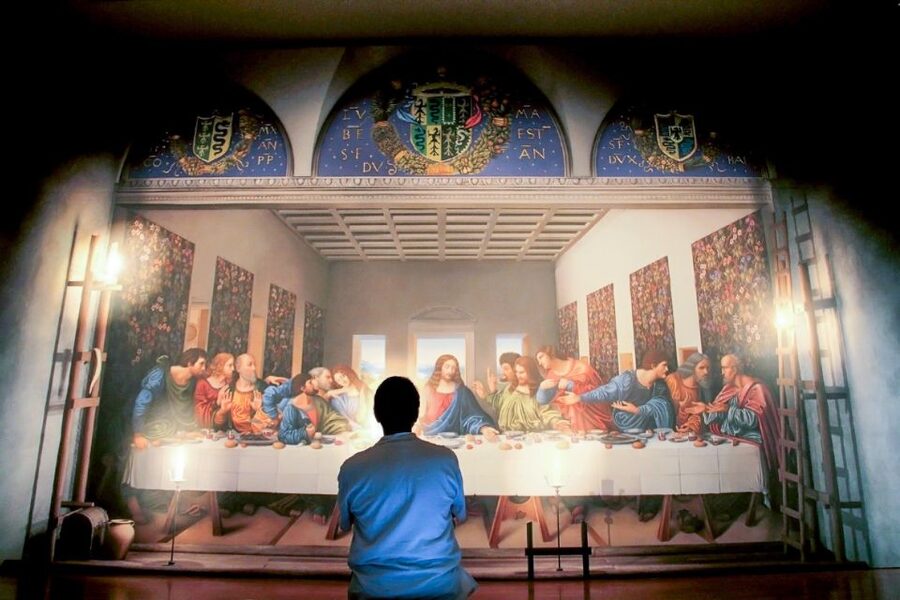
Here, you can study a digital restoration of the wall painting and inspect its details at your own pace. An optional three-dimensional reconstruction helps you understand the room and the placement of the figures.
This is useful if you cannot obtain a reservation for the original Last Supper, but it also helps you prepare for a visit to Santa Maria delle Grazie. You can focus on the composition, the condition of the painting, and Leonardo’s choices without having only a few minutes in front of the real wall.
Keep your expectations clear. A digital restoration is an interpretation, not the original artwork. The exhibition also presents digitally reconstructed versions of famous works and details, but these should be treated as study tools rather than replacements for Leonardo’s paintings.
The Last Supper section is still one of the most worthwhile stops. It expands the visit beyond machines and shows how Leonardo’s technical eye shaped his art.
Leonardo the artist, engineer, and city planner
A major strength of Leonardo3 is its range. You can study the famous artist, but you can also see the practical thinker who worked on canals, urban projects, monuments, machines, and military technology.
The canal and city-planning material gives useful context. Renaissance Italy was not yet a united country, and safety, water, transport, and defense were serious concerns. Leonardo’s designs aimed at practical problems, including more efficient urban life and engineering systems.
The horse monument section is another worthwhile pause. It shows the stages involved in producing an ambitious sculpture, from the early concept through the technical challenge of creating such a large work.
These sections help correct the familiar image of Leonardo as only the painter of the Mona Lisa and Last Supper. His notebooks show a person constantly testing ideas across different fields. One drawing might begin as an observation of nature and lead to a machine, a building plan, or a new artistic method.
The exhibition does not need to tell you that Leonardo was brilliant. The range of his work makes the point on its own.
Hands-on stations that work well for families
Leonardo3 is a good choice with children, especially those over about eight who can read instructions and follow a technical explanation. Younger children may still enjoy the moving machines, but the written material and concepts can be demanding.
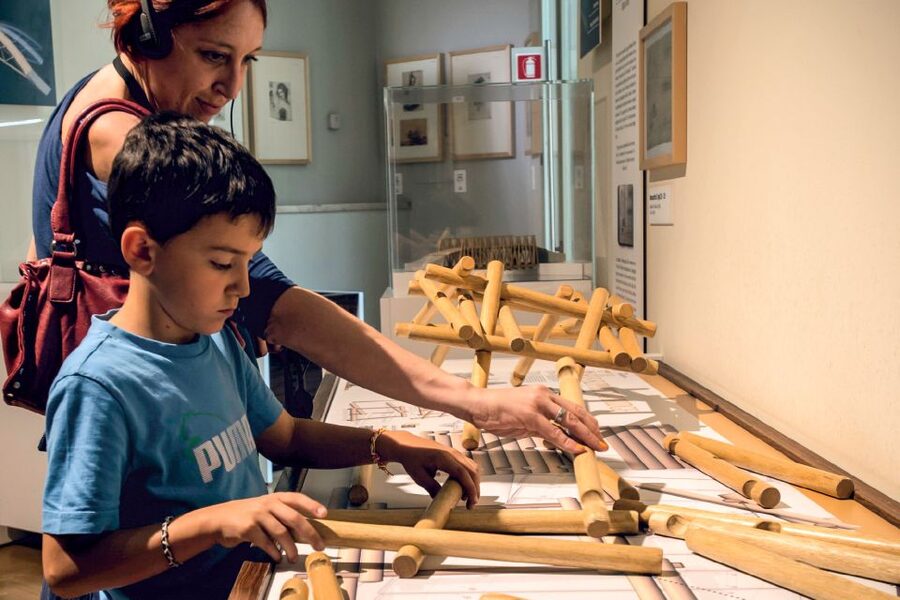
The workshop area gives children something active to do. They can assemble a self-supporting bridge from wooden pieces or print an inventor’s certificate. These activities make a welcome break from reading and looking.
The building stations also show why Leonardo’s designs matter. A bridge made from separate wooden parts can support itself through its structure, without ordinary fasteners. Building it gives you a quick lesson in balance and load.
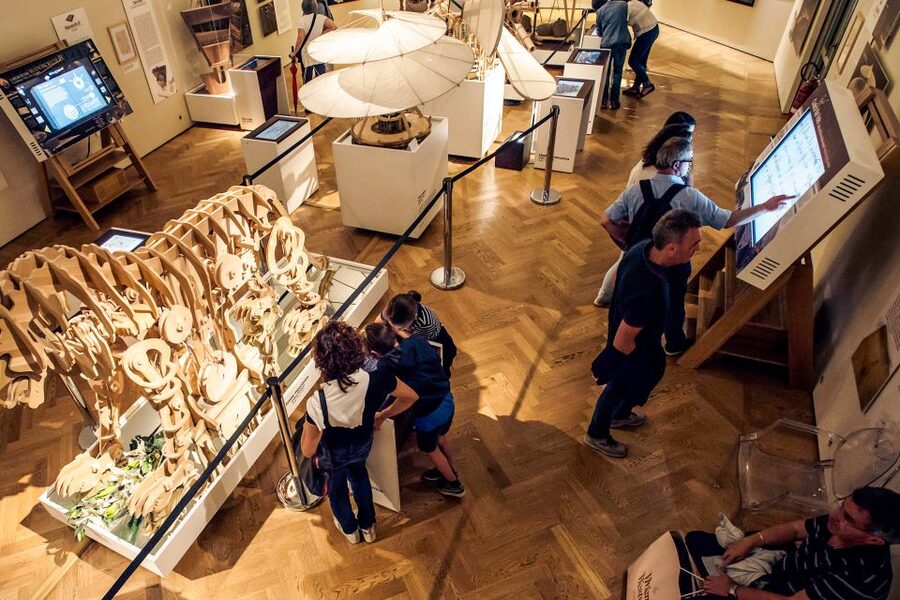
Adults can use these stations, too. You do not need to treat the museum as a children’s attraction, but hands-on work makes the engineering easier to understand. If the museum is busy, access to the popular stations may be limited because the rooms are fairly tight.
Families should allow at least an hour for a brisk visit. If you want the audio guide, read the displays, and spend time with the workshop, plan on roughly one and a half to two hours. One visitor spent two and a half hours exploring in detail, while another found an hour enough for a shorter family visit.
How the audio guide changes the experience
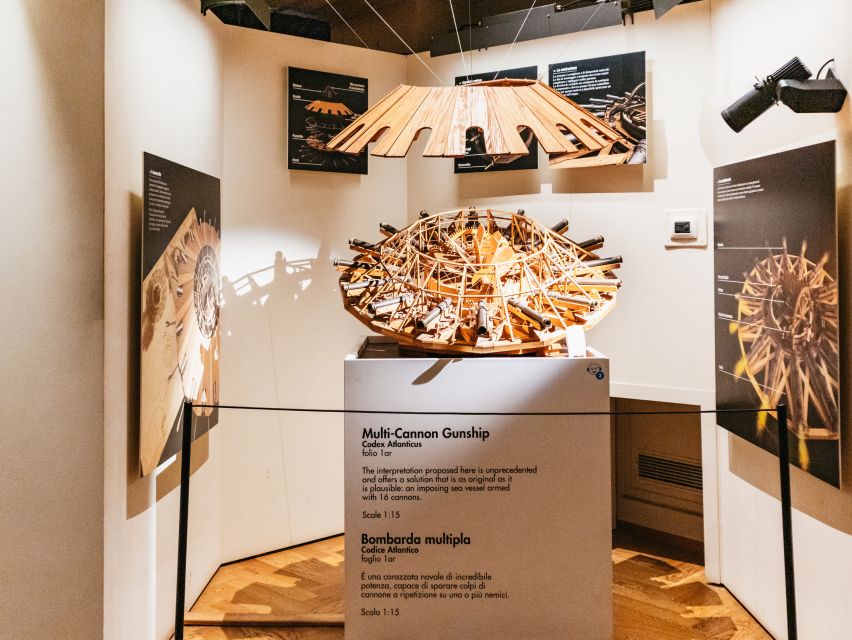
The standard exhibition is visual and interactive, but the audio guide adds essential context. It explains Leonardo’s machines, the manuscript research behind the reconstructions, and the purpose of individual designs.
Audio guides are available in Italian, English, Russian, German, French, Spanish, Portuguese, and Chinese. The interactive experiences themselves are in English and Italian, so an audio guide is especially useful if neither language is comfortable for you.
Check which ticket option you are buying. The activity information lists the audio guide as included when that option is selected. Some visitors also describe paying an additional small amount for headphones, so confirm the exact ticket details at booking.
I would choose the audio option for a first visit. Without it, you can enjoy the movement and shape of the models, but you may miss the reasoning behind them. The guide also helps you decide which displays deserve more time when the exhibition feels crowded.
Do not feel obliged to listen to every track. Choose the machines that interest you, then use the explanations to understand how the model connects to Leonardo’s notes.
Timing, comfort, and the museum’s compact layout
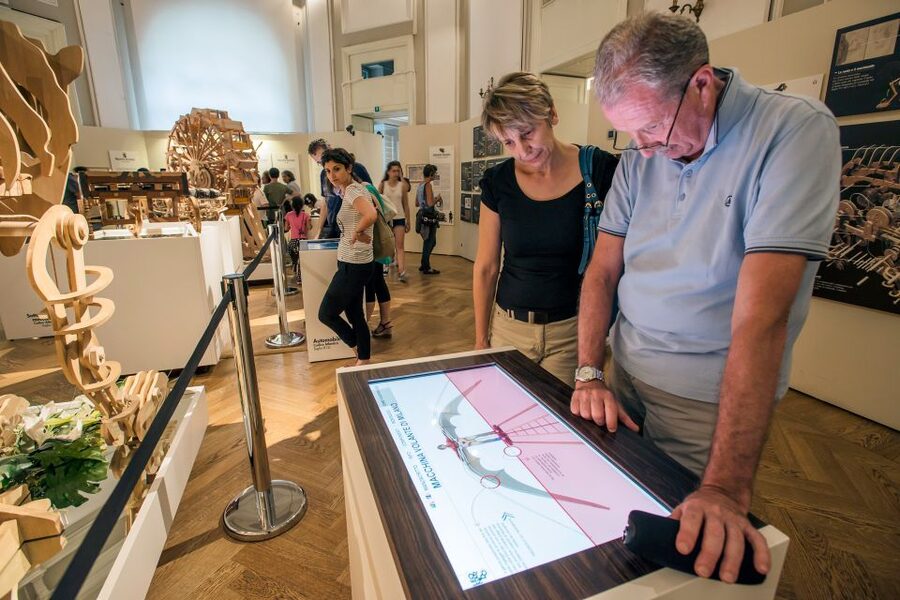
The ticket is valid for one day, with entry times based on availability. This gives you some flexibility, but it is not a full-day pass to a large museum complex. Most people should plan a focused visit rather than build an entire day around Leonardo3.
The compact layout is both helpful and limiting. You can cover the main sections without walking long distances, and the exhibition feels manageable for a short Milan itinerary. On the other hand, displays can seem close together, and it may be difficult to reach every interactive feature when other people are using it.
The rooms can also feel warm. Wear comfortable clothing and avoid planning the museum immediately after a heavy meal. Since food and drinks are not allowed inside, take care of those needs before entering.
There is plenty to see, so avoid arriving with only 30 minutes unless you want a quick overview. For a satisfying visit, I would allow 90 minutes. Add more time if you enjoy reading technical explanations, using the audio guide, or working through the family activities.
Is $18 a fair price?
At $18 per person, Leonardo3 offers good value if you like interactive museums, engineering, Renaissance art, or Leonardo himself. The ticket includes museum admission, and the central location saves time on transport.
The value is strongest when you use the exhibits actively. If you simply walk through the rooms, you might finish in about an hour and feel the exhibition is small. If you read the explanations, inspect the digital codices, use the audio guide, and try the hands-on stations, the visit can fill one and a half to two hours comfortably.
The bookshop discount adds a small bonus. Show your voucher at the counter for 10 percent off books. This is more useful than a general souvenir discount if you want a guide to Leonardo’s designs or a book for a child.
The price is less attractive if your main goal is only to see original Renaissance paintings. Leonardo3 focuses heavily on reconstructions, machines, and digital material. It is a supplement to Milan’s major art sites, not a substitute for them.
Who should book Leonardo3?
I would recommend this for Leonardo fans, families, science-minded visitors, and anyone who learns better by seeing a mechanism move than by reading a label. It is also a smart backup if you cannot get into the actual Last Supper, since the digital presentation lets you study the painting in a relaxed setting.
You will get the most from it if you enjoy connecting drawings with practical results. The museum asks you to accept that the models are interpretations based on manuscripts, not original machines. That is a fair trade for seeing ideas that would otherwise remain flat sketches.
Art purists may prefer Milan’s original paintings and churches. Visitors looking for a quiet, spacious gallery may find the compact rooms frustrating. If you dislike technical displays, the amount of information may feel heavy.
For most people, the mix of moving models, digital material, art, and family activities makes the ticket worthwhile.
FAQ
Where is Leonardo3 located?
Leonardo3 is located in Milan’s Galleria Vittorio Emanuele II, near Piazza della Scala. Enter through the Galleria and show your ticket at the ticket office.
How much does admission cost?
The listed price is $18 per person.
How long is the ticket valid?
The ticket is valid for one day. Starting times depend on availability when you book.
Is an audio guide included?
An audio guide is available when you select the ticket option that includes it. Available languages are Italian, English, Russian, German, French, Spanish, Portuguese, and Chinese.
What languages are used in the interactive exhibits?
The interactive experiences are in English and Italian.
Is Leonardo3 wheelchair accessible?
Yes, the activity is wheelchair accessible.
Are food and drinks allowed inside?
No. Food and drinks are not allowed in the museum.
Can I take photographs?
Cameras are not allowed inside the exhibition.
Does the ticket include transportation?
No. Transportation to and from the museum is not included.
Should you book Leonardo3?
Book it if you want to see Leonardo’s ideas turned into moving, three-dimensional machines rather than only viewing paintings and manuscript pages. The mechanical models, digital codices, and Last Supper restoration make this a distinctive stop in Milan, and the central location fits neatly into a sightseeing day.
Skip it if you want a large traditional art museum or only have a few minutes. For everyone else, choose the audio guide, allow about 90 minutes to two hours, and give the hands-on exhibits enough time to show why Leonardo’s imagination still feels so practical today.
Recently reviewed around Milan
- From Milan: Venice Full-Day Guided Tour With Boat Ride★ 4.5 · 322 reviews
- Venice Day Trip from Milan with Guided City Tour★ 4.0 · 383 reviews
- Verona and Lake Garda Day Trip from Milan★ 4.5 · 214 reviews
- Full-day Skip-The-Line Milan, The Last Supper and Duomo Cathedral★ 5.0 · 293 reviews
- Small-Group Lake Como & Lugano by Swiss Train + Boat Cruise★ 5.0 · 1,084 reviews
- Tour Bernina Red Train And St Moritz from Milan★ 4.5 · 247 reviews
- Walking Food Tour of Milan with Tastings★ 4.5 · 194 reviews
- Skip the Line: Essential Milan Tour Including Da Vinci’s ‘The Last Supper’★ 4.5 · 339 reviews
Museums, compared.
Vatican: Museums & Sistine Chapel Entrance Ticket
Read our review →
Vatican Museums & Sistine Chapel Tour with Optional Basilica
Read our review →
Vatican Museums, Sistine Chapel & St Peter’s Basilica Guided Tour
Read our review →
Skip-The-Line Uffizi Gallery Timed Entry Ticket
Read our review →
Vatican Museums, Sistine Chapel & Basilica Tour
Read our review →
Vatican Museums & Sistine Chapel Skip-the-Line Entry Ticket
Read our review →Vatican Museums, Sistine Chapel & Basilica Tour
Read our review →
Vatican Museums & Sistine Chapel Guided Tour
Read our review →Browse the lists this tour appears in