
Review · MUSEUMS
Milan: Pinacoteca Ambrosiana & da Vinci Codex Exhibition
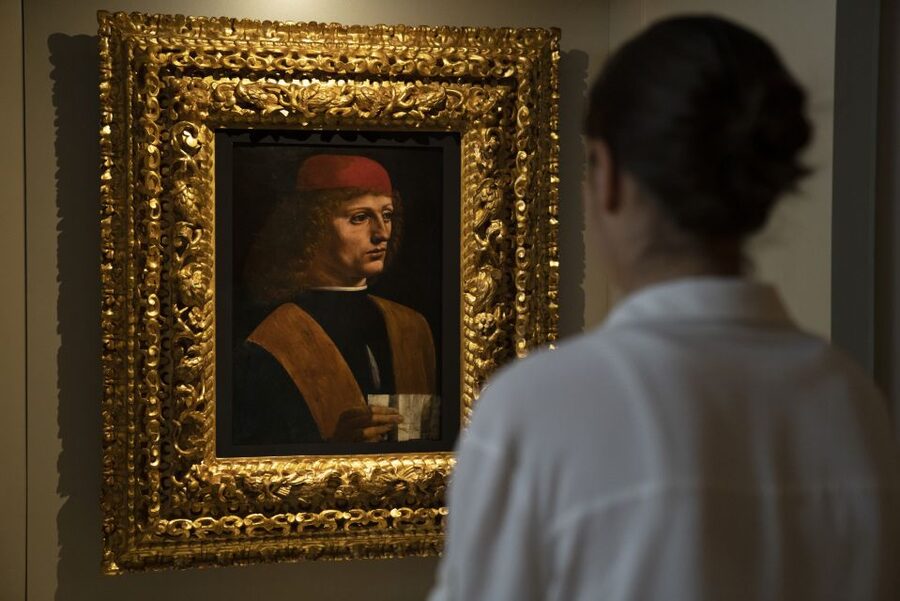
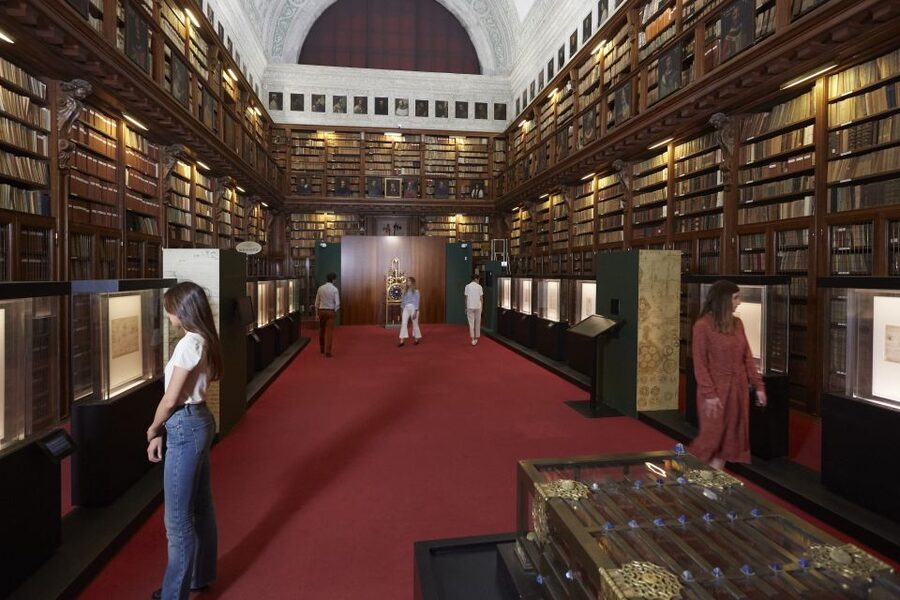
Leonardo da Vinci’s original working drawings are the star here. At Milan’s Pinacoteca Ambrosiana, you see pages from the Codex Atlanticus, alongside Raphael’s enormous preparatory cartoon for the School of Athens and paintings by Caravaggio, Botticelli, and Tiziano. The museum occupies a historic library, so the building itself is part of the visit.
I like the compact scale, which lets you see major works without the fatigue of a giant museum. I also like the freedom to move at your own pace, with a useful audio guide available for €4. The main drawback is that some rooms can be dim and the route is not always obvious, so pick up the map and allow at least two hours.
In This Review
- Key points to know before you go
- Why the Ambrosiana deserves a place in your Milan plans
- Getting to Piazza Pio XI 2
- Start with the Ambrosiana collection
- Look closely at Caravaggio, Botticelli, Raphael, and Tiziano
- Raphael’s School of Athens cartoon is a must-see
- Enter Leonardo’s world through the Codex Atlanticus
- Take time in the Federiciana Room
- Choosing the audio guide for €4
- Timing, comfort, and practical limitations
- Who will enjoy this Milan museum most?
- Is the $21 admission good value?
- Should you book the Pinacoteca Ambrosiana?
- FAQ
- What does the admission ticket include?
- Is an audio guide included?
- Can I listen to the audio guide after leaving?
- How long should I allow for the museum?
- Where is the Pinacoteca Ambrosiana?
- Is this a guided tour?
- Can I cancel my booking?
Key points to know before you go
- Leonardo’s working mind: The Codex Atlanticus presents original drawings covering engineering, architecture, machines, and ideas from more than 40 years of work.
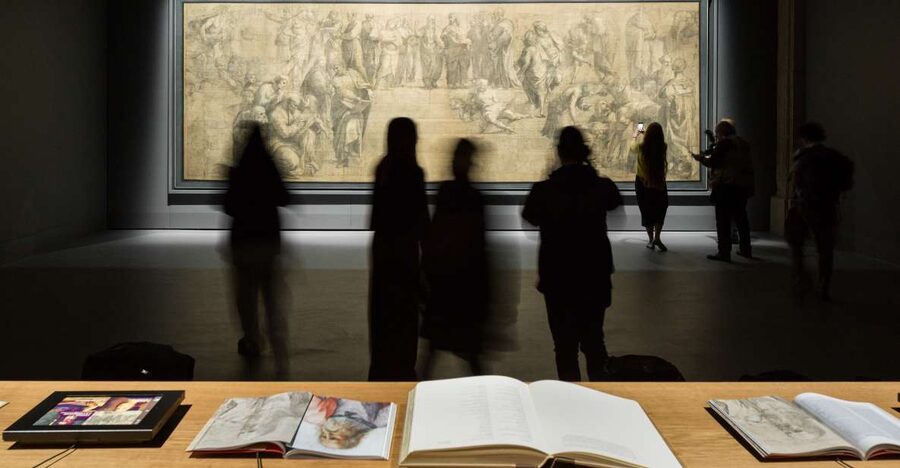
- Raphael’s School of Athens cartoon: This large preparatory drawing is one of the museum’s essential sights, with a film explaining how such cartoons were used.
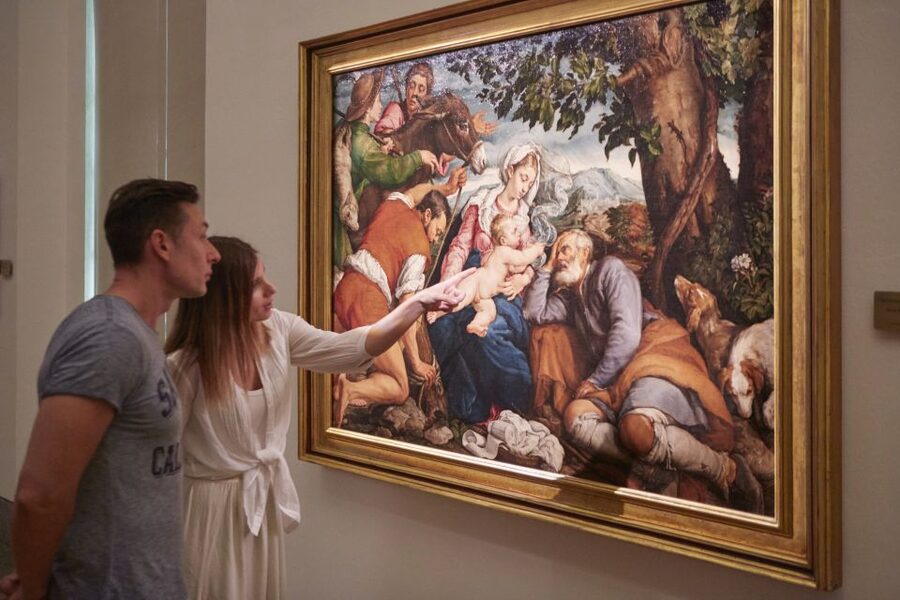
- A small museum with major names: Botticelli, Raphael, Tiziano, Caravaggio, Leonardo, and other Italian masters appear in a manageable sequence.
- A library as well as an art museum: The Federiciana Room and the old library interiors add a third layer to the paintings and drawings.
- Plan for two to three hours: A quick visit is possible, but the audio guide and extra rooms reward a slower pace.
- Bring the museum map: It is easy to miss interesting rooms, and signs do not always make the route clear.
Why the Ambrosiana deserves a place in your Milan plans
Milan’s famous Duomo and Brera Gallery often take the spotlight, but the Pinacoteca Ambrosiana offers a different kind of art visit. It is close to the Duomo, easy to reach, and less demanding in scale than a vast national museum.
The collection is housed within the Ambrosiana complex, a historic library and cultural institution. You are not simply walking through white gallery rooms. The old building, library spaces, sculptures, objects, and displays of books all help explain the setting in which these works were collected and preserved.
The experience suits you if you want famous art without spending an entire day on your feet. It also works well as a cool, quiet break during a hot Milan afternoon. Several rooms are air-conditioned, and there are places to sit, which makes the visit easier for anyone who needs regular rests.
At about $21 per person, admission is reasonable for Milan, especially because it includes both the Ambrosiana collections and the Leonardo exhibition. The ticket does not include the audio guide, but the €4 supplement is modest and can make a real difference if you want context rather than a quick look.
The overall rating is 4.6 from 1,816 bookings, and the strongest praise centers on the art, the library, the presentation of Leonardo’s drawings, and the manageable crowds. Those are the same reasons I would put this museum on a serious Milan art itinerary.
More Museum Tours in Milan
- Milan: Science and Technology Leonardo da Vinci Museum Entry
★ 4.5 · 7,169 reviews - Official San Siro Stadium and Museum Guided Tour
★ 4.4 · 3,573 reviews - Milan: Leonardo3 The World of Leonardo Museum Entry Ticket
★ 4.4 · 3,241 reviews
Getting to Piazza Pio XI 2
The entrance is at the Ambrosiana, Piazza Pio XI 2, in central Milan. From the Duomo, you can reach it on foot, though the precise walking time is not provided here. By metro, use the Red Line to Cordusio or Duomo, or the Yellow Line to Duomo.
Trams also serve the area. Lines 12, 14, and 16 stop at Orefici Cantù, while lines 2 and 3 stop at Duomo. This central location makes the museum easy to pair with the cathedral, Galleria Vittorio Emanuele II, or a walk through the city center.
At the entrance, keep your ticket information ready. This is a ticketed museum visit, not a guided group tour. One source of confusion has been wording that suggests a guide may meet you, but no guide is included in the basic experience. Think of it as admission with optional audio support.
The museum can sometimes admit people before their listed time, but you should still check the selected starting time and availability when booking. The experience is valid for one day rather than being a fixed, all-day program.
Start with the Ambrosiana collection
Begin by taking a moment to understand the route. The museum map matters because some rooms are easy to miss, and the layout does not always tell you clearly where you are. I would rather spend a minute getting oriented than discover later that I skipped an important gallery.
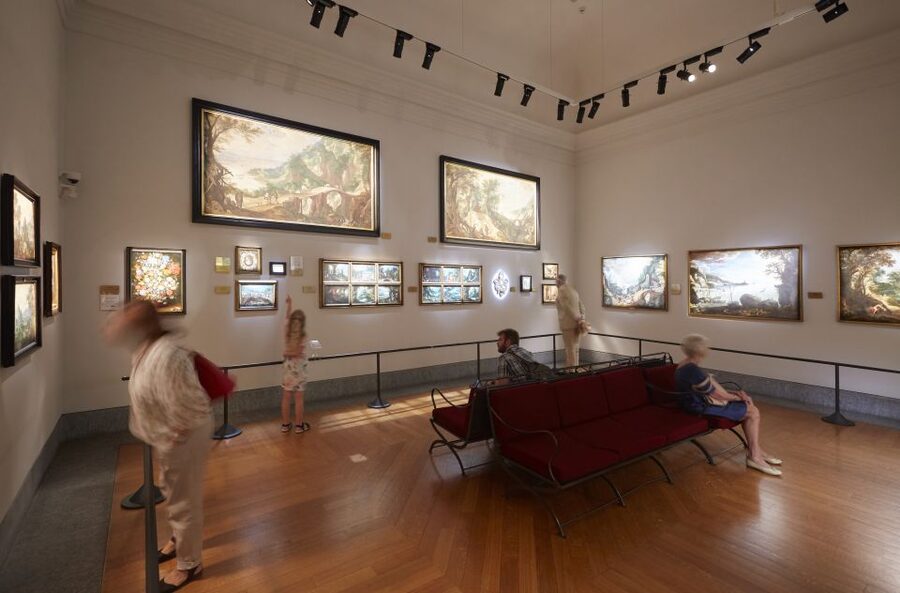
The collection brings together paintings, drawings, sculpture, books, pottery, and other old objects. That variety is part of the appeal. You move between framed works and displays that show the wider collecting purpose of the Ambrosiana.
The paintings are generally displayed close enough for careful viewing. You can see brushwork and details without being pushed along by a huge crowd. Several rooms are well lit, but the lighting is not consistent throughout the museum. Some labels can be hard to read because the surrounding areas are quite dark.
That subdued atmosphere has a benefit. The darker rooms can make paintings appear dramatic, and one visitor particularly appreciated the way the lighting focused attention on the works. Still, if you rely heavily on written labels, bring patience and use the audio guide for a clearer explanation.
Look closely at Caravaggio, Botticelli, Raphael, and Tiziano
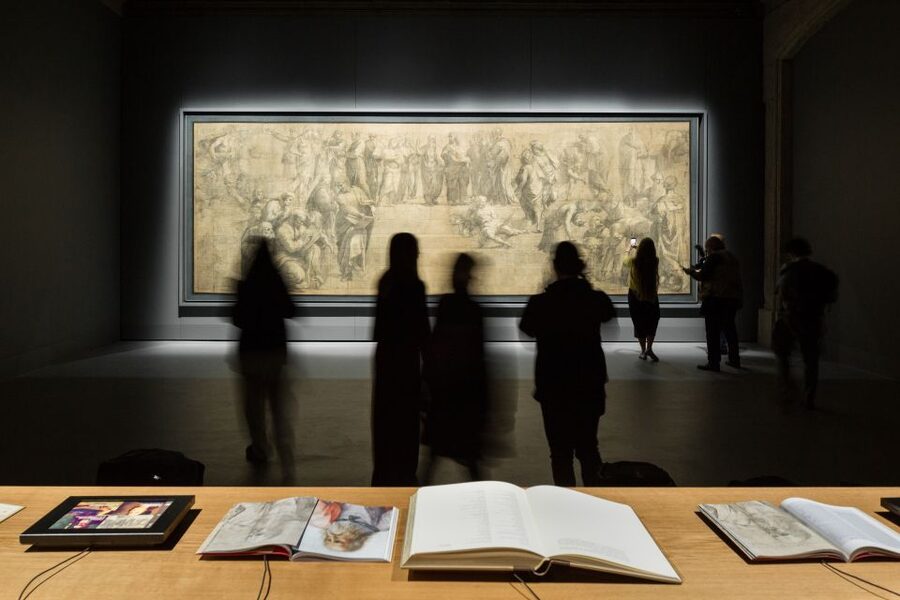
The Ambrosiana is not only a Leonardo stop. Its collection gives you a useful survey of Italian painting, with works connected to Botticelli, Raphael, Tiziano, and Caravaggio.
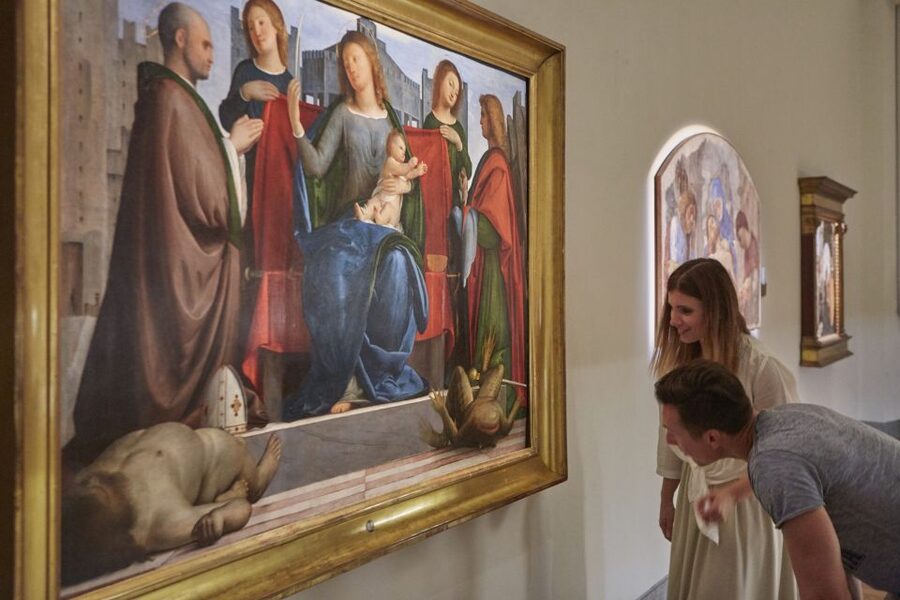
Caravaggio’s still lifes are especially worth your time. A still life can look simple from across a room, but the point is to approach carefully and notice how ordinary objects become a study in light, texture, and balance. The museum’s relatively intimate scale helps you do that.
Raphael provides one of the visit’s major highlights, though not only because of the famous cartoon discussed below. The museum’s Raphael material helps you see the planning behind finished Renaissance art. You are looking at a working process, not just a polished result.
Works by Botticelli and Tiziano broaden the picture. Instead of seeing Leonardo in isolation, you can place his experiments beside the work of other major Italian masters. That comparison is valuable if you are still learning how Renaissance painting changed across different artists and generations.
The collection is substantial without feeling exhausting. You can read selected labels, listen to the audio guide, and still retain a sense of what you have seen. If you have only an hour, choose the major works and Leonardo display. With two to three hours, the museum feels much more complete.
More Milan museums and collections:
- Milan: La Scala Theater & Museum Guided Experience
★ 4.1 · 2,931 reviews - Milan: La Scala Theater and Museum Tour with Entry Tickets
★ 4.7 · 1,722 reviews - Milan: Cathedral, Archeological Area and Museum Ticket
★ 4.5 · 1,093 reviews - Casa Milan: Museum Entry Ticket
★ 4.6 · 969 reviews
Raphael’s School of Athens cartoon is a must-see
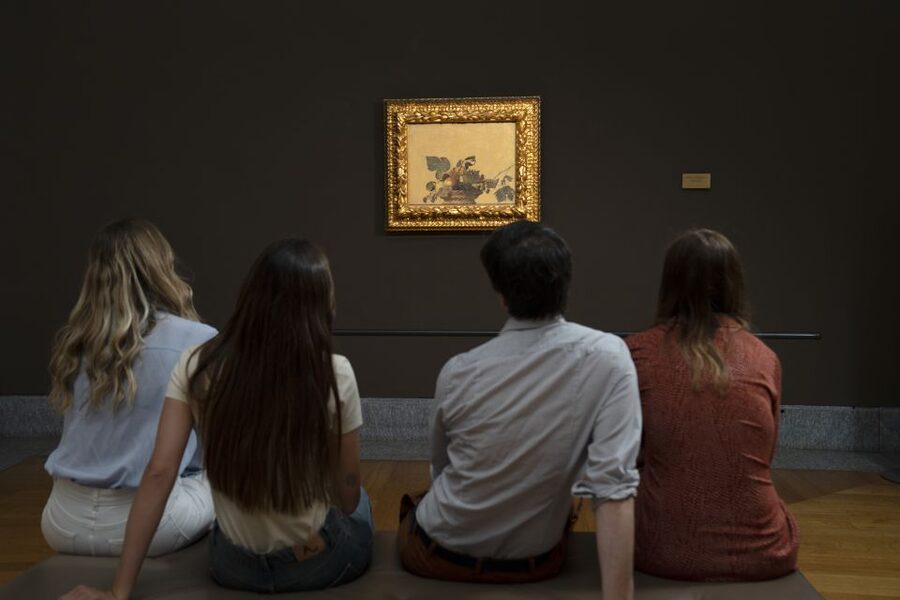
For many people, Raphael’s cartoon for the School of Athens is the surprise of the visit. This is not a small preparatory sketch. It is a large working design connected with the frescoes in the Vatican’s Stanza della Segnatura.
The word cartoon here means a full-scale preparatory drawing, not a comic illustration. Raphael and his workshop used such drawings to plan a monumental wall painting. The Ambrosiana display gives you a chance to see how figures, gestures, and the overall composition were worked out before the final fresco.
A film explains the process of making the cartoon and transferring the design onto a wall. It also helps identify the figures represented in the composition. I recommend giving this stop enough time, even if you arrived mainly for Leonardo.
The cartoon is especially rewarding if you have seen the School of Athens in Rome. You can compare the finished fresco with the earlier planning stage. If Rome is not on your itinerary, the Ambrosiana still provides a strong introduction to Raphael’s method.
This is one of the places where a little explanation adds real value. Without context, you may admire the scale and draftsmanship but miss why the work matters. With the film or audio guide, you can see the cartoon as evidence of the discipline behind a famous Renaissance masterpiece.
Enter Leonardo’s world through the Codex Atlanticus
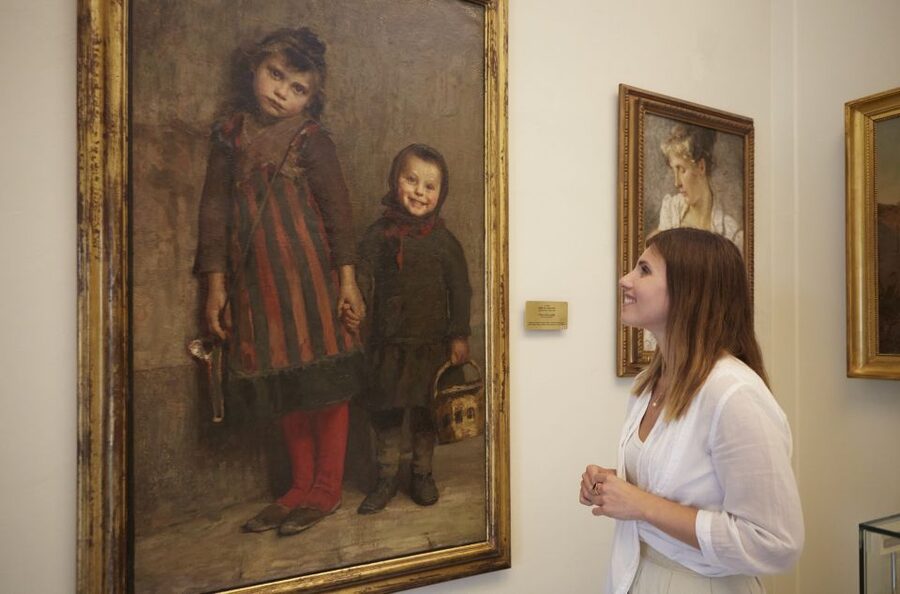
The Leonardo exhibition is the main reason many people book this experience. The Codex Atlanticus is described as the world’s largest collection of original Leonardo da Vinci drawings, and the display gives you direct access to his working ideas.
These are not simply finished pictures. You see drawings connected with engineering, architecture, machines, and observation. They reveal a mind moving between art, mechanics, science, and practical design.
That is what makes the display so engaging. Leonardo’s notes and sketches let you see him testing possibilities. A page may suggest a machine, a structure, or a technical solution, while another shows the close study of form that supported his artistic work.
The presentation also places his drawings within more than 40 years of research into the master’s work, thoughts, and feelings. You do not need specialist training to appreciate the display. Take your time with the pages and let the small details do the work.
The library setting adds meaning. Leonardo’s drawings are not presented as isolated curiosities. They sit within an institution built around the preservation and study of books, ideas, and art. That connection makes the final part of the visit feel like a meeting with both the artist and the people who safeguarded his work.
A painting by Leonardo may also appear among the museum’s collection, which can be a pleasant surprise. The exact display arrangement can change, so I would not book solely on the expectation of seeing a particular painting. The Codex material itself is the reliable main attraction described by this experience.
Take time in the Federiciana Room
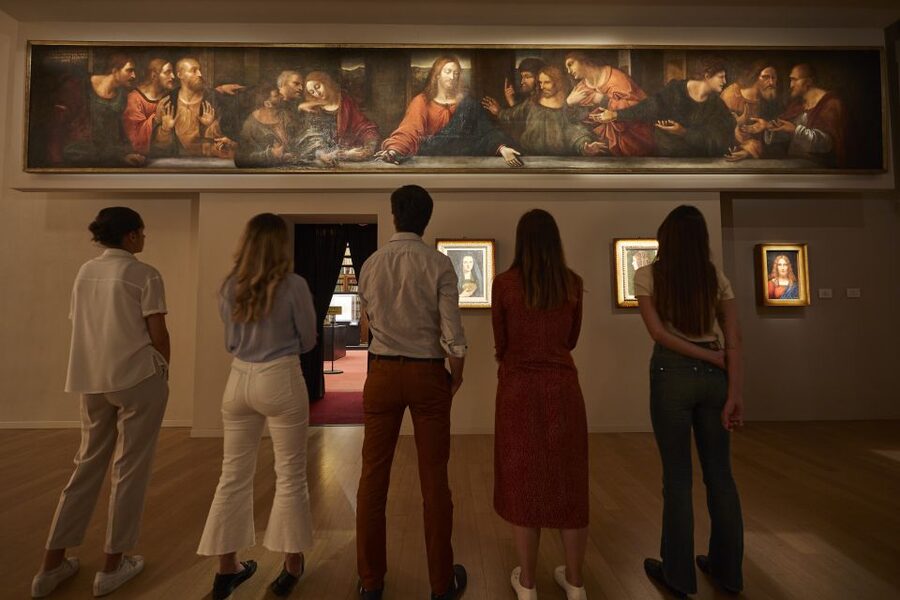
The Federiciana Room, part of the Ambrosiana Library, gives the visit a different mood. After the paintings and drawings, this room helps you understand the institution as a library and research center rather than only an art gallery.
The library interiors are among the most memorable parts of the building. Several visitors have praised the impressive old library and the beauty of the three-story setting. The architecture is not just background decoration. It explains why this place feels more like a historic scholarly collection than a modern exhibition hall.
You may also encounter books, artifacts, pottery, and sculptures in the surrounding displays. This variety can be a pleasant surprise if you arrive expecting only paintings and Leonardo sketches.
The map is particularly useful here. Interesting rooms are not always obvious from the main route, and it is possible to leave without seeing everything. I suggest checking the map at the beginning, then marking the rooms you want to return to before heading toward the exit.
Choosing the audio guide for €4
The audio guide is optional and costs €4. It is available in six languages through GetYourGuide or at the museum ticket office. You can download the app to your device and continue listening after the visit.
I would pay for it if you are not already familiar with Renaissance painting or Leonardo’s technical drawings. The guide supplies the background that labels sometimes cannot provide, especially for Raphael’s cartoon and the Codex Atlanticus.
One practical point matters: the guide may begin in a one-hour visit mode. If you plan to stay for two or three hours, change it to the several-hours visit setting. Otherwise, you may receive descriptions for only a limited number of paintings and assume there is nothing more to hear.
The audio guide has been praised as useful, but it can feel cumbersome to operate. You will get more from it if you allow a minute at the start to learn the controls. If you prefer silence and a slow look at art, the museum labels and map may be enough.
The ability to listen after leaving is handy. You can revisit the information later, perhaps while walking through Milan or reviewing the works you found most interesting.
Timing, comfort, and practical limitations
Plan on two to three hours for a satisfying visit. An art enthusiast may stay longer, while a visitor focused on Leonardo and Raphael can see the main sights in less time.
The museum is generally calm and not overwhelming. That makes it a good choice when you want major art without the pressure of a crowded blockbuster exhibition. It is also a sensible stop in summer because the interior is cool and air-conditioned in parts.
There are seats where you can rest. Lighting is mixed, however. Some labels are difficult to read, and a few rooms may feel too dark for comfortable reading. Ask staff for help if you lose the route, but keep the map close because wayfinding can be confusing.
If you are using a baby buggy, check the arrangements before you arrive. Some upper or restricted sections may not allow buggies on the floors, and you may be asked to leave one at the entrance. The available information does not give full mobility details, so anyone with specific access needs should confirm directly with the museum.
A crypt visit may be offered separately, but it is not included in the listed admission. Extra charges have drawn criticism, so treat it as an optional add-on rather than part of the main ticket.
Cancellation is flexible: you can cancel up to 24 hours in advance for a full refund. The reserve-now, pay-later option is useful if your Milan schedule is still changing.
Who will enjoy this Milan museum most?
I would recommend the Ambrosiana to several types of visitor:
- Art lovers who want Caravaggio, Raphael, Botticelli, Tiziano, and Leonardo in one compact museum.
- Anyone curious about how Renaissance artists planned and built major works.
- Visitors who prefer a quiet museum with places to sit.
- Families or mixed-interest groups who need a visit that can be shortened or extended.
- People who have already seen Brera and want a less obvious art stop near the Duomo.
- Leonardo enthusiasts who want original working drawings rather than only famous finished paintings.
It may be less satisfying if you want a huge gallery with dozens of rooms devoted to one artist. The Ambrosiana is smaller than Brera, and its displays cover many forms of art and collecting. That variety is a strength for some visitors and a limitation for others.
I also would not choose it as a fast stop between major Milan sights unless you are willing to focus. The building, library, Codex, Raphael cartoon, and paintings all deserve more than a rushed glance.
Is the $21 admission good value?
At $21, the ticket offers strong value for a central Milan art experience. You receive admission to the Pinacoteca Ambrosiana collections, the Leonardo original-drawing exhibition, and the library-related spaces included in the regular visit.
The price is easiest to justify if you allow two or three hours. A one-hour visit can still work, but you will be choosing rather than seeing the full range of the museum. Add the €4 audio guide if you want help with the works and the building.
The value also comes from variety. You are paying for more than one headline object. The Codex Atlanticus draws you in, Raphael’s cartoon may become the highlight, and the library gives the visit a setting you will not get in a standard modern gallery.
Should you book the Pinacoteca Ambrosiana?
Yes, if you want a focused art visit with Leonardo’s original drawings, Raphael’s School of Athens cartoon, and a beautiful historic library in one place. I would book it as a two-hour stop near the Duomo, then add the audio guide if you care about technique and context.
Before entering, collect the map, expect no guide to meet you, and set the audio app to the several-hours mode if you plan to stay. If you need buggy or accessibility arrangements, confirm them first. For $21, this is a smart choice for art lovers and a rewarding change of pace from Milan’s biggest sights.
FAQ
What does the admission ticket include?
The ticket includes entry to the Pinacoteca Ambrosiana collections and the exhibition of Leonardo da Vinci’s original drawings from the Codex Atlanticus.
Is an audio guide included?
No. The audio guide costs €4 and is available in six languages through GetYourGuide or at the museum ticket office.
Can I listen to the audio guide after leaving?
Yes. The app can be downloaded to your device, and you can continue listening after the visit.
How long should I allow for the museum?
Allow two to three hours for a full visit. You can see the main highlights more quickly, but extra time helps with the library, paintings, Leonardo drawings, and Raphael cartoon.
Where is the Pinacoteca Ambrosiana?
The entrance is at Piazza Pio XI 2 in Milan. The nearest metro stops are Cordusio or Duomo on the Red Line, and Duomo on the Yellow Line.
Is this a guided tour?
No. The listed experience provides exhibition admission, with an optional audio guide. A live guide is not included.
Can I cancel my booking?
Yes. You can cancel up to 24 hours in advance for a full refund. The reserve-now, pay-later option also lets you delay payment while keeping plans flexible.
Recently reviewed around Milan
- From Milan: Venice Full-Day Guided Tour With Boat Ride★ 4.5 · 322 reviews
- Venice Day Trip from Milan with Guided City Tour★ 4.0 · 383 reviews
- Verona and Lake Garda Day Trip from Milan★ 4.5 · 214 reviews
- Full-day Skip-The-Line Milan, The Last Supper and Duomo Cathedral★ 5.0 · 293 reviews
- Small-Group Lake Como & Lugano by Swiss Train + Boat Cruise★ 5.0 · 1,084 reviews
- Walking Food Tour of Milan with Tastings★ 4.5 · 194 reviews
- Skip the Line: Essential Milan Tour Including Da Vinci’s ‘The Last Supper’★ 4.5 · 339 reviews
- Tour Bernina Red Train And St Moritz from Milan★ 4.5 · 247 reviews
Museums, compared.
Vatican: Museums & Sistine Chapel Entrance Ticket
Read our review →
Vatican Museums & Sistine Chapel Tour with Optional Basilica
Read our review →
Vatican Museums, Sistine Chapel & St Peter’s Basilica Guided Tour
Read our review →
Skip-The-Line Uffizi Gallery Timed Entry Ticket
Read our review →
Vatican Museums, Sistine Chapel & Basilica Tour
Read our review →
Vatican Museums & Sistine Chapel Skip-the-Line Entry Ticket
Read our review →Vatican Museums, Sistine Chapel & Basilica Tour
Read our review →
Vatican Museums & Sistine Chapel Guided Tour
Read our review →Browse the lists this tour appears in