
Review · BORGHESE GALLERY TOURS
Rome: Borghese Gallery and Gardens Guided Small-Group Tour
The Borghese Gallery is one of Rome’s finest art stops, and its compact size makes it a pleasure to explore with a guide. You’ll see Bernini’s Apollo and Daphne, Caravaggio’s St. Jerome, Canova’s Pauline Bonaparte, and Raphael’s The Deposition in the former Borghese home.
I like the reserved entry, which removes one of Rome’s trickier museum hassles, and the small group of up to 15, which gives you a better chance of hearing the guide. The main thing to weigh is time: the gallery is packed with major works, and the visit can feel brisk. The gardens section may also be brief, especially in a late time slot.
In This Review
- Key points at a glance
- Why the Borghese Gallery deserves a place on your Rome schedule
- Meeting your guide at Piazzale del Museo Borghese
- Inside the villa: art with a collector’s agenda
- Bernini’s Apollo and Daphne and the gallery’s star works
- A guided visit, followed by time to look on your own
- The Borghese Gardens: a calm finish with a timing caveat
- Is $60 a fair price?
- Who will enjoy this tour most?
- Practical advice before you go
- Should you book the Borghese Gallery and Gardens tour?
- FAQ
- How long does the Borghese Gallery and Gardens tour last?
- What is included in the $60 price?
- Where do I meet the guide?
- How early should I arrive?
- What should I bring?
- Can I bring a bag, luggage, stroller, or phone?
- Is the tour suitable for wheelchair users?
Key points at a glance
- Bernini takes center stage: See Apollo and Daphne and other sculptures while your guide explains the movement, emotion, and technical skill behind them.
- A personal collection in a personal setting: Cardinal Scipione Borghese built the villa and gathered many of the works still displayed inside.
- Reserved entry saves effort: Your ticket is arranged in advance, but you still need to arrive 15 minutes early.
- Small groups help inside crowded rooms: A maximum of 15 people and headsets make the guide easier to follow.
- The gardens add a quieter side of Rome: Walk through the former private park among fountains, sculptures, and shady paths.
- Expect plenty of walking: Large bags, luggage, strollers, and mobile phones are not allowed in the gallery.
Why the Borghese Gallery deserves a place on your Rome schedule
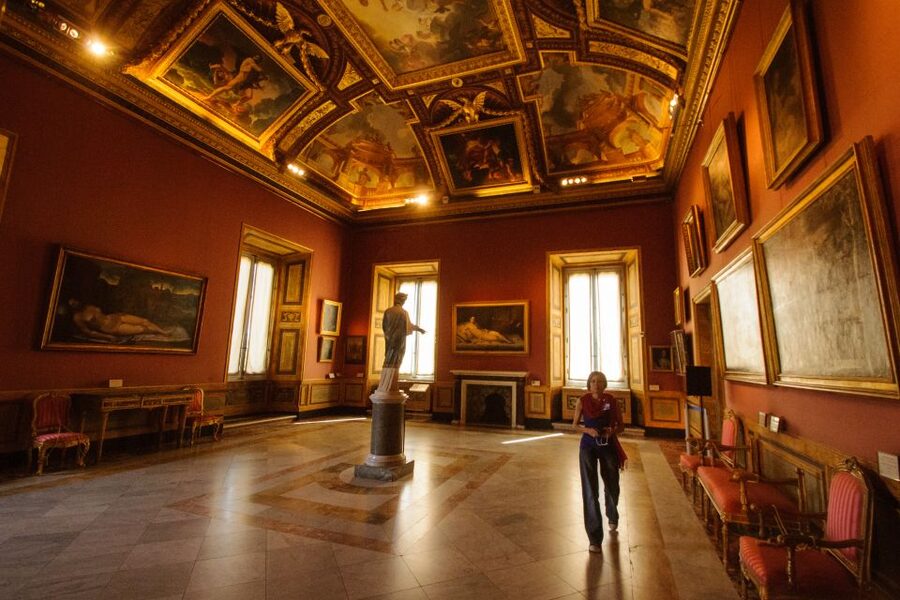
Rome has museums that can feel like endurance tests. The Borghese Gallery is different. It occupies a former villa, and the collection is concentrated into a manageable set of rooms rather than spread across a giant complex.
That scale matters. You can spend real time looking at a Bernini sculpture instead of racing through endless corridors. You can also understand how the rooms, works, and collector fit together. This was not an accidental pile of famous art. Cardinal Scipione Borghese commissioned, acquired, and pursued works with fierce determination.
The result is a museum with a strong point of view. Bernini’s sculptures receive special attention, but the collection also includes Caravaggio, Titian, Raphael, Canova, and other major artists. I especially like that the tour treats the art as part of a story about ambition, taste, status, and power.
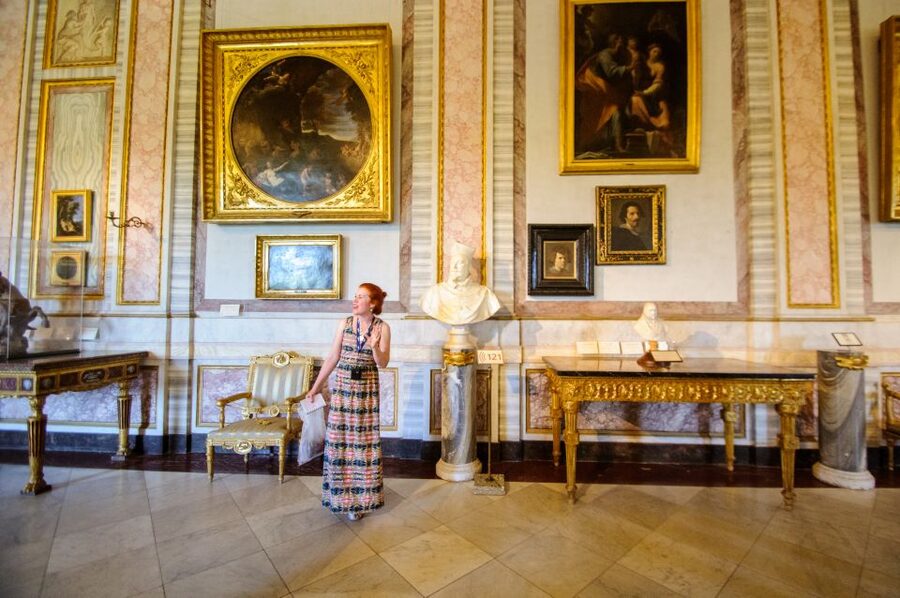
A guide makes a real difference here. Without one, you can admire the polished marble and dramatic paintings, but you may miss the small visual choices that give them force. The guides on this experience include Sal, Federica, Barbara, Fabio, Alessandra, Eduardo, Silvia, and others. Names and assignments vary, but the strongest theme in the feedback is clear: the guides are praised for bringing art to life through humor, context, and strong storytelling.
More Museum Tours in Rome
- Rome: Borghese Gallery Guided Tour with Skip-the-Line Entry
★ 4.8 · 2,649 reviews - Rome: Borghese Gallery Skip-the-Line Tickets with Audioguide
★ 4.6 · 2,562 reviews - Rome: Borghese Gallery Entry Ticket & Optional Guided Tour
★ 4.5 · 2,237 reviews
Meeting your guide at Piazzale del Museo Borghese
The meeting point is Piazzale del Museo Borghese, directly in front of the gallery. Arrive at least 15 minutes before departure. This is not a place to cut things close. Anyone arriving after the group leaves may not be accommodated, and missed tours or tickets cannot be refunded.
The reserved ticket is one of the tour’s practical advantages. Borghese Gallery visits operate with controlled entry, so booking ahead is important. You are not simply joining a public museum line and hoping for space. Your place is arranged in advance, which is especially useful during busy periods in Rome.
Look for the tour representative at the stated meeting point and allow extra time to reach the villa. The information provided does not include transportation to the meeting point, so you need to plan that part yourself.
A passport or identity card is required. Bring only what you need. The gallery does not permit bags, luggage, or large personal items, and baby carriages are not allowed. Mobile phone use is also prohibited inside. Security procedures can cause delays, and restrictions may become tighter at short notice.
Inside the villa: art with a collector’s agenda
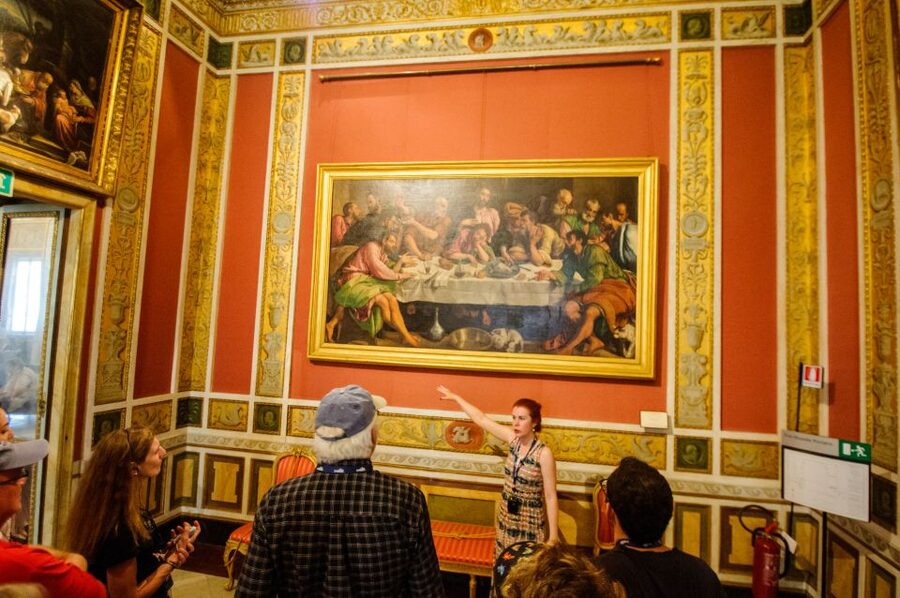
The gallery visit is not just a parade of famous names. Your guide explains Cardinal Borghese’s role in shaping the collection and why the works remain so powerful in their original setting.
Scipione Borghese was a cardinal, a patron, and an aggressive collector. Villa Borghese was created as both a residence and a showcase for his art. Knowing this changes the way you read the rooms. The sculptures and paintings were chosen to impress, persuade, and display the cardinal’s taste.
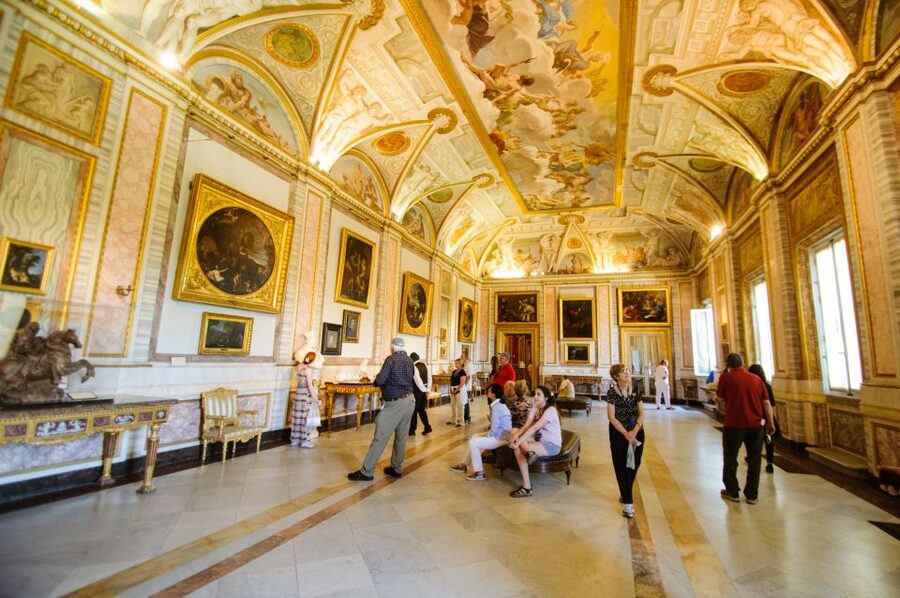
The setting also makes the art easier to connect. You are not viewing isolated objects in a modern white box. The rooms help show how a wealthy Roman collector might have lived with these works around him. The guide’s job is to point out those connections while keeping the tour moving.
Headsets are included, which is more useful than it sounds. Museum rooms can become noisy, and a guide speaking to a group of 15 can otherwise be hard to hear. With the headset, you can look closely while still following the explanation.
The pace is the main tradeoff. The gallery contains more than you can fully absorb in a short visit. One person described the two-hour museum portion as enough to cover the main works but still somewhat limited. That is a fair way to view it. You will see the important rooms and hear the main stories, but you will not have unlimited time with every painting.
Bernini’s Apollo and Daphne and the gallery’s star works
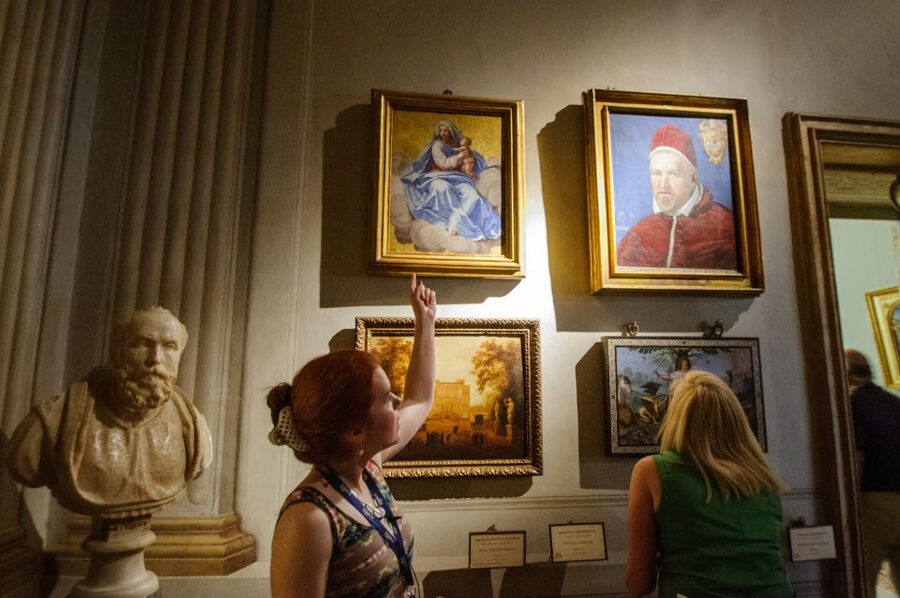
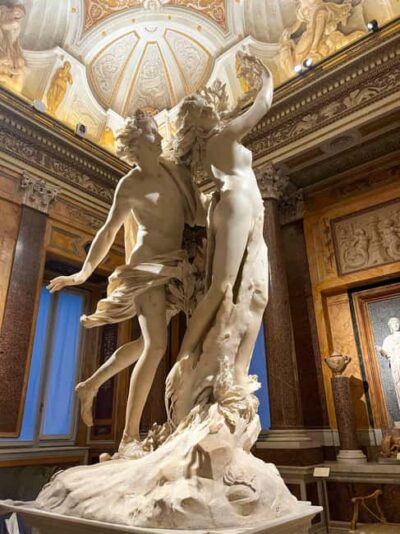
For many people, Bernini is the reason to book. His sculptures are not quiet blocks of stone. They twist, reach, react, and seem to change as you move around them.
Your guide may spend substantial time on Apollo and Daphne, one of the gallery’s signature works. The scene captures the instant Daphne transforms into a laurel tree while Apollo reaches for her. Look at the fingers, hair, bark, and leaves. The marble appears to shift from skin to plant, and that transformation gives the sculpture its drama.
A good guide helps you look in the right order. You may first notice the sweeping movement, then the expressions, then the tiny details that make the change feel almost impossible. Several guides receive special praise for their presentations of Bernini’s sculptures, so this is likely to be one of the strongest parts of the visit.
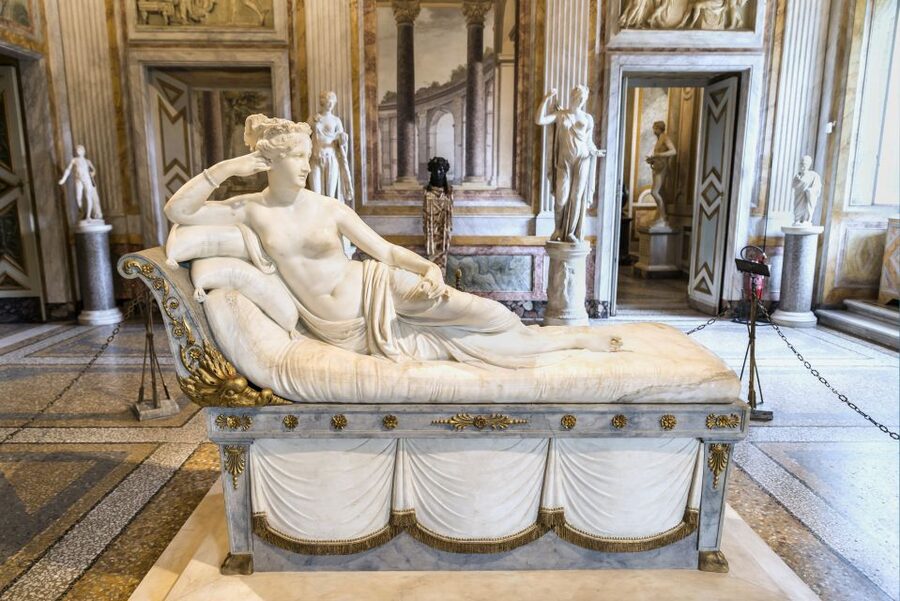
Canova’s Pauline Bonaparte offers a different kind of spectacle. The polished marble, relaxed pose, and idealized beauty raise questions about portraiture and public image. Your guide can help explain how the sculpture works both as a likeness and as a carefully staged statement.
The gallery’s paintings provide a useful contrast. Caravaggio’s St. Jerome is intimate and severe, with the saint shown in concentrated reflection. Titian brings a different visual language, while Raphael’s The Deposition rewards close attention to its arrangement of figures and emotional tension.
The point is not to memorize every date. It is to understand how the works differ and why they belong together in this collection. Guides such as Salvatore, Federica, Fabio, Eddy, and Elisa are repeatedly praised for connecting the art to its patrons, personalities, and historical setting.
More Borghese Gallery museums and collections:
- Rome: Borghese Gallery & Gardens Small Group Guided Tour
★ 4.5 · 2,190 reviews - Rome: Borghese Gallery Guided Tour with Tickets
★ 4.9 · 1,880 reviews - Rome: Skip-the-Line Borghese Gallery Guided Tour
★ 4.7 · 933 reviews - Rome: Borghese Gallery Guided Tour with Skip-the-Line Entry
★ 4.9 · 891 reviews
A guided visit, followed by time to look on your own
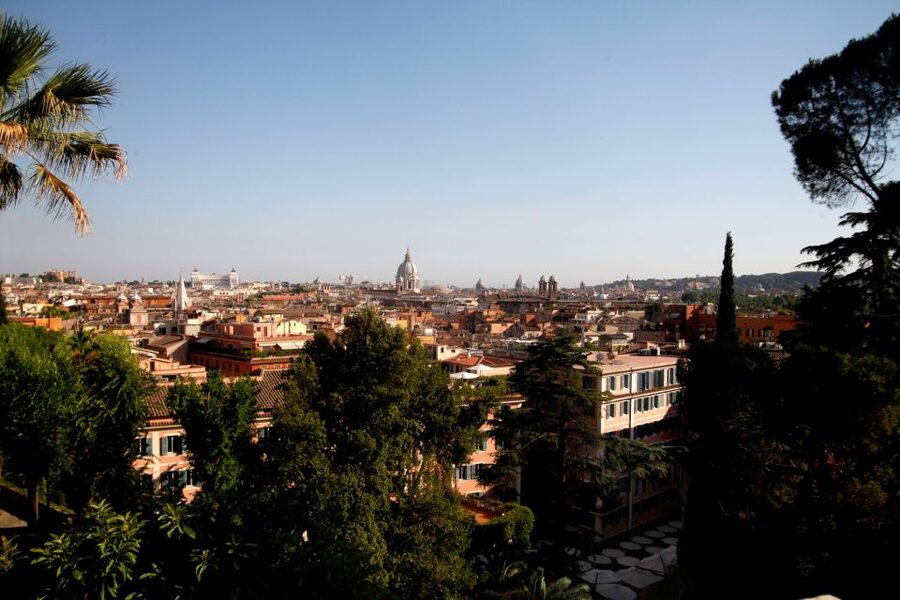
The supplied schedule describes a two-hour guided gallery visit and also lists a self-guided portion. The overall activity is advertised as 2.5 hours, with 30 minutes in the gardens, so the exact division of time may depend on the departure slot and the operating schedule.
That detail is worth clarifying before booking. The gallery itself is the heart of the experience, and you should not assume that every listed segment means a full additional block of time. In practice, the guided portion is designed to show you the major highlights, while any independent time gives you a chance to revisit a favorite room or examine a work without narration.
I like this combination in theory. A guide gives you a framework, then you can use your own eyes. It also suits mixed groups, since one person may want more time with a sculpture while another is ready to move on.
Still, do not book this expecting a slow, scholarly study session. The collection is dense, and the schedule is fixed. If you already know the Borghese Gallery well, you may prefer an unhurried visit with more independent time. If this is your first visit, the guide-led structure is likely to keep you from missing the major works.
The Borghese Gardens: a calm finish with a timing caveat
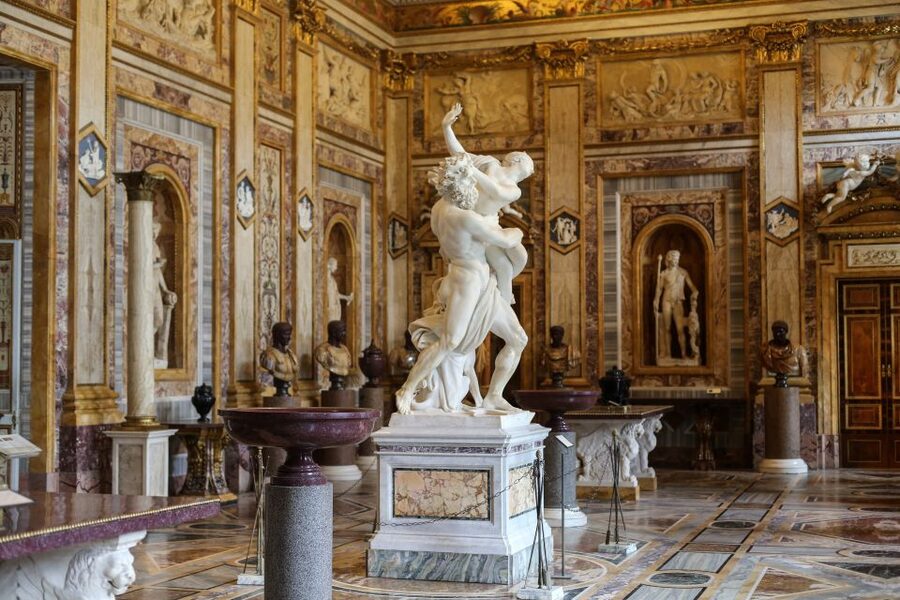
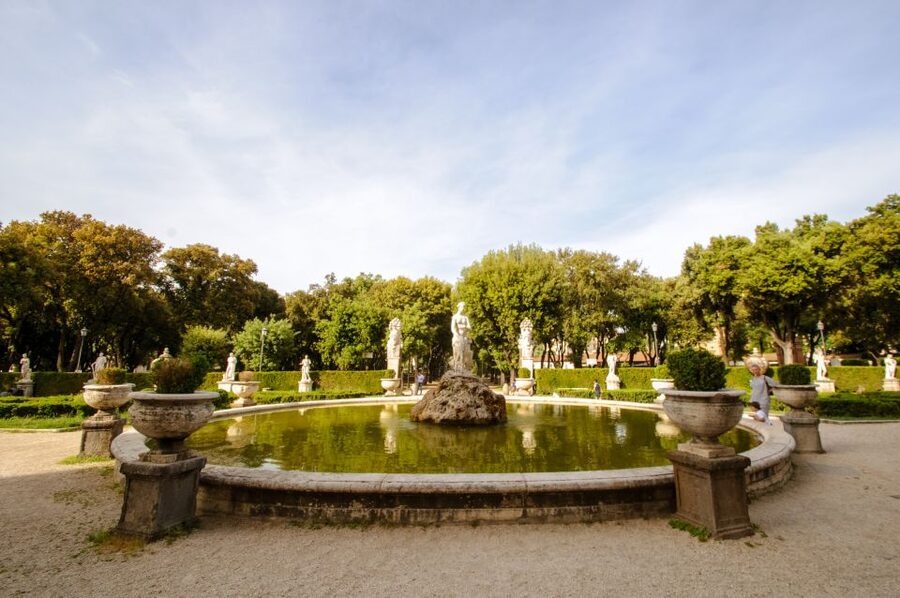
The gardens were once Cardinal Borghese’s private park. Today, Villa Borghese is a favored place for Romans to rest among trees, paths, fountains, and sculptures.
The garden walk gives the tour a welcome change of pace. After the concentrated rooms of the gallery, it is pleasant to step outside and hear how the villa and park fit into the wider Borghese estate. The guide points out the character of the grounds, including shady lanes, water features, and sculptures.
The garden portion is listed as 30 minutes, but the actual experience may vary. One account describes roughly 10 minutes of garden information at the end of a late-day visit rather than a full walk through the park. Another person skipped the outdoor portion because of summer heat. If the gardens matter greatly to you, choose an earlier time if available and ask the guide at the start how the timing will work.
Do not confuse this with a full botanical tour. The gardens are an added visit and a pleasant conclusion, not the main event. Their value is the contrast: art indoors, open space outdoors, and a glimpse of how the villa remains part of Roman daily life.
Is $60 a fair price?
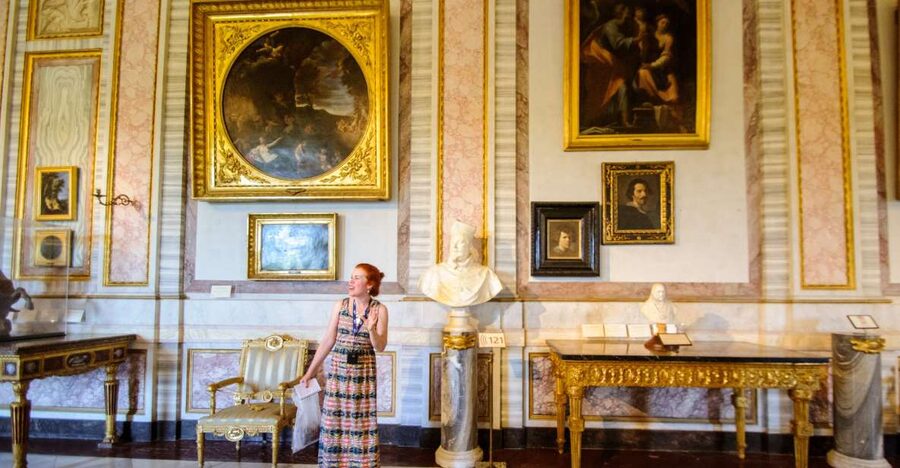
At $60 per person, this is not the cheapest way to enter the Borghese Gallery. You are paying for more than the admission ticket, though. The price includes reserved entry, an English-speaking guide, a group capped at 15, headsets, and the gardens.
I think the value depends on how you use museums. If you enjoy learning the story behind a work, the guide can make the extra cost worthwhile. The feedback includes strong praise for guides such as Salvatore, Federica, Eduardo, Gaga, Silvia, and Fabio, especially for explaining artistic details and links between the artists and the Borghese family.
The price is also easier to justify if you have limited time in Rome. A self-guided visit can work, but you must do the preparation yourself and decide what deserves your attention. This tour gives you a ready-made route through the best-known works.
The value is weaker if you want to linger for hours, sketch, take pictures, or explore every room at your own pace. Mobile phones are prohibited, and the schedule can feel tight. There are also limited places to sit, so expect to be on your feet for much of the visit.
Who will enjoy this tour most?
I would recommend it to a first-time visitor who wants the Borghese Gallery explained rather than simply entered. It is also a good choice for anyone who normally finds art museums difficult to approach. Several guides are praised for making the subject engaging even for people who do not usually care much about sculpture or painting.
Families with older children and teenagers can benefit from the storytelling. One account describes a 17-year-old becoming engaged once the guide connected the art to Italian culture and history. The group size is small enough to feel more personal than a large museum procession.
Art lovers should also consider it, but with realistic expectations. The guide can add context you might not get from labels, yet the fixed duration means you may want a separate return visit if you wish to study the collection carefully.
This is less suitable for anyone using a wheelchair or requiring special assistance. The tour cannot accommodate wheelchairs, strollers, baby carriages, or guests with impairments requiring special support. Comfortable shoes are essential because the visit involves a fair amount of walking.
Practical advice before you go
Keep your arrival simple. Bring your passport or ID card, wear comfortable shoes, and avoid all bags if possible. Since no bags are permitted inside the gallery, carrying less will save you time and worry.
Plan for a focused museum visit rather than a relaxed afternoon. The gallery’s major works deserve attention, but you will need to keep moving with the group. If there is a particular work you care about, tell the guide early so you can make the most of the available time.
Summer heat can make the garden walk less appealing, especially after two hours indoors and on foot. On a hot day, carry water for the approach and ask how much outdoor time is planned. The information provided does not specify water or refreshment arrangements, so do not count on them being supplied.
Finally, check the exact schedule when choosing a departure. The stated duration is 2.5 hours, while the detailed timing includes a two-hour guided visit, a two-hour self-guided visit, and 30 minutes in the gardens. That does not fit neatly together, so the final timing may depend on the selected slot. This is the one detail I would confirm before paying.
Should you book the Borghese Gallery and Gardens tour?
Book it if you want the major art explained by an expert, prefer a small group, and value the ease of reserved entry. The guides are the real strength, with Sal, Federica, Fabio, Eduardo, Silvia, and others praised for passion, humor, clear explanations, and memorable storytelling.
Skip it if you want a long, quiet visit with no fixed route, or if the garden walk is your main reason for going. The outdoor portion may be shorter than expected, and the gallery itself can feel rushed for serious art study.
For most first-time visitors to Rome, I think the $60 is sensible. The Borghese Gallery is compact but loaded with masterpieces, and a strong guide helps you see why Bernini’s marble feels alive, why Caravaggio’s paintings are so intense, and how one determined cardinal shaped the entire experience.
FAQ
How long does the Borghese Gallery and Gardens tour last?
The activity is advertised as 2.5 hours. The detailed schedule includes a guided gallery visit, time for independent viewing, and a 30-minute guided visit to the gardens, but the exact timing can vary by departure slot.
What is included in the $60 price?
The price includes entry to the Borghese Gallery, a guided gallery visit, an English-speaking expert guide, headsets, a small group of up to 15 people, and a visit to the Villa Borghese Gardens.
Where do I meet the guide?
Meet at Piazzale del Museo Borghese, in front of the Borghese Gallery.
How early should I arrive?
Arrive 15 minutes before departure. Late arrivals may not be accommodated, and missed tours or tickets cannot be refunded.
What should I bring?
Bring a passport or identity card. Comfortable shoes are recommended because the tour involves considerable walking.
Can I bring a bag, luggage, stroller, or phone?
No bags or luggage are permitted in the Borghese Gallery, and large bags, strollers, and baby carriages are not allowed. Mobile phone use is prohibited.
Is the tour suitable for wheelchair users?
No. The tour cannot accommodate wheelchair users, strollers, baby carriages, or people requiring special assistance because of an impairment.
Recently reviewed around Borghese Gallery
- Borghese Gallery Skip-the-Line Entry Ticket with Audioguide★ 4.0 · 345 reviews
- Borghese Gallery Guided Tour with Skip-the-Line Entry★ 5.0 · 261 reviews
- Borghese Gallery Max 6 People Tour: Baroque & Renaissance in Rome★ 5.0 · 185 reviews
- Rome: Skip-the-Line Borghese Gallery Guided Tour★ 4.7 · 933 reviews
- Rome: Borghese Gallery Guided Tour with Skip-the-Line Entry★ 4.9 · 891 reviews
- Rome: Borghese Gallery Guided Tour with Skip-the-Line Ticket★ 4.5 · 192 reviews
- Rome: Borghese Gallery Small Group Guided Tour★ 4.7 · 260 reviews
- Rome: Borghese Gallery Skip-the-line Entry Ticket★ 4.5 · 397 reviews
Borghese Gallery Tours, compared.
Borghese Gallery Guided Tour with Skip-the-Line Entry
Read our review →
Borghese Gallery Skip-the-Line Tickets with Audioguide
Read our review →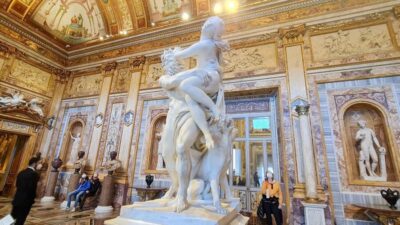
Borghese Gallery Entry Ticket & Optional Guided Tour
Read our review →
Borghese Gallery & Gardens Small Group Guided Tour
Read our review →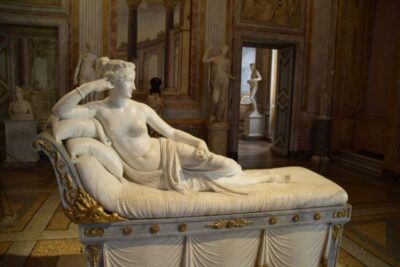
Borghese Gallery Guided Tour with Skip-the-Line Entry
Read our review →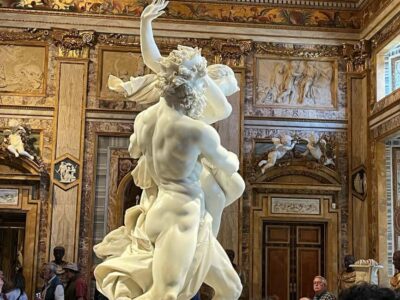
Browse the lists this tour appears in