
Review · BORGHESE GALLERY TOURS
Rome: Borghese Gallery Small Group Guided Tour
Rome’s Borghese Gallery packs a remarkable amount of art into a small, lavish villa. In about two hours, you can stand close to Bernini’s Apollo and Daphne and David, then turn to Caravaggio’s Boy with a Basket of Fruit and St. Jerome Writing. The short route works well if you want the major works without spending half a day in a huge museum.
I like the small-group format, which makes it easier to hear the guide and ask questions. I also like the headset system, since you can look closely at a sculpture while still following the explanation. The main drawback is time: the gallery holds more than you can properly see in 1.5 to 2 hours, and the opening few rooms may feel rushed as the group reaches its starting point.
In This Review
- Key points to know
- Why the Borghese Gallery deserves a place in your Rome plans
- Meeting the guide outside the Borghese Gallery
- Bernini’s marble figures, where the tour earns its keep
- Caravaggio’s dark rooms and ordinary faces
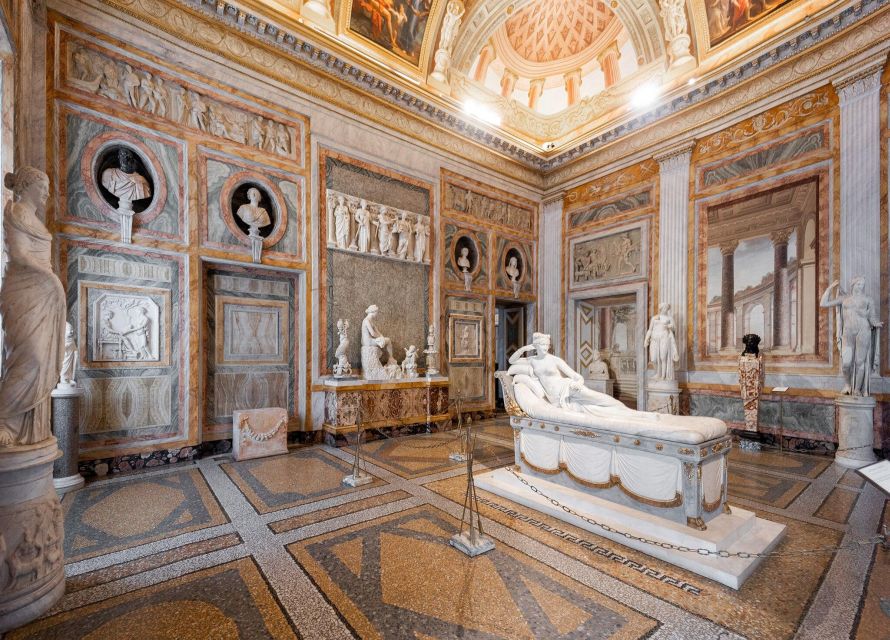
- Ornate rooms that frame every masterpiece
- The route is focused, but not complete
- What the guide changes
- Practical rules that can shape your visit
- Is this Borghese Gallery tour good value?
- Should you book the Borghese Gallery guided tour?
- FAQ
- How long does the Borghese Gallery tour last?
- What language is the tour conducted in?
- Is admission to the Borghese Gallery included?
- Where does the tour meet?
- Are headsets provided?
- Can I bring a bag into the Borghese Gallery?
- Is the tour suitable for wheelchair users?
Key points to know
- Bernini takes center stage: Apollo and Daphne and David are the artistic high points, with close views of marble work that rewards a guide’s explanation.
- Caravaggio adds drama: Boy with a Basket of Fruit and St. Jerome Writing show the painter’s sharp eye for light, mood, and ordinary human detail.
- The villa is part of the experience: Frescoes, carved decoration, and ornate rooms frame the paintings and sculptures.
- Guides bring different strengths: Felicity, also called Fe, Andrada, Barbara, Fabio, Phoebe, Ellie, Sylvia, and others have led tours praised for clear storytelling and energy.
- Plan for strict security: Bags of any size, food, drinks, video recording, pets, weapons, and sharp objects are not allowed inside.
- The meeting point needs attention: Look for the guide in front of the gallery entrance with a City Walkers sign, but allow extra time because some visitors have found the organizer hard to spot.
Why the Borghese Gallery deserves a place in your Rome plans
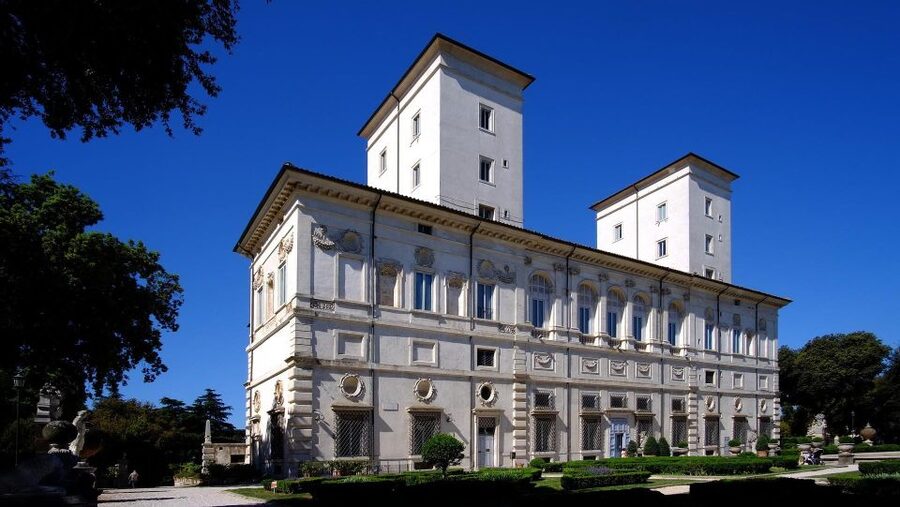
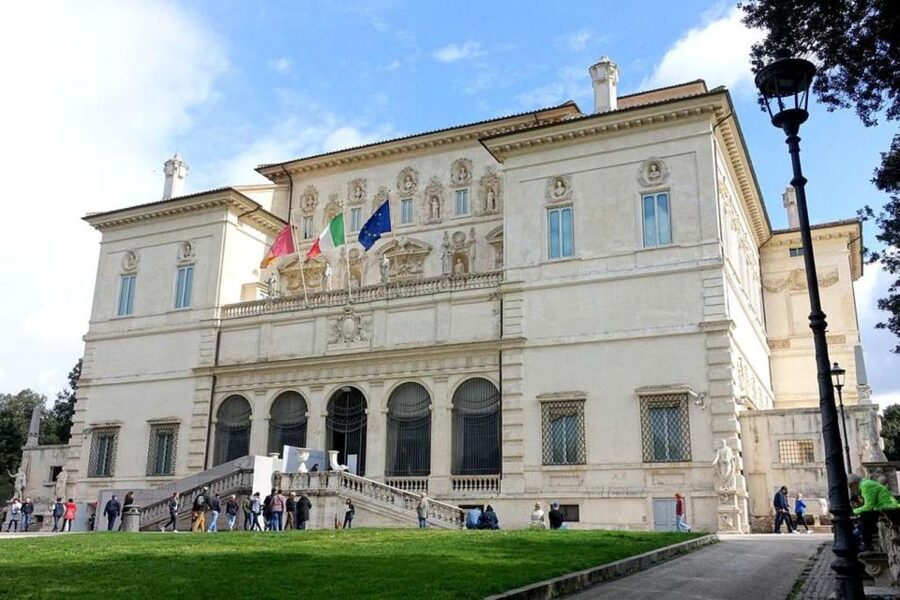
Rome has museums that can swallow an entire day. The Borghese Gallery is different. It is a compact collection in a 17th-century villa, where the rooms themselves compete with the art for your attention.
The collection is closely linked to Cardinal Scipione Borghese, an important early patron of Gian Lorenzo Bernini and a powerful collector of paintings and sculpture. Your guide explains how the cardinal shaped the collection and why these particular artists mattered to Rome’s cultural life.
That context changes the way you look at the rooms. You are not simply checking famous works off a list. You are seeing a carefully assembled display of Baroque sculpture, dramatic painting, classical subjects, and polished luxury.
The museum limits the number of people inside, which helps preserve the atmosphere. It also means tickets can be difficult to secure independently. A guided visit with entry included has practical value, especially if you have only a few days in Rome and do not want to spend time trying to arrange admission on your own.
At $51.24 per person, this is not the cheapest museum visit in Rome. Still, the price includes gallery admission, skip-the-line access, a live English-speaking guide, and a headset. If the guide gives you the kind of clear art explanation reported by visitors who toured with Felicity, Andrada, Elizabeth, Barbara, or Fabio, the added cost can be worthwhile.
More Museum Tours in Rome
- Vatican: Museums & Sistine Chapel Entrance Ticket
★ 4.5 · 144,003 reviews - Vatican Museums & Sistine Chapel Tour with Optional Basilica
★ 4.3 · 67,413 reviews - Vatican Museums, Sistine Chapel & St Peter’s Basilica Guided Tour
★ 4.5 · 39,149 reviews
Meeting the guide outside the Borghese Gallery
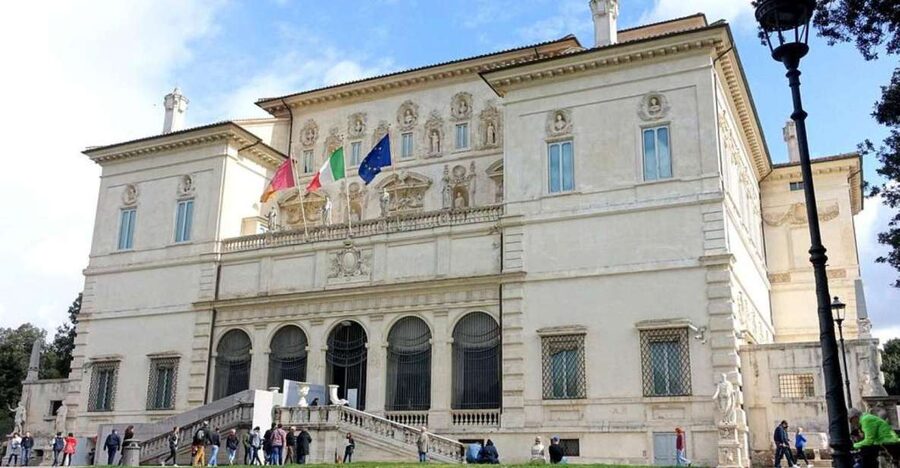
The tour begins in front of the entrance to the Borghese Gallery and Museum. Your guide should be holding a City Walkers sign. There is no hotel pickup, so you need to make your own way to the museum and arrive ready to find the group.
This part deserves more attention than it might seem. Several people found the meeting point easy to reach, but others had trouble identifying the organizer because the sign was not obvious enough. I would not arrive at the last second. Give yourself a little extra time to locate the entrance and the guide, especially if you are unfamiliar with the villa grounds.
The opening moments may include a quick movement through several rooms to reach the proper starting point. One visitor found this rushed, but the pace improved after the guide explained the arrangement. That is useful to know in advance. Do not judge the whole tour by the first few minutes.
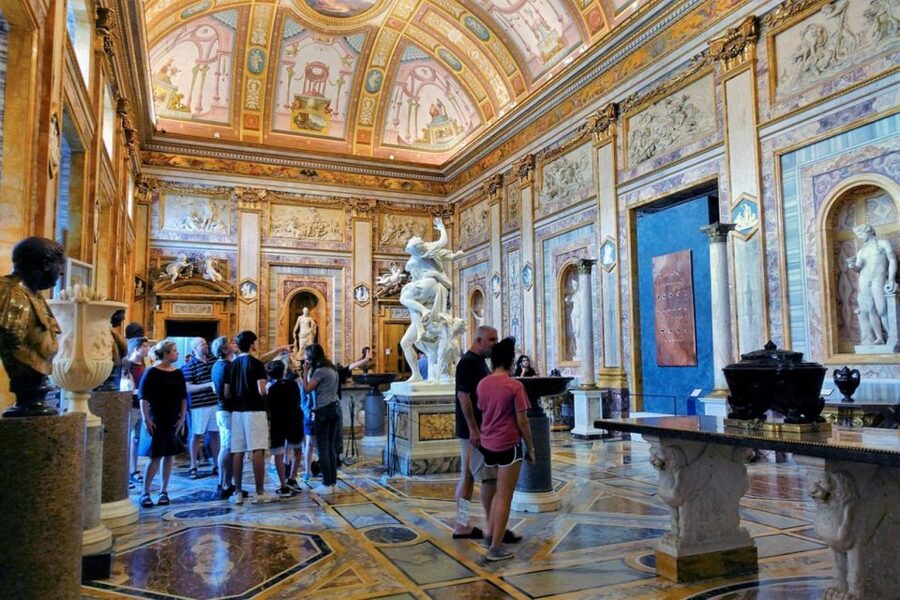
Once everyone is together, you receive a headset so you can hear the guide across the room. This matters in a museum where groups may gather around the same famous sculpture. You can step a little closer to study a face, hand, or fold of fabric without losing the commentary.
Bernini’s marble figures, where the tour earns its keep
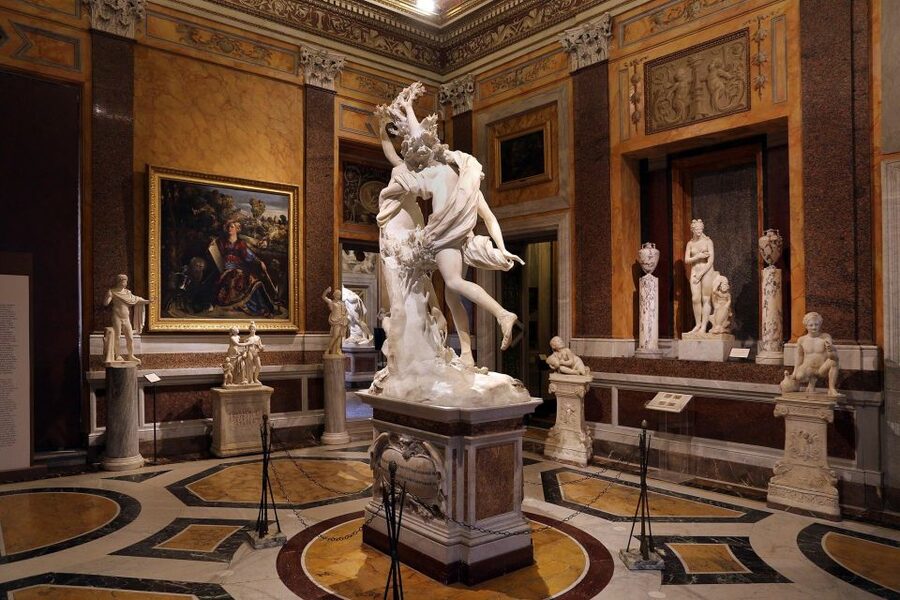
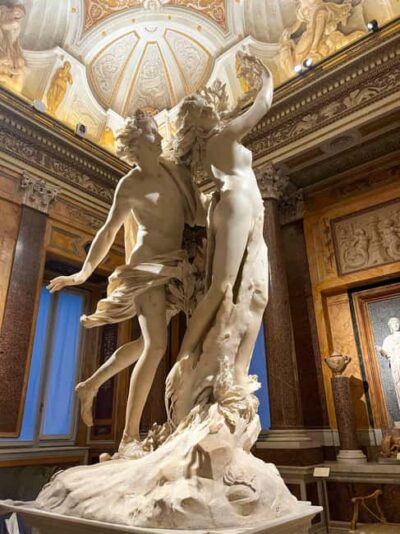
The Borghese Gallery is one of the best places in Rome to see Bernini’s sculpture at close range. His Apollo and Daphne is usually the moment when the tour shifts from impressive to astonishing.
The subject comes from ancient mythology. Apollo pursues Daphne, who asks the gods to save her and begins changing into a laurel tree. Bernini captures the transformation in mid-motion. Apollo’s hand reaches toward her body, while Daphne’s fingers and hair seem to turn into leaves and branches.
A guide can point out details that are easy to miss when you are simply taking photographs. Look at the transition from soft flesh to bark, the spread of Daphne’s fingers, and the way the figures seem to move through open space. The marble is not treated as a solid block. It appears to stretch, curl, and change before your eyes.
The group also examines David, another major Bernini work. This is not a calm, posed hero. David is caught at the moment of action, twisting his body as he prepares to throw the stone at Goliath.
The sculpture asks you to move around it. From one angle, you see concentration in David’s face. From another, you feel the force of the turn through his shoulders, legs, and arms. Your guide can explain how Bernini used the viewer’s position as part of the work, an important idea in Baroque art.
These are the pieces that justify choosing a guide over a quick solo visit. You can see the marble without help, but the guide gives you a way to read the movement, story, and technique. Guides such as Andrada and Felicity have been especially praised for connecting the artwork with its historical setting and for keeping the explanation lively rather than academic.
Caravaggio’s dark rooms and ordinary faces
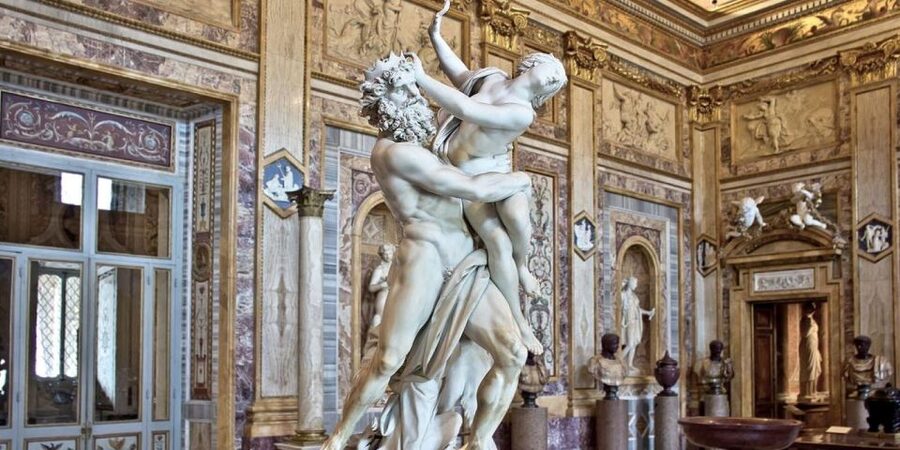
The paintings by Caravaggio provide a strong counterpoint to Bernini’s theatrical marble. His Boy with a Basket of Fruit is quieter, but it is full of visual tension.
The young figure looks directly toward you while holding a basket filled with fruit. A guide may draw your attention to the leaves, bruised fruit, skin, and fabric. Caravaggio makes ordinary objects important, but the painting also carries a sense of fragility. The fruit will decay. The boy’s pose feels relaxed, yet his gaze keeps the picture from becoming merely decorative.
St. Jerome Writing has a different mood. The saint is shown in a stark, focused setting, with his body and face shaped by strong light and surrounding darkness. Caravaggio’s technique makes the scene feel immediate rather than distant. You are not looking at a remote holy figure in an idealized world. You are looking at a tired, aging man at work.
This is where the guide’s storytelling can help most. A good explanation connects the painting’s subject, lighting, human expression, and religious purpose. Ellie has been praised for making both the art and the history easy to follow, while other guides, including Phoebe and Barbara, have been described as strong storytellers who adjusted their approach to the group.
The Caravaggio rooms also make the tour more varied. Bernini gives you movement in three dimensions. Caravaggio gives you concentrated drama on a flat surface. Seeing both in the same visit helps you understand why the Baroque period could feel so forceful and theatrical.
More Rome museums and collections:
- Rome: Vatican Museums, Sistine Chapel & Basilica Tour
★ 4.3 · 13,872 reviews - Vatican Museums & Sistine Chapel Skip-the-Line Entry Ticket
★ 4.4 · 13,838 reviews - Rome: Vatican Museums, Sistine Chapel & Basilica Tour
★ 4.7 · 13,217 reviews - Rome: Vatican Museums & Sistine Chapel Guided Tour
★ 4.3 · 12,117 reviews
Ornate rooms that frame every masterpiece
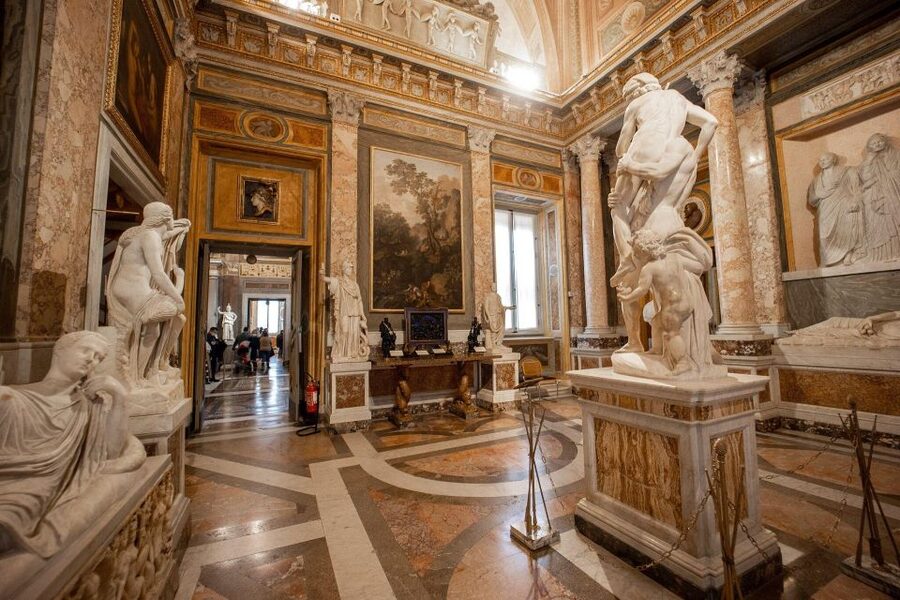
Do not rush past the interiors. The Borghese Gallery is not a plain white-box museum. Frescoes, decorated ceilings, patterned floors, carved frames, and elaborate walls turn the building into part of the collection.
The setting tells you something about Cardinal Borghese’s aims. Art was displayed here as a sign of taste, wealth, power, and learning. The ornate rooms were designed to impress, and they still do.
At times, the decoration can compete with the paintings. That is a minor drawback if you prefer quiet galleries where the artwork has no visual competition. I find the contrast useful, though. Bernini’s polished marble looks even more theatrical in a room built for display, while Caravaggio’s dark paintings gain force against bright decoration.
Your guide also helps set priorities. You cannot give every painting equal attention during a 1.5 to 2-hour visit. The best guides explain which works deserve a longer look and which details can be covered more quickly.
Several guides have made a point of balancing different ages and interests in the group. Barbara, for example, was praised for telling engaging stories while adjusting her presentation to the people around her. That flexibility matters in a small museum tour, since one group may include art enthusiasts, first-time museum visitors, and families with very different levels of background knowledge.
The route is focused, but not complete
The stated duration is short enough to fit neatly into a busy Rome itinerary. You might schedule it between other sights, though the exact start time depends on availability. The tour ends back at the meeting point, so you are not left wondering where the official visit finishes.
The tradeoff is coverage. Even a well-planned two-hour route cannot do justice to the full collection. One guide apparently took the group upstairs to see additional paintings, including works by Raphael, but that should not be treated as a guaranteed part of every visit. Some rooms may also close for maintenance.
Think of this tour as an introduction to the gallery’s main artistic story, not a complete museum study. You will likely see the best-known Bernini and Caravaggio works, learn how Renaissance and Baroque styles differ, and gain a clearer sense of the collection’s purpose. You will not have time to linger over every painting or return repeatedly to your favorite sculpture.
I like that limitation for a first visit. The Borghese can feel overwhelming if you try to absorb everything at once. A guide gives you a framework, and you can return later, if your ticket and schedule allow, with a better idea of what deserves your attention.
What the guide changes
The most consistent strength of this experience is the quality of the live explanations. The individual guide matters more than the basic ticket. Names connected with especially warm and effective tours include Felicity, also called Fe, Andrada, Barbara, Fabio, Phoebe, Ellie, Elizabeth, Sylvia, Donatella, Giuseppe, and Fabian.
You are not guaranteed a particular guide, so book this for the format and subject rather than a specific person. Still, the range of praised guides gives you a useful picture of what the tour aims to provide: art history explained through stories, visual details, and comparisons between artists.
Felicity has been praised for infectious energy, dry humor, and a clear grasp of the collection. Andrada has been noted for helping visitors connect the artwork with wider historical events. Donatella reportedly used old sketches and comparisons between artists to explain early 17th-century Baroque ideas.
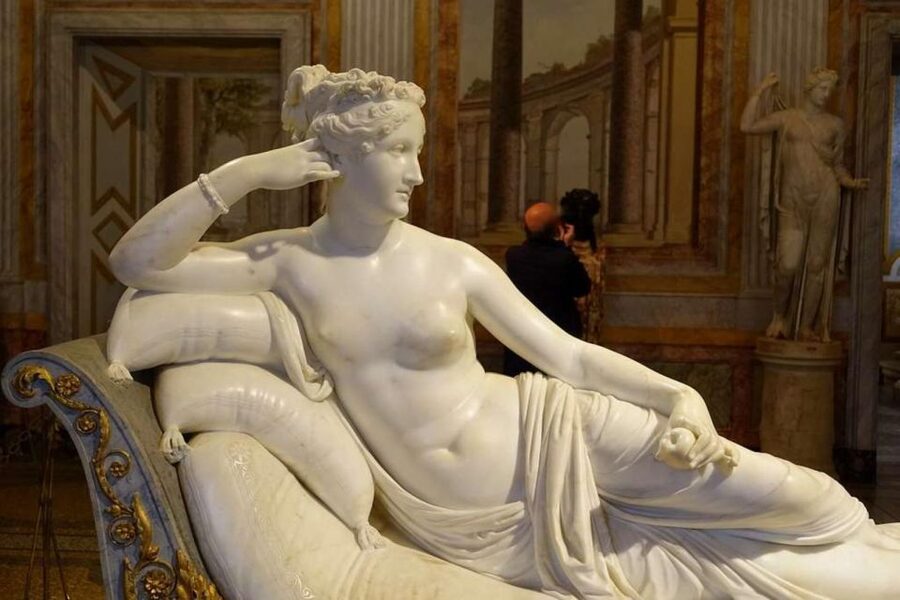
That kind of presentation is valuable at the Borghese because the art is visually powerful but not always self-explanatory. You can admire the finish of Apollo and Daphne without knowing how the myth shapes the sculpture. You can enjoy Caravaggio’s light without understanding why it changed the feel of religious painting. The guide fills in those gaps.
The best approach is to listen first, then spend a few quiet moments looking for yourself. Do not feel you must stare at the artwork while the guide is speaking. Use the headset to hear the explanation, then give your eyes time to take in the sculpture or painting without commentary.
Practical rules that can shape your visit
Security rules here are strict. Bags of any size are not permitted inside the Borghese Gallery. Food and drinks are also forbidden, along with video recording, weapons, sharp objects, and pets.
The bag rule is the one most likely to affect your plans. Do not arrive with a daypack assuming it will be accepted. Leave unnecessary belongings elsewhere before you reach the museum. The supplied information does not confirm storage arrangements, so do not count on being able to deposit a large bag at the entrance.
The tour operates rain or shine. Since hotel pickup is not included and the meeting point is outdoors, allow for the weather when planning your route. The tour is not suitable for wheelchair users or people with mobility impairments, so check this carefully before booking.
You can cancel up to 24 hours in advance for a full refund, and the reserve-now, pay-later option keeps payment flexible. Those terms are useful if your Rome schedule is still shifting, but they do not remove the need to check the starting time and meeting instructions before you commit.
Is this Borghese Gallery tour good value?
At $51.24, the tour costs more than simply wandering through a museum on your own, assuming you already have admission. The important question is what you want from the visit.
I would consider it good value if you are new to Bernini, Caravaggio, or Baroque art. The guide turns a short visit into a focused lesson, and the headset means you can hear without standing shoulder to shoulder with the group. Skip-the-line entry is also useful because Borghese admission is limited.
I would hesitate if you want a slow, solitary museum visit. The fixed pace and short duration leave little room to sit with every painting. You may also find the opening movement through several rooms hurried, and maintenance can affect which parts of the museum are open.
Should you book the Borghese Gallery guided tour?
Book this tour if you want to see Bernini and Caravaggio with clear explanations, have limited time in Rome, and prefer a small group to a large guided procession. It is particularly suitable for first-time visitors who want the main works placed in historical and artistic context.
Skip it if you need wheelchair access, cannot travel without a bag, or strongly prefer exploring at your own pace. Also book only when you can arrive early enough to find the City Walkers guide, since meeting-point confusion has caused avoidable stress.
For most visitors who want an efficient, meaningful introduction to the Borghese Gallery, I would choose the guided option. Just accept its limits: two hours gives you the highlights, not the whole collection.
FAQ
How long does the Borghese Gallery tour last?
The tour lasts about 1.5 to 2 hours. Available starting times vary, so check the schedule before booking.
What language is the tour conducted in?
The live tour guide speaks English.
Is admission to the Borghese Gallery included?
Yes. Borghese Gallery skip-the-line tickets are included in the activity.
Where does the tour meet?
The guide waits in front of the entrance to the Borghese Gallery and Museum with a City Walkers sign. The tour ends back at the same meeting point.
Are headsets provided?
Yes. Headsets are included so you can hear the guide clearly inside the gallery.
Can I bring a bag into the Borghese Gallery?
No. Bags of any size are not permitted inside the gallery. Food and drinks, video recording, weapons, sharp objects, and pets are also not allowed.
Is the tour suitable for wheelchair users?
No. The activity is listed as unsuitable for wheelchair users and people with mobility impairments.
Recently reviewed around Rome
- Ancient Rome at Twilight Walking Tour★ 5.0 · 276 reviews
- Domus Aurea Guided Tour: The Golden House of Nero★ 4.5 · 199 reviews
- Early Vatican Museums & Sistine Chapel Small Group Tour★ 4.5 · 314 reviews
- Early Vatican Museums Tour: The Best of the Sistine Chapel★ 4.5 · 900 reviews
- Jewish Ghetto & Piazza Navona: Food, Wine & Sightseeing Rome Tour★ 5.0 · 460 reviews
- 3 Days in Sorrento, Capri & Pompeii: la Dolce Vita★ 4.0 · 595 reviews
- Tivoli Villas Full Day Trip From Rome with Lunch★ 4.0 · 443 reviews
- Cook With Us in Rome: A Hands-On Cooking Experience 09:20AM class★ 5.0 · 234 reviews
Borghese Gallery Tours, compared.
Borghese Gallery and Gardens Guided Small-Group Tour
Read our review →
Borghese Gallery Guided Tour with Skip-the-Line Entry
Read our review →
Borghese Gallery Skip-the-Line Tickets with Audioguide
Read our review →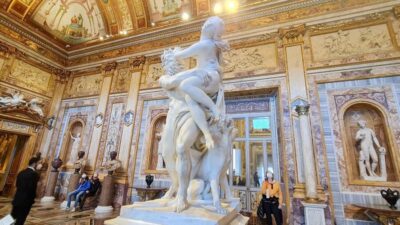
Borghese Gallery Entry Ticket & Optional Guided Tour
Read our review →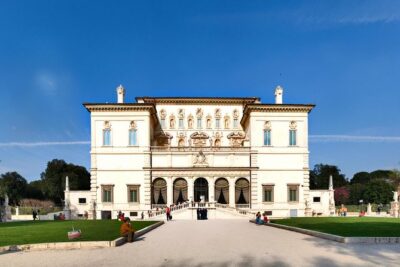
Borghese Gallery & Gardens Small Group Guided Tour
Read our review →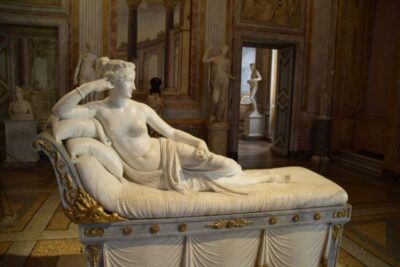
Borghese Gallery Guided Tour with Skip-the-Line Entry
Read our review →Browse the lists this tour appears in