
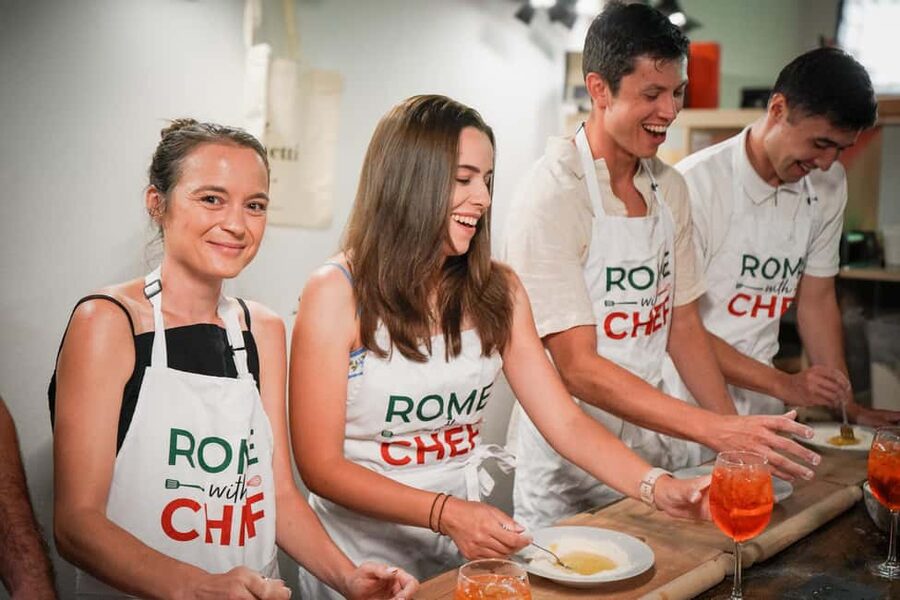
Review · COOKING CLASSES
Rome: Spritz & Spaghetti Cooking Class
Rome: Spritz & Spaghetti Cooking Class Review
Fresh pasta and three spritzes make an unusually social introduction to Roman food. You begin with an Aperol spritz, roll and cut your own fettuccine, then sit down to eat it with carbonara or cacio e pepe. The class is led by a local chef and mixologist in a real Roman kitchen.
I like the hands-on format and the small maximum of 14 people. You are not just watching a demonstration: you make the pasta, help with the sauce, and eat the finished dish. I also like the way the drinks pace the class, with a Hugo spritz during the cooking and a Limoncello spritz at the end.
The main drawback is dietary. This menu cannot accommodate coeliac disease, gluten intolerance, vegan diets, or lactose intolerance. The three-hour class also includes alcohol throughout, so it is a poor fit if you want a quiet cooking lesson or do not drink.
In This Review
- Key points at a glance
- What this Rome cooking class is really about
- Starting with Aperol and meeting the chef
- Rolling and cutting fresh fettuccine
- Choosing between carbonara and cacio e pepe
- A Hugo spritz while the pasta cooks
- Sitting down for the meal and Limoncello
- Why the small group size matters
- Price, timing, and practical value
- Who should book this experience
- Final verdict: book it for food, drinks, and company
- FAQ
- How long does the Spritz & Spaghetti Cooking Class last?
- What drinks are included?
- What pasta will I make?
- Is the class suitable for vegetarians?
- Can the class accommodate gluten-free, vegan, or dairy-free diets?
- Is the class private or shared?
- What language is the class taught in?
Key points at a glance
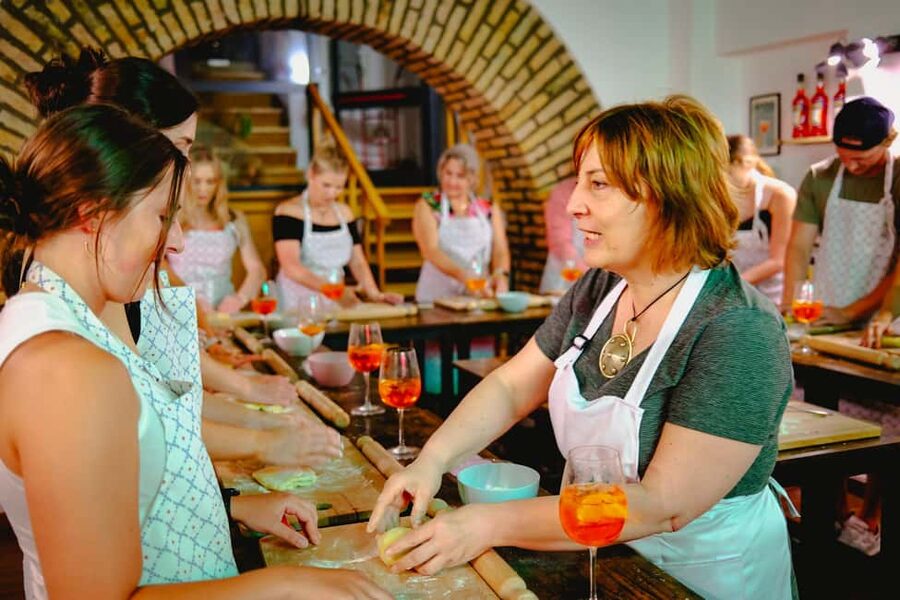
- Three spritzes in one class: Make Aperol, Hugo, and Limoncello spritzes, not just one welcome drink.
- Fresh fettuccine by hand: Roll, cut, cook, and eat the pasta you make.
- A Roman kitchen setting: The lesson takes place in a working kitchen rather than a formal sightseeing venue.
- Small groups, up to 14 people: The size gives you a fair chance to handle the dough and ask questions.
- Strong instructors: Chefs including Sunny, Marzia, Jem, Laura, Ida, Bart, and Adriano have been praised for warmth, humor, and clear instruction.
- Recipes to take home: You can repeat the pasta and sauce at home after your holiday.
What this Rome cooking class is really about
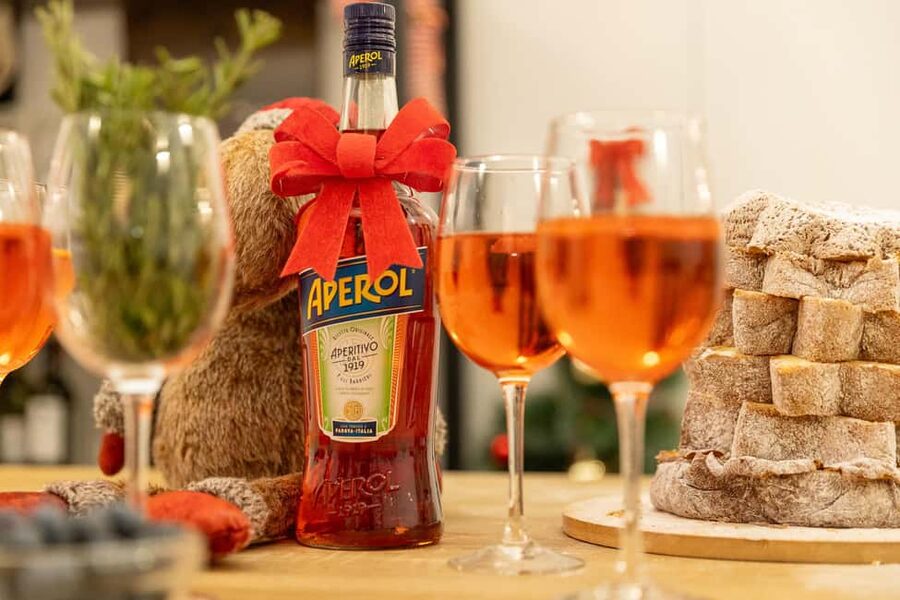
This is less a serious chef-training session and more a lively food-and-drink evening with useful cooking skills tucked inside. You spend three hours meeting people, mixing drinks, working with pasta dough, and eating a Roman meal that you helped prepare.
That balance matters. Rome has plenty of food tours where you watch someone else prepare the dish. Here, your hands stay busy. You roll the dough, cut the fettuccine, and take part in making the sauce. If you like learning by doing, this format gives you more than a restaurant meal.
The class is offered as either a shared or private experience. In a shared class, the social side is part of the appeal. The group can include people from different countries, and the drinks help conversation start quickly. A private booking gives your own party more control over the atmosphere, though the provided information does not specify a different menu or schedule for private groups.
The working language is English. The instructors have included chefs and hosts such as Sunny, Marzia, Jem, Laura, Ida, Bart, Kysusha, Sushi, Adriano, and others. Staff assignments can vary, but the common thread is an energetic teaching style. Marzia is noted for explaining cooking methods and regional differences, while Jem has been praised for his pasta carbonara and cacio e pepe. Bart is known for keeping the room lively while still including everyone in the cooking.
More Cooking Classes in Rome
- 3 in 1 Cooking Class near Navona: Fettuccine, Ravioli & Tiramisu
★ 5.0 · 7,376 reviews - Rome: Pasta & Tiramisu Class with Fine Wine by the Vatican
★ 4.9 · 4,852 reviews - Rome: Pasta Making Class with Wine, Limoncello, and Dessert
★ 4.9 · 3,177 reviews
Starting with Aperol and meeting the chef
The first drink is an Aperol spritz. This is not just a cocktail course opener. It gives you a few minutes to meet the chef, the mixologist, and the rest of the group before flour and eggs appear on the table.
The class is presented as the only tipsy cooking class in Rome. That wording tells you what kind of evening to expect: informal, cheerful, and built around drinking as well as food. You receive one Aperol spritz, one Hugo spritz, and one Limoncello spritz as part of the experience, along with unlimited water and soft drinks.
The alcohol is a meaningful part of the value, but it also deserves clear attention. Three spritzes over three hours can feel generous, especially at the listed price of $112.15 per person. It also means you should not schedule a demanding museum visit or another major activity immediately afterward. If you are sensitive to alcohol, use the water and soft drinks provided and tell the staff in advance what you need.
The Aperol spritz is also a practical icebreaker. A shared cooking class can feel awkward for the first few minutes, particularly for solo participants. The opening drink and shared work at the table give you an easy way to start talking without forcing formal introductions.
Rolling and cutting fresh fettuccine
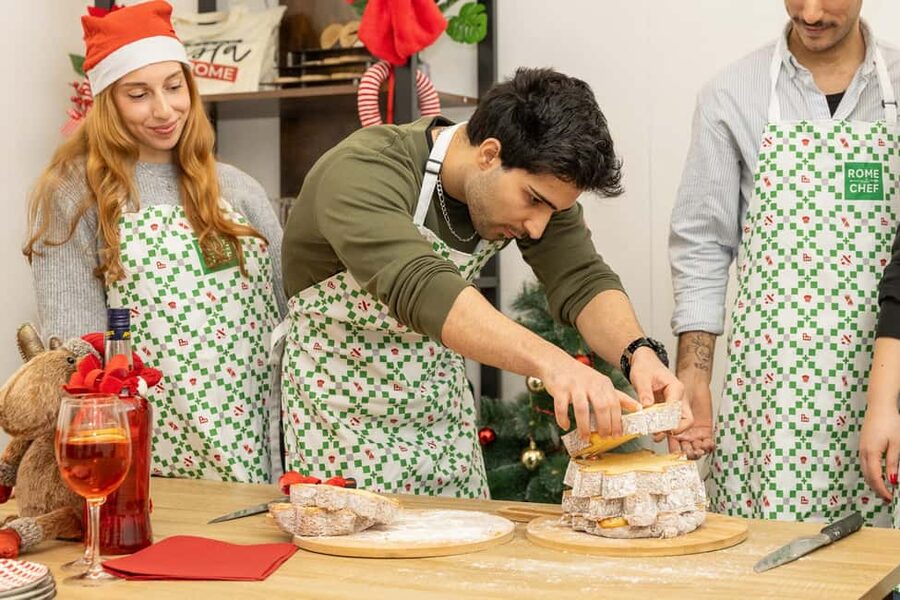
Once everyone is settled, the chef introduces the pasta process and gives some background on Italian cooking. The goal is fresh handmade fettuccine. You roll the dough, cut it into ribbons, and cook it yourself under guidance.
This is the part I would value most if you already know Rome’s food scene. Eating pasta in a trattoria is easy. Learning how dough changes under your hands gives you a skill you can use again. The recipes help, but the physical practice matters just as much. You see the texture, feel the dough, and learn how the shape affects the finished dish.
The class uses fresh, locally sourced ingredients. The exact quantities and method can vary with the chef, but you are given a traditional approach rather than a restaurant-style performance. The instructors are there to show you each stage and keep the process manageable for different skill levels.
It is worth keeping your expectations sensible. This is a group workshop, not a private lesson in a pasta school. You will have hands-on work, but the time must be shared among as many as 14 people. That maximum is still fairly intimate for a social activity, and the repeated praise for instructors such as Sushi, Ida, and Laura suggests that the hosts make an effort to include people at different levels.
Choosing between carbonara and cacio e pepe
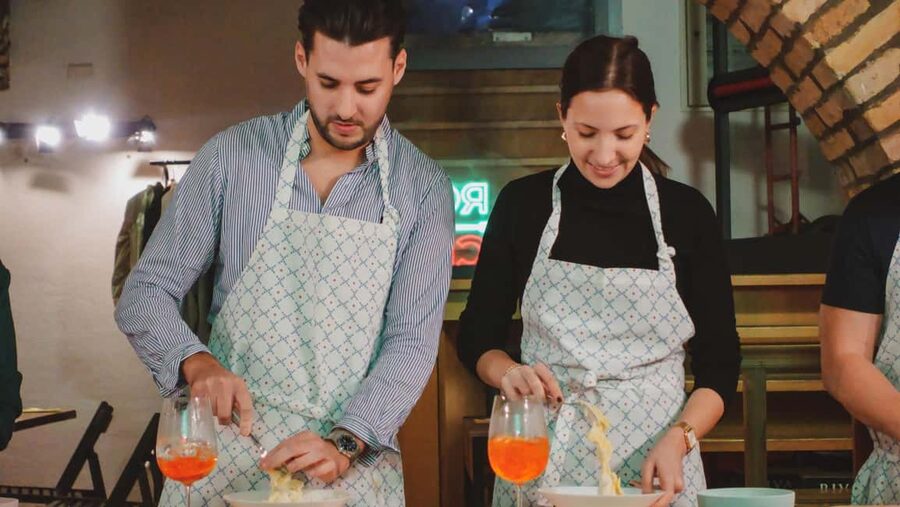
The pasta is served with a traditional sauce, usually carbonara or cacio e pepe. Both are closely linked with Roman cooking, but they teach different lessons.
Carbonara is built around a creamy texture created without cream. Eggs, cheese, and the other ingredients need careful handling so the sauce coats the pasta without turning into scrambled egg. Cacio e pepe is simpler on paper and less forgiving in another way. Cheese, pepper, pasta, and the right amount of cooking water must come together smoothly.
The class gives you a useful chance to see why these dishes can taste so different at home and in Rome. Technique matters more than a long ingredient list. The pasta water, timing, heat, and movement all affect the final plate.
You eat everything you make. That is a small but important promise. Your meal is not a token sample after the real cooking is finished. It is the result of your work, and the food becomes the main reward at the end of the lesson.
Several instructors have received especially strong praise for the pasta. Jem has been singled out for carbonara and cacio e pepe that participants considered better than versions they had eaten in Roman restaurants. That is subjective, of course, but it points to the most satisfying part of the format: you get to eat the dish while the steps are still fresh in your mind.
A different way to spend the day, same part of Italy:
- Vatican: Museums & Sistine Chapel Entrance Ticket
★ 4.5 · 144,003 reviews - Vatican Museums & Sistine Chapel Tour with Optional Basilica
★ 4.3 · 67,413 reviews - Colosseum, Roman Forum & Palatine Guided Tour
★ 4.7 · 63,148 reviews - Vatican Museums, Sistine Chapel & St Peter’s Basilica Guided Tour
★ 4.5 · 39,149 reviews
A Hugo spritz while the pasta cooks
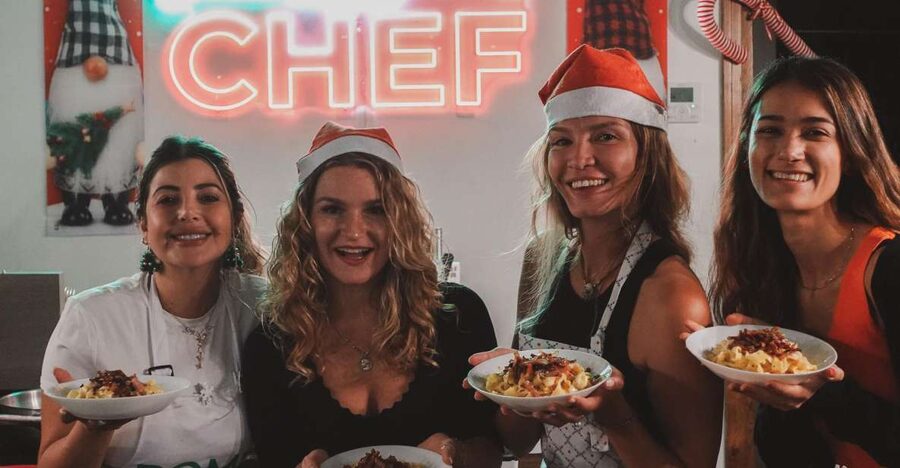
The second cocktail is a Hugo spritz, served while the cooking continues. This keeps the class moving and gives you something to enjoy while the pasta rests or cooks.
The drink sequence also breaks the three-hour session into clear stages. Aperol gets you started, the Hugo accompanies the practical work, and Limoncello closes the meal. It feels more like a relaxed evening out than a tightly timed technical workshop.
For some people, that is exactly the appeal. The food lesson and cocktail lesson support each other, and the drinks help create the friendly atmosphere repeatedly praised by participants. For others, the cocktail focus may feel too strong. If your main goal is advanced pasta instruction, you may prefer a class with more time devoted to dough, shaping, and sauce technique.
The mixology element is still useful for a Rome holiday. Spritzes are part of everyday Italian aperitivo culture, and learning three versions gives you something practical to order and make later. You are not only drinking a pre-mixed cocktail. You learn the basic preparation of Aperol, Hugo, and Limoncello spritzes.
Sitting down for the meal and Limoncello
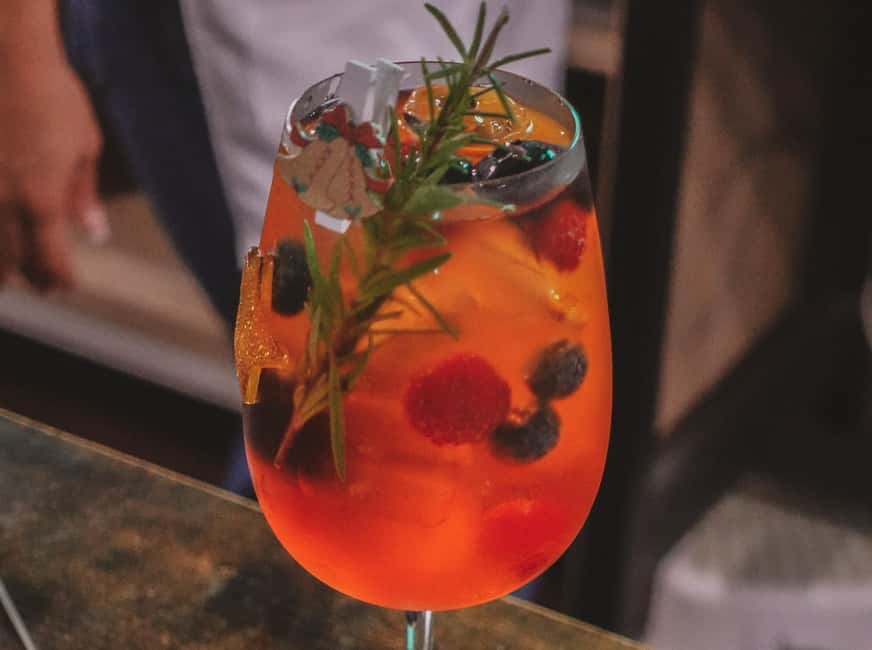
After the pasta and sauce are ready, you sit down with the group and eat the meal. The final drink is a Limoncello spritz, which gives the class a clear finish.
This shared table is where the activity becomes more than a recipe lesson. You have worked alongside the people around you, so the meal has a natural sense of occasion. The class is especially well suited to solo visitors, couples, and small groups who want an evening activity that includes conversation without requiring a separate bar or restaurant booking.
The meal is vegetarian-friendly, but you must read the dietary limits carefully. Gluten-free, vegan, dairy-free, and lactose-free versions are not available because the menu uses wheat and dairy. The supplier asks you to share dietary restrictions in advance so the team can see if anything else can be done, but you should not book this class expecting a substitute menu for those diets.
The drinks, food, and instruction are all included. You do not need to buy a separate meal afterward unless you are particularly hungry. The supplied information does not specify portion size, so I would treat this as a full tasting meal rather than plan it as a feast for a very large appetite.
Why the small group size matters
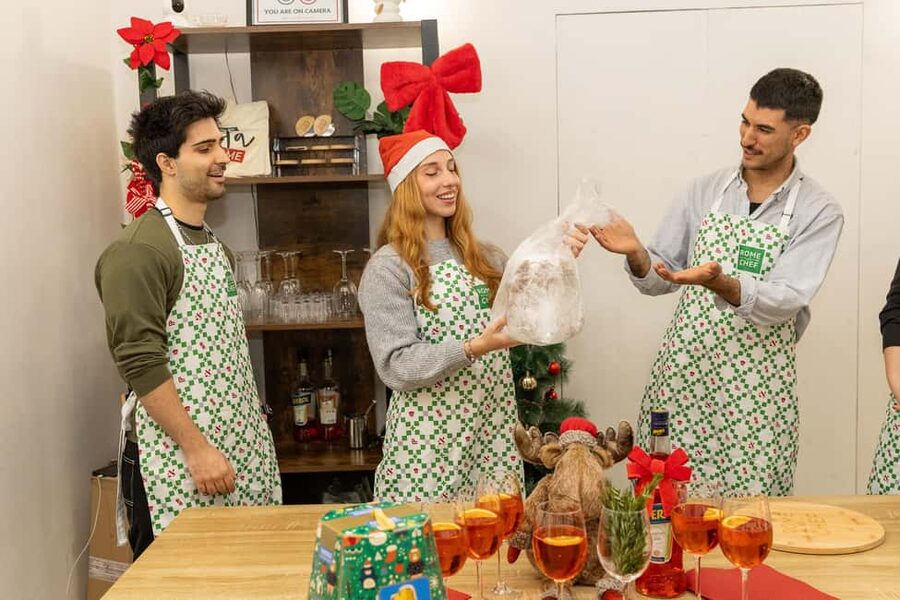
Fourteen people is the maximum, and that is an important detail. A cooking class can lose its value when the group is so large that you only watch someone at the front. Here, you should have a real chance to work with the dough and sauce.
The instructors are also a major part of the experience. Names that have appeared across the classes include Marzia, Laura, Ida, Bart, Sunny, Jem, Ari, Ele, Sherry, Eleanora, Benjamin, Simay, and Adriano. You cannot choose a particular chef unless the booking option says so, but the range of positive comments suggests a team with strong personalities and a warm approach.
The best fit is someone who enjoys a little noise, humor, and group participation. Bart has been praised for making the room funny and energetic, while Laura and Ida have been described as especially welcoming and helpful. Marzia’s teaching style has been valued by people who wanted more explanation about cooking methods and regional differences.
A private group is available if you want a more contained event. That can make sense for a birthday, family gathering, or small group of friends. The shared option is likely the better value if meeting new people is part of your plan.
Price, timing, and practical value
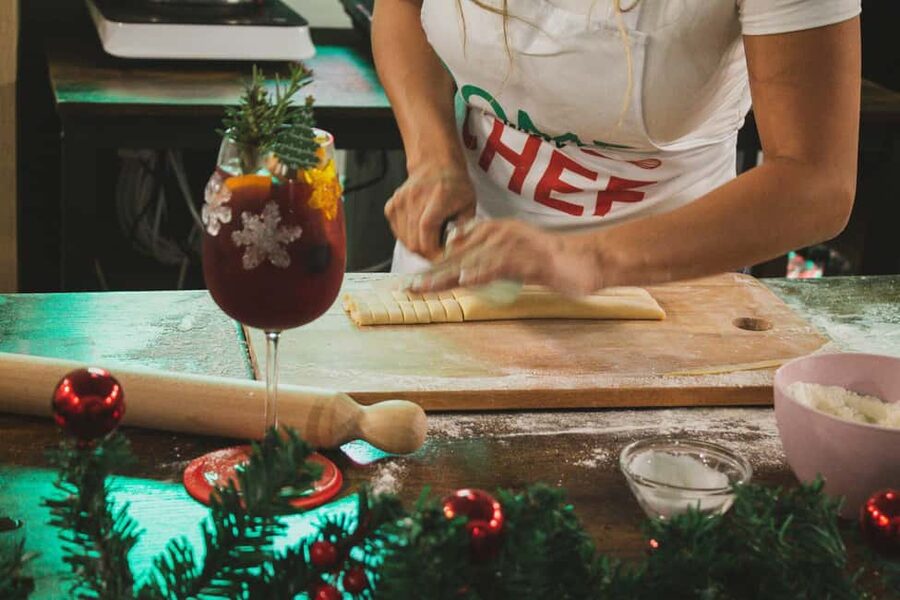
At $112.15 per person, the class is not a budget meal. You are paying for three hours of instruction, a local chef, a mixologist, fresh ingredients, three cocktails, water and soft drinks, a handmade pasta meal, and recipes to take home.
The value depends on how you use it. If you compare it with a simple plate of pasta, the price is high. If you compare it with a cooking lesson, three drinks, and dinner in one evening, the cost is easier to justify. You also leave with techniques you can repeat, which gives the experience more lasting value than a single restaurant meal.
The duration is long enough to avoid feeling rushed. There is time to meet the group, prepare the pasta, mix the drinks, cook the sauce, and eat. Starting times vary, so check the available slot before planning the rest of your day.
The meeting point can vary depending on the option booked, and the activity ends back at that meeting point. Check the exact location in your confirmation rather than assuming every session uses the same kitchen. The class is in Rome, in the Lazio region, but the supplied details do not identify a single permanent address.
Free cancellation is available up to 24 hours before the activity for a full refund. You can also reserve now and pay later, which is useful if your Rome schedule is still shifting.
Who should book this experience
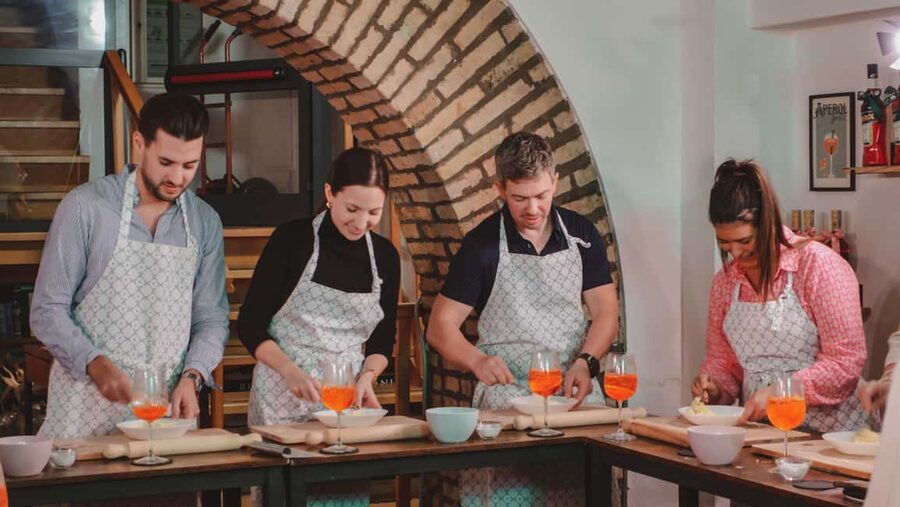
I would recommend it most strongly to:
- Couples looking for a relaxed evening activity
- Solo visitors who enjoy meeting people through food
- Families with participants who can drink responsibly
- Pasta fans who want to learn carbonara or cacio e pepe
- People who prefer active classes to sightseeing lectures
- Anyone who wants recipes and skills to take home
It is less suitable for anyone with coeliac disease, gluten intolerance, vegan dietary requirements, dairy restrictions, or lactose intolerance. It is also not the right pick if you want a sober class, a highly technical culinary course, or a very quiet meal.
You should also think about your schedule. The class lasts three hours and includes multiple alcoholic drinks. Book it when you can enjoy the full session without rushing to another appointment.
Final verdict: book it for food, drinks, and company
You should book the Spritz & Spaghetti Cooking Class if you want to cook, drink, and socialize in one compact Roman experience. The pasta is the heart of the activity, while the three spritzes make it feel like a night out rather than a standard lesson.
I especially like the combination of fresh fettuccine, Roman sauces, a small group, and recipes to take home. The instructors, including Marzia, Jem, Laura, Ida, and Bart, bring much of the personality, and the class seems designed to make beginners feel useful from the first bowl of dough.
Skip it if the dietary restrictions rule you out or if you want a formal, alcohol-free cooking course. For everyone else, $112.15 is a fair price for a three-hour meal, cocktail workshop, and social evening, especially if you want to bring a little Roman kitchen skill home with you.
FAQ
How long does the Spritz & Spaghetti Cooking Class last?
The class lasts three hours. Starting times vary, so check availability when selecting your date.
What drinks are included?
You receive one Aperol spritz, one Hugo spritz, and one Limoncello spritz. Unlimited water and soft drinks are also included.
What pasta will I make?
You will roll, cut, and cook handmade fettuccine. The pasta is served with a traditional carbonara or cacio e pepe sauce.
Is the class suitable for vegetarians?
Yes. Vegetarian options are available.
Can the class accommodate gluten-free, vegan, or dairy-free diets?
No. The menu cannot accommodate coeliac disease, gluten intolerance, vegan diets, or lactose intolerance because it uses gluten and dairy products.
Is the class private or shared?
You can book either a shared class or a private group, depending on the option selected.
What language is the class taught in?
The live tour guide language is English.
More Workshops in Rome
- Rome: 3-in-1 Fettuccine, Ravioli, and Tiramisu Cooking Class
★ 4.9 · 2,704 reviews - Rome: Fettuccine Pasta Cooking Class in Rome’s City Center
★ 4.8 · 2,414 reviews - Rome: Traditional Pasta with Cocktails Cooking Class
★ 5.0 · 2,374 reviews - Become a Masterchef in Rome: Pasta, Ravioli and Tiramisù Class
★ 5.0 · 2,156 reviews
Recently reviewed around Rome
- Ancient Rome at Twilight Walking Tour★ 5.0 · 276 reviews
- Domus Aurea Guided Tour: The Golden House of Nero★ 4.5 · 199 reviews
- Early Vatican Museums & Sistine Chapel Small Group Tour★ 4.5 · 314 reviews
- Early Vatican Museums Tour: The Best of the Sistine Chapel★ 4.5 · 900 reviews
- Jewish Ghetto & Piazza Navona: Food, Wine & Sightseeing Rome Tour★ 5.0 · 460 reviews
- 3 Days in Sorrento, Capri & Pompeii: la Dolce Vita★ 4.0 · 595 reviews
- Tivoli Villas Full Day Trip From Rome with Lunch★ 4.0 · 443 reviews
- Cook With Us in Rome: A Hands-On Cooking Experience 09:20AM class★ 5.0 · 234 reviews
Cooking Classes, compared.
3 in 1 Cooking Class near Navona: Fettuccine, Ravioli & Tiramisu
Read our review →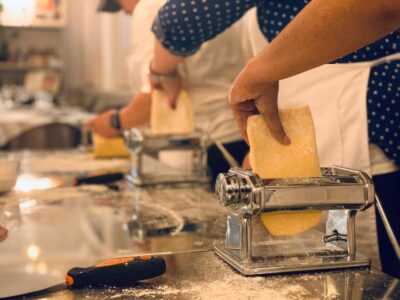
Pasta & Tiramisu Cooking Class with Unlimited Wine
Read our review →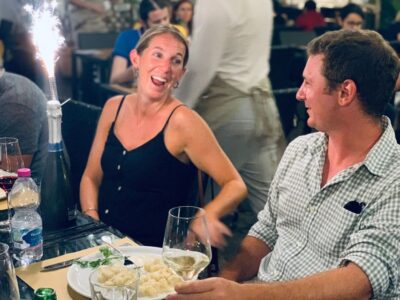
Pasta & Tiramisu Class with Fine Wine by the Vatican
Read our review →
Cooking Class and Lunch at a Tuscan Farmhouse with Local Market Tour from Florence
Read our review →
Authentic Pizza Making Class in Naples with Appetizers and Drink
Read our review →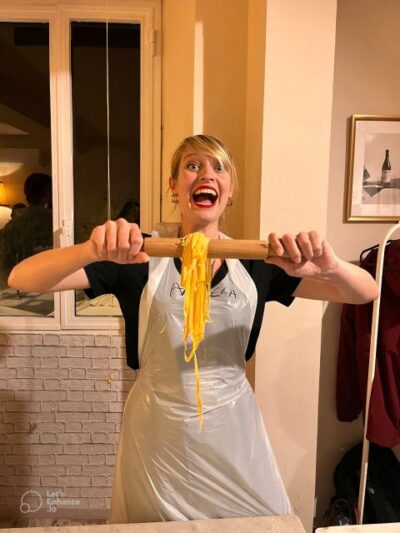
Pasta Making Class with Wine, Limoncello, and Dessert
Read our review →Browse the lists this tour appears in