
Review · DESSERT TOURS
Rome: Trevi Fountain District Underground Tour and Ice Cream
Rome’s most famous fountain is only the top layer of this story. Below the Trevi District, the Vicus Caprarius archaeological area reveals old walls, water channels, a Roman residence, and objects left behind nearly 2,000 years ago. An archaeologist or history-focused guide helps turn a compact underground site into a clear lesson in Roman engineering.
I like the way this tour links the Virgo aqueduct to the water still moving through the ancient masonry. I also like the finish: your gelato voucher gives you a sweet break near Trevi Fountain without forcing the whole group to eat at once. The main drawback is scale. The underground site is small, and the Trevi visit may mean viewing the fountain from the crowded plaza rather than getting a special close-up position.
In This Review
- Key points to know before booking
- What lies below the Trevi District
- Starting at Vicolo del Puttarello 25
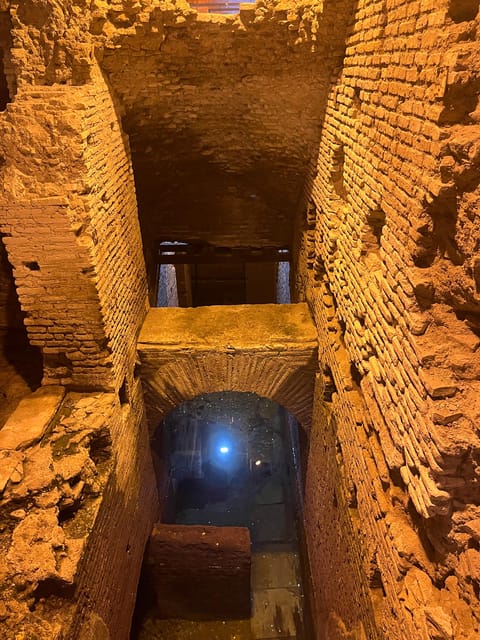
- The Vicus Caprarius archaeological area
- Why the guide makes the small site work
- The Trevi Fountain stop and what to expect
- Gelato near Trevi Fountain
- Is $52 a fair price for one hour?
- Who will enjoy this underground Rome tour?
- Practical advice for a smoother visit
- Should you book it?
- FAQ
- How long does the Trevi Fountain underground tour last?
- What is the meeting point?
- What language is the tour offered in?
- Is entry to Vicus Caprarius included?
- Is Trevi Fountain admission included?
- Does the tour include gelato?
- Can I use the gelato voucher later?
- Is the tour suitable for wheelchair users?
- Can I cancel the booking for a full refund?
Key points to know before booking
- Imperial Age finds: See ancient coins, amphorae, polychrome marble, and the head of Alessandro Helios.
- Water beneath Trevi: Follow the route of water from the aqueduct through old masonry, pipes, and pools.
- A short, focused visit: The underground guided portion lasts about 40 minutes, within a one-hour experience.
- Strong guides: Carla, Erika, Alessia, Noemi, Naomi, and other English-speaking guides have been praised for clear explanations, humor, and patience with children.
- Gelato at the end: You receive Italian gelato, with the voucher usable at a historic shop near the fountain.
- Expect stairs and tight spaces: This is not suitable for wheelchair users or people with mobility impairments.
What lies below the Trevi District

The Vicus Caprarius site gives you a useful way to understand Rome: not as one ancient city, but as many cities piled on top of one another. The modern streets sit above Roman structures, which in turn cover earlier layers. Down below, you see masonry, rooms, water works, and objects tied to daily life.
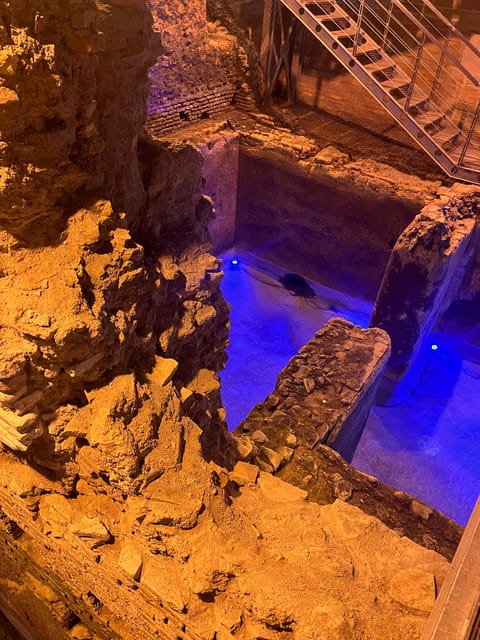
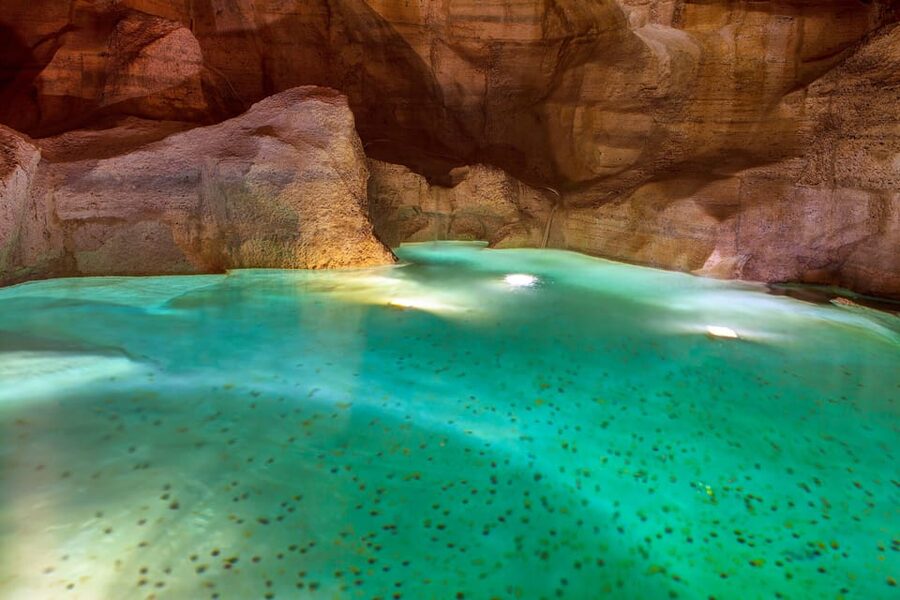
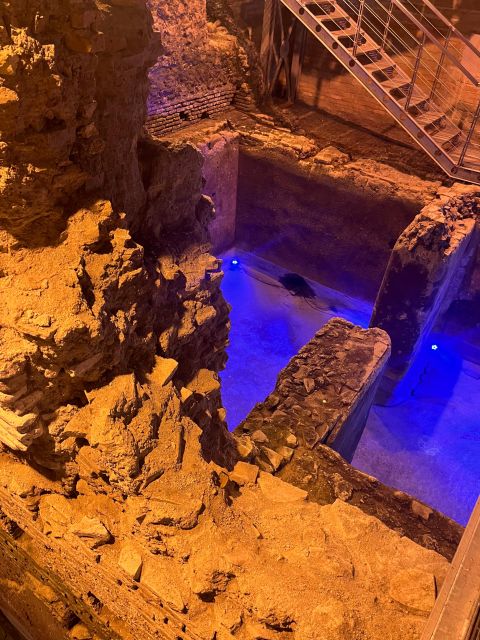
The phrase City of Water makes sense here. The area is connected to the Virgo aqueduct, the ancient water system that supplied this part of Rome. Water from the Trevi Fountain continues to filter through the old masonry, reaching pipes and pools connected with the luxurious Domus residence.
That link is the heart of the experience. You are not simply looking at broken walls in a dark room. You are seeing how Roman building methods, water supply, private comfort, and modern Rome still touch one another.
The guide explains the site in English, with the help of an archaeologist or a guide trained in Roman archaeology. The best guides, including Carla, Erika, Alessia, Noemi, and Naomi, have been praised for making technical subjects easy to follow. Their approach matters because the ruins themselves are not large or obvious. Without explanation, you could walk through in a few minutes and miss the point.
More Rome trips worth a second look
- Rome: Pasta Making Class with Wine, Limoncello, and Dessert
★ 4.9 · 3,177 reviews - Rome Cooking Class: Make Pizza and Pasta with Wine & Dessert
★ 4.5 · 651 reviews - Florence: Handmade Pasta & Dessert Class with Unlimited Wine
★ 4.8 · 788 reviews
Starting at Vicolo del Puttarello 25
The meeting point is at Vicolo del Puttarello, 25, close to Trevi Fountain. Arrive at least 15 minutes early. The Trevi area can be hard to cross when crowded, and one participant was delayed by the number of people in the streets, though the operator still allowed the person to join.
Once inside, the tour moves at a fairly relaxed pace. You have time to look at the walls and objects while the guide explains what they reveal about Rome. One useful feature is the use of headsets on some departures, so the guide does not need to shout over the surrounding noise.
The site is underground and compact. That has two effects. First, you get close to the remains instead of viewing them from a distant platform. Second, you should not expect a large museum or a long walk through open ruins. The visit is concentrated, with most of the value coming from the guide’s storytelling.
Wear comfortable shoes. The activity is not suitable for wheelchair users or people with mobility impairments, so anyone who has trouble with stairs, uneven surfaces, or confined archaeological spaces should choose another Trevi-area visit.
The Vicus Caprarius archaeological area
The main guided section lasts about 40 minutes. It takes you through three sections of the antiquarian, where you can see ancient objects and parts of the Roman settlement.
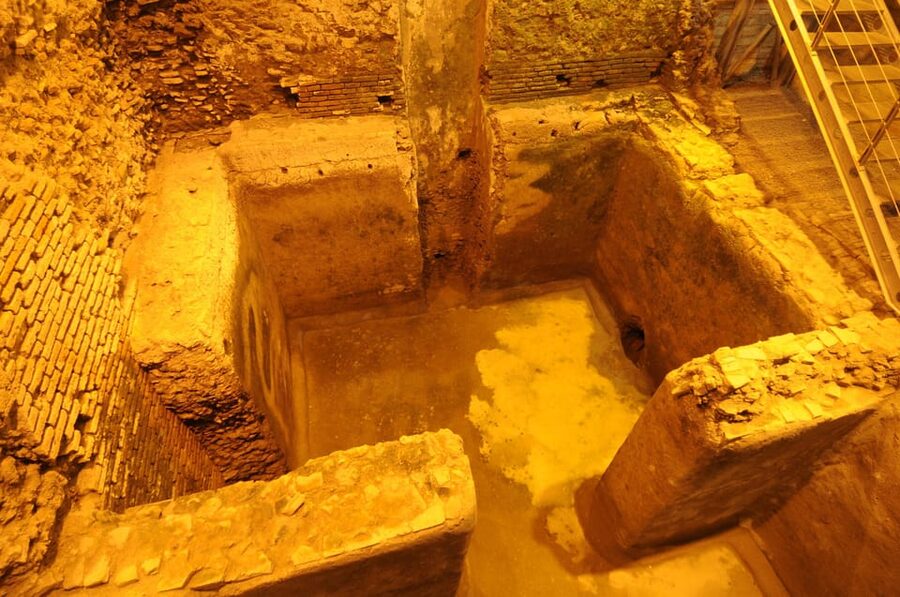
The first impression is often the layered masonry. This is the famous Roman lasagna effect in physical form: one period built over another, with traces of different uses surviving close together. The site helps you picture how Rome changed while keeping parts of its old infrastructure in place.
Your guide explains the Domus residence and its water supply. The residence was a luxurious home, and its pools and pipes show how access to water shaped comfort and status in Roman life. The aqueduct was not only an impressive public project. It also supported private homes, baths, fountains, and carefully planned interiors.
Look closely at the ancient water channels. The guide points out how water from the Trevi system moves through the site’s masonry. This is one of the most unusual parts of the tour because the aqueduct is not treated as a remote monument. You see its role as a working system tied to the buildings around it.
The finds add a human touch. Among the discoveries are precious polychrome marble coverings, the head of Alessandro Helios, a hoard of about 800 coins, and a Spatheia, an African amphora used to transport oil.
The coin hoard is especially useful for imagining the site as a lived-in place. Coins are small, but a collection of 800 pieces suggests commerce, storage, loss, or deliberate concealment. The Spatheia adds another thread, showing that goods moved across the Roman world and reached the homes and businesses of this neighborhood.
The polychrome marble gives you a glimpse of decoration rather than engineering. Roman interiors could be colorful, polished, and expensive. At the same time, the water channels and structural remains remind you that grand rooms depended on practical systems hidden below the floor.
The head of Alessandro Helios is another memorable object. It is the sort of detail that can stay with you after the tour because it gives the archaeological area a recognizable face among all the brick and stone.
Why the guide makes the small site work
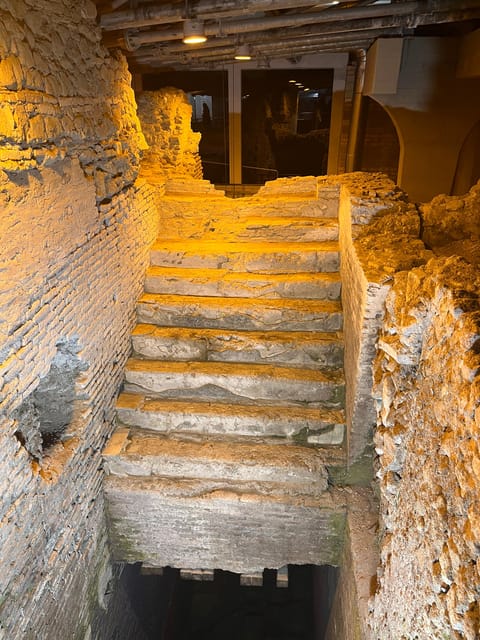
I would not book this experience expecting a self-explanatory attraction. The underground area is small, and several parts may look like ordinary old walls until someone explains their purpose.
A strong guide gives you a framework for reading the site. Carla has been praised for warm, clear explanations. Erika is known for answering questions and connecting the ruins to Roman culture and daily life. Alessia has been appreciated for her calm explanations and for keeping children involved. Noemi has been praised for humor, energy, and a broad grasp of several centuries of Roman history.
Those details matter when you compare this with a larger Roman monument. A big site can impress you through scale alone. Vicus Caprarius needs interpretation. The guide explains why the water matters, how the different levels fit together, and what the objects say about the people who used the buildings.
The tour also works well for repeat visitors to Rome. You may have seen the Colosseum, Pantheon, and Roman Forum already, yet still know little about the water beneath the Trevi neighborhood. Several people who had visited Rome before found this an unexpected addition because it showed a side of the city they had not seen.
Families can benefit too, though the underground space may not suit every child. The tour is short, and guides have made an effort to keep active children engaged. The headsets can help younger visitors hear the story without standing directly beside the guide.
A different way to spend the day, same part of Italy:
- Vatican: Museums & Sistine Chapel Entrance Ticket
★ 4.5 · 144,003 reviews - Vatican Museums & Sistine Chapel Tour with Optional Basilica
★ 4.3 · 67,413 reviews - Colosseum, Roman Forum & Palatine Guided Tour
★ 4.7 · 63,148 reviews - Vatican Museums, Sistine Chapel & St Peter’s Basilica Guided Tour
★ 4.5 · 39,149 reviews
The Trevi Fountain stop and what to expect
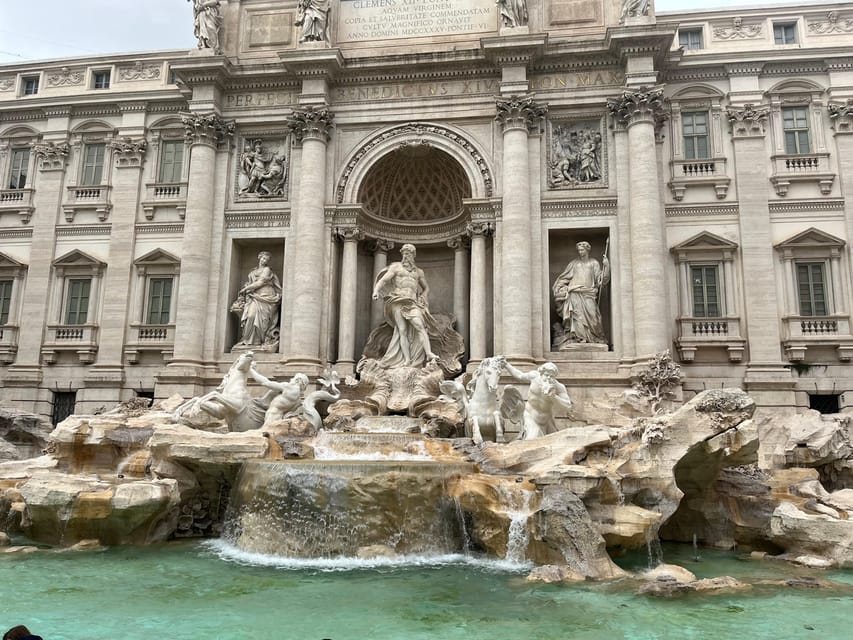
The experience begins with the fountain, but the main attention goes to the underground archaeology. You have a brief guided look at Trevi Fountain, listed at about five minutes, with the fountain access ticket included.
You can make a wish at the city’s largest Baroque fountain and hear about its exterior features. The tour gives you useful context for the water beneath the district, but do not assume this is a dedicated fountain tour with a reserved viewing platform.
The plaza can be crowded. One person expected a closer view but saw the fountain from the middle of the public area instead. Another was able to enter a better position when a guard allowed it, but that should be treated as luck rather than a promised part of the experience.
This is an important distinction. If your main goal is uninterrupted photos of the fountain, schedule extra time outside the tour. The guide can offer picture tips and, in one case, stayed longer to help with photos and suggest nearby places, but the official format is short.
The fountain stop works best as an introduction and a conclusion to the underground visit. You begin with the famous sight above ground, learn where its water story reaches below the streets, then return to the plaza with a better sense of what you are looking at.
Gelato near Trevi Fountain
The final treat is Italian gelato from a historic shop near the fountain. You receive a voucher rather than being taken through a formal group tasting.
That arrangement is convenient. You can collect the gelato after the guided portion, and the voucher can be used at the shop rather than requiring the entire group to sit down at one exact moment. One participant appreciated having the choice to decide when to claim it.
The gelato is more than a minor extra. A one-hour underground tour can feel quite focused, especially for children, and the cold dessert gives the experience a pleasant finish. It is also practical in Rome’s hot summer weather. The underground site itself can provide relief from the heat, followed by gelato outside.
Do not judge the $52 price solely by the cost of the dessert. The gelato is a small part of the fee. You are paying mainly for the reserved entry, the English-speaking guide, the archaeological interpretation, and the convenience of fitting Vicus Caprarius and Trevi Fountain into one short booking.
Is $52 a fair price for one hour?
At $52 per person, this is not the cheapest way to see Trevi Fountain. You can view the fountain plaza without paying for a tour, and the underground site is not large.
The value improves if you care about Roman water systems, archaeology, or the practical side of ancient life. Admission to Vicus Caprarius, a guided explanation, assistance, and gelato are included. For a first visit to Rome, the tour adds a layer that you are unlikely to get by standing at the fountain alone.
I see it as a specialist add-on rather than a major Rome sightseeing tour. You are not getting a full day of monuments. You are getting a compact lesson that fits neatly between other central Rome plans.
The format also helps if you have limited time. The official duration is one hour, with roughly 40 minutes underground, a short fountain explanation, and time for the gelato stop. Check the starting times when booking, since the available schedule can change.
The experience includes reserved entry to Vicus Caprarius, but the information also says skip-the-ticket-line service is available while skip-the-line entry is not included. I would treat the reserved archaeological admission as the firm benefit and avoid assuming that every queue around Trevi Fountain will disappear.
Free cancellation up to 24 hours before the selected time and reserve-now, pay-later booking make it easier to fit into a changing Rome schedule. Those policies add flexibility, but they do not change the basic question: do you want a guided look at a small underground site?
Who will enjoy this underground Rome tour?
I would recommend it to you if you like:
- Roman engineering and ancient water systems
- Archaeology explained in plain language
- Small sites that reveal daily life rather than only famous monuments
- Short activities that fit around a busy sightseeing day
- A cool indoor break during hot weather
- A guide-led visit with time for questions
- A relaxed introduction to the Trevi area
It is particularly useful for repeat visitors. The Colosseum and Forum show Rome’s public power, while Vicus Caprarius shows how water and housing shaped a neighborhood.
Families may also find the one-hour length manageable. The guide’s personality will affect the experience, but several guides have been praised for humor, patience, and keeping children focused.
I would hesitate if you need step-free access, use a wheelchair, or dislike small underground spaces. I would also look elsewhere if you want a long, detailed study of Trevi Fountain’s Baroque design. This tour gives the fountain a supporting role.
Practical advice for a smoother visit
Arrive 15 minutes early at Vicolo del Puttarello, 25. Give yourself extra time to cross the busy Trevi streets, especially if you are coming from another attraction.
Wear comfortable shoes. The site is underground and is not suitable for people with mobility impairments. Since the visit is short, arriving late could mean missing the explanation that gives the ruins their meaning.
Keep your expectations realistic about photos. The underground rooms are close and atmospheric, but the Trevi Fountain stop may place you in the general crowd. Plan a separate fountain visit if photography is a major goal.
If you are visiting in summer, this can be a sensible midday choice. The underground area is cooler than the plaza, and the gelato provides an easy finish. In cooler months, the same format remains useful as a compact history stop near other central sights.
English is the stated tour language. Guides such as Carla, Erika, Alessia, Noemi, Naomi, and others have been praised for clear speech and friendly delivery, but the individual guide is assigned rather than selected when you book.
Should you book it?
Book this tour if you want to understand what feeds and supports Rome’s famous fountain, not just photograph it. The underground water system, Roman residence, coin hoard, African amphora, and marble fragments give you plenty to think about in a short visit.
At $52, it makes the most sense as a guided archaeology experience with gelato included, not as a paid ticket to Trevi Fountain alone. The site is compact, the fountain viewing may be crowded, and access is unsuitable for some visitors.
For history fans, repeat visitors, families wanting a manageable activity, and anyone seeking a cool break from Rome’s summer heat, I think it is a smart choice. If you want grand ruins on a huge scale or a full fountain-focused tour, spend your money elsewhere and visit Trevi Fountain on your own.
FAQ
How long does the Trevi Fountain underground tour last?
The activity lasts one hour. The guided visit inside Vicus Caprarius takes about 40 minutes, followed by a short guided look at Trevi Fountain and the gelato finish.
What is the meeting point?
Meet at Vicolo del Puttarello, 25, in the Trevi District. Arrive at least 15 minutes before your selected start time.
What language is the tour offered in?
The live guided tour is offered in English.
Is entry to Vicus Caprarius included?
Yes. The booking includes a reserved entry ticket and a guided tour of Vicus Caprarius.
Is Trevi Fountain admission included?
The listed inclusions specify a Trevi Fountain access ticket. The fountain stop is brief, and the public plaza may still be crowded.
Does the tour include gelato?
Yes. Italian gelato from a historic shop near Trevi Fountain is included.
Can I use the gelato voucher later?
The gelato voucher can be used at the shop after the tour, and it is not limited to the exact moment the guided visit ends.
Is the tour suitable for wheelchair users?
No. The activity is not suitable for wheelchair users or people with mobility impairments.
Can I cancel the booking for a full refund?
Yes. You can cancel up to 24 hours in advance for a full refund. Reserve-now, pay-later booking is also available.
Recently reviewed around Rome
- Ancient Rome at Twilight Walking Tour★ 5.0 · 276 reviews
- Domus Aurea Guided Tour: The Golden House of Nero★ 4.5 · 199 reviews
- Early Vatican Museums & Sistine Chapel Small Group Tour★ 4.5 · 314 reviews
- Early Vatican Museums Tour: The Best of the Sistine Chapel★ 4.5 · 900 reviews
- Jewish Ghetto & Piazza Navona: Food, Wine & Sightseeing Rome Tour★ 5.0 · 460 reviews
- 3 Days in Sorrento, Capri & Pompeii: la Dolce Vita★ 4.0 · 595 reviews
- Tivoli Villas Full Day Trip From Rome with Lunch★ 4.0 · 443 reviews
- Cook With Us in Rome: A Hands-On Cooking Experience 09:20AM class★ 5.0 · 234 reviews
Dessert Tours, compared.

Pasta Making Class with Wine, Limoncello, and Dessert
Read our review →
Handmade Pasta & Dessert Class with Unlimited Wine
Read our review →

Rome Cooking Class: Make Pizza and Pasta with Wine & Dessert
Read our review →Browse the lists this tour appears in