Review · TICKETS
Rome:Hop-On Hop-Off Panoramic Open Bus Ticket 3 Circuits x 1
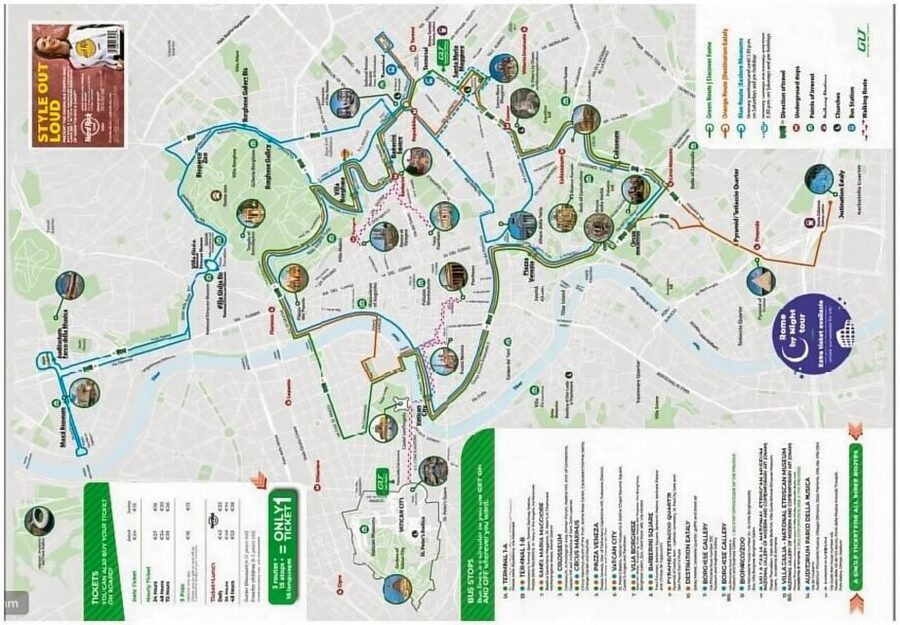
Rome’s grandest sights are spread across a surprisingly large city, and this open-top bus gives you a useful first look without wearing out your feet. From the upper deck, you can connect Ancient Rome, the Vatican, Baroque Rome, Testaccio, and the museum quarter in one outing. The route is best for getting your bearings, not for replacing walks inside the monuments.
I especially like the three-route choice and the practical stop near nearly every major sightseeing zone. I also like the flexibility: you can ride a full circuit, get off for the Spanish Steps or Colosseum, then board again later. The main catch is that traffic can slow the bus, and the audio equipment is not perfect on every vehicle. This is a city orientation tool, not a private guide.
In This Review
- Key points to know before boarding
- Why this bus works well as your first Roman outing
- Starting at Piazza dei Cinquecento
- Green Route: Ancient Rome and the historic center
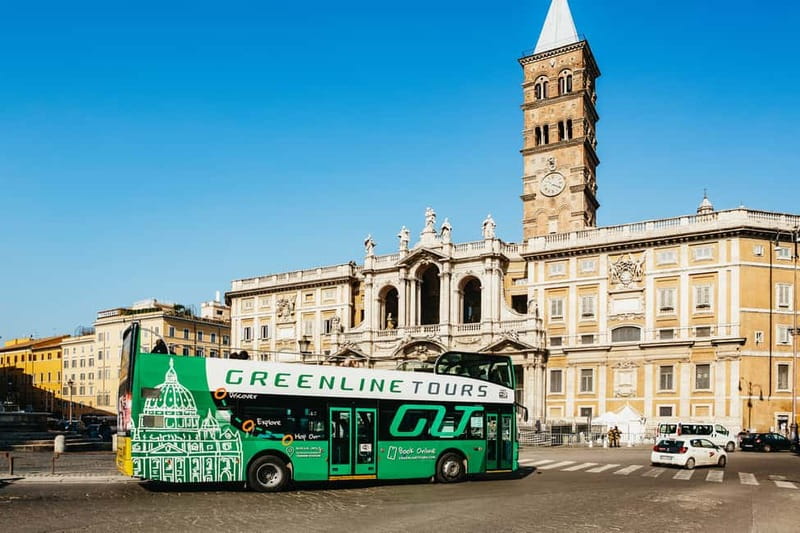
- Santa Maria Maggiore
- The Colosseum and Palatine Hill
- Circus Maximus
- Piazza Venezia
- Vatican City and Rome’s grand north side
- Vatican City
- Villa Borghese and Piazza Barberini
- Borghese Gallery, Bioparco, and Villa Giulia
- Auditorium Parco della Musica and MAXXI
- Orange Route: food and Testaccio
- Pyramid and Testaccio
- Eataly Rome
- Blue Route: a broader view beyond the center
- What the ride feels like in real use
- Is the $20 price good value?
- Who should book this Rome bus?
- FAQ
- How long is the ticket valid?
- How often do the buses run?
- Where does the tour start?
- Can I board at a different stop?
- Is entry to the monuments included?
- Which audio guide languages are available?
- Is the bus suitable for wheelchair users?
Key points to know before boarding
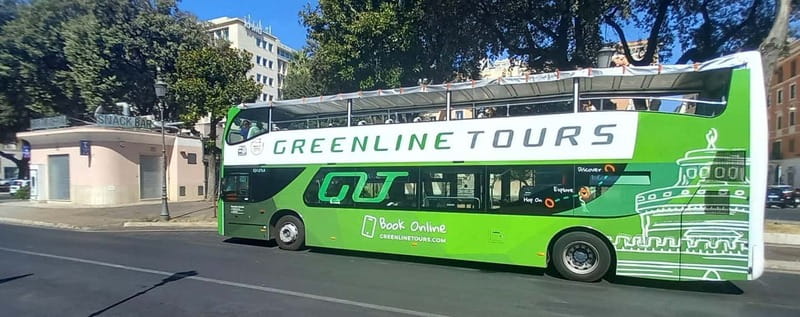
- Three circuits cover more than the usual Rome center: Green, Orange, and Blue routes reach major sights, Testaccio, Eataly, Villa Giulia, the Auditorium, and MAXXI.
- Your ticket can last from one day to 72 hours: Boarding for the first time starts the selected period.
- Buses are scheduled about every 20 minutes: Actual waits can vary, and traffic affects the ride.
- The upper deck gives you Rome’s best first overview: Bring sunglasses, a sun hat, and comfortable shoes for the stops.
- The audio guide comes in 16 languages: Earphones are supplied, though sound quality may vary between buses.
- Entrance tickets are separate: The ride takes you near the Colosseum, Vatican, Borghese Gallery, and other sights, but it does not get you inside.
Why this bus works well as your first Roman outing

Rome can feel confusing at first. The Colosseum sits southeast of the historic center, Vatican City lies across the river, and the museums around Villa Borghese are farther north. A bus ride lets you see how these pieces fit together before you commit to long walks or public transport.
I would use this tour early in a Rome visit, especially after an overnight flight or before hotel check-in. You get a seat, a broad view of the city, and a basic explanation of the monuments while the bus handles the distance. One useful approach is to ride a complete circuit first, then choose the stops you want to revisit on the next loop.
The audio commentary adds context as you pass the monuments. It is not a substitute for a specialist walking tour, but it helps you understand what you are seeing. The system offers Italian, English, Dutch, French, German, Spanish, Arabic, Chinese, Japanese, Portuguese, Russian, Hindi, Korean, Greek, Hebrew, and Polish.
The bus also includes free Wi-Fi, live tracking, and an assistant on board. Those small practical touches matter when you are deciding whether to wait at a stop or walk to the next one. The live tracker can help, but allow extra time because central Rome traffic is unpredictable.
More Rome trips worth a second look
- Vatican: Museums & Sistine Chapel Entrance Ticket
★ 4.5 · 144,003 reviews - Rome: Pantheon Fast-Track Ticket and Official Audio Guide
★ 4.3 · 21,008 reviews - Vatican Museums & Sistine Chapel Skip-the-Line Entry Ticket
★ 4.4 · 13,838 reviews
Starting at Piazza dei Cinquecento
The main departure point is at Piazza dei Cinquecento, on the corner of Via Cavour, identified as Terminal 1/A. This is a sensible starting point because it is near Rome’s main rail and transport area, and it places you close to Santa Maria Maggiore at the beginning of the circuit.
Bring the original booking confirmation, not just a screenshot. You can start here or board at another listed stop, but starting at the main terminal makes it easier to confirm the route and ask the on-board assistant any questions.
The ride ends back at Piazza dei Cinquecento and Via Cavour. That makes the circuit simple to plan, though you should not assume every route follows the same exact sequence or timing. Check the current route information when you board.
Green Route: Ancient Rome and the historic center
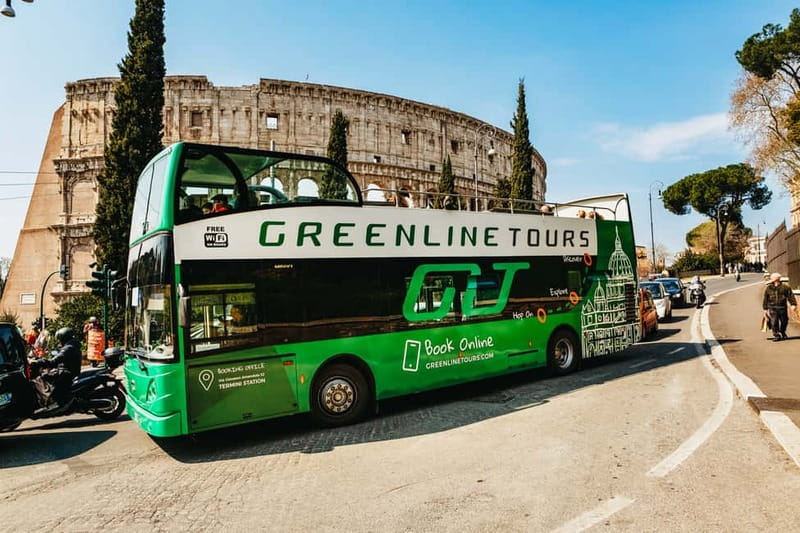
The Green Route is the most useful circuit for a first look at the famous center. It links major Ancient Roman monuments with the grand squares and streets north of them.
Santa Maria Maggiore
The Basilica of Santa Maria Maggiore is one of Rome’s great churches, with a prominent position near Termini. The bus passes or stops at Piazza dell’Esquilino, 12, giving you a practical chance to get off and visit the area.
This is a good early stop if you want a quieter start than the Colosseum. It also helps you understand Rome’s mix of working streets, churches, cafés, and monumental buildings.
A different way to spend the day, same part of Italy:
- Vatican Museums & Sistine Chapel Tour with Optional Basilica
★ 4.3 · 67,413 reviews - Colosseum, Roman Forum & Palatine Guided Tour
★ 4.7 · 63,148 reviews - Vatican Museums, Sistine Chapel & St Peter’s Basilica Guided Tour
★ 4.5 · 39,149 reviews - Rome: Colosseum, Palatine Hill and Roman Forum Guided Tour
★ 4.8 · 32,814 reviews
The Colosseum and Palatine Hill
The Colosseum stop is on Via di San Gregorio, close to the entrance area for the Palatine. From here, you can walk toward the amphitheater, Roman Forum, and Palatine Hill.
The stop is convenient, but the bus does not include admission. You will need separate entrance tickets for the archaeological sites, and this route is best used to reach the area rather than as a way to see the monuments up close. The ride gives you a fine exterior view, but the real experience requires time on foot.
Circus Maximus
At Via del Circo Massimo, near the Belvedere Romolo e Remo, you can get off beside the long open valley of Circus Maximus. The site once hosted huge public spectacles, but today it is a broad open space with views toward the Aventine and nearby Ancient Roman remains.
This is a useful stop for a break from dense streets. It also gives you a different sense of Rome’s scale. The Colosseum is enclosed and dramatic, while Circus Maximus is spacious and easier to appreciate from a distance.
Piazza Venezia
The bus stops on Via del Teatro Marcello, in front of civic numbers 32 to 34, near Piazza Venezia. This is one of the busiest central points on the route, close to the massive monument to Vittorio Emanuele II, the Roman Forum area, and Via del Corso.
From here, you can walk toward the Trevi Fountain, Spanish Steps, Pantheon area, and other historic-center sights. The bus does not stop directly at every one of those landmarks, so expect a walk after getting off. That is not a serious flaw, since the historic center is best explored on foot.
Via del Corso is especially useful if you want shops, cafés, and side streets between the major monuments. You can combine a bus ride with your own wandering instead of staying on board all day.
Vatican City and Rome’s grand north side
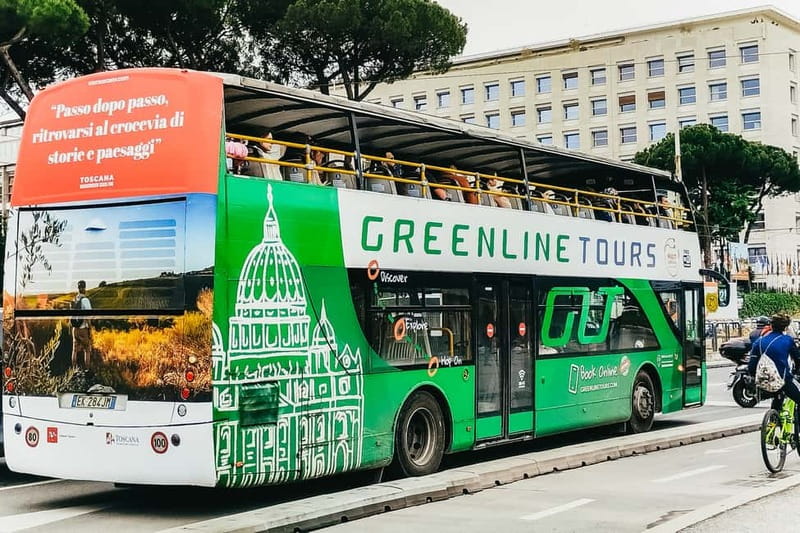
Vatican City
The Vatican stop is at Lungotevere Tor di Nona 7. It is close to the Vatican area, but the ticket does not include entry to St. Peter’s Basilica, the Vatican Museums, or the Sistine Chapel.
Use this stop as a transport link, not as a promise of skip-the-line access. You can get off, walk through the surrounding area, and visit the monuments with separate arrangements. The bus gives you a helpful view of St. Peter’s Square and the outside of the basilica, but indoor visits require more planning.
Villa Borghese and Piazza Barberini
The Villa Borghese stop is on Via Ludovisi, 48, while the Piazza Barberini stop is on Via Barberini, 14. Together, they connect the park, the Spanish Steps area, and the elegant streets around Barberini.
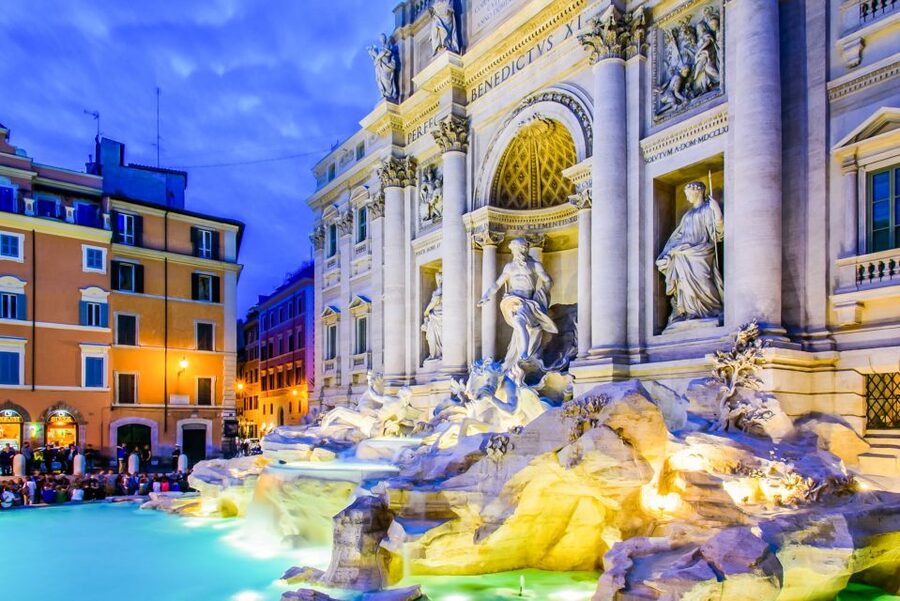
The Spanish Steps are not listed as a dedicated stop, so use this part of the route as a nearby drop-off and continue on foot. The same applies to the Trevi Fountain. If those are your priorities, check the walking route from the stop before you get off.
Villa Borghese offers a welcome change from the traffic and stone of central Rome. The park also places you near the Borghese Gallery, although gallery admission is not included and should be arranged separately.
Borghese Gallery, Bioparco, and Villa Giulia
The Borghese Gallery stop is on Via Pinciana, near the museum. This is one of the most useful stops for art lovers, but again, the ride only gets you nearby. You need a separate ticket to enter.
The Bioparco stop on Via Mercadante serves Rome’s zoo and the northern section of Villa Borghese. It may suit families or anyone who wants a change from churches and archaeological sites.
At Piazza Thorvaldsen, the route reaches Villa Giulia, home to the National Etruscan Museum, and the National Gallery of Modern and Contemporary Art. This is a less obvious side of Rome, and the stop makes it easier to reach museums beyond the usual first-day circuit.
Auditorium Parco della Musica and MAXXI
The route continues to the Auditorium Parco della Musica on Via de Coubertin and MAXXI on Via Guido Reni 4/a. These stops serve Rome’s modern cultural district.
The Auditorium is a major performance complex, while MAXXI focuses on modern and contemporary art. These places are not essential for a short first visit, but they make the longer ticket periods more useful. If you have 48 or 72 hours, you can use one day for Ancient Rome and the Vatican, then reserve another stretch for northern museums.
Orange Route: food and Testaccio
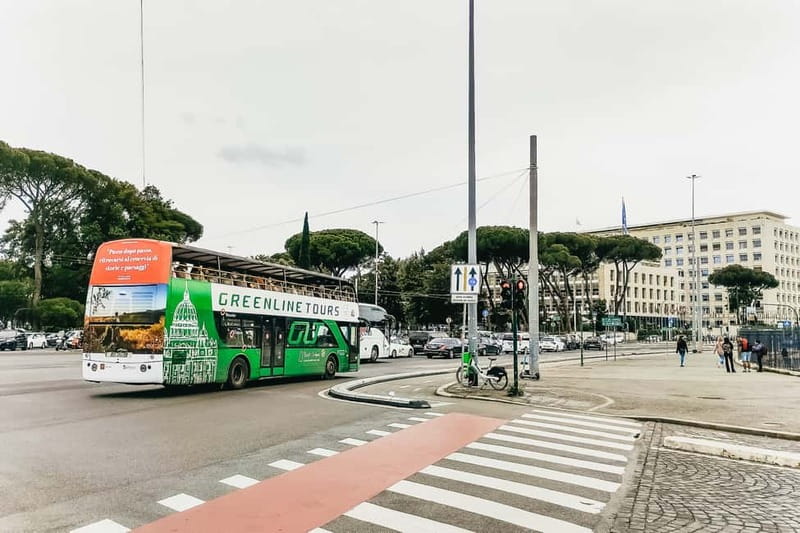
The Orange Route is designed around Italian food and neighborhoods with a more local feel. Its key stops include the Pyramid and Testaccio quarter, Eataly, and nearby archaeological points.
Pyramid and Testaccio
The Pyramid of Cestius and the Non-Catholic Cemetery give this part of Rome a distinctive character. The stop also reaches the old city gate and the area around Saint Paul Outside the Walls.
Testaccio is a good place to pause for food and see a side of Rome that feels different from the postcard center. The tour information does not include meals, so plan to buy food on your own. This route is especially useful if you want to connect sightseeing with Roman eating rather than spend the entire day around the Colosseum and Trevi Fountain.
Eataly Rome
The Eataly stop serves the large food market in the Garbatella area. It can work well for a meal break, food shopping, or a taste of modern Italian food culture.
Do not treat Eataly as a replacement for exploring Testaccio. They offer different experiences. Testaccio gives you a neighborhood setting, while Eataly is a large organized market with many food options under one roof.
Blue Route: a broader view beyond the center
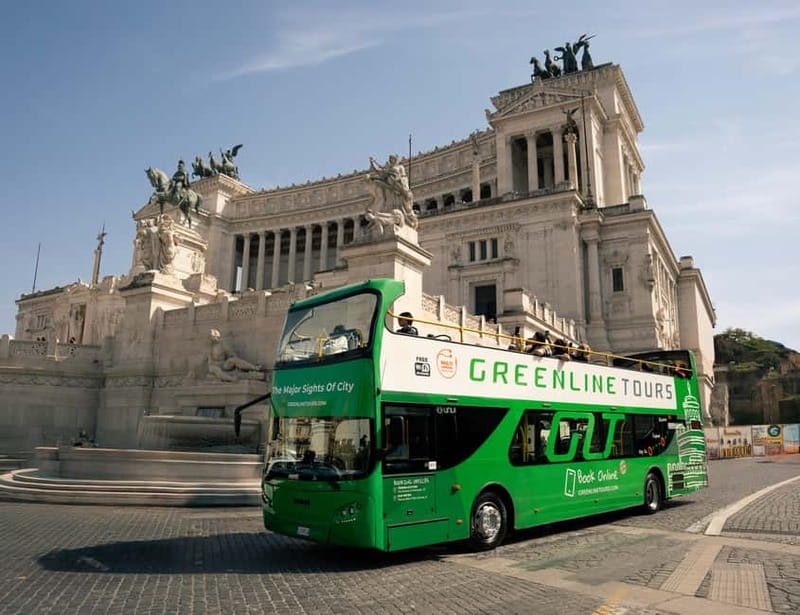
The Blue Route reaches the less central cultural and neighborhood stops, including Eataly, the Borghese Gallery, Villa Giulia, the Auditorium, and MAXXI. Its value increases with the 48-hour or 72-hour ticket because you can take your time instead of trying to fit every distant stop into one day.
A longer ticket also lets you use the bus as a practical connection between sightseeing zones. You might spend the morning around the Colosseum, ride toward Villa Borghese, then continue to the Vatican or Testaccio without making the entire journey on foot.
The routes are not a private chauffeur service. The bus follows scheduled roads, and Rome traffic can be thick. Use it for orientation and broad connections, but walk when two nearby sights are close together.
What the ride feels like in real use
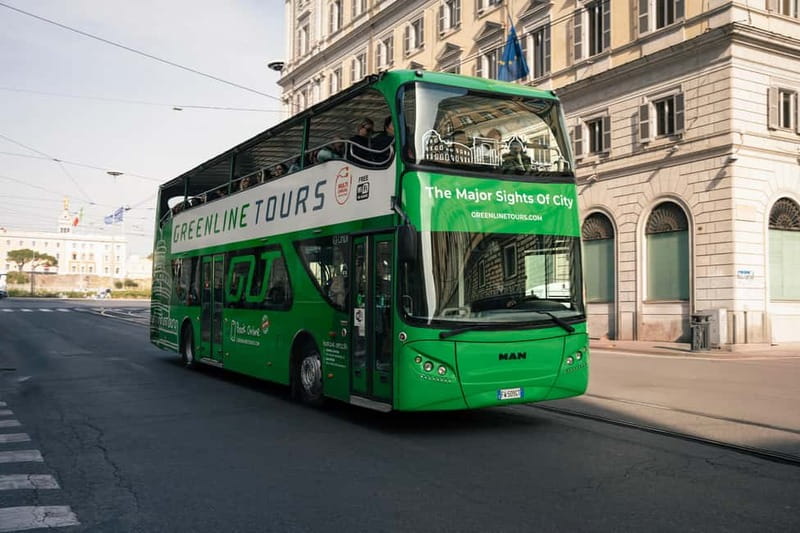
The open-top upper deck is the reason to choose this kind of tour. You get a clear view of domes, monuments, street signs, and the changing shape of the city. Sit near the front if you want the best forward view, but bring a hat and sunglasses because there is little shade upstairs.
Weather matters. Rain can make the final part of a ride unpleasant, and strong sun can become tiring. Comfortable shoes still matter because getting off the bus means walking on Rome’s uneven streets and covering the final distance to each sight.
Buses are scheduled approximately every 20 minutes. That is frequent enough for a flexible day, but it does not mean a bus will arrive exactly on schedule. At busy stops, pay attention to the route name and destination before boarding.
The audio system is generally useful, especially for a first circuit, but sound quality can vary. Some headphone ports may not work, and the commentary can be hard to hear when the bus is noisy. Test your earphones early and ask the assistant if you need help.
Is the $20 price good value?
At about $20 per person, the one-day option can be good value if you complete a full circuit and use the bus for at least two or three longer connections. It is less compelling if you plan to walk everywhere in the historic center, since many of the main sights are close enough to link on foot.
The longer periods offer better value for a slower visit. A 48-hour or 72-hour ticket gives you time to use the Blue and Orange routes, stop at museums, and return to the bus after a long walking stretch. The ticket includes unlimited circuits and stops during the selected period, plus audio commentary, Wi-Fi, tracking, and on-board assistance.
Keep the separate entrance costs in mind. The bus does not include the Colosseum, Roman Forum, Palatine, Vatican attractions, Borghese Gallery, or other admissions. Think of it as transport plus an introduction, not a sightseeing pass.
Who should book this Rome bus?
I would recommend it most strongly to first-time visitors, families, older visitors, anyone short on time, and people who want a calm first day after a long journey. It is also useful if you want to compare Rome’s major areas before choosing where to spend your walking time.
You may want a different plan if you prefer intimate guides, detailed archaeological explanation, or fast point-to-point transport. The bus is slower than a taxi for a single journey and less focused than a walking tour inside one neighborhood.
Book it if your goal is to see the city’s shape, reach far-apart districts, and decide what deserves a closer visit. Skip it if your Rome plan already consists of carefully grouped walking routes and prebooked entries.
FAQ
How long is the ticket valid?
The ticket can be selected for a daily period, 24 hours, 48 hours, or 72 hours. Validity begins when you first board and validate it.
How often do the buses run?
Buses are scheduled approximately every 20 minutes. Traffic and operating conditions can affect the actual wait.
Where does the tour start?
The main starting point is Piazza dei Cinquecento, at the corner of Via Cavour, Terminal 1/A.
Can I board at a different stop?
Yes. Listed stops include Santa Maria Maggiore, the Colosseum, Circus Maximus, Piazza Venezia, Vatican City, Villa Borghese, Piazza Barberini, Testaccio, Eataly, Borghese Gallery, Bioparco, Villa Giulia, the Auditorium, and MAXXI.
Is entry to the monuments included?
No. The ticket includes the bus routes, audio commentary, earphones, Wi-Fi, live tracking, and on-board assistance. Entrance tickets, food, and drinks are not included.
Which audio guide languages are available?
Audio commentary is available in Italian, English, French, German, Dutch, Spanish, Arabic, Chinese, Japanese, Russian, Portuguese, Hindi, Korean, Greek, Hebrew, and Polish.
Is the bus suitable for wheelchair users?
The activity is listed as not suitable for wheelchair users. Pets and large bags are not allowed, although assistance dogs are permitted.
Recently reviewed around Rome
- Ancient Rome at Twilight Walking Tour★ 5.0 · 276 reviews
- Domus Aurea Guided Tour: The Golden House of Nero★ 4.5 · 199 reviews
- Early Vatican Museums & Sistine Chapel Small Group Tour★ 4.5 · 314 reviews
- Early Vatican Museums Tour: The Best of the Sistine Chapel★ 4.5 · 900 reviews
- Tivoli Villas Full Day Trip From Rome with Lunch★ 4.0 · 443 reviews
- Jewish Ghetto & Piazza Navona: Food, Wine & Sightseeing Rome Tour★ 5.0 · 460 reviews
- 3 Days in Sorrento, Capri & Pompeii: la Dolce Vita★ 4.0 · 595 reviews
- Cook With Us in Rome: A Hands-On Cooking Experience 09:20AM class★ 5.0 · 234 reviews
Tickets, compared.
Vatican: Museums & Sistine Chapel Entrance Ticket
Read our review →
Cathedral and Duomo’s Terraces Entrance Ticket
Read our review →
Skip-The-Line Uffizi Gallery Timed Entry Ticket
Read our review →
Naples Underground Entry Ticket and Guided Tour
Read our review →
Pantheon Fast-Track Ticket and Official Audio Guide
Read our review →
Entry Ticket and Guided Tour with an Archaeologist
Read our review →