Review · FLORENCE TOURS
The Best Tour in Florence: Renaissance and Medici Tales
Florence makes sense when you connect its churches, palaces, artists, and ruling family. This two-hour Medici-focused walk does just that, starting at San Lorenzo and finishing beside Palazzo Vecchio, with the Duomo, Dante’s house, and the Uffizi area along the way.
I like two things right away: the route gives you a useful first look at the city without museum fatigue, and the guides turn complicated Medici politics into stories you can follow. Guides including Deborah, Camilla, Alberto, Aurora, Manuel, and Simona have been praised for humor, clear explanations, and practical food and sightseeing tips.
The main consideration is the group size, which can reach 30 people. You also need to remember that this is an outdoor walk, admission to most interiors is not included, and the low listed price works through donations to the guide rather than a standard fixed tour fee.
In This Review
- Key points to know before booking
- Why the Medici are the right key to Florence
- From San Lorenzo to the Medici palace
- The Baptistery and the Duomo complex
- Giotto’s Campanile and Brunelleschi’s dome
- Dante, politics, and Florence in the streets
- Piazza della Signoria and the power of public art
- Palazzo Vecchio and the Uffizi area
- What the guides do best
- Price, donations, and real value
- Timing, group size, and what to bring
- Who should book this Florence walk?
- Should you book The Best Tour in Florence?
- FAQ
- How long does the Florence walking tour last?
- Where does the tour start?
- Where does the tour end?
- Is the tour offered in English?
- Is admission to the attractions included?
- How does the donation system work?
- How many people can join the tour?
- Is the tour suitable for most people?
- Can I cancel for a full refund?
Key points to know before booking
- Medici stories provide the tour’s backbone: You learn how one banking family helped shape Florence, its art, and its Renaissance identity.
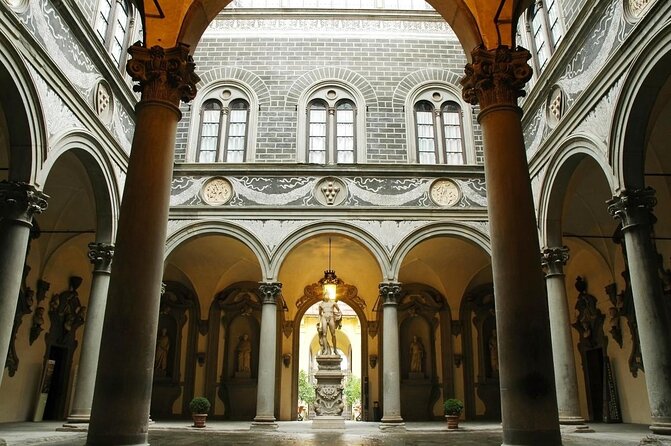
- The route covers Florence’s essential sights: San Lorenzo, Palazzo Medici Riccardi, the Baptistery, Duomo, Dante’s house, Piazza della Signoria, Palazzo Vecchio, and the Uffizi area.
- It is a donation-based tour: The listed price is unusually low, but your guide’s only compensation comes from the donation you choose at the end.
- The tour is best as a first-day orientation: It helps you understand what you are seeing before you return to museums and churches on your own.
- Guiding style matters here: The strongest feedback centers on engaging storytellers such as Deborah, Camilla, Alberto, Aurora, and Manuel.
- You walk for about two hours: Wear comfortable shoes, arrive at the San Lorenzo meeting point early, and expect weather to affect the outing.
Why the Medici are the right key to Florence
You can see Florence as a parade of famous buildings, or you can see it as a city shaped by money, family alliances, artistic ambition, and political control. The second view is far more useful, and the Medici family gives this tour a clear thread.
The walk begins beside the statue of Giovanni de’ Medici, sitting on a throne near the Basilica of San Lorenzo. That meeting point fits the subject. San Lorenzo became the Medici family church and burial place, with principal family members from Cosimo il Vecchio through Cosimo III buried there.
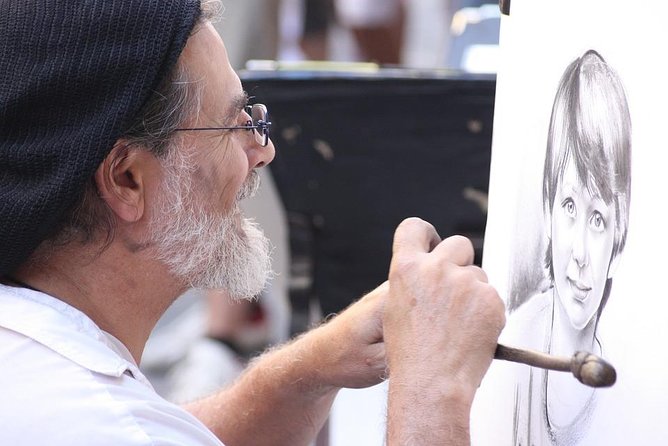
Your guide uses the family to explain more than names and dates. You get a sense of how patronage affected architecture, painting, sculpture, religion, and civic life. The best guides also add humor and local perspective, which keeps the material from turning into a lecture.
This is why I would take the tour early in a Florence stay. Once you know the Medici connection, the buildings around you stop feeling like separate monuments. The city begins to read as one connected story.
Other Florence days travellers weigh against this one:
- Florence: Skip-The-Line Uffizi Gallery Timed Entry Ticket
★ 4.5 · 27,832 reviews - Tuscany Day Trip from Florence: Siena, San Gimignano, Pisa and Lunch at a Winery
★ 5.0 · 21,634 reviews - Florence: Timed Entrance Ticket to Michelangelo’s David
★ 4.6 · 16,983 reviews
From San Lorenzo to the Medici palace
The first stop is the Basilica di San Lorenzo, one of Florence’s largest churches. The short ten-minute visit is an exterior introduction unless you pay separately to enter, so set your expectations accordingly.
The value here is the setting. San Lorenzo sits in the middle of Florence’s main market district, and its connection to the Medici family gives your guide an immediate way to explain power and memory in the city. You learn why a family church could also act as a public statement.
Next comes Palazzo Medici Riccardi, built for Cosimo de’ Medici between 1444 and 1484. It was designed for the head of the Medici banking family, so this is where the tour can link private wealth to public influence.
You will not have admission included for the palace. The guide’s role is to explain what the building represents and point out its place in the city’s story. If the palace interests you, note it for a later visit rather than expecting a full interior tour during this walk.
The Baptistery and the Duomo complex
The Baptistery of St. John is one of Florence’s oldest buildings, built between 1059 and 1128 in the Florentine Romanesque style. It sits across from the cathedral, so this section gives you an excellent view of how Florence arranged its religious center.
The guide spends about ten minutes here. Admission is not included, and the experience is mainly about orientation, architecture, and the building’s age. That is useful because the Baptistery can be easy to overlook when the Duomo dominates your attention.
Then you reach Florence Cathedral, formally Santa Maria del Fiore. The cathedral began in 1296 in the Gothic style, based on a design by Arnolfo di Cambio. The cathedral, Baptistery, and Giotto’s Campanile form part of Florence’s UNESCO-listed historic center.
The cathedral itself has free admission, according to the tour details, but this does not mean every part of the complex is included in the walk. You are seeing the building from outside, with about ten minutes for the stop. If you want to enter, climb, or explore paid areas, plan that separately.
The scale is the point. Florence’s religious center gathers several major works into a compact space, and your guide helps you sort out which building is which. That saves time later, especially if you are trying to plan visits to the cathedral complex without confusing the separate admission rules.
Giotto’s Campanile and Brunelleschi’s dome
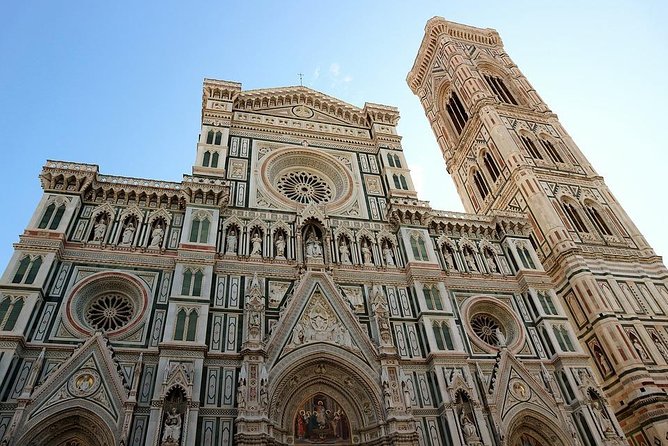
Giotto’s Campanile rises beside the cathedral and Baptistery. It is a fine example of Florentine Gothic design, with sculptural decoration and bands of colored marble. The tour includes a short stop, but not admission to climb the tower.
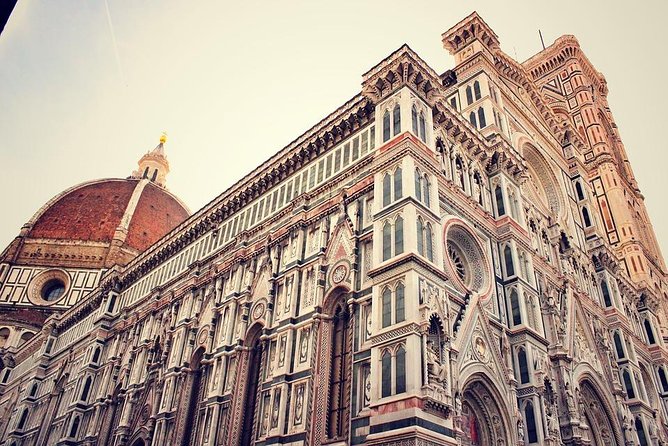
The tower works well as a comparison with the dome. Giotto’s Campanile draws the eye upward with its vertical form, while Brunelleschi’s Cupola spreads across the cathedral roof with a much more daring structural idea.
The Cupola del Brunelleschi is one of the tour’s strongest talking points. It was once the largest dome in the world and remains the largest brick dome ever built. You do not climb it on this experience, and admission is not included, but the guide explains why its construction remains such a major moment in architecture.
This is where a good storyteller makes a real difference. The facts are impressive, but the challenge of building such a dome becomes easier to grasp when you are standing below it and hearing the story in place. Guides such as Aurora, Camilla, and Manuel have been praised for making architecture understandable to people who do not usually study art or engineering.
A different way to spend the day, same part of Italy:
- Florence: Michelangelo’s David Skip-the-Line Entry Ticket
★ 4.5 · 12,764 reviews - The Best tour in Florence: Renaissance & Medici Tales – guided by a STORYTELLER
★ 5.0 · 12,316 reviews - Florence: Leonardo Interactive Museum Entry Ticket
★ 4.5 · 11,763 reviews - Florence: Pasta Cooking Class with Unlimited Wine
★ 4.9 · 10,285 reviews
Dante, politics, and Florence in the streets
The route continues to the House of Dante, connected with Dante Alighieri, author of the Divine Comedy. The museum and birthplace are associated with one of the most important writers of the Middle Ages and a major figure in the Italian language.
The stop is brief, about five minutes, and admission is not included. That makes it more of a street-level introduction than a museum visit. Still, it adds a needed literary side to a walk otherwise centered on churches, architecture, and the Medici.
I like this change of subject. Florence was not shaped only by bankers and artists. Writers, rival factions, civic arguments, and personal feuds also helped form its identity. A short stop at Dante’s house gives your guide room to explain that the city’s story is not purely about Renaissance beauty.
It also keeps the walk moving. Two hours is enough time to see a great deal from the outside, but not enough for long interior visits. The route works because it uses brief stops to build a broad picture instead of spending half the morning at one site.
Piazza della Signoria and the power of public art
Piazza della Signoria is an L-shaped square in front of Palazzo Vecchio. It has long served as a meeting place for Florentines and is also a natural gateway to the Uffizi Gallery.
This is one of the liveliest parts of the route, but the square can also be crowded. With a group of up to 30 people, listen carefully when the guide gathers everyone for explanations. Stay close enough to hear, especially around the statues and the palace entrance.
The square is valuable because it shows art in a civic setting. You are not simply looking at sculpture in a gallery. You are seeing public symbols placed beside the seat of city government, where art, power, and political messaging meet.
A useful detail from the walk is the copy of Michelangelo’s David outside Palazzo Vecchio. The original is not here, but the replica marks the spot where the famous sculpture once carried a strong public meaning. The guide can explain the difference between the original and the copy, and why this location matters.
That distinction is worth hearing in person. If you have visited Florence before, you may have walked past the statue without understanding its political role. The tour gives the square more meaning than a quick photograph can provide.
Palazzo Vecchio and the Uffizi area
Palazzo Vecchio is Florence’s town hall, a massive fortress-palace overlooking Piazza della Signoria. Its architecture reflects civic strength, and its position beside the square makes it one of the city’s most important public buildings.
The tour does not include entry to the palace museum. You get an outside explanation and time to see the building, the David copy, and the nearby Loggia dei Lanzi, which holds a gallery of statues.
The walk ends in Piazza della Signoria, although the tour description places the final area close to the Uffizi Gallery and notes that the endpoint can vary slightly within the indicated area. That is convenient. You can continue to the Uffizi, return to another sight, or stop for lunch in the center without needing a long transfer.
The Uffizi itself is not included, and the tour does not function as an Uffizi visit. It gives you context for the museum’s connection to the Medici. The complex began in 1560 under Giorgio Vasari for Cosimo I de’ Medici, originally to house the offices of Florentine magistrates. The Italian word uffizi means offices.
That short explanation can improve your later museum visit. The Uffizi is easier to appreciate when you understand that its collection and building are tied to the same family story running through San Lorenzo, Palazzo Medici Riccardi, and the city’s public spaces.
What the guides do best
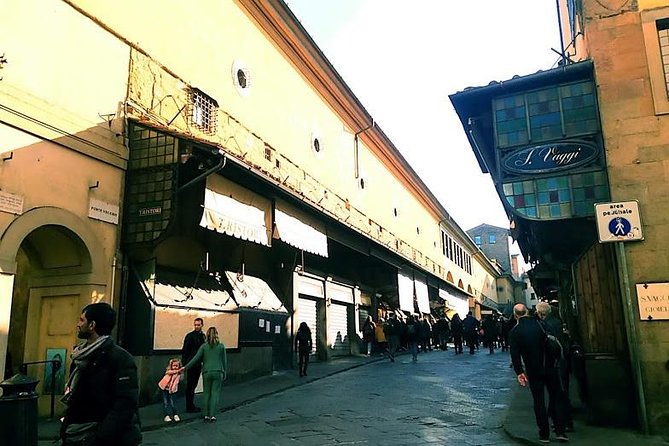
The strongest feature of this experience is not the number of stops. Florence has plenty of walking routes that pass the same buildings. The difference is how the guide connects them.
Deborah is praised for mixing humor with art, history, and Medici tales, and for handling a large group while keeping people involved. Camilla is described as an energetic storyteller who answers questions easily and keeps the pace comfortable. Alberto is praised for covering a wide range of subjects in two hours, including food and restaurant suggestions.
Aurora brings an art historian’s viewpoint, while Manuel is praised for making the city come alive and telling stories in a clear, entertaining way. Simona is noted for speaking clearly, keeping non-history specialists involved, and maintaining energy through the walk. Elizabeth, Elisabetta, and other guides are also described as warm, amusing, and informative.
You cannot choose a specific guide from the information provided, so treat these names as examples of the style you might encounter rather than a guarantee. The consistent pattern is clear: this tour depends heavily on the person leading it. A strong guide makes the quick stops feel connected. A less engaging guide would leave you with a list of buildings.
Price, donations, and real value
The listed price is $3.62 per person, which makes this one of the least expensive ways to get a guided introduction to Florence. But the number needs explaining.
This is a donation-based experience. The guide’s only compensation comes from the amount you choose to give at the end. The low booking price is not the full measure of what the guide earns, so bring cash or be ready to donate an amount that reflects the time, expertise, and quality of the walk.
The practical value is high if you use the tour as an orientation. You see the city’s central landmarks, learn which sites deserve a return visit, and get suggestions about food and places to explore. Several guides have offered useful restaurant recommendations and ideas for the rest of a Florence stay.
The tour is less valuable if you expect included museum entry, private attention, or a quiet small-group experience. It is an outdoor overview, not a substitute for the Duomo, Palazzo Vecchio, or Uffizi museums. Think of it as a guided framework for your own sightseeing.
Timing, group size, and what to bring
The walk lasts about two hours and is offered in English. It starts at Piazza di San Lorenzo, 35R, beside the Giovanni de’ Medici statue, and ends at Piazza della Signoria, with the exact endpoint possibly shifting slightly within that area.
Arrive early. The San Lorenzo area is central, but a busy square and a group meeting point can make a last-minute arrival stressful. The tour is capped at 30 people, which is manageable but not intimate.
Comfortable shoes matter. You will be on foot for the full experience, moving between major sites rather than sitting inside a museum. The tour requires good weather, so rain or other poor conditions can lead to a different date or a full refund.
Most people can participate, and service animals are allowed. The meeting and ending areas are near public transportation, which makes this a practical choice for a first morning or afternoon in Florence.
Free cancellation is available up to 24 hours before the start time. Cancellations or changes made inside that 24-hour window are not refunded or accepted. The same local-time cutoff applies if you need to alter your plans.
Who should book this Florence walk?
I would recommend it most strongly to first-time visitors who want the city to make sense before tackling its major museums. It also suits repeat visitors who have seen the famous buildings but want a clearer explanation of the Medici and the political meaning behind public art.
Families and mixed-interest groups may like the format because the guides use stories, humor, and visual landmarks rather than relying only on dates. People who enjoy architecture, Renaissance art, literature, or city politics will get the most from the route.
You should look elsewhere if you want interior access, a small private group, or a focused visit to one monument. The two-hour schedule gives you breadth, not depth. You will see many sites, but you must return on your own for the full museum experience.
Should you book The Best Tour in Florence?
For the price, this is an easy tour to justify, provided you understand the donation model. It gives you a solid route through central Florence, a clear Medici storyline, and the chance to hear a lively local guide before you spend time and money inside the city’s major museums.
Book it near the start of your stay, arrive early, and treat the walk as a map for the rest of Florence. If your guide is as engaging as Deborah, Camilla, Alberto, Aurora, Manuel, or Simona have been, give a fair donation at the end. That is what keeps this low-cost format worthwhile.
FAQ
How long does the Florence walking tour last?
The tour lasts approximately two hours.
Where does the tour start?
It starts at Piazza di San Lorenzo, 35R, 50123 Firenze, beside the statue of Giovanni de’ Medici sitting on a throne.
Where does the tour end?
It ends in Piazza della Signoria. The exact endpoint may vary slightly within the indicated area, which is close to the Uffizi Gallery.
Is the tour offered in English?
Yes. English is the listed language for the tour.
Is admission to the attractions included?
Admission is not included for San Lorenzo, Palazzo Medici Riccardi, the Baptistery, Giotto’s Campanile, Brunelleschi’s Cupola, Palazzo Vecchio, or the Uffizi Gallery. The cathedral and House of Dante stops list free admission, but the tour remains a guided outdoor walk rather than an interior visit.
How does the donation system work?
The tour is made possible through donations. At the end, you choose the amount you want to give, and this donation is the guide’s only compensation.
How many people can join the tour?
The activity has a maximum of 30 travelers.
Is the tour suitable for most people?
Yes. Most travelers can participate, and service animals are allowed. The experience takes place on foot and requires good weather.
Can I cancel for a full refund?
Yes, if you cancel at least 24 hours before the experience start time. Cancellations or changes made less than 24 hours before the start time are not refunded or accepted.
Recently reviewed around Florence
- Walking Food Tour of Florence with Tastings and Wine★ 5.0 · 518 reviews
- Florence Sunset Food Tour with Wine & Dine at a Tuscan farmhouse★ 5.0 · 194 reviews
- Wine Experience In Chianti Hills from Florence★ 4.5 · 195 reviews
- Wine Tasting Experience in Ponte Vecchio: Best Tuscany selection!★ 5.0 · 197 reviews
- Uffizi Gallery Timed Entry Admission Tickets★ 4.0 · 392 reviews
- Val d’Orcia Brunello Wine Tour with Montalcino and Montepulciano★ 4.5 · 359 reviews
- Uffizi Gallery Small Group Tour with Guide★ 4.5 · 879 reviews
- Early Access Guided Uffizi Gallery Tour Skip-the-Line Small Group★ 4.5 · 707 reviews
Florence Tours, compared.
Skip-The-Line Uffizi Gallery Timed Entry Ticket
Read our review →
Tuscany Day Trip from Florence: Siena, San Gimignano, Pisa and Lunch at a Winery
Read our review →
Michelangelo’s David Skip-the-Line Entry Ticket
Read our review →
The Best tour in Florence: Renaissance & Medici Tales – guided by a STORYTELLER
Read our review →
Pisa, Siena and San Gimignano Day Trip with Lunch
Read our review →