
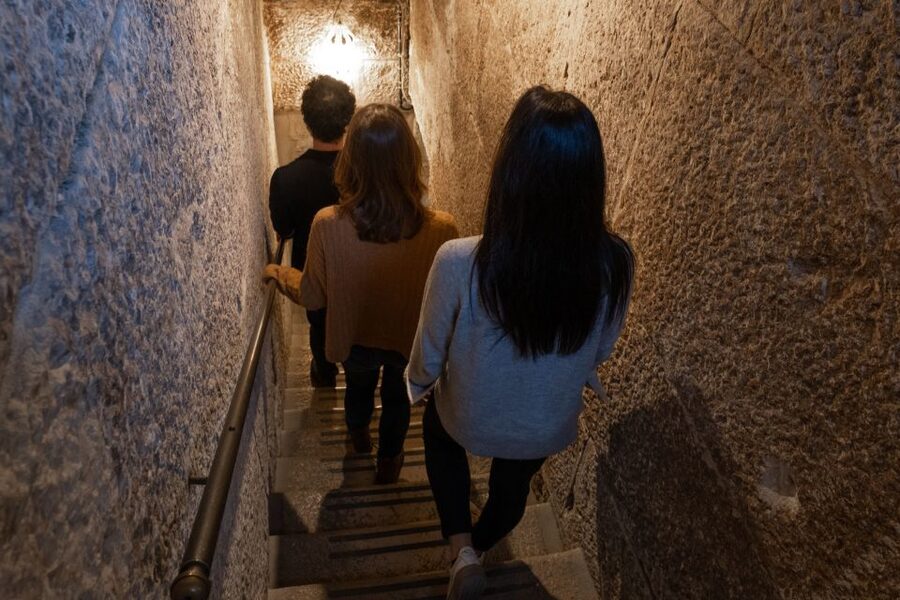
Review · EVENING EXPERIENCES
Venice: Lords of the Night Prison’s Palace Cells & Tortures
Venice’s most famous prison story begins in a cold stone building beside Piazza San Marco, where Casanova was held and later escaped through the roof. This compact tour takes you into the old cells, courtroom, torture rooms, and a restricted passage that gives you a far less polished view of the Venetian Republic.
I like the small-group feel, which makes it easier to ask about the devices, graffiti, and prison rules. I also like the short running time and low price: at about $11, it fits neatly between major sights. The drawback is size. This is a small museum and prison complex, not a vast palace, so you may finish in 45 minutes, especially without a guide.
In This Review
- Key points to know before you go
- Entering the prison beside Piazza San Marco
- A courtroom, cells, and the machinery of justice
- Dark cells and graffiti from inmates
- Torture devices and the darker side of Venetian justice
- Casanova’s cells and the secret route
- What the guided option adds
- Audio guide or entry only?
- How the $11 price fits your Venice budget
- Practical advice for timing and access
- Who will enjoy this prison visit?
- Should you book the Prison’s Palace tour?
- FAQ
- Where is the Prison’s Palace in Venice?
- How long does the visit take?
- Is the Bridge of Sighs included?
- What languages are available?
- Is the tour suitable for people with limited mobility?
- Can I cancel the booking?
Key points to know before you go
- Casanova’s prison route: See the cells and upper areas connected with his famous escape.
- A close look at inmate life: Learn what prisoners ate, drank, and how they slept.
- Torture rooms and old devices: The displays are graphic in subject, even when the objects are behind glass.
- A guide adds useful context: Guides such as Julia, Tiziana, Kristian, and Christian have led lively tours in English and Italian.
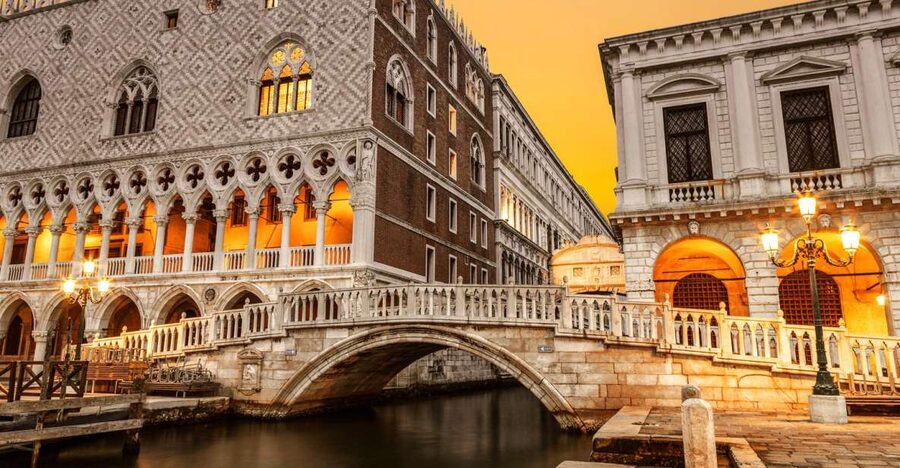
- Right beside Piazza San Marco: The entrance is across the bridge next to Doge’s Palace, making this easy to pair with other sights.
- Not the Bridge of Sighs: Your ticket does not include the Bridge of Sighs or Doge’s Palace.
Entering the prison beside Piazza San Marco

The Prison’s Palace, or Palazzo delle Prigioni, sits in one of Venice’s busiest sightseeing areas, directly beside Doge’s Palace and near the Riva degli Schiavoni. That location makes the building easy to miss. Most eyes are drawn to the grand palace, the basilica, and the water. The prison is the darker neighbor across the bridge.
To find it, stand in Piazza San Marco with Doge’s Palace in front of you and the San Marco basin behind you. Walk to the right side of the palace entrance, cross the bridge, and look for the entrance to the prison on your left.
The directions are simple once you know the landmark, but the entrance can feel unclear on arrival. Go inside and look for the staircase and ticket area. One visitor missed the downstairs portion, while another said the meeting instructions did not make it clear that you needed to enter the building and go upstairs. Give yourself a few extra minutes rather than arriving at the last second.
The site is open from 10 a.m. to 5 p.m. The booking is valid for one day, with available starting times shown during booking. Guided tours can be conducted in English or Italian, and the guide may switch between languages if the group needs it. That bilingual setup is useful for mixed groups, though it can make the tour take a little longer or feel less concentrated in one language.
More Venice trips worth a second look
- Venice: Catamaran Sunset Jazz Cruise with Aperitivo
★ 4.7 · 1,206 reviews - Venice: Guided Canal Kayak Tour at Day, Night, or Sunset
★ 4.7 · 318 reviews - Winner 2025 Florence Sunset Food & Wine Tour by Eating Europe
★ 5.0 · 5,015 reviews
A courtroom, cells, and the machinery of justice
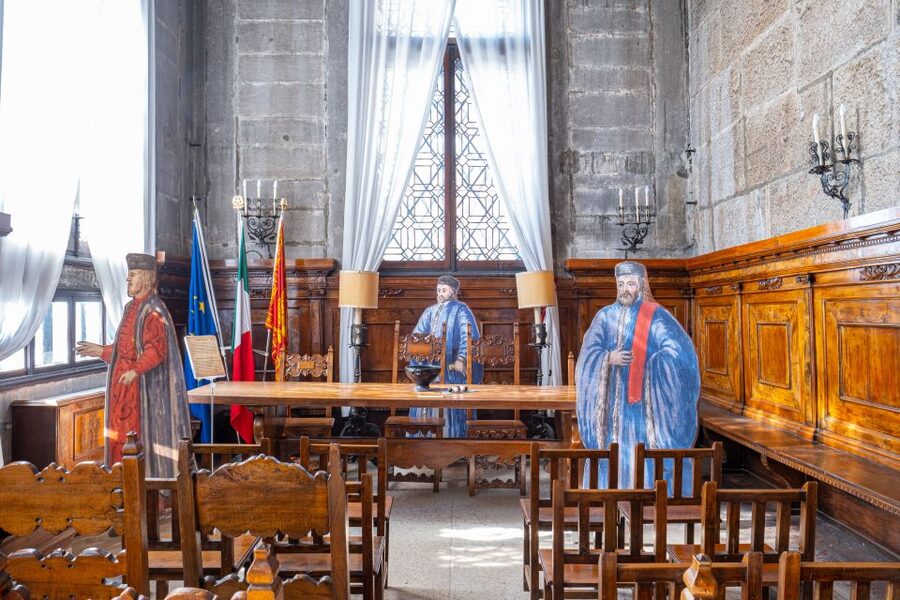
The visit begins with the imposing courtroom and the rooms connected with the Venetian justice system. This is where the tour gains its real value. The building is not just a collection of old objects. It shows how punishment worked inside a powerful republic that prized order and secrecy.
You hear about the Council of Ten, the group of senior Venetian politicians that supervised justice across Venetian territory. The title Lords of the Night refers to officials connected with policing and criminal justice. Their work was not theatrical. They investigated crime, handled prisoners, and helped enforce the state’s authority.
The courtroom gives you a sense of the process before you see the cells. It places the torture equipment in context. Without that setting, the displays could feel like a collection of grim curiosities. With it, you can think about who had power, how judgments were made, and what happened to people once they entered the prison system.
The explanations also cover ordinary prison life. You learn what inmates ate and drank, where they slept, and what conditions they faced. These details are often more revealing than the dramatic devices. A prison becomes real when you consider food, water, bedding, cramped rooms, and the marks people left behind.
Dark cells and graffiti from inmates
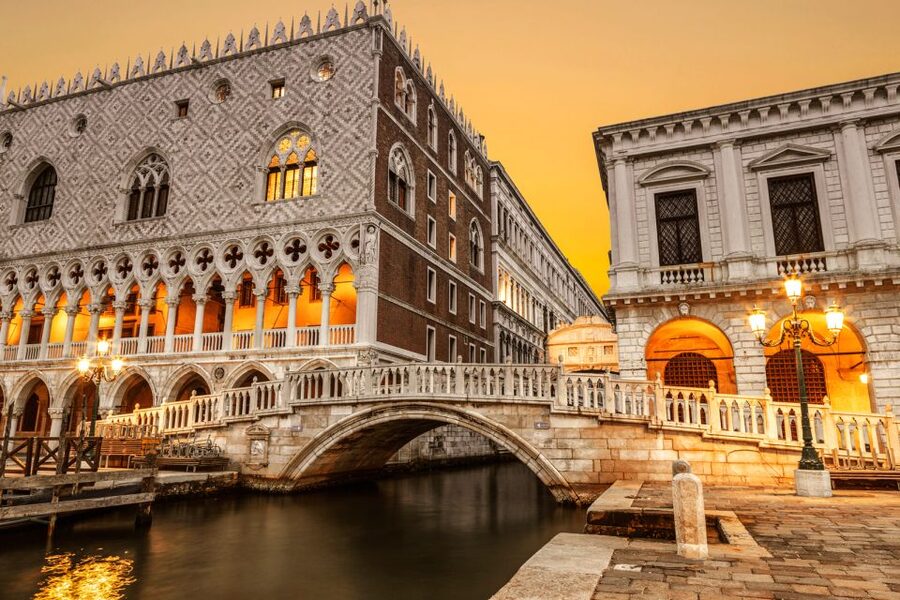
The cells are the heart of the visit. They are dark, plain, and much less grand than the nearby palace rooms. You walk through the actual prison spaces rather than viewing a modern reconstruction, which gives the experience a physical edge.
Look closely at the walls for graffiti left by inmates. These marks connect the rooms to individual people who spent time there. They also help you picture the prison as a working place, not merely an old building preserved for sightseeing.
The cells are not presented as comfortable historical interiors. Expect cold stone, limited space, and a stark contrast with the marble halls of Venice’s political center. You do not need a large amount of imagination to understand that imprisonment here meant isolation and uncertainty.
The amount of time you spend in the cells depends on your ticket. With a live guide, the group pauses for explanations and questions. With entry only, you can move at your own pace and read the signs. The self-guided option works if you enjoy taking in displays quietly, but a guide helps fill gaps, especially where an object has little written explanation.
Torture devices and the darker side of Venetian justice
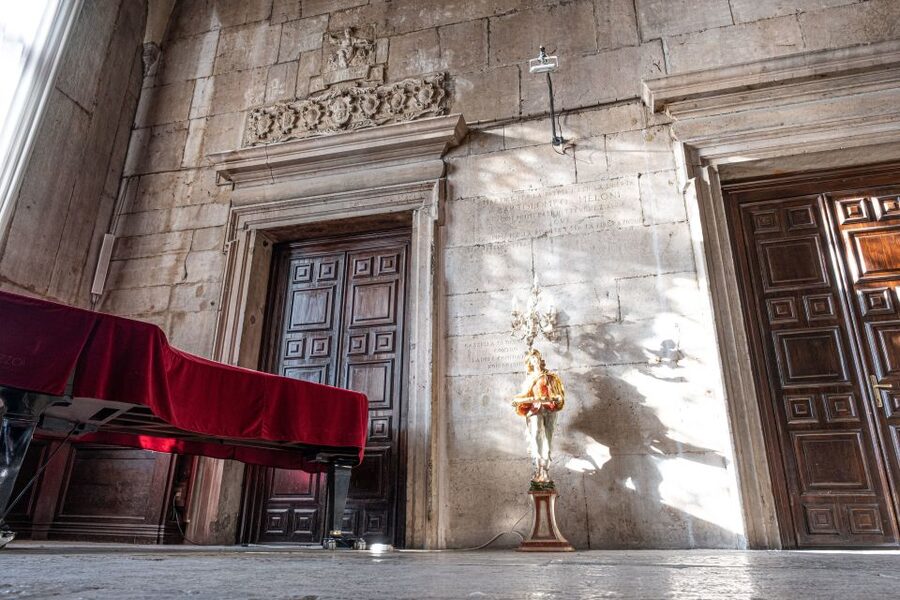
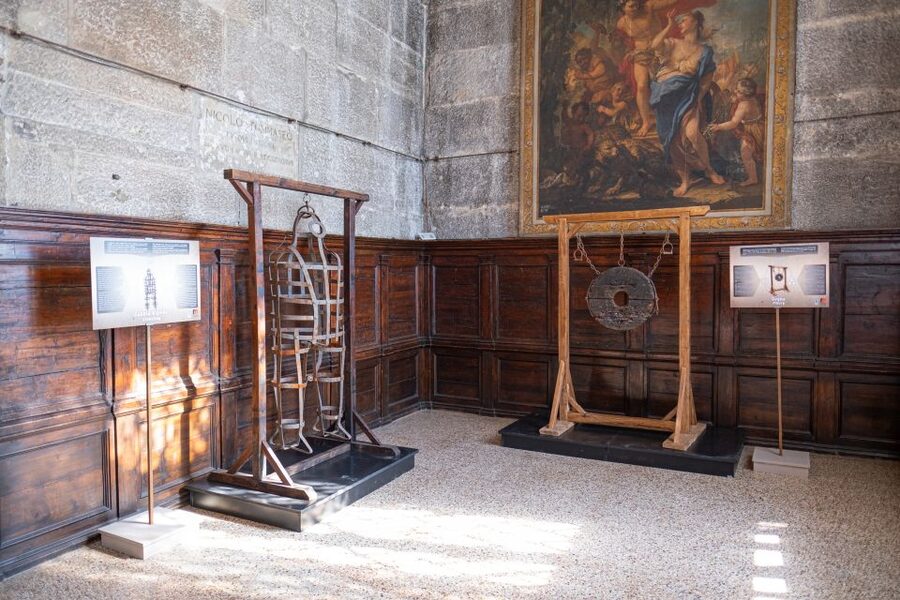
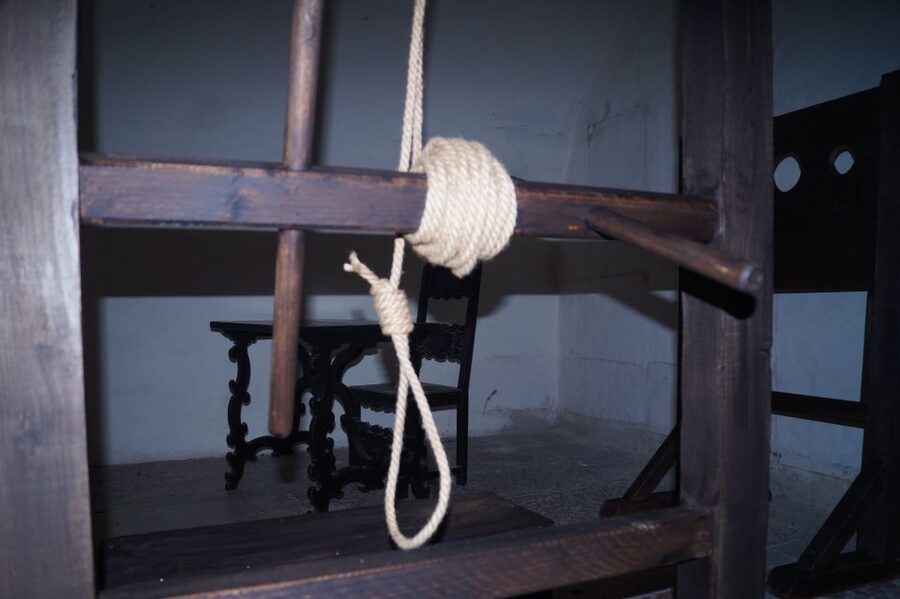
The torture rooms contain the most disturbing part of the visit. You see displays of devices associated with punishment and interrogation, along with explanations of how they were used. The subject matter is grim, and the tour does not hide that fact.
Some people will find this fascinating as social history. Others may feel the focus leans too heavily toward instruments and methods rather than the daily lives of prisoners. That balance is worth considering before booking. If your interest is crime, punishment, and old justice systems, the displays will probably hold your attention. If you mainly want to learn about Venetian architecture or political history, the torture section may feel overemphasized.
A guide makes a difference here. A good explanation can tell you what an object was for, place it within the legal process, and separate historical fact from the myths that grew around the prison. Guides have also answered questions in real time, which is useful when the labels are brief.
The tour is suitable for older children who can handle the subject, and one guide has successfully kept a mixed-age group interested. Still, the displays concern torture and punishment. Use your judgment with younger children or anyone sensitive to graphic historical themes.
A different way to spend the day, same part of Italy:
- Venice: Doge’s Palace Reserved Entry Ticket
★ 4.6 · 42,716 reviews - Venice: Grand Canal Gondola Ride with App Commentary
★ 4.1 · 18,908 reviews - Boat Trip: Glimpse of Murano, Torcello & Burano Islands
★ 4.3 · 15,699 reviews - Venice: Grand Canal by Gondola with Live Commentary
★ 4.1 · 13,681 reviews
Casanova’s cells and the secret route
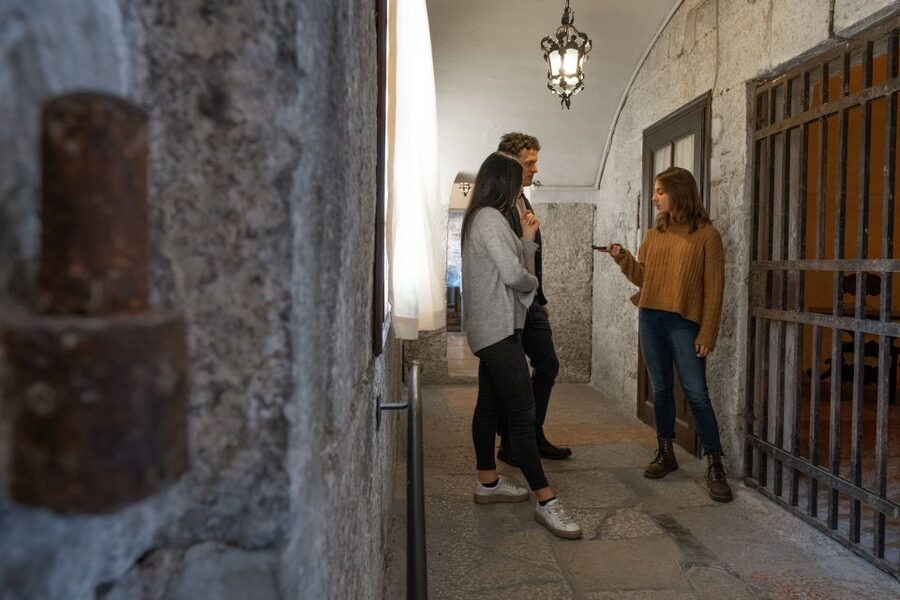
The most famous name linked to the prison is Giacomo Casanova. He was arrested by the Venetian authorities and held in the prison before making his celebrated escape. The story is one of the tour’s main draws, and it gives the building a strong narrative thread.
You hear how Casanova escaped and visit areas connected with the route, including the upper parts of the prison. The attic is especially important to the story. The account is not just a quick mention in a guidebook. It helps you understand the building’s layout and why an escape was possible at all.
The route also includes a passage dating from the 1500s that had not been open to the public until recently. This is one of the more unusual parts of the experience. It links the prison spaces in a way that most visitors to Piazza San Marco never see.
The Casanova material is entertaining, but it should not be the only reason you book. The prison itself, the justice system, and the inmate graffiti offer a broader picture. Casanova provides the memorable story. The rooms provide the substance.
What the guided option adds
You can choose entry only, a live guided tour, or an audio guide. The guided option is usually the best value when the price difference is small, since the tour is already inexpensive.
Several guides have been praised for giving clear explanations and keeping the mood light without losing the seriousness of the subject. Julia has been described as patient and responsive to questions. Tiziana led an engaging tour with careful explanations. Kristian and Christian have also guided bilingual groups in English and Italian, using stories and local details to keep the visit moving.
The guides are not all the same. Some are university students, including a criminology student who brought particular enthusiasm to the subject. That can be a plus if you enjoy a younger, conversational style. The trade-off is that a bilingual tour may repeat information in two languages, and a guide’s clothing or presentation may be informal.
The strongest reason to choose a guide is not simply the facts printed on the signs. It is the extra explanation around objects that have little text, the chance to ask why a room was used, and the ability to connect the cells with Casanova and the Council of Ten.
The tour usually lasts around 45 to 60 minutes. That is short enough for children and easy to fit into a packed Venice day. You may also walk around for a little longer after the guided portion, depending on the visit arrangement.
Audio guide or entry only?
Entry only is the cheapest and most flexible way to see the prison. It suits you if you prefer to read, pause for photographs, and move through a compact museum without following a group. The exhibition has enough material to make a self-guided visit worthwhile.
The limitation is that some objects may not explain themselves. Torture devices can look similar to an untrained eye, and the connection between rooms, officials, and prisoners is easier to follow with a clear narrator.
The optional audio guide is available in English, French, Spanish, and Italian. It gives you more structure than entry only, while letting you set your own pace. Check the exact option when booking, since the live tour languages are Italian and English, while the audio selection is broader.
For most English-speaking visitors, I would choose the live guide if available. The site is small, and a good guide can cover the main story efficiently. If you dislike fixed group timing or want to linger over the graffiti, choose entry only or audio.
How the $11 price fits your Venice budget
At $11 per person, this is one of the easier paid additions to a day around San Marco. You are not committing half a day or paying palace-level admission. A guided visit lasting roughly an hour gives you a focused historical stop for the cost of a simple meal or drink.
The value depends on your expectations. If you expect a huge prison complex with many wings, you may feel shortchanged. The museum is compact, and one visitor found it smaller than expected. If you see it as a concentrated look at Venetian imprisonment, punishment, and Casanova’s escape, the price is fair.
It also works well as a companion to Doge’s Palace. You can visit the grand political rooms first, then cross into the prison and see where the legal system ended for accused or convicted people. That contrast is one of the best reasons to include both sites in the same day.
Remember that this ticket does not include Doge’s Palace or access to the inside of the Bridge of Sighs. You can visit the prison without buying the larger palace ticket, but you should not book it expecting to cross the Bridge of Sighs from inside. For that, you need the Doge’s Palace visit.
Practical advice for timing and access
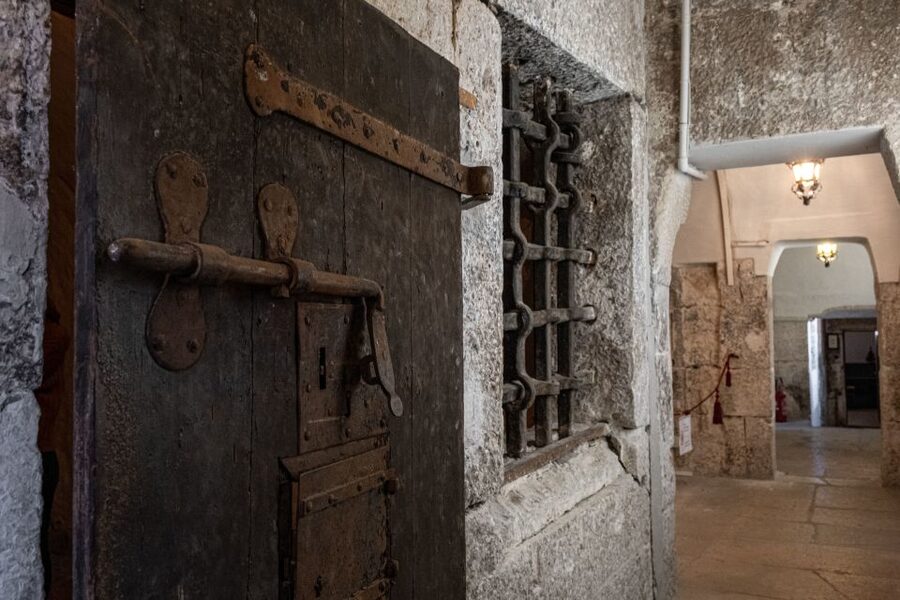
Plan for about an hour inside, plus a few minutes to locate the entrance. The opening window is 10 a.m. to 5 p.m., so a morning visit can work before the square becomes the center of your day, while an afternoon visit fits well after nearby sights.
The building is not recommended for people with limited mobility. Stairs are part of the route, and the historic prison layout is not designed for easy access. Anyone who dislikes enclosed, dark, or confined spaces should also think carefully before booking.
Wear shoes you can manage on old stairs and hard floors. The information provided does not promise a fully accessible route, so ask before arrival if you have specific mobility needs.
The meeting point is the Prison Palace itself, not a separate office in the square. If you book a guided time, arrive early enough to cross the bridge and identify the entrance. The building’s position beside Doge’s Palace is convenient, but the crowded square can make a precise meeting point harder to spot.
Who will enjoy this prison visit?
I would recommend this experience if you enjoy unusual history, old justice systems, famous escapes, or places that show the less polished side of a city. It is also a good choice if you have already seen Venice’s main churches and palaces and want something more intimate and unsettling.
Families with older children can get a lot from it, especially if the guide explains the devices without turning the visit into a horror show. The one-hour format helps. You get a clear subject, a handful of strong stories, and enough time to continue sightseeing.
I would be more cautious if your main goal is architecture, grand interiors, or a long museum visit. The prison is small, and the torture displays take up a major part of the experience. Entry only may feel too brief if you read quickly.
Should you book the Prison’s Palace tour?
Book it if you want a low-cost, central Venice experience with a strong story and a darker subject. The cells, inmate graffiti, courtroom, old torture rooms, and Casanova route give you more than a quick photo stop, especially with a live guide.
Choose entry only for freedom and a quiet visit. Choose the guide for better context and questions. Just keep your expectations realistic: this is a compact prison museum lasting about 45 to 60 minutes, not a full-day attraction.
For $11, I think it earns a place in your San Marco plans, particularly when paired with Doge’s Palace. Go for the cells and Casanova, stay for the details of prison life, and remember that the Bridge of Sighs requires a separate palace ticket.
FAQ
Where is the Prison’s Palace in Venice?
It is beside Piazza San Marco, close to Doge’s Palace and the Riva degli Schiavoni. From the square, walk to the right side of Doge’s Palace, cross the bridge, and find the entrance on the left.
How long does the visit take?
The guided visit generally lasts about 45 to 60 minutes. You may be able to continue looking around after the guided portion.
Is the Bridge of Sighs included?
No. The ticket does not include access to the Bridge of Sighs or Doge’s Palace. Visiting the inside of the Bridge of Sighs requires a Doge’s Palace visit.
What languages are available?
Live tours are available in Italian and English. The tour may be bilingual. The optional audio guide is available in English, French, Spanish, and Italian.
Is the tour suitable for people with limited mobility?
No. The experience is not recommended for people with mobility impairments, and the historic prison route includes stairs and difficult access.
Can I cancel the booking?
Yes. You can cancel up to 24 hours in advance for a full refund. A reserve-now, pay-later option is also available.
Recently reviewed around Venice
- St Mark’s Basilica and Doge’s Palace Priority Entry Ticket★ 4.2 · 885 reviews
- Venice: Hard Rock Cafe with Set Menu for Lunch or Dinner★ 4.4 · 1,102 reviews
- Venice: Doge’s Palace and St. Mark’s Basilica Guided Tour★ 4.6 · 458 reviews
- Venice: Walking tour, Doge Palace, & St. Mark’s Basilica★ 4.5 · 884 reviews
- Punta Sabbioni: Murano, Burano & Torcello Guided Boat Tour★ 4.3 · 236 reviews
- Murano: Glass Blowing Demonstration with Optional Drinks★ 4.5 · 294 reviews
- Murano: Glass Blowing Demonstration and Artistic Glass Gift★ 4.6 · 507 reviews
- Venice: Murano and Burano Excursion★ 4.5 · 928 reviews
Evening Experiences, compared.
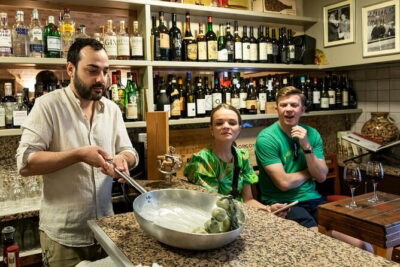
Winner 2025 Florence Sunset Food & Wine Tour by Eating Europe
Read our review →
Mount Etna Morning or Sunset Day Trip with Tasting
Read our review →
Sunset Jeep Tour of Mount Etna and Lava Flow Caves
Read our review →
Paranormal Night Walking Tour & Secret Backstreets
Read our review →

From Milazzo: Panarea and Stromboli Boat Trip by Night
Read our review →
Valley of the Temples Skip-the-Line Sunset Tour
Read our review →Browse the lists this tour appears in