
Review · SKIP THE LINE
Agrigento: Valley of the Temples Skip-the-Line Sunset Tour
The best reason to choose this Agrigento tour is the timing. You begin in daylight, watch the sandstone temples turn gold, then see several ruins take on a different character as lights come on. Sunset softens the heat and gives photographers much better light than the middle of the day.
I like the skip-the-line entry through express security and the human touch of a local guide who can explain what you are looking at instead of leaving you with a field of impressive stones and no story. Guides including Rosanna, Liz, Sara, Enza, and Benedetto have been praised for lively history, local anecdotes, and good group control. The main drawback is the walking: this is not a quick stop beside one temple, and the route back can feel long, especially in summer.
In This Review
- Key points to know before you book
- Why sunset is the right time at Agrigento
- Meeting at the Juno Temple entrance
- The first walk through the Valley of the Temples
- Temple of Hera Lacinia on the eastern spur
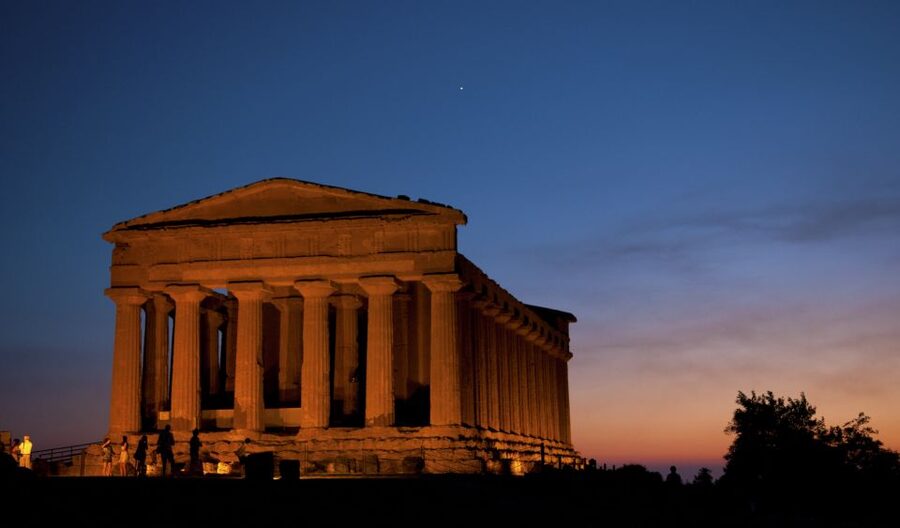
- Temple of Concordia, the visual centerpiece
- Temple of Heracles and the rougher ruins
- Temple of Olympian Zeus and the scale of the site
- What the guides add to the two-hour format
- Walking, heat, and the route back
- Is $51 a fair price?
- Who should book this Agrigento sunset tour?
- Should you book it?
- FAQ
- How long does the Valley of the Temples sunset tour last?
- What temples are included?
- Where is the meeting point?
- How early should I arrive?
- Does the tour include the entrance ticket?
- Is there skip-the-line access?
- What languages are available?
- Is the tour wheelchair accessible?
- What should I bring?
- Can I cancel or pay later?
Key points to know before you book
- Golden-hour timing: See the temples in daylight, sunset color, and evening illumination during one visit.
- Five Doric temples: The route includes Hera Lacinia, Concordia, Heracles, Olympian Zeus, and another temple area within the valley.
- A real walking tour: Allow for a substantial walk between stops, with uneven archaeological-site surfaces and no included shuttle.
- Strong local guiding: Rosanna, Liz, Sara, Enza, and Benedetto are among the guides singled out for clear explanations and engaging stories.
- Large groups are possible: Groups of about 23 people have been handled well, but a bilingual tour may take longer to follow.
- Plan your meeting carefully: Meet under the olive tree by the Lemonade stand before the Juno Temple entrance, and arrive 30 minutes early.
Why sunset is the right time at Agrigento
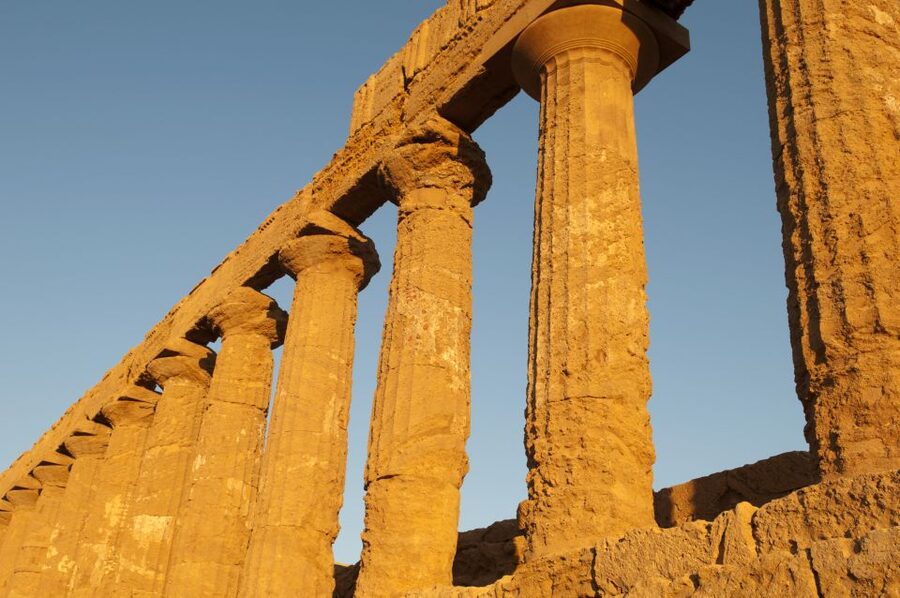
The Valley of the Temples is one of Sicily’s great open-air sights. Its ancient Doric temples sit along a broad ridge below modern Agrigento, with long views across the surrounding countryside. At midday, the pale stone can look harsh and the heat can make the walk feel like work. At sunset, the visit becomes slower and more atmospheric.
This tour starts before the sun disappears, which is important. You do not simply arrive in the dark to see floodlit ruins. You first get a clear look at the temples, their columns, their broken outlines, and the setting around them. Then the low sun changes the color of the stone, and the lights begin to pick out the buildings after dusk.
The timing also helps in Sicily’s warmer months. June, July, and August can be punishing at exposed archaeological sites. A late-afternoon start gives you a better chance of walking comfortably, though you should still bring water, sunscreen, a hat, and clothing suited to the forecast.
The trade-off is that sunset times change through the year, and the tour start time changes with availability. Check the actual departure time when booking. You want enough daylight to understand the site, followed by the sunset effect that makes this version special.
More Sicily trips worth a second look
- Catania: Mount Etna Morning or Sunset Day Trip with Tasting
★ 4.8 · 4,028 reviews - Catania: Sunset Jeep Tour of Mount Etna and Lava Flow Caves
★ 4.8 · 2,113 reviews - From Milazzo: Panarea and Stromboli Boat Trip by Night
★ 4.2 · 1,605 reviews
Meeting at the Juno Temple entrance
Your meeting point is the ticket office for the Valley of the Temples at the Tempio di Giunone, also called the Temple of Hera Lacinia. The guide waits under the olive tree in front of the Lemonade stand, before the main gate to the Juno Temple entrance.
This is a useful detail because a large archaeological park can have more than one access point. Do not simply head toward Agrigento and expect to find the group. Use the supplied map pin, identify the Lemonade stand, and give yourself time to walk from your parking area or drop-off point.
You are told to arrive 30 minutes before the tour. The ticket is handed to you directly by the guide, and it is valid only for the scheduled start time. If you arrive late, you may lose the guided visit rather than join at the next stop.
There is also airport-style security for everyone. During the high season, security can take up to 30 minutes. Arriving early is therefore sensible, even if the guide may not appear until close to the official start time.
The first walk through the Valley of the Temples
The tour begins around the Valley of the Temples, with roughly 30 minutes devoted to the first section and its views. This is where the guide gives you the basic framework: the site dates to the Hellenic period, the buildings followed Greek Doric forms, and Agrigento was an important ancient city.
A guide makes a major difference here. Ancient temple ruins can look similar at first glance. You need help seeing which columns belong together, what has survived, what has fallen, and how the site fits into the larger story of Greek Sicily. A good explanation also helps you picture the buildings as working religious spaces rather than isolated blocks of stone.
The strongest guiding style seems to be conversational rather than purely academic. Rosanna is praised for combining historical background with family anecdotes. Liz is noted for humor and passion for Agrigento. Benedetto has used picture books to show how the structures may have looked, while other guides have added details about local customs, plants, animals, and daily life.
That variety matters. You are not just collecting dates. You are getting context about how people used the temples and how the ancient city related to the modern Sicilian area.
Temple of Hera Lacinia on the eastern spur
The first named temple is Hera Lacinia, often called the Temple of Juno. It sits on a high spur at the most easterly point of the valley, so the approach gives you a sense of the site’s position and scale.
This stop is particularly good for views. You are not looking at a temple in isolation, but at an ancient structure placed along a ridge with open space around it. In the softer evening light, the columns and remaining walls gain stronger shadows, making the shape easier to read.
The walk uphill is also your first reminder that this experience requires stamina. The route is not described as a short, flat circuit. Comfortable shoes are essential, and you should not count on a shuttle moving the group from one temple to the next.
If you have mobility concerns, contact the operator before booking. The activity details say it is wheelchair accessible in one place, but also list wheelchair users under not suitable for the tour. That is a clear inconsistency, so you should get a direct answer about the current route and site conditions.
A different way to spend the day, same part of Italy:
- Mount Etna: Guided Volcano Summit Hiking Tour with Cable Car
★ 4.7 · 3,784 reviews - Palermo: NO Mafia Walking Tour
★ 4.8 · 2,431 reviews - Palermo: Hop-on Hop-off Bus Tour 24-hour Ticket
★ 3.9 · 2,410 reviews - From Trapani: Cruise to Favignana and Levanzo with lunch
★ 4.2 · 2,286 reviews
Temple of Concordia, the visual centerpiece
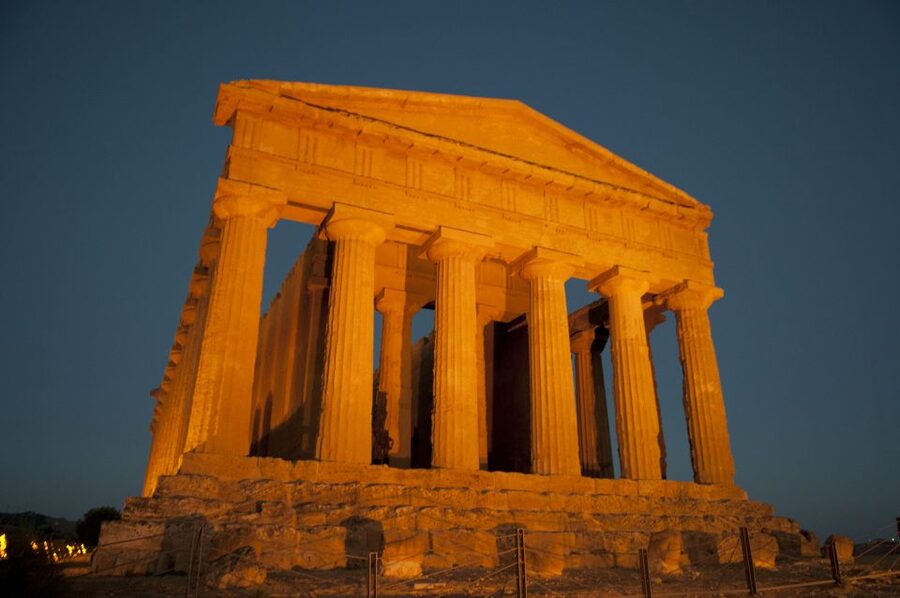
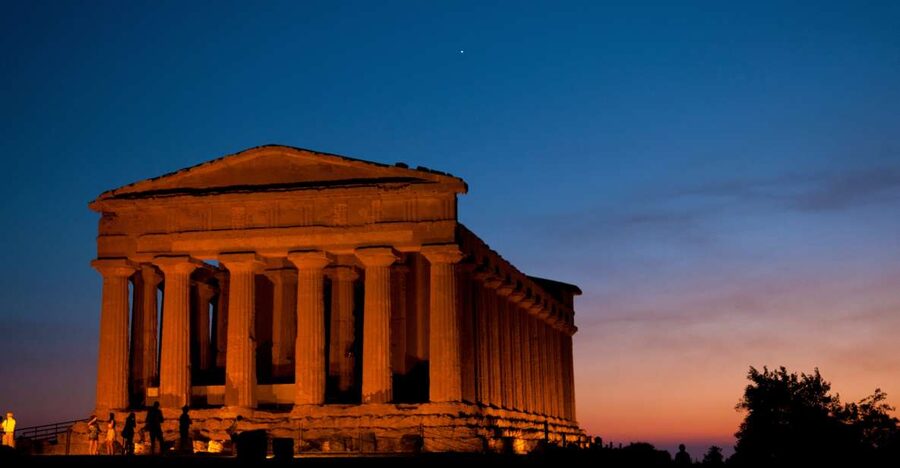
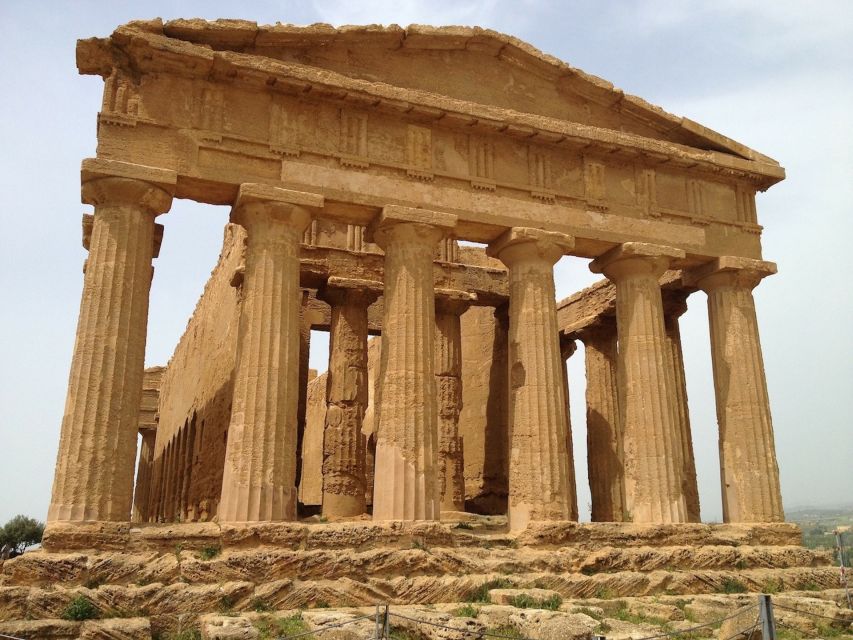
The Temple of Concordia gets its own 30-minute visit, and rightly so. It is one of the best-preserved Doric temples in Sicily, dating to the fifth century. For many people, this is the moment when the Valley of the Temples becomes more than a collection of ruins.
The building’s survival lets you see the proportions of a classical temple far more clearly than at the shattered Temple of Zeus. Rows of columns, the broad platform, and the overall outline are still easy to understand. Your guide can point out features that you might otherwise pass without noticing.
This is also a prime photography stop. In daylight, you can capture the full form of the temple. As the sun drops, the sandstone takes on a warmer tone. Later, artificial lighting gives the structure a more dramatic outline.
You get time for photographs at the main stops, but remember that the tour continues as a group. The best approach is to listen first, then use the free moments for pictures. A small water bottle and a phone or camera with enough battery will serve you well, since the route covers several sections of the park.
Temple of Heracles and the rougher ruins
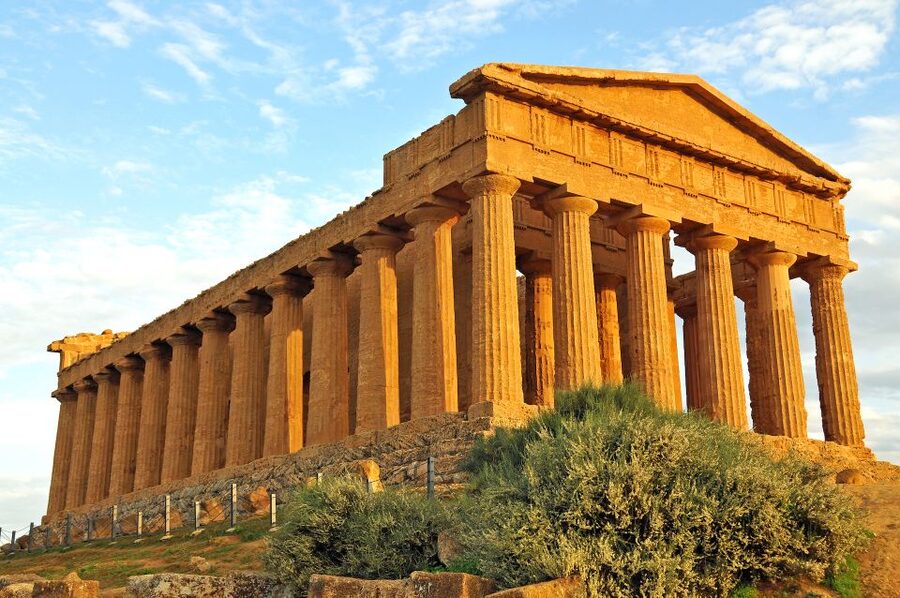
The ancient Greek Temple of Heracles follows, with another 30-minute section of guided sightseeing. Compared with Concordia, this stop gives you a clearer sense of how much has been lost over time. The remains are less complete, and your guide’s descriptions become especially useful.
This is where the guide’s storytelling earns its fee. With only fragments left, you need someone to explain the likely shape and purpose of the original building. Several guides have been praised for describing what the temples looked like when they were in use and for connecting the ruins to life in ancient Agrigento.
The contrast between Concordia and Heracles improves the tour. One offers a strong surviving example of Doric architecture. The other asks you to reconstruct the past from columns, foundations, and broken stone.
It is also another walking segment. In hot weather, the combination of distance, sun, and uneven ground can be tiring. The tour does not include transport between temples or refreshment stops, and cafés may be closed by the time an evening tour finishes. Carry your own water rather than assuming you can buy it inside.
Temple of Olympian Zeus and the scale of the site
The Temple of Olympian Zeus is visited for about 30 minutes, with part of the time available for self-guided exploration. These ruins help show the ambition of ancient Agrigento. The remains are not as complete as Concordia, but their size and scattered elements give the stop a different impact.
This section benefits from a guide who can explain what you are seeing before giving you space to look around. The combination of guided interpretation and independent time was a strong feature for me. You get the essential story, then a chance to pause, take photographs, or simply look without having to keep moving every second.
The ruined state of Olympian Zeus also keeps the tour honest. You will not see five perfectly preserved temples. You will see a mix of complete columns, partial structures, foundations, and collapsed stone. That variety is part of the site’s appeal, but it means the quality of the explanation matters.
The tour covers five temples in total. The named route includes Hera Lacinia, Concordia, Heracles, and Olympian Zeus, with the broader Valley of the Temples section completing the visit. Ask your guide at the start which fifth temple area is included on that day, since the precise emphasis may vary.
What the guides add to the two-hour format
A two-hour tour gives you a useful introduction, not an exhaustive archaeological study. You will hear historical background, architectural explanations, stories about the site, and practical guidance while walking between the main remains.
The guides are generally praised for making the material easy to follow. Rosanna is described as friendly and relatable. Liz is known for humor and enthusiasm. Sara is praised as a strong storyteller, while Enza is noted for keeping a group of 23 people together. Benedetto has been appreciated for not rushing the route and for using visual references.
There is one listening issue to consider. The tour can run in Italian and English at the same time. Some people find the switching between languages distracting or tiring, especially when they are unsure which language comes next. Others found the bilingual explanations clear and well managed.
If you prefer a single-language tour, ask about the departure before paying. If you join a bilingual group, stay close enough to hear both versions and expect the commentary to take a little longer.
Whisper equipment is not provided for children. If you want a whisper device for a child, you can request and pay for it directly from the guide on site.
Walking, heat, and the route back
The most important practical point is the amount of walking. The tour moves from the Juno entrance along the ridge and between several temple areas. One route back through the park at twilight was described as especially pleasant, but other people found the return longer than expected and wished for a bus or shuttle.
That means you should think about where you leave your car. Parking near the meeting point is useful if you want to finish close to your vehicle. If you arrange transport from elsewhere, check how you will get back after the tour, particularly once the site is lit and daylight has faded.
Wear shoes with a firm sole. Bring water even if you expect the evening to be cool, and use sunscreen because much of the archaeological area is exposed. A hat helps in summer, while a light layer can be useful after sunset.
Families can enjoy this tour if children are comfortable walking and listening for two hours. The guides have handled children well, but there are no child whisper devices included. People who want a slow, highly detailed architectural study may find the pace brisk, while most first-time visitors should get a solid overview.
Is $51 a fair price?
At $51 per person, this is not the cheapest way to enter the site. You are paying for the admission ticket, the guide, the express security route, and the special sunset timing.
For me, the value depends on how much you want to understand. If you already know Greek temple architecture and prefer wandering alone, a self-guided visit may cost less and give you more control. If the ruins are new to you, the guide helps turn columns and foundations into an intelligible ancient city.
The sunset timing adds real value in summer. You avoid the worst part of the daytime heat, get better photographic light, and may see the temples illuminated before leaving. That combination is hard to reproduce on a basic daytime entry.
The ticket is supplied by the guide at the meeting point, and the express security check can save time, although airport-style screening may still take up to 30 minutes in high season. Free cancellation is available up to 24 hours before the start, and you can reserve now and pay later, which is useful when your Sicilian route is still shifting.
Who should book this Agrigento sunset tour?
I would choose this tour if you want the main temples explained clearly, prefer evening temperatures, and like the idea of seeing the site in three forms: daylight, sunset, and illumination.
It suits first-time visitors, photographers, couples, families with reasonably active children, and anyone who wants a local voice rather than a printed description. The guides’ local stories and personal connection to Agrigento can make the ancient site feel less remote.
I would hesitate if you dislike group tours, need a completely flat route, or want to spend a long time at one temple. The group may be around 23 people, the route involves substantial walking, and bilingual commentary may not suit everyone.
Should you book it?
Book it if sunset is your priority and you want the ruins to make sense. The Temple of Concordia in warm evening light is the headline, but the real strength is the full progression from ancient remains in daylight to illuminated monuments after dark.
Before booking, confirm the meeting point, language arrangement, and accessibility details. Arrive early, carry water, wear good shoes, and plan your return from the park. With those points handled, $51 is a reasonable price for a well-timed introduction to one of Sicily’s most memorable archaeological sites.
FAQ
How long does the Valley of the Temples sunset tour last?
The tour lasts two hours.
What temples are included?
The route includes the Temple of Hera Lacinia, also called the Juno Temple, the Temple of Concordia, the Temple of Heracles, and the Temple of Olympian Zeus. Five temples are visited in total, with the broader Valley of the Temples section completing the route.
Where is the meeting point?
Meet under the olive tree in front of the Lemonade stand, before the main gate of the Juno Temple entrance. The ticket office is listed as Valle dei Templi, Tempio di Giunone.
How early should I arrive?
Arrive 30 minutes before the scheduled start. Late arrivals may not be able to join because the entry ticket is valid only at the tour’s start time.
Does the tour include the entrance ticket?
Yes. The entry ticket is included and is handed to you directly by the guide at the meeting point.
Is there skip-the-line access?
The tour includes an express security check. All visitors must still pass through airport-style security, and the wait may reach 30 minutes during high season.
What languages are available?
The live guide is available in Italian and English. A tour may be conducted in both languages at the same time.
Is the tour wheelchair accessible?
The activity information gives conflicting details. It lists wheelchair accessibility but also says the tour is not suitable for wheelchair users. Contact the provider before booking to confirm the current route and access conditions.
What should I bring?
Bring comfortable shoes, a sun hat, sunscreen, water, and clothing suited to the weather.
Can I cancel or pay later?
You can cancel up to 24 hours before the activity for a full refund. Reserve now and pay later is also available.
Recently reviewed around Sicily
- Sicilian Cooking Class★ 5.0 · 289 reviews
- Discover Palermo in 3 hours. Art, history, markets and street food★ 5.0 · 352 reviews
- Palermo : Private Custom Walking Tour with a Local Guide★ 4.5 · 237 reviews
- Palermo No Mafia walking tour: discover the Anti-mafia culture in Sicily★ 5.0 · 1,011 reviews
- Palermo’s Delight: Unleash the Secrets of Pizza and Gelato Making★ 5.0 · 497 reviews
- Palazzo Conte Federico★ 5.0 · 650 reviews
- Night Street Food Tour of Palermo with a Local -For real foodies!★ 5.0 · 486 reviews
- Wanna be Sicilian: Palermo Cooking Class and Market Tour★ 5.0 · 197 reviews
Skip the Line, compared.
Skip-The-Line Uffizi Gallery Timed Entry Ticket
Read our review →
Vatican Museums & Sistine Chapel Skip-the-Line Entry Ticket
Read our review →
Skip-the-Line Group Tour of the Vatican, Sistine Chapel & St. Peter’s Basilica
Read our review →
Michelangelo’s David Skip-the-Line Entry Ticket
Read our review →
Vatican Museums & Sistine Chapel Skip-The-Line Ticket
Read our review →
Vatican, Sistine Chapel & St. Peter’s Skip-the-Line Tour
Read our review →
Skip-the-Line Vatican, Sistine Chapel & St. Peter’s | Small Group
Read our review →
Vatican: Vatican Museums Sistine Chapel Skip-the-Line Ticket
Read our review →Browse the lists this tour appears in