Review · FLORENCE TOURS
Florence: 1.5-hour Santa Croce Guided Experience
Santa Croce is Florence’s Italian Hall of Fame, where art, faith, science, and politics share the same Gothic church. In 90 minutes, you’ll see the tombs of Michelangelo, Galileo Galilei, and Machiavelli, along with Giotto’s frescoes, the Bardi Chapel, and the Pazzi Chapel.
I like the small-group format, which gives guides room to answer questions and adjust the talk to your interests. I also like the fast-track entry and the strong record of guides such as Francesca, Annette, Marta, Ivan, and Steffi, who are often praised for clear storytelling and warm personalities.
The main consideration is timing. Ninety minutes is long enough for a well-shaped introduction, but not enough for every chapel, artwork, and historical detail. Santa Croce is also a functioning religious site, so you’ll need modest clothing, including no sleeveless shirts, and the interior can feel hot in summer.
In This Review
- Key points at a glance
- Why Santa Croce deserves more than a quick photo
- Meeting at Dante and entering with a guide
- Reading the Gothic interior
- Giotto, the Bardi Chapel, and the power of frescoes
- The Pazzi Chapel and the Medici connection
- Donatello, Brunelleschi, and the church’s major works
- Michelangelo, Galileo, Machiavelli, and the Italian Hall of Fame
- What the small-group format adds
- Price, timing, and practical comfort
- Who should book this Santa Croce tour?
- Should you book it?
- FAQ
- How long does the Santa Croce guided experience last?
- What language is the tour offered in?
- Where do I meet the guide?
- Are tickets included?
- Is the experience wheelchair accessible?
- Is there a dress requirement?
Key points at a glance
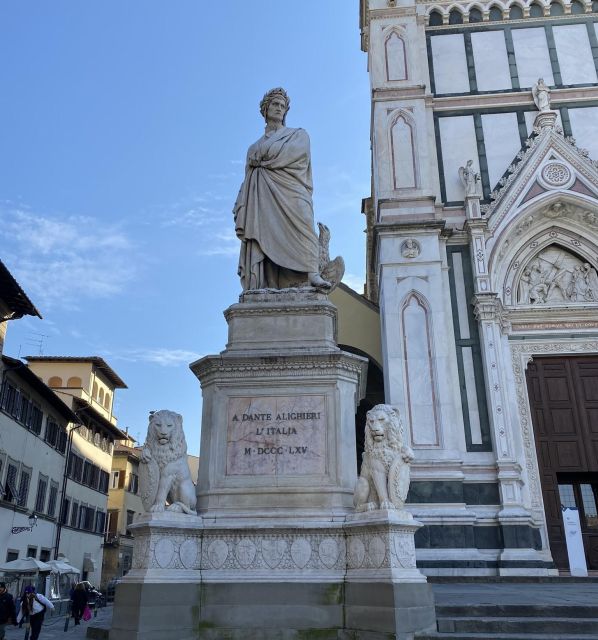
- Meet Dante outside the basilica: Find the statue of Dante Alighieri and climb the steps in front of Santa Croce, looking for the purple Hidden Experiences sign.
- See famous tombs in their original setting: Michelangelo, Galileo Galilei, and Machiavelli are among the major Italian figures memorialized here.
- Focus on major works: The route includes Giotto’s frescoes, the Bardi Chapel, Medici Chapel, Pazzi Chapel, and works linked to Donatello and Brunelleschi.
- Expect a guide-led visit: Your guide carries the tickets, and headphones are provided when the group has more than seven people.
- Good access for many visitors: The experience is wheelchair accessible, with private-group booking also available.
- Best for art and history fans: The talk connects the church’s decoration with Florence’s religious, artistic, and political story.
Why Santa Croce deserves more than a quick photo
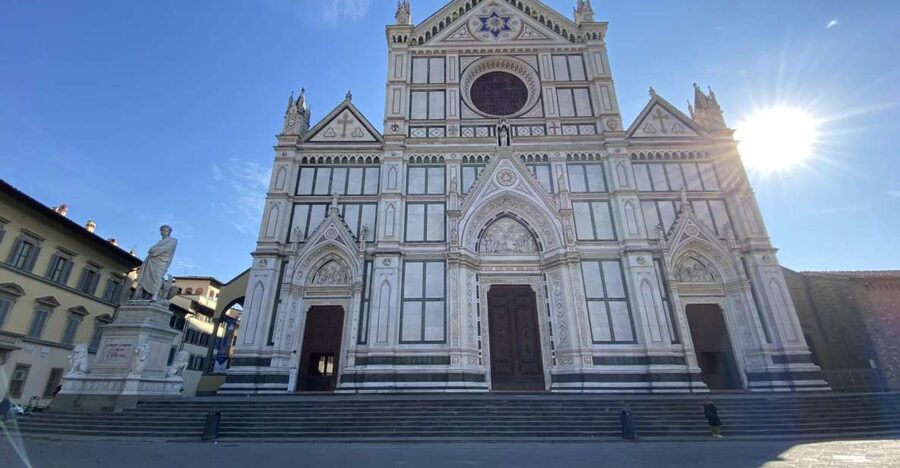
Many people first notice Santa Croce from the square: its broad facade, central position, and busy Florentine setting make it easy to add to a walking day. But the real reward is inside. The basilica is not just a pretty church with famous names attached to it. It is a place where Florence’s ideas about religion, art, learning, and national identity come together.
I find the famous tombs especially useful as an entry point. You do not need a degree in art history to understand why Michelangelo and Galileo matter. Their monuments give the guide familiar human figures to work with, then open the door to wider subjects: the power of the Franciscan order, the role of wealthy Florentine families, and the way later generations chose which Italians to honor.
The church was founded in the 13th century and became Florence’s main Franciscan church. That gives the visit a clear historical frame. You are not simply moving from one artwork to the next. You are seeing how a major religious institution grew into a place of public memory.
A guide makes a real difference here. On your own, you can admire the scale of the interior and spot the better-known tombs. You might miss the links between a chapel’s decoration, its patrons, and the larger story of Florence. A good guide turns separate objects into a connected walk through the city’s past.
More Florence trips worth a second look
- The Best tour in Florence: Renaissance & Medici Tales – guided by a STORYTELLER
★ 5.0 · 12,316 reviews - Florence: Duomo Cathedral Guided Tour
★ 3.9 · 5,970 reviews - Uffizi Gallery Small Group Tour with Guide
★ 4.5 · 4,923 reviews
Meeting at Dante and entering with a guide
The meeting point is the statue of Dante Alighieri, on the steps in front of the basilica. Look for the guide holding a purple Hidden Experiences flag or sign. This is a simple location once you know what to look for, but the instructions are strict: latecomers are not accepted.
I would arrive early. The guide has the group tickets, and this is not the sort of tour where you can stroll up several minutes after the start and join inside. Give yourself time to locate the statue, check the sign, and settle before the group enters.
Fast-track entry is useful at a popular Florence landmark. It does not mean the building is empty, and it does not remove the need to meet the guide on time. It does mean you avoid handling the ticket process yourself and can begin the visit with the group.
The tour is offered in English, Spanish, or Italian. If more than seven people join, headphones are supplied so you can hear the guide while looking around the large interior. That matters in a church with high ceilings and several points of interest competing for your attention.
Reading the Gothic interior
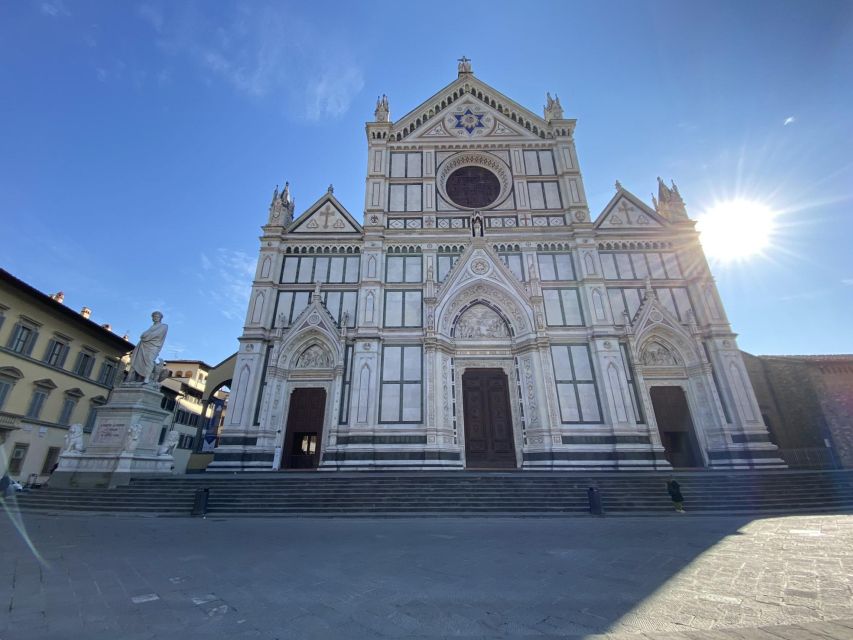
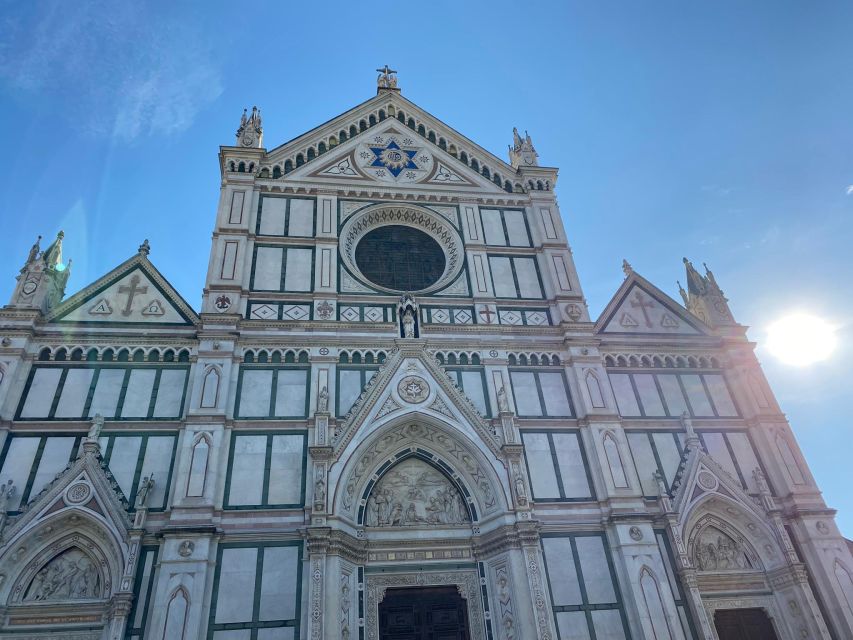
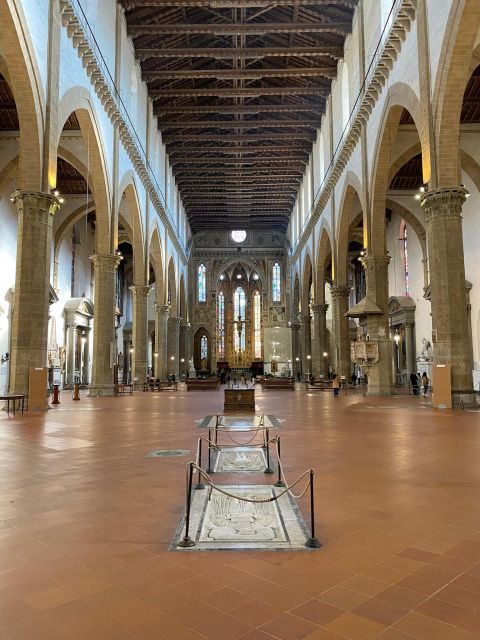
The first part of the visit introduces Santa Croce as a Gothic church and explains its place in Florence. Look up at the architectural structure, then notice how the church’s large spaces provide a setting for chapels, frescoes, sculptures, and tombs.
The value of this section is context. Gothic design can be easy to reduce to pointed arches and height, but the guide helps you see how the architecture supports the church’s religious purpose and public image. You’ll also begin to understand why Santa Croce could become both a place of worship and a site for honoring major cultural figures.
The scale may surprise you. The church contains so many names and works that a solo visit can feel like a list of disconnected highlights. The guide’s job is to keep the route focused, pointing you toward the parts that best explain the building.
This is also where the pace matters. Ninety minutes goes quickly. You should expect to stop for key explanations rather than inspect every surface at length. If you prefer quiet, extended looking at each fresco, a self-guided visit may suit you better. If you want a clear introduction and a sense of what deserves a closer look later, the timed tour is a good fit.
Giotto, the Bardi Chapel, and the power of frescoes
Giotto’s frescoes are among the major artistic reasons to visit Santa Croce. The guide brings attention to the scenes and explains why they matter, rather than leaving you to guess which details deserve your time.
The Bardi Chapel receives special attention. This is one of the places where the church’s art becomes easier to understand through a story-led explanation. The frescoes are not decoration added at random. They belong to the religious and artistic program of the chapel, and the guide helps you connect the imagery with the people and beliefs behind it.
You will want to look closely at the painted details, but also step back to see how the frescoes work within the chapel. The experience is strongest when you alternate between small details and the full space. A guide such as Francesca or Ivan can help keep that balance, explaining enough to make the scenes meaningful without turning the visit into a lecture.
Several guides have been praised for making complicated material accessible to families and younger visitors. That is useful if you are visiting with children or teenagers. The subject matter is serious, but the best guides use humor, questions, and stories to keep the group involved.
A different way to spend the day, same part of Italy:
- Florence: Skip-The-Line Uffizi Gallery Timed Entry Ticket
★ 4.5 · 27,832 reviews - Tuscany Day Trip from Florence: Siena, San Gimignano, Pisa and Lunch at a Winery
★ 5.0 · 21,634 reviews - Florence: Timed Entrance Ticket to Michelangelo’s David
★ 4.6 · 16,983 reviews - Florence: Michelangelo’s David Skip-the-Line Entry Ticket
★ 4.5 · 12,764 reviews
The Pazzi Chapel and the Medici connection
The Pazzi Chapel offers a change of mood from the large main church. Its inclusion gives you a closer look at the role of architecture and patronage in Florence. The tour also includes the Medici Chapel, tying the basilica to one of the city’s most influential families.
You do not need to arrive with a detailed map of Florentine dynasties. The guide supplies the links as you move through the spaces. If the Medici interest you, say so early. One visitor had a guide focus more closely on the family’s connections, and the small-group setup makes that kind of adjustment possible when time allows.
The Medici and Pazzi names also help explain that Santa Croce is not only about private devotion. Wealthy families used chapels, monuments, and art to express status, faith, memory, and political influence. The building becomes a record of who had power and how that power was displayed.
This part of the route is a good example of why a guide can be worth the cost. You are paying not only to enter, but to understand what you are seeing. Without explanation, a chapel may register as another beautiful room. With the right story, it becomes evidence of Florence’s social structure.
Donatello, Brunelleschi, and the church’s major works
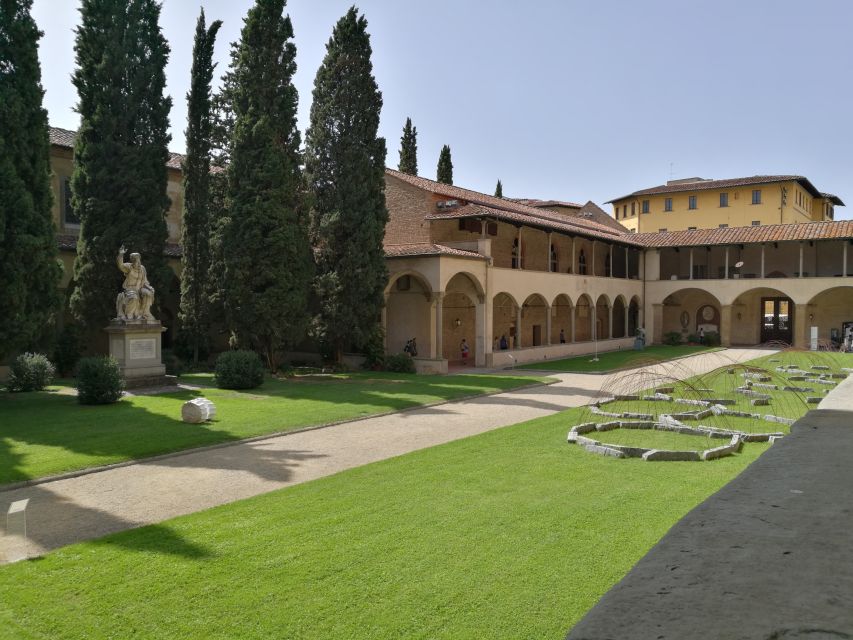
The visit also points out works by Donatello, Brunelleschi, and other important artists. The appeal is not simply counting famous names. Santa Croce lets you see how different artistic skills operate in one setting: fresco painting, sculpture, architecture, and monumental design.
Your guide will select the works that fit the 90-minute route. That means the experience has a practical limit. You should not expect an exhaustive catalog of every artist inside the basilica. Instead, expect a guided selection built around the church’s main artistic and historical themes.
I like this approach for a first visit. Florence can overwhelm you with masterpieces, and it is easy to spend too long trying to absorb everything. A focused tour gives you a working map. You leave knowing which chapels and works deserve a second look if you return independently.
The strongest guides also move beyond art labels. Several, including Annette, Steffi, Marta, and Ivan, have been praised for linking the church’s paintings and sculptures to political history and famous personalities. That broader view keeps the visit from feeling like a sequence of museum captions.
Michelangelo, Galileo, Machiavelli, and the Italian Hall of Fame
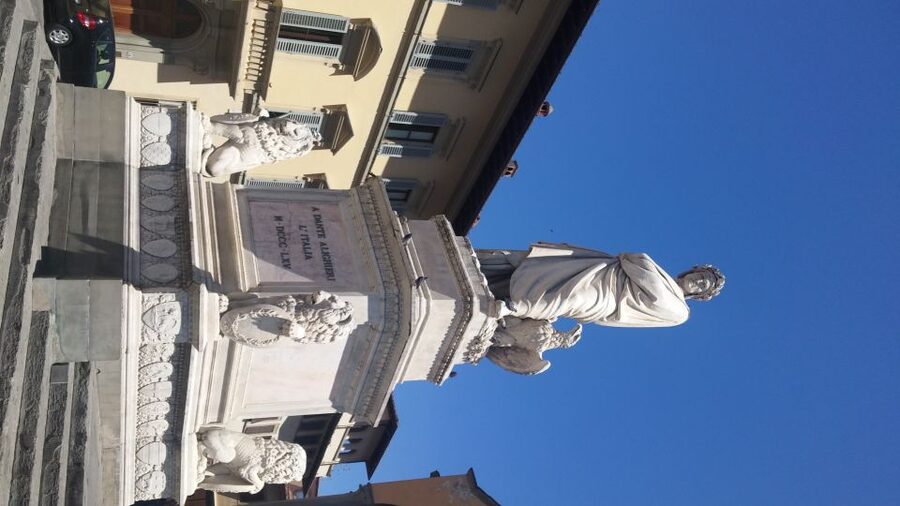
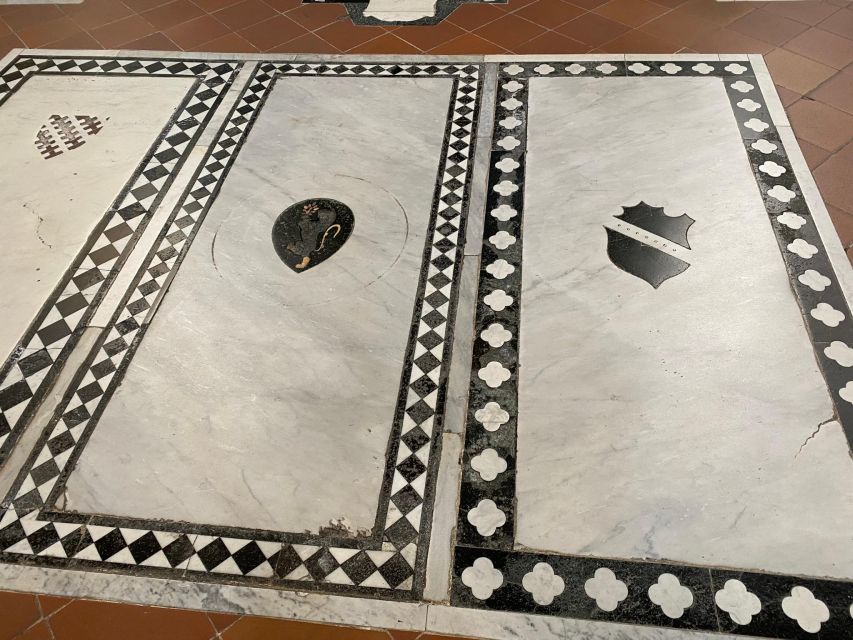
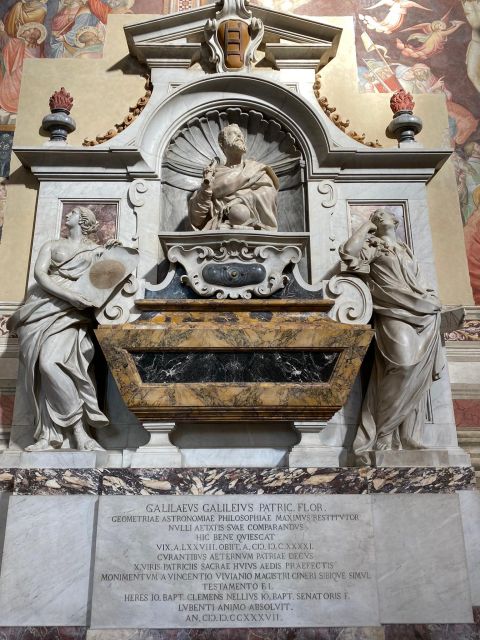
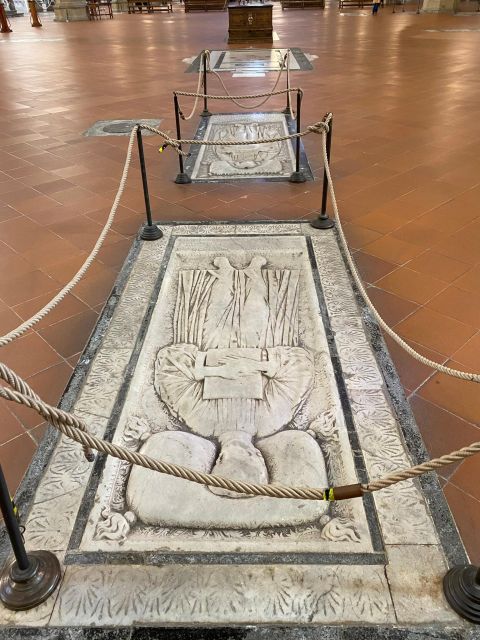
The tombs are the emotional center of the experience for many people. Michelangelo, Galileo Galilei, and Machiavelli are among the great Italian figures honored here. Their monuments are works of art in their own right, but they also show how Florence and later Italy shaped public memory.
Michelangelo’s tomb connects the church with one of the best-known artists of the Renaissance. Galileo’s monument brings science into a building visitors may first associate only with religion. Machiavelli adds political thought and the hard-edged world of statecraft. Together, the names make Santa Croce feel like a portrait of Italian culture rather than a single-period church.
The guide explains who these people were and why they are remembered here. That explanation matters because not every monument is a burial in the same sense, and a short visit benefits from clear distinctions. The tour may also point out other notable memorials, including the memorial to Florence Nightingale noted during one visit.
This is a good section for questions. Ask about the people whose names you recognize, and do not be shy about asking for a basic explanation if you do not know the story. The guides are used to different levels of interest. Some visitors want art, others want politics, and others simply want to understand why so many major Italians are gathered in one church.
What the small-group format adds
The experience is advertised as a small-group tour, with private groups available. The actual size can vary, and some departures may be especially intimate. A few visits have ended up with only one or two people, while others have included families and small clusters.
That flexibility affects the feel of the tour. With a tiny group, you can ask more questions and the guide can spend extra time on a subject that interests you. With more people, headphones help you follow the commentary, but you may have less room to steer the discussion.
The guides receive the most consistent praise for three things: clear explanations, personal warmth, and the ability to connect with different ages. Annette engaged a teenager in one family group. Another guide explained the church in a way grandchildren could follow. Ivan was praised for combining humor with detailed storytelling, while Marta and Francesca were singled out for passion and clarity.
Those details matter because a church tour can easily become dry. Here, the people leading the visits appear to be the main reason the experience works so well. Still, guide quality can vary from one departure to another, and no tour can guarantee a specific guide unless the booking details say so.
Price, timing, and practical comfort
At $42 per person, this is not the cheapest way to spend 90 minutes in Florence. The value depends on what you want. If you are happy to enter Santa Croce alone and read limited information at your own pace, you may prefer to save the fee.
I think the price is reasonable if you want the building to make sense. Fast-track entry, a certified guide, and the chance to ask questions add useful structure. The tour also helps you avoid spending your entire visit looking only at the most famous tombs while missing the frescoes and chapels that give the church its character.
The timing is a strong point. One and a half hours is enough to cover the main story without taking over your day. You can place it between other central Florence sights, but leave a little breathing room rather than booking another fixed-time activity immediately afterward.
Summer comfort deserves attention. One visit took place during tremendous heat inside Santa Croce, and the guide worked to keep the group comfortable. The church may feel cooler than the street, but you should not assume it will be air-conditioned. Wear sensible clothing and bring water for before or after the visit, since food and drinks are not included.
The basilica is wheelchair accessible. If mobility is a concern, private-group availability may also make it easier to shape the pace, though you should confirm any specific needs when booking. Hotel pickup and drop-off are not included, so plan to reach Santa Croce independently.
Who should book this Santa Croce tour?
I would choose this experience if you enjoy art but want the stories behind it. It also suits anyone interested in Florence’s religious institutions, Renaissance artists, Italian politics, science, or the way a country builds its list of heroes.
Families can benefit from the guide’s storytelling, especially if a child or teenager is likely to lose interest in a silent church visit. The 90-minute length is manageable, and the small-group format can make it easier to ask questions.
First-time visitors to Santa Croce will get the clearest value. If you have already visited several times, the experience can still work, especially with a guide like Glenda or Annette who may draw attention to details you missed. Just keep your expectations realistic: this is a guided overview, not a full academic study of every artwork.
Should you book it?
Book the Florence Santa Croce Guided Experience if you want a focused introduction to one of Florence’s most important churches, with the tombs, chapels, frescoes, and major artists tied into one story. The guides are the heart of the experience, and names such as Francesca, Marta, Annette, Ivan, and Steffi have repeatedly been praised for making the material lively and easy to follow.
Skip it if you strongly prefer exploring alone, need a long time with each artwork, or are trying to keep every museum visit as inexpensive as possible. For most people who want Santa Croce to feel like more than a beautiful building, $42 buys useful context, easier entry, and a well-sized introduction to Florence’s cultural memory.
FAQ
How long does the Santa Croce guided experience last?
The experience lasts 1.5 hours, or 90 minutes.
What language is the tour offered in?
The live guide is available in English, Spanish, or Italian.
Where do I meet the guide?
Meet at the statue of Dante Alighieri on the steps in front of the Basilica of Santa Croce. Look for a guide with a purple Hidden Experiences flag or sign.
Are tickets included?
Yes. Fast-track entry tickets are included, and the guide carries the tickets for the group.
Is the experience wheelchair accessible?
Yes, the activity is listed as wheelchair accessible.
Is there a dress requirement?
Sleeveless shirts are not allowed. Food and drinks, hotel pickup, and hotel drop-off are not included.
Recently reviewed around Florence
- Walking Food Tour of Florence with Tastings and Wine★ 5.0 · 518 reviews
- Florence Sunset Food Tour with Wine & Dine at a Tuscan farmhouse★ 5.0 · 194 reviews
- Wine Experience In Chianti Hills from Florence★ 4.5 · 195 reviews
- Uffizi Gallery Timed Entry Admission Tickets★ 4.0 · 392 reviews
- Val d’Orcia Brunello Wine Tour with Montalcino and Montepulciano★ 4.5 · 359 reviews
- Wine Tasting Experience in Ponte Vecchio: Best Tuscany selection!★ 5.0 · 197 reviews
- Uffizi Gallery Small Group Tour with Guide★ 4.5 · 879 reviews
- Early Access Guided Uffizi Gallery Tour Skip-the-Line Small Group★ 4.5 · 707 reviews
Florence Tours, compared.
Skip-The-Line Uffizi Gallery Timed Entry Ticket
Read our review →
Tuscany Day Trip from Florence: Siena, San Gimignano, Pisa and Lunch at a Winery
Read our review →
Michelangelo’s David Skip-the-Line Entry Ticket
Read our review →
The Best tour in Florence: Renaissance & Medici Tales – guided by a STORYTELLER
Read our review →
The Best Tour in Florence: Renaissance and Medici Tales
Read our review →