Review · FLORENCE TOURS
Florence: Guided Tour of Medici Family Secrets and Chapels
The most powerful moment comes inside the Medici Chapels, where Michelangelo’s marble figures watch over the tombs of the Medici dukes. The Chapel of the Princes then changes the mood entirely: its walls glitter with colored marble and semi-precious stones, showing how the family used art to display wealth and authority.
I like the way this tour links the chapel to the streets outside, especially the Medici home and the political spaces around Palazzo Vecchio. I also like the strong storytelling. Guides including Vanessa, Chiara, Julia, and Michaela have been praised for clear explanations, family-tree context, and lively answers to questions. The main consideration is pace: two hours covers a lot, and the tour is not suitable for wheelchair users or people with mobility impairments.
In This Review
- Key points to know before booking
- Why the Medici story works best on foot
- Entering the Medici Chapels
- Michelangelo’s New Sacristy and the family tombs
- Michelangelo’s hiding place and the 2004 crypt
- San Lorenzo and the Medici family’s beginnings
- Palazzo Medici Riccardi from the courtyard
- Piazza del Duomo and the public face of Florence
- Piazza della Signoria and the Medici takeover
- Finishing near the Uffizi
- The guides are the tour’s biggest strength
- Is $93 a fair price?
- Who should book this experience?
- Should you book the Medici Secrets tour?
- FAQ
- How long does the tour last?
- What language is the tour conducted in?
- Where does the tour meet?
- How early should I arrive?
- Is entry to the Medici Chapels included?
- Can I enter Michelangelo’s Secret Room?
- Is the Basilica di San Lorenzo visited inside?
- Are Palazzo Medici Riccardi and Palazzo Vecchio visited inside?
- Can I bring a large backpack?
- Is the tour wheelchair accessible?
- Can I cancel the booking?
Key points to know before booking
- Michelangelo’s New Sacristy is the main event: See the Medici tombs and famous marble sculptures with timed entry.
- A street-level history lesson: Connect the family chapel, bank, palaces, churches, and government squares as you walk through central Florence.
- The Chapel of the Princes is lavish by design: Colored marble and sparkling stone make the Medici message of power impossible to miss.
- A few secrets come from the outside: You learn about Michelangelo’s hiding place and the buried crypt, but you do not enter the secret room.
- Guides make a big difference: Vanessa, Chiara, Julia, Valentina, and others have earned praise for storytelling, humor, and friendly answers.
- Good value for a short visit: At $93 per person, the price makes the most sense if you want reserved chapel admission and a well-organized introduction to Florence’s ruling family.
Why the Medici story works best on foot
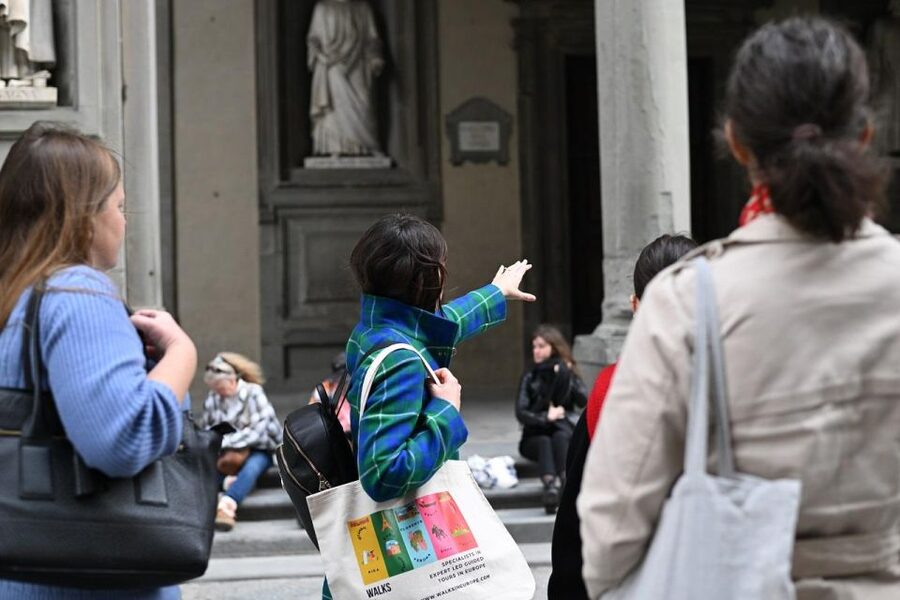
Florence can feel like an open-air museum, but its monuments make much more sense once you know who paid for them, who lived nearby, and who wanted control of the city. The Medici family story gives you that connecting thread.
This is not only a tour of statues and grand façades. You hear about Cosimo the Elder, Lorenzo the Magnificent, and Piero the Unfortunate, along with the family’s clashes with the Strozzis and Pazzis. You also learn how a successful European bank helped a merchant family become the force behind Florence’s politics and art.
I find that useful because the Medici can otherwise blur into a long list of names. The guide’s job is to show how banking, marriage, public buildings, religious foundations, and patronage worked together.
The route is compact but busy. It begins at Piazza di Madonna degli Aldobrandini, near the entrance to the Medici Chapels, then moves through San Lorenzo, Piazza del Duomo, Piazza della Signoria, and the Uffizi area. You are on your feet for most of the two hours, so comfortable shoes are sensible.
More Florence trips worth a second look
- The Best tour in Florence: Renaissance & Medici Tales – guided by a STORYTELLER
★ 5.0 · 12,316 reviews - Florence: Duomo Cathedral Guided Tour
★ 3.9 · 5,970 reviews - Uffizi Gallery Small Group Tour with Guide
★ 4.5 · 4,923 reviews
Entering the Medici Chapels
The tour begins with the visit that requires the most planning: the Medici Chapels. Your ticket is reserved in advance and timed, which means you skip the regular ticket line and enter with the group at the appointed time.
Arrive at least 15 minutes early. The ticket can expire within five to ten minutes, and late arrivals cannot join after the tour has started. This is one of those small details that matters far more in Florence than it sounds.
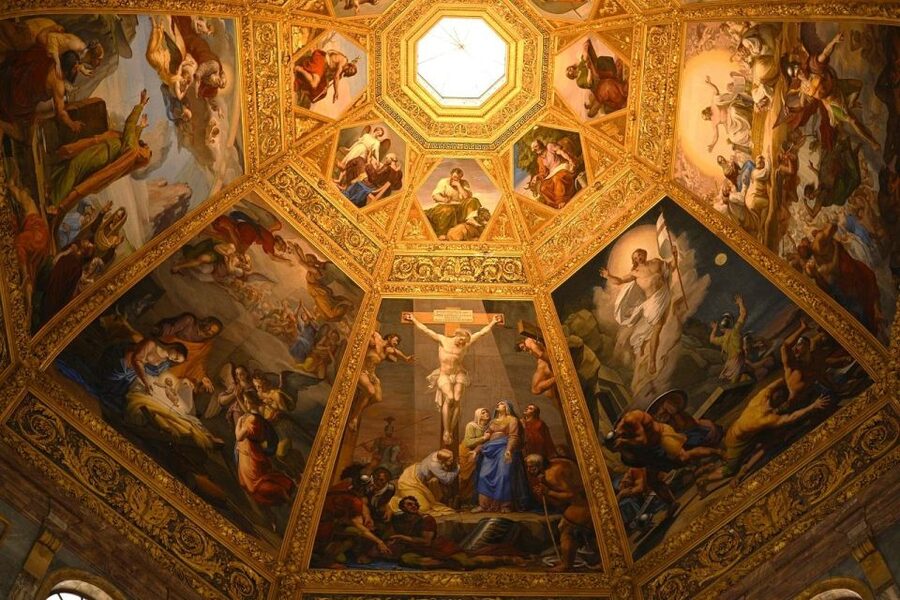
Inside, the octagonal Chapel of the Princes makes an immediate impression. It was designed as a grand burial place for the Medici rulers, and its decoration is deliberately excessive. Inlaid marble covers the walls, while semi-precious stones add flashes of color and shine.
Your guide helps you read the room as political theater. This was not modest religious decoration. It was a statement that the Medici had the money, reach, and authority to create something unlike the simpler churches around them.
The chapel is beautiful, but it can also feel visually crowded. If you prefer restrained Renaissance architecture, the display may seem too elaborate. That is exactly why the explanation helps: the excess is part of the message.
Michelangelo’s New Sacristy and the family tombs
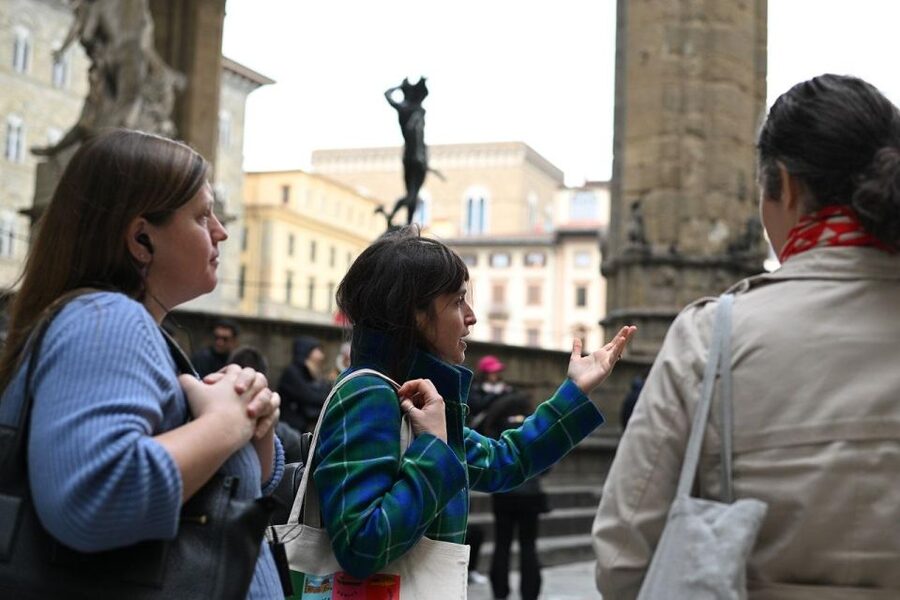
The New Sacristy is the artistic heart of the visit. Michelangelo designed the room and its tombs, creating a setting where architecture, sculpture, and light work together.
You see the Medici burials decorated with his famous figures, including the allegorical figures associated with time and the day. The guide explains how the sculptures relate to the people buried there and why Michelangelo’s treatment is so different from a simple portrait or memorial.
This is where a live guide earns the admission price. You can admire the marble on your own, but it is easy to miss the relationship between the seated figures, the tomb architecture, and the larger Medici story.
The New Sacristy is also a place for slowing down. The rest of the tour moves through city streets, but here you have time to look closely. Notice the contrast between the cool geometry of the room and the powerful movement of the sculptures.
You should also keep expectations in check. The tour includes the New Sacristy and the Medici Chapels, but not every Medici-related room in Florence. Michelangelo’s Secret Room is discussed from an external viewpoint only, and entry is not included.
Michelangelo’s hiding place and the 2004 crypt
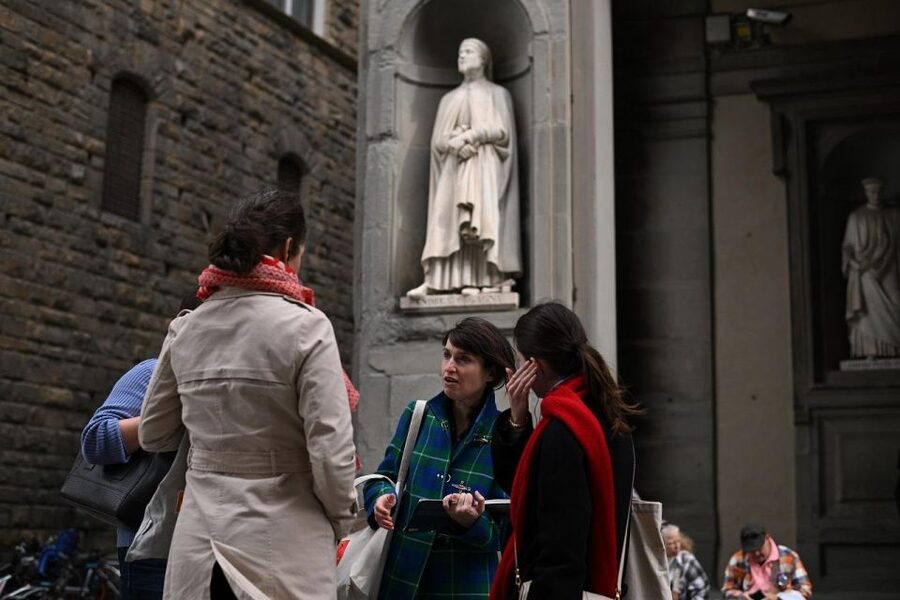
The tour adds a useful touch of mystery with the story of Michelangelo’s Secret Room. In 1530, the artist hid there for many weeks after political events made Florence dangerous for him.
You learn about the room from outside. That distinction matters, since the ticket does not include entry. Still, the story adds human drama to a family history that can otherwise feel dominated by rulers, bankers, and monuments.
The tour also points out the Medici family’s lesser-known crypt. Researchers found the vaulted chamber in 2004 after lifting a stone slab behind the chapels’ main altar.
Again, the value is in the explanation. You are not promised access to every secret space, but you do get the story of how the chamber was found and why it matters. It reminds you that Florence still has layers beneath its famous sights.
Large bags and backpacks are not allowed in the monument. Travel light for this visit, and do not arrive assuming you can carry your full day bag inside.
A different way to spend the day, same part of Italy:
- Florence: Skip-The-Line Uffizi Gallery Timed Entry Ticket
★ 4.5 · 27,832 reviews - Tuscany Day Trip from Florence: Siena, San Gimignano, Pisa and Lunch at a Winery
★ 5.0 · 21,634 reviews - Florence: Timed Entrance Ticket to Michelangelo’s David
★ 4.6 · 16,983 reviews - Florence: Michelangelo’s David Skip-the-Line Entry Ticket
★ 4.5 · 12,764 reviews
San Lorenzo and the Medici family’s beginnings
After the chapel, the route moves into the San Lorenzo neighborhood. The Basilica di San Lorenzo is seen from the exterior, particularly from the square, where its design gives you a sense of the family’s long connection with the church.
The basilica’s appearance is less glittering than the Chapel of the Princes, and that contrast is helpful. You see an earlier, more restrained face of Medici patronage before the family’s later display of dynastic wealth.
The guide also places the family’s founders in the neighborhood and explains the rapid growth of the Medici bank. This part gives the tour its economic backbone. The Medici did not begin as hereditary monarchs. Their power grew through finance, alliances, political skill, and carefully chosen artistic projects.
The Basilica di San Lorenzo is an exterior stop, not a full interior visit. If you want to explore the church itself, you will need separate time and admission. Even so, the square is a strong place to hear how religion and family identity overlapped in Florence.
Palazzo Medici Riccardi from the courtyard
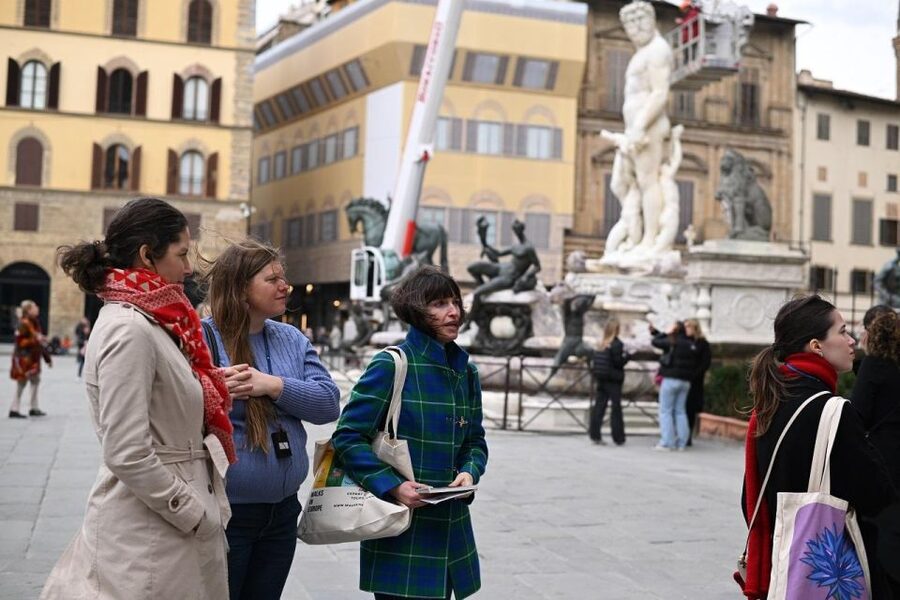
Next comes Palazzo Medici Riccardi, the family’s former home. You see the exterior and look into its courtyard, where the architecture offers a more private and residential side of Medici power.
This is a useful pause between the chapel and the political center. The palace was not merely a grand address. It showed how the Medici wanted to appear: wealthy, cultured, and important, but not so openly royal that Florence would reject them.
Your guide explains the link between art and power as you examine the decorations from outside. This is one of the tour’s better ideas, since it turns a quick pass-by into a lesson in image-making.
The limitation is simple: you do not receive a full interior tour of Palazzo Medici Riccardi as part of this experience. If you want its rooms and artworks, plan a separate visit.
Piazza del Duomo and the public face of Florence
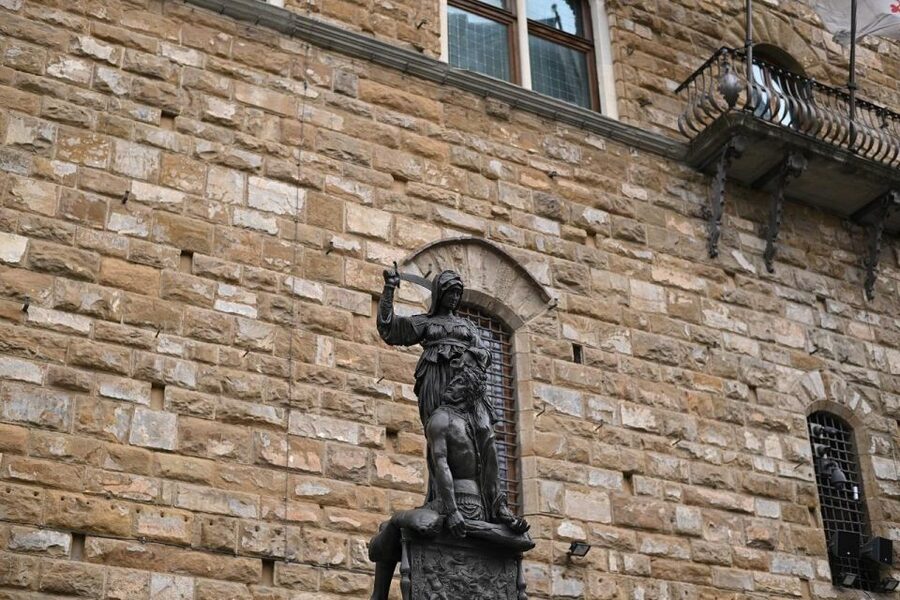
The walk continues to Piazza del Duomo, where the cathedral complex dominates the center of the city. The stop helps place Medici influence within Florence’s most famous public setting.
You hear about the cathedral, baptistery, and the family’s relationship with these major religious landmarks. One guide was especially praised for explaining the baptistery and cathedral in a way that helped connect the buildings to the Medici period.
This is a guided look at the square, not a dedicated cathedral admission. Expect to hear the historical connections and see the buildings from the outside rather than spend the bulk of the tour inside the cathedral.
The square can be crowded, and the tour group must keep moving through the pedestrian flow. That is normal for central Florence, but it is another reason to stay close to your guide and arrive on time.
Piazza della Signoria and the Medici takeover
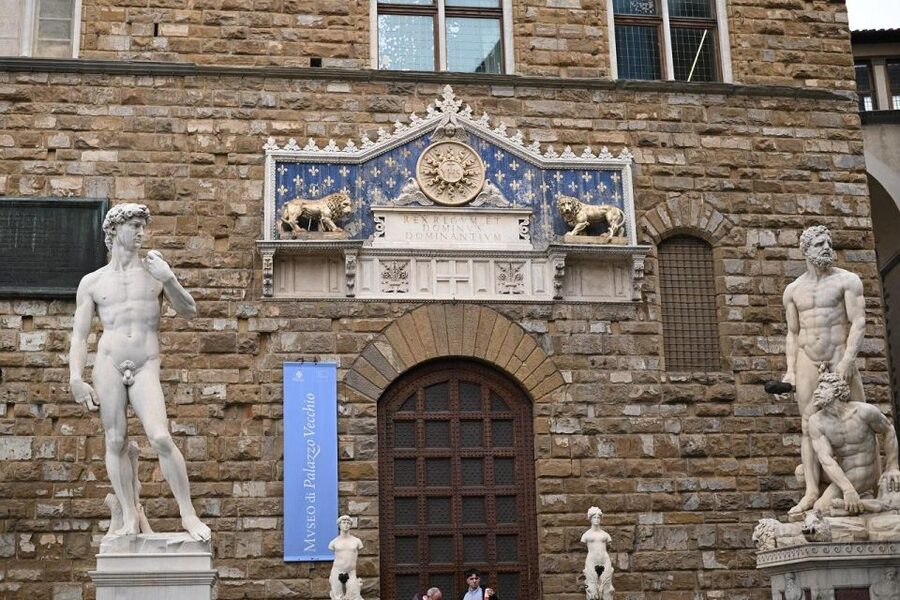
Piazza della Signoria brings the story from family influence to direct political control. Since the 14th century, this has been Florence’s political heart, centered on the medieval government building now known as Palazzo Vecchio.
The guide explains how Palazzo Vecchio became a Medici Palace in 1540. That change is one of the clearest markers in the tour: the family was no longer simply advising or financing the city. It was ruling.
You see Palazzo Vecchio from an unusual vantage point and learn how its medieval civic role changed under Medici control. The exterior is dramatic, with its tower and fortress-like form, but the political story gives it extra force.
This stop also helps explain the family rivalries. Florence was not a smooth march toward Medici dominance. The Strozzis, Pazzis, and other powerful families challenged them, and the guide uses the city’s squares and palaces to show where those tensions played out.
Finishing near the Uffizi
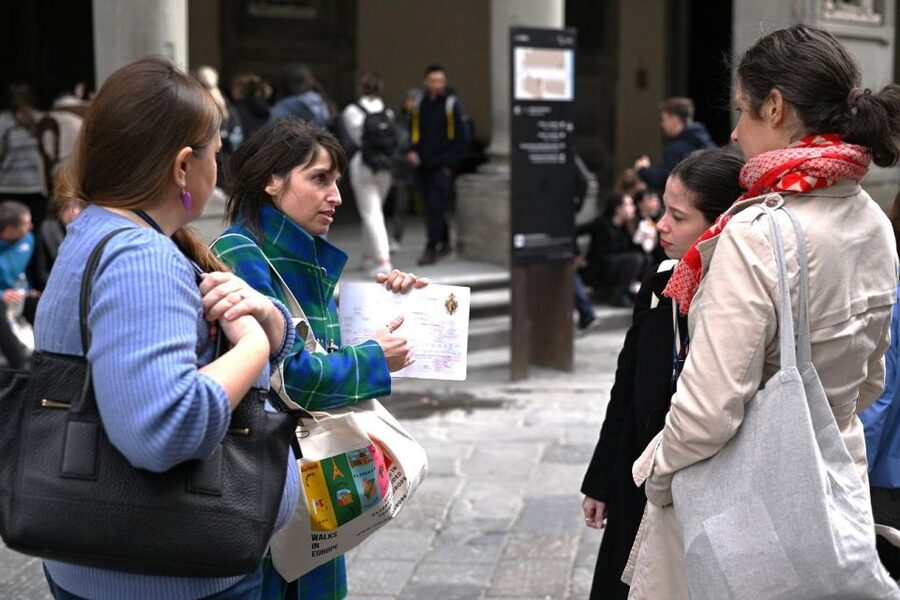
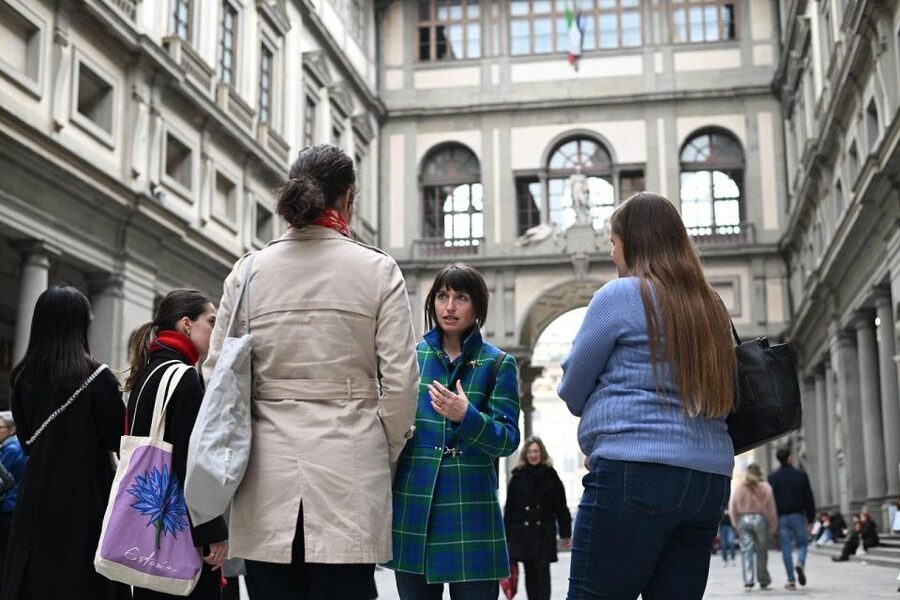
The route continues toward Piazzale degli Uffizi, where you reflect on the connection between art, money, and government. The Uffizi itself is one of the clearest reminders of the Medici legacy, even though this tour does not include museum admission.
The final discussion ties together the chapel, the Medici residence, San Lorenzo, the cathedral square, and Palazzo Vecchio. Instead of treating these as separate sights, you leave with a clearer sense of how one family shaped the city’s appearance and political life.
Your guide can also suggest ways to spend the rest of your time in Florence. Several guides, including Michaela and others, have been praised for offering useful food, coffee, and gelato suggestions along the route.
The supplied route information also indicates a return to Piazza di Madonna degli Aldobrandini, while the detailed walking description places the conclusion at Piazzale degli Uffizi. Confirm the exact end point when booking or meeting your guide, especially if you have a timed museum reservation afterward.
The guides are the tour’s biggest strength
The guide can make this experience either a lively history lesson or a hurried list of dates. The feedback from the past year points strongly toward the first outcome.
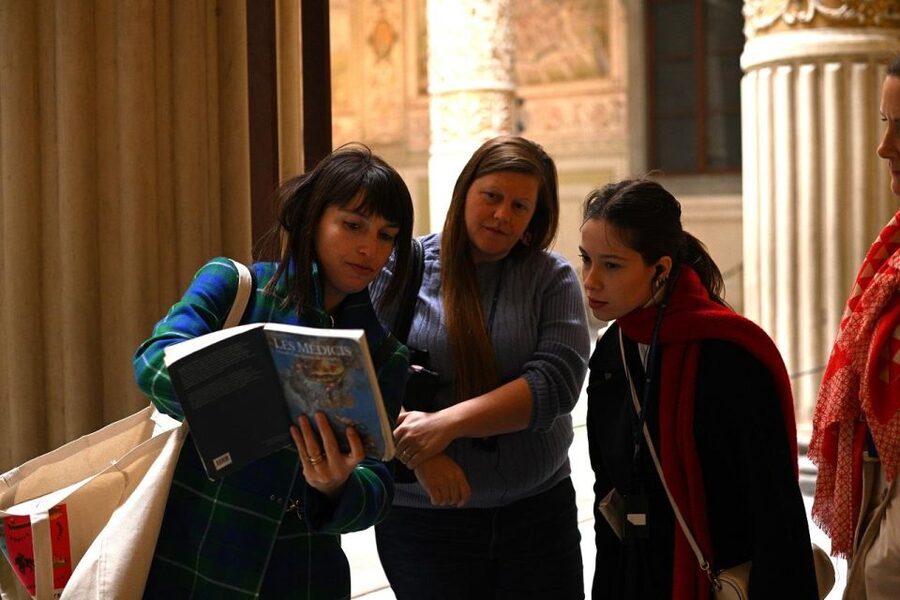
Vanessa is repeatedly praised for clear explanations, family-tree graphics, friendly answers, and good pacing. Chiara is noted for tailoring the discussion to a small group and encouraging questions. Julia, Valentina, Michaela, Nora, and Marco are also praised for warmth, humor, and storytelling.
That does not mean you can select a particular guide. Names depend on the departure and availability. It does tell you what to expect from the format: a live English-speaking guide who can respond to questions rather than an audio track that gives everyone the same script.
Small groups have been a recurring advantage. A group of three, or even a private-feeling departure, gives you more room to ask about the family tree, Michelangelo, or the rivalry between Florence’s leading families. Group size can vary, so do not assume every departure will be intimate.
The strongest praise centers on enthusiasm and the ability to bring the past into the present. One family even found the two-hour format engaging for children aged 11 and 14. I would still judge your children individually, since the tour contains a lot of history and walking, but the storytelling approach can work well for older children.
Is $93 a fair price?
At $93 per person, this is not a bargain walking tour. The value comes from combining reserved entry to the Medici Chapels with a focused guide-led route through several important parts of central Florence.
The chapel ticket is the key cost advantage. You avoid the regular ticket line and have a timed entry arranged for you. In a city where a missed time slot can ruin a carefully planned day, that convenience has real value.
You are also paying for interpretation. The guide explains why the buildings matter, who commissioned them, and how the Medici used architecture and sculpture to strengthen their position. If you already know Florence’s Medici story well and are comfortable arranging tickets yourself, the price may feel high.
For a first visit, I think the tour can be worthwhile. It gives you a framework for later visits to the Uffizi, Palazzo Vecchio, San Lorenzo, and other Medici sites. The two-hour length also fits neatly into a busy Florence day.
Food, drinks, and transportation to the meeting point are not included. You need to reach Piazza di Madonna degli Aldobrandini on your own and arrive early with only a small bag.
Who should book this experience?
I would choose this tour if you want Florence’s major sights explained through one family’s story. It suits first-time visitors, history fans, art lovers, and anyone who has watched a Medici drama and wants to separate historical fact from television atmosphere.
It is also a good choice if you have limited time. The route gives you a quick orientation to the San Lorenzo district, Duomo area, Piazza della Signoria, and Uffizi surroundings, while the chapel provides a substantial interior visit.
You should think twice if you need a wheelchair-accessible route or have difficulty walking and standing. The tour is not suitable for wheelchair users or people with mobility impairments, and the itinerary includes several outdoor stops and city streets.
Rain does not automatically ruin the experience. Guides have adjusted routes during bad weather, replacing an outdoor stop with more discussion of indoor sights when needed. Still, bring suitable clothing and expect the walking portion to continue.
Free cancellation up to 24 hours before the start and the reserve-now, pay-later option make the booking less rigid. The tour does not run on the first Sunday of the month.
Should you book the Medici Secrets tour?
Book it if you want the Medici Chapels and Michelangelo’s New Sacristy paired with a clear explanation of Florence’s streets, rivalries, and political rise. The strongest part is the combination of remarkable art and an energetic guide who can turn names and dates into a human story.
Skip it if you want long interior visits at Palazzo Vecchio, San Lorenzo, or the cathedral, since those places are mainly viewed from outside or discussed along the route. At $93, the tour works best for someone who values reserved admission and expert context more than independent sightseeing.
For a first day in Florence, I see this as a useful foundation. You leave knowing why the Medici Chapels matter, how the family moved from banking into power, and where to look next for the city’s Renaissance story.
FAQ
How long does the tour last?
The tour lasts two hours.
What language is the tour conducted in?
The live tour guide speaks English.
Where does the tour meet?
Meet in Piazza di Madonna degli Aldobrandini by the entrance to the Medici Chapels. The guide carries a sign reading Walks in Europe.
How early should I arrive?
Arrive 15 minutes before the scheduled starting time. The tickets are timed and may expire within five to ten minutes.
Is entry to the Medici Chapels included?
Yes. The tour includes pre-booked tickets to the Medici Chapels and Michelangelo’s New Sacristy.
Can I enter Michelangelo’s Secret Room?
No. The Secret Room is explained from an external viewpoint, and entry is not included.
Is the Basilica di San Lorenzo visited inside?
No. The experience includes an exterior visit of the Basilica di San Lorenzo.
Are Palazzo Medici Riccardi and Palazzo Vecchio visited inside?
The tour views Palazzo Medici Riccardi from the outside and its courtyard decorations from outside. Palazzo Vecchio is also passed by and viewed from an outside vantage point.
Can I bring a large backpack?
No. Large bags and backpacks are not allowed in the monument. Travel with a small bag.
Is the tour wheelchair accessible?
No. It is not suitable for wheelchair users or people with mobility impairments.
Can I cancel the booking?
You can cancel up to 24 hours in advance for a full refund. The reserve-now, pay-later option lets you hold a place without paying immediately.
Recently reviewed around Florence
- Walking Food Tour of Florence with Tastings and Wine★ 5.0 · 518 reviews
- Florence Sunset Food Tour with Wine & Dine at a Tuscan farmhouse★ 5.0 · 194 reviews
- Wine Experience In Chianti Hills from Florence★ 4.5 · 195 reviews
- Uffizi Gallery Timed Entry Admission Tickets★ 4.0 · 392 reviews
- Val d’Orcia Brunello Wine Tour with Montalcino and Montepulciano★ 4.5 · 359 reviews
- Wine Tasting Experience in Ponte Vecchio: Best Tuscany selection!★ 5.0 · 197 reviews
- Early Access Guided Uffizi Gallery Tour Skip-the-Line Small Group★ 4.5 · 707 reviews
- Uffizi Gallery Small Group Tour with Guide★ 4.5 · 879 reviews
Florence Tours, compared.
Skip-The-Line Uffizi Gallery Timed Entry Ticket
Read our review →
Tuscany Day Trip from Florence: Siena, San Gimignano, Pisa and Lunch at a Winery
Read our review →
Michelangelo’s David Skip-the-Line Entry Ticket
Read our review →
The Best tour in Florence: Renaissance & Medici Tales – guided by a STORYTELLER
Read our review →

The Best Tour in Florence: Renaissance and Medici Tales
Read our review →