
Review · CRUISES & BOAT TOURS
Genoa: Cetacean Watching Cruise with Marine Biologist Guide
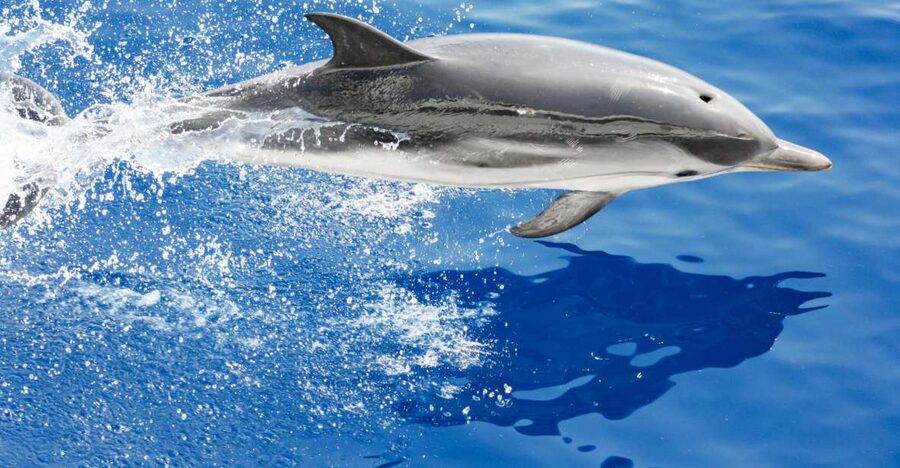
The big draw here is the chance to see wild whales and dolphins in the Pelagos Sanctuary, not animals performing in a tank. You may spot fin whales, sperm whales, Cuvier’s beaked whales, pilot whales, Risso’s dolphins, or large groups of common and bottlenose dolphins. Sightings are common, at about 95 percent, but no wild-animal encounter can be promised.
I like two things right away: the marine biologist guide, who gives the outing real meaning, and the free return option within one year if no cetaceans are seen. The main drawback is the length. Four and a half hours on open water can feel long, especially if the sea is rough or the animals stay out of sight.
In This Review
- Key points to know before you book
- Setting out from Genoa’s Aquarium Pier
- Why the Pelagos Sanctuary matters
- The search for a fin whale or sperm whale
- When dolphins become the main event
- What the marine biologist adds
- The practical side of a 4.5-hour boat ride
- Is $53 a fair price?
- Who will enjoy this most?
- How to make the most of the trip
- Should you book the Genoa cetacean cruise?
- FAQ
- Where does the cetacean-watching cruise leave from?
- How early should I arrive?
- How long does the cruise last?
- Which languages are available?
- Which animals might I see?
- Are cetacean sightings guaranteed?
- What happens if no cetaceans are spotted?
- Are food and drinks included?
- Is the boat wheelchair accessible?
- Can I cancel the booking?
Key points to know before you book
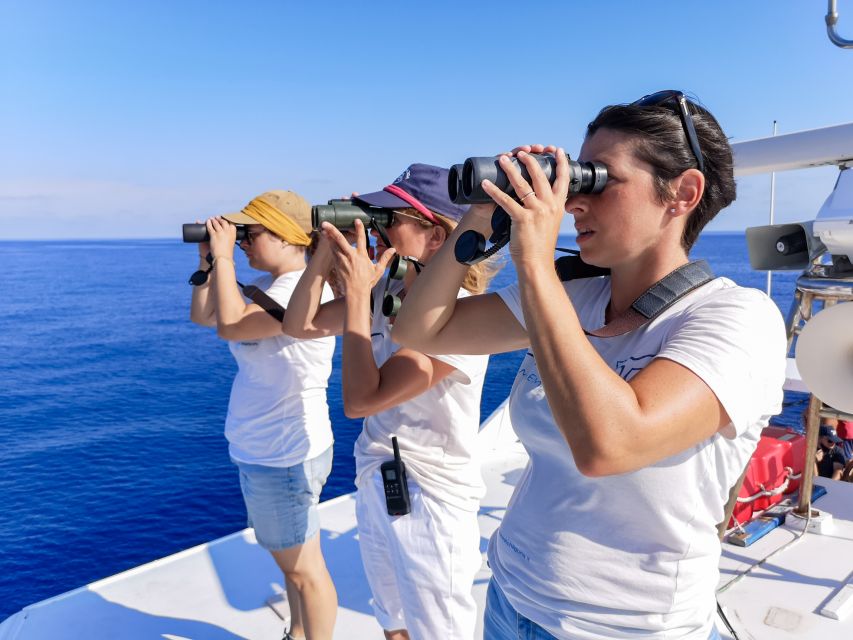
- The trip searches the Pelagos Sanctuary: This protected area is home to several whale and dolphin species in the Tyrrhenian Sea.
- Dolphin sightings can be spectacular: Large groups, sometimes numbering around 100 animals, may gather near the boat.
- Whales are possible but never certain: Fin whales, sperm whales, and Cuvier’s beaked whales are among the species you might see.
- A marine biologist explains the action: Expect information about diet, behavior, species identification, and conservation.
- No sighting does not mean no second chance: You can return free within one year, subject to a new reservation and presentation of the original ticket.
- Plan for a full half-day: The boat has indoor and outdoor seating, a toilet, and paid bar service, but snacks and drinks are not included.
Setting out from Genoa’s Aquarium Pier
Your starting point is the local partner’s ticket office at the beginning of the Aquarium Pier, at Ponte Spinola 2. Look on the left side as you reach the pier, and arrive at least 15 minutes before departure.
This is a handy meeting point if you are already visiting Genoa’s aquarium area. The boat returns to the same general location, so you do not need to arrange a separate transfer at the end. There are two listed departure and return options, but they refer to the same Consorzio Liguria Via Mare point at Ponte Spinola.
The tour lasts 4.5 hours. That time includes the trip out to suitable viewing areas, periods of quiet searching, animal watching, explanations from the guide, and the return to Genoa. You are not spending four and a half hours looking at whales every second. This is a search on a large body of water, and patience is part of the deal.
The boat has seating inside and outside, plus a toilet. A bar is available for drinks and snacks at an extra charge. Since food is not included, I would bring water and a small snack if you prefer not to buy refreshments onboard. Smoking and pets are not allowed.
More Boat Tours in Genoa
- La Spezia: Cinque Terre Tour by Boat
★ 4.4 · 2,611 reviews - From La Spezia: Round-Trip to Pisa Cruise Shore Excursion
★ 4.5 · 978 reviews - Cinque Terre Hybrid Boat Tour from Monterosso
★ 5.0 · 951 reviews
Why the Pelagos Sanctuary matters
The Pelagos Sanctuary is a large protected area in the Mediterranean created to support marine mammals and encourage cooperation on their protection. The opening briefing gives you a useful sense of place before the boat heads farther out.
The guide explains the sanctuary’s history, conservation work, and the species that live in its waters. That context matters. Without it, a quick glimpse of a dorsal fin can be exciting but hard to interpret. With a biologist pointing out behavior and body shape, you have a better chance of understanding what you are seeing.
The sanctuary can host fin whales, sperm whales, Cuvier’s beaked whales, long-finned pilot whales, Risso’s dolphins, striped dolphins, bottlenose dolphins, and short-beaked common dolphins. Each species has its own habits, feeding patterns, and ways of using the sea.
You may also hear about how the crew follows non-disturbance rules. The goal is not to chase animals or force a close encounter. The boat approaches responsibly, keeping the animals’ welfare ahead of a perfect photograph. That can mean a less dramatic picture, but it is the right approach to wildlife watching.
The search for a fin whale or sperm whale
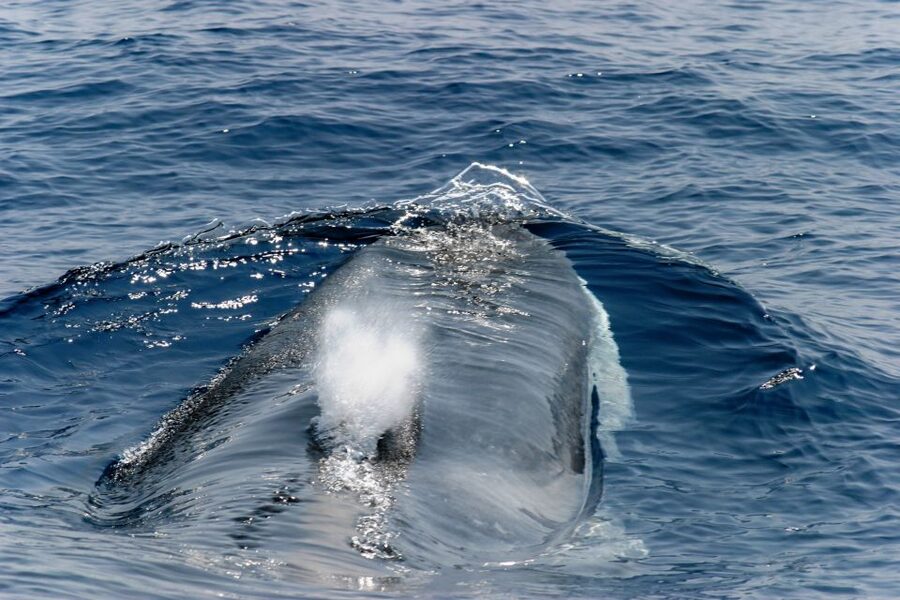
Once the boat reaches favorable viewing areas, the rhythm changes. You scan the sea, listen to the guide, and wait for a sign: a distant breach, a blow, a fin, or a sudden group of dolphins breaking the surface.
Fin whales are among the larger possibilities. A sighting may be brief, with only a back and blow visible before the animal slips away. Sperm whales can also appear, though one may be seen while it is already heading underwater. That is a reminder that even a confirmed whale sighting may last only moments.
Cuvier’s beaked whales and pilot whales are possible too, along with several dolphin species. The guide can help you tell one from another, explain feeding behavior, and answer questions while the boat moves between search areas.
Do not book this expecting a guaranteed whale show. The stated cetacean sighting rate is about 95 percent, but that figure includes dolphins and other marine mammals. You could see a large dolphin pod and no whale at all. For many people, that still makes a fine morning on the sea. If whales are your only goal, you need to accept more uncertainty.
When dolphins become the main event
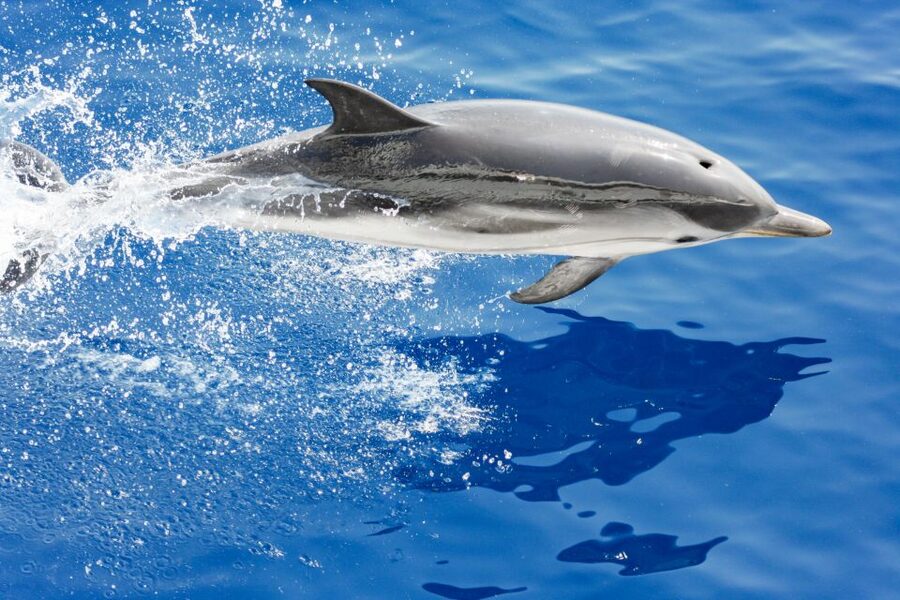
Dolphins may provide the most active part of the outing. They can travel in groups, play around the boat, and appear in repeated bursts as they surface. One reported outing included several larger groups totaling about 100 dolphins, along with more than one type of dolphin and a brief look at a sperm whale.
That is the kind of sighting that makes the four-and-a-half-hour schedule feel worthwhile. A dolphin pod gives you more movement to watch than a single whale surfacing once. You might see jumps, quick turns, or animals riding near the boat, though their behavior is never controlled for the camera.
The guide helps turn a fast encounter into something more useful. You can ask about diet, social behavior, identification, and the conservation pressures faced by marine mammals. The experience is best when you treat the camera as a bonus and keep your eyes on the water.
Photography is possible, but open-sea conditions make it tricky. Use a fast shutter speed if your camera allows it, keep it ready, and do not spend the entire outing staring at a screen. A distant blow or fin can vanish before you frame it.
More Genoa & Cinque Terre trips worth a second look
- Genoa: 2-Hour Guided Walking Tour of the Historical Center
★ 4.2 · 605 reviews - Guided Tour of Rolli Palaces UNESCO Site, Genoa
★ 4.4 · 539 reviews - Genoa: Historic Guided Tour of Christopher Columbus’ House
★ 4.4 · 186 reviews - Colosseum, Roman Forum & Palatine Guided Tour
★ 4.7 · 63,148 reviews
What the marine biologist adds
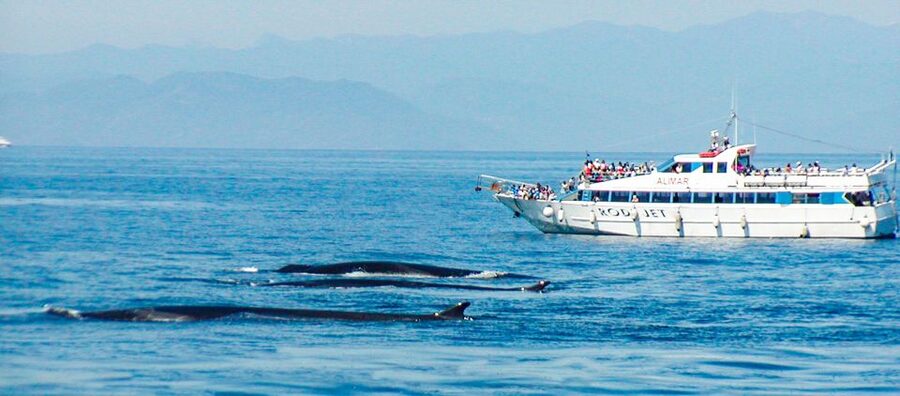
The guide is not simply there to announce an animal. The briefing and live commentary cover the sanctuary, species, feeding habits, mannerisms, and protection programs. You can ask direct questions instead of relying on a recorded narration.
The tour operates in Italian and English. The bilingual format is helpful if you speak either language, but it can also make announcements long. One criticism concerns loud speaker messages and English explanations that were sometimes hard to follow. If clear, detailed English commentary is especially important to you, keep that in mind.
Still, the presence of a specialist gives the boat trip a strong educational side. You learn why animals are found in particular areas, what they may be doing at the surface, and why a respectful distance matters. The science does not remove the excitement. It gives the excitement a frame.
No individual guide names are provided for this departure, so you should not book expecting a particular marine biologist. The advertised service is a live guide in Italian and English.
The practical side of a 4.5-hour boat ride
Four and a half hours is long enough to see several species, but it requires some preparation. Wear comfortable clothes and shoes, and bring weather-appropriate layers. Conditions can change once you are away from the harbor, even if Genoa feels warm when you leave.
The boat offers both indoor and outdoor seats. Outside is usually the better place for watching and taking pictures, while the interior gives you a break from wind or sun. The toilet is a useful feature on a half-day outing.
Paid bar service is available, but snacks and drinks are not included in the price. I would carry water, especially if you plan to sit outside for much of the trip. Comfortable clothing matters more than dressing up. You are there to watch the sea, not to make a formal entrance.
Sea conditions are important. The operator may cancel one day before departure if the weather or water conditions are unsuitable. That is frustrating when it affects your schedule, but it is also sensible. A wildlife trip is not worth running in unsafe or miserable conditions.
The experience is listed as wheelchair accessible. If you have specific mobility needs, confirm the practical boarding details before departure, since the supplied information does not explain the ramp, deck layout, or restroom access.
Is $53 a fair price?
At $53 per person, this is a reasonable half-day price for a specialist boat outing, particularly because a marine biologist is included rather than a general sightseeing narrator. You are paying for the boat time, crew, wildlife search, interpretation, and access to a protected marine area.
The value depends on what you want. If you simply want a quick harbor cruise, 4.5 hours is too much time and money. If you want to learn about Mediterranean cetaceans and are happy to spend hours searching for animals that may appear only briefly, the price is easier to justify.
The free return policy improves the value. If no cetaceans are spotted, you may return within one year from the original excursion date. You must make a new reservation through the company website and present the original ticket at boarding. It is not an instant refund, but it gives you a practical second chance.
The flexible booking terms also help: cancellation is free up to 24 hours before departure, and you can reserve now and pay later. Check the available departure time before booking, since the start time varies by date.
Who will enjoy this most?
I would recommend this outing to people who like wildlife, marine science, and open-water trips. Families with older children may enjoy the anticipation and the chance to ask questions, while photographers should appreciate the chance to capture animals in a natural setting.
It also suits anyone who wants more than a standard boat ride. The sanctuary briefing and species information give the outing a clear purpose. You are not simply looking back at Genoa from the water.
You should think twice if you dislike long periods of waiting, get seasick easily, or need guaranteed whale sightings. The boat can offer a successful dolphin encounter and still fail to find a whale. That is normal wildlife watching, not a fault in the animals.
The bilingual announcements may also test your patience if you prefer a quiet boat or short commentary. The information is useful, but it can take time in both Italian and English.
How to make the most of the trip
Arrive early enough to find the ticket office at the left side of the Aquarium Pier. Keep your ticket available and wear layers that work in changing weather.
Bring water, a snack if needed, sun protection, and a camera that you can operate quickly. Do not wait for the guide to announce every animal. Scan the water yourself, especially around the edges of the group and near the boat.
Listen for instructions about non-disturbance rules. A responsible approach may keep the animals farther away than you hoped, but it protects the very wildlife you came to see.
Most of all, set the right expectation. A successful outing might mean a spectacular dolphin group, one brief sperm whale sighting, several distant blows, or no cetaceans and a return trip later in the year. The sea decides the schedule.
Should you book the Genoa cetacean cruise?
Book it if you want a serious wildlife outing, not a guaranteed spectacle. The combination of a marine biologist, the Pelagos Sanctuary, a high stated chance of seeing cetaceans, and a free return after a no-sighting trip makes this a solid choice for curious visitors.
I would be especially comfortable booking at $53 if you have half a day to spare and are pleased with dolphins as well as whales. I would skip it if your schedule is tight, rough water would ruin your day, or a whale is the only acceptable result.
The best reason to go is not a promise of a perfect photograph. It is the chance to watch Mediterranean marine mammals where they actually live, while learning how the sanctuary tries to protect them.
FAQ
Where does the cetacean-watching cruise leave from?
Meet at the local partner’s ticket office at the beginning of the Aquarium Pier, Ponte Spinola 2, on the left side.
How early should I arrive?
Arrive at least 15 minutes before departure.
How long does the cruise last?
The experience lasts 4.5 hours.
Which languages are available?
The live guide service is available in Italian and English.
Which animals might I see?
Possible species include fin whales, sperm whales, Cuvier’s beaked whales, Risso’s dolphins, long-finned pilot whales, striped dolphins, bottlenose dolphins, and short-beaked common dolphins.
Are cetacean sightings guaranteed?
No. Sightings are common, listed at about 95 percent, but they cannot be guaranteed.
What happens if no cetaceans are spotted?
You may return free within one year of the original excursion date. You must make a new reservation on the company website and show the original ticket at the boarding gate.
Are food and drinks included?
No. Snacks and drinks are not included, but paid bar service is available onboard.
Is the boat wheelchair accessible?
The activity is listed as wheelchair accessible.
Can I cancel the booking?
You can cancel up to 24 hours before departure for a full refund. You can also reserve now and pay later.
Recently reviewed around Genoa & Cinque Terre
- Rafting Sesia★ 5.0 · 304 reviews
- Cinque Terre Sunset Boat Tour Experience★ 5.0 · 402 reviews
- Kayak experience with Carnassa Tour in Cinque Terre + Snorkeling★ 5.0 · 359 reviews
- Cinque Terre Sunset Cruise with Aperitif from Monterosso★ 5.0 · 258 reviews
- Cinque Terre Private Boat Tour★ 5.0 · 202 reviews
- Cinque Terre Small Group or Private Day Tour from Florence★ 4.5 · 1,248 reviews
- Private Tour to Cinque Terre from Florence★ 5.0 · 343 reviews
- Cinque Terre Sunset Tour by Boat★ 5.0 · 274 reviews
Cruises & Boat Tours, compared.
Boat Trip: Glimpse of Murano, Torcello & Burano Islands
Read our review →
Burano, Torcello & Murano Boat Tour w/Glassblowing
Read our review →
Como & Bellagio with Private Lake Como Cruise
Read our review →
Murano & Burano Islands Guided Small-Group Tour by Private Boat
Read our review →
Murano & Burano Panoramic Boat Tour w/ Glassblowing
Read our review →

Browse the lists this tour appears in