
Review · HISTORICAL TOURS
Genoa: Historic Guided Tour of Christopher Columbus’ House
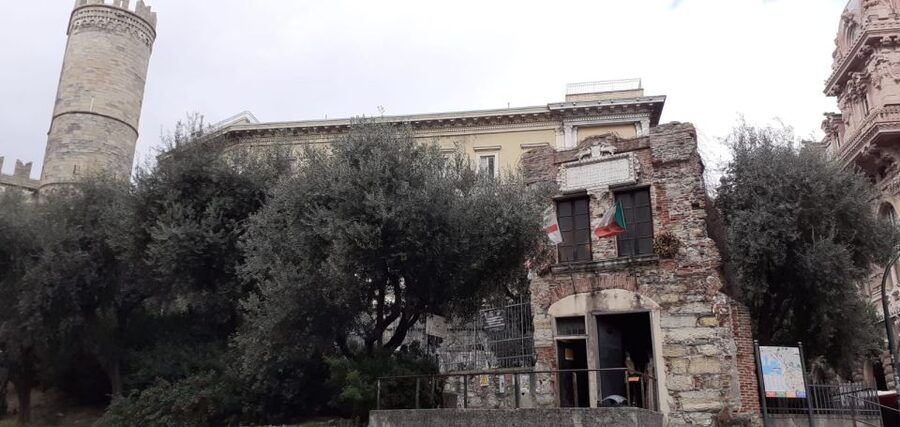
Genoa’s Casa di Colombo is a small, plain building with a surprisingly large story. According to archival records, Christopher Columbus’ father moved here in 1455, when Christopher was four. The house gives you a glimpse of family life, work, and medieval Genoa before you step outside toward Porta Soprana and the Sant’Andrea Cloister.
I like two things in particular: the tiny group size, limited to six people, and the guide’s focus on the building itself rather than only on Columbus. Guides such as Luisa and Georgia have been praised for explaining the house’s rebuilding, its archaeology, and the surrounding city. The main drawback is the short and somewhat variable length. It is sold as a 20-minute visit, but some tours last 30 minutes or close to an hour.
In This Review
- Key points at a glance
- Why this little house matters in Genoa
- What happens inside Casa di Colombo
- From the house to Sant’Andrea Cloister
- Porta Soprana gives the visit its setting
- The guides make the difference
- Is $12 a fair price?
- Timing, meeting point, and practical limits
- Who will enjoy this short Genoa tour?
- How to fit it into a day in Genoa
- Should you book Casa Colombo?
- FAQ
- How long does the Casa Colombo tour last?
- What sites are included?
- What languages are available?
- How many people can join the group?
- Where do I meet the guide?
- Is the tour suitable for wheelchair users?
- Can I cancel the booking?
Key points at a glance
- Columbus’ family home: See the building linked to Christopher Columbus’ childhood years in Genoa.
- A workshop below: The ground floor was used for work, while private rooms occupied the upper floor.
- Three medieval sights together: The visit includes Casa Colombo, the Cloister of Sant’Andrea, and Porta Soprana.
- Small groups: A maximum of six people makes it easier to hear the guide and ask questions.
- Italian or English: The guided visit is available in both languages.
- Good value at $12: The price is modest, especially when the nearby cloister and medieval setting are included.
Why this little house matters in Genoa
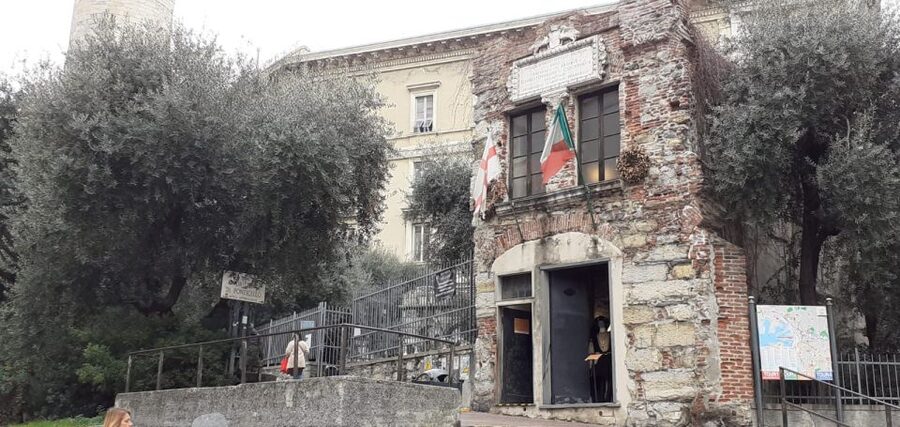
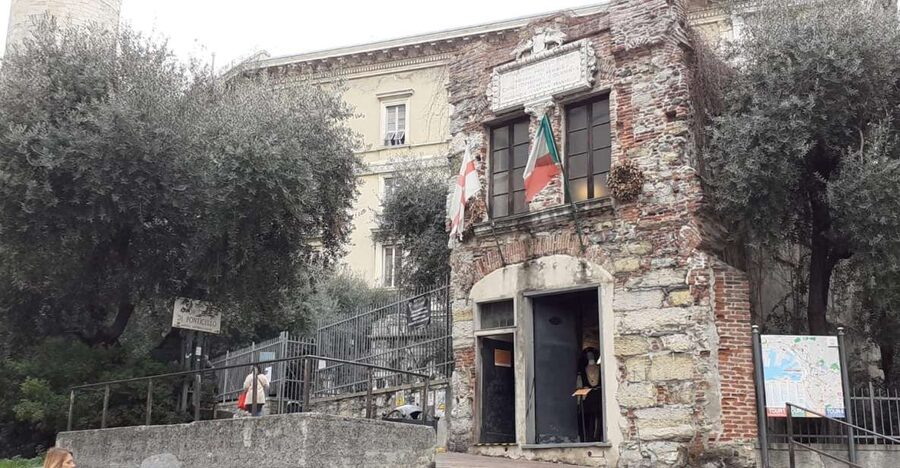
You do not come here for grand rooms or a large museum collection. Casa di Colombo is valuable because it is modest. The building helps you picture the working family behind one of the most famous names in European exploration.
Domenico Colombo, Christopher’s father, moved into the house in 1455. Christopher was four years old at the time. That detail gives the visit a useful frame: you are looking at a place connected with his early life, not a grand residence built after his voyages.
The house also reflects how people lived and worked in medieval Genoa. The ground floor functioned as a workshop. An attic with wooden beams separated that working space from the upper floor, where the family’s private rooms were located.
That division is one of the most interesting details of the visit. It turns the building from a famous-person attraction into a piece of urban history. You can think about the noise and labor of the workshop below, then the more private family life above.
The house is just outside Genoa’s ancient medieval walls and close to Porta Soprana. That location matters. After the guided portion, you are already in one of the city’s oldest areas, with several layers of Genoese history within a very short walk.
More history-led days around Genoa & Cinque Terre:
- Genoa: 2-Hour Guided Walking Tour of the Historical Center
★ 4.2 · 605 reviews - 2 Hours Private Historical Tour in Genoa
★ 5.0 · 248 reviews - Genoa Food, Wine Tasting & History Walking Tour
★ 5.0 · 212 reviews
What happens inside Casa di Colombo
The advertised visit inside the house lasts about 15 to 20 minutes. The overall activity is listed as 20 minutes, while the itinerary gives the house visit as 30 minutes. In practice, you should allow some flexibility. A focused visit may be brief, while a guide who explains the building and nearby remains in detail may continue much longer.
Your guide meets you inside the venue, not outside. This point deserves attention because it has caused confusion for some people. Do not wait on the street or in a nearby area. Go into the venue and look for the guide there.
The tour begins with the structure. You will hear how the house was arranged, how the workshop and living areas were divided, and what is known about its connection to the Columbus family. The guide also discusses the rebuilding of the house, which is important because this is not a perfectly preserved time capsule.
That honesty improves the visit. You are not being asked to accept every stone as untouched from Columbus’ childhood. Instead, you get a short lesson in how historians and archaeologists interpret an old building, what archival records tell us, and how later rebuilding affects what you see today.
Several guides have made this aspect especially strong. Luisa has been praised for a careful and thorough explanation. One guide, described as an archaeologist, focused on evidence and avoided forcing conclusions where the facts were uncertain. That approach suits Genoa, a city where old walls, rebuilt structures, and later additions often sit together.
The small group limit of six is a real advantage here. In a cramped historic building, a large crowd would make it harder to hear and easier to miss small details. With only a few people, you can follow the explanation and ask a quick question without holding up a long line.
From the house to Sant’Andrea Cloister
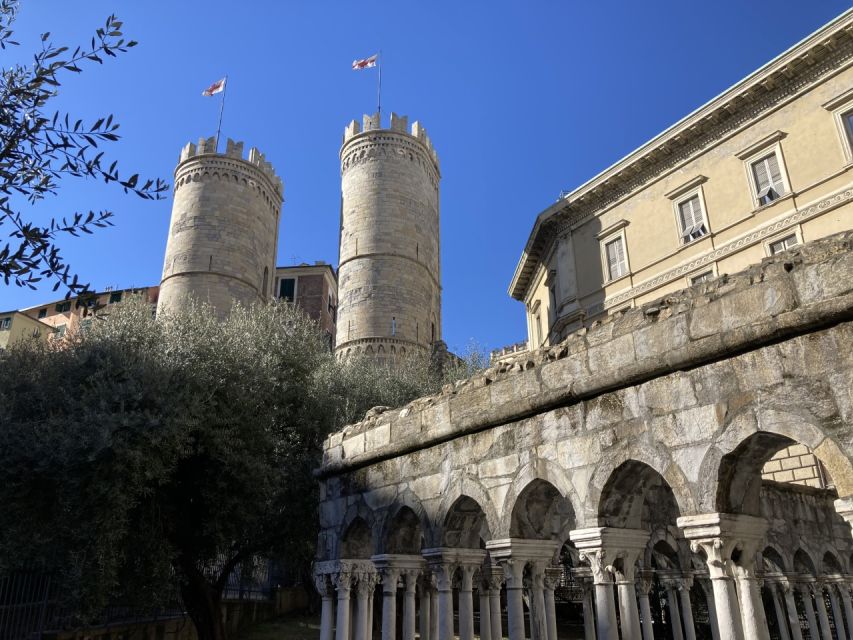
The tour does not end when you leave Casa Colombo. Your guide also takes you to the Cloister of Sant’Andrea, rebuilt in the area behind the house and Porta Soprana.
This part adds much more value than the house alone. Casa Colombo is compact, so the cloister gives you room to understand the setting around it. The guide can point out features you might otherwise pass without noticing, including the way the surviving and rebuilt medieval elements fit together.
The cloister is also a good place to connect the family house with Genoa’s wider past. You are no longer looking only at the early life of one famous sailor. You are seeing a small section of the city that still presents itself as the medieval heart of Genoa.
The visit may also include the area around Porta Soprana and the Barbarossa Wall. The exact time spent at each point can vary, but the guide’s explanation of the surrounding structures is one reason some tours run well beyond the listed 20 minutes.
Georgia, one of the guides named in visitor feedback, was praised for covering the Columbus House, the Barbarossa Wall, and the cloister in a visit that lasted nearly an hour. That longer format will appeal to anyone who enjoys city archaeology. If you have a tight schedule, though, you should not assume every tour will follow that pace or that the full hour is guaranteed.
Porta Soprana gives the visit its setting
Porta Soprana helps you understand why this location was chosen for the tour. The gate sits beside the old medieval walls, and the house is just outside them. You get a physical sense of the boundary between the city and its defenses.
That setting makes this more than a single-building stop. You can see how the house, the gate, the wall, and the cloister form a compact historical area. A guide can explain connections that are easy to miss when you explore alone.
I especially like this kind of short city tour when the guide uses the surroundings as part of the lesson. You are not simply shown an address linked with Columbus and then sent away. The focus expands to include Genoa’s buildings, urban growth, and the way the city preserves and reconstructs old sites.
Still, keep your expectations measured. This is not a large museum with extensive displays. The attraction is the location, the building’s domestic scale, and the explanation provided by the guide. If you want paintings, original objects, or a long chronological account of Columbus’ voyages, this is not the right stop.
More Genoa & Cinque Terre trips worth a second look
- Genoa: Cetacean Watching Cruise with Marine Biologist Guide
★ 4.3 · 745 reviews - Guided Tour of Rolli Palaces UNESCO Site, Genoa
★ 4.4 · 539 reviews - Colosseum, Roman Forum & Palatine Guided Tour
★ 4.7 · 63,148 reviews - Vatican Museums, Sistine Chapel & St Peter’s Basilica Guided Tour
★ 4.5 · 39,149 reviews
The guides make the difference
Because the tour is so short, the guide has a large role in determining its quality. A rushed explanation could leave you with little more than a name and an old house. A strong guide turns the same 20 minutes into a useful introduction to Genoa.
The most praised guides have combined local history with archaeology and building history. Luisa was described as thorough and well prepared. Georgia spent extra time with the group and connected the house to the nearby wall and cloister. Other guides have been noted for explaining the structure and the history of its occupants in clear terms.
You may also find that the guide adjusts the emphasis to the group. One small family group received a personalized visit, with extra attention to the parts of the area that interested them most. That kind of flexibility is easier with six people than with a busload.
The language choice is Italian or English. If you book in English, confirm that you have selected the appropriate option when checking availability. The small-group format should help you hear clearly, which is useful inside an old building with hard surfaces and limited space.
Is $12 a fair price?
At $12 per person, this is an inexpensive guided stop in central Genoa. The value depends on how you use it.
For the house alone, the price is reasonable but not exceptional. Casa Colombo is small, and the interior visit may last only 15 to 20 minutes. If you arrive expecting a full museum experience, you could feel that the visit is over quickly.
The price looks better when you count the wider area tour. You are not paying only for entry to a building. You also receive an escorted explanation of the Sant’Andrea Cloister and the area near Porta Soprana, with a guide who can point out details that are easy to miss.
The small group also matters. A private guide would cost far more, while a larger public tour might be less personal. A maximum of six people offers a useful middle ground. You get live explanation and the chance to ask questions without paying private-tour prices.
I would book it as a short add-on to a day in Genoa, not as the main event. Pair it with time in the surrounding medieval streets, and the $12 begins to feel like a good investment in context.
Timing, meeting point, and practical limits
The listed duration is 20 minutes, but the house portion is also described as lasting 30 minutes, and some guided visits have continued for much longer. Treat the published time as a minimum planning figure rather than a promise of a fixed finish.
The meeting instruction is simple but important: meet the guide inside the venue. Do not wait outside. If you are arriving by train or working around a cruise schedule, leave a little room for finding the entrance and getting into position.
The ticket is valid only on the date booked. Cancellation is allowed up to 24 hours before the activity for a full refund, and you can reserve now and pay later. Those terms are useful if your Genoa plans are still shifting, but they do not change the need to arrive for the booked date and time.
This visit is not suitable for wheelchair users or people with mobility impairments. The historic house and medieval site do not provide an accessible format according to the activity information.
Who will enjoy this short Genoa tour?
I would recommend Casa Colombo to you if you like small historic sites, local guides, and buildings that tell a story through their layout. It is particularly useful if you are already visiting Porta Soprana and want more than a quick photograph.
Families can benefit from the short format. Twenty minutes is long enough to introduce Columbus and the house without demanding a full afternoon of attention. A small group also allows children to ask questions more easily.
It suits history fans who enjoy uncertainty and evidence. The strongest explanations appear to focus on what the records and building can support, rather than presenting every claim as certain. That makes the stop more thoughtful than a simple celebrity biography.
It may not suit you if you need step-free access, want a large collection of objects, or have no interest in Columbus. The house is also too brief to justify crossing Genoa only for this one attraction. It works best when folded into a walk around the medieval center.
How to fit it into a day in Genoa
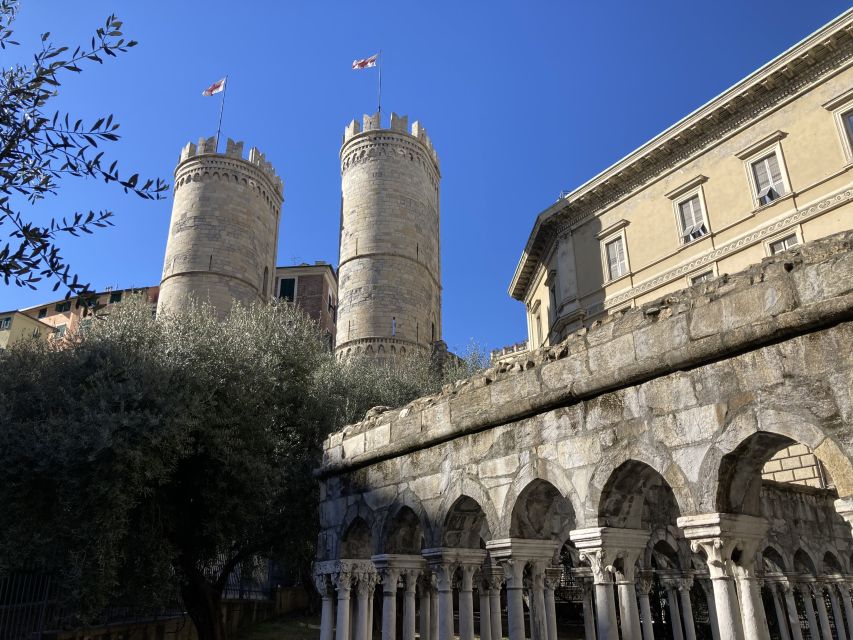
Plan the visit alongside Porta Soprana and the nearby medieval streets. Since the tour itself is short, you can use it as an anchor point for exploring the area before or after the guide’s explanation.
Arrive ready to look at the building, not just listen for famous names. Notice the difference between the former workshop on the ground floor and the private rooms above. Then pay attention to how the cloister and old defensive structures change your understanding of the house.
If your guide offers extra explanation, take advantage of it. The best part of this activity may be the local context: the rebuilding of the house, the wall remains, and the way several centuries meet in one compact section of Genoa.
Because the duration can vary, avoid scheduling a train or another timed activity immediately afterward. You may be finished in 20 minutes, but a detailed guide could keep you in the area for 30 minutes or longer.
Should you book Casa Colombo?
Book this tour if you want a low-cost, short introduction to Columbus’ early life and Genoa’s medieval center. The combination of Casa Colombo, Sant’Andrea Cloister, and Porta Soprana gives you more than the price suggests, especially with a good English-speaking guide and only a few people in the group.
Skip it if accessibility is essential, if you want a large museum, or if your schedule allows no flexibility beyond a strict 20-minute window. For most visitors already exploring central Genoa, though, $12 is a sensible way to add structure and useful local detail to a walk.
FAQ
How long does the Casa Colombo tour last?
The activity is advertised as 20 minutes. The house visit is also described as lasting 15 to 20 or 30 minutes, and some guided visits have continued for nearly an hour when the surrounding sites receive more attention.
What sites are included?
The visit includes Casa di Colombo, the Cloister of Sant’Andrea, and the area around Porta Soprana. The surrounding explanation may also include the Barbarossa Wall.
What languages are available?
The guided visit is available in Italian and English.
How many people can join the group?
The group is limited to six participants.
Where do I meet the guide?
You should meet the guide inside the venue. Do not wait outside or in a nearby area.
Is the tour suitable for wheelchair users?
No. The activity is not suitable for wheelchair users or people with mobility impairments.
Can I cancel the booking?
You can cancel up to 24 hours in advance for a full refund. The ticket is valid only on the date booked, and a reserve-now, pay-later option is available.
Recently reviewed around Genoa & Cinque Terre
- Rafting Sesia★ 5.0 · 304 reviews
- Cinque Terre Sunset Boat Tour Experience★ 5.0 · 402 reviews
- Kayak experience with Carnassa Tour in Cinque Terre + Snorkeling★ 5.0 · 359 reviews
- Cinque Terre Sunset Cruise with Aperitif from Monterosso★ 5.0 · 258 reviews
- Cinque Terre Small Group or Private Day Tour from Florence★ 4.5 · 1,248 reviews
- Cinque Terre Private Boat Tour★ 5.0 · 202 reviews
- Private Tour to Cinque Terre from Florence★ 5.0 · 343 reviews
- Cinque Terre Sunset Tour by Boat★ 5.0 · 274 reviews
Historical Tours, compared.
St. Mark Basilica Ticket, Audioguide+History Gallery
Read our review →
Venice’s Best: Basilica, Doge’s Palace, Gondola & History Gallery
Read our review →
Historic Milan Tour with Skip-the-Line Last Supper Ticket
Read our review →
Rome in a Day Tour with Vatican, Colosseum and Historic Center
Read our review →
Rome Food Tour in the Historic Centre with 8+ Food Tastings
Read our review →Browse the lists this tour appears in