
Review · MUSEUMS
La Scala Theatre and Museum guided experience
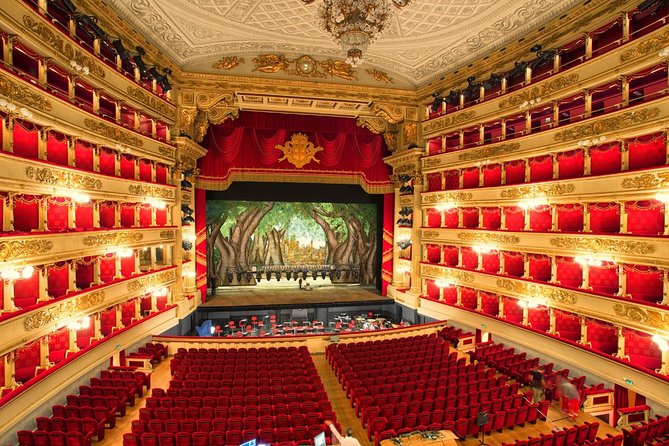
La Scala is more than a pretty opera house. It is a working stage, and that matters. On a lucky visit, you may look into the auditorium, step into a box, or watch technicians prepare for an opera. At other times, the museum is your main stop, with the guide explaining the people, performances, and machinery that made this Milan landmark famous.
I like the small group limit of 15, since it gives you room to ask questions. I also like the central meeting point and the chance to hear a guide such as Giorgio, Simone, Maria, or Lorella connect La Scala with Milan’s music and civic life. The main caution is simple: access to the theatre itself is not guaranteed, and one tour may finish in about 70 minutes rather than the advertised 90.
In This Review
- Key points before you book
- Why La Scala matters in Milan
- Meeting at the Museo Teatrale alla Scala
- Inside the Teatro alla Scala Museum
- Seeing the auditorium and stage
- The guide makes or breaks the visit
- How much time should you allow?
- Is $56.84 a fair price?
- Who will enjoy this La Scala experience?
- Practical tips for getting the most from it
- Should you book the La Scala Theatre and Museum tour?
- FAQ
- Where does the La Scala Theatre and Museum tour start?
- Where does the experience end?
- How long does the tour last?
- Is the tour offered in English?
- What is included in the price?
- Is entry into the theatre guaranteed?
- How many people can join the group?
- Is hotel pickup included?
- Can I cancel for a full refund?
Key points before you book
- The theatre may be open to your group, or it may not: Rehearsals and private events can limit the visit to the museum.
- The guides are the heart of the experience: Simone, Giorgio, Maria, Lara, Lorella, and others have been praised for clear storytelling and strong opera knowledge.
- The museum adds substance: You see items connected with composers, singers, performances, and La Scala’s long working life.
- A group of up to 15 feels manageable: You can usually hear the guide and ask questions without fighting a large crowd.
- The $56.84 price buys more than admission: It includes entry tickets, a licensed guide, and a guided visit lasting about 90 minutes.
- Timing can affect what you see: Morning visits have sometimes allowed a glimpse of stage practice, while late visits may be shortened by closing or preparations.
Why La Scala matters in Milan
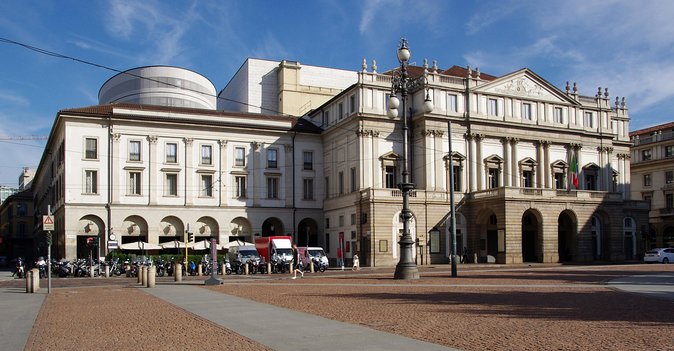
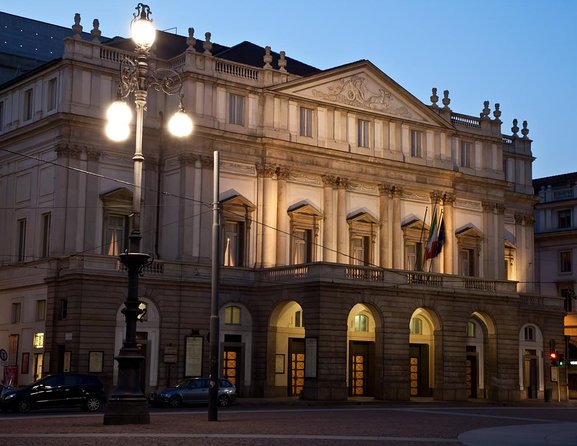
Teatro alla Scala opened in 1778. Giuseppe Piermarini designed the building, which quickly became one of Milan’s most important cultural places and one of the world’s best-known opera theatres.
You do not need to know opera to get something from this visit. The guide places the building in the story of Milan, then links its rooms and collections to the singers, composers, conductors, and productions that shaped its reputation. That context makes the theatre easier to read. Instead of seeing only gilt decoration and red seating, you begin to understand how a major opera house functions.
I find that useful because La Scala can feel intimidating from the outside. Its fame is huge, but the visit is not aimed only at experts. Guides have explained opera and Italian music history in plain English, and the strongest tours use stories rather than a string of dates.
The experience is also a look behind the curtain, even when you cannot enter every part of the building. You may hear about acoustics, stage work, rehearsals, opera preparation, and the practical labor that supports a performance. That is one reason the tour can work well for first-time opera visitors.
More Museum Tours in Milan
- Milan: Science and Technology Leonardo da Vinci Museum Entry
★ 4.5 · 7,169 reviews - Official San Siro Stadium and Museum Guided Tour
★ 4.4 · 3,573 reviews - Milan: Leonardo3 The World of Leonardo Museum Entry Ticket
★ 4.4 · 3,241 reviews
Meeting at the Museo Teatrale alla Scala
The tour begins at the Teatro alla Scala Museum, at Largo Antonio Ghiringhelli 1. This is a useful starting point because the museum is part of the La Scala complex, not a separate sight across town. The activity ends back at the same meeting point.
The location is near public transportation, so it fits neatly into a day around central Milan. You can pair it with other central sights, but leave enough time to find the museum and meet your guide without rushing. The meeting point is particularly helpful if you are not familiar with Milan’s opera district.
Confirmation is provided when you book. The tour is offered in English and has a maximum of 15 people. Headphones are supplied when the group reaches 10 participants, an important detail in a busy building where sound can carry unevenly.
Do not expect hotel pickup or drop-off. Food, drinks, and gratuities are also outside the price. This is a focused cultural visit, not a transport package or a full-day tour.
Inside the Teatro alla Scala Museum
The museum is not simply a waiting room before the theatre. It is the part of the experience that remains available when rehearsals or private events close the auditorium.
Your guide uses the collection to explain La Scala’s past and the figures tied to it. You might see objects connected with composers and singers, along with material that shows how performances and opera culture developed over time. The precise route and objects emphasized can vary, but the purpose is consistent: to make the institution’s story visible.
I like the museum best as a way to understand the human side of opera. A theatre can look grand but distant. Personal items and performance-related objects bring the singers and composers closer, while the guide fills in the links between the people, the music, and the building.
The strongest guides do not merely identify objects. Maria, for example, has been praised for bringing composers and singers to life through stories. Another guide, Lara, held attention for the full 90 minutes without relying on notes. Those details point to what you should hope for: a spoken tour with personality, not a silent walk past glass cases.
The museum also helps if you are new to opera. You can enjoy the displays as a record of Milanese culture, then ask the guide basic questions without feeling out of place. An opera enthusiast will likely want more technical detail, but the tour appears designed to serve both beginners and experienced fans.
Seeing the auditorium and stage
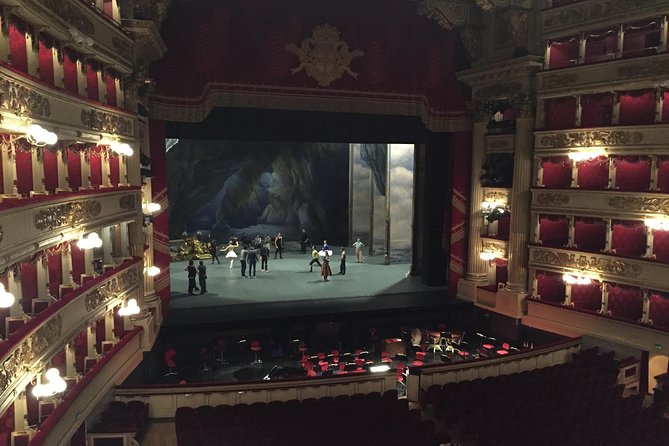
The most exciting possibility is access to the theatre itself. Depending on the day, you may view the auditorium, take photographs, enter one of the boxes, or watch part of a rehearsal. Several visits have included stage practice, and one group saw preparations for a Wagner opera. That kind of glimpse gives the building a pulse.
A rehearsal is not a performance, so keep your expectations realistic. You may see workers setting up, hear music during a practice session, or catch the stage between production tasks. Still, this can be more revealing than a polished show. You see that opera depends on carpenters, stage crews, musicians, singers, lighting, timing, and acoustics, not only the person in the spotlight.
One particularly useful part of the guiding is the explanation of how the hall operates. The tour can cover the auditorium’s acoustics, the way performances are mounted, and the behind-the-scenes work supporting operas and ballets. If you are interested in theatre mechanics, listen closely here.
There is an important limit. Rehearsals and private events sometimes mean that the theatre cannot be visited at all. In that case, the museum remains open, but you should not expect a full backstage tour or guaranteed access to the auditorium. Some people have found the museum-only version engaging, while others felt disappointed because seeing the opera house was their main goal.
If the auditorium is open, the time inside may still be short. One visitor reached a box on a 4 p.m. visit but wished there had been more time before the theatre closed at 5 p.m. Another tour ended after roughly 70 minutes. The lesson is practical: treat theatre access as a welcome bonus, not a promise.
More Milan museums and collections:
- Milan: La Scala Theater & Museum Guided Experience
★ 4.1 · 2,931 reviews - Milan: Pinacoteca Ambrosiana & da Vinci Codex Exhibition
★ 4.6 · 1,816 reviews - Milan: La Scala Theater and Museum Tour with Entry Tickets
★ 4.7 · 1,722 reviews - Milan: Cathedral, Archeological Area and Museum Ticket
★ 4.5 · 1,093 reviews
The guide makes or breaks the visit
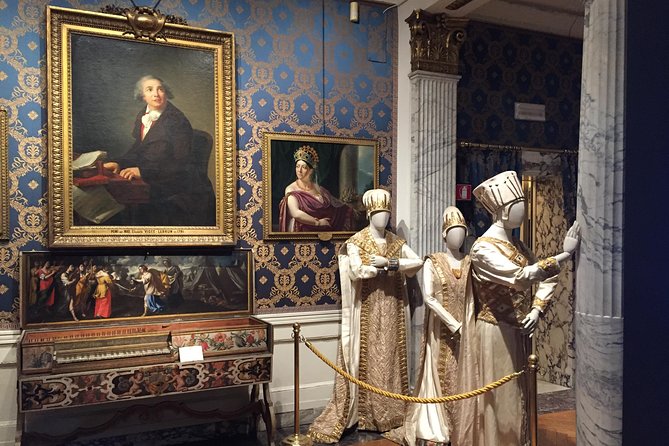
This is a guide-led experience, and the guide’s style has a direct effect on its value. The best guides bring warmth, facts, and a sense of theatre to the hour and a half.
Simone has been praised for explaining both La Scala and the surrounding history of Milan. Giorgio arrived promptly, answered questions, and added details about the building and a rehearsal. Maria made the composers and singers feel like real people through her stories. Lorella was singled out for a thorough explanation of the building and how it operates.
Other strong guides have been described as personable, patient, friendly, and passionate about theatre. One guide had worked in the business, which added practical authority when discussing performance. That sort of experience is valuable because it helps you understand not just what La Scala looks like, but how it functions.
The small group also matters. With no more than 15 people, you have a better chance of hearing the guide and getting an answer to a specific question. In a large tour, a question about a composer, an opera, or the auditorium’s acoustics might be lost. Here, it can become part of the visit.
There is one warning in the feedback. At least one guide was judged poorly prepared, and not every tour has delivered the same level of detail. That is a risk with any multi-guide experience. The overall rating is 4.6 out of 5 from 664 ratings, with 90 percent recommending it, but no guided product is perfectly uniform.
How much time should you allow?
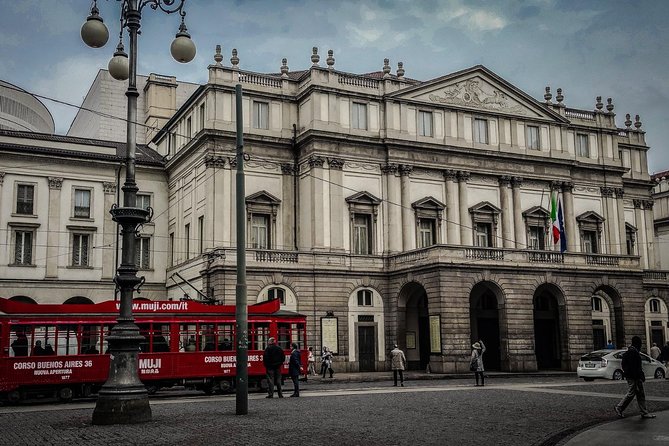
The advertised duration is about 1 hour 30 minutes. That is enough time for a clear introduction to the museum, a guided explanation of La Scala, and, when conditions allow, a look into the theatre.
Do not plan a tight connection immediately afterward. The exact visit can change based on rehearsals, private events, theatre closing times, and the pace of the guide. At least one reported visit lasted about 70 minutes, while others filled the full hour and a half.
Morning may be a good choice if you want a chance of seeing stage practice. Several visits scheduled earlier in the day included rehearsal activity. This is not a guarantee, but it is a useful preference if you have a choice of times.
Late afternoon can work well too, especially if you want to fit the tour around Milan sightseeing. Just remember that closing time may reduce what you see. A 4 p.m. start allowed one group into a box, but left little time to explore the theatre before it closed.
Is $56.84 a fair price?
At $56.84 per person, this is not a cheap museum entry. You are paying for more than admission, though. The price includes tickets to La Scala Theatre and Museum, a licensed English-speaking guide, and the small-group format.
I consider the price reasonable if you care about context. A quick look at the building will show you its decoration, but it will not explain the theatre’s role, its performers, or the labor behind an opera. A strong guide gives you that missing layer.
The value rises when the guide is excellent and the theatre is open. Hearing about acoustics, seeing a box, watching stage preparation, and learning how performances operate can make the fee feel well spent. The price is less convincing if the visit is limited to the museum and the guide rushes through it.
Group discounts are available, and you can upgrade to a private tour. A private visit costs more, but it may suit a couple or family that wants to ask many questions or move at a slower pace. A private guide has also been praised for making the visit feel personal and conversational.
For most people, I would start with the small-group option. It keeps the price below a private tour while offering enough room for questions. Choose private only if La Scala is a major priority, you want a more tailored discussion, or you dislike fixed group pacing.
Who will enjoy this La Scala experience?
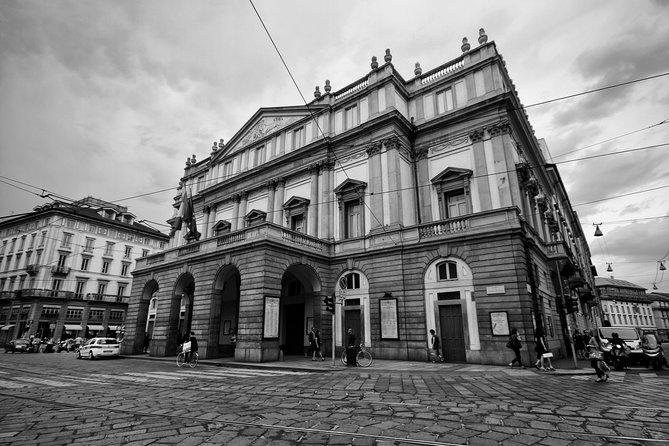
This tour is a good fit if you want a guided introduction rather than a standalone museum visit. It suits first-time opera visitors, people interested in Milan’s cultural story, and anyone curious about what happens behind an opera or ballet.
You do not need specialist music knowledge. The guides explain the setting, history, performances, and important figures in English, and the best ones keep the subject lively for newcomers.
Opera fans will appreciate the chance to connect names and performances with the building. The museum’s displays and discussions of singers, composers, acoustics, and stage work add detail that a general Milan walking tour cannot provide.
Families and mixed-interest groups may also find it useful, especially if one person loves opera and another is more interested in architecture or Milan. The visit is short enough to fit into a larger sightseeing day, and the central meeting point keeps the plan simple.
I would be more cautious if your only goal is a guaranteed look inside the auditorium. Theatre access depends on rehearsals and private events. For that reason, book this as a guided La Scala museum and theatre experience, not as a guaranteed backstage or rehearsal visit.
Practical tips for getting the most from it
- Ask about the theatre when you meet: Conditions can change, and your guide can tell you what access is possible that day.
- Choose a morning time if rehearsal activity interests you: This has sometimes allowed groups to see stage practice.
- Keep your schedule flexible: The visit may last about 70 minutes or the full 90 minutes.
- Bring questions: The small group makes it easier to ask about composers, singers, acoustics, Milan, or stage work.
- Do not skip the museum mentally: If the auditorium is closed, the museum carries the visit and offers the historical setting.
- Consider private only for a specific reason: The standard small group already provides personal contact at a lower price.
- Remember the limits of the ticket: Food, drinks, transport, hotel pickup, and gratuities are not included.
Free cancellation is available if you cancel at least 24 hours before the local start time. Changes or cancellations inside that window are not refunded, and a minimum group size is required for the activity to run. If the provider cancels because that minimum is not reached, you are offered another date or experience, or a full refund.
Should you book the La Scala Theatre and Museum tour?
I would book it if you want La Scala to make sense, not just appear in a photograph. The strongest part is the guide’s storytelling, especially when the guide connects the building with composers, singers, Milan, acoustics, and the crews who prepare each production.
The small group, central meeting point, included admission, and English-language guidance make the plan easy. At $56.84, it is fair value when you want context and a chance of seeing the working theatre.
I would not book it expecting guaranteed auditorium or rehearsal access. If that is your one essential goal, the uncertain entry could disappoint you. But if you are happy with a well-led museum visit and see theatre access as an extra, this is a worthwhile addition to a Milan itinerary.
FAQ
Where does the La Scala Theatre and Museum tour start?
It starts at the Teatro alla Scala Museum, Largo Antonio Ghiringhelli 1, 20121 Milan, Italy.
Where does the experience end?
The activity ends back at the meeting point.
How long does the tour last?
The advertised duration is approximately 1 hour and 30 minutes. Some visits may finish earlier, depending on conditions at the theatre.
Is the tour offered in English?
Yes. The experience is offered in English.
What is included in the price?
The price includes tickets to La Scala Theatre and Museum, a licensed tour guide, and a small-group guided tour. Headphones are provided when the group has 10 or more participants.
Is entry into the theatre guaranteed?
No. Rehearsals and private events may limit the visit to the museum only.
How many people can join the group?
The maximum group size is 15 participants.
Is hotel pickup included?
No. Hotel pickup and drop-off are not included. The tour begins and ends at the museum meeting point.
Can I cancel for a full refund?
Yes, if you cancel at least 24 hours before the experience start time. Cancellations made less than 24 hours before the start are not refunded.
Recently reviewed around Milan
- From Milan: Venice Full-Day Guided Tour With Boat Ride★ 4.5 · 322 reviews
- Venice Day Trip from Milan with Guided City Tour★ 4.0 · 383 reviews
- Verona and Lake Garda Day Trip from Milan★ 4.5 · 214 reviews
- Full-day Skip-The-Line Milan, The Last Supper and Duomo Cathedral★ 5.0 · 293 reviews
- Small-Group Lake Como & Lugano by Swiss Train + Boat Cruise★ 5.0 · 1,084 reviews
- Tour Bernina Red Train And St Moritz from Milan★ 4.5 · 247 reviews
- Walking Food Tour of Milan with Tastings★ 4.5 · 194 reviews
- Skip the Line: Essential Milan Tour Including Da Vinci’s ‘The Last Supper’★ 4.5 · 339 reviews
Museums, compared.

Vatican: Museums & Sistine Chapel Entrance Ticket
Read our review →
Vatican Museums & Sistine Chapel Tour with Optional Basilica
Read our review →
Vatican Museums, Sistine Chapel & St Peter’s Basilica Guided Tour
Read our review →
Skip-The-Line Uffizi Gallery Timed Entry Ticket
Read our review →
Vatican Museums, Sistine Chapel & Basilica Tour
Read our review →
Vatican Museums & Sistine Chapel Skip-the-Line Entry Ticket
Read our review →Vatican Museums, Sistine Chapel & Basilica Tour
Read our review →
Vatican Museums & Sistine Chapel Guided Tour
Read our review →Browse the lists this tour appears in