
Review · ASSISI & UMBRIA TOURS
Orvieto: Pozzo della Cava Entry Ticket
Orvieto’s Pozzo della Cava is more than a well. It is a small underground world beneath the city’s oldest district, with nine caverns showing how Etruscan, medieval, and Renaissance residents used the rock below their homes. I like the clear explanations and the freedom to move at your own pace. I also like the price: at $5, it is an easy add-on to a day in Orvieto.
The main drawback is scale. This is a compact, self-guided visit, not a large underground tour or a guided archaeological expedition. It sits on the far side of town from the Duomo, so you should choose it for its specific Etruscan and medieval story, not because it is the biggest sight underground.
In This Review
- Key points at a glance
- Why Pozzo della Cava adds something different to Orvieto
- Finding the oldest part of the well
- Following the nine caverns underground
- Seeing medieval Orvieto below its streets
- Renaissance changes and the final cave
- A self-guided visit with no fixed group pace
- How long the visit takes
- The $5 price and what you get
- Location and planning around the Duomo
- Who will enjoy Pozzo della Cava most
- Should you book the Pozzo della Cava ticket?
- FAQ
- Where is Pozzo della Cava?
- How long does the visit take?
- Is the tour guided?
- Which languages are available?
- Is there a route for children?
- What does the ticket include?
- How much does admission cost?
Key points at a glance
- Nine underground caverns: Follow a short route beneath the Cava neighborhood, with spaces shaped and reused across 28 centuries.
- An Etruscan water well: Begin with one of Orvieto’s oldest underground structures, including a cistern finished with cocciopesto plaster.
- Medieval life below the streets: See how houses in Urbs Vetus, Orvieto’s medieval name, extended into three-story basement levels.
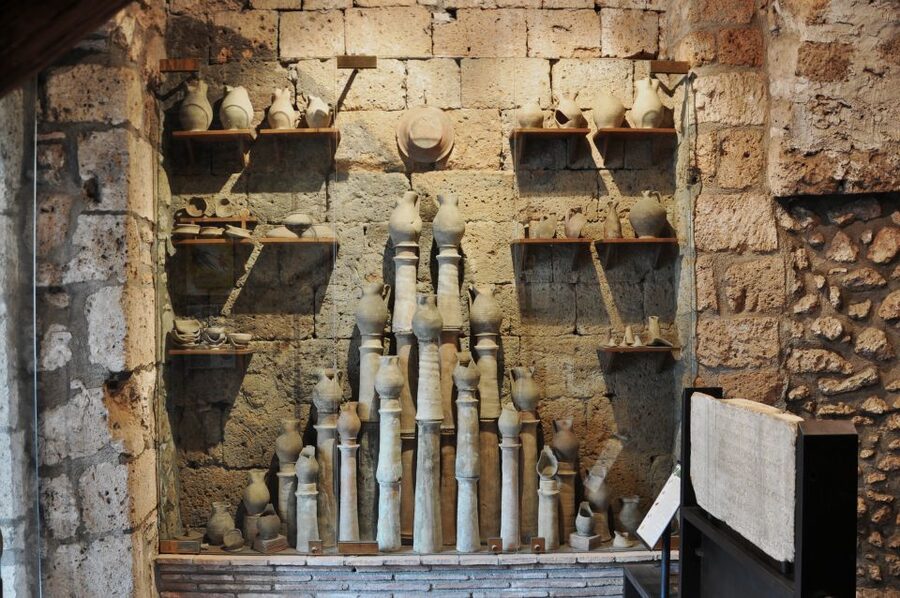
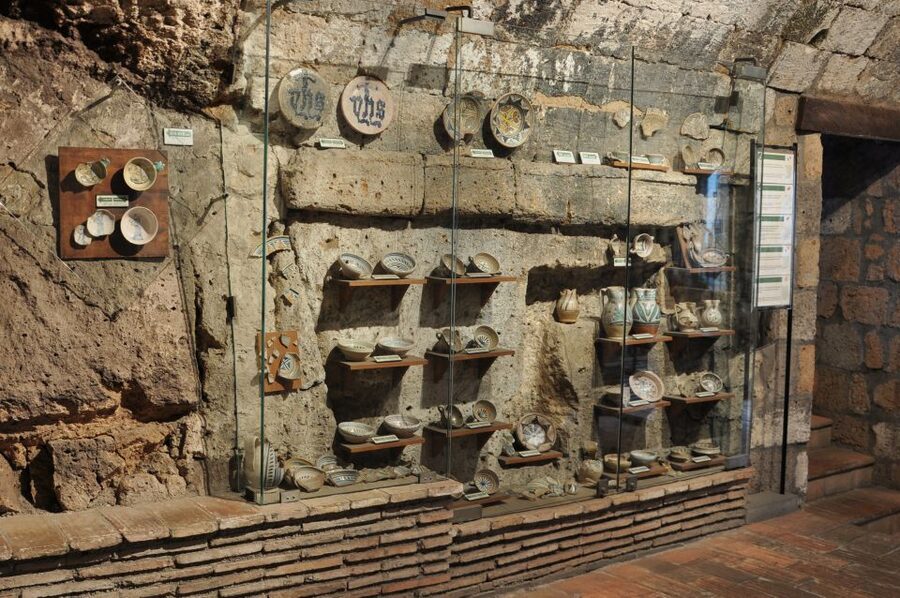
- Artifacts in place: Look for Etruscan, medieval, and Renaissance remains preserved in the caves.
- Self-guided and flexible: Read the panels in Italian, English, or French, and stop when something catches your attention.
- A cool, inexpensive stop: The underground temperature can be welcome in summer, and the visit generally takes about 30 minutes to an hour.
Why Pozzo della Cava adds something different to Orvieto
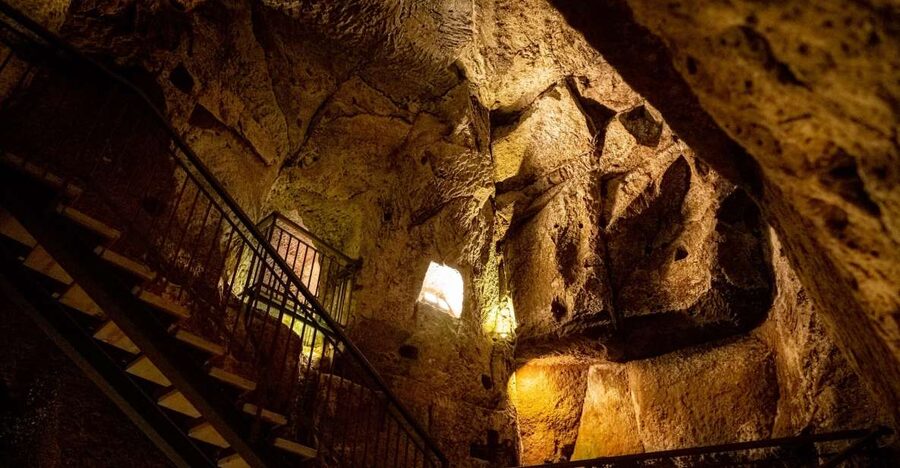
Orvieto is famous for its cathedral, but the city’s story does not stop at street level. Built on a volcanic tufa plateau, Orvieto has layers of rooms, wells, workshops, cisterns, and passages cut into the rock below its streets.
Pozzo della Cava gives you a manageable look at those layers. You are not simply walking through a dark tunnel. You are following evidence of changing needs: water storage in the Etruscan period, domestic space in the Middle Ages, and further excavation during the Renaissance.
I find that scale useful. The site is small enough to visit without giving up half a day, but varied enough to explain why Orvieto has so much beneath its pavement. The signs help connect a plain wall or cut stone chamber with the people who made and used it.
The visit is also a good counterpoint to the grander sights near the cathedral. The Duomo is about spectacle. Pozzo della Cava is about construction, survival, and daily life.
More Italy trips worth a second look
- Vatican: Museums & Sistine Chapel Entrance Ticket
★ 4.5 · 144,003 reviews - Milan: Cathedral and Duomo’s Terraces Entrance Ticket
★ 4.6 · 61,054 reviews - Venice: Doge’s Palace Reserved Entry Ticket
★ 4.6 · 42,716 reviews
Finding the oldest part of the well
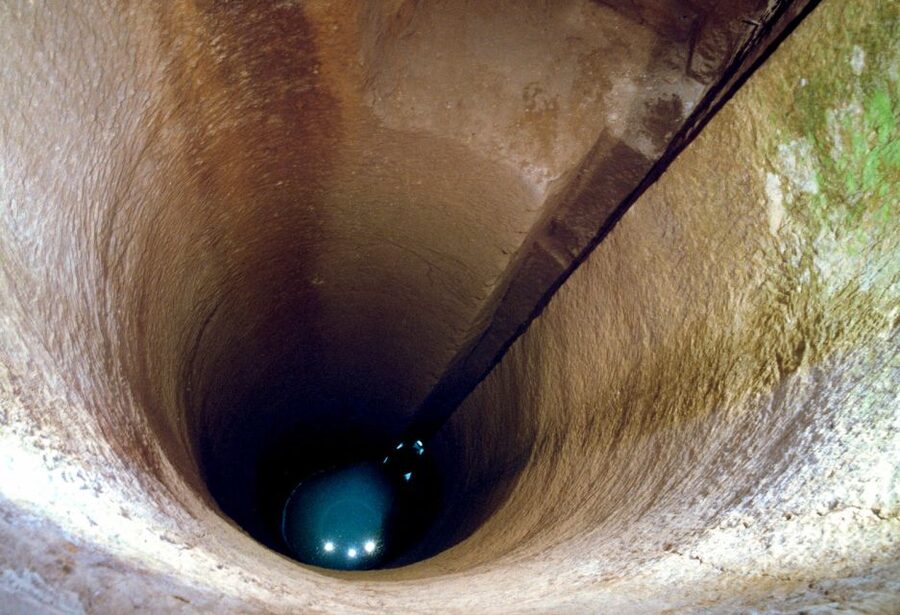
The route begins at the oldest section of the complex. Here, you see a cistern lined with cocciopesto, a waterproof plaster made with crushed ceramic material. It is a practical detail, but an important one. A water structure only works if its walls can hold water, and this finish shows the technical care behind the ancient design.
The well is linked to Orvieto’s Etruscan beginnings and to the city’s early need for a reliable water supply. The site also preserves traces connected with Etruscan burial practices, giving you a reminder that the underground spaces were not all built for the same purpose.
This first section rewards a slower look. The route is not presented as a theatrical show, and that is part of its appeal. You have time to read the panels, examine the masonry, and consider how much effort it took to cut and adapt the soft volcanic rock.
If you arrive expecting a monumental well like Orvieto’s famous Pozzo di San Patrizio, adjust your expectations. Pozzo della Cava is a different kind of experience. It is a historic complex of working spaces and excavations, with the well as its oldest and most important feature.
Following the nine caverns underground
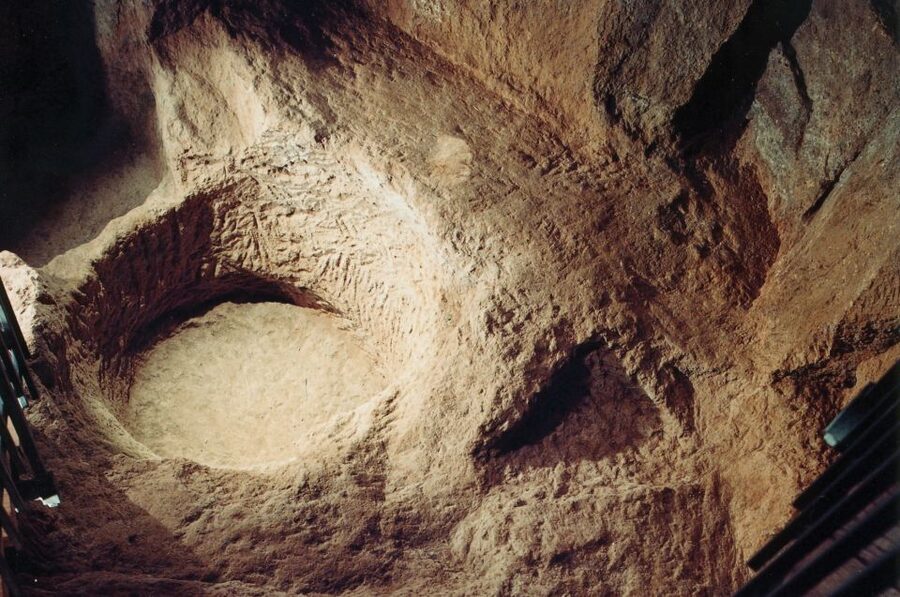
From the well, you continue through the underground complex, which includes nine caverns. The route is short enough to manage easily, but each chamber helps explain a different period or use.
Some areas preserve the shape of the excavated rock. Others show how later residents altered the underground spaces. You might find yourself looking at a wall first as an archaeological object, then as part of an old home or storage area.
That change in viewpoint is the best reason to visit. The site shows that underground Orvieto was not frozen in one ancient moment. It was reused over time, with later generations adapting what earlier ones had cut into the tufa.
The route is self-guided. There is no included guide or audio app, so your experience depends on the written explanations and your own pace. For many people, that is a plus. You can stop at a panel, move ahead if a section interests you less, or linger without keeping up with a group.
The multilingual information is available in Italian, English, and French. The English explanations make the site easy to follow, and the special itinerary for children gives families a way to make the archaeology less abstract.
Seeing medieval Orvieto below its streets
The middle portion takes you into the underground maze of Urbs Vetus, the medieval name for Orvieto. The most striking idea here is the relationship between the houses above and the spaces below.
Medieval homes could have basements extending through several levels. The complex helps you understand how the city’s residents used this vertical space, rather than treating the underground as an empty area beneath the streets.
A three-story basement sounds impressive, but the value is not just height. It shows how people solved practical problems in a crowded hilltop city. Underground rooms could provide working or storage areas and could be reshaped as the needs of a household changed.
The signs place these spaces within the wider passage of Italian history. You move from Etruscan engineering to medieval domestic life without needing a long lecture. For me, that makes the visit especially useful after walking Orvieto’s streets, where the medieval buildings can otherwise seem like a single, unchanging picture.
This is also the section where the self-guided format works best. The spaces are atmospheric, but the written context keeps them from becoming a simple walk through bare caves. Read the panels carefully, and you will get a stronger sense of how the underground rooms fit into everyday life.
A different way to spend the day, same part of Italy:
- Vatican Museums & Sistine Chapel Tour with Optional Basilica
★ 4.3 · 67,413 reviews - Colosseum, Roman Forum & Palatine Guided Tour
★ 4.7 · 63,148 reviews - Vatican Museums, Sistine Chapel & St Peter’s Basilica Guided Tour
★ 4.5 · 39,149 reviews - Rome: Colosseum, Palatine Hill and Roman Forum Guided Tour
★ 4.8 · 32,814 reviews
Renaissance changes and the final cave
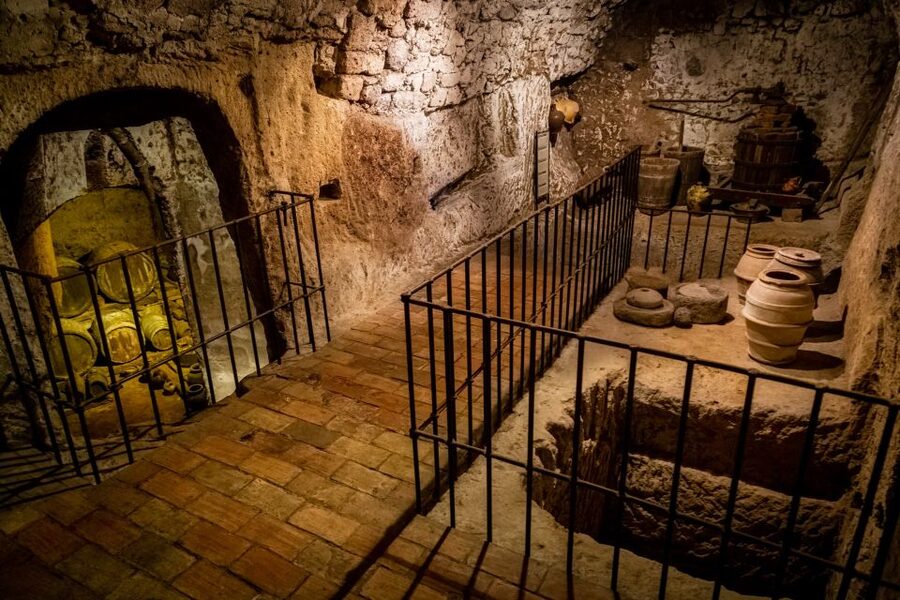
The last part of Pozzo della Cava shows the Renaissance stage of the complex. The most recent sections were excavated during this period, and the final cavern preserves traces of changes made across twenty-eight centuries.
That long time span is the central story here. You are seeing a place that was altered rather than abandoned. Ancient work was built around, medieval spaces were adapted, and Renaissance excavation added another layer.
The final cave is described as the most impressive part of the route, though the exact impact will depend on how much you enjoy raw archaeology. There is no grand decoration or polished museum display. Its interest comes from the marks left by repeated use and rebuilding.
Take your time here. The route may take only 30 minutes if you walk straight through, but an hour is reasonable if you read everything and pause in each chamber. The difference matters because this is a place for close looking, not a quick list of dramatic photo stops.
A self-guided visit with no fixed group pace
Your ticket provides entry to the underground complex and multilingual explanations, but not a guided tour. Italian, English, and French are supported, and a host or greeter may be available in those languages at the entrance.
That setup makes Pozzo della Cava simple to fit into a busy day. You do not need to wait for a scheduled group to move through the rooms, and you can decide how much time to spend on the archaeological details.
The tradeoff is that nobody is there to answer every question or explain the site in a personal way. If you want a specialist guide, this ticket alone will not provide one. The written panels are meant to carry the visit, and they are generally clear enough for a short independent tour.
The route has been described as well signposted, which matters underground. You are not left guessing which chamber comes next. The child-friendly itinerary is another practical touch for families, though children who need constant activity may find the reading-heavy format less engaging.
How long the visit takes
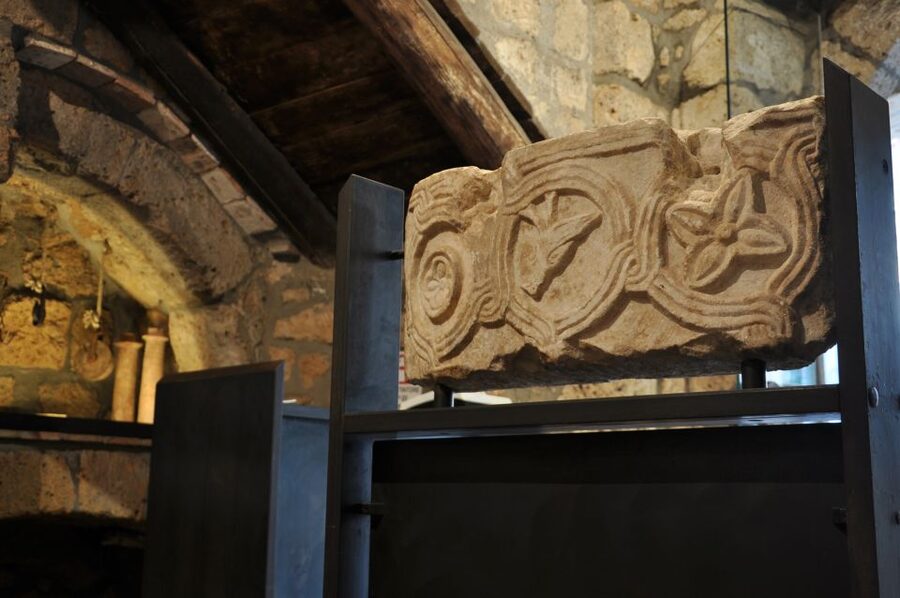
Plan on 30 minutes for a brisk visit and up to an hour if you read the panels and stop often. Several people have found that half an hour is enough, while others have allowed closer to an hour.
That range makes it useful between larger Orvieto sights. You can visit before lunch, add it to a walking route through the medieval district, or use it as a cooler break during a hot day. The underground temperature is one of the small pleasures of the experience, especially in summer.
The site is not a full-day attraction. If you have limited time in Orvieto, the cathedral, streets, and major viewpoints may come first. Pozzo della Cava makes the most sense once you have already seen the city above and want a closer look at how it was built below.
The $5 price and what you get
At $5 per person, the ticket offers good value if you enjoy archaeology, old construction, or unusual local history. The cost is low enough that the visit does not need to be the main reason for your day in Orvieto.
The value comes from the combination of the nine caverns, the Etruscan well, preserved remains, and the written context. You are paying for access to a genuine underground complex, not for a long staged attraction.
Still, low price does not mean you should expect a large museum. The route is compact, there is no included guide, and the displays rely on signs rather than a large collection of exhibition cases. If you want a major underground network with a long guided explanation, this may feel too brief.
Booking ahead can help if you want the certainty of entry, and the ticket offers free cancellation up to 24 hours before the visit. You can also reserve now and pay later. At quieter times, the entrance may have no line, so spontaneous entry may work as well.
Location and planning around the Duomo
Pozzo della Cava is in Orvieto’s medieval Cava district, on the far side of town from the cathedral area. It is still close enough to walk to, but do not confuse it with the better-known underground tour that starts near the Duomo.
That distinction matters. The two experiences explore different underground areas, and the Cava visit is smaller and self-guided. If you have time, doing both can give you two separate views of Orvieto below street level. If you only want one underground stop, choose based on the subject and format you prefer.
Use the visit to explore the oldest district rather than treating it as an isolated stop. The surrounding medieval streets give the chambers more meaning, and the walk between parts of town helps you see how the underground spaces relate to the city above.
Because no fixed duration is given beyond a one-day validity, check the available starting times when you book. The ticket is valid for one day, so you have flexibility within that period.
Who will enjoy Pozzo della Cava most
I would recommend this experience to:
- History-minded visitors who want to see Etruscan, medieval, and Renaissance layers in one place.
- Families who can make use of the child-friendly explanations.
- Independent sightseers who prefer reading and exploring without a guide.
- Budget-conscious visitors looking for a worthwhile $5 stop.
- Summer visitors who appreciate a cool underground break.
- Repeat visitors to Orvieto who want a different side of the city.
I would be more cautious if you have only a short time in town and have not yet seen the main sights. The complex is interesting, but it is not large. It should supplement Orvieto, not replace its major landmarks.
Should you book the Pozzo della Cava ticket?
Book it if you want a short, inexpensive look at how Orvieto developed below ground. The Etruscan well, nine caverns, clear multilingual signs, and freedom to explore alone make this a strong value for the price.
Skip it if you are looking for a long guided tour, a large museum, or a spectacular underground monument. For most visitors with room in their schedule, though, Pozzo della Cava is an easy recommendation. Allow 30 to 60 minutes, visit with an open mind, and focus on the layers of human work rather than expecting a single dramatic sight.
FAQ
Where is Pozzo della Cava?
It is in Orvieto’s medieval Cava neighborhood, on the far side of town from the Duomo. It remains close enough to reach on foot from other parts of Orvieto.
How long does the visit take?
A quick visit takes about 30 minutes. If you read the explanations and pause in the caverns, allow up to an hour.
Is the tour guided?
No. The ticket provides entry to the underground complex and multilingual written explanations, but no guided tour or app.
Which languages are available?
Explanations are available in Italian, English, and French. The host or greeter languages are also Italian, English, and French.
Is there a route for children?
Yes. A special child-friendly itinerary is included.
What does the ticket include?
It includes entry to the underground Pozzo della Cava complex and the multilingual explanations. A guided tour is not included.
How much does admission cost?
The listed price is $5 per person. The ticket is valid for one day.
Recently reviewed around Italy
- Ancient Rome at Twilight Walking Tour★ 5.0 · 276 reviews
- Early Vatican Museums Tour: The Best of the Sistine Chapel★ 4.5 · 900 reviews
- Domus Aurea Guided Tour: The Golden House of Nero★ 4.5 · 199 reviews
- Early Vatican Museums & Sistine Chapel Small Group Tour★ 4.5 · 314 reviews
- Jewish Ghetto & Piazza Navona: Food, Wine & Sightseeing Rome Tour★ 5.0 · 460 reviews
- 3 Days in Sorrento, Capri & Pompeii: la Dolce Vita★ 4.0 · 595 reviews
- Tivoli Villas Full Day Trip From Rome with Lunch★ 4.0 · 443 reviews
- Cook With Us in Rome: A Hands-On Cooking Experience 09:20AM class★ 5.0 · 234 reviews
Assisi & Umbria Tours, compared.
Entry Ticket and Guided Tour of Perugia Underground
Read our review →


Professional hot air balloon rides at Assisi, Trasimeno in Umbria
Read our review →

Small Group Tour of Assisi and St. Francis Basilica
Read our review →Browse the lists this tour appears in