
Review · ASSISI & UMBRIA TOURS
Perugia: Entry Ticket and Guided Tour of Perugia Underground
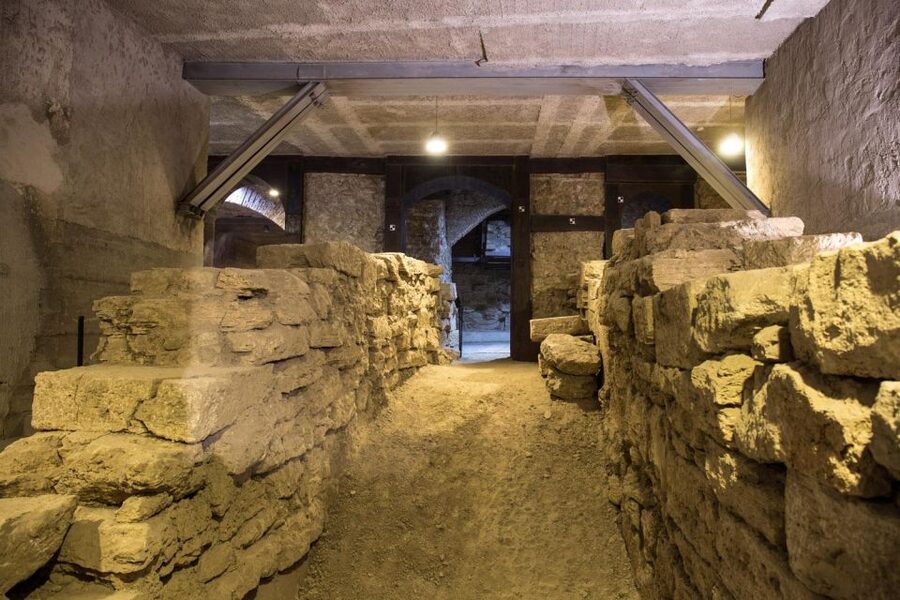
Perugia Underground takes you beneath Saint Lawrence Cathedral, down through 2,500 years of city history. In less than an hour, you see Etruscan construction, Roman roads and buildings, and medieval layers hidden below today’s streets.
I like the clear historical sequence and the strong finish: the virtual reality presentation helps turn scattered walls and foundations into a picture of old Perugia. I also like the price, $14, which is fair for a guided archaeological visit. The main catch is language. The live guide speaks Italian, and English speakers follow along with a tablet, which can feel rushed.
In This Review
- Key points to know before you book
- Why Perugia Underground is worth your time
- Starting in the cloisters of Saint Lawrence Cathedral
- The Etruscan foundations beneath modern Perugia
- Roman roads, houses, and the story of Perugia
- Medieval layers and a city built upward
- The VR presentation gives the ruins a clearer shape
- The Italian guide and English translation setup
- How the 50-minute schedule feels
- Who should book this underground visit?
- Is $14 a fair price?
- Should you book Perugia Underground?
- FAQ
- Where does the Perugia Underground tour start?
- How long does the tour last?
- What languages are available?
- Is the entrance ticket included?
- Is the tour suitable for wheelchair users?
- Can I bring a stroller or pet?
- Should I bring anything special?
Key points to know before you book
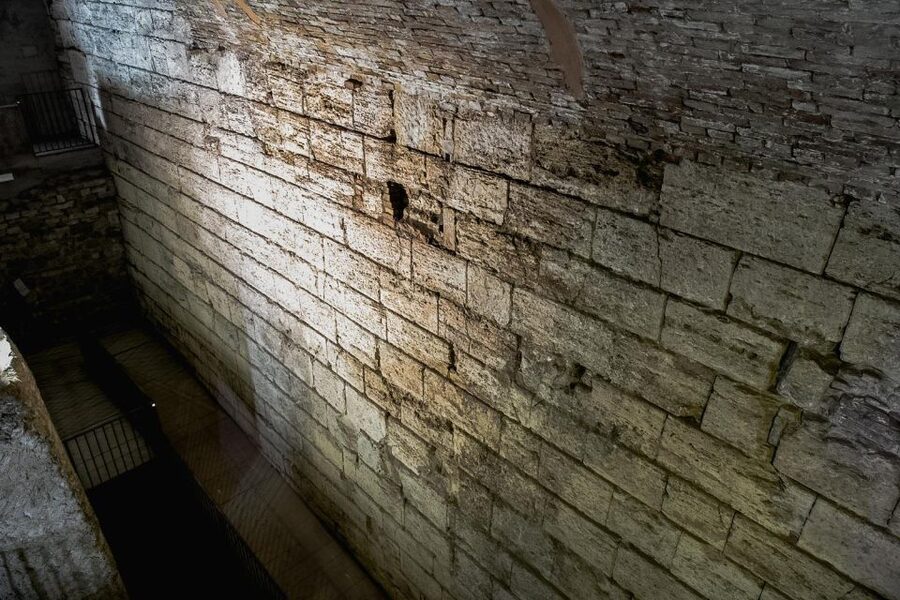
- Descend 15 meters below the cathedral: The route reaches well beneath the present level of Saint Lawrence Cathedral.
- See three major periods in one short visit: Etruscan, Roman, and medieval remains appear along the underground path.
- The guide speaks Italian: English is supplied through a translation tablet and headphones when needed.
- The VR finale adds useful context: It shows how parts of Perugia may have looked in earlier periods.
- The route includes stairs: It is not suitable for wheelchair users, strollers, or people with significant mobility difficulties.
- Bring a light layer: The underground area has a slight temperature change from the streets above.
Why Perugia Underground is worth your time
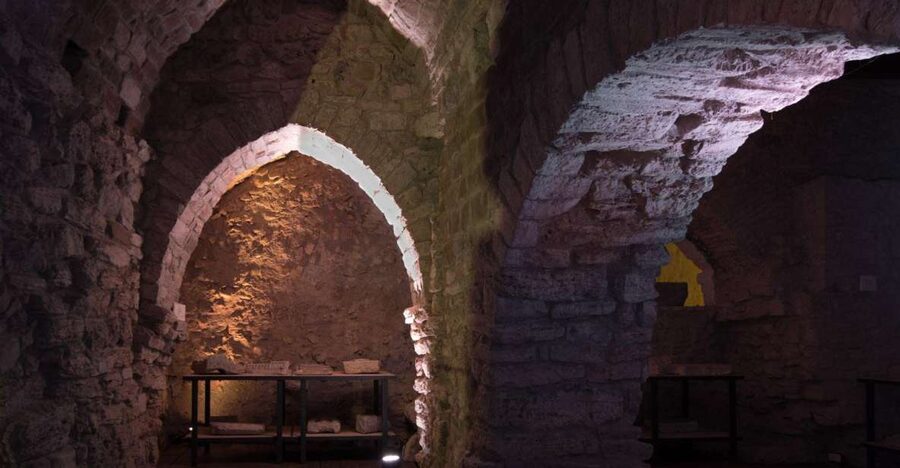
Perugia is a city built in layers. Its upper streets belong to the modern town, but the ground below holds earlier versions of the same place. This visit lets you see those layers in one compact route beneath the Cathedral of Saint Lawrence.
That setting matters. You are not looking at an isolated museum display removed from its original surroundings. You start in the cathedral cloisters, then move into the hill itself, following the remains as the route reaches about 15 meters below the current cathedral level.
I find this especially useful early in a Perugia visit. The tour gives you a basic map of the city’s past: Etruscan engineering, Roman urban life, and the medieval rebuilding that shaped the streets you see above. It also makes later sights, including Rocca Paolina, easier to understand because you begin to recognize Perugia as a city repeatedly built over itself.
At $14 per person, the experience offers good value if you want more than a quick look at the cathedral. The visit lasts about 50 minutes, so it fits neatly between other sights without taking up half a day. The price includes admission, the guide, an English translation tablet when needed, and the VR experience.
The limitation is depth. You see an appealing selection of remains, but this is not a long archaeological seminar. A few visitors wanted more objects from the excavations or more detailed explanations. If you already have a strong background in Etruscan or Roman archaeology, you may find the presentation introductory.
More Italy trips worth a second look
- Vatican: Museums & Sistine Chapel Entrance Ticket
★ 4.5 · 144,003 reviews - Milan: Cathedral and Duomo’s Terraces Entrance Ticket
★ 4.6 · 61,054 reviews - Venice: Doge’s Palace Reserved Entry Ticket
★ 4.6 · 42,716 reviews
Starting in the cloisters of Saint Lawrence Cathedral
The meeting point is in the cloister of Saint Lawrence Cathedral, in the heart of Perugia. Enter through the large portal in Piazza IV Novembre, next to Libreria delle Volte. The ticket office and tour start are described as being in this cloister.
Allow a few extra minutes to find the entrance. The wording about the ticket office can be confusing, and one visitor had to ask staff in the museum area for help before joining the group. I would go to the cathedral cloister first, rather than wait in the open piazza looking for a guide.
The start is a good choice. The cloister provides a calm transition from the busy square into the archaeological route. You begin above ground, then gradually move into the older layers beneath it.
The group follows a fixed route that can only be visited with a guide. That restriction makes sense. Underground archaeological remains need protection, and a guide helps you understand what you are looking at instead of leaving you to puzzle over fragments of masonry.
The Etruscan foundations beneath modern Perugia
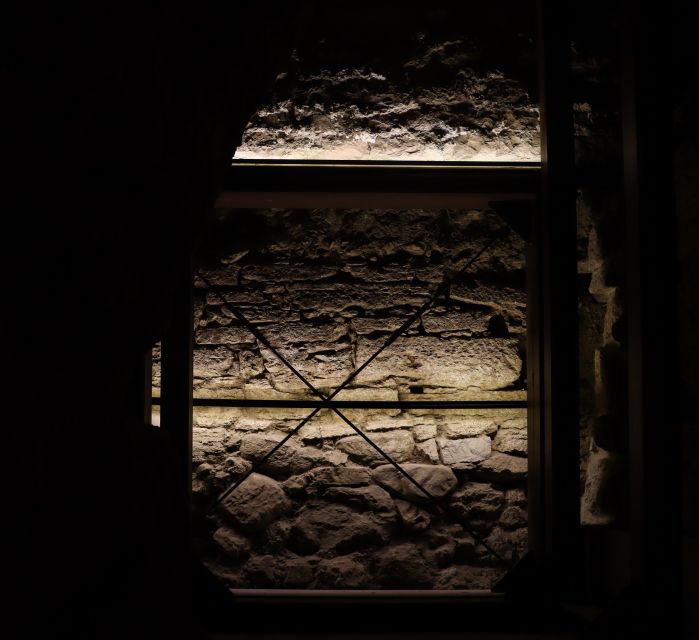
The first major historical layer reaches back more than 2,500 years to the Etruscans. The visit uses the remains to explain how early Perugia was formed and how its builders worked with the hill.
This is one of the most satisfying parts for visitors who like practical ancient history. The focus is not only on dates and names. You see evidence of construction methods and urban planning, which gives a clearer idea of how advanced Etruscan builders were.
The underground setting also helps you understand the city’s shape. Perugia was not simply placed on a flat patch of land. Its historic center follows the high ground, and the archaeology below the cathedral shows how earlier communities adapted the site.
You should expect remains rather than a fully preserved ancient street. Some sections can feel visually subtle, especially if you are not used to reading archaeological walls and foundations. This is where the guide’s explanation matters most.
Italian speakers can listen directly to the guide. If you need English, you receive a tablet and headphones with translated content. The system allows you to follow the story, but you must divide your attention between the screen, the remains, and the group’s movement.
Roman roads, houses, and the story of Perugia
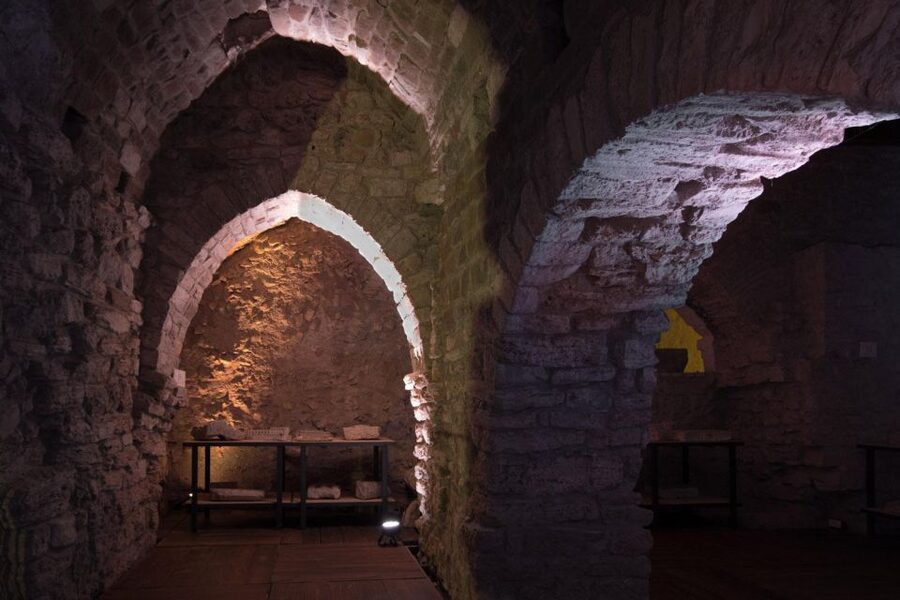
The next layers bring in Roman Perugia. The route includes evidence of Roman roads and houses, making this more than a tour of anonymous stone walls.
Roman remains are often easiest to appreciate when you can see how they served daily life. A road tells you how people moved through the city. A house suggests how the urban area was organized. Even partial remains become more meaningful when you can connect them to the practical workings of an ancient town.
The tour also touches on major figures and events linked to Perugia, including Julius Caesar, Gaius Octavius Caesar Augustus, and the siege of Perugia. These references place the underground remains within the larger conflicts and political changes that affected central Italy.
The siege is an especially useful piece of context because it shows that Perugia was not a quiet hill town on the edge of events. Its position and strength made it important, and its history was shaped by struggles for power.
This part of the visit can move quickly. The entire tour is only 50 minutes, and the guide has several periods to cover. English-speaking visitors may find that the Italian explanation moves ahead while the translated tablet is still playing. One practical solution is to pause or skip through the tablet when the group moves on, then return to a section later if the system allows it.
That arrangement is not as relaxed as an English-language walking tour. Still, the translation makes the experience accessible, and the price remains reasonable for the amount of material covered.
A different way to spend the day, same part of Italy:
- Vatican Museums & Sistine Chapel Tour with Optional Basilica
★ 4.3 · 67,413 reviews - Colosseum, Roman Forum & Palatine Guided Tour
★ 4.7 · 63,148 reviews - Vatican Museums, Sistine Chapel & St Peter’s Basilica Guided Tour
★ 4.5 · 39,149 reviews - Rome: Colosseum, Palatine Hill and Roman Forum Guided Tour
★ 4.8 · 32,814 reviews
Medieval layers and a city built upward
The route continues through medieval remains, showing how later residents reused and reshaped earlier parts of Perugia. This is the central idea of the visit: the city did not replace its past in one clean sweep. New streets, buildings, and structures grew over older ones.
You may find the medieval material less immediately dramatic than the Roman roads or the VR display, but it helps complete the story. Perugia’s present-day center is the result of many building phases, and the underground route lets you see that process at close range.
The path reaches 15 meters below the current level of the cathedral. That descent gives the tour a physical sense of time. You are not simply hearing that the city has layers. You are moving through them, one level at a time.
There are flights of stairs along the route. This is important for anyone with limited mobility. The experience is not suitable for wheelchair users, strollers, or people with significant mobility difficulties. Baby strollers are not permitted, and pets, food, and drinks are also not allowed.
The temperature below ground is only slightly different, but a light garment is a sensible addition. You do not need special equipment, just comfortable footwear and enough freedom of movement for the stairs.
The VR presentation gives the ruins a clearer shape
The final VR experience is the most widely praised feature of the visit, and I can see why. Archaeological remains often require imagination. You look at a wall, road, or foundation and try to picture the complete building. The VR presentation helps supply that missing picture.
It shows parts of the city in a reconstructed form, allowing you to connect the physical remains with the places they once belonged to. Several people found this finale particularly effective because it tied together the Etruscan, Roman, and medieval material covered during the route.
There is a reasonable argument for showing the VR presentation first. A few visitors felt that seeing the larger picture at the beginning would have made the later explanations easier to follow. As arranged, the VR works as a closing recap and visual reward.
I prefer to think of it as a useful conclusion rather than a substitute for the archaeology. The headset cannot replace standing beside original remains, but it can make those remains easier to read. The combination works better than either part alone.
The VR segment may also be appealing if you are visiting with teenagers or anyone who needs a visual element to stay engaged. It adds variety to a tour that otherwise relies on close observation and spoken explanation.
The Italian guide and English translation setup
The live tour is in Italian. Guides such as Beatrice and Lorenzo have been praised for warm, enthusiastic presentations, and the experience benefits from a guide who can explain why a fragment matters rather than simply point it out.
For English speakers, the supplied tablet provides translated content. This is a practical solution, but it changes the feel of the visit. Instead of watching the guide and listening to a natural explanation in English, you may be reading from a screen while the group continues through the underground route.
One visitor found the English recording slower than the Italian presentation and had to skip ahead to keep up. Another enjoyed the visit but wished the guide spoke English directly. You should know this before booking, especially if you prefer a conversational tour with time for questions.
The system still works well enough for many people, particularly if your goal is to understand the main story. I would not book this expecting a fully English-led tour. I would book it expecting an Italian guide supported by English audio or written translation.
The guide’s personality also matters. When the presentation is warm and energetic, the language gap becomes easier to manage. Beatrice and Lorenzo are two names associated with particularly engaging visits, although guide assignments can vary.
How the 50-minute schedule feels
Fifty minutes is enough to make the tour worthwhile, but not enough to linger at every section. The route is efficient, which suits a short city break or a busy day in Perugia.
You will move through several historical periods in one sitting, then finish with the VR presentation. That makes the tour feel packed with information. It also means you should not expect a long pause for photographs or an extended museum visit afterward.
A few visitors felt rushed near the end. Others found that the guide continued slightly beyond the planned time, which improved the experience. The exact rhythm may depend on the group, the guide, and how long each stop requires.
If you want a leisurely archaeological study, look for a longer specialist tour. If you want a well-organized introduction to the underground city before continuing around Perugia, 50 minutes works well.
Who should book this underground visit?
I would recommend Perugia Underground to:
- First-time visitors who want a quick explanation of Perugia’s origins
- Anyone interested in Etruscan and Roman building methods
- History-minded families with older children who will enjoy the VR element
- Visitors already planning to see Rocca Paolina and wanting useful context
- People looking for a short indoor activity in the center of Perugia
- English speakers comfortable using a tablet during an Italian-led tour
I would think twice if stairs are difficult for you, if you use a wheelchair, or if you are bringing a stroller. I would also choose a different experience if you need a fully English-speaking guide or want a detailed display of excavated objects.
Food and drinks are not allowed, so finish your snack before entering. Pets are not permitted either.
Is $14 a fair price?
Yes, for most visitors. The fee includes the underground entrance, guided interpretation, translation support, and VR. Even though the visit is short, you receive several different elements rather than simply walking through an unstaffed archaeological space.
The value is strongest if you are already in Piazza IV Novembre and can reach the cloister easily. There is no separate transport cost, and the tour fits into a morning or afternoon sightseeing plan.
The value is weaker if you cannot comfortably use stairs or if you will spend most of the time struggling with the tablet. In that case, the included features do not compensate for the physical or language limitations.
Free cancellation up to 24 hours before the visit and the option to reserve now and pay later add flexibility, though the main decision should be based on the stairs and Italian-language format.
Should you book Perugia Underground?
Book it if you want a short, affordable way to understand how Perugia grew from an Etruscan settlement into a Roman and medieval city. The physical remains are fascinating, the guides bring useful energy, and the VR finale gives you a better picture of what the earlier city may have looked like.
Go in with realistic expectations. This is an Italian-led tour with English tablet support, not a full English-language presentation. The route is compact, includes stairs, and may feel brisk.
For most able-bodied visitors staying in central Perugia, I would book it. At $14, it offers a clear sense of the city beneath the streets and gives you historical context for the cathedral, Piazza IV Novembre, and Rocca Paolina. Just arrive at the cathedral cloister, bring a light layer, and be ready to trade a little screen time for a worthwhile look below the city.
FAQ
Where does the Perugia Underground tour start?
The ticket office and starting point are in the cloister of Saint Lawrence Cathedral. Enter the cloister through the large portal in Piazza IV Novembre, next to Libreria delle Volte.
How long does the tour last?
The tour lasts about 50 minutes. Starting times vary, so check availability when booking.
What languages are available?
The live guide speaks Italian. A tablet with translation and headphones is available when needed, including English translation support.
Is the entrance ticket included?
Yes. The entrance ticket to Perugia Underground and the guided tour are included in the $14 price. The VR experience is also included.
Is the tour suitable for wheelchair users?
No. The route includes flights of stairs and is not suitable for wheelchair users or people with significant mobility difficulties.
Can I bring a stroller or pet?
No. Baby strollers and pets are not allowed on the tour. Food and drinks are also prohibited.
Should I bring anything special?
Bring a light garment because the underground area has a slight temperature change. Comfortable clothing and shoes are sensible because the route includes stairs.
Recently reviewed around Italy
- Ancient Rome at Twilight Walking Tour★ 5.0 · 276 reviews
- Domus Aurea Guided Tour: The Golden House of Nero★ 4.5 · 199 reviews
- Early Vatican Museums & Sistine Chapel Small Group Tour★ 4.5 · 314 reviews
- Early Vatican Museums Tour: The Best of the Sistine Chapel★ 4.5 · 900 reviews
- Tivoli Villas Full Day Trip From Rome with Lunch★ 4.0 · 443 reviews
- Jewish Ghetto & Piazza Navona: Food, Wine & Sightseeing Rome Tour★ 5.0 · 460 reviews
- 3 Days in Sorrento, Capri & Pompeii: la Dolce Vita★ 4.0 · 595 reviews
- Cook With Us in Rome: A Hands-On Cooking Experience 09:20AM class★ 5.0 · 234 reviews
Assisi & Umbria Tours, compared.

Professional hot air balloon rides at Assisi, Trasimeno in Umbria
Read our review →

Small Group Tour of Assisi and St. Francis Basilica
Read our review →Browse the lists this tour appears in