
Review · WALKING TOURS
Private Florence Tour: 3-Hour Walking Tour with a Licenced Guide
Florence packs a remarkable amount into a compact center, and this private walk connects the city’s great names, Medici power, Renaissance art, and everyday street life in one efficient route. The special stop is Officina Profumo Farmaceutica di Santa Maria Novella, a centuries-old pharmacy with frescoed rooms and fragrances made from traditions linked to the nearby monastery.
I like the private format, since Irina can adjust the pace for a family, an older parent, or a group caught in hot or rainy weather. I also like the mix of famous sights and small details, including Dante’s neighborhood, wine stories at Palazzo Antinori, and visual aids on a tablet. The main limitation is clear: churches, museums, and palaces are generally viewed from outside, so you’ll need separate tickets and time if you want to see their interiors.
In This Review
- Key points to know before you book
- Why this three-hour walk works as a Florence introduction
- Santa Maria Novella and Florence’s historic perfume tradition
- Palazzo Antinori and Florence’s wine connections
- The Medici district: chapels, San Lorenzo, and the family palace
- The Baptistery and Brunelleschi’s remarkable dome
- Dante’s district and a quieter side of the old center
- Piazza della Signoria, an outdoor museum of Florence
- Ponte Vecchio, the right place to finish
- What the private format adds
- Who will get the most from this Florence tour
- Practical details that affect your decision
- Should you book it?
- FAQ
- How long is the Florence walking tour?
- Where does the tour begin?
- Where does the tour end?
- Is this a private tour?
- What language is the tour offered in?
- Does the tour include museum and church admission?
- What happens if bad weather cancels the tour?
Key points to know before you book
- The pharmacy is the main interior visit: Spend about 20 minutes among historic rooms, frescoes, and old perfume-making traditions.
- The route covers Florence’s essential center: Santa Maria Novella, San Lorenzo, the Duomo, Dante’s district, Piazza della Signoria, and Ponte Vecchio all fit into three hours.
- Irina is the guide to request: Her style combines art and history with restaurant, leather, gelato, and practical Florence tips.
- This is a private walk: Only your own group takes part, making it easier to ask questions or change the pace.
- The tour ends at Ponte Vecchio: You finish beside the Arno, well placed for continuing toward Oltrarno or the city center.
- Plan for outdoor sightseeing: Hot sun, rain, crowds, and uneven city streets can affect the experience, although the route can be adapted.
Why this three-hour walk works as a Florence introduction
I see this tour as an orientation walk rather than a museum tour. In three hours, you move from Florence’s railway station area through the religious and political heart of the city, then finish on its most famous bridge.
That structure matters. Florence can feel like a catalogue of names at first: Medici, Michelangelo, Brunelleschi, Dante, Palazzo Vecchio, San Lorenzo. A good guide gives those names a place and a connection. Here, the route shows how the city’s churches, palaces, artists, bankers, rulers, and merchants shaped one another.
The walk is in English and is private, so you can ask why a building matters, stop for clarification, or tell Irina what interests you most. Past groups have found her especially useful for explaining art and history to mixed-age families. She has also used photos and other visual material on a tablet, which helps when you are looking at an exterior but want to understand what lies inside.
At $219.97 per person, this is not a budget stroll. Its value depends heavily on group size and your plans. For one or two people, the price is a serious splurge. For a larger private group, the cost may make more sense, especially if you want a personal introduction without being tied to a large group’s pace. Group discounts are offered, though the exact discount is not provided.
More Walking Tours in Florence
- Florence: Guided Walking Tour
★ 4.5 · 3,334 reviews - Skip the line: Uffizi and Accademia Small Group Walking Tour
★ 4.5 · 3,135 reviews - Florence: Guided Walking Tour
★ 4.6 · 1,602 reviews
Santa Maria Novella and Florence’s historic perfume tradition
The meeting point is at Fratellanza Militare Firenze, at Piazza di Santa Maria Novella 18. That puts you beside one of the city’s main arrival points, since Santa Maria Novella railway station is just across from the church that gives the square its name.
The first major focus is Santa Maria Novella, one of Florence’s most important churches. Even if you do not enter, its position gives you an immediate sense of how visitors have approached Florence for centuries. The tour uses the church as a starting point for the city’s religious, artistic, and civic story.
The most distinctive stop comes next at Officina Profumo Farmaceutica di Santa Maria Novella. Created by monks connected with the nearby church, it is described as one of the oldest pharmacies in the world. You have about 20 minutes to look around, smell the fragrances, and hear how perfume developed from monastic remedies and preparations.
This is a welcome change from a route made up only of grand facades. The pharmacy engages more than one sense, and the frescoed interiors give you a glimpse of a different side of Florence. It is not simply another church or palace. You see how religious institutions also made products, practiced medicine, and developed traditions that survived into modern life.
The admission is included, but the other major sights on the route are not presented as interior visits. If seeing the inside of Santa Maria Novella is important to you, ask about that when booking, since the listed experience focuses on the exterior and the pharmacy.
Palazzo Antinori and Florence’s wine connections
A short stop at Palazzo Antinori introduces one of Tuscany’s best-known wine families. The building is the historic residence of the Antinori family, and the guide uses it to tell stories about Tuscan wine.
You should not expect a wine tasting here. The point is the connection between a prominent city palace and the wider Tuscan countryside, where wine estates helped families build wealth and influence. It also adds a useful local theme to a tour otherwise centered on churches, sculpture, and dynastic politics.
The stop lasts about 10 minutes. That is enough for a story and a look at the building, but not enough for a detailed wine lesson. I would treat it as a flavorful pause, not a stand-alone wine experience.
The Medici district: chapels, San Lorenzo, and the family palace
The route then moves into the Medici quarter, where the family’s power becomes visible in stone. You see the exterior of the Medici Chapels, the burial place of members of the dynasty that shaped Florence.
The chapels are one of the most important possible interior visits in this part of town, but entry is not included in this walking experience. That distinction deserves attention. You can learn why the building matters and see it from outside, but you will need a separate admission if you want to see the tombs and Michelangelo’s work inside.
Nearby, you admire San Lorenzo, described as the first Florentine cathedral and a church funded by the Medici clan. This stop helps explain the family’s influence. The Medici were not only wealthy patrons who bought paintings. They tied their public image to churches, religious foundations, architecture, and the city’s civic identity.
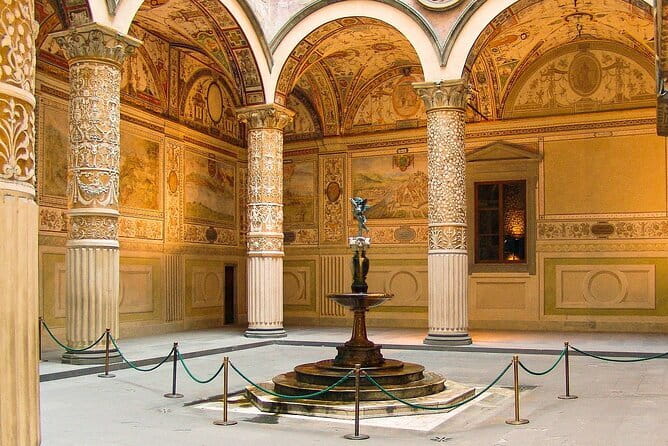
You also see the exterior of the Medici Palace, the family’s first residence. The palace is linked to Lorenzo the Magnificent and to Michelangelo’s years under Medici protection. That relationship is one of the more useful stories on the walk, since it shows how Renaissance art depended on personal sponsorship and political favor.
If the gates happen to be open, the group may enter the courtyard and garden. This is conditional, not something to count on. The uncertainty is part of the route’s character, but it also reinforces the need to keep expectations realistic. You are booking a city walk with possible access to a courtyard, not a guaranteed palace visit.
More Florence walks with a guide:
- Florence: Renaissance and Medici Tales Guided Walking Tour
★ 4.8 · 1,549 reviews - Florence: Uffizi & Accademia Small Group Walking Tour
★ 4.7 · 1,380 reviews - Skip-the-Line Florence Highlights and David Walking Tour
★ 5.0 · 1,127 reviews - Florence: Dark Mysteries and Legends Guided Walking Tour
★ 4.6 · 1,081 reviews
The Baptistery and Brunelleschi’s remarkable dome
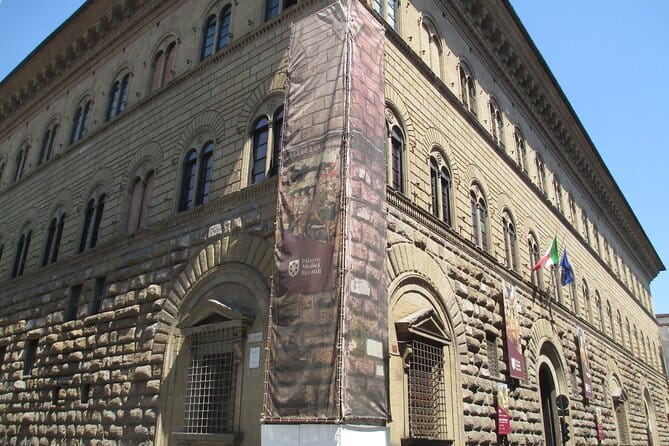
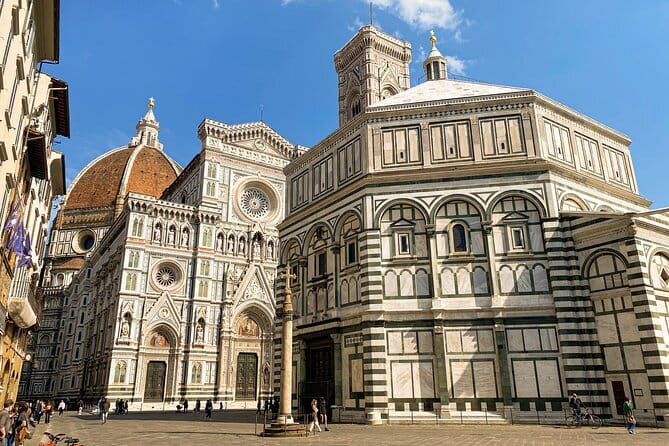
The walk continues to the Piazza del Duomo, one of Florence’s great visual moments. Here you look at the Baptistery of San Giovanni, identified as the oldest building in the city, with its famous Gates of Paradise.
The Baptistery is important not only for its age but also for the role it plays in Florence’s religious center. Its doors are among the most celebrated works associated with the Renaissance. From the square, the guide can help you read the building as part of a larger group rather than as an isolated monument.
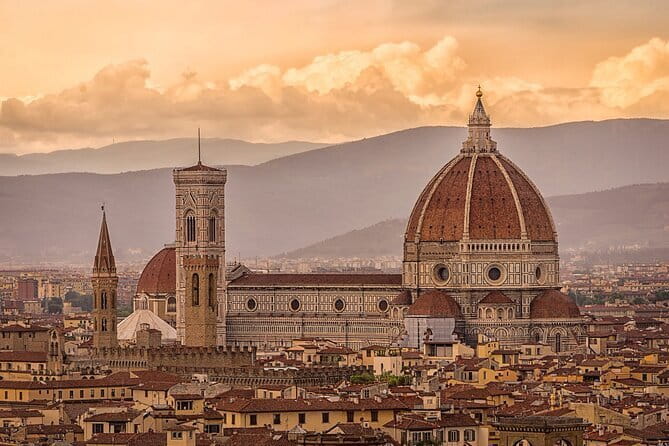
Then comes Santa Maria del Fiore, Florence’s cathedral. Its flower-shaped plan and enormous masonry dome dominate the skyline. Filippo Brunelleschi’s dome remains the architectural star of this square, and the story of how it was built gives the stop real substance.
The tour does not include a cathedral entry or a climb. That may disappoint anyone expecting a full Duomo visit, especially since the cathedral complex requires planning and separate tickets for its various parts. On the other hand, an exterior explanation is a practical way to get your bearings before deciding which Duomo sites deserve your time later.
I like this part of the tour because the scale is easy to miss when you are busy taking photos. A guide can point out the relationship between the Baptistery, cathedral, and dome, then explain why Brunelleschi’s solution was such a feat. You leave with a better sense of what you are looking at, not just a picture of a famous building.
Dante’s district and a quieter side of the old center
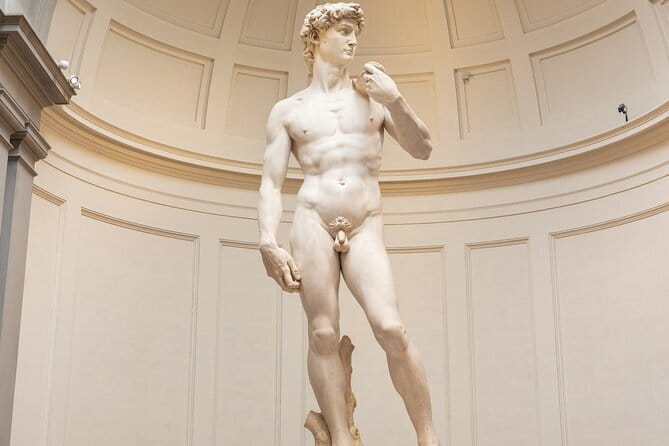
One of the more personal sections takes you through Dante’s district. You see Dante’s tower-house from outside and enter a church dating back about 1,000 years, the place where Dante met the woman who became his love and muse.
This stop shifts the mood. The Medici and Duomo sections focus on public power and major architecture. Dante’s neighborhood brings the story down to individual lives, memory, poetry, and the narrow streets of medieval Florence.
Because the tower-house is viewed from outside, you should not expect a full literary museum experience. Its value is in the setting and the story. It also offers a break from the better-known monuments and gives you a reason to notice the older street pattern around you.
Irina’s guiding style appears well suited to this kind of stop. She has been praised for explaining unusual details that are easy to miss, rather than simply moving from one postcard view to the next. She also answers questions about the city beyond formal history, including food, shopping, leather goods, and gelato.
Piazza della Signoria, an outdoor museum of Florence
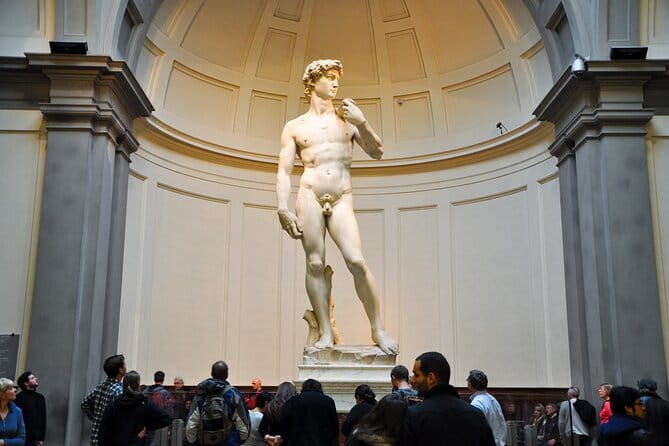
Piazza della Signoria is the political center of the route and one of Florence’s best open-air art spaces. You look at Palazzo Vecchio, a medieval fortress that once housed government offices, a prison for serious criminals, and the Medici residence.
The square itself is packed with original Renaissance sculptures. You can pause for about 10 minutes, but your guide’s explanation is what turns the collection from public decoration into political theater. These statues were placed where citizens, rulers, and visitors would see them. Their subjects and positions helped communicate power.
Again, Palazzo Vecchio is viewed from the outside on this tour. If you want its grand rooms, halls, and tower, you will need another visit. That is not a flaw if you understand the purpose of this experience. The walk gives you a clear overview and helps you choose where to spend more time later.
The square can be crowded, and hot weather can make a standing explanation tiring. Irina has adapted routes for rain and intense heat, and she has slowed the pace or found seating when someone had a leg injury. Still, you should wear comfortable shoes and be ready to spend much of the tour outdoors.
Ponte Vecchio, the right place to finish
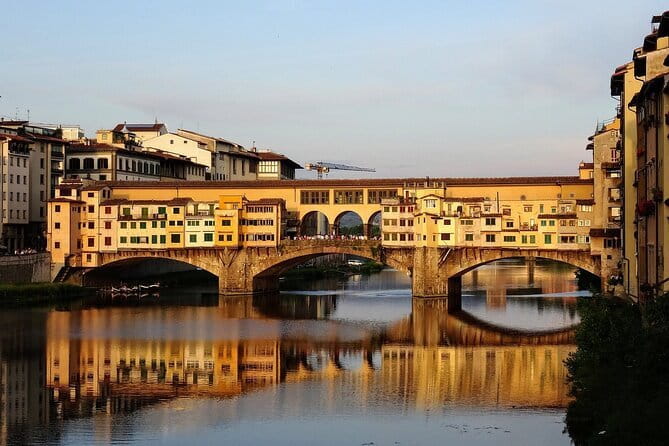
The final stop is Ponte Vecchio, the oldest bridge in Florence and one of the city’s defining symbols. Its jewelry shops hang above the Arno, giving the bridge a look unlike any other stop on the route.
Ending here is practical. You finish at a landmark that is easy to recognize and close to several directions for the rest of your day. You can continue along the river, explore the Oltrarno side, return toward the Duomo, or simply pause for photographs.
The bridge is also a fitting final lesson. Florence’s identity is not only churches and noble palaces. It is trade, commerce, craft, river crossings, and shops built into the city’s daily life. After the grand stories of the Medici and Brunelleschi, Ponte Vecchio brings you back to a working urban street.
The listed stop lasts about 15 minutes, though the total experience is approximately three hours. Ask your guide about the best next stop in the area, since Irina is known for offering suggestions for meals and the rest of your Florence visit.
What the private format adds
The private setup is the strongest practical reason to choose this tour over a standard group walk. Only your own party takes part, so you do not have to wait for strangers, compete to hear, or follow a pace that does not suit your group.
That matters for families. One parent can ask for shorter explanations, a child can ask questions without holding up a large group, and older relatives can take a slower pace. One family even received extra time without an added charge, though that should be viewed as a kindness rather than a guaranteed feature.
The private format also supports customization. Irina has tailored walks around specific interests, and she has adjusted plans during heavy rain. In one case, a wet day led to more time at the Medici Chapel, which became a fortunate change because the interior was relatively quiet.
You should not assume every request or weather change will produce the same result. The route remains an outdoor walking tour, and the experience requires good weather. If poor weather forces cancellation, you are offered another date or a full refund.
Who will get the most from this Florence tour
I would choose this walk if you are visiting Florence for the first time and want the city explained before tackling museums on your own. It covers the major landmarks efficiently and gives you a mental map for the rest of your stay.
It also suits families and mixed-age groups that want a private pace. Irina’s use of visual aids, willingness to answer questions, and ability to adjust for heat, rain, or mobility concerns are useful advantages.
Art lovers should note the limits. You receive context about major artists and buildings, but the listed route does not include standard museum or church admissions. If you want the Uffizi, Accademia, Medici Chapels, Palazzo Vecchio interiors, or a Duomo climb, book those separately.
The tour is less suitable if you have only one narrow interest, such as Renaissance painting or cathedral architecture. Its strength is breadth. You see many parts of central Florence and learn how they connect.
Practical details that affect your decision
The tour is offered in English and lasts about three hours. It begins at Santa Maria Novella and ends at Ponte Vecchio, with the route crossing much of the historic center on foot.
Public transportation is nearby at the meeting point, and service animals are allowed. Most people can participate, but this is still a walking experience through a historic city. Plan for outdoor conditions, pauses on your feet, and the possibility of crowds.
The price is $219.97 per person. For a solo visitor, that is expensive for an overview without broad admission coverage. For a private family or group, the personal attention can improve the value, particularly if you want local advice and a pace built around your own needs.
You can cancel for a full refund up to 24 hours before the start time. Changes or cancellations inside that window are not accepted for a refund. Since poor weather can cancel the experience, keep your schedule flexible if rain is likely.
Should you book it?
Book this tour if you want a personal introduction to Florence, prefer a private group, and value stories and local orientation more than ticking off museum interiors. Irina’s strengths are clear: art and history explanations, visual aids, flexible pacing, and useful advice for the rest of your stay.
Skip it if you expect entry to the major churches, palaces, or museums to be included. In that case, your money may be better directed toward a tour built around one specific interior collection.
For first-time visitors with three spare hours, this is a strong way to connect the city’s main landmarks. Just treat the pharmacy as the featured interior stop, wear good shoes, and plan separate visits for Florence’s major museums and monument interiors.
FAQ
How long is the Florence walking tour?
The tour lasts approximately three hours.
Where does the tour begin?
It begins at Fratellanza Militare Firenze, Piazza di Santa Maria Novella 18, near Santa Maria Novella.
Where does the tour end?
The tour ends at Ponte Vecchio, Florence’s Old Bridge, beside the Arno River.
Is this a private tour?
Yes. Only your own group participates in the activity.
What language is the tour offered in?
The tour is offered in English.
Does the tour include museum and church admission?
The listed route includes free admission to the Santa Maria Novella pharmacy. The churches, palaces, and other major sights are generally viewed from outside, so separate admission may be needed for interior visits.
What happens if bad weather cancels the tour?
If the experience is canceled because of poor weather, you are offered a different date or a full refund. You can also cancel up to 24 hours before the start time for a full refund.
More 3-Hour Experiences in Florence
- Eat Like a Local: Venice 3-Hour Small-Group Food Tasting Tour
★ 5.0 · 3,137 reviews - Naples: The Holy Mile 3-Hour Guided Tour
★ 4.9 · 711 reviews - Tour of the Costa degli Dei by boat, 3 hours with aperitif included
★ 5.0 · 667 reviews - Pompeii Private Tour with an Archaeologist and Skip The Line – 3 hours
★ 5.0 · 564 reviews
Recently reviewed around Florence
- Walking Food Tour of Florence with Tastings and Wine★ 5.0 · 518 reviews
- Florence Sunset Food Tour with Wine & Dine at a Tuscan farmhouse★ 5.0 · 194 reviews
- Wine Experience In Chianti Hills from Florence★ 4.5 · 195 reviews
- Wine Tasting Experience in Ponte Vecchio: Best Tuscany selection!★ 5.0 · 197 reviews
- Uffizi Gallery Timed Entry Admission Tickets★ 4.0 · 392 reviews
- Val d’Orcia Brunello Wine Tour with Montalcino and Montepulciano★ 4.5 · 359 reviews
- Uffizi Gallery Small Group Tour with Guide★ 4.5 · 879 reviews
- Early Access Guided Uffizi Gallery Tour Skip-the-Line Small Group★ 4.5 · 707 reviews
Walking Tours, compared.

Guided Walking Tour & Last Supper Visit with Ticket
Read our review →
Rialto Bridge & Offbeat Unusual Venice Walking Tour
Read our review →
Private 3 hrs Venice Tour: St Mark’s, Walking tour & Boat tour
Read our review →

Skip the line: Uffizi and Accademia Small Group Walking Tour
Read our review →
Trastevere & Campo de Fiori Street Food Walking Tour
Read our review →Browse the lists this tour appears in