
Review · BOLOGNA & EMILIA TOURS
Ravenna: UNESCO Monuments and Mosaics Guided Tour
Ravenna’s mosaics are not background decoration. They are the main event, glowing with gold, blue, and green glass in buildings that once served as the capital of the Western Roman Empire. This walking tour helps you read the images, from Justinian and Theodora in San Vitale to the starry ceiling that made Galla Placidia’s mausoleum famous.
I like the two tour lengths, which let you match the visit to your schedule. I also like the ticket-line access and the guides’ focus on small details, symbolism, and local stories. Guides such as Chiara, Marco, Serena, and Roberta, an archaeologist, have been praised for clear explanations and lively storytelling.
The main consideration is physical rather than artistic: you walk between the sites on cobblestones and uneven surfaces, and you may stand for much of the visit. The three-hour route also packs a lot into one morning or afternoon, so visitors who prefer slow, solitary viewing may want extra time afterward.
In This Review
- Key points to know before booking
- Why Ravenna’s mosaics deserve a guided visit
- Meeting at Piazza San Francesco
- The Essential Experience: three major monuments in two hours
- Neonian Baptistery: an early Christian room with Roman echoes
- San Vitale: imperial power in gold and glass
- The Mausoleum of Galla Placidia and its starry ceiling
- The Complete Experience: all five UNESCO monuments
- Chapel of Saint Andrew inside the Archbishop’s Museum
- Basilica of Sant’Apollinare Nuovo
- How the guiding affects what you see
- Timing, pace, and group comfort
- Is $33 a good price?
- Who should choose this tour?
- Practical advice for a better visit
- Should you book Ravenna’s mosaic tour?
- FAQ
- Where does the tour meet?
- How long does the tour last?
- What is included in the price?
- Which monuments are included in the Essential Experience?
- Which monuments are included in the Complete Experience?
- What languages are available?
- Do I need to bring earphones?
- Is the tour suitable for wheelchair users?
- Can I cancel or pay later?
Key points to know before booking
- Choose between two routes: The Essential Experience lasts two hours and covers three main monuments, while the Complete Experience lasts three hours and visits all five sites included in the combined ticket.
- Start at Piazza San Francesco: Check in inside the Tourist Information Office at number 7, then set off with your guide through the historic center.
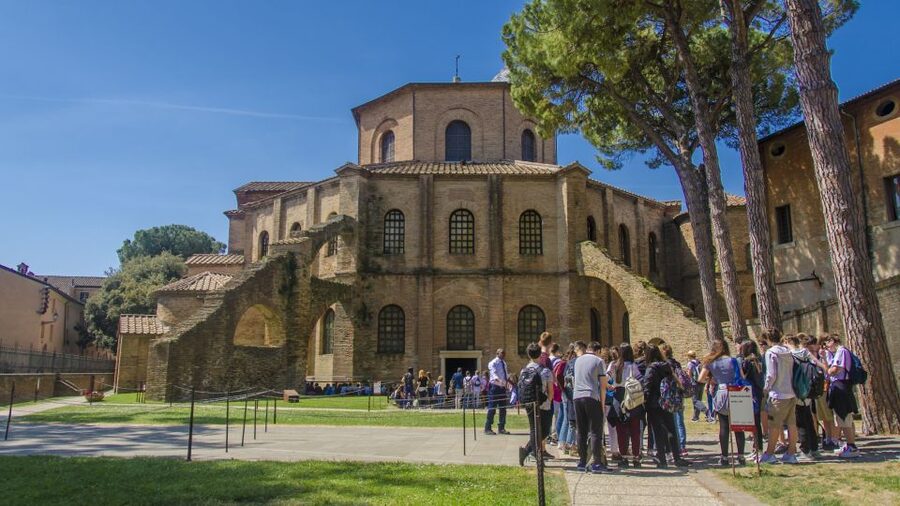
- See the famous imperial mosaics: San Vitale contains the celebrated portraits of Emperor Justinian and Empress Theodora.
- Look up at Galla Placidia: The small mausoleum is known for its deep blue ceiling scattered with golden stars.
- Admission is included: The price is $33 per person, with entrance tickets to the sites covered by your chosen route.
- Bring wired earphones: The radio guide requires earphones with a jack connection, which are not supplied.
Why Ravenna’s mosaics deserve a guided visit
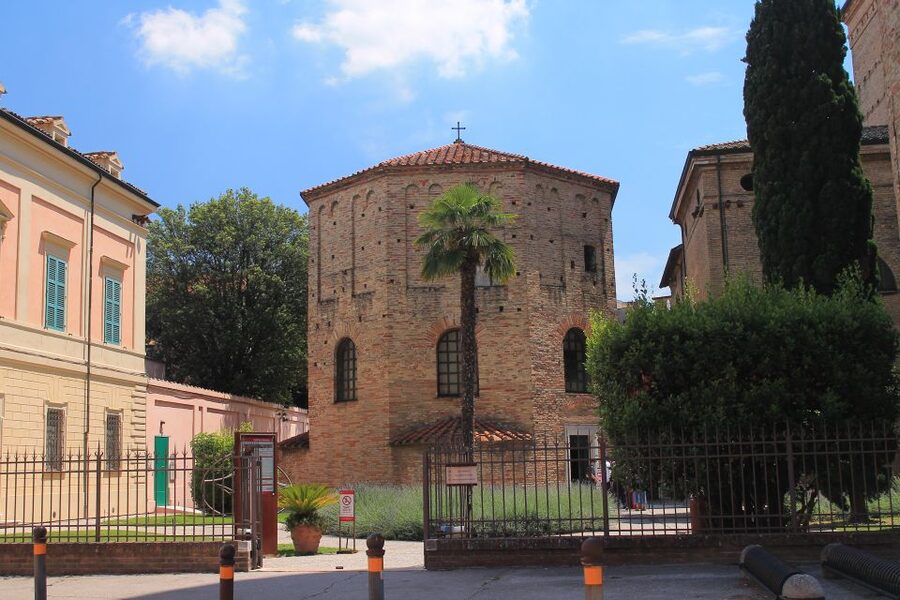
Ravenna can be easy to underestimate. The city center is pleasant and walkable, but the great interiors are often quiet and restrained from the outside. Step through the doors, though, and the walls begin to sparkle.
These mosaics were made more than 1,500 years ago from small pieces of colored glass and stone. They were not simply decorative. Their placement, gestures, clothing, animals, plants, and use of gold all carried meaning.
That is where a guide earns the admission price. Without help, you can admire the shine and the beauty. With a good explanation, you begin to notice how an emperor presents power, how a saint is identified, and how Ravenna’s art reflects both Roman traditions and influence from the eastern Byzantine world.
The tour also gives you a useful historical frame. Ravenna sat between East and West, and its monuments show that meeting point in architecture and imagery. You are not only looking at old churches. You are seeing a city shaped by shifting imperial power, Christian belief, and contact across the Adriatic.
More Bologna & Emilia trips worth a second look
- Guided Tour of Mosaic Tiles in Ravenna
★ 5.0 · 1,693 reviews - Bologna: Walking Food Tour with a Local Guide
★ 4.8 · 882 reviews - Guided group tour TastyBus: Parmesan Cheese and Parma Ham
★ 5.0 · 241 reviews
Meeting at Piazza San Francesco
Both tour options begin at the Tourist Information Office in Piazza San Francesco 7. Go inside and check in at the front desk rather than waiting outside the building. Staff register your booking and direct you to the guide.
This is a practical starting point because the route begins in the historic center and continues on foot. You do not need to arrange taxis or transfers between the monuments.
The guide speaks Italian, English, German, or French, depending on the departure. Language groups are organized separately, an important detail when you want explanations that are easy to follow.
You may be given a radio guide during the visit. Bring your own wired earphones with a jack connection. Bluetooth earbuds are not suitable unless you also have the correct adapter, so check your equipment before arriving.
The Essential Experience: three major monuments in two hours
The two-hour route is the sensible choice if Ravenna is part of a larger day trip or if you want the strongest concentration of art without filling your entire schedule. It visits the Neonian Baptistery, Basilica of San Vitale, and Mausoleum of Galla Placidia.
At the end, you may continue on your own to Basilica of Sant’Apollinare Nuovo. That gives the shorter option a useful bit of flexibility, though you should allow extra time if you want to see Sant’Apollinare properly rather than simply pass through.
The Essential Experience works well for first-time visitors who want the essential Ravenna story. You get a baptistery, a major basilica, and a small chapel, three very different settings that show how varied mosaic art can be.
The tradeoff is clear. You will not have the guided visit to the Chapel of Saint Andrew, and Sant’Apollinare Nuovo is not part of the guided portion. If Ravenna is the main purpose of your day, the three-hour route gives you a fuller picture.
Neonian Baptistery: an early Christian room with Roman echoes
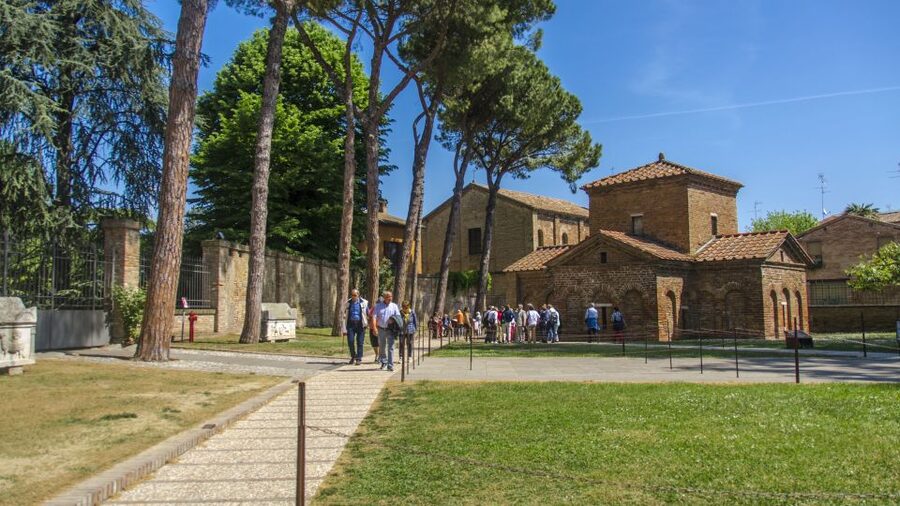
The Neonian Baptistery is one of Ravenna’s oldest buildings. Its interior is compact, making it easier to appreciate how carefully the decoration was arranged around the central baptismal pool.
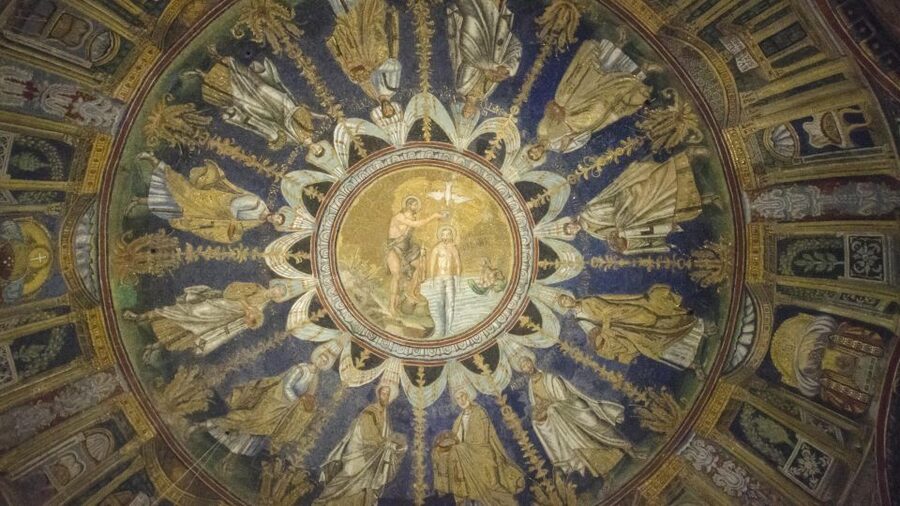
Look up at the dome, where the Baptism of Christ occupies the center. Around it, the apostles form a circular procession. The imagery has a distinctly Hellenistic-Roman character, with movement, drapery, and figures that feel more naturalistic than the formal scenes you will see elsewhere.
A guide helps you understand the room’s purpose. Baptism was not a private decorative moment. It marked entry into the Christian community, and the building’s shape and imagery were designed around that ritual.
The baptistery is also a good early stop because it teaches you how to look. Notice the repeated patterns, the use of color, and the way the circular dome directs your eye toward the central scene.
Seating is limited across the monuments, and the baptistery is not a place to linger casually with a large group. Stand where your guide indicates, listen to the explanation, and then take your photographs when there is room.
A different way to spend the day, same part of Italy:
- Bologna: City Center Walking Tour
★ 4.5 · 3,478 reviews - Maranello: Ferrari Museum Entrance Ticket
★ 4.6 · 1,505 reviews - Bologna Food & Market Tour with 6 Tastings, Pasta, Wines & More
★ 5.0 · 1,328 reviews - Bologna Food Experience: Factory tours & Family-Style Lunch
★ 5.0 · 1,201 reviews
San Vitale: imperial power in gold and glass
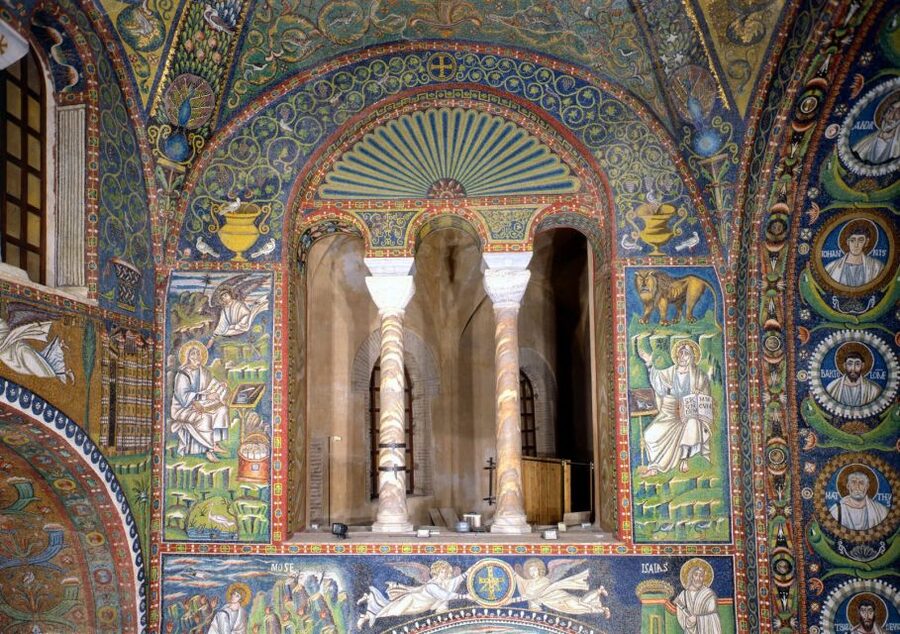
Basilica of San Vitale is the visual high point for many people. Its architecture rises dramatically, but the mosaics are what hold your attention. Gold backgrounds catch the light, while the figures seem to float outside ordinary time.
The most famous panels show Emperor Justinian and Empress Theodora with their attendants. These are not relaxed family portraits. Their clothing, jewels, position, and formal expressions communicate rank and authority.
Your guide can point out details that are easy to miss from the floor. The figures are not arranged at random, and the objects they carry are tied to Christian worship and imperial power.
San Vitale also shows how architecture and mosaic work together. The curved walls, arches, and upper galleries create a shifting view as you move through the building. The building is not merely a box covered with pictures. Its structure shapes how the images are seen.
This is one of the places where ticket-line access matters most. If the entrance is busy, moving through with the group saves time that you can use inside. The tour generally allows time for photographs and personal viewing after the guide’s explanation, though the exact pace depends on crowd levels and the group.
The Mausoleum of Galla Placidia and its starry ceiling
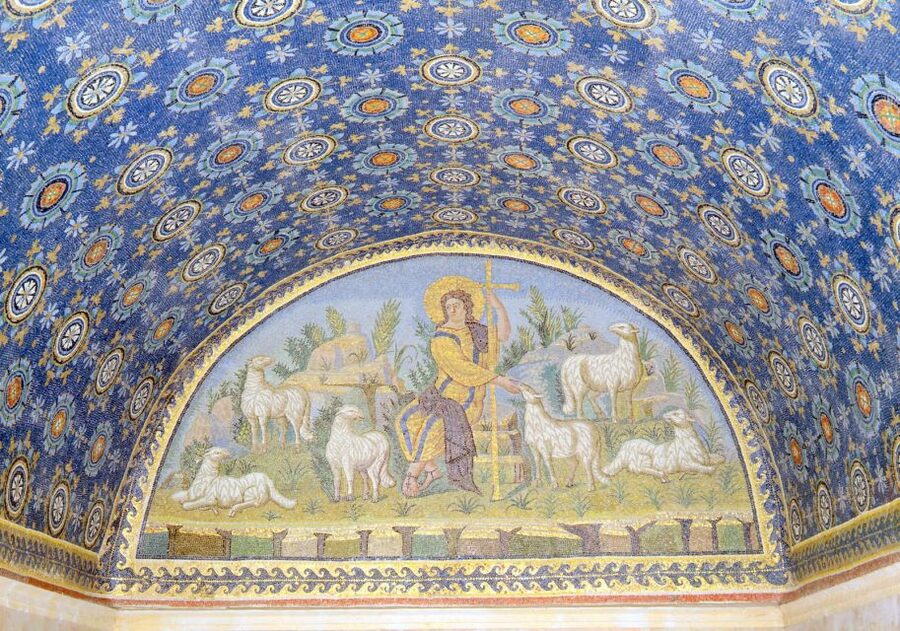
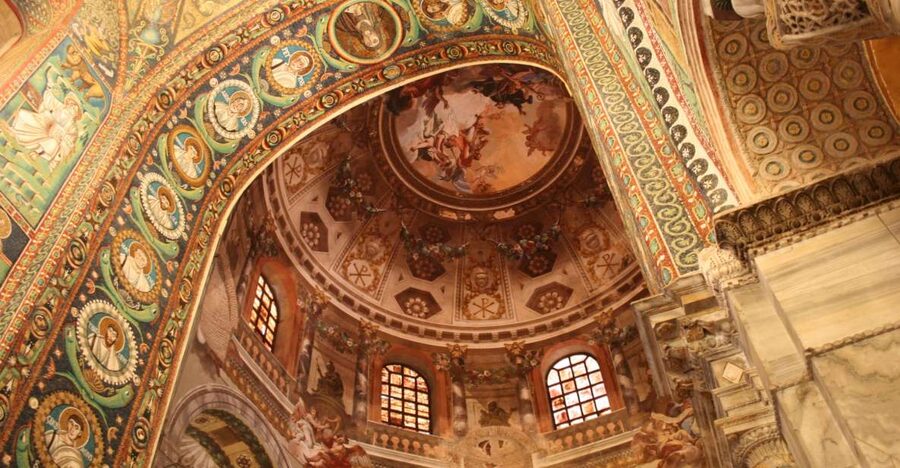
The Mausoleum of Galla Placidia is smaller and more intimate than San Vitale. Its exterior is modest, but inside, the dark blue ceiling is scattered with golden stars around a central cross.
This is the room many people remember most clearly. The contrast is strong: a dim interior, deep blue surfaces, and points of gold that make the ceiling seem almost endless.
The chapel’s design rewards a slow look upward. The stars are not just a pretty pattern. The entire room creates a sense of the heavens, with Christian symbols placed within that celestial setting.
Dante Alighieri is said to have been inspired by the mausoleum’s starry interior. A guide may also connect the building to Ravenna’s later place in Italian literary memory, including the story of Dante’s remains and their movement around the city.
Because the chapel is small, crowd control affects the experience. You may need to share the best viewing spots with other groups. A good guide makes a real difference here by positioning the group sensibly and directing attention to the most important details without blocking the room.
The Complete Experience: all five UNESCO monuments
The three-hour option adds the Chapel of Saint Andrew and Basilica of Sant’Apollinare Nuovo to the three sites above. It is the better pick if Ravenna’s mosaics are a central reason for your visit.
The extra hour is not filler. It adds two sites with different scale and character, helping you see how mosaic decoration developed across several buildings and settings.
You still walk at a relaxed pace, but the route covers more ground and includes more time on your feet. If you have mobility concerns, the activity is described as wheelchair accessible, but the route may include cobblestones and uneven surfaces. Contact the provider before booking if you need to confirm how the route will work for your specific needs.
Chapel of Saint Andrew inside the Archbishop’s Museum
The Chapel of Saint Andrew is located inside the Archbishop’s Museum. It is an early Christian archiepiscopal chapel, preserved in a setting that feels more private than the large basilicas.
Its importance comes partly from its survival. This is a small, highly decorated space that gives you another example of how religious authority used art to shape a visitor’s experience.
Because the chapel is part of a museum complex, the stop adds a different rhythm to the tour. You are not only moving from basilica to basilica. You are seeing a preserved chapel within a wider collection.
The Complete Experience is the only option that includes this visit with the guide. If you are fascinated by early Christian art rather than interested only in the most famous interiors, this extra stop is worth the added hour.
Basilica of Sant’Apollinare Nuovo
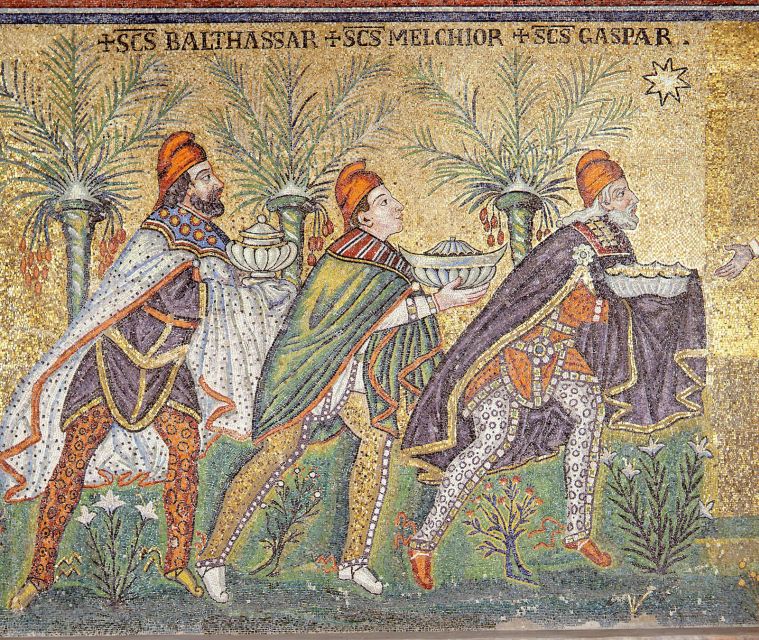
Sant’Apollinare Nuovo contains one of the longest and most striking mosaic cycles in Ravenna. Its walls show scenes connected with the life of Christ, arranged in long bands that lead your eye through the nave.
The scale changes the way you look. In Galla Placidia, you study a ceiling. In San Vitale, you compare imperial figures. At Sant’Apollinare Nuovo, you follow a visual sequence across the length of the church.
The mosaics also give you a chance to notice repeated figures, gestures, buildings, and landscapes within the scenes. A guide can explain how the panels are arranged and how political and religious ideas appear in the imagery.
The Essential Experience lets you visit this basilica independently afterward, but the Complete Experience includes the guide’s explanation. For many people, that makes the extra hour worthwhile, especially if you want help understanding the sequence rather than simply admiring the individual panels.
How the guiding affects what you see
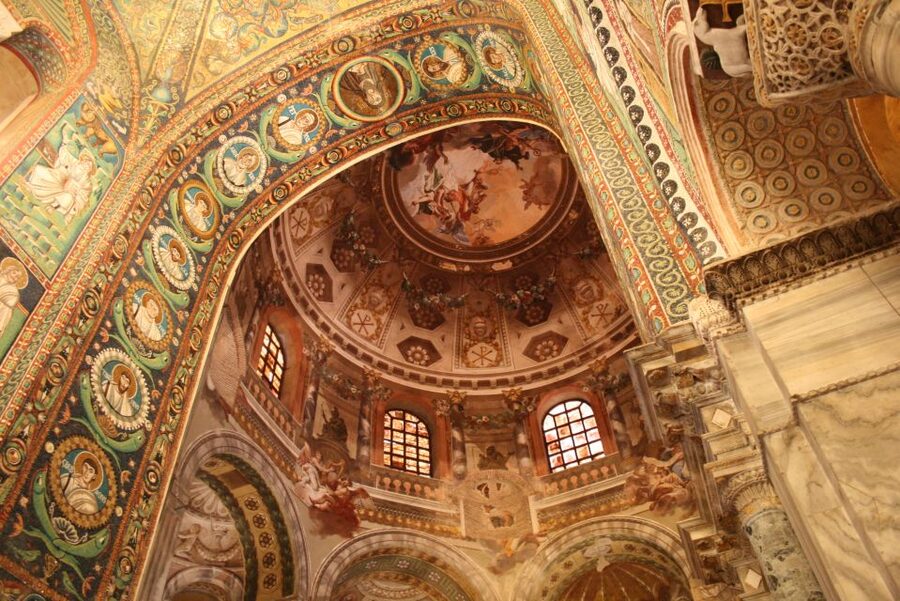
The strongest part of this experience is the interpretation. Guides are not limited to reciting dates. The best examples from this tour include explanations of religious symbols, historical context, architecture, and small visual details.
Roberta, described as a qualified archaeologist, is the sort of guide suited to visitors who want period knowledge presented clearly. Marco has been praised for combining historical detail with humor, and Serena for handling difficult questions with insight.
Other guides, including Chiara, Celia, Cinzia, Sergio, Ivan, Elisabeth, and Baldo, have been singled out for different strengths: local stories, patience, clear English, passion for Ravenna, and the ability to keep a group moving.
That variety means your exact style may differ by departure. Still, the consistent aim is clear: help you understand what you are looking at. One guide even included a bathroom stop during a well-paced visit, a small but useful touch during three hours of walking and standing.
A guide can also handle practical problems. During one rainy visit, Chiara stopped at a gift shop so the group could buy umbrellas. During a city marathon, Marco worked the group through the crowds with humor and care.
Timing, pace, and group comfort
The listed duration is two to three hours, depending on the option you choose. The pace is described as relaxed, but this is still an active walking tour.
You move between monuments through Ravenna’s old streets. Some surfaces are cobbled or uneven, and not every site offers seating. Wear shoes you can walk in comfortably, and be ready to stand while looking upward for long stretches.
The tour can be efficient without feeling rushed. Several visitors have found that the guide gives an explanation, leaves time for photographs, and then moves on. That balance matters because the interiors are visually dense. You need both context and a few quiet minutes to look for yourself.
Small groups are possible. One reported group had only five people, while another had eight. Group size may vary by departure, so do not book on the assumption that every tour will be tiny.
The radio system is useful when several groups are inside the same monument. Just remember to bring the correct earphones, and keep your ID or a copy with you, as requested.
Is $33 a good price?
At $33 per person, this is a strong value if you choose the Complete Experience and visit all five sites. The cost includes the expert local guide and entrance tickets to the monuments on your route, so you are not paying only for a walk through the streets.
The ticket-line access adds practical value. Ravenna’s most famous sites can draw queues, and entering with the group helps you spend your limited time looking at mosaics rather than waiting outside.
The Essential Experience may be the better financial and time choice if you have only a short stop or plan to return independently to Sant’Apollinare Nuovo. The Complete Experience is better value for an art-focused visit because it adds two important interiors and gives you a connected explanation across all five monuments.
You can reserve now and pay later, and cancellation is free up to 24 hours before the start time. Those terms help if your Emilia-Romagna plans are still shifting.
Who should choose this tour?
I would choose this experience if you are visiting Ravenna for the first time, especially if you are arriving from Bologna for the day. One visitor took the early train from Bologna, toured the monuments, then stayed for lunch, shopping, and a walk before returning by train.
It also suits solo visitors. A guided route removes the awkwardness of navigating admissions and deciding where to stand, while the historical explanation gives shape to what could otherwise feel like a string of beautiful rooms.
Art lovers, church architecture fans, and anyone curious about the Byzantine world will get the most from it. Families with older children may also appreciate the stories and visual clues, though the standing time may test younger visitors.
You may not need it if you have already studied Ravenna’s mosaics closely and prefer to move at your own speed. In that case, use the tour as a framework, then return to the sites that caught your eye.
Practical advice for a better visit
Arrive inside the Tourist Information Office in Piazza San Francesco a little before the scheduled start so check-in does not delay the group. Bring an ID or a copy, plus wired earphones with a jack connection.
Wear comfortable shoes and carry water, especially if you choose the three-hour route. The monuments are indoors, but the route between them is on city streets, including uneven sections.
If you want photographs, use the time after each explanation carefully. Ask your guide where the best viewpoints are. One of the useful habits reported from the tour is that guides position the group so people can see details without blocking one another.
Do not bring pets. The activity is listed as wheelchair accessible, but the cobblestones, uneven surfaces, and limited seating deserve serious consideration before you book.
Should you book Ravenna’s mosaic tour?
Yes, if you want to understand Ravenna rather than simply collect photographs of its churches. The guides bring out the symbols, imperial messages, and tiny details that are easy to miss on your own, while included admission and ticket-line access keep the visit efficient.
Choose the Essential Experience for a focused two-hour introduction. Choose the Complete Experience if Ravenna is a priority and you want all five UNESCO monuments with a connected explanation.
I would book the three-hour option for a dedicated Ravenna visit, then leave time afterward to wander and revisit your favorite mosaic interiors at your own pace.
FAQ
Where does the tour meet?
The meeting point is the Tourist Information Office at Piazza San Francesco 7. Enter the office and check in at the front desk.
How long does the tour last?
The Essential Experience lasts two hours. The Complete Experience lasts three hours.
What is included in the price?
The price includes an expert local guide and entrance tickets to all the sites included in your chosen tour option.
Which monuments are included in the Essential Experience?
The shorter route includes the Neonian Baptistery, Basilica of San Vitale, and Mausoleum of Galla Placidia. You may continue independently to Basilica of Sant’Apollinare Nuovo afterward.
Which monuments are included in the Complete Experience?
The three-hour route includes the Chapel of Saint Andrew, Neonian Baptistery, Basilica of San Vitale, Mausoleum of Galla Placidia, and Basilica of Sant’Apollinare Nuovo.
What languages are available?
The live guide is available in Italian, German, English, and French.
Do I need to bring earphones?
Yes. Bring your own earphones with a jack connection for the radio guides.
Is the tour suitable for wheelchair users?
The activity is listed as wheelchair accessible. However, the route may include cobblestones and uneven surfaces, and some monuments may not offer seating.
Can I cancel or pay later?
You can cancel up to 24 hours in advance for a full refund. The reserve-now, pay-later option lets you book without paying immediately.
Recently reviewed around Bologna & Emilia
- Guided group tour TastyBus: Parmesan Cheese and Parma Ham★ 5.0 · 241 reviews
- Tour Parmigiano Reggiano dairy and Parma ham★ 5.0 · 601 reviews
- Tasting and Biking Parma★ 5.0 · 218 reviews
- Private Half Day Parma Food Walking Tour★ 5.0 · 561 reviews
- Cavedoni Balsamic Vinegar Tour: The Oldest in Modena★ 5.0 · 267 reviews
- Bologna on the plate, Cooking Class with Alessia★ 5.0 · 260 reviews
- Bologna Private Highlights & Hidden Gems Tour with a Local★ 5.0 · 359 reviews
- Bologna Local Pasta Cooking Class, Ragu, Spritz, Wine & Gelato★ 5.0 · 527 reviews
Bologna & Emilia Tours, compared.
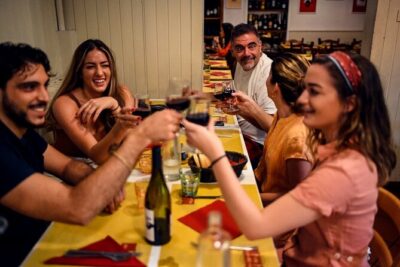
Bologna Food & Market Tour with 6 Tastings, Pasta, Wines & More
Read our review →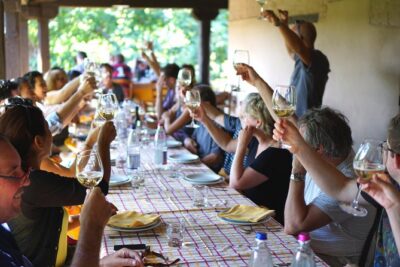
Bologna Food Experience: Factory tours & Family-Style Lunch
Read our review →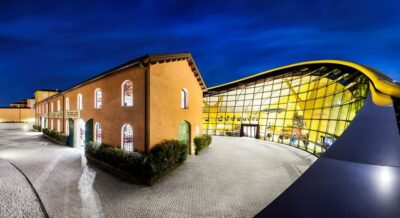
Maranello and Modena: Ferrari Museums Combo Tickets
Read our review →
Browse the lists this tour appears in