Review · TICKETS
Rome: Catacombs of St. Callixtus Entry Ticket & Guided Tour
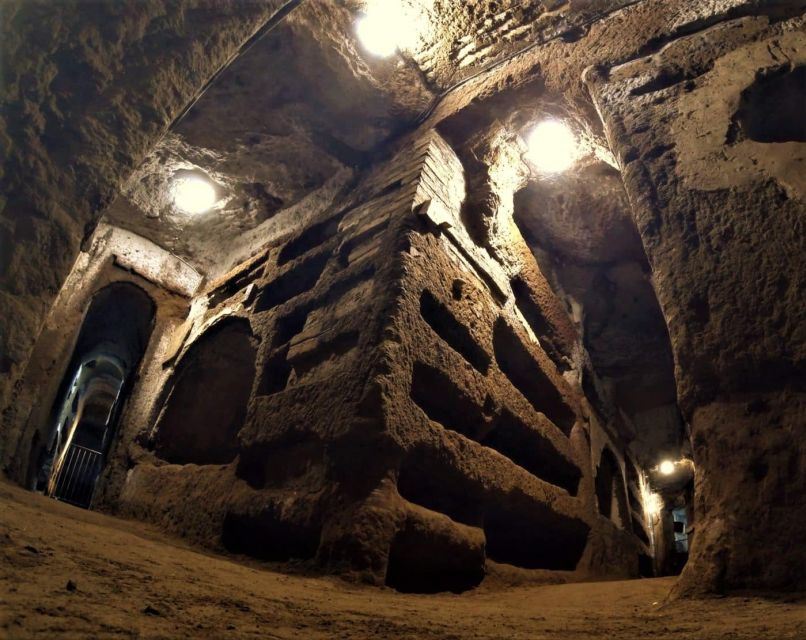
The most striking thing here is the scale. Beneath Rome’s Appian Way lies one of the city’s largest Christian burial sites, with corridors and chambers linked to an estimated half a million Christians. The tour brings you to the Crypt of the Popes, where nine popes and three bishops were buried, then to the Crypt of St. Cecilia and some early Christian wall paintings.
I like the low $16 price and the way a live guide turns a short visit into a clear lesson about Rome’s first Christian communities. I also like the cool underground temperature, around 15°C according to one visitor, which makes this a welcome break on a hot Roman day. The main drawback is the short 30-minute visit, and the site is outside the center, so getting there takes planning.
In This Review
- Key points to know before you go
- Why the Catacombs of St. Callixtus are worth your time
- From the ticket office to the underground passages
- The Crypt of the Popes
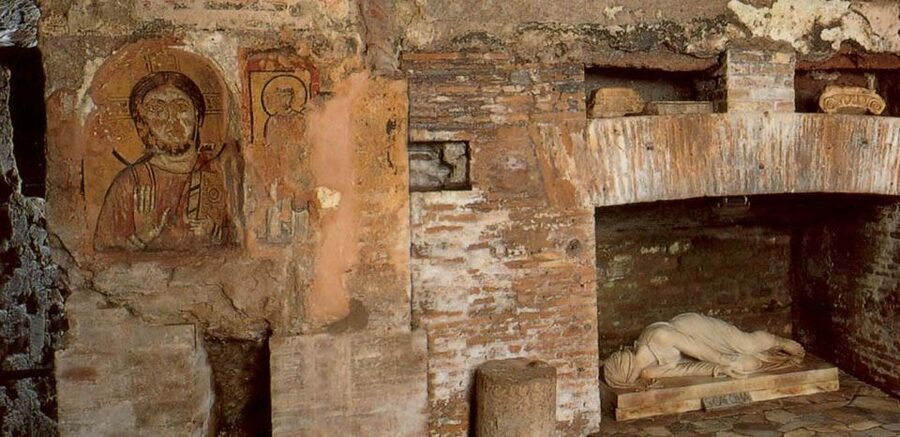
- The Crypt of St. Cecilia
- Early frescoes and Area I
- What the half-million burial estimate tells you
- A short tour with a lot packed into it
- Reaching the Appian Way site
- Who will enjoy this visit most
- Is $16 good value?
- Small details that make the visit better
- Should you book the Catacombs of St. Callixtus?
- FAQ
- How long does the Catacombs of St. Callixtus tour last?
- What does the $16 price include?
- Which languages are available?
- Can I take photographs inside the catacombs?
- How early should I arrive?
- Is the tour suitable for people with claustrophobia or mobility impairments?
Key points to know before you go
- Nine popes are connected to the Crypt of the Popes, along with three bishops.
- The tour is fully guided, so you stay with the group rather than exploring independently.
- Photography is forbidden inside, including the underground chambers and frescoes.
- The catacombs are cool and sometimes tight, so wear comfortable clothes and shoes.
- Public transport works, but allow extra time and read the meeting instructions carefully.
- This is a burial site, not a bone display, and the focus is history, faith, architecture, and burial customs.
Why the Catacombs of St. Callixtus are worth your time
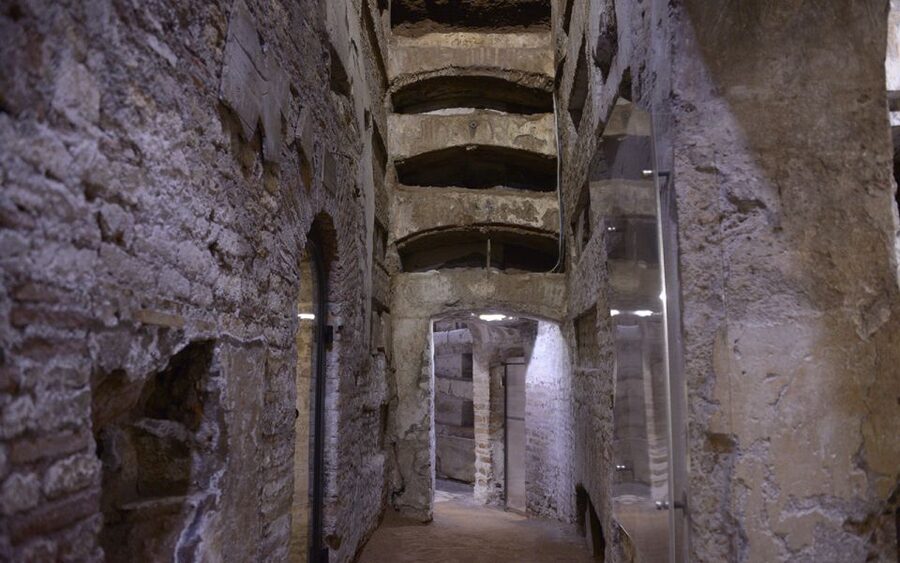
Rome is full of grand monuments, but the Catacombs of St. Callixtus offer a different kind of history. Here, the story is not told through marble columns or huge public buildings. It is told through narrow underground passages, small burial chambers, worn inscriptions, and the traces of a Christian community that lived almost 2,000 years ago.
The catacombs were the oldest official cemetery of Rome’s Christian community. The name comes from Callixtus, who was linked with the administration and care of the cemetery before becoming pope. A guide helps connect that name to the wider story of Christian burial in ancient Rome.
You should not expect a theatrical attraction or a spooky show. This is a religious and archaeological site. The mood is quiet and respectful, and the value comes from understanding what you are seeing. Without a guide, many of the chambers would look like plain stone corridors. With one, the site becomes easier to read.
More Rome trips worth a second look
- Vatican: Museums & Sistine Chapel Entrance Ticket
★ 4.5 · 144,003 reviews - Rome: Pantheon Fast-Track Ticket and Official Audio Guide
★ 4.3 · 21,008 reviews - Rome:Hop-On Hop-Off Panoramic Open Bus Ticket 3 Circuits x 1
★ 4.0 · 15,405 reviews
From the ticket office to the underground passages
Go directly to the catacomb ticket office and show your voucher at least 10 minutes before your scheduled time. This detail matters because the meeting point information can be confusing. The entrance is in front of the ticket office, and some people have found the location described as being roughly 100 meters away from the point shown on their booking information.
Do not assume that showing the voucher is the final step. You may need to exchange it for an entry ticket at the ticket counter. Arriving early gives you time to sort this out without rushing.
The visit is conducted in a group, and you must stay with the guide. That keeps the tour orderly and protects the site, but it also means this is not the right choice if you want to wander at your own pace or stop for long periods at one chamber.
The guides speak Italian, French, German, and English. Names can vary by departure. Guides praised for their clear explanations and friendly manner have included Francesca, Sam, Fr Peter, Comfort, Arishba, and Don Sam. One guide was an archaeologist, while another was a newly ordained priest, so the tone can vary from archaeological detail to a stronger religious perspective.
The Crypt of the Popes
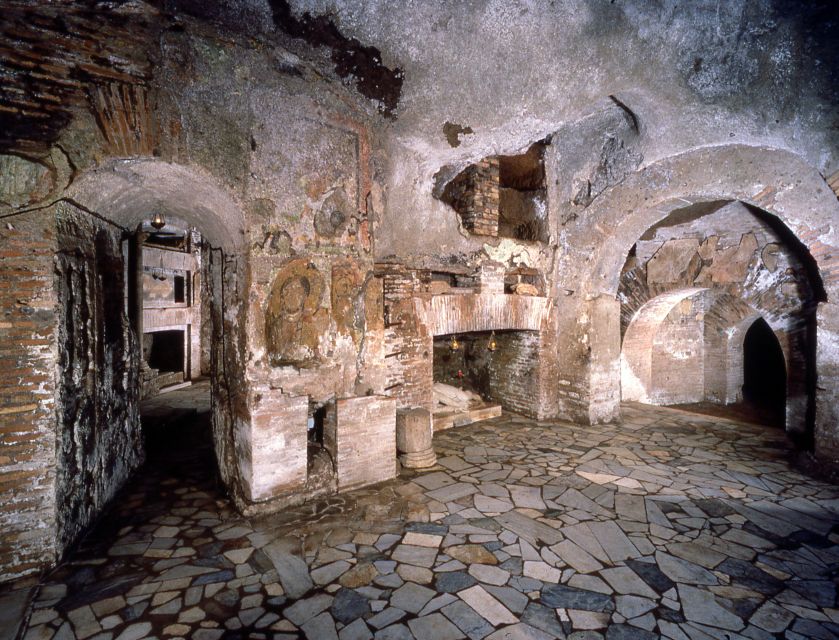
The first major highlight is the Crypt of the Popes. Nine popes and three bishops were laid to rest here, making this one of the most important areas in the complex.
The room is not a grand papal tomb in the style of St. Peter’s Basilica. Its importance is more direct and human. The space shows how early Christian leaders were buried within the community they served. The guide explains the role of the popes and helps you understand why this modest chamber matters.
This is also a good example of why the tour works best with a live guide. You are not simply looking at an empty room and trying to imagine its former use. The explanations give the chamber a place in the development of Christianity in Rome.
The word crypt can create the wrong expectation. You will not see exposed remains here. Several people have arrived expecting skeletons or piles of bones, only to find burial spaces and historical evidence instead. If you want an underground site focused on visible human remains, this is not that experience.
The Crypt of St. Cecilia
Next comes the adjoining Crypt of St. Cecilia. Cecilia was a Roman matron remembered for helping ensure that martyrs received proper burial.
Her story gives the tour a more personal focus. The catacombs were not only places where church leaders were buried. They were also cared for by members of the Christian community, including people who helped preserve the dignity of those who had died.
The guide explains Cecilia’s connection to the site and the traditions surrounding her. You may find this part especially meaningful if you are interested in Christian history, saints, or the development of early religious communities in Rome.
At the same time, the chamber is best appreciated through the explanation rather than through dramatic physical remains. The experience asks you to picture the people and customs behind the rooms, not to expect a large collection of objects.
A different way to spend the day, same part of Italy:
- Vatican Museums & Sistine Chapel Tour with Optional Basilica
★ 4.3 · 67,413 reviews - Colosseum, Roman Forum & Palatine Guided Tour
★ 4.7 · 63,148 reviews - Vatican Museums, Sistine Chapel & St Peter’s Basilica Guided Tour
★ 4.5 · 39,149 reviews - Rome: Colosseum, Palatine Hill and Roman Forum Guided Tour
★ 4.8 · 32,814 reviews
Early frescoes and Area I
The tour also includes some of the oldest frescoes found in Rome’s catacombs. These paintings are valuable because they show how early Christians used images and symbols in burial spaces.
The wall paintings are not bright, polished works like those in the Vatican Museums. They are old, delicate, and preserved in an underground setting. Lighting can be limited in places, and one person suggested that brighter paths and corners would help older visitors. Move carefully and listen closely when the guide points out details.
Area I contains the cubicles of the sacraments. These small burial rooms offer a glimpse of how the catacomb was arranged and how family or community spaces were used. The word cubicle here refers to a burial chamber, not a modern room. Your guide explains how these areas fit into the larger cemetery.
Because photography is forbidden inside, you will need to rely on your own attention rather than your phone. That may feel restrictive, especially when you see old paintings or unusual stonework, but it helps keep the visit quiet and protects the site.
What the half-million burial estimate tells you
The estimated number of people buried in the Catacombs of St. Callixtus gives the visit its real scale. The tour itself covers only a small section of a much larger underground complex, said to extend for about 20 kilometers.
That does not mean you walk 20 kilometers. You see selected areas on the guided route. Still, the figure helps you understand that this was not a single tomb or a small family cemetery. It was a major burial ground used by a large Christian population over many generations.
The passages also show how much work went into creating and maintaining underground cemeteries. The site reflects changing burial traditions, the place of martyrs in Christian memory, and the growth of Christian communities in Rome.
You should allow the guide’s explanations to do some of the work. The tunnels themselves can seem repetitive, with similar walls and openings. The stories of the people buried there give each section a clearer purpose.
A short tour with a lot packed into it
The scheduled duration is 30 minutes. That sounds brief, and it is. You will not receive an extended archaeological study or free time to explore every corner.
Still, the route packs several important elements into that half hour: the history of the cemetery, the meaning of its name, the Crypt of the Popes, the Crypt of St. Cecilia, the early frescoes, and Area I. Some guides run a little longer when there are questions or when the group needs extra explanation.
I see the length as a benefit for many visitors. You can fit the catacombs into a day that already includes the Colosseum, the Forum, or the Appian Way. Families with older children and teenagers can also manage a half-hour underground visit without the fatigue that comes with a much longer museum tour.
The short format is less suitable if catacombs are your main interest. In that case, you may wish for more time, more chambers, and a slower look at the artwork. For most people, though, 30 minutes provides a useful introduction at a reasonable price.
Reaching the Appian Way site
The Catacombs of St. Callixtus are not in central Rome. From Termini Station, take Metro A toward Anagnina to San Giovanni, then bus 218 toward Ardeatina. Get off at Fosse Ardeatine, where the catacomb entrance should be in front of you.
Another route uses Metro B toward Laurentina. Get off at Colosseo or Circo Massimo, walk to the Terme Caracalla or Porta Capena bus stop, then take bus 118 toward Appia or Villa Dei Quintili. Leave the bus at Catacombe di San Callisto.
Public transport is possible, but do not cut the timing close. Bus waits can add 20 minutes, and the site is farther out than many first-time visitors expect. One practical plan is to schedule the catacombs as part of an Appian Way day rather than treating them as a quick stop between central attractions.
Getting back can be less simple than getting there. A taxi or ride-hailing car may be the easier choice after the visit, especially if you are traveling alone or have a fixed reservation elsewhere. The area around the site is peaceful and green, but it does not feel like central Rome, where a taxi is always passing.
Who will enjoy this visit most
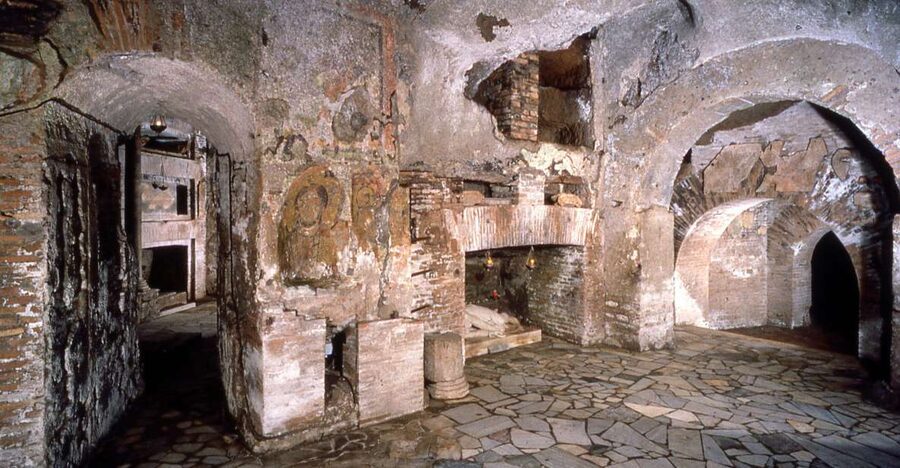
I would choose this tour for anyone interested in ancient Rome, early Christianity, archaeology, or the ways communities cared for their dead. It is also a good choice for families with older children and teens, particularly if you explain beforehand that the tour is about burial chambers and history, not visible skeletons.
The site can offer a break from Rome’s hot streets. Underground temperatures are cool, so bring a light jacket or sweater even in summer. Wear shoes that feel secure, and choose comfortable clothing.
This is not suitable for people with mobility impairments or claustrophobia. The underground setting may feel uncomfortable if tight passageways or enclosed spaces make you anxious. Baby carriages are not allowed.
The atmosphere is reverent rather than frightening. That makes it a good fit for visitors who want a thoughtful historical stop, but not for anyone seeking a dramatic haunted attraction.
Is $16 good value?
At $16 per person, this is one of Rome’s more affordable guided historic experiences. The price includes the entry ticket and a live tour guide, with no separate food, drink, or hotel transfer included.
The value comes from the interpretation. You are paying for access to a site that is difficult to understand on your own, plus a guide who explains the popes, martyrs, burial traditions, frescoes, and Christian communities connected to it.
The price is especially fair if you are already planning to visit the Appian Way area. If you must make a special trip across Rome and then pay for a taxi both ways, your total cost will be higher. That is the main budget question to consider.
The tour has a rating of 4.6 from more than 3,000 bookings, and the strongest praise centers on the guides. Francesca, Sam, Fr Peter, Comfort, Arishba, and Don Sam have all been singled out for clear explanations, patience, humor, or a respectful approach. You cannot choose a particular guide in advance, but the staff’s ability to make a short visit engaging is an important part of the value.
Small details that make the visit better
Arrive early, especially if you are using a bus. Show your voucher at the ticket office at least 10 minutes before the scheduled time, and confirm that you have the correct entry ticket before joining the group.
Bring a sweater for the underground temperature. Comfortable shoes matter more than fashionable ones, since you are walking through an old burial complex rather than a smooth modern gallery.
Keep your phone in your pocket. Photography is not allowed inside, and the visit is fully guided. Listen for the guide’s explanation of the spaces instead of trying to record everything.
If you have questions, save them for the end or ask when the guide pauses. Several guides make time for questions, and one continued explaining nearby points of interest after the formal tour ended. That extra conversation can help you connect the catacombs with other sights around the Appian Way.
Should you book the Catacombs of St. Callixtus?
Book this tour if you want a short, affordable look at an important Christian burial site and you are willing to travel beyond central Rome. The Crypt of the Popes, Crypt of St. Cecilia, old frescoes, and sacrament chambers give the half-hour visit plenty of substance.
I would skip it if you dislike enclosed spaces, need step-free access, want to explore alone, or expect to see bones. I would also avoid squeezing it into an already crowded schedule, since the journey takes time and the meeting point needs care.
For most history-minded visitors, the combination of low price, strong guides, and unusual subject matter makes this a worthwhile addition to Rome. Just plan the transport, bring a light layer, and arrive ready for a quiet lesson beneath the Appian Way.
FAQ
How long does the Catacombs of St. Callixtus tour last?
The scheduled tour lasts 30 minutes. Some visits may run a little longer if the guide answers questions or adds extra information.
What does the $16 price include?
The price includes entry to the Catacombs of St. Callixtus and a guided tour. Hotel transfers, food, and drinks are not included.
Which languages are available?
Guided tours are available in Italian, French, German, and English.
Can I take photographs inside the catacombs?
No. Photography is not allowed inside the catacombs.
How early should I arrive?
Go directly to the catacomb ticket office and show your voucher at least 10 minutes before the scheduled tour. You may need to exchange the voucher for an entry ticket.
Is the tour suitable for people with claustrophobia or mobility impairments?
No. The activity is not suitable for people with mobility impairments or claustrophobia. Baby carriages are also not allowed.
Recently reviewed around Rome
- Ancient Rome at Twilight Walking Tour★ 5.0 · 276 reviews
- Domus Aurea Guided Tour: The Golden House of Nero★ 4.5 · 199 reviews
- Early Vatican Museums & Sistine Chapel Small Group Tour★ 4.5 · 314 reviews
- Early Vatican Museums Tour: The Best of the Sistine Chapel★ 4.5 · 900 reviews
- Jewish Ghetto & Piazza Navona: Food, Wine & Sightseeing Rome Tour★ 5.0 · 460 reviews
- 3 Days in Sorrento, Capri & Pompeii: la Dolce Vita★ 4.0 · 595 reviews
- Tivoli Villas Full Day Trip From Rome with Lunch★ 4.0 · 443 reviews
- Cook With Us in Rome: A Hands-On Cooking Experience 09:20AM class★ 5.0 · 234 reviews
Tickets, compared.
Vatican: Museums & Sistine Chapel Entrance Ticket
Read our review →
Cathedral and Duomo’s Terraces Entrance Ticket
Read our review →

Skip-The-Line Uffizi Gallery Timed Entry Ticket
Read our review →
Naples Underground Entry Ticket and Guided Tour
Read our review →
Pantheon Fast-Track Ticket and Official Audio Guide
Read our review →
Entry Ticket and Guided Tour with an Archaeologist
Read our review →