

Review · SKIP THE LINE
Rome: Pantheon Guided Tour with Skip-the-line Ticket
The Pantheon’s great surprise is that you can walk beneath a 43.3-meter concrete dome built nearly 2,000 years ago, with no central support. I like the short, focused format and the live guide, especially when guides such as Matteo, Julia, Ramona, or Ilaria turn the building’s engineering and changing purpose into a clear story. Raphael’s tomb and the oculus give the visit two memorable anchors.
The main catch is practical: the meeting point and ticket arrangements vary by booking. Some options require you to collect a ticket at OhMyGuide, about 500 meters from the Pantheon, and some reservations made before July 16 do not include admission. Read the ticket details carefully, and allow extra time for pickup.
In This Review
- Key points to know before booking
- Why the Pantheon deserves 45 focused minutes
- From Agrippa’s temple to Hadrian’s Pantheon
- Looking up at the oculus and unsupported dome
- How a Roman temple became a Christian basilica
- Raphael’s tomb and the Pantheon’s later role
- What the guide contributes inside
- Ticket pickup, queues, and the meaning of skip-the-line
- Is $28 a fair price?
- Practical details that can make or break the visit
- Who will get the most from this Pantheon tour?
- Should you book it?
- FAQ
- How long is the Pantheon guided tour?
- What language is the tour conducted in?
- Is the Pantheon entry ticket included?
- Where do I collect the ticket?
- Is the ticket pickup point inside the Pantheon?
- Where does the tour begin?
- Where does the activity end?
- What clothing is required?
- What should I bring?
- Can I cancel the booking?
Key points to know before booking
- The 43.3-meter dome is the star: Its famous oculus lets daylight, and sometimes rain, reach the interior.
- The 45-minute length works well: You get a clear introduction without being trapped in a long lecture.
- The live guide adds context: Strong guides explain the building’s Roman, Christian, artistic, and royal connections.
- Raphael is buried here: His tomb helps show why the Pantheon became more than an ancient temple.
- Ticket pickup may be off-site: Check whether your option includes admission and where you must collect it.
- Dress rules are enforced: Shorts, sleeveless tops, vests, and short skirts are not allowed.
Why the Pantheon deserves 45 focused minutes
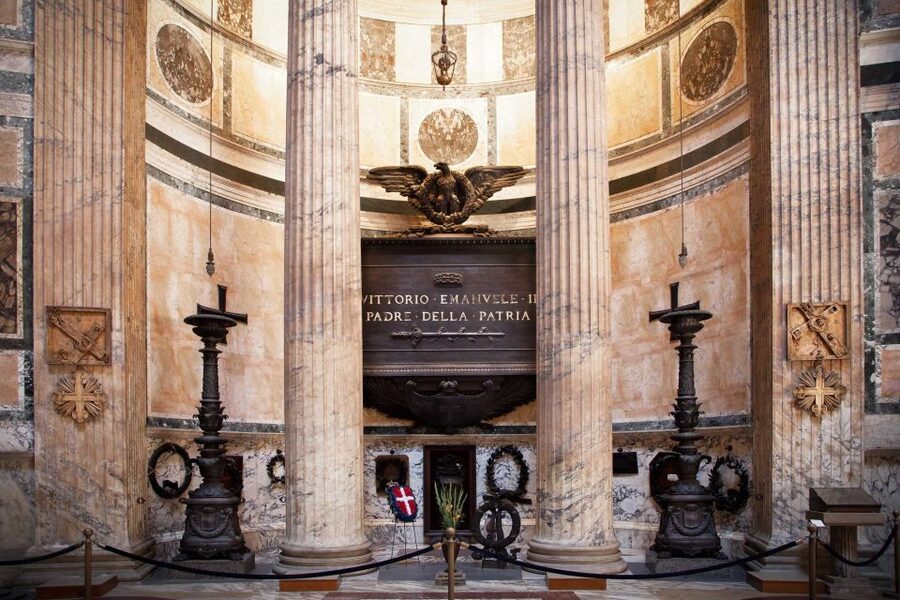
Rome has grand ruins everywhere, but the Pantheon gives you something different: a complete interior that still feels like a building rather than a scattered archaeological site. You enter beneath the familiar portico, pass through huge bronze doors, and find yourself in a vast round space crowned by the ancient dome.
I like this tour because the building rewards explanation. On your own, you can admire the columns, marble, chapels, and ceiling. With a guide, you can start to understand why the dome was such a daring piece of Roman construction and how the building survived while much of ancient Rome disappeared.
The tour lasts about 45 minutes. That is enough time to cover the main structure, the oculus, the building’s changing purpose, and the tombs without turning the visit into a history class that outlasts your attention span. It also fits neatly between other stops in central Rome.
The experience is conducted in English. A small-group option may be available, which can make it easier to hear the guide and ask a question. Group size depends on the option you select, so check the booking details rather than assuming every departure is small.
More Rome trips worth a second look
- Vatican Museums & Sistine Chapel Skip-the-Line Entry Ticket
★ 4.4 · 13,838 reviews - Skip-the-Line Group Tour of the Vatican, Sistine Chapel & St. Peter’s Basilica
★ 4.5 · 12,779 reviews - Rome: Vatican Museums & Sistine Chapel Skip-The-Line Ticket
★ 4.2 · 11,708 reviews
From Agrippa’s temple to Hadrian’s Pantheon
The building’s story begins with Marcus Agrippa, who founded a temple here between 25 and 27 BC. His original structure formed part of a complex on his property in the Campus Martius, an important area of ancient Rome.
Your guide will explain that the Pantheon you see today is not simply Agrippa’s original building preserved intact. The present structure belongs to a later rebuilding, but Agrippa’s name remains on the inscription across the front. That mixture of old identity and later construction is one of the first useful lessons of the tour.
The name Pantheon is usually connected with all the gods, and the original temple was dedicated to the 12 Roman gods. The guide also places the building in the wider world of Roman power, religion, and public display. It was not just a practical hall. It expressed the reach and confidence of Rome.
This is where a live guide earns the $28 price. A plaque or audio track can give you dates, but a person can connect the inscription, the portico, the interior, and the building’s later uses into one readable story.
Looking up at the oculus and unsupported dome
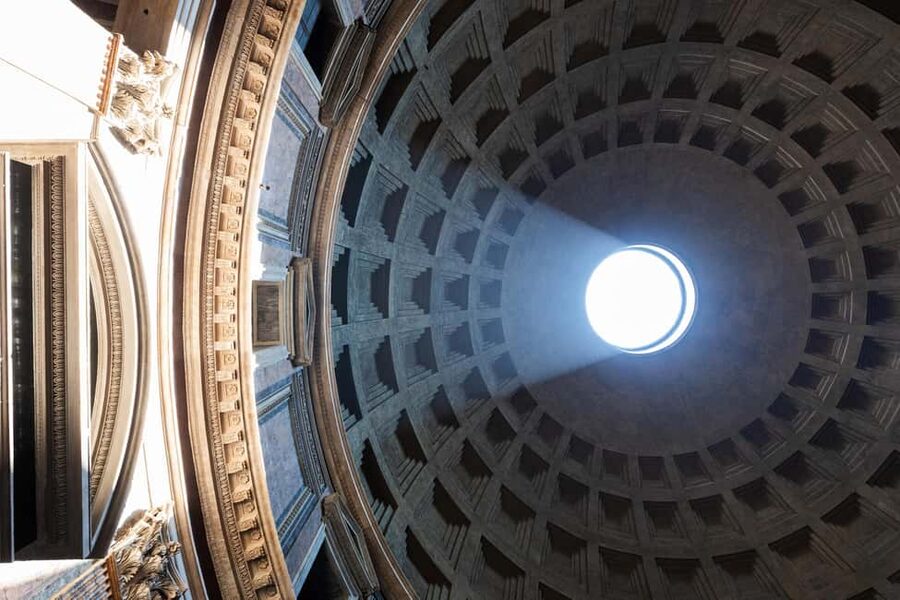
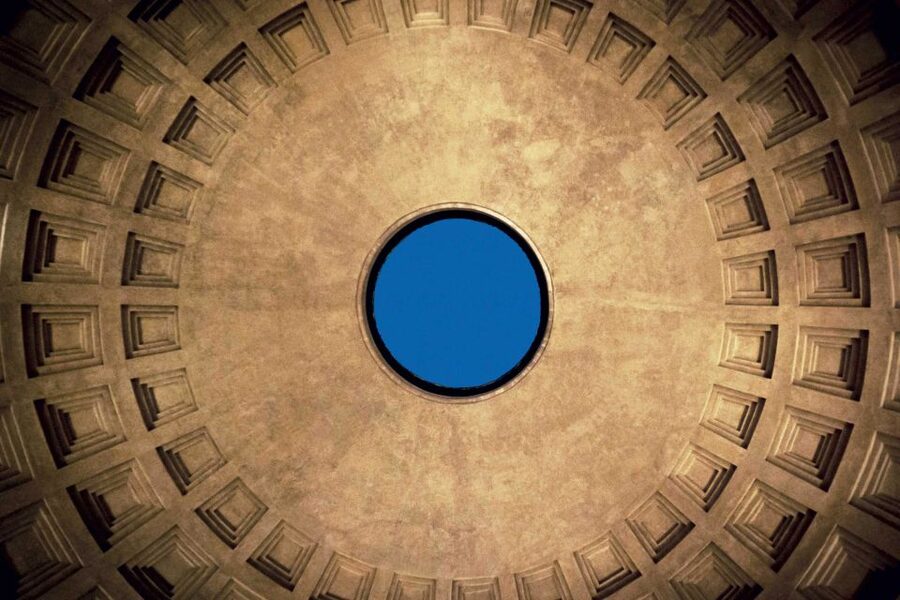
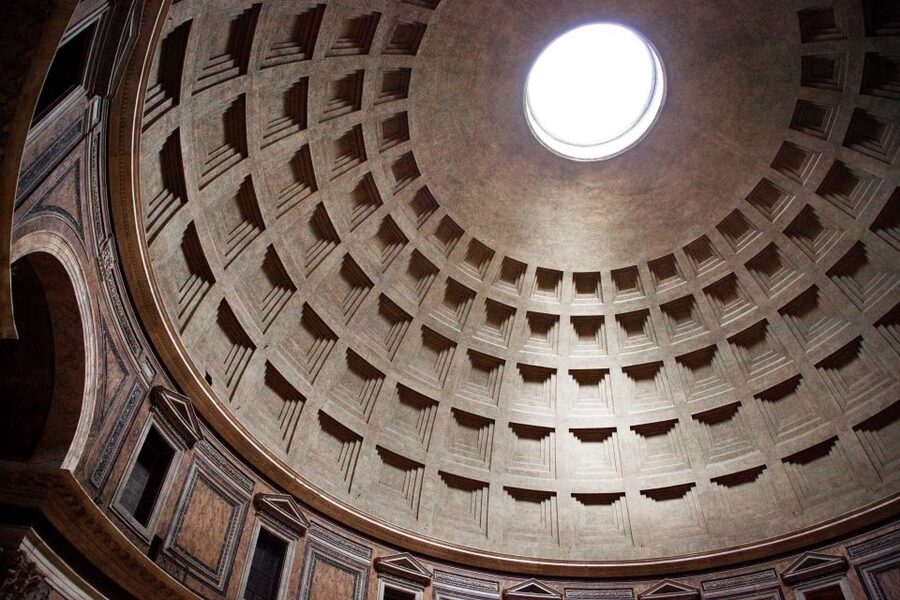
The central moment comes when you look straight up. The Pantheon’s dome has a diameter of 43.3 meters and remains the largest unsupported dome in the world according to the tour information.
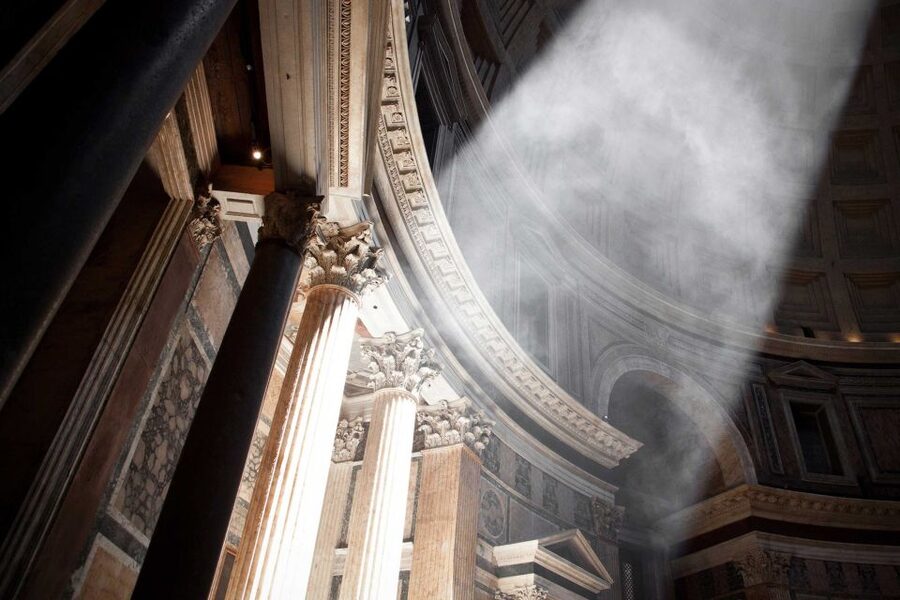
The oculus is an open circular window at the dome’s center. It brings in natural light and gives the interior a moving quality as the light shifts across the walls and floor. If rain happens during your visit, drops can fall through the opening. One tour group happened to see this, and it made an already unusual piece of architecture even more striking.
You should spend a little time simply watching the light. The oculus is not a decorative skylight sealed behind glass. It is an opening to the sky, and that fact changes how you experience the room.
Your guide may point out how the dome’s design affects your sense of scale. The proportions make the interior feel balanced rather than merely enormous. The tour’s value lies less in memorizing measurements than in understanding what those measurements mean when you are standing beneath them.
The floor is also part of the visual effect. From the center, the geometry of the room helps you see how carefully the space was planned. The building feels calm and ordered, even though it represents a remarkable technical achievement.
How a Roman temple became a Christian basilica
The Pantheon later became a Christian church. In 608, Pope Boniface IV ordered the remains of many martyrs to be removed from the Christian catacombs and placed inside the building.
That change helped protect the Pantheon from the fate of many other ancient structures. Instead of remaining an abandoned pagan temple, it gained a new religious purpose. Today, the building is known as a basilica, so you are entering an active sacred site as well as an ancient monument.
Your guide will connect the Roman and Christian chapters rather than treating them as separate attractions. That makes the interior easier to read. The chapels and tombs belong to the building’s later life, while the dome and basic spatial drama reach back to ancient Rome.
The religious setting also explains the dress code. Access is permitted only to people wearing suitable clothing. Men and women must avoid shorts, sleeveless shirts, and vests, while short skirts are also not allowed. This is not the place to arrive in beachwear after a hot afternoon of sightseeing.
A different way to spend the day, same part of Italy:
- Vatican: Museums & Sistine Chapel Entrance Ticket
★ 4.5 · 144,003 reviews - Vatican Museums & Sistine Chapel Tour with Optional Basilica
★ 4.3 · 67,413 reviews - Colosseum, Roman Forum & Palatine Guided Tour
★ 4.7 · 63,148 reviews - Vatican Museums, Sistine Chapel & St Peter’s Basilica Guided Tour
★ 4.5 · 39,149 reviews
Raphael’s tomb and the Pantheon’s later role
One of the tour’s clearest human connections is Raphael’s tomb. The great Renaissance artist chose the Pantheon as his place of eternal rest, linking the ancient monument with the period when artists and architects looked to Rome for inspiration.
Raphael’s presence adds a personal layer to the visit. You are not only studying a Roman engineering feat. You are also seeing a place deliberately chosen by one of the most important artists of the Renaissance.
The Pantheon became a resting place for artists and royalty. Your guide will point out the important tombs and explain how the building’s meaning changed again over time. It moved from temple to church, then became a place where Italy’s cultural and political figures could be remembered.
This part is particularly useful if you have already seen Raphael’s work elsewhere in Rome. The tomb gives the artist a physical connection to the city, not just a name in a museum caption.
What the guide contributes inside
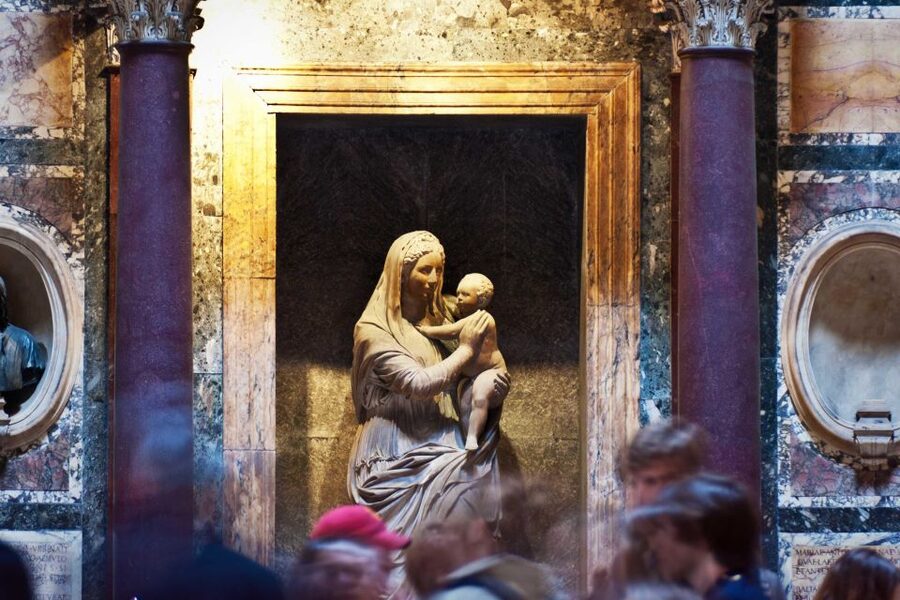
The strongest part of this activity is usually the guide’s delivery. The best guides do not just list dates. They explain construction, religion, destruction, artistic influence, and the way people in different periods understood the building.
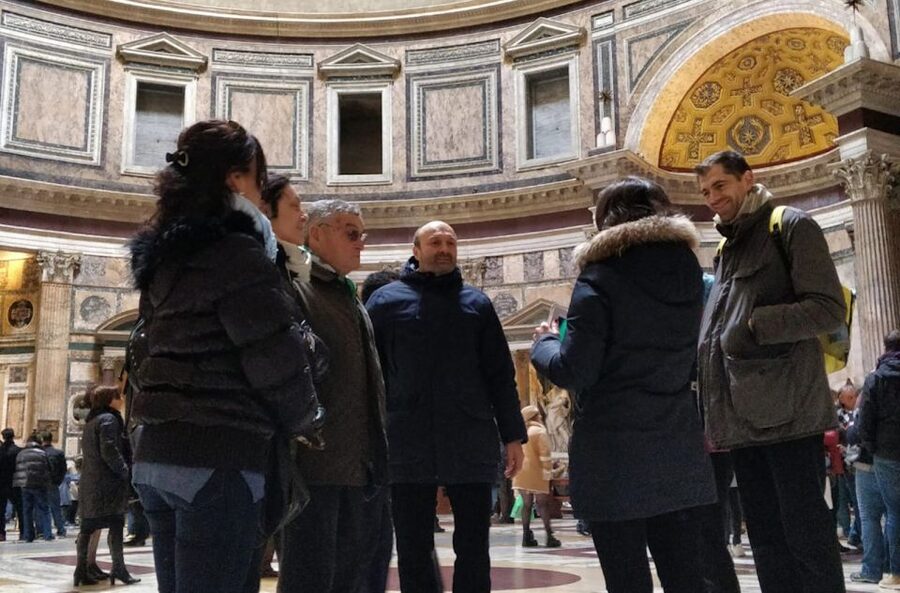
Matteo has been singled out for making links between Roman times and the 21st century while keeping the historical facts clear. Julia and Valentina have also been praised for a strong command of the subject and an engaging manner. Ramona, described as an archaeologist, focused closely on architectural details. Alessandra and Ilaria are other guides associated with especially warm and enthusiastic tours.
Your guide is assigned according to the departure, so you cannot assume you will receive a particular person. Still, these examples show the range of the experience: some guides lean into engineering, some into storytelling, and others into the building’s art and religious use.
A live guide also lets you ask for clarification. If the difference between the original temple and the present structure is confusing, or if you want more detail about Raphael, you can ask at the moment. That personal exchange is the main reason I would choose this over simply walking through with an audio guide.
The tour is short enough that the guide needs to stay on point. That is generally an advantage here. You get the essential story, then have the option of spending more time inside on your own if conditions and opening hours allow.
Ticket pickup, queues, and the meaning of skip-the-line
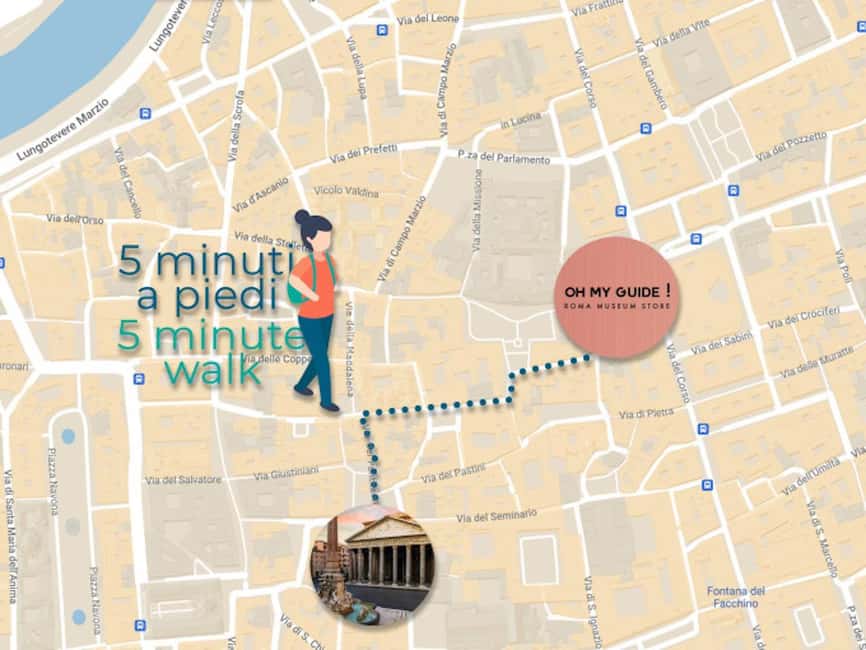
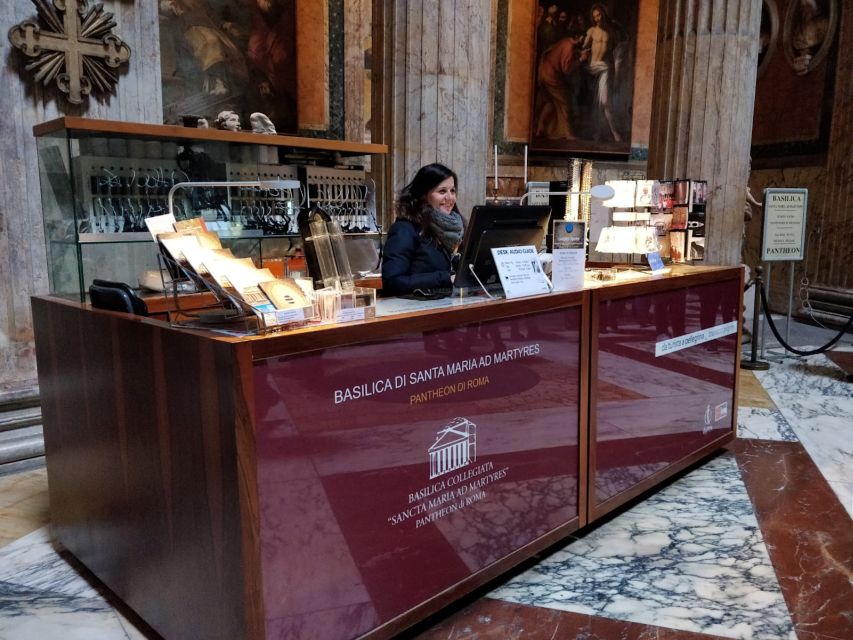
The phrase skip-the-line needs careful handling. Your booking may include a Pantheon entry ticket, but not every option does. Reservations made before July 16 are specifically noted as not including a ticket, and the ticket must be collected at OhMyGuide, Roma Museum Store, at Via dei Bergamaschi 49.
The pickup point is not inside the Pantheon. It is roughly a five-minute walk away, with one set of instructions describing about 500 meters. One booking experience put the distance closer to a kilometer, so I would use the safer approach: leave plenty of time and follow the exact address in your confirmation.
Once at the Pantheon, instructions about where to wait for the guide can be unclear. The information desk is the useful landmark. Make it clear to the staff there that you are waiting for a tour, rather than standing quietly and hoping the guide finds you.
Queues can move quickly, but busy periods are still possible. Several departures were especially useful when the Pantheon was crowded or people were being turned away. In summer heat, a reserved entry can be worth more than the ticket’s face value because it protects your schedule and reduces the risk of wasting time outside.
The booking system also allows free cancellation up to 24 hours before the activity and offers a reserve-now, pay-later choice. These terms are helpful if your Rome plans are still shifting, but always confirm the precise option and date before paying.
Is $28 a fair price?
At $28 per person, this is not the cheapest way to enter the Pantheon, especially if your selected option does not include the admission ticket. The value depends on what you want from the visit.
If you only need to step inside and look around, paying for a guide may feel unnecessary. The Pantheon is compact, and you can appreciate its scale without a formal explanation.
I think the price makes more sense for a first visit, a history-minded traveler, or anyone who wants a timed entry that fits a packed Rome schedule. The tour gives you structure, a live English-speaking guide, and a better chance of understanding what you are seeing instead of passing through in five minutes.
The short duration also improves the value. You are not paying for several hours of material when you only need help with one monument. At its best, the tour gives you the right facts, points out the details your eyes might miss, and leaves you time for coffee or another sight nearby.
Before booking, compare the total cost of each option. An entry ticket may be included in one choice but not another. That difference matters more than a small change in the advertised price.
Practical details that can make or break the visit
The Pantheon can be affected by closures, delayed openings, religious services, concerts, and other events. Service times may change, so do not build a tight, unchangeable schedule around the tour.
Bring a passport or ID card. The activity is wheelchair accessible, though the exact movement of a group through the site may depend on current conditions and the selected meeting arrangement.
Wear appropriate clothing from the start. Cover your shoulders and knees, and do not count on being allowed inside in shorts, short skirts, or sleeveless tops. This simple check can save you an unpleasant interruption.
Look for the exact meeting point in your confirmation. It may vary by booking option. If ticket collection is required, plan that walk before the tour rather than arriving at the Pantheon at the last minute.
The activity ends back at the meeting point. Since it lasts 45 minutes, it is easy to place before or after another central Rome stop, but give yourself a buffer for queues, ticket collection, or a delayed opening.
Who will get the most from this Pantheon tour?
I would choose this tour if you want the building’s story explained in plain English and prefer a person over an audio guide. It is also a good fit if your schedule needs a defined start time or if you are visiting during a busy period when entry may be difficult.
Families may appreciate the compact length. Forty-five minutes is long enough to hold attention but short enough to avoid the glazed expression that can arrive during a much longer historical tour.
Architecture fans will get the most from the dome, oculus, proportions, and construction details. Art lovers have Raphael’s tomb and the Renaissance connection. Anyone interested in religious history will find the transition from Roman temple to basilica especially useful.
You may not need it if you already know the Pantheon well, have a strong guidebook plan, or only want a quick look inside. You also need to be comfortable with a little logistical fuss if your option requires off-site ticket pickup.
Should you book it?
Book this Pantheon tour if you want a short, human explanation of one of Rome’s most remarkable interiors, especially when a busy itinerary makes a timed visit valuable. The dome, oculus, Christian conversion, and Raphael’s tomb give the guide plenty to work with, and the strongest guides make those subjects feel connected rather than random.
I would be cautious only about the ticket wording and meeting instructions. Confirm that admission is included, check the date rules, collect tickets at Via dei Bergamaschi 49 if required, and report to the information desk when you arrive.
For about $28, the tour is a fair buy when the guide is strong and entry saves you time. It is less compelling for someone who wants only independent access. If this is your first Pantheon visit, I would lean toward booking it, provided you allow extra time for the off-site ticket arrangements.
FAQ
How long is the Pantheon guided tour?
The guided tour lasts 45 minutes. Starting times vary, so check availability for your chosen date.
What language is the tour conducted in?
The live tour guide speaks English.
Is the Pantheon entry ticket included?
The ticket is included only if you select an option that includes it. Reservations made before July 16 do not include a ticket, so check the exact booking option.
Where do I collect the ticket?
If your booking requires ticket collection, pick it up at OhMyGuide, Roma Museum Store, Via dei Bergamaschi 49 in Rome.
Is the ticket pickup point inside the Pantheon?
No. The pickup point is off-site, roughly 500 meters from the Pantheon according to the provided directions.
Where does the tour begin?
The meeting point can vary depending on the option booked. Follow the meeting instructions on your confirmation.
Where does the activity end?
The activity ends back at the meeting point.
What clothing is required?
You must wear suitable attire. Shorts, short skirts, sleeveless shirts, and vests are not permitted for entry.
What should I bring?
Bring a passport or ID card.
Can I cancel the booking?
You can cancel up to 24 hours in advance for a full refund. A reserve-now, pay-later option is also available, depending on the booking terms.
Recently reviewed around Rome
- Ancient Rome at Twilight Walking Tour★ 5.0 · 276 reviews
- Domus Aurea Guided Tour: The Golden House of Nero★ 4.5 · 199 reviews
- Early Vatican Museums & Sistine Chapel Small Group Tour★ 4.5 · 314 reviews
- Early Vatican Museums Tour: The Best of the Sistine Chapel★ 4.5 · 900 reviews
- Jewish Ghetto & Piazza Navona: Food, Wine & Sightseeing Rome Tour★ 5.0 · 460 reviews
- 3 Days in Sorrento, Capri & Pompeii: la Dolce Vita★ 4.0 · 595 reviews
- Tivoli Villas Full Day Trip From Rome with Lunch★ 4.0 · 443 reviews
- Cook With Us in Rome: A Hands-On Cooking Experience 09:20AM class★ 5.0 · 234 reviews
Skip the Line, compared.

Skip-The-Line Uffizi Gallery Timed Entry Ticket
Read our review →
Vatican Museums & Sistine Chapel Skip-the-Line Entry Ticket
Read our review →
Skip-the-Line Group Tour of the Vatican, Sistine Chapel & St. Peter’s Basilica
Read our review →
Michelangelo’s David Skip-the-Line Entry Ticket
Read our review →
Vatican Museums & Sistine Chapel Skip-The-Line Ticket
Read our review →
Vatican, Sistine Chapel & St. Peter’s Skip-the-Line Tour
Read our review →
Skip-the-Line Vatican, Sistine Chapel & St. Peter’s | Small Group
Read our review →
Vatican: Vatican Museums Sistine Chapel Skip-the-Line Ticket
Read our review →Browse the lists this tour appears in