
Review · MUSEUMS
Naples: National Archaeological Museum of Naples Guided Tour
The most rewarding part of this two-hour museum tour is the connection between the objects and the buried towns around Mount Vesuvius. You will see frescoes, mosaics, sculptures, coins, and wall paintings, but your guide helps explain where they came from and why they matter. The Farnese Hercules and Toro Farnese are major highlights, while the Pompeii and Herculaneum rooms give the visit a strong sense of place.
I like the archaeologist guides, especially guides such as Nicoletta, Silvia, Salvatore, and Carmine, who have been praised for clear explanations and lively storytelling. I also like the small-group feel reported by several participants, along with the chance to remain in the museum after the guided portion ends. The main consideration is simple: two hours can only cover selected galleries in a very large museum, and some people have found it hard to hear when no headset or sound system worked well.
In This Review
- Key points at a glance
- Why this museum matters in Naples
- Meeting at the ticket office
- The first two hours: a guided route through a huge collection
- The Farnese Collection and its giant sculptures
- Pompeii’s mosaics and Herculaneum’s frescoes
- Why a guide helps more than an audio track
- Group size, pace, and time afterward
- Is $52 a fair price?
- Who should book this museum tour?
- Should you book it?
- FAQ
- How long does the guided museum tour last?
- What museum does the tour visit?
- Where is the meeting point?
- Is museum admission included?
- What languages are available?
- Does the tour include skip-the-line entry?
- Can I stay in the museum after the guided tour?
- Is transportation included?
- Are food and drinks included?
- What items are not allowed?
- Is the tour suitable for wheelchair users?
- Can I cancel the booking?
- Do I have to pay when I book?
Key points at a glance
- Farnese masterpieces: See the Farnese Hercules and the enormous Toro Farnese, among the museum’s most memorable classical sculptures.
- Pompeii and Herculaneum connection: Study mosaics and frescoes saved from the eruption of Mount Vesuvius in 79 AD.
- Archaeologist-led visit: Guides including Silvia, Nicoletta, and Salvatore have been praised for turning complex art and excavation details into clear stories.
- Useful first overview: The tour gives you a sensible route through a huge collection, so you are not left wandering among hundreds of unfamiliar objects.
- Stay afterward: Once the two-hour tour ends, you can continue looking at galleries independently.
- Practical limits: Large bags, oversize luggage, strollers, and non-folding wheelchairs are not allowed, and the tour is not suitable for wheelchair users or people with mobility impairments.
Why this museum matters in Naples
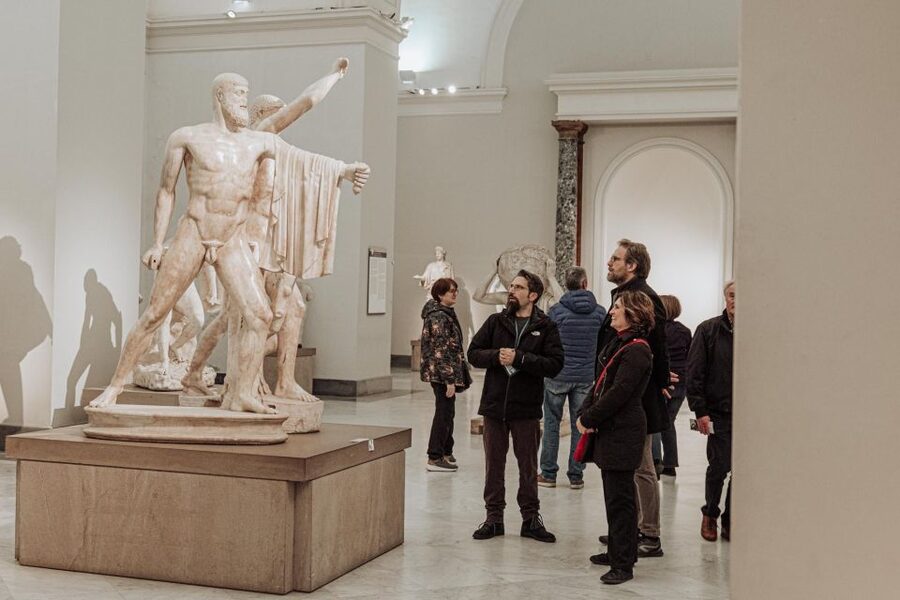
Naples’ National Archaeological Museum is the place where many pieces of the Bay of Naples story come together. Pompeii and Herculaneum show you Roman towns in their original setting. This museum gathers the portable art and household decoration from those sites, then places them beside older Greek works and grand Roman copies.
That mix can be confusing if you walk in without a plan. One room may hold a delicate mosaic, the next a towering marble god, followed by coins, fresco fragments, or a portrait bust. A guide gives you a route through the abundance and explains what you are looking at before the collection becomes a blur of impressive but disconnected objects.
I especially like this tour for anyone who has already visited Pompeii or Herculaneum. You can recognize the styles and subjects from the ruins, then see the original decoration close up in a protected museum setting. Several participants found the museum made much more sense after Pompeii, and that is good advice to follow if your schedule allows.
You do not need to visit the archaeological sites first, though. If the museum comes early in your Naples stay, the tour can give you a useful visual primer for Pompeii and Herculaneum.
More Naples & Pompeii museums and collections:
- Naples: National Archaeological Museum Ticket & Audio App
★ 4.4 · 617 reviews - Vatican: Museums & Sistine Chapel Entrance Ticket
★ 4.5 · 144,003 reviews - Vatican Museums & Sistine Chapel Tour with Optional Basilica
★ 4.3 · 67,413 reviews
Meeting at the ticket office
The meeting point is outside the museum ticket office. Look for the guide holding an ASKOS TOURS sign. Transportation is not included, so you need to make your own way to the Museo Archeologico Nazionale di Napoli.
The skip-the-line entry is useful because it removes one small nuisance before the tour begins. It does not mean you can skip the meeting point or arrive at any time. Plan to be outside the ticket office with enough time to identify the guide and group.
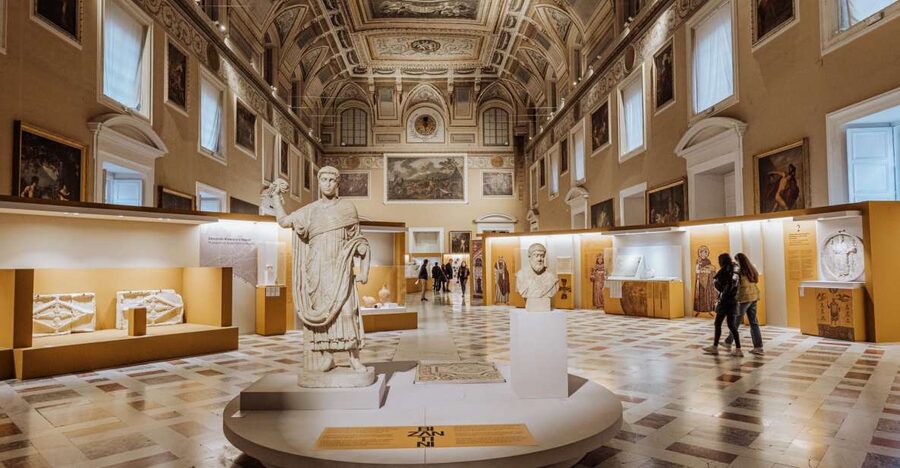
The museum building itself is part of the experience. You are not entering a modern white-box gallery designed only to frame art. The corridors, grand rooms, and historic structure add to the feeling that Naples has been collecting and displaying its ancient past for generations.
The first two hours: a guided route through a huge collection
Your guide begins by setting the museum in context, then leads you through selected highlights rather than attempting every room. That is the right approach. The museum is too large for a full tour in two hours, and a rushed march through every floor would leave you with a long list of names but little understanding.
Expect the guide to pause at major sculptures, explain the figures represented, and connect Greek originals with Roman versions and later collecting traditions. The corridors lined with busts of gods, emperors, and other figures make the museum feel almost like a procession through the ancient world.
Guides have been praised for answering questions, adjusting the pace, and making art easier to approach. Silvia has been described as an archaeologist who also works at Pompeii and teaches at university. Nicoletta has been praised for linking the museum’s objects with the Roman world around the Bay of Naples. Salvatore has been singled out for making the art approachable while handling questions with ease.
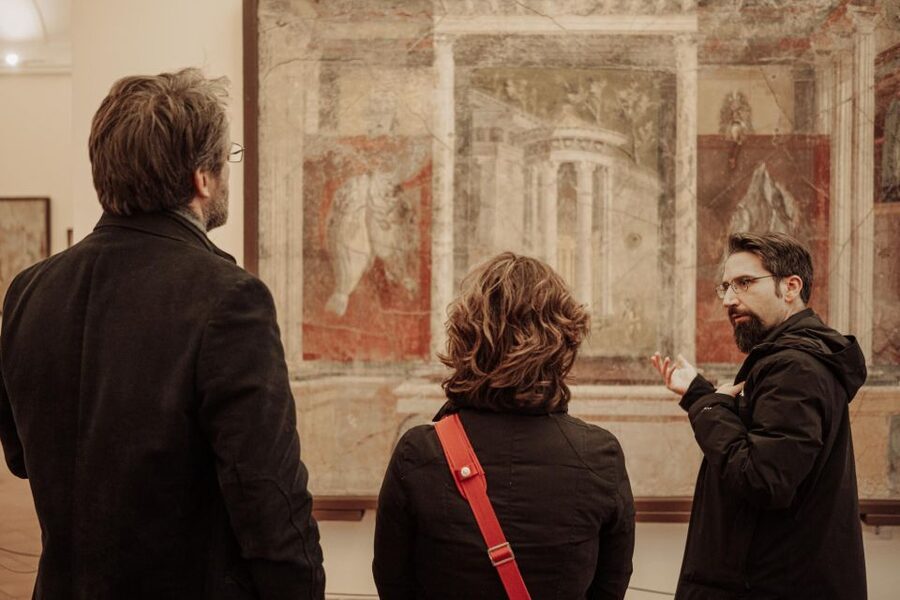
Those details matter because this is not a room-by-room audio recording. You can ask why a sculpture looks the way it does, how a mosaic was found, or how an object relates to something you saw in Pompeii. That give-and-take is the strongest reason to choose a live guide over simply buying museum admission.
The Farnese Collection and its giant sculptures
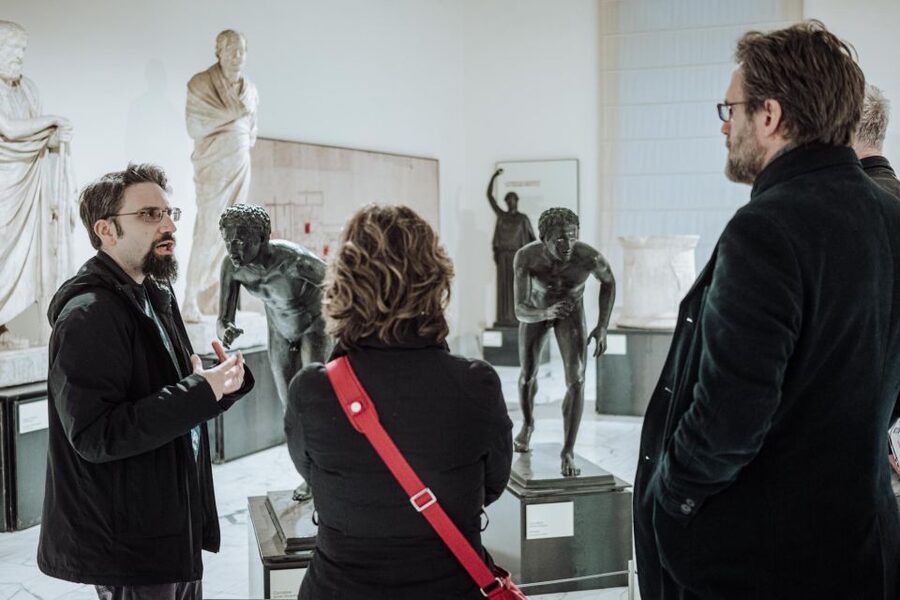
The Farnese Collection is the artistic heavyweight of the visit. It is known for major classical sculptures, and the tour usually gives special attention to works such as the Farnese Hercules and the Toro Farnese.
The Farnese Hercules presents a powerful, oversized figure at rest after his labors. Even if you know little about classical sculpture, its scale and physical force are easy to grasp. A guide can add the details that scale alone cannot provide, including how the sculpture fits into the tradition of Greek subjects copied and reworked in the Roman world.
The Toro Farnese, or Farnese Bull, is another dramatic stop. It is a large group sculpture filled with movement, bodies, and narrative action. It rewards time with a guide because the scene is not instantly clear from a quick glance. You can look at the arrangement of the figures while the guide explains the story and the work’s place in the collection.
The galleries also include depictions of Greek gods and Roman emperors. Busts are not just rows of stern faces. They offer clues about how rulers and important figures wanted to be remembered, and a guide can help you notice differences in pose, expression, clothing, and hairstyle.
One useful tip is to remember the works you want to see again. The guided route may move on before you have absorbed every detail. Since you can stay in the museum afterward, you can return to Hercules, the Toro Farnese, or another favorite without the pressure of the group.
More Naples & Pompeii trips worth a second look
- Naples: Naples Underground Entry Ticket and Guided Tour
★ 4.4 · 21,781 reviews - Pompeii: Entry Ticket and Guided Tour with an Archaeologist
★ 4.8 · 19,459 reviews - Pompeii: Entry Ticket with Optional Audio Guide
★ 4.2 · 12,360 reviews - Naples: Catacombs of San Gennaro Entry Ticket & Guided Tour
★ 4.6 · 7,941 reviews
Pompeii’s mosaics and Herculaneum’s frescoes
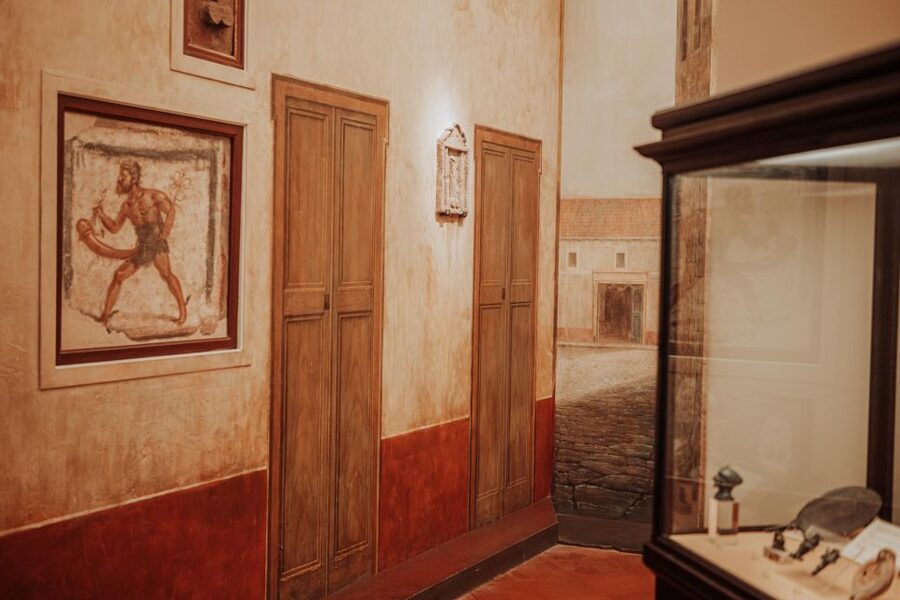
For many people, the most meaningful section is the material from Pompeii and Herculaneum. The eruption of Mount Vesuvius in 79 AD preserved wall paintings, floors, and household objects in ways that are rare in the ancient world.
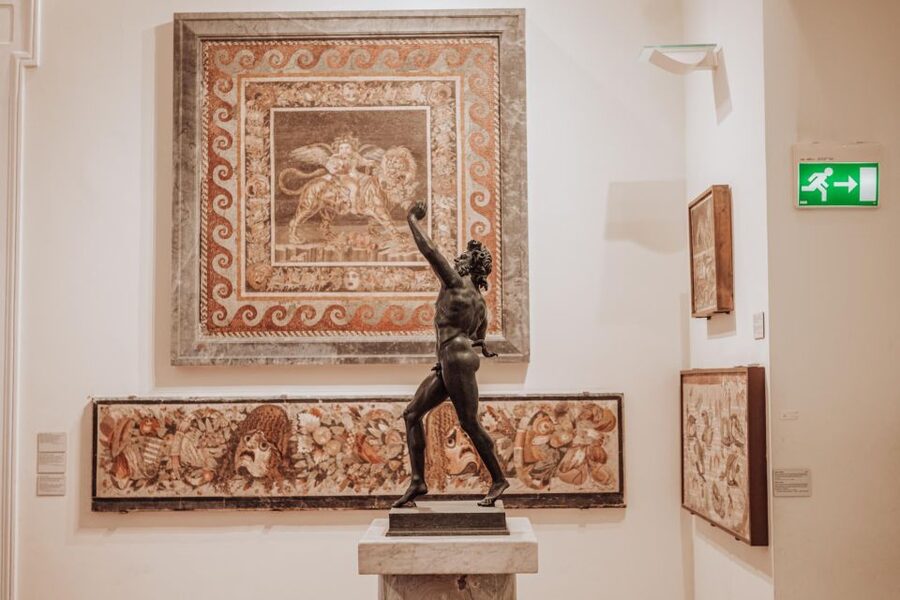
The mosaics show how much care Roman households put into their floors and decorative schemes. Small pieces of stone or glass form images, patterns, and scenes that can still be read centuries later. The guide helps you see the technical skill behind the finished surface and explains how the museum pieces relate to the houses where they were found.
The frescoes are equally important. In the ruins, you may see walls with color still clinging to plaster. Here, the painted scenes and decorative details are presented for close study. You can pay attention to the colors, figures, borders, and architectural illusions that were hard to appreciate while walking through a larger archaeological site.
The famous mosaic showing Alexander the Great and Darius is one of the works that can make the museum visit worthwhile on its own. Its restoration status may change, so do not assume you will see it fully available on your date. Even when restoration affects access, the museum’s wider collection still provides plenty to see.
This is where the tour earns much of its value. A guide can explain not just what a scene depicts, but how it functioned in a Roman home and what its condition tells you about preservation. If you have visited Pompeii, these objects help fill in the details that weather, distance, and damaged walls can leave unclear.
Why a guide helps more than an audio track
A museum of this size can overwhelm you. You may know the Hercules, recognize a Roman emperor, or have heard of Pompeii’s mosaics, but without direction it is easy to miss the pieces that give the collection its shape.
A live archaeologist can point out the details that do not announce themselves. You can ask questions in plain language, stop to examine a sculpture, and hear the explanation tied to what is directly in front of you. Several participants found the guide essential because the number of exhibits can be bewildering without a route.
The best guides also add local perspective. A guide from Naples can connect the museum to the surrounding region, the Bay of Naples, and the nearby archaeological sites. That regional view helps you understand that Pompeii, Herculaneum, Greek influence, Roman power, and later collecting are not separate topics. They are parts of one long story.
The experience is not perfect for every group. One participant found a sore throat and poor sound equipment made the explanation difficult to follow, while another suggested that headsets would help in crowded galleries. Nancy, who is hard of hearing, had a good experience when ear pieces were provided. If hearing clearly is important to you, ask at the start what audio equipment is being used and stay close enough to the guide.
Group size, pace, and time afterward
The tour lasts two hours, a useful length for a first visit. It is long enough to see the major collections without making the whole day about one building. It also leaves room for you to remain inside afterward and continue at your own speed.
Several groups were small, including one with only five people and another with six. Group size can vary by departure, so you should not assume every tour will be that intimate. Still, the format is designed for a guided walking visit rather than a large coach-group presentation.
The pace has generally been described as comfortable, with time for questions and explanations. You will still be on your feet for much of the tour, and one participant wished for more pauses to rest. If you tire easily, wear comfortable shoes and use the museum’s resting places when available.
The two-hour limit also shapes what you see. You will not cover every floor or every collection. That is not a flaw so much as a choice. The guide concentrates on major sculptures, Pompeii and Herculaneum material, and key classical works. Afterward, you can explore other areas that match your interests.
Is $52 a fair price?
The listed price is $52 per person. Museum admission is included, valued at 20 euros for an adult and 2 euros for reduced EU admission for citizens aged 18 to 25. The rest pays for the archaeologist guide, the arranged entry, and the convenience of having someone make sense of the collection.
If you are an eligible young EU citizen, the price difference between basic admission and this tour is much larger, so you should think carefully about how much you value the guide. For a standard adult ticket holder, the extra cost is easier to justify if you want context, have limited time, or plan to visit Pompeii and Herculaneum.
You are paying for more than access. The museum is vast, and the guide helps you spend two hours on the works most likely to stay with you. A visitor who already knows classical art and prefers to wander alone may find the premium less useful. For a first-time visitor, especially one unfamiliar with Greek and Roman art, the structure can save time and frustration.
The ticket price does not include transport, food, or drinks. You should also note that the museum can be free to all visitors on the first Sunday of the month, according to information provided by one participant. Check the current arrangements before choosing that date, since the guided service and any free-admission rules may not work in the same way.
Who should book this museum tour?
I would choose this tour if you meet one or more of these conditions:
- You are visiting Pompeii or Herculaneum and want the museum to complete the picture.
- You have only a short time in Naples and want to see major works without planning your own route.
- You enjoy asking questions rather than reading labels on your own.
- Classical sculpture feels unfamiliar and you want help understanding what you are seeing.
- You prefer an archaeologist-led explanation with local context.
- You want a guided start, then time to explore independently.
Families can also find the format useful, provided everyone can manage two hours of walking and standing. One participant brought her grandmother and enjoyed the visit, while another group appreciated having a guide make the huge museum less intimidating.
I would think twice if you need a wheelchair-accessible tour, use a non-folding wheelchair, or have significant mobility limits. The activity is not suitable for wheelchair users or people with mobility impairments. Oversize luggage, large bags, baby strollers, and non-folding wheelchairs are not allowed.
The tour is offered in English or Italian. If you need English, the quality of spoken English can vary by guide, although many participants praised the clarity and communication of their guides. Ask questions early and let the guide know if you need the group to slow down or repeat an explanation.
Should you book it?
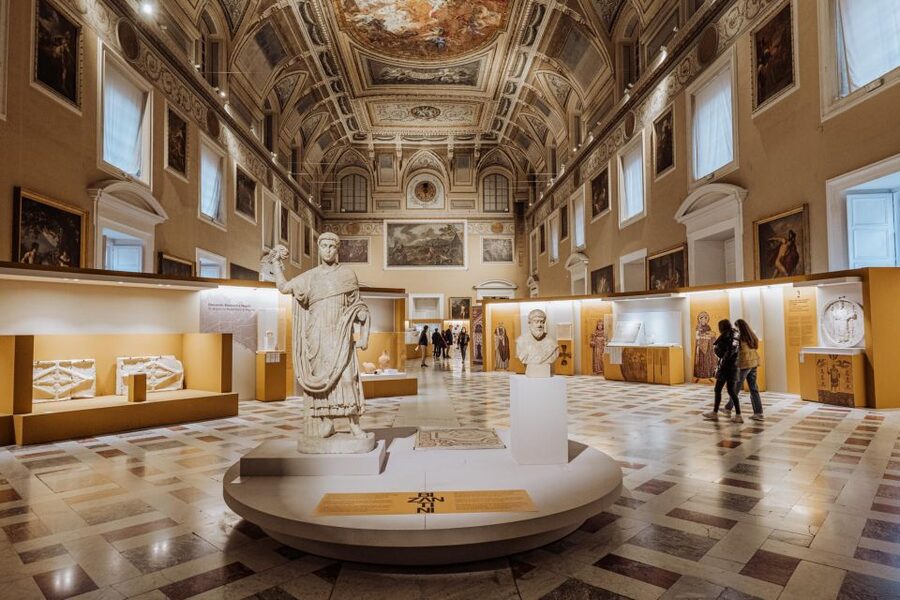
Yes, if you want the National Archaeological Museum to mean more than a parade of famous statues. The two-hour route focuses on the Farnese Collection, Pompeii and Herculaneum art, and the Greek and Roman works that give Naples its ancient character.
The best plan is to visit Pompeii or Herculaneum first, then take this museum tour afterward. That order lets you recognize the frescoes and mosaics as pieces from real homes and public spaces rather than isolated decorations. If you cannot fit in the archaeological sites, the museum still works well as an introduction.
Book it for the guide, not simply for skip-the-line entry. The most praised part of the experience is the quality of the explanations, especially when an archaeologist such as Silvia or Nicoletta leads the group. Stay afterward to revisit the Hercules, study the mosaics more closely, or explore rooms the two-hour route could not include.
FAQ
How long does the guided museum tour last?
The guided tour lasts two hours.
What museum does the tour visit?
It visits the National Archaeological Museum of Naples, also called the Museo Archeologico Nazionale di Napoli.
Where is the meeting point?
Meet outside the ticket office of the Archaeological Museum of Naples. The guide will hold an ASKOS TOURS sign.
Is museum admission included?
Yes. Entry to the Archaeological Museum of Naples is included in the tour price.
What languages are available?
The live tour guide is available in English and Italian.
Does the tour include skip-the-line entry?
Yes. Skip-the-line entry to the museum is included.
Can I stay in the museum after the guided tour?
Yes. You can remain in the museum after the two-hour guided visit and continue exploring independently.
Is transportation included?
No. Transportation to and from the museum is not included.
Are food and drinks included?
No. Food and drinks are not included.
What items are not allowed?
Oversize luggage, large bags, baby strollers, and non-folding wheelchairs are not allowed.
Is the tour suitable for wheelchair users?
No. The activity is not suitable for wheelchair users or people with mobility impairments. Electric wheelchairs are also not allowed.
Can I cancel the booking?
Yes. You can cancel up to 24 hours in advance for a full refund.
Do I have to pay when I book?
The reserve-now, pay-later option lets you hold your place without paying immediately.
Recently reviewed around Naples & Pompeii
- Pompeii Skip-the-line Tour with Archaeologist Guide★ 5.0 · 559 reviews
- Skip the Line Guided Tour of Pompeii led by an Archaeologist★ 5.0 · 703 reviews
- Visit in Pompeii – Pompeii Private Tour with Ada★ 5.0 · 436 reviews
- Sharing Tour of Pompeii★ 5.0 · 487 reviews
- Pompeii Private Tour with an Archaeologist and Skip The Line★ 5.0 · 391 reviews
- Private Day Tour to Vesuvius, Herculaneum & Pompeii with Pick Up★ 5.0 · 279 reviews
- Pompeii Vineyard Escape: Private Wine Tasting & Lunch★ 5.0 · 329 reviews
- Pompeii Guided Group Tour with Entry Ticket and Archaeologist★ 4.5 · 269 reviews
Museums, compared.

Vatican: Museums & Sistine Chapel Entrance Ticket
Read our review →
Vatican Museums & Sistine Chapel Tour with Optional Basilica
Read our review →
Vatican Museums, Sistine Chapel & St Peter’s Basilica Guided Tour
Read our review →
Skip-The-Line Uffizi Gallery Timed Entry Ticket
Read our review →
Vatican Museums, Sistine Chapel & Basilica Tour
Read our review →
Vatican Museums & Sistine Chapel Skip-the-Line Entry Ticket
Read our review →Vatican Museums, Sistine Chapel & Basilica Tour
Read our review →
Vatican Museums & Sistine Chapel Guided Tour
Read our review →Browse the lists this tour appears in