
Review · POMPEII & VESUVIUS TOURS
Pompeii Skip-the-line Tour with Archaeologist Guide
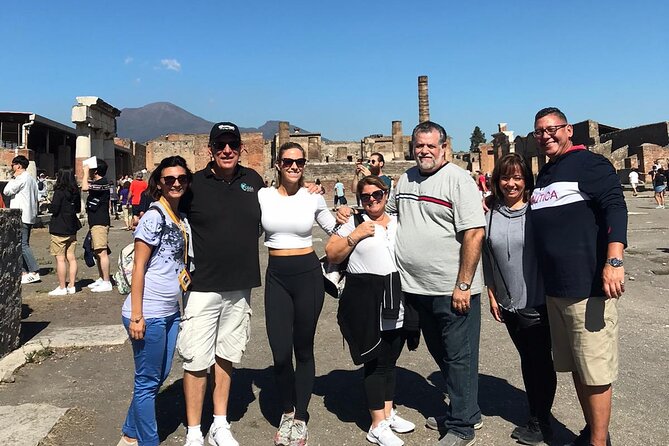
Pompeii is far more than a field of broken walls. Its wagon-rutted lava-stone streets lead through a Roman city where people bathed, shopped, worshiped, worked, argued, and watched theater before Vesuvius buried it in AD 79. A good guide turns those stones into a readable neighborhood.
I like the archaeologist guides, especially Lello, Italo, and Leonardo, who bring field experience and sharp eyes to details you could easily miss. I also like the small group size, capped at 16, which makes it easier to hear, ask questions, and keep a sensible pace through an enormous site.
The main drawback is time. Two hours gives you a strong introduction, not a full Pompeii visit. You will need to arrive on time, walk over uneven ancient streets, and plan extra time afterward if you want to explore more of the sprawling archaeological park.
In This Review
- Key points to know before booking
- Why Pompeii makes a guide worth paying for
- Getting to the Hotel Vittoria meeting point
- Entering a city frozen by Vesuvius
- The forum, where public life came together
- Theaters, baths, and the Gymnasium
- Shops, bars, and the practical Roman city
- Gladiator barracks and the Lupanare
- What the archaeologist guides add
- Is two hours enough?
- Who should book this Pompeii tour?
- Booking, cancellation, and practical details
- Should you book it?
- FAQ
- How long does the Pompeii tour last?
- What is included in the price?
- Is this a stand-alone ticket to Pompeii?
- Where does the tour meet?
- How do I reach Pompeii by public transportation?
- What should I wear?
- How large is the group?
- Can I cancel for a refund?
Key points to know before booking
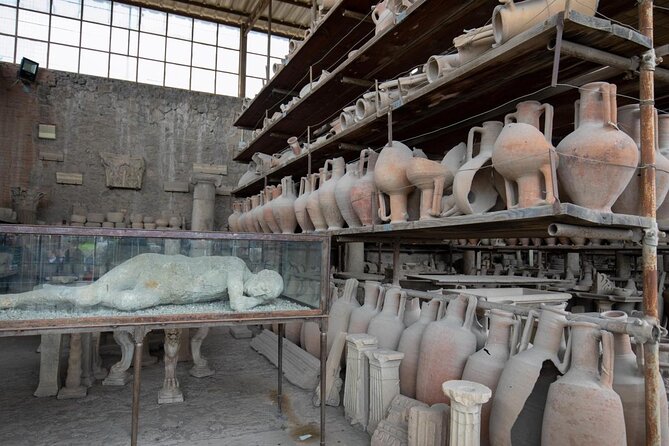
- Archaeologist-led explanations: Guides such as Lello and Italo connect ordinary details, from street ruts to shop counters, with daily Roman life.
- A focused two-hour route: Expect the forum, theater, baths, Gymnasium, House of Menander, gladiator barracks, and Lupanare, with other highlights depending on the route.
- Small group setting: The maximum group size is 16, a useful middle ground between a private tour and a large crowd.
- Admission is included: Your confirmation works with the guide as part of the guided entry, rather than as a separate ticket for independent use.
- Easy rail access: Pompei Scavi station is reached on the Circumvesuviana line from Naples or Sorrento, and the meeting point is near the excavation entrance.
- Plan for sun and rough footing: Wear sturdy, comfortable shoes and bring a hat in summer. You walk on original streets made with volcanic rock.
Why Pompeii makes a guide worth paying for
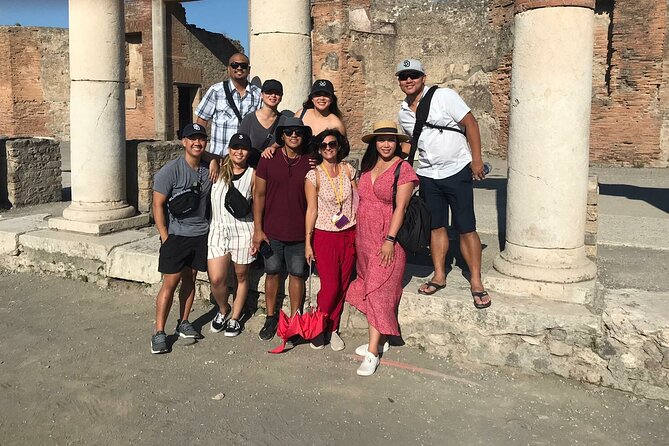
At $71.35 per person, this is not the cheapest way to enter Pompeii. It is, however, a fair price if you want the site explained instead of simply photographed.
Pompeii can feel confusing on your own. You see walls, columns, thresholds, fountains, and slabs of pavement, but the purpose of each space is not always clear. The guide supplies the missing frame: this was a home, that was a shop, this opening led to a kitchen, and this public space linked religion with government.
That context matters because Pompeii is large and its attractions are spread out. A self-guided visit can easily become a march from one impressive ruin to the next without much sense of how the city worked. In two hours, the guide gives you a map in your head.
The tour is also useful for first-time visitors who have only half a day. It gets you into the archaeological park, points out major sights, and leaves you with enough direction to continue alone. Several guides also offer suggestions for what to see after the formal tour, which is valuable because the site is too large to absorb in one quick circuit.
You should not book this expecting a private experience. The group can reach 16 people, and the tour is offered in English. Still, that is a manageable size for a historic site, especially compared with the very large groups often seen around Italy’s major monuments.
More Naples & Pompeii trips worth a second look
- Herculaneum: Skip-the-Line Guided Tour with Archaeologist
★ 4.8 · 3,439 reviews - Mount Vesuvius: Skip-the-Line Ticket and Smart Digital Guide
★ 4.2 · 2,780 reviews - From Naples: Pompeii Skip-the-Line Entry Ticket and Tour
★ 4.4 · 2,753 reviews
Getting to the Hotel Vittoria meeting point
You make your own way to Hotel Vittoria at Piazza Esedra in Pompei. The meeting point is near the entrance to the archaeological park, and the activity ends back there.
From Naples or Sorrento, the practical option is the Circumvesuviana train to Pompei Scavi. This is the station used for the ruins and makes the tour fairly simple to fit into a broader Campania itinerary. You do not need hotel or port pickup, since neither is included.
Give yourself extra time to find the hotel and guide. The policy is strict about lateness: if you miss the tour or arrive too late, there is no refund. Bring the mobile number used at booking, including the country code, since the operator requests it for emergencies.
This is a walking tour from the start. There is no shuttle within the park, and you will be crossing original streets made of lava rock. Comfortable shoes are not a minor suggestion here. Smooth soles, flimsy sandals, or shoes that pinch will make the experience less pleasant.
Entering a city frozen by Vesuvius
Once you meet the guide, you enter the ancient city together. Admission is included, but the confirmation is not meant to function as a stand-alone ticket. You use it with the guide for this tour.
The central story is the eruption of Mount Vesuvius in AD 79, which buried Pompeii and helped preserve an extraordinary amount of urban detail. The guide explains how the disaster shaped what you see, while also keeping the focus on the people who lived there before the eruption.
The best part of the visit is that daily life keeps appearing in ordinary places. You walk along streets with wheel ruts left by carts. Raised sidewalks, stepping stones, doorways, and drainage features show how people moved around the city. These details can look plain until someone explains how they fit together.
The preserved streets also make the footing uneven. You will be walking over ancient paving, not a smooth modern path, so look down as well as up. That is one reason the guide’s pace matters. A considerate guide can help the group pause without blocking the route or rushing through every stop.
The forum, where public life came together
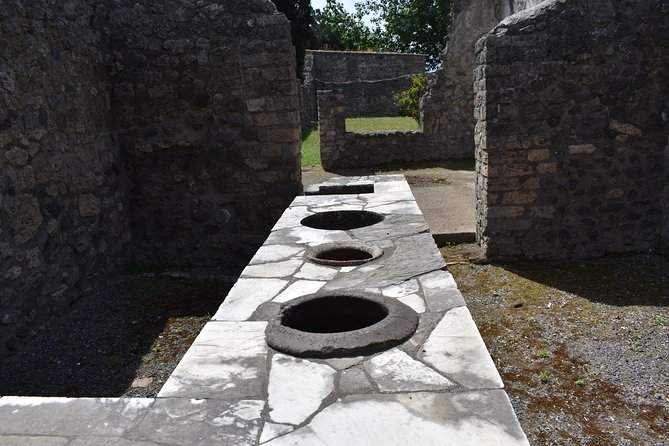
The forum was the heart of Pompeii. This was where civic buildings and temples gathered, and where politics, religion, trade, and public ceremony overlapped.
You will see the remains of temples and government buildings while the guide explains how priests and politicians used the space. The forum gives you the clearest picture of Pompeii as a functioning Roman city, not simply a collection of private houses.
I find this stop especially useful early in a visit because it provides scale. Once you understand the public center, the later streets and buildings make more sense. You can begin to distinguish a civic space from a home, a commercial room from a religious building, and a formal avenue from a side street.
The open forum can also be exposed to strong sun. If you visit in summer, pack a hat and water for your own use. Food is not included, and this is not a food tour, so plan refreshments separately.
A different way to spend the day, same part of Italy:
- Naples: Naples Underground Entry Ticket and Guided Tour
★ 4.4 · 21,781 reviews - Pompeii: Entry Ticket and Guided Tour with an Archaeologist
★ 4.8 · 19,459 reviews - Pompeii: Entry Ticket with Optional Audio Guide
★ 4.2 · 12,360 reviews - Pompeii: Small Group Tour with an Archaeologist
★ 4.8 · 12,264 reviews
Theaters, baths, and the Gymnasium
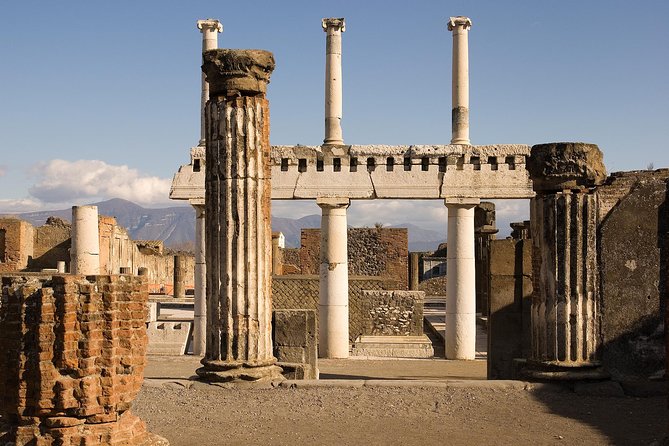
The small theaters show a more entertaining side of Pompeii. They once hosted tragedy and comedy, giving the city a place for performance and public gatherings.
The theater ruins are easier to appreciate when you imagine their original purpose. The guide helps you read the seating, stage area, and surrounding structure rather than treating the building as another pile of stone. For families, this is often a more approachable stop than a long explanation of civic offices.
The thermal baths offer another window into routine Roman life. Residents went there to bathe, exercise, and gossip. The baths were social spaces as much as practical ones, and the surviving rooms help explain how a normal day could include public facilities that served several roles.
The route may also include the Gymnasium. Together, the baths and Gymnasium show that recreation and social contact were built into city life. You get a picture of Pompeiians as active residents with habits and schedules, not distant figures from a textbook.
Small theaters, baths, and the Gymnasium are also places where an archaeologist’s eye helps. A guide can point out features that an untrained eye might pass without noticing. That kind of explanation is one of the clearest reasons to choose this tour over wandering alone.
Shops, bars, and the practical Roman city
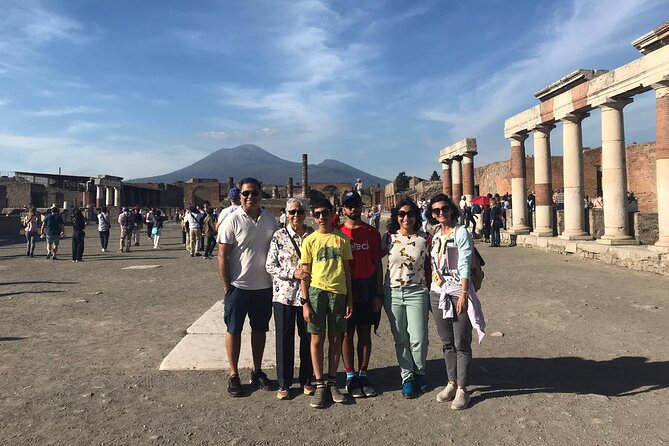
Pompeii’s remains include local businesses, restaurants, bars, and shops selling food and clothing. These spaces are a welcome change from grand temples because they show how people earned money and bought ordinary goods.
Look for the practical layout of commercial rooms and the clues that separate business space from domestic space. The guide explains what each area was used for, how it related to the street, and what it reveals about the city’s economy.
This is where the tour often feels most human. A forum can seem monumental, but a shop counter or food business connects more quickly with modern life. You begin to see that Pompeii was not built only for emperors and priests. It was a working town filled with customers, tradespeople, families, and passersby.
The route may include the House of Menander as well. The itinerary also names many other parts of the ancient city, so the exact order can vary with site conditions and crowd movement. Do not expect to see every open building in two hours. Pompeii is simply too large.
Gladiator barracks and the Lupanare
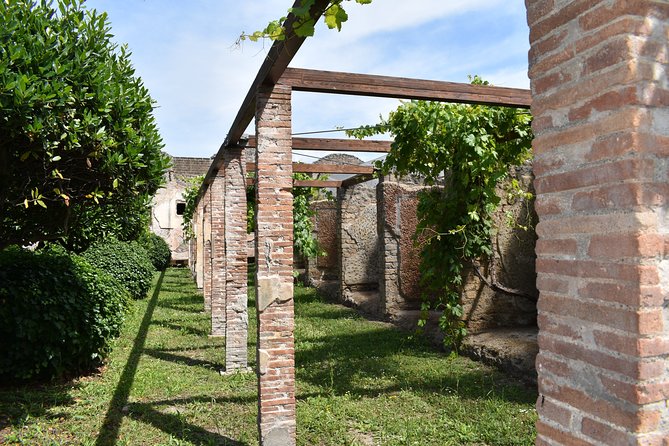
The gladiator barracks add another layer to the city’s public life. Roman gladiators trained and lived there, and the guide can place that building within the wider entertainment culture represented by the theaters.
The Lupanare, or brothel, is one of Pompeii’s most popular stops. It is commonly called the rebuilt brothel, and its appeal comes from the direct, sometimes startling evidence it provides about Roman commercial and sexual life.
This part of the visit may not suit every family in the same way. The tour can work well with older children and teenagers, but parents should use their own judgment. One family with children ages 9, 12, and 14 found the guide’s storytelling engaging, while the subject itself still calls for a little awareness before booking.
The value of seeing the Lupanare is not shock value. It is part of the wider picture of how Pompeii functioned. The guide can help keep the stop historical rather than sensational and connect it to the city’s businesses, streets, and social habits.
What the archaeologist guides add
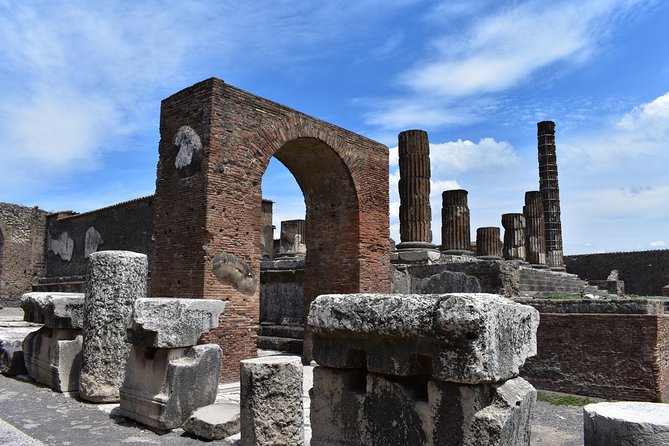
The strongest feature of this experience is the quality of its guides. Lello is described as having worked on the digs for many years, with nearly 30 years of experience at Pompeii. Italo is praised for his clear English, careful pacing, and ability to steer the group away from the worst crowding. Leonardo is also described as well spoken, kind, and passionate about the site.
Guide assignments can vary, so you should not assume a particular person will lead your departure. Still, the repeated pattern is clear: the tour depends heavily on a guide who can combine archaeology with storytelling.
Lello’s appeal is his energy and humor. He links small physical details with larger questions about Roman life and keeps the two-hour route moving. Italo is noted for welcoming questions from younger members of a group and for protecting the site’s remains, including asking people not to picnic on the ruins.
That kind of personal touch changes the pace. You are not simply following a flag from one stop to another. You can ask why a feature matters, test your own guesses, and get suggestions for the rest of your visit.
Some departures provide ear sets, which make it easier to hear while walking. Since this detail can depend on the operation of the specific tour, it is still wise to stay close to the guide and keep an eye on the group.
Is two hours enough?
Two hours is enough for a strong introduction. You should expect to see the main attractions, including the forum, theater, baths, commercial spaces, Gymnasium, House of Menander, gladiator barracks, and Lupanare, along with other important ruins chosen by the guide.
Two hours is not enough to see everything. Pompeii covers a broad area, and you may want to remain after the guided portion to explore additional streets and buildings. One smart plan is to treat this tour as your orientation, then continue independently if you have the time and energy.
The 5 pm departure also lasts two hours. That may suit you if you want to avoid the hottest part of the day, but you should consider how it fits with your transport and other plans. The supplied information does not promise a sunset visit or special evening access, so book it for the guided route, not for an assumed after-hours atmosphere.
Who should book this Pompeii tour?
I would choose this for a first visit, a half-day schedule, or anyone who wants the site to make sense quickly. It is particularly good for families, couples, and small groups who prefer conversation over a large, impersonal lecture.
It also suits anyone with a real interest in archaeology. The guides’ field experience can add details about excavation and preservation that a basic audio guide may not provide.
You might skip it if you already have specialist knowledge, several hours for slow independent exploration, and a firm plan for using a guidebook or audio material. You might also prefer a private tour if your group needs a completely custom pace, though this experience is not presented as private.
The price makes most sense when you consider what is included: an English-speaking local guide, admission, a small group, and a carefully chosen introduction to a huge site. It is less attractive if you only want a quick look at the entrance or plan to spend many hours exploring alone after a brief orientation.
Booking, cancellation, and practical details
The tour is often reserved well ahead, with an average booking lead time of 42 days. That suggests planning early if your dates are fixed, especially during a busy Italy itinerary.
Free cancellation is available up to 24 hours before the local start time. Changes or cancellations inside that window are not accepted for a refund. The experience depends on good weather and a minimum number of participants. If the operator cancels for either reason, you are offered another date or experience, or a full refund.
Most people can take part, and service animals are allowed. The tour is near public transportation, but hotel and port transfers, food, and drinks are not included.
Should you book it?
Yes, if you want Pompeii explained by someone who understands both the visible ruins and the excavation work behind them. The small group, included admission, and strong archaeologist guides make $71.35 reasonable for a focused introduction.
Book it with realistic expectations. You will walk on rough ancient streets, cover only a portion of the park, and need to arrive at Hotel Vittoria on time. Plan to stay longer afterward if you can. For a first visit, this tour gives you the essential story and helps you see Pompeii as a lived-in Roman city rather than a confusing spread of ruins.
FAQ
How long does the Pompeii tour last?
The tour lasts approximately two hours. The 5 pm departure also lasts two hours.
What is included in the price?
Admission tickets and a local guide are included.
Is this a stand-alone ticket to Pompeii?
No. The confirmation is for the guided tour and can be used only with the guide. It is not intended as an independent ticket to the ruins.
Where does the tour meet?
The meeting point is Hotel Vittoria at Piazza Esedra, 80045 Pompei, near the archaeological site entrance. The activity ends back at the meeting point.
How do I reach Pompeii by public transportation?
You can take the Circumvesuviana train from Naples or Sorrento to the Pompei Scavi station. The meeting point is near the excavation entrance.
What should I wear?
Wear comfortable shoes because the tour uses original ancient streets made from volcanic rock. A hat is useful in the summer sun.
How large is the group?
The tour has a maximum of 16 participants.
Can I cancel for a refund?
You can cancel at least 24 hours before the local start time for a full refund. Cancellations or changes made less than 24 hours before the start are not refunded. If poor weather or an insufficient minimum group cancels the activity, you are offered another date or a full refund.
Recently reviewed around Naples & Pompeii
- Skip the Line Guided Tour of Pompeii led by an Archaeologist★ 5.0 · 703 reviews
- Visit in Pompeii – Pompeii Private Tour with Ada★ 5.0 · 436 reviews
- Sharing Tour of Pompeii★ 5.0 · 487 reviews
- Pompeii Private Tour with an Archaeologist and Skip The Line★ 5.0 · 391 reviews
- Private Day Tour to Vesuvius, Herculaneum & Pompeii with Pick Up★ 5.0 · 279 reviews
- Pompeii Vineyard Escape: Private Wine Tasting & Lunch★ 5.0 · 329 reviews
- Pompeii Guided Group Tour with Entry Ticket and Archaeologist★ 4.5 · 269 reviews
- Pompeii Private Tour with an Archaeologist and Skip The Line – 3 hours★ 5.0 · 564 reviews
Pompeii & Vesuvius Tours, compared.

Entry Ticket and Guided Tour with an Archaeologist
Read our review →




Pompeii Small Group Tour with an Archaeologist
Read our review →
Pompeii, Amalfi Coast and Positano Day Trip from Rome
Read our review →Browse the lists this tour appears in