
Review · POMPEII & VESUVIUS TOURS
Pompeii: Entry Ticket with Optional Audio Guide
Pompeii is not a collection of ruins behind glass. It is an entire Roman town, with streets, shops, temples, houses, theaters, baths, and a market waiting around the next corner. The reserved entry ticket helps you avoid the worst ticket queues, while the self-guided format lets you set your own pace.
I like the choice between the less expensive Pompeii Express ticket and Pompeii+, which adds the Villa of the Mysteries, Villa of Diomedes, and Villa Regina. I also like having an optional audio guide, since Pompeii is so large that a little explanation can turn a wall or courtyard into a readable piece of Roman life.
The main drawback is the site’s size and occasionally unclear entrance procedure. The audio guide can take time to understand, and some buildings may be closed even when they appear in the guide. Bring water, wear good shoes, and allow more time than you think you need.
In This Review
- Key points to know before you go
- Walking into a Roman city frozen by Vesuvius
- Choosing Pompeii Express or Pompeii+
- What you will see inside the ancient city
- Why an audio guide helps, and where it falls short
- How much time should you allow?
- Entry, queues, and finding the right entrance
- Price and value at $26
- Heat, walking, and a better route through Pompeii
- Who should book this Pompeii ticket?
- Should you book it?
- FAQ
- How long is the Pompeii ticket valid?
- What does the Pompeii Express ticket include?
- What does the Pompeii+ ticket include?
- What is the last entry time for Pompeii+?
- Is an audio guide included?
- Where do I collect the physical audio guide?
- Do I need to bring headphones?
- Do I need identification?
- Is Pompeii wheelchair accessible?
Key points to know before you go
- Two ticket choices: Pompeii Express covers the ancient city, while Pompeii+ adds three suburban villas and the Antiquarium at Boscoreale.
- A full day is possible: Pompeii is large enough to fill several hours, and some people spend the whole day walking its streets.
- The audio guide is optional: It is available as a physical device or digital guide in several languages, but headphones are not included.
- Pick up audio equipment inside: Collect and return the physical audio guide at the official desk near Porta Marina Superiore.
- Arrive prepared for a walk: Comfortable shoes, water, and a site map will make a major difference.
- Reserve ahead: Online booking can save you from the long ticket lines at this popular archaeological site.
Walking into a Roman city frozen by Vesuvius

The power of Pompeii comes from its scale. You are not looking at one palace or one temple. You are walking through the remains of an active city that was buried after the eruption of Mount Vesuvius on August 24, AD 79.
The ash preserved a surprising amount of ordinary life. You can follow ancient streets, look into houses, enter public buildings, and see the places where residents worshipped, bathed, watched performances, and bought food. That makes the visit feel less like a museum stop and more like a walk through a vanished neighborhood.
The ruins are not all equally preserved, and access can change from one day to the next. A building shown in the audio guide may be closed when you arrive. Even so, the sheer number of surviving streets and structures gives you plenty to see.
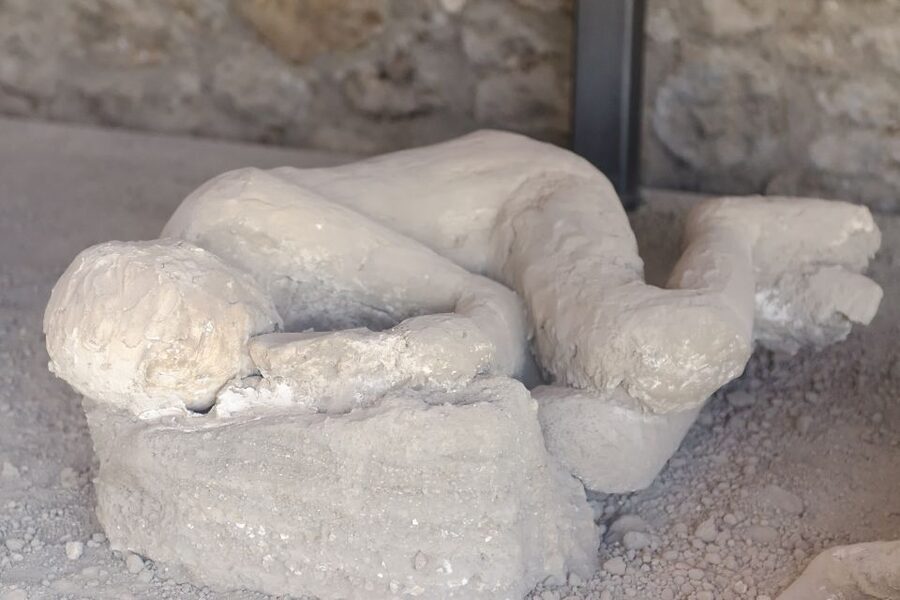
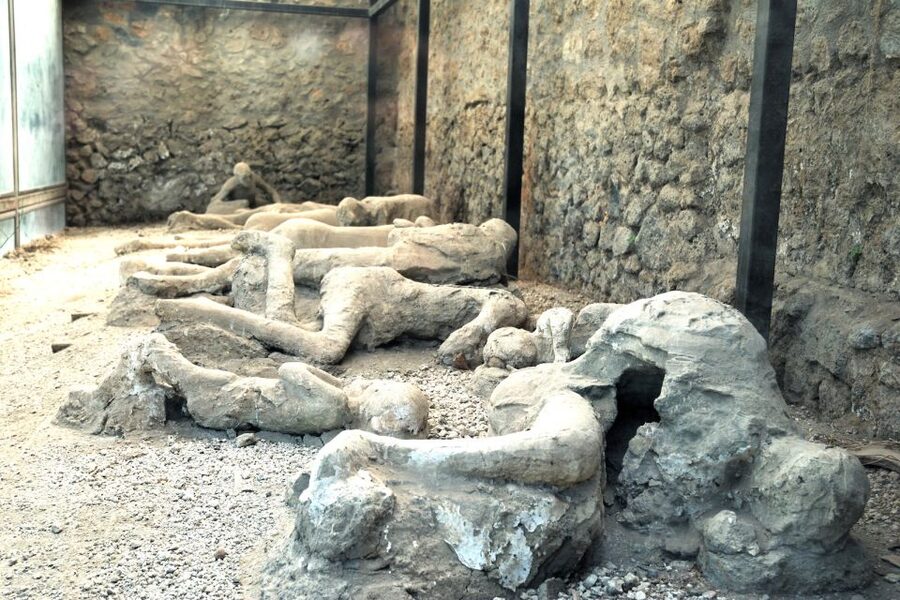
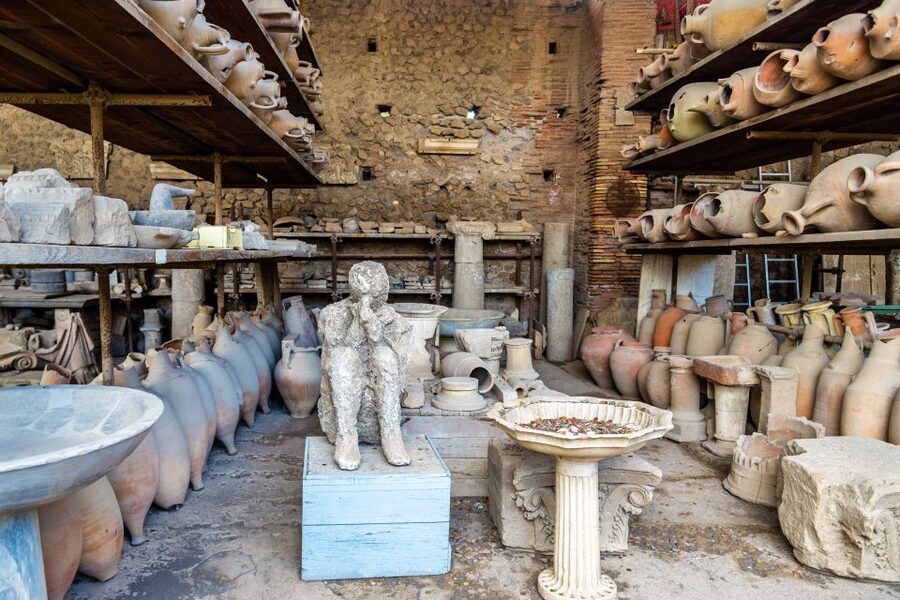
The site can also be sobering. The eruption killed the city’s inhabitants, and preserved human remains are displayed in parts of Pompeii. You may find this one of the most moving sections, but it is worth knowing in advance that the visit is not only about architecture and archaeology.
More Naples & Pompeii trips worth a second look
- Pompeii: Skip-the-Line Entrance Ticket with Audio Guide
★ 4.0 · 2,509 reviews - Pompeii: Skip-the-Line Entry Ticket with Audio Guide or Tour
★ 4.1 · 1,364 reviews - Herculaneum: Skip-the-Line Entry Ticket with Audio Guide
★ 4.3 · 870 reviews
Choosing Pompeii Express or Pompeii+
The basic Pompeii Express ticket includes the ancient city of Pompeii. That is already a substantial visit, with temples, theaters, villas, baths, public buildings, the market area, and the amphitheater.
If you have only a few hours, Express may be the sensible choice. Pompeii is so large that adding distant sites can turn your visit into a race. You can see important parts of the ancient city without trying to cover every corner.
Pompeii+ includes the ancient city plus three suburban sites:
- Villa of the Mysteries
- Villa of Diomedes
- Villa Regina in Boscoreale, with the Antiquarium
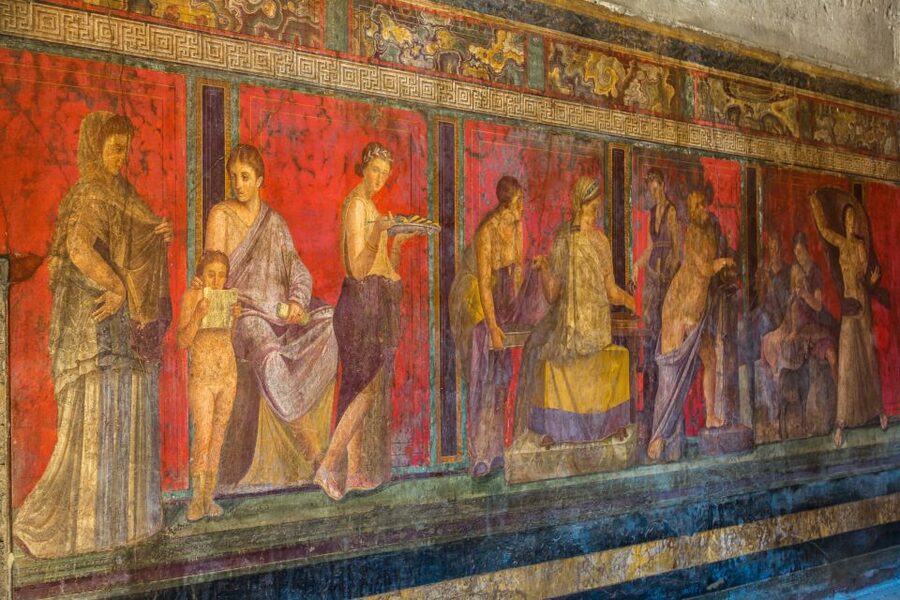
The Villa of the Mysteries is the big reason to consider the upgrade. Its frescoes are among the most memorable sights in the wider Pompeii area, and the villa gives you a better sense of Roman private life beyond the central streets.
Villa Diomedes adds another suburban residence, while Villa Regina in Boscoreale and its Antiquarium broaden the story beyond the main city. These locations are not simply extra rooms along your route, so Pompeii+ suits you best if you have enough time and want a fuller archaeological visit.
Pay attention to the last entry time for Pompeii+. From November 1 through March 31, the last entry is 3:30 p.m. From April 1 through October 31, it is 5:30 p.m. The Express option does not include the suburban villas, so do not assume the basic ticket covers Villa of the Mysteries.
What you will see inside the ancient city
Start by getting your bearings. Pompeii’s streets can feel confusing at first, and the site is large enough that it is easy to walk past an important building without realizing it. Use the map and mark off the areas you have visited.
The temples of Venus, Apollo, and Jupiter show the religious side of Roman life. Their columns and open spaces are impressive, but the real value comes from placing them in the city plan. These were not isolated monuments. They were part of the daily setting for people who lived, worked, shopped, and worshipped nearby.
The public baths reveal a more social side of Pompeii. Look for the decorative details and mosaics, then imagine the baths as places for conversation and routine, not just washing. The public buildings often make more sense when you remember that Roman cities were built around shared spaces.
The House of the Faun is one of the famous private residences. It represents the scale and decoration that wealthy Roman families could enjoy. Its surviving layout helps you understand how a Roman home could be organized around courtyards, reception rooms, and carefully decorated interiors.
The market area offers a more everyday view. You can see where people bought food and supplies, which helps balance the grand villas and temples. Pompeii works best when you move between impressive monuments and small details of ordinary life.
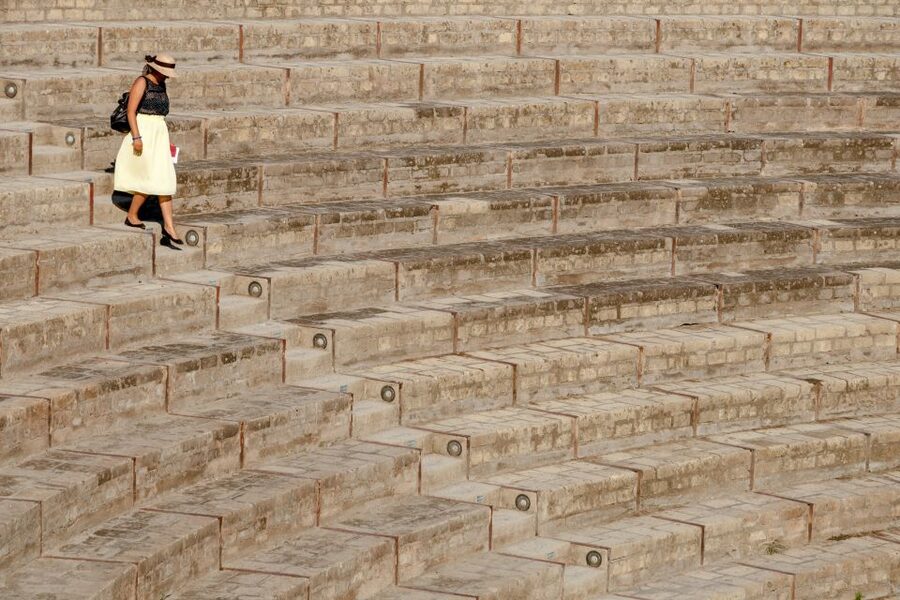
The theaters and amphitheater give the city a public stage. Stop and picture the crowds, noise, and performances that once filled these spaces. The amphitheater is especially useful for understanding Pompeii as a living city rather than a quiet archaeological site.
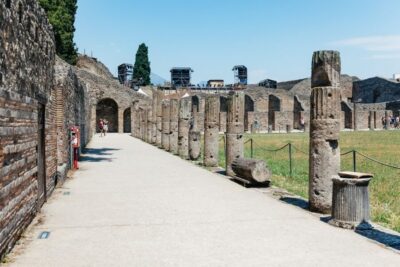
The streets themselves may be the most revealing part. Ancient paving, building fronts, and worn pathways show how people moved around town. With Vesuvius in the background, the view connects the preserved city to the force that ended it.
Why an audio guide helps, and where it falls short
I recommend adding an audio guide if you are visiting without a private guide. Pompeii contains too much material to interpret easily from ruins alone, and the commentary can explain the role of a building before you move on.
The digital guide can also help you find your position and identify sights on a map. This is useful when the streets begin to look alike. Several language choices are available, including English, Italian, Chinese, Japanese, Portuguese, Russian, German, and French. The included digital audio guide information also lists Spanish, so check the language options shown for your booking.
The physical audio guide is collected inside the archaeological site at the official audio guide desk near Porta Marina Superiore. It can only be picked up and returned at the park’s official desk. A valid ID is required as a deposit, so carry your passport or another accepted identity document.
Bring your own headphones. Headphones are not included, and Bluetooth headphones do not work with the physical audio guide device. If you use the digital guide on your own phone, make sure you are comfortable handling the device while walking.
The guide is not perfect. Some explanations can be hard to match with the exact room or viewpoint, and the commentary may describe a building that is temporarily closed. It may also take a few minutes to learn the controls. A map remains useful even if you choose the guide.
If you prefer a clear story and direct answers, a live guide may suit you better. This ticket does not include a guided tour. The self-guided format gives you freedom, but you must decide where to go and how long to stay.
A different way to spend the day, same part of Italy:
- Naples: Naples Underground Entry Ticket and Guided Tour
★ 4.4 · 21,781 reviews - Pompeii: Entry Ticket and Guided Tour with an Archaeologist
★ 4.8 · 19,459 reviews - Pompeii: Small Group Tour with an Archaeologist
★ 4.8 · 12,264 reviews - From Naples: Pompeii Ruins & Mount Vesuvius Day Tour
★ 4.3 · 11,459 reviews
How much time should you allow?

The ticket is valid for one day, and Pompeii can easily occupy most of that day. A shorter visit is still worthwhile, but you should plan around your priorities instead of expecting to see everything.
With about two hours, focus on a compact selection of major streets, the House of the Faun, the baths, temples, theater areas, and the amphitheater. You will not cover the whole archaeological park, but you can get a strong first impression.
With several hours, slow down. The best moments often come from connecting the major sights rather than rushing from one famous building to another. Use the map to avoid retracing your steps and keep an eye on closing times.
A full day allows more room for side streets and the suburban villas if you choose Pompeii+. One practical warning: even a full day may not be enough to visit every open area. The site is genuinely large, and walking on ancient paving can be tiring.
If you are visiting with children or anyone who tires easily, set a modest goal. A shorter route with regular breaks is better than turning the final hours into a march. The site is wheelchair accessible, although the historic surfaces and distance between areas still make sensible pacing important.
Entry, queues, and finding the right entrance
The reserved ticket is most useful during busy periods. People without advance tickets can face long lines, while a voucher on your phone lets you proceed toward the appropriate entrance.
Do not assume the first entrance you see is the fastest one. The site has several access points, and the route for vouchers, tickets, and audio guide collection can be confusing. Follow the instructions for your specific option and allow time to find the correct desk.
The audio guide desk is at Porta Marina Superiore, while entry arrangements may direct you toward another entrance. Some ticket holders have found the voucher and audio guide collection process unclear, especially when sent between different offices. Printing the voucher can be helpful even when a phone version is accepted.
A useful practical detail is that luggage storage is available at the site. That matters because you will be walking for hours, often over uneven ancient streets. Still, bring only what you need for the day and keep your identification with you.
The meeting point can vary by the option booked. This is not a guided group tour with one fixed departure point, so read the instructions attached to your reservation before leaving for Pompeii.
Price and value at $26

At $26 per person, this is a reasonable way to secure access to one of Italy’s major archaeological sites, especially if avoiding a long ticket queue matters to you. The value depends on which ticket you choose and whether you use the audio guide.
Pompeii Express offers the strongest value for a first visit with limited time. The central archaeological city contains more than enough for several hours, and you will not pay extra for suburban locations you cannot reach.
Pompeii+ is better value if the Villa of the Mysteries is high on your list. For only a modest increase, you add sites that give the visit more range. The catch is time. An upgrade has little value if you arrive late or prefer a relaxed route through the main city.
The audio guide is worth considering for independent visitors who want context without joining a group. It is less useful if you already have a detailed guidebook or prefer to explore by sight. Since physical headphones are not provided, remember to bring your own.
EU citizens under 18 enter Pompeii free, as do disabled citizens and their relatives, according to the stated admission rules. Check whether the paid option is needed for everyone in your party before booking.
Heat, walking, and a better route through Pompeii

Wear comfortable shoes. Pompeii involves a great deal of walking, and ancient paving can be uneven. The site also has exposed areas, so bring water and prepare for sun, particularly during warmer months.
Arriving early can help with both crowds and temperature. It also gives you more time to work out the map and audio guide before the busiest part of the day.
Do not try to memorize every building. Pick a few themes and follow them. You might focus on religion through the temples, public life through the baths and theaters, food and trade through the market, and domestic life through the houses and villas.
The human remains and the city’s final moments can make the visit emotionally heavy. Give yourself time to pause rather than treating Pompeii as a checklist of photo stops. The Vesuvius view is striking, but it also reminds you why the city was preserved in such a sudden and terrible way.
Facilities include toilets around the site, and a map helps you locate them. Luggage storage is available, which makes a long visit more comfortable.
Who should book this Pompeii ticket?

I would choose this experience if you want independence, need a reserved entry ticket, and are comfortable planning your own route. It works particularly well for couples, families, and independent visitors who do not want to follow a fixed group schedule.
The audio guide makes it a better choice for first-time visitors who want explanations but do not want a live tour. Pick Pompeii Express for a focused visit or Pompeii+ for a longer day centered on the Villa of the Mysteries and the other suburban sites.
You may want a live guide instead if you have limited time and worry about wandering without direction. The site’s size is its greatest strength, but it is also the reason some people lose time or miss key buildings.
Should you book it?
Book this ticket if you want flexible entry to Pompeii and plan to spend at least several hours exploring. The reserved access, optional audio guide, luggage storage, and choice of Pompeii Express or Pompeii+ make it practical for many itineraries.
Choose Pompeii+ only if you can meet the earlier last-entry rules and have time for the suburban villas. Otherwise, Pompeii Express gives you an excellent visit at a lower price.
For the best experience, arrive early, carry water and identification, bring headphones, print or save your voucher, and study the entrance instructions before you go. Pompeii rewards patience more than speed.
FAQ
How long is the Pompeii ticket valid?
The ticket is valid for one day. Starting times depend on availability when you book.
What does the Pompeii Express ticket include?
Pompeii Express includes entry to the ancient city of Pompeii. It does not include the suburban villas, including the Villa of the Mysteries.
What does the Pompeii+ ticket include?
Pompeii+ includes the ancient city of Pompeii, Villa of the Mysteries, Villa of Diomedes, and Villa Regina in Boscoreale with its Antiquarium.
What is the last entry time for Pompeii+?
From November 1 through March 31, the last entry time is 3:30 p.m. From April 1 through October 31, the last entry time is 5:30 p.m.
Is an audio guide included?
An audio guide is optional. Depending on the selected option, you can use a physical audio guide or a digital audio guide.
Where do I collect the physical audio guide?
Collect and return the physical audio guide at the official audio guide desk near Porta Marina Superiore, inside the Pompeii archaeological site.
Do I need to bring headphones?
Headphones are not included, so bring your own if you want to use them. Bluetooth headphones do not work with the physical audio guide device.
Do I need identification?
Bring a passport or ID card. A valid ID is required as a deposit when renting the physical audio guide device.
Is Pompeii wheelchair accessible?
Yes, the activity is listed as wheelchair accessible. The site is large, and its ancient surfaces and long distances may still require careful pacing.
Recently reviewed around Naples & Pompeii
- Pompeii Skip-the-line Tour with Archaeologist Guide★ 5.0 · 559 reviews
- Sharing Tour of Pompeii★ 5.0 · 487 reviews
- Skip the Line Guided Tour of Pompeii led by an Archaeologist★ 5.0 · 703 reviews
- Visit in Pompeii – Pompeii Private Tour with Ada★ 5.0 · 436 reviews
- Pompeii Private Tour with an Archaeologist and Skip The Line★ 5.0 · 391 reviews
- Private Day Tour to Vesuvius, Herculaneum & Pompeii with Pick Up★ 5.0 · 279 reviews
- Pompeii Guided Group Tour with Entry Ticket and Archaeologist★ 4.5 · 269 reviews
- Pompeii Private Tour with an Archaeologist and Skip The Line – 3 hours★ 5.0 · 564 reviews
Pompeii & Vesuvius Tours, compared.

Entry Ticket and Guided Tour with an Archaeologist
Read our review →


Pompeii Small Group Tour with an Archaeologist
Read our review →
Pompeii, Amalfi Coast and Positano Day Trip from Rome
Read our review →
Pompeii and Mount Vesuvius Day Trip from Rome with Pizza Lunch
Read our review →Browse the lists this tour appears in