
Review · SKIP THE LINE
Palazzo Vecchio: Skip-the-Line Entry and Secret Passage Tour
Palazzo Vecchio keeps some of its best stories behind concealed doors and twisting stairways. This 75-minute tour takes you into spaces most standard palace visits skip, including the mysterious stairway built inside the thick walls, Francesco I de’ Medici’s small study, and Cosimo I’s Tesoretto.
I especially like two things here: the small group of no more than four people, which makes it easier to hear and ask questions, and the way the guide connects the secret rooms to Medici power, family life, and palace design. The main caution is physical. Narrow passages, curved stairs, heat in some rooms, and low-comfort spaces make this a poor pick if you dislike tight quarters or have limited mobility.
In This Review
- Key points at a glance
- Why Palazzo Vecchio’s secret rooms are worth your time
- Starting at Piazza della Signoria
- The secret stairway inside the thick walls
- Francesco I’s small study and the Medici taste for secrecy
- Cosimo I’s Tesoretto and private power
- Secret doors, cabinets, and rooms closed to the regular route
- Vasari’s roof structure over the Hall of the Five Hundred
- Use the remaining hour for the public palace
- Small group size and guide quality
- Who should book the secret passage tour?
- Is $37 good value?
- Should you book Palazzo Vecchio’s secret passage tour?
- FAQ
- How long does the Palazzo Vecchio secret passage tour last?
- What is included in the price?
- Is the tower included?
- What language is the tour offered in?
- How large is the group?
- Is the tour suitable for people with limited mobility?
Key points at a glance
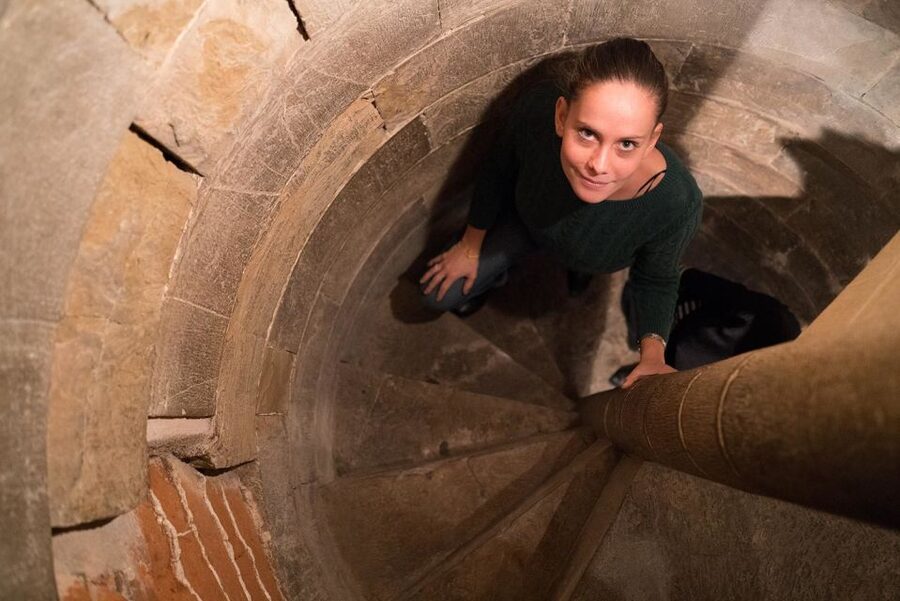
- Walk through a stairway inside the palace walls, built by order of Gualtieri di Brienee.
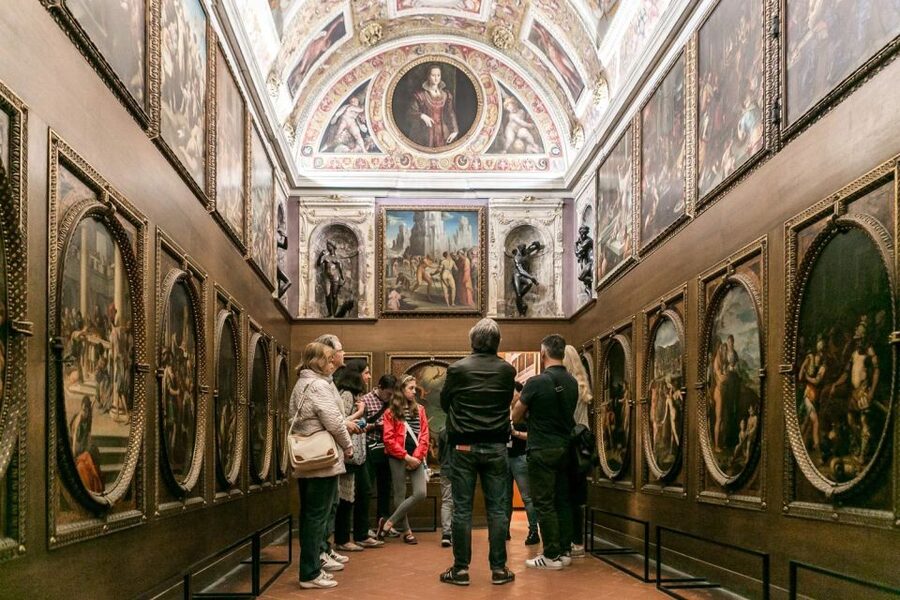
- See Francesco I de’ Medici’s studiolo, a refined room created to hold rare and precious objects.
- Visit Cosimo I’s Tesoretto, the private study associated with the ruler who reshaped Palazzo Vecchio.
- Learn how Vasari’s great roof structure supports the Hall of the Five Hundred’s ceiling.
- Explore with an English-speaking guide in a group limited to four participants.
- Continue through the public palace afterward, with the tour ending in the Hall of the Five Hundred.
Why Palazzo Vecchio’s secret rooms are worth your time
Florence has no shortage of famous art. The Uffizi, Accademia, and the main rooms of Palazzo Vecchio often get the first claim on a visitor’s schedule. Yet the secret passage tour offers something different: not simply another set of grand halls, but a look at how rulers moved, worked, stored objects, and controlled access inside a seat of power.
The palace can seem like a civic museum at first glance. You see imposing architecture, painted walls, and huge ceremonial rooms. Then the tour takes you through a door or narrow stairway that changes the scale completely. The setting shifts from public display to private movement.
That contrast gives the experience its appeal. The Medici did not use every part of the building to impress an audience. Some rooms were practical, private, or designed to keep important people and objects out of sight. You get a better sense of the palace as a working residence and government center, not just a handsome shell filled with art.
The tour is priced at $37 per person. I consider that fair if you already intend to visit Palazzo Vecchio and want access to areas a normal admission does not cover. It is less compelling if you only want the major public rooms and plan to move through the museum quickly.
More Florence trips worth a second look
- Florence: Skip-The-Line Uffizi Gallery Timed Entry Ticket
★ 4.5 · 27,832 reviews - Florence: Michelangelo’s David Skip-the-Line Entry Ticket
★ 4.5 · 12,764 reviews - Florence: Skip-the-Line Uffizi Small Group Tour
★ 4.6 · 5,926 reviews
Starting at Piazza della Signoria
Your visit begins at the entrance to Palazzo Vecchio from Piazza della Signoria. This is one of Florence’s easiest meeting points to find, but the voucher exchange takes place inside the building, not out in the square.
Once inside the courtyard, go to the ticket office area and head directly to the InfoPoint counter. There, you exchange your voucher for the tour ticket and bypass the regular ticket line. The directions are simple once you know this detail, but first-time visitors can lose time by looking for an outside meeting point or waiting in the wrong queue.
Allow a few extra minutes to get oriented. The palace entrance can be busy, especially when a civic event fills the main hall or reception area. Staff can direct you where to wait, but it is still wise not to arrive at the last moment.
The skip-the-line benefit is useful, though it should be understood correctly. It means you avoid the ticket-purchase queue. It does not turn the palace into a private visit, and public areas may still have other visitors moving through them.
The secret stairway inside the thick walls
The first major surprise is the stairway built within the palace walls by order of Gualtieri di Brienee. This is the kind of feature that can disappear from a standard museum route because it is narrow, functional, and easy to miss.
Its value comes from the setting. You are not looking at a grand staircase built for ceremony. You are seeing a route shaped by the building itself, where thick masonry creates a concealed passage through the structure. The cramped turns help you picture how different palace life could be away from the formal rooms.
This is also the point where you should take the physical demands seriously. The stairs twist and narrow, and one visitor compared the experience to a poor choice for anyone with trouble in small spaces or unusually large feet. That is practical advice, not a minor footnote.
The tour is not recommended for people with limited mobility. Claustrophobia can also be a concern, since some passages are confined and some rooms may feel hot in summer. If you are unsure, consider the public palace visit instead, or contact the provider before booking.
Francesco I’s small study and the Medici taste for secrecy
The studiolo of Francesco I de’ Medici is one of the tour’s most interesting stops. It is a small, elegant study made for rare and precious objects, a sharp contrast to the vast Hall of the Five Hundred.
The room helps explain Francesco’s character and interests through its scale and purpose. Rather than presenting power with a crowd of officials and a huge painted program, the studiolo turns inward. It was a private place for objects, curiosity, and controlled access.
Your guide provides the meaning that the room alone cannot. Guides including Francesco, Francesca, Sara, Julia, Marta, and Roberta have been praised for turning the palace’s rooms into personal stories rather than a string of dates. The exact guide depends on the departure, but the format gives you a live English explanation throughout the visit.
I like this stop because it shows how the Medici used architecture to manage privacy. A palace ruler needed grand rooms for public business, but also smaller spaces where objects, ideas, and conversations could be kept away from view.
The studiolo is not large, so a group of four matters. You have a better chance of seeing details and staying close to the guide without being pushed to the rear of a large crowd.
A different way to spend the day, same part of Italy:
- Tuscany Day Trip from Florence: Siena, San Gimignano, Pisa and Lunch at a Winery
★ 5.0 · 21,634 reviews - Florence: Timed Entrance Ticket to Michelangelo’s David
★ 4.6 · 16,983 reviews - The Best tour in Florence: Renaissance & Medici Tales – guided by a STORYTELLER
★ 5.0 · 12,316 reviews - Florence: Leonardo Interactive Museum Entry Ticket
★ 4.5 · 11,763 reviews
Cosimo I’s Tesoretto and private power
The tour also reaches the desk or study associated with Cosimo I de’ Medici, known as the Tesoretto. The name suggests a small treasury or store of valued things, and the room offers another view of the Medici household’s private side.
Cosimo I was central to Palazzo Vecchio’s transformation into a powerful court and administrative center. The Tesoretto gives that larger story a physical anchor. Instead of hearing only about a ruler in a grand hall, you see a more contained workspace linked to his daily authority.
This is where a good guide earns the price of the tour. The room is meaningful because of its connections: who used it, why it was placed where it was, and how private spaces supported the public image of the family. Guides such as Marta and Martina have been noted for explaining not just what is in front of you, but how the palace changed over time.
The tour does not treat the Medici as cardboard villains or flawless patrons. Stories about family members, private rooms, relics, doors, and palace customs make the people behind the dynasty easier to understand. You get the sense of a family protecting status, objects, movement, and information.
Secret doors, cabinets, and rooms closed to the regular route
The thrill here is not based on a theatrical stunt. The hidden doors and passageways are real parts of the building, and the appeal comes from seeing areas normally closed to the main public.
You might pass through a concealed entrance, inspect a disguised cabinet, or try to guess where a door is located before the guide reveals it. The experience has a playful side, which is useful if you have spent several days looking at formal churches and museums and need a change of pace.
The tour also includes private rooms and an attic-like area, according to the route described by past participants. The exact sequence can vary, so you should not expect every departure to reveal an identical set of details. The core focus remains the secret passages, Medici rooms, and restricted palace spaces.
I appreciate that the tour remains tied to history. The passages were not merely built for amusement. Your guide explains how they related to palace movement, privacy, and safety. That context keeps the experience from becoming a simple hunt for doors behind paintings.
Some passages are narrow enough to affect your enjoyment. If you want wide viewing areas and time to linger alone, this is not the best format. You are moving with a guide through spaces designed for limited access, not browsing a spacious gallery.
Vasari’s roof structure over the Hall of the Five Hundred
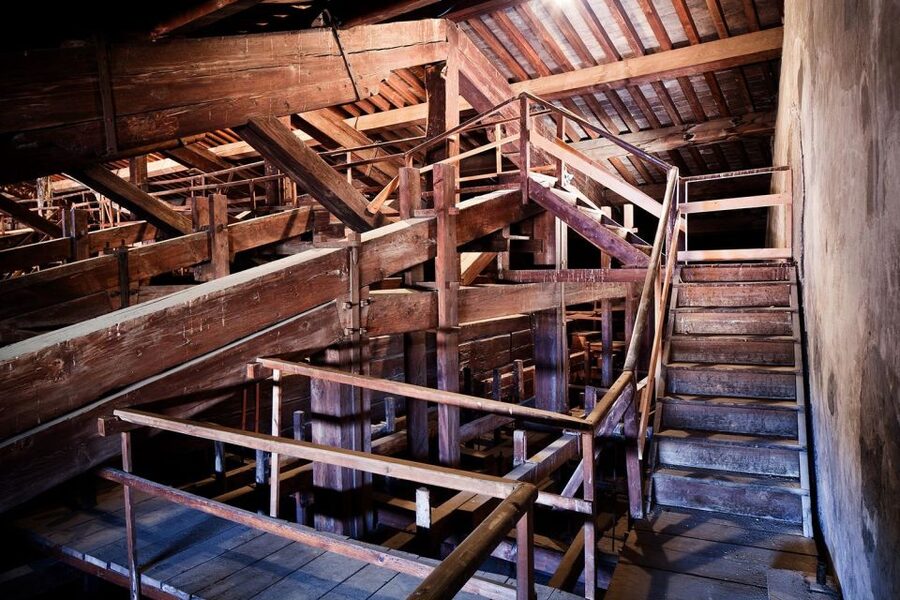
The route finishes with a look at the large trussed structure created by Giorgio Vasari to support the paneled ceiling of the Hall of the Five Hundred. This is a strong technical detail for anyone interested in architecture, engineering, or the practical work behind Renaissance spectacle.
Most visitors focus on the paintings and scale of the hall. The tour adds another layer by showing how the ceiling is supported. The structure matters because the room’s grand effect depends on difficult construction above and behind the decoration.
This stop also helps connect the secret route to the public palace. You move from private stairs and small studies into Florence’s great ceremonial room, where art and politics meet. The change in scale is part of the lesson: the Medici world needed both concealed routes and spaces designed to overwhelm an audience.
The guided portion ends in the Hall of the Five Hundred. That is useful because you can continue exploring Palazzo Vecchio on your own without having to exit immediately.
Use the remaining hour for the public palace
The 75 minutes covers the guided secret-passage experience, not every room in Palazzo Vecchio. If you want to see the public galleries and major halls properly, allow about another hour afterward.
That extra time lets you slow down in the Hall of the Five Hundred, look at the decorative program, and connect the grand public setting with the private rooms you have just visited. The palace is much more satisfying when you do not treat the secret tour as the entire museum.
The standard admission included with this activity covers Palazzo Vecchio, but the tower is a separate ticket. Do not assume that this booking includes tower access. If climbing the tower is a priority, check for a different ticket or add-on before you reserve.
A civic event can make the main reception area busy, and this may affect where you wait at the start. It does not change the appeal of the restricted rooms, but it is another reason to arrive early and follow the staff’s directions.
Small group size and guide quality
The group limit of four is one of the best features of this experience. In narrow rooms, a large crowd would make the tour awkward. With four people, you can stay near the guide, hear the explanation, and ask questions without turning the visit into a lecture from across a room.
The guide is central to the experience. The architecture is interesting, but the stairs and small rooms need explanation. Guides named in visitor accounts include Francesco, Francesca, Sara, Marta, Martina, Julia, Giulia, Roberta, Simone, and Daisy. The repeated pattern is clear: the best departures rely on lively storytelling and strong command of the palace’s history.
Guide quality can still vary. One person found the guide late, and another described a guide as a little quiet, though still pleased with the tour. These are minor concerns in an otherwise highly rated experience, but they are worth keeping in mind if you expect a polished theatrical presentation.
The tour is offered in English only. If you want a private tour in another language, this is not the right choice based on the information available.
Who should book the secret passage tour?
I would choose this for first-time Florence visitors who already plan to see Palazzo Vecchio and want more than a quick look at the famous rooms. It is also a strong pick for families with older children and teenagers. The secret doors, narrow stairs, and behind-the-scenes route provide a welcome change after a long run of traditional museums and churches.
It suits you especially well if you like:
- Medici family stories and palace politics
- Renaissance architecture and construction
- Small-group guiding
- Rooms that are not part of the normal public route
- A mix of serious history and light discovery
- A short guided visit followed by independent museum time
I would think twice if you have limited mobility, dislike confined spaces, or are uncomfortable on twisting stairs. Summer heat inside some rooms may add to the problem. The tour has no stated age restriction, but comfort and mobility matter more than age here.
It is also not ideal if your main goal is the tower. Tower access is not included, and the tour spends its time on the secret rooms and passages rather than covering every part of the palace.
Is $37 good value?
At $37 per person, the activity costs more than a basic museum admission, but you are paying for two things: entry to Palazzo Vecchio and a guided route into spaces unavailable on the main public visit.
I think the price works best when you use the included admission fully. Book enough time to stay in the palace after the 75-minute tour. If you leave as soon as the guide finishes, you are not getting the full value of the ticket.
The four-person limit also improves the calculation. A guide can point out small features and answer questions in a way that is difficult with a large crowd. For a family of four, the format can feel close to a private visit without the cost of hiring a private guide.
Flexible booking adds practical value. You can reserve now and pay later, and cancellation is free up to 24 hours before the start time for a full refund. Check the available departure times before you commit, since the tour lasts 75 minutes and is offered at set start times.
Should you book Palazzo Vecchio’s secret passage tour?
Book it if you want to see the palace from the inside out, not just admire its grand public rooms. The passage inside the wall, Francesco I’s studiolo, Cosimo I’s Tesoretto, concealed doors, and Vasari’s roof structure give you a sharper picture of how Medici power operated.
I would pair the tour with at least an additional hour in the public museum. Arrive early enough to find the InfoPoint inside the courtyard, wear shoes suited to twisting stairs, and be honest about your comfort in tight spaces.
Skip it if you need step-free access, want tower entry, or prefer to explore alone without a set route. For everyone else, especially families and visitors curious about the Medici, this is one of the more distinctive ways to spend $37 in central Florence.
FAQ
How long does the Palazzo Vecchio secret passage tour last?
The guided tour lasts 75 minutes. You can continue exploring the rest of Palazzo Vecchio afterward, and allowing about another hour gives you time to see the public rooms at a comfortable pace.
What is included in the price?
The $37 price includes skip-the-line admission to Palazzo Vecchio and the guided secret passage tour.
Is the tower included?
No. Tower access requires a different ticket.
What language is the tour offered in?
The live guided tour is offered in English.
How large is the group?
The group is limited to four participants.
Is the tour suitable for people with limited mobility?
No. The tour is not recommended for people with limited mobility because it includes narrow, twisting stairs and confined passageways. It may also be uncomfortable if you have claustrophobia.
Recently reviewed around Florence
- Walking Food Tour of Florence with Tastings and Wine★ 5.0 · 518 reviews
- Florence Sunset Food Tour with Wine & Dine at a Tuscan farmhouse★ 5.0 · 194 reviews
- Wine Experience In Chianti Hills from Florence★ 4.5 · 195 reviews
- Uffizi Gallery Timed Entry Admission Tickets★ 4.0 · 392 reviews
- Val d’Orcia Brunello Wine Tour with Montalcino and Montepulciano★ 4.5 · 359 reviews
- Wine Tasting Experience in Ponte Vecchio: Best Tuscany selection!★ 5.0 · 197 reviews
- Uffizi Gallery Small Group Tour with Guide★ 4.5 · 879 reviews
- Early Access Guided Uffizi Gallery Tour Skip-the-Line Small Group★ 4.5 · 707 reviews
Skip the Line, compared.
Skip-The-Line Uffizi Gallery Timed Entry Ticket
Read our review →
Vatican Museums & Sistine Chapel Skip-the-Line Entry Ticket
Read our review →
Skip-the-Line Group Tour of the Vatican, Sistine Chapel & St. Peter’s Basilica
Read our review →
Michelangelo’s David Skip-the-Line Entry Ticket
Read our review →
Vatican Museums & Sistine Chapel Skip-The-Line Ticket
Read our review →
Vatican, Sistine Chapel & St. Peter’s Skip-the-Line Tour
Read our review →
Skip-the-Line Vatican, Sistine Chapel & St. Peter’s | Small Group
Read our review →
Vatican: Vatican Museums Sistine Chapel Skip-the-Line Ticket
Read our review →Browse the lists this tour appears in