Review · 2-HOUR EXPERIENCES
Rome: 2-Hour Gladiator School
This is not a quiet museum lesson. At Rome’s Gladiator School on the ancient Via Appia Antica, you put on a gladiator tunic, handle Roman-style weapons, learn basic sword moves, and finish with a mock battle. The fighting uses safe equipment, but there is enough action to keep children and adults focused.
I like the mix of hands-on history and exercise. You do not just hear about gladiators, you learn how their weapons were used and take part in the training. I also like the way the two-hour session gives families a shared activity, with children often aged from about 5 to teenagers and adults joining in as well.
The main drawback is practical rather than historical: the Appian Way location takes extra planning, and the open-air setting can be very hot. Mosquitoes have also been a problem, so insect repellent is a sensible addition to your day bag.
In This Review
- Key points to know before booking
- What the two-hour gladiator lesson is really like
- The small museum and its unusual objects
- Tunics, weapons, and safe sword fighting
- The final battle in the arena
- What the teaching adds to a Colosseum visit
- Heat, mosquitoes, and getting to the Appian Way
- Is $135.94 a fair price?
- Who will enjoy this most?
- Booking details worth knowing
- Should you book Rome Gladiator School?
- FAQ
- Where does the gladiator school take place?
- How long does the activity last?
- What does the experience include?
- Is the sword fighting safe?
- Can children take part?
- Can parents watch without joining?
- How do I reach the meeting point by bus?
- Is the activity wheelchair accessible?
Key points to know before booking
- A real Appian Way setting: The school is on Rome’s ancient Via Appia Antica, away from the Colosseum crowds and central city streets.
- Training, not just a talk: You learn basic sword-fighting techniques and use Roman weapons during the session.
- A mock arena finale: The course ends with a staged battle using safe foam swords, often in front of an Emperor.
- Good for mixed ages: Children and adults can train together, making this an easy family choice.
- History with a human angle: The instructor explains gladiator life, Roman soldiers, weapons, and daily life in imperial Rome.
- Useful extras included: The price covers the museum visit, training, drinks, and a completion certificate.
What the two-hour gladiator lesson is really like
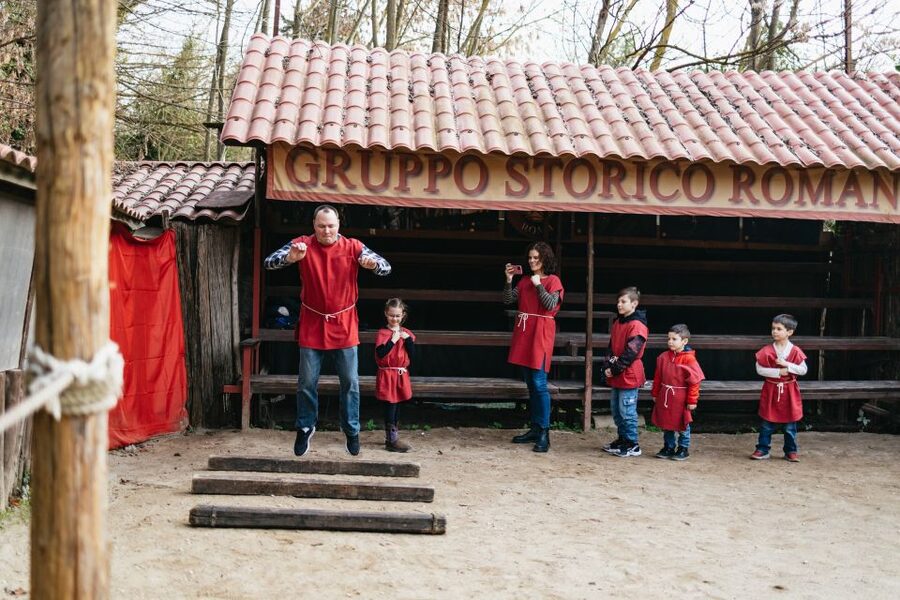
The experience begins at the Gladiator School of Rome, located on the Appian Way. You meet your instructor there, rather than at the Colosseum or another central Rome landmark. The nearest bus stop is Appia Antica-Travicella, served by buses 118 and 218.
That setting matters. The Appian Way gives the activity a more fitting backdrop than a classroom near the city center. You are in the area of one of Rome’s oldest roads, then stepping into a purpose-built activity focused on ancient Roman combat. It is not the Colosseum itself, and you should not confuse this with a guided tour of the amphitheater, but the location helps connect the lesson to the city’s Roman past.
The course starts with an introduction to Roman history and gladiators. This section is not treated as a long lecture. The strongest guides keep the group involved with questions, demonstrations, jokes, and examples that children can follow. Guides named in the feedback include Mirko, Cena, Patriccio, Olympus, Marko, and Sina, although your instructor will depend on the session.
You learn about the position of gladiators in Roman society and hear about the weapons they used. The emphasis is on the real people behind the arena image, not only the Hollywood version. One session included discussion of Roman soldiers and military life as well as gladiators, which helps explain how combat training fit into the wider Roman world.
More Rome trips worth a second look
- Cooking Class 2 Hour Spanish Steps – Fettucine and Tiramisù
★ 5.0 · 298 reviews - Lucca: 2-Hour City Center Walking Tour
★ 4.7 · 1,314 reviews - Milan Duomo and Rooftop 2-Hour Guided Tour
★ 4.6 · 1,076 reviews
The small museum and its unusual objects
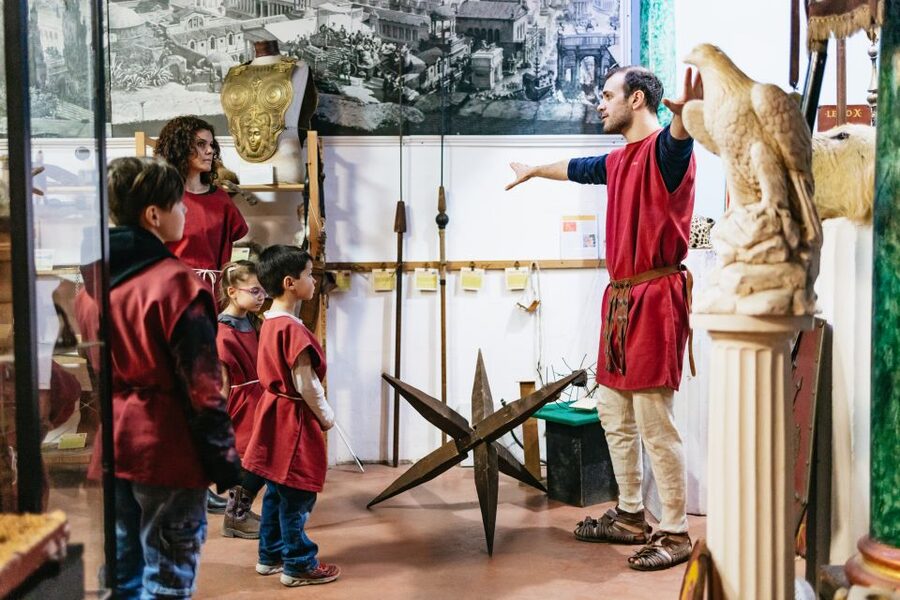
The included museum visit adds useful context before the physical training begins. It is described as small, so do not arrive expecting a major national museum with room after room of galleries. Its value comes from the subject matter and the chance to see objects connected to gladiators, Roman weapons, and military equipment.
That makes the museum a good opening chapter for the activity. You first see and discuss the world of Roman combat, then practice movements yourself. The visit also gives the instructor a chance to explain details that are easy to miss at the Colosseum, where you are usually looking at the building rather than learning how a weapon worked.
The museum may appeal most to families who want more than costume photos. Children can see the equipment and then handle safe versions during training. Adults who already know the basic Colosseum story may also appreciate the focus on gladiator techniques and Roman military life.
Keep your expectations sensible. The museum is one part of a larger experience, not the main event. If your priority is a large collection of ancient objects, Rome’s major archaeological museums will offer much more. If you want a short, focused introduction before an active lesson, this stop does its job.
Tunics, weapons, and safe sword fighting

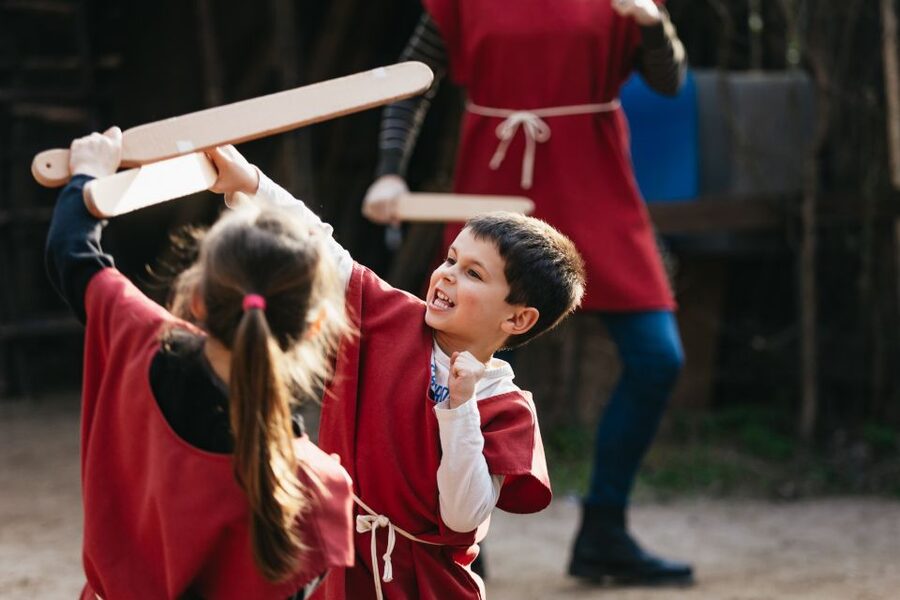
After the introduction, you put on a gladiator tunic and begin the practical part of the course. The instructor teaches basic sword-fighting techniques and explains how to move with Roman-style weapons. The lesson is designed for beginners, so you do not need previous fencing or martial-arts experience.
The safety element is important. This is theatrical combat and physical play, not a serious weapons class. The final battles use foam swords, and the instructor directs the activity so that children and adults can take part safely. You still get the fun of blocking, striking, and moving like a fighter without handling dangerous equipment.
The best part is the steady pace. Families describe the session as active from start to finish, with much less sitting than they expected. The instructor is usually moving around the group, demonstrating techniques, correcting positions, and encouraging participants. That personal attention helps shy children join in and gives confident children enough to do.
Adults are not pushed to the side. Parents can participate alongside their children, and several family groups found that the adults enjoyed the combat as much as the younger members. If you prefer to watch, you can do that too. Parents or companions who do not take the course do not need to buy a ticket.
The final battle in the arena
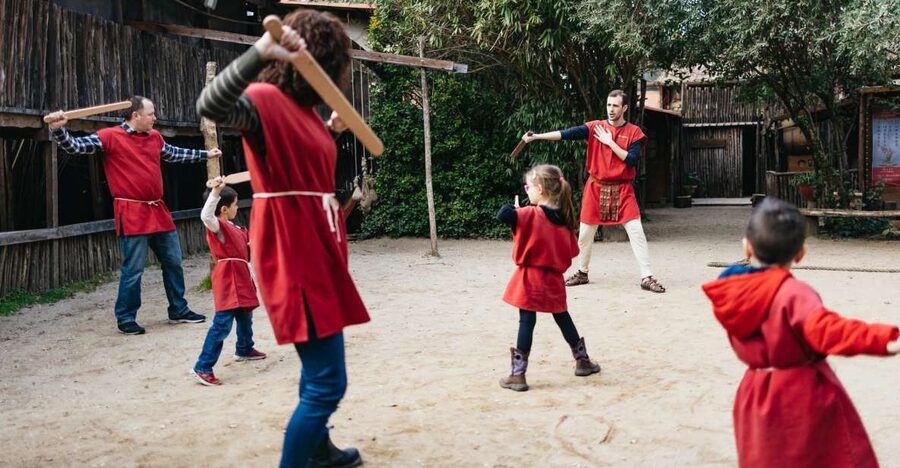
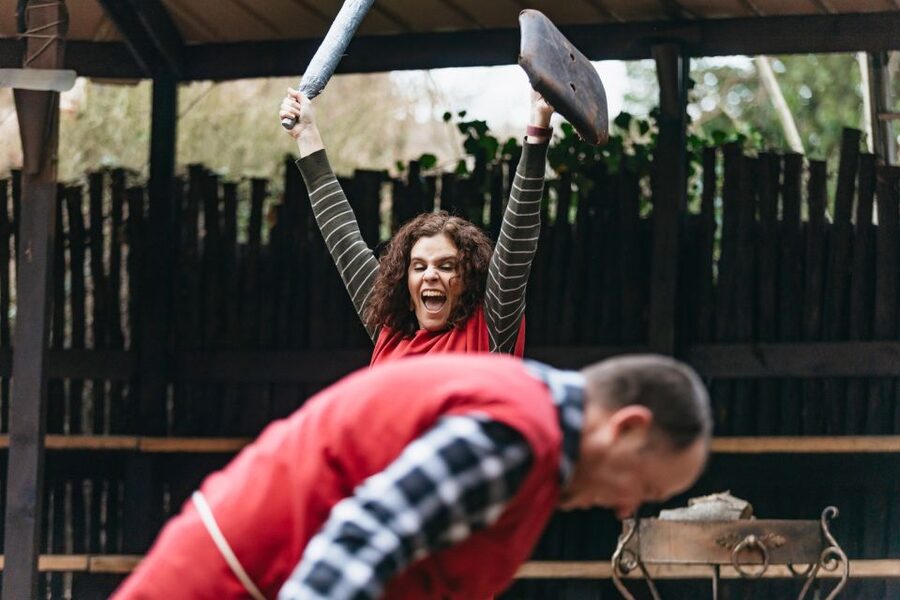
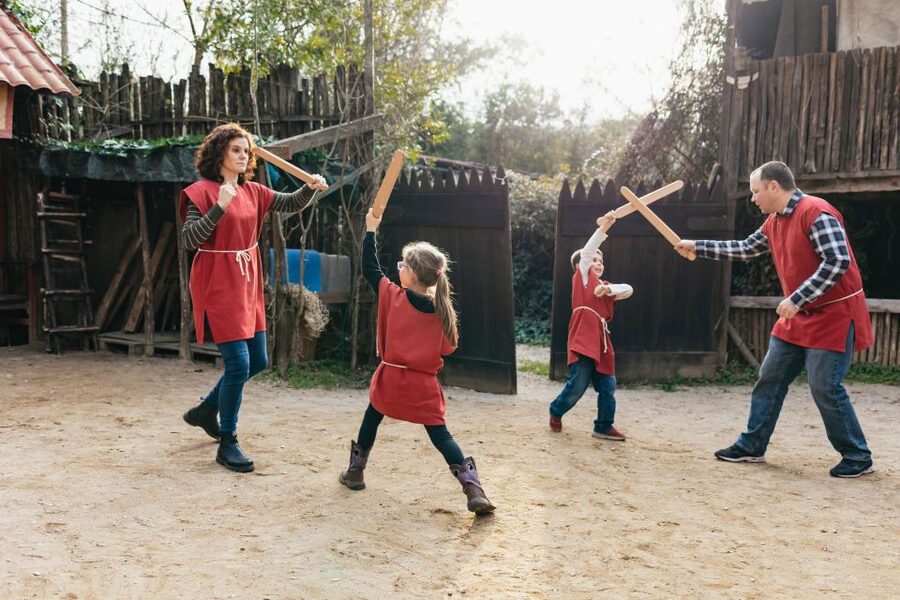
The lesson builds toward a mock battle in the school’s arena. You use foam swords and put the techniques into practice against other participants. The activity can include families and children of different ages, so the exact feel of the battle will depend on the group attending that day.
This finale gives the earlier instruction a clear purpose. Instead of learning a few movements and stopping, you get a playful test of what you have practiced. Children often enjoy the sense of ceremony, especially when the battle takes place in front of an Emperor figure.
You should see this as guided role-play, not a reenactment of actual Roman arena combat. Nobody is being asked to perform a dangerous stunt, and the point is participation rather than winning. Still, the format creates strong family photographs and a memorable story to take home.
The battle also works well for mixed generations. One family group included children, parents, and a grandparent, with ages ranging from 11 to 76. That is a useful clue for anyone planning a group with different interests and energy levels. You do not all need to be athletic, but you should be comfortable with light physical activity.
A different way to spend the day, same part of Italy:
- Vatican: Museums & Sistine Chapel Entrance Ticket
★ 4.5 · 144,003 reviews - Vatican Museums & Sistine Chapel Tour with Optional Basilica
★ 4.3 · 67,413 reviews - Colosseum, Roman Forum & Palatine Guided Tour
★ 4.7 · 63,148 reviews - Vatican Museums, Sistine Chapel & St Peter’s Basilica Guided Tour
★ 4.5 · 39,149 reviews
What the teaching adds to a Colosseum visit

This experience pairs naturally with a visit to the Colosseum, but it should not replace one. At the amphitheater, you see the huge public setting where gladiatorial spectacles took place. At the school, you explore the weapons, movements, and training in a personal way.
If you visit both, space them carefully. The school is on the Appian Way, while the Colosseum is in the city center, so they are not next door to each other. One family booked an underground Colosseum tour later in the day and found that seeing the areas where gladiators and animals waited added useful context.
You can also book the gladiator school after your Colosseum visit, when children may be ready for something more active. This order works especially well for families. The Colosseum supplies the impressive monument, while the school gives younger visitors a chance to act on what they have just seen.
The activity is also a good answer to a common Rome problem: children can lose patience during long archaeological visits. Here, history is broken into short explanations, demonstrations, and movement. You still learn, but the information arrives through action rather than a long stream of dates and names.
Heat, mosquitoes, and getting to the Appian Way

Plan for the setting. The training area has shady spots, and cold water is provided, but summer heat can be intense. One family attended on a day above 95 degrees Fahrenheit and appreciated the water and available shade.
Wear light clothing under the tunic and bring a bottle if you prefer to have your own supply. Comfortable shoes make sense because the course includes movement and practice. Insect repellent is worth packing, especially during warmer months, since mosquitoes have been reported around the site.
The bus is the clearest public transport option given for the activity. Use bus 118 or 218 and get off at Appia Antica-Travicella. Check the current Rome transit information before you leave, since routes and schedules can change. Build in spare time rather than trying to arrive at the last minute.
The tour ends back at the Gladiator School, which keeps the plan simple. You do not need to arrange a second pickup point after the battle. The activity is wheelchair accessible, but it is still wise to ask the provider about the exact practical arrangements if a participant has specific mobility needs.
Is $135.94 a fair price?
At $135.94 per person, this is not a budget activity. The price deserves a clear look, particularly for a family of four or five. You are paying for a two-hour experience rather than a full-day tour, so the value depends on how much your group will take part.
The package includes the museum visit, gladiator training, drinks, and a certificate. More important, it provides a guided activity that keeps the whole group involved. A standard museum visit may cost less, but it will not give your children the same physical role or shared family memory.
The value is strongest for families with children who like action, costumes, and stories about Roman soldiers. It is also good for adults who enjoy historical role-play and do not mind looking slightly silly in the name of fun. If everyone in your party wants a serious archaeological lecture, the price will feel less convincing.
A useful way to judge it is to ask how many people will participate. Nonparticipating parents and companions do not need a ticket, so a family can reduce the cost if one adult prefers to watch. If two adults and two children all join, the activity becomes a shared event rather than a children’s add-on.
The rating is 4.7 from 630 reviews, with repeated praise for the guides, the balance of education and activity, and the quality of the final battle. I would still budget for the location and the heat, since a good activity can be less enjoyable if you arrive tired, thirsty, or poorly prepared.
Who will enjoy this most?
I would recommend the Gladiator School for families with children roughly from early school age through the teenage years. Younger children can take part with adult support, and the activity has also worked well for children aged 5, 7, 8, 9, 10, 11, 12, and 14.
Older children are not automatically too old for it. Teenagers may enjoy the sword practice and the chance to compete with their parents, especially if they have already visited the Colosseum and want a change of pace. Adults can participate rather than simply supervise.
It also suits a multigenerational group. The teaching is patient, and the format does not require specialist fitness. You should expect light physical activity, standing, and movement, but not a demanding workout.
I would be more cautious about booking it for a group where nobody wants to dress up or act out a battle. The experience depends on participation. The museum and history talk are useful, but the sword training and arena scene are the heart of the session.
Booking details worth knowing

The activity lasts two hours, with starting times shown when you check availability. Instruction is offered in English and Italian. Free cancellation is available up to 24 hours before the start time, and you can reserve now and pay later, which helps if your Rome schedule is still changing.
Meet your instructor at the Gladiator School of Rome on the Appian Way. The session finishes at the same place. Parents and companions who only watch do not have to pay, while anyone who joins the course needs a ticket.
The provider is Gruppo Storico Romano. The team’s style matters here, since the instructor controls both the historical explanation and the safety of the battle. Guides such as Cena and Mirko have been praised for keeping children engaged, while Patriccio was singled out for making a child feel capable and included.
Should you book Rome Gladiator School?
Book it if you want a family activity that combines Roman history with movement, especially after seeing the Colosseum. The museum gives the lesson substance, the sword practice keeps it lively, and the foam-sword battle supplies a memorable finish.
Think twice if your group prefers quiet museum time, has little interest in role-play, or will struggle with the Appian Way location and summer heat. For the right audience, though, the two hours offer more than a costume photo. You learn how gladiators and soldiers used their weapons, take part in a carefully guided battle, and leave with a certificate to mark your Roman training.
FAQ
Where does the gladiator school take place?
The activity takes place at the Gladiator School of Rome on the ancient Appian Way, or Via Appia Antica, in Rome’s Lazio region.
How long does the activity last?
The gladiator school session lasts two hours. Starting times are shown when you check availability.
What does the experience include?
The price includes a museum visit, gladiator training, drinks, and a certificate.
Is the sword fighting safe?
Yes. The activity teaches basic sword-fighting techniques in a supervised setting, and the final battle uses foam swords.
Can children take part?
Yes. The course is suitable for children and adults. Children as young as five have taken part according to the supplied activity information.
Can parents watch without joining?
Yes. Parents and companions do not need to pay for a ticket if they do not attend the course.
How do I reach the meeting point by bus?
The nearest bus stop is Appia Antica-Travicella. Buses 118 and 218 serve the stop.
Is the activity wheelchair accessible?
Yes. The activity is listed as wheelchair accessible. Instruction is available in English and Italian.
Recently reviewed around Rome
- Ancient Rome at Twilight Walking Tour★ 5.0 · 276 reviews
- Early Vatican Museums Tour: The Best of the Sistine Chapel★ 4.5 · 900 reviews
- Domus Aurea Guided Tour: The Golden House of Nero★ 4.5 · 199 reviews
- Early Vatican Museums & Sistine Chapel Small Group Tour★ 4.5 · 314 reviews
- Jewish Ghetto & Piazza Navona: Food, Wine & Sightseeing Rome Tour★ 5.0 · 460 reviews
- 3 Days in Sorrento, Capri & Pompeii: la Dolce Vita★ 4.0 · 595 reviews
- Tivoli Villas Full Day Trip From Rome with Lunch★ 4.0 · 443 reviews
- Cook With Us in Rome: A Hands-On Cooking Experience 09:20AM class★ 5.0 · 234 reviews
2-Hour Experiences, compared.






2-Hour Guided Walking Tour of the Historical Center
Read our review →
Pompeii 2h Small-Group Tour with Expert Archaeologist
Read our review →