
Review · COOKING CLASSES
Rome: Traditional Pasta Making Class with Wine & Gelato
Fresh pasta is one of Rome’s best souvenirs, and this three-hour class lets you take the skill home rather than simply taking another photograph. In a cooking school reserved for your group in Trastevere, you’ll make fettuccine and ravioli from scratch, then eat what you made with wine and gelato.
I like the hands-on format and the way the chef explains the reasons behind each step, not just the motions. I also like the easy social rhythm: prosecco and an aperitivo first, cooking in the middle, and a proper meal at the end. The main consideration is that the class is not suitable for wheelchair users, people with mobility impairments, or strollers, and celiac diets cannot be accommodated.
In This Review
- Key points at a glance
- Starting with prosecco in Trastevere
- Making fettuccine and ravioli from scratch
- Roman sauces and seasonal market choices
- Eating the meal you just prepared
- What the three hours feel like
- Is the $66.84 price good value?
- Who should book, and who should skip it
- Should you book the Trastevere pasta class?
- FAQ
- Where does the pasta-making class meet?
- How early should I arrive?
- How long does the experience last?
- Is the class taught in English?
- Is the class private or shared?
- What pasta will I make?
- Which sauces might be prepared?
- Are dietary restrictions accommodated?
Key points at a glance
- Two fresh pastas: Make fettuccine and ravioli by hand, with sauces selected from seasonal ingredients.
- Roman sauce lesson: Your chef may prepare amatriciana, puttanesca, gricia, or cacio e pepe, depending on market availability.
- Aperitivo before cooking: Begin with prosecco, cured meats, and cheese before the work starts.
- Local food advice: Use the class to ask about Roman cuisine, restaurants, gelato, and Italian cooking habits.
- A real sit-down meal: Eat your homemade pasta with wine, then finish with chef-prepared gelato.
- Family-friendly pace: Children and adults can take part, and a six-year-old was able to enjoy the structured class.
Starting with prosecco in Trastevere
The meeting point is Piazza di San Giovanni della Malva, in front of the San Giovanni della Malva church. Arrive 15 minutes early and look for the guide carrying a red bag or a Devour Tours sign.
From there, the experience moves into a charming cooking school in the heart of Trastevere. The setting is private to your group, although you may book either a shared class or a private option. That choice matters. A shared class gives you a chance to meet other people and swap stories over the meal. A private class gives your family or group more room to set the pace and ask questions.
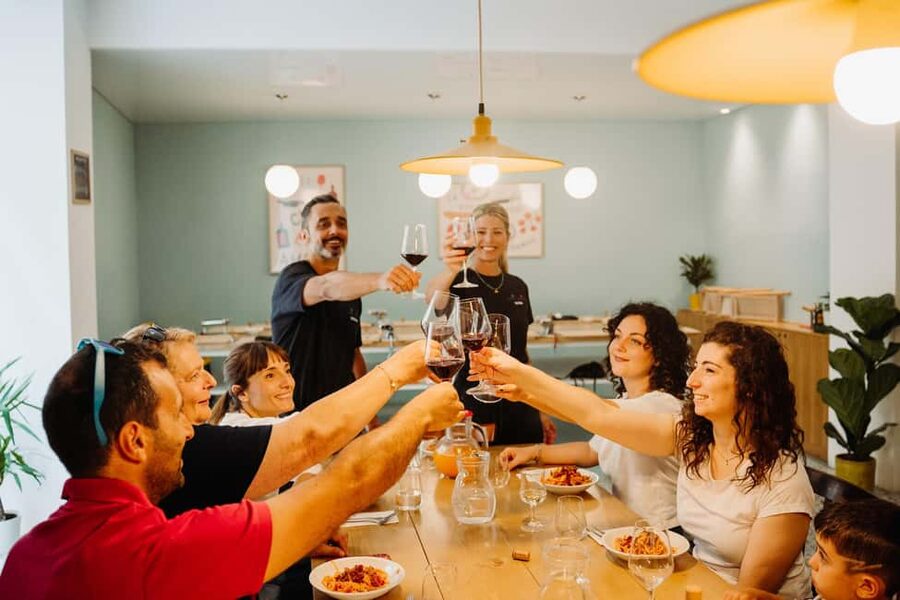
The class opens with a traditional aperitivo: prosecco, cured meats, and cheese. This is more than a snack to occupy you while the chef sets up. In Italy, the aperitivo is a social pause before dinner, and it gets everyone talking before flour starts flying.
I like this opening because it keeps the class from feeling like a rushed demonstration. You have time to settle in, meet the chef, and ask about Rome before focusing on dough. Wine is included, but additional food and drinks are available afterward if you want to linger.
More Cooking Classes in Rome
- 3 in 1 Cooking Class near Navona: Fettuccine, Ravioli & Tiramisu
★ 5.0 · 7,376 reviews - Rome: Pasta & Tiramisu Class with Fine Wine by the Vatican
★ 4.9 · 4,852 reviews - Rome: Pasta Making Class with Wine, Limoncello, and Dessert
★ 4.9 · 3,177 reviews
Making fettuccine and ravioli from scratch
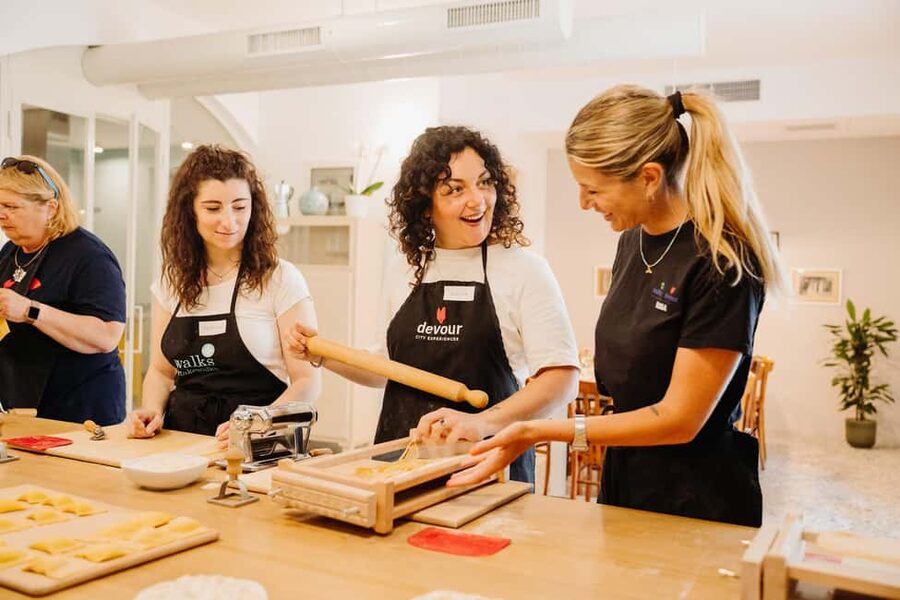
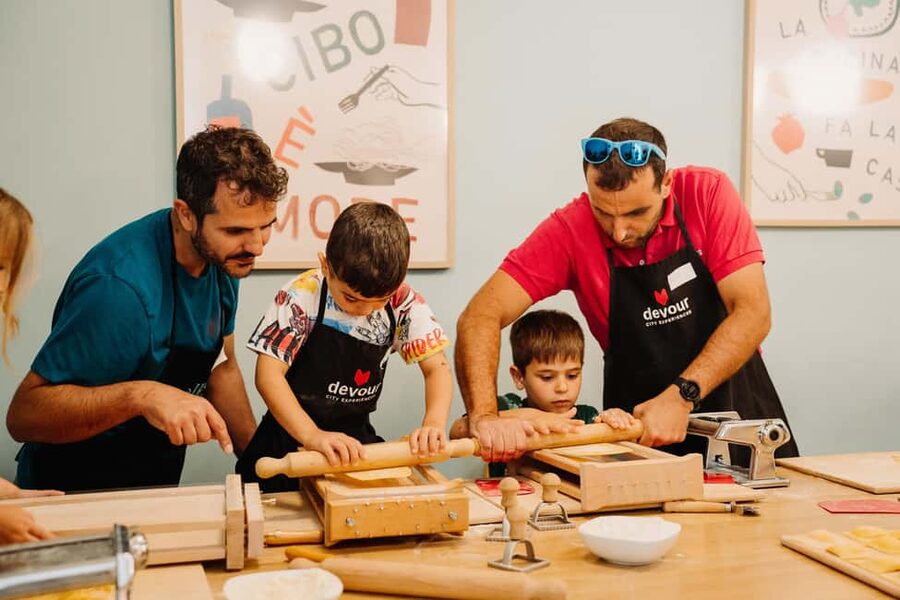
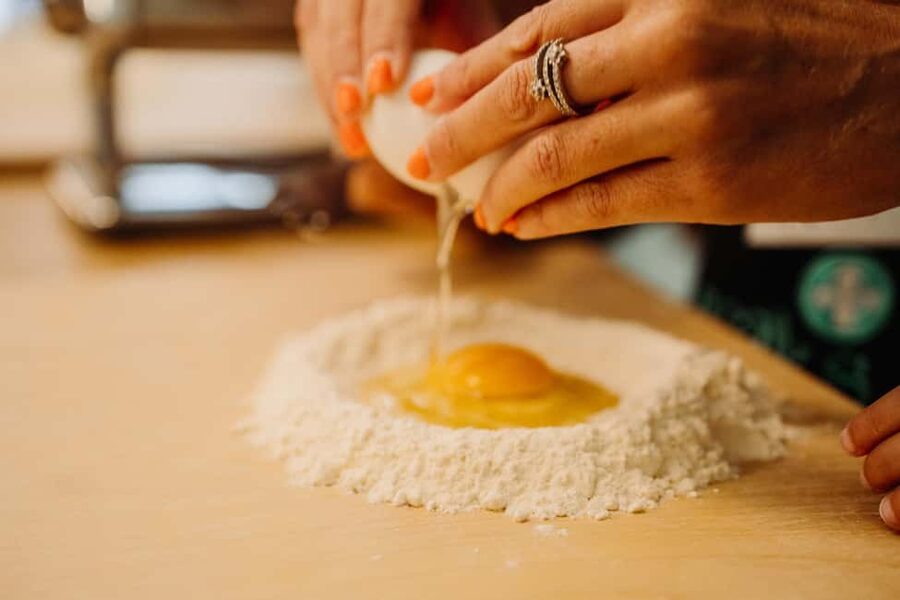
The central part of the class is practical. You do not simply watch a chef roll dough while you stand at the edge of the room. You take part in making two kinds of pasta, fettuccine and ravioli, with guidance from an English-speaking professional chef.
For first-time pasta makers, this is the most useful part of the experience. Dough can look simple, but the feel matters. You need to learn how it should come together, how thin it should be rolled, and how to handle it without tearing. The chefs guide the process patiently, giving adults and children time to work out each step.
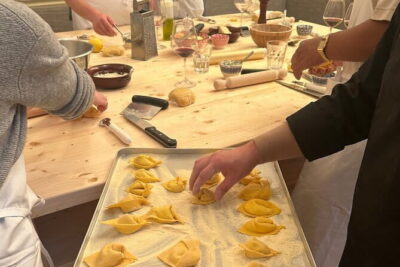
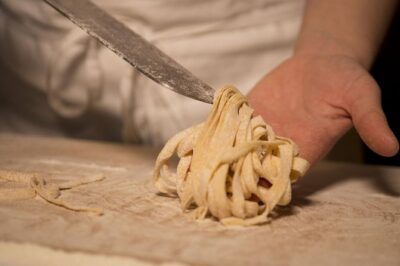
Ravioli also adds a different skill from fettuccine. You must shape and seal the filled pasta carefully, while fettuccine gives you the satisfaction of cutting long ribbons. The class therefore offers more than one basic pasta technique, which gives you a better foundation for trying the recipes at home.
Several chefs are named in the feedback from past classes, including Luca, Federica, Stefano, Manuela, Elisa, Asia, Jamila, Jeanmarie, Fernanda, Guilia, and Alessandro. The teaching style can vary with the chef, but the strongest pattern is clear: the class is designed to be social, patient, and active. You can expect stories, jokes, encouragement, and time for questions rather than a stiff cooking lecture.
One especially useful teaching feature is the explanation of why a step matters. Chef Federica, for example, was praised for explaining general cooking principles as well as the particular recipe being prepared. That kind of instruction stays with you. You are more likely to repeat the result at home if you understand the reason for a technique instead of memorizing a list of orders.
Roman sauces and seasonal market choices
The pasta is paired with traditional red and white sauces. Options include amatriciana, puttanesca, gricia, and cacio e pepe. These are important Roman staples, each with a different character.
Amatriciana brings tomato and a savory pork flavor. Gricia is a white sauce built around pork and cheese. Cacio e pepe is the simplest on paper, but getting the cheese and pepper to form a smooth sauce takes care. Puttanesca adds a stronger, saltier profile. The class may not prepare every one of these sauces. The chef chooses according to seasonal ingredients available from local markets.
That seasonal approach is a strength, but it also means you should not book expecting one exact sauce. If your heart is set on cacio e pepe or amatriciana, ask in advance, though the final choice may still depend on the day’s ingredients.
I like that the sauce lesson is included rather than treating pasta as the whole subject. Many people return home able to make noodles but still struggle with the sauce. Here, you learn how Roman cooks build the dish as a whole. You can also ask the chef about local food customs, the differences among Roman sauces, and how to spot a good gelateria.
The class is adaptable to dietary needs except for celiac disease. If you have other restrictions, contact the provider before the class so the kitchen can arrange your food. Do not wait until you arrive. The meal includes pasta, sauces, appetizers, wine, prosecco, and gelato, so advance notice matters.
Eating the meal you just prepared
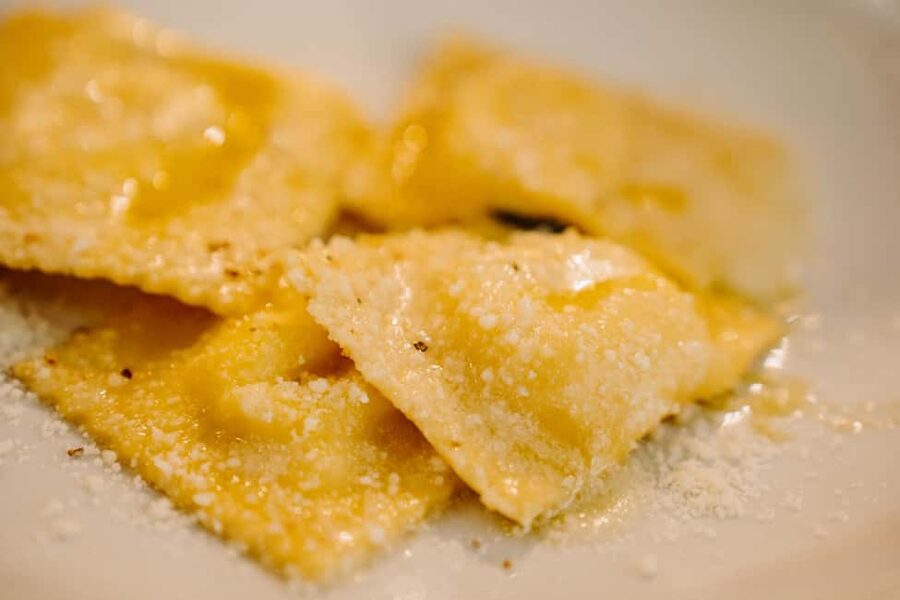
Once the pasta is ready, you sit down and eat it in the same welcoming space. This part gives the class a satisfying shape. You begin as a student, become a pasta maker, and then enjoy a meal that you helped prepare.
The meal includes both homemade pastas and their sauces, along with wine. The food is not an afterthought or a small tasting portion meant to send you out for dinner. The experience is built around sitting down together after the work is done.
Past participants have praised the flavor of the pasta and the warm atmosphere created by the chefs. One family with children aged nine and eleven called the class the favorite activity of a ten-day Italy trip. Another family took part with a six-year-old and found the structure manageable for both adults and children.
That said, this is not a restaurant meal where you choose from a menu. The ingredients and sauces are set by the class plan and seasonal supply. One participant wished for a small green salad and found one ravioli preparation a little mild. If you want a wide selection or a long, leisurely restaurant dinner, this may feel limited. If you want to understand how a Roman meal comes together, the format makes good sense.
The final course is homemade gelato prepared by the chef. It gives the meal a proper Italian finish and adds one more useful subject for questions. You can ask how gelato differs from other frozen desserts and how to recognize a good gelateria, advice that may help during the rest of your time in Rome.
More Rome trips worth a second look
- Rome: Tuscany & Montepulciano Day Trip with Lunch & Wine Tasting
★ 4.5 · 5,232 reviews - Rome Food Tour: Unlimited Tastings with Fine Wine & Barolo
★ 5.0 · 3,365 reviews - Rome: Trastevere Food tour with Free-Flowing Fine Wine
★ 5.0 · 2,853 reviews - Learn to Make Pasta & Tiramisu with Wine and Limoncello Included
★ 5.0 · 2,345 reviews
What the three hours feel like
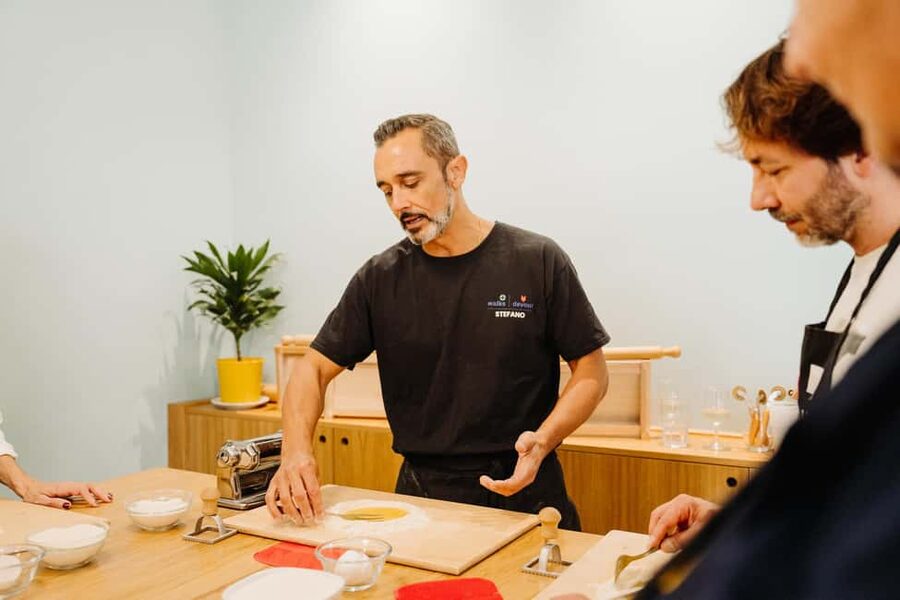
Three hours is a comfortable length for this activity. You have enough time for the aperitivo, introductions, pasta preparation, sauce work, and meal without turning the class into an all-day commitment.
The pace is active, but the class is not meant to be a race. Chefs such as Stefano and Luca have been praised for keeping the session moving while still making people feel at ease. That balance is important in a shared class, where everyone may have a different level of cooking experience.
If you are a solo visitor, the shared option can be a good way to meet people in a natural setting. You have a task to do together, so conversation comes easily. If you are traveling with family or marking an occasion, the private option may be worth considering for the extra privacy and control.
The English instruction is another practical advantage. You can ask about ingredients, Roman food traditions, and home cooking without relying on gestures or translation. The chefs are locals or work closely with Roman food traditions, and several have also offered restaurant suggestions by neighborhood.
The class ends back at the meeting point. There is no hotel pickup or drop-off, so plan your route to and from Piazza di San Giovanni della Malva. Trastevere is a pleasant area for a meal or evening walk, making it easy to build the class into a day on this side of the Tiber.
Is the $66.84 price good value?
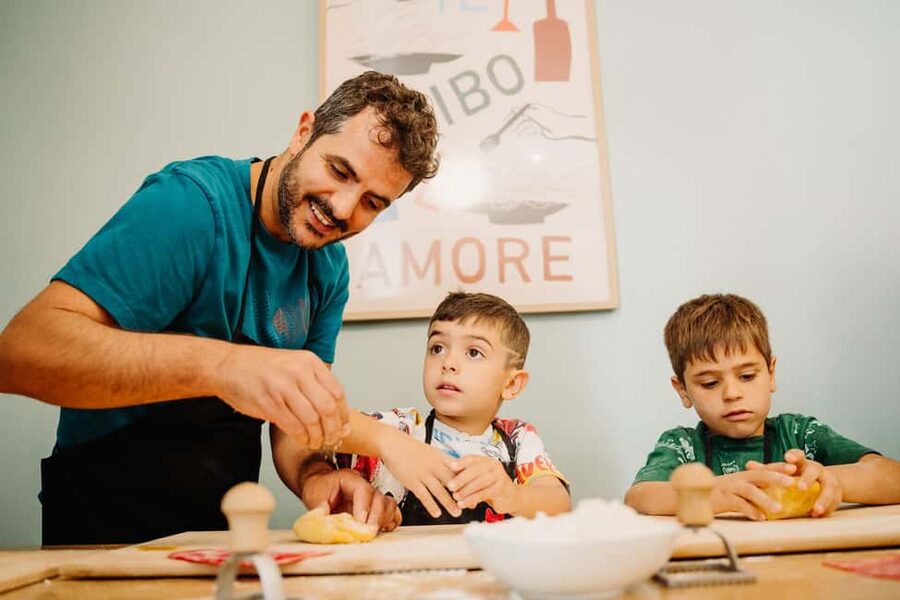
At $66.84 per person, this is a fair price for a three-hour cooking experience in central Rome. You are paying for a chef, all ingredients, an aperitivo, two pasta dishes, sauces, prosecco, wine, gelato, and a seated meal.
The value improves if you would otherwise pay separately for lunch or dinner. You receive food throughout the session, but the real benefit is the instruction. A restaurant can serve you excellent pasta, but it cannot give you the technique to make it at home.
The price also works well for families because children can take part rather than simply wait while adults attend a class. A private option may cost more depending on the booking choice, but it can make sense if you value quiet instruction or want the session shaped around your own group.
I would not choose this experience only for the cheapest meal in Rome. You can find less expensive food elsewhere. I would choose it for the combination of a meal, a local cooking lesson, social time, and practical recipes you can use after your trip.
Free cancellation is available up to 24 hours before the start time, and you can reserve now and pay later. Starting times vary, so check availability before arranging the rest of your day.
Who should book, and who should skip it
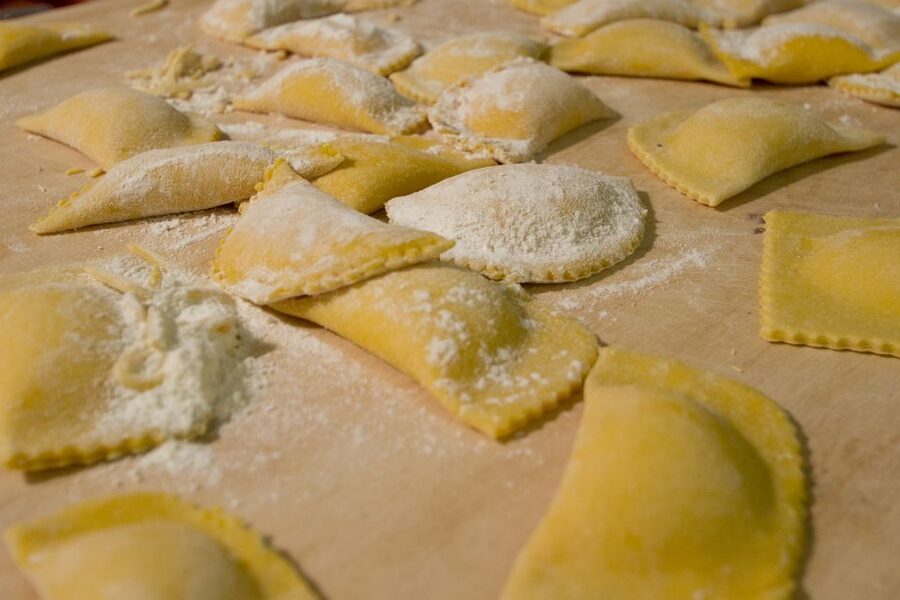
I would recommend this class to first-time pasta makers, families, couples, solo visitors, and anyone who wants a break from monuments. It is especially useful early in a Rome visit, since the chef can point you toward Roman restaurants and explain local food customs you will notice afterward.
It suits people who like to participate. If you prefer to sit back while someone else cooks, you may find the flour, rolling, shaping, and cleanup less appealing. The class is also not suitable for wheelchair users, people with mobility impairments, or strollers because of the nature of the cooking space.
Celiac diners should not book this class, since that dietary need cannot be accommodated. Other dietary restrictions may be handled if you contact the provider ahead of time.
Keep your expectations sensible about the exact menu. Seasonal ingredients guide the sauce choice, and the ravioli filling or final flavor may not match the dish you imagined. The chefs can teach you the method, but the meal remains part of a group cooking experience rather than a fully customized private restaurant service.
Should you book the Trastevere pasta class?
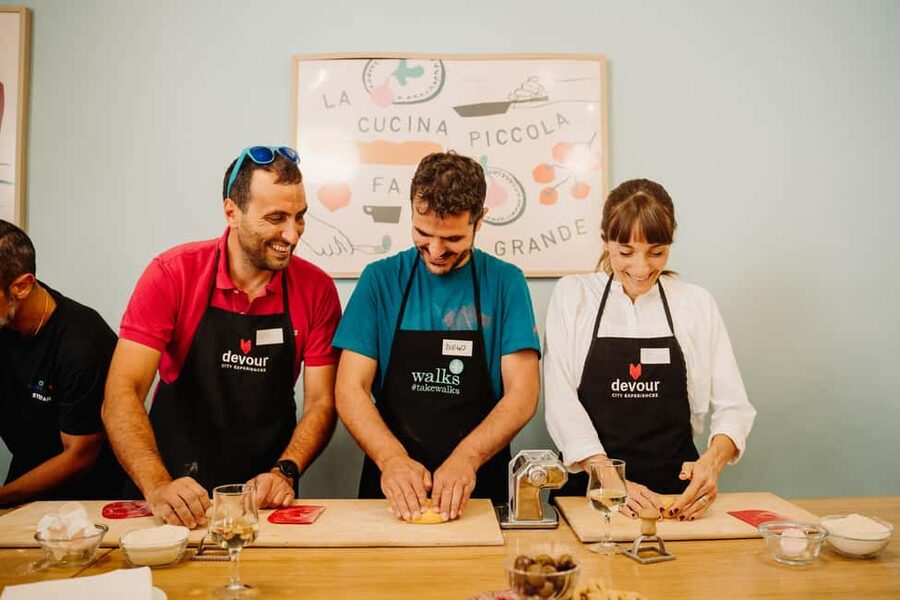
Book it if you want to learn a useful Roman skill and enjoy a generous, social meal in a kitchen setting. The combination of prosecco, cured meats, hands-on pasta work, wine, and gelato gives the three hours a clear rhythm, while the chefs add practical advice that can continue helping you after Rome.
I especially recommend it for families and people who have never made pasta. The class is structured enough for children, lively enough for adults, and focused enough that you leave with more than a pleasant memory. Choose the private option if group privacy matters, and the shared class if meeting other people sounds like part of the fun.
Skip it if you need wheelchair access, have celiac disease, or want a fixed menu with no seasonal changes. For everyone else, $66.84 buys a full afternoon or evening of food, instruction, and Roman hospitality, with the added reward of recipes you can try in your own kitchen.
FAQ
Where does the pasta-making class meet?
The meeting point is Piazza di San Giovanni della Malva, 00153 Roma RM, in the square in front of the San Giovanni della Malva church.
How early should I arrive?
You should arrive 15 minutes before the scheduled start time. The guide will be carrying a red bag or a Devour Tours sign.
How long does the experience last?
The class lasts three hours. Starting times vary, so check availability when booking.
Is the class taught in English?
Yes. The instructor language is English.
Is the class private or shared?
You can choose a private or shared cooking class, depending on the option selected. Small groups are also available.
What pasta will I make?
You will make two homemade pastas, fettuccine and ravioli, with traditional sauces.
Which sauces might be prepared?
The chef may prepare amatriciana, puttanesca, gricia, or cacio e pepe. The exact sauce depends on seasonal ingredients from local markets.
Are dietary restrictions accommodated?
The class can adapt to dietary needs except for celiac disease. Contact the provider before joining so suitable food can be arranged.
More Workshops in Rome
- Rome: 3-in-1 Fettuccine, Ravioli, and Tiramisu Cooking Class
★ 4.9 · 2,704 reviews - Rome: Fettuccine and Tiramisu Cooking Class with Wine
★ 4.8 · 2,013 reviews - Rome: Pasta & Tiramisu Cooking Class near the Spanish Steps
★ 4.8 · 1,395 reviews - Cooking Class in the Heart of Rome: Pizza and Tiramisu Making
★ 5.0 · 1,330 reviews
More Pasta in Rome
- Rome: Fettuccine Pasta Cooking Class in Rome’s City Center
★ 4.8 · 2,414 reviews - Rome: Traditional Pasta with Cocktails Cooking Class
★ 5.0 · 2,374 reviews - Become a Masterchef in Rome: Pasta, Ravioli and Tiramisù Class
★ 5.0 · 2,156 reviews - Pasta Cooking Class Near the Colosseum with 3 Spritz Cocktails
★ 5.0 · 1,686 reviews
Recently reviewed around Rome
- Ancient Rome at Twilight Walking Tour★ 5.0 · 276 reviews
- Early Vatican Museums Tour: The Best of the Sistine Chapel★ 4.5 · 900 reviews
- Domus Aurea Guided Tour: The Golden House of Nero★ 4.5 · 199 reviews
- Early Vatican Museums & Sistine Chapel Small Group Tour★ 4.5 · 314 reviews
- Jewish Ghetto & Piazza Navona: Food, Wine & Sightseeing Rome Tour★ 5.0 · 460 reviews
- 3 Days in Sorrento, Capri & Pompeii: la Dolce Vita★ 4.0 · 595 reviews
- Tivoli Villas Full Day Trip From Rome with Lunch★ 4.0 · 443 reviews
- Cook With Us in Rome: A Hands-On Cooking Experience 09:20AM class★ 5.0 · 234 reviews
Cooking Classes, compared.
3 in 1 Cooking Class near Navona: Fettuccine, Ravioli & Tiramisu
Read our review →
Pasta & Tiramisu Cooking Class with Unlimited Wine
Read our review →
Pasta & Tiramisu Class with Fine Wine by the Vatican
Read our review →
Cooking Class and Lunch at a Tuscan Farmhouse with Local Market Tour from Florence
Read our review →
Authentic Pizza Making Class in Naples with Appetizers and Drink
Read our review →
Pasta Making Class with Wine, Limoncello, and Dessert
Read our review →Browse the lists this tour appears in