
Review · SICILY TOURS
Syracuse: Neapolis Archaeological Park Small Group Tour
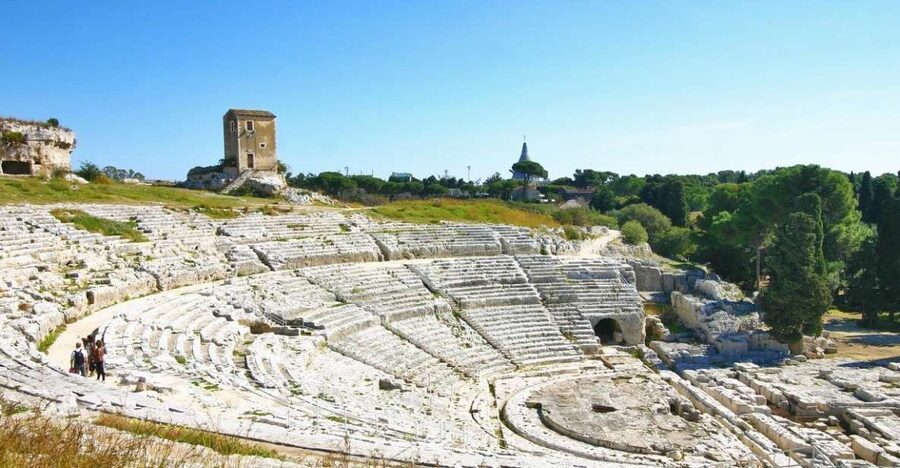
Syracuse’s Neapolis Archaeological Park packs Greek theaters, Roman ruins, stone quarries, and a famous echoing grotto into one memorable walk. I especially like the Greek Theater’s bay views and the chance to hear the Ear of Dionysius explained on site, rather than treating it as just another photo stop.
I also like the modest $26 price, which makes a guide a sensible add-on for a place that can otherwise feel like a spread of scattered ruins. The main consideration is language: the listed live tour is in Italian, and large groups may need radio receivers, while very small groups may hear explanations in two languages.
In This Review
- Key points at a glance
- Why Neapolis is worth your time
- Starting at the Latomie del Paradiso
- The Cordari grotto and the Ear of Dionysius
- The Greek Theater and views across the bay
- The Altar of Hieron II
- Syracuse’s Roman amphitheater
- How much time the 1.5-hour format gives you
- Guides, languages, and group size
- Is $26 a fair price?
- Who should book this walk?
- Final verdict: a smart introduction to Neapolis
- FAQ
- Where does the Neapolis Archaeological Park tour meet?
- How long does the tour last?
- What monuments are included?
- Is an entry ticket included?
- Is the tour offered in English?
- Are shared and private tours available?
- Is the tour wheelchair accessible?
- Can I cancel the booking?
Key points at a glance
- The Greek Theater is the centerpiece: Cut into Temenite Hill, it combines impressive stonework with broad views toward Syracuse’s bay.
- The Ear of Dionysius is more than a quick picture: Your guide explains the grotto’s unusual shape and famous echo.
- You see Greek and Roman remains together: The route includes the Altar of Hieron II and Syracuse’s Roman amphitheater.
- The tour is short but well packed: The advertised duration is 1.5 hours, with stops ranging from 5 to 30 minutes.
- Small-group and private choices are available: Group size can affect how easily you hear and interact with the guide.
- Guiding adds real value here: A good guide such as Eva or Federica can connect stones, myths, politics, and daily life.
Why Neapolis is worth your time
Syracuse is often introduced through Ortigia, with its lanes, churches, and sea views. Neapolis shows another side of the city: Syracuse as one of the major Greek centers of the ancient Mediterranean, later shaped by Roman rule.
The park is not one single monument. It is a broad archaeological area where a theater, quarry, grotto, altar, and amphitheater sit among paths and local plants. That variety is part of the appeal, but it can also make an unguided visit feel disconnected. You may see a wall or a cut in the rock without knowing what it meant or how it was used.
This tour gives you a clear sequence. You move from the quarries to the grotto, then to the Greek Theater and Roman remains. I like that progression because it lets you see how Syracuse changed across different periods instead of presenting the past as one undifferentiated block.
The site also rewards a guide who can explain scale. A theater carved into a hillside is impressive on its own, but it becomes easier to picture when you understand how the slope was used, how audiences viewed performances, and how the setting related to the city below. The best guides on this tour, including Eva, Federica, Galina, and Anne-Marie, have been praised for making the history clear and engaging rather than simply listing dates.
Other Sicily days travellers weigh against this one:
- Catania: Mount Etna Morning or Sunset Day Trip with Tasting
★ 4.8 · 4,028 reviews - Mount Etna: Guided Volcano Summit Hiking Tour with Cable Car
★ 4.7 · 3,784 reviews - Palermo: NO Mafia Walking Tour
★ 4.8 · 2,431 reviews
Starting at the Latomie del Paradiso
The walk begins at the entrance gate of Neapolis Archaeological Park. The supplied meeting information gives Largo Anfiteatro 2 as a starting point, but the exact meeting place can vary with the option you book, so check your confirmation carefully.
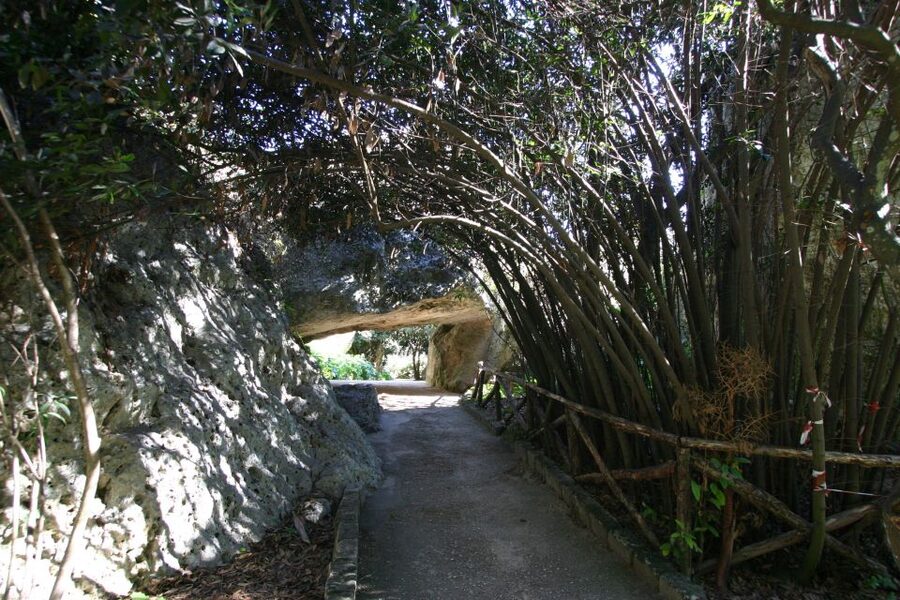
Your first main stop is the Latomie del Paradiso, an ancient stone quarry. These excavated walls show how Syracuse’s builders obtained stone, but they also tell a less comfortable story about the people forced to work there. The quarry is now softened by local flora, giving the area a greener feel than you might expect from a heavily cut stone site.
The planned explanation here lasts about 15 minutes. That is enough time for your guide to establish the park’s purpose and point out the relationship between the quarry and the monuments built from its stone. You will want to look upward as well as across the ground. The scale of the excavated rock is easier to grasp from below.
This is a walking tour, not a bus circuit, so wear shoes you can use comfortably on archaeological paths. The park is listed as wheelchair accessible, and one guide took care to point out paved paths for a family using a stroller. Still, conditions can vary along an ancient site, so anyone with mobility concerns should confirm the practical route with the provider.
The Cordari grotto and the Ear of Dionysius
The route continues to the Grotta dei Cordari, with around 15 minutes set aside for the stop. Its name is connected with rope makers, and the grotto forms part of the quarry system that gives Neapolis much of its character.
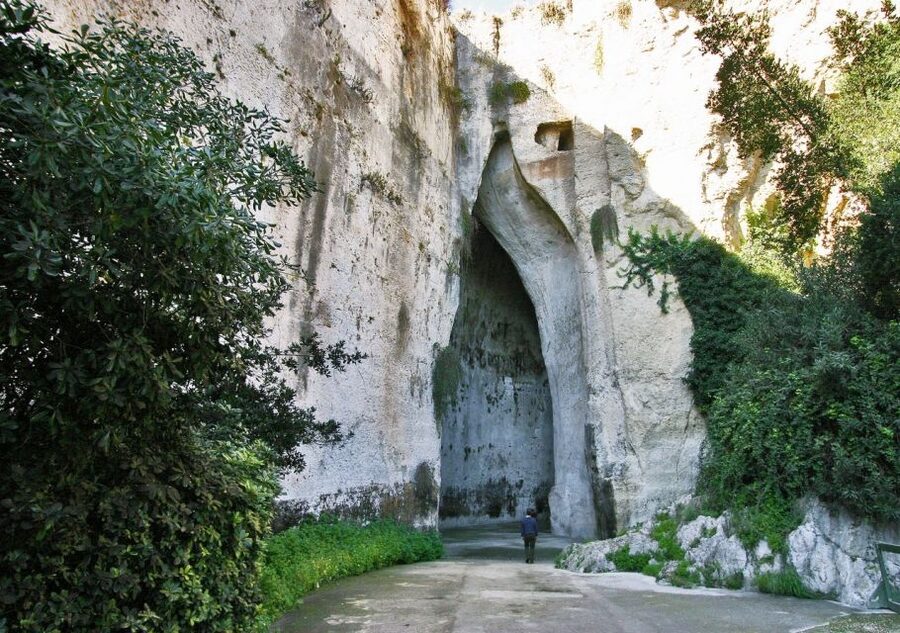
Then comes the park’s most theatrical natural feature, the Ear of Dionysius. This tall, cave-like grotto is famous for its ear-shaped form and its strong echo. The name belongs to a later legend associated with the tyrant Dionysius, and the guide’s explanation helps separate the dramatic story from the physical facts you can see around you.
The grotto is a place where a short explanation makes a big difference. On your own, you may notice the shape and test the acoustics. With a guide, you get a sense of why this particular quarry became so famous and how its form affects sound.
Give yourself a moment to listen. The Ear is not a museum display with labels arranged in front of you. It is a space where the rock itself does the work. The acoustics are the attraction, but the narrow, high walls also show the labor involved in cutting stone from the hillside.
The stop is listed at about 15 minutes, which keeps the pace moving. If you want long quiet pauses at each monument, this may feel quick. If you are fitting Neapolis into a busy Syracuse day, the compact format is useful.
The Greek Theater and views across the bay
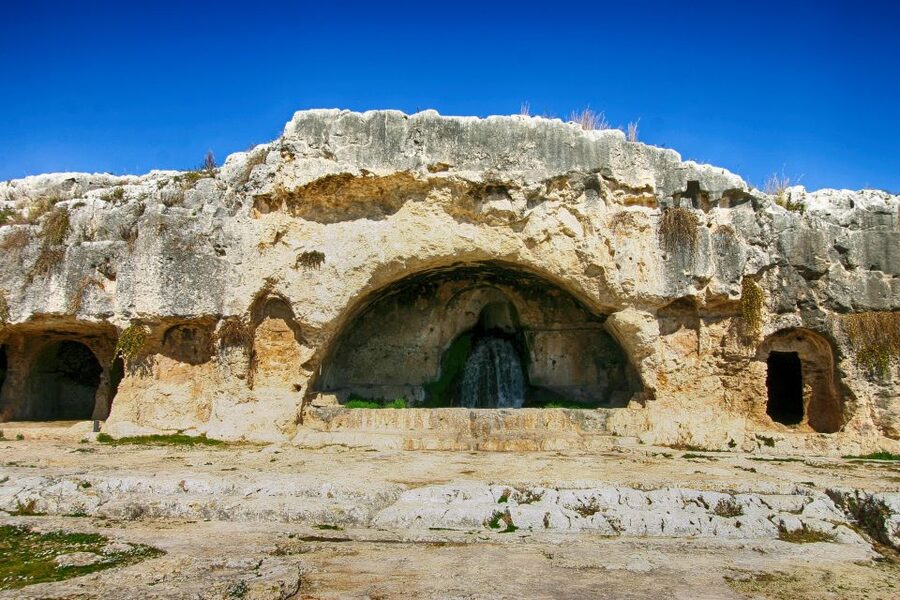
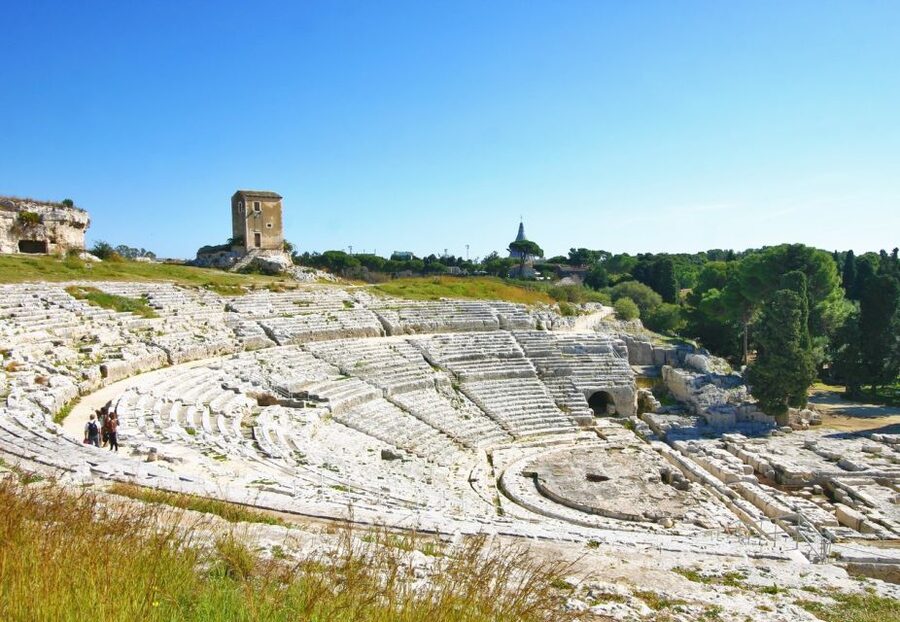
The Greek Theater receives the longest planned explanation, about 30 minutes, and rightly so. Cut directly into the rock of Temenite Hill, it is the park’s grandest ancient monument and the place where the site’s setting becomes part of the experience.
From the theater, you can look toward the town and bay. The view helps explain why this location mattered. The theater was not built in isolation. It used the hillside, opened toward the surrounding area, and made a performance into a civic event as well as a piece of architecture.
Your guide will help you read the curved seating, stage area, and cut stone as parts of a working venue. Even if you are not an ancient-theater specialist, the basic idea is easy to grasp once you are standing inside the bowl of the hill.
I like this part of the tour because it joins architecture and scenery without turning either into decoration. The view is beautiful, but the stonework keeps your attention. You can imagine the effort needed to shape the seats, while also seeing why the hillside was such a practical choice.
The park has modern sculptures and other contemporary elements as well. One guide was praised for explaining their meaning, which is useful if you notice art that seems unrelated to the ruins. It gives the park a present-day layer without taking attention away from the ancient remains.
The theater is also the point where group size matters most. A small group of about 10 allows you to hear the guide and ask questions without much fuss. In a large shared group, radio receivers are available. Those devices can help, though you will still have less flexibility than on a private visit.
A different way to spend the day, same part of Italy:
- Palermo: Hop-on Hop-off Bus Tour 24-hour Ticket
★ 3.9 · 2,410 reviews - From Trapani: Cruise to Favignana and Levanzo with lunch
★ 4.2 · 2,286 reviews - Catania: Sunset Jeep Tour of Mount Etna and Lava Flow Caves
★ 4.8 · 2,113 reviews - Palermo Original Street Food Walking Tour by Streaty
★ 5.0 · 2,105 reviews
The Altar of Hieron II
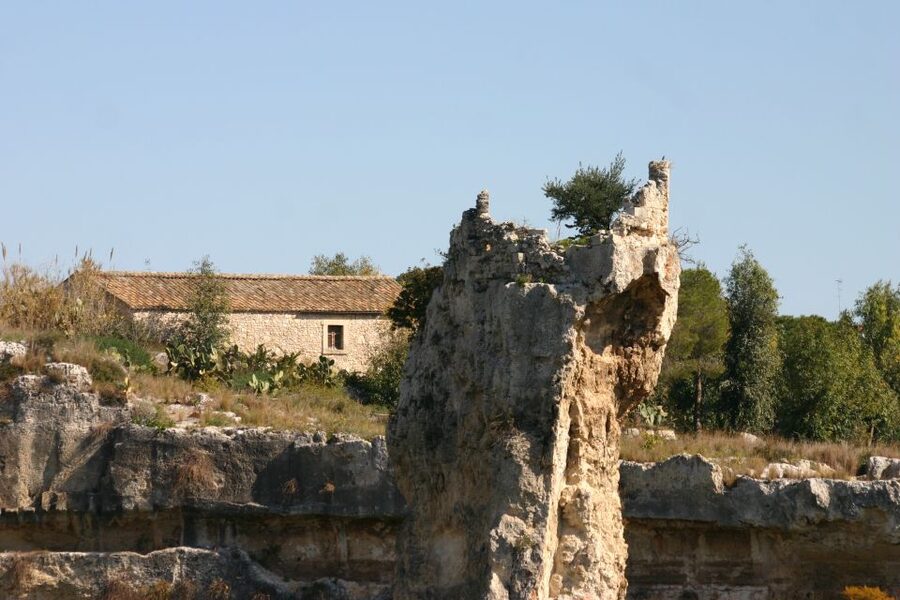
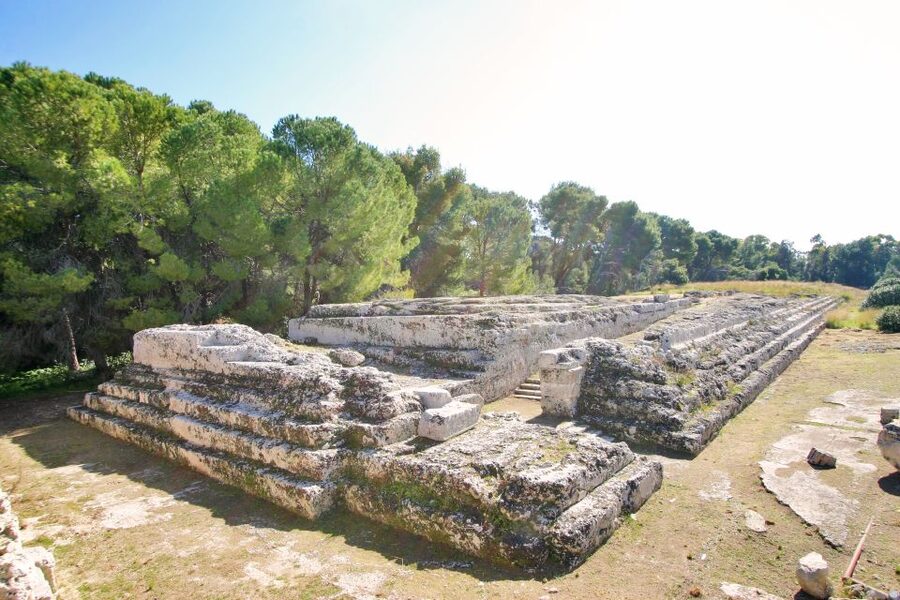
After the theater, the route includes a short photo stop within the park before moving to the Altar of Hieron II. The altar receives about 10 minutes of guided attention.
The altar is a reminder of the public and religious scale of ancient Syracuse. Its remains are extensive enough to help you picture ceremonies and civic display, even though time has reduced the original structure.
This is a stop where explanation matters more than intact walls. You are not visiting a complete building that tells its own story. The guide supplies the context, points out what survives, and helps you understand why the altar was important to the city.
That makes the stop particularly useful for first-time visitors who want more than a collection of impressive stones. The tour’s Greek and Roman focus also helps you see how power, worship, and public life were expressed through huge construction projects.
Syracuse’s Roman amphitheater
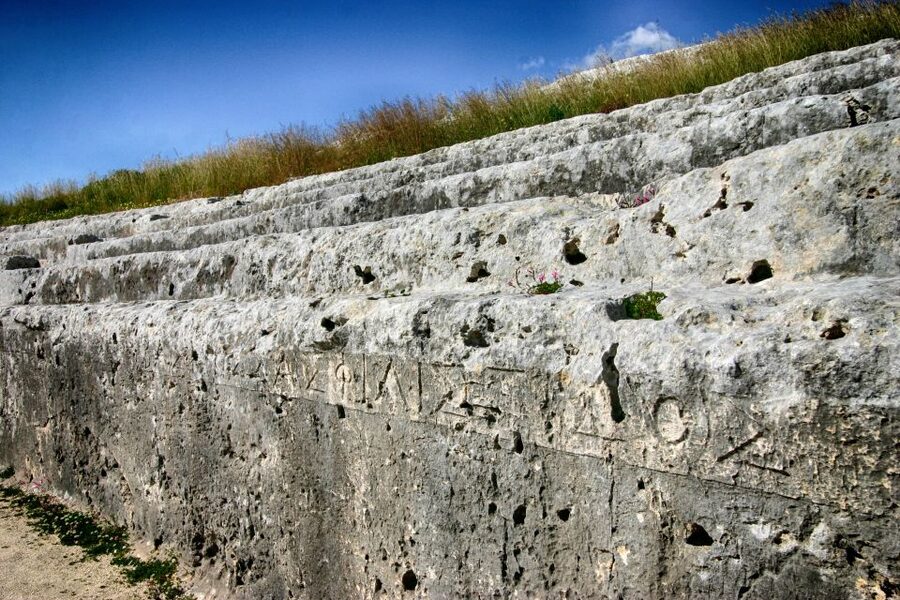
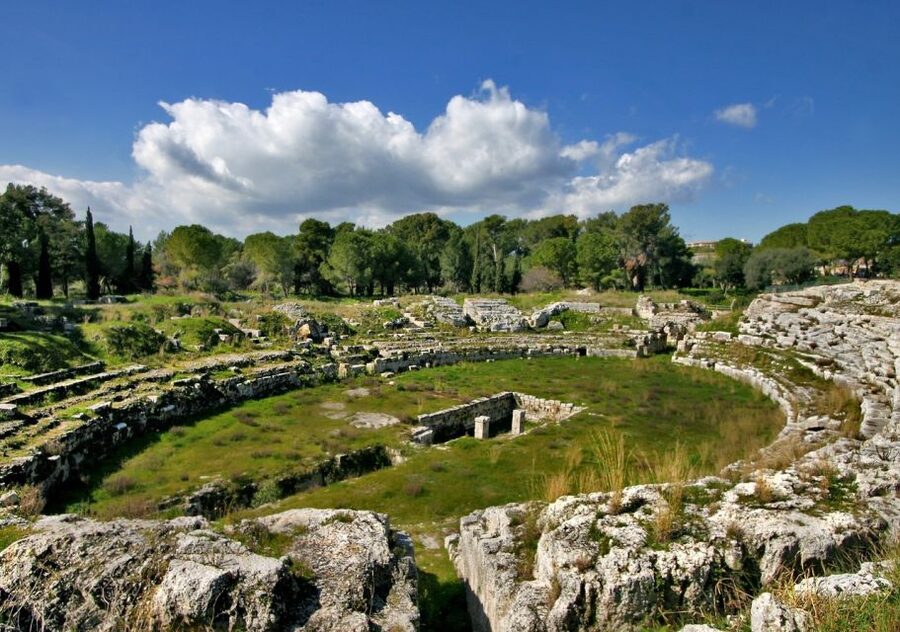
The final major stop is the Roman amphitheater, with about 15 minutes of guided explanation. It provides a useful contrast with the Greek Theater.
The Greek venue is cut into the hillside and linked to performances and civic culture. The Roman amphitheater has a different shape and function, reflecting Roman entertainment and engineering. Seeing both in one visit makes the change from Greek Syracuse to Roman Syracuse easier to understand.
The amphitheater is another place where a guide can help you read the remains. Ruins do not always reveal their original purpose at a glance, particularly when you are looking at partial walls or a worn arena. A clear explanation gives the structure a working life in your mind.
Access to this portion can occasionally depend on the site’s operating arrangements. On one past visit, the Roman section was closed early, and the guide worked to get the group inside. That suggests a practical reason to keep your booking details and timing clear, though access conditions are ultimately controlled by the archaeological park.
The tour returns to Largo Anfiteatro 2 or another listed drop-off point, depending on the option booked. Since the route is on foot, you finish close to where you started rather than needing a separate ride back.
How much time the 1.5-hour format gives you
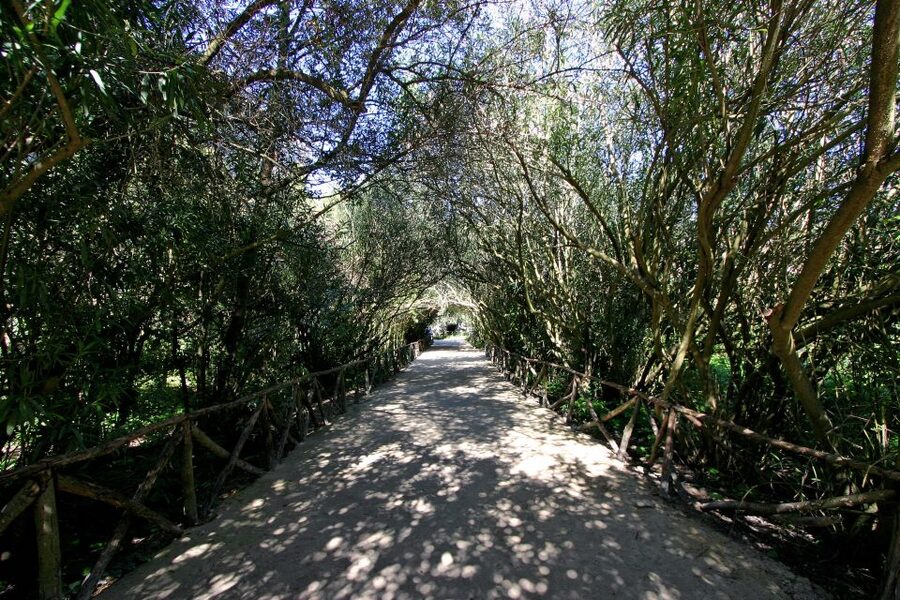
The advertised duration is 1.5 hours, and the route covers a lot in that time. The longest pause is at the Greek Theater, while the quarries, grotto, altar, and Roman amphitheater receive shorter explanations.
That format suits you if you want a strong introduction before continuing around Syracuse. It is also a good choice if your schedule includes Ortigia, the cathedral, or other city sights.
The pace may feel slow to someone who only wants to take photographs and move on. One person found the tour could have been shorter, while another described the length as comfortable and not tiring. Both reactions make sense. The tour is built around explanations, questions, and stops, not a rapid circuit.
If you love ancient history, you may wish you had more time at each monument after the guide finishes. You can ask about the private option if you want more control over the pace and subject matter. For a first visit, though, the standard route covers the essential monuments without turning the park into an all-day commitment.
Summer heat is worth considering. One visitor found an evening start especially helpful during a very warm July visit. If several starting times are available, a later slot may make the walk more pleasant. Spring can offer a different sensory bonus, with orange and lemon blossom adding fragrance to the park.
Rain does not automatically ruin the visit, but it can make the walk harder and reduce the comfort of stopping outdoors. Bring weather-appropriate clothing and check the forecast before setting out.
Guides, languages, and group size
The listed live tour language is Italian. In rare cases, a very small shared group may receive explanations in two languages. Confirm your preferred language before booking, especially if Italian is not comfortable for you.
Several guides have received especially warm praise for their approach. Eva is repeatedly associated with clear explanations, patience, sensible pacing, and a talent for answering questions. Federica is noted for bringing Greek and Roman culture together in an engaging way and for offering suggestions about the surrounding area. Galina and Anne-Marie are also described as lively guides who connect the ruins to local history.
That consistency matters because Neapolis is a place where the guide shapes much of the experience. You can walk through the park without help, but you may miss the links between the quarry, theater, altar, and amphitheater. A guide also helps children and teenagers stay involved by turning facts into stories and answering questions as they come up.
The private option is the better fit if your group has a child, a slower walker, or a strong interest in one period. A past private visit was adjusted for an eight-year-old, with the guide changing the pace and content. On a shared tour, you accept the group’s rhythm, but a smaller group of around 10 can still feel personal.
Radio receivers are included only with the large shared group option. They are practical when the group spreads out, especially at the theater or along wider paths. In a small group, you may not need them, but you will want to stay close enough to hear every explanation.
Is $26 a fair price?
At $26 per person, this is a good value if entry tickets are included in the option you select. The package includes a walking tour and licensed guide, with admission included only when that option is chosen, so compare the booking choices before paying.
The value comes less from transportation and more from interpretation. You are not paying for a transfer or a meal. You are paying to make sense of a large site in a short period and to ask questions while you are standing beside the monuments.
For someone who has already studied Syracuse in detail, the tour may feel basic in places. For most first-time visitors, the cost is modest compared with the time saved and the added meaning. The repeated praise for guides explaining just the right amount, rather than overwhelming people with facts, also points to a useful balance.
The private option will cost more than the advertised shared price if priced separately, but it gives you control over pace and questions. Choose shared for value, private for flexibility.
The booking terms are traveler-friendly: you can cancel up to 24 hours before the start for a full refund, and reserve now while paying later. Bring a passport or ID card, as requested for the activity.
Who should book this walk?
I would choose this tour if you want the essential monuments explained in one compact visit. It fits couples, families, and history-minded visitors who would rather hear a coherent story than read scattered signs.
It is particularly good for you if:
- You are visiting Syracuse for the first time.
- You want both Greek and Roman remains in one stop.
- You appreciate stories, myths, and historical context.
- You are traveling with children or teenagers who benefit from a lively guide.
- You have limited time and want the main sights covered.
- You prefer a small group or can choose a private visit.
You may prefer to explore independently if you want complete freedom to linger, take photographs, or skip monuments. You should also think carefully about the Italian-language format if you need a full explanation in another language.
Final verdict: a smart introduction to Neapolis
I recommend this tour for most first-time visitors to Syracuse. The Greek Theater, Ear of Dionysius, quarry, altar, and Roman amphitheater make a strong collection of ancient sites, and the route gives them a sensible order.
The biggest benefit is having someone explain what you are looking at. Eva, Federica, Galina, and other guides have shown the value of clear storytelling and a relaxed pace, though the exact guide and group size depend on the booking.
Book the shared option if you want a fairly priced overview. Choose private if you want the tour adjusted for children, mobility needs, or a particular interest. Just confirm the meeting point, language, and ticket option before you pay, then bring your ID and comfortable walking shoes.
FAQ
Where does the Neapolis Archaeological Park tour meet?
The meeting point may vary according to the option booked. Largo Anfiteatro 2 is provided as a starting and return location for some options. Check your booking details for the exact meeting place.
How long does the tour last?
The advertised duration is 1.5 hours. The route includes guided stops at the quarries, grotto, Ear of Dionysius, Greek Theater, Altar of Hieron II, and Roman amphitheater.
What monuments are included?
You visit Latomie del Paradiso, Grotta dei Cordari, the Ear of Dionysius, the Greek Theater, the Altar of Hieron II, and Syracuse’s Roman amphitheater.
Is an entry ticket included?
Entry tickets are included only if you select the option that includes them. Check the specific booking option before confirming.
Is the tour offered in English?
The listed live tour language is Italian. In rare cases, a very small shared group may receive explanations in two languages.
Are shared and private tours available?
Yes. You can choose between a shared group tour and a private tour.
Is the tour wheelchair accessible?
The activity is listed as wheelchair accessible. A guide has also helped a family use paved paths with a stroller.
Can I cancel the booking?
You can cancel up to 24 hours in advance for a full refund. The activity also offers a reserve now and pay later option.
Recently reviewed around Sicily
- Sicilian Cooking Class★ 5.0 · 289 reviews
- Discover Palermo in 3 hours. Art, history, markets and street food★ 5.0 · 352 reviews
- Palermo : Private Custom Walking Tour with a Local Guide★ 4.5 · 237 reviews
- Palermo No Mafia walking tour: discover the Anti-mafia culture in Sicily★ 5.0 · 1,011 reviews
- Palermo’s Delight: Unleash the Secrets of Pizza and Gelato Making★ 5.0 · 497 reviews
- Palazzo Conte Federico★ 5.0 · 650 reviews
- Night Street Food Tour of Palermo with a Local -For real foodies!★ 5.0 · 486 reviews
- Wanna be Sicilian: Palermo Cooking Class and Market Tour★ 5.0 · 197 reviews
Sicily Tours, compared.

Mount Etna Morning or Sunset Day Trip with Tasting
Read our review →
Mount Etna: Guided Volcano Summit Hiking Tour with Cable Car
Read our review →
Sunset Jeep Tour of Mount Etna and Lava Flow Caves
Read our review →
Palermo Original Street Food Walking Tour by Streaty
Read our review →
Mount Etna: Trek to 3000m with cable car and jeep
Read our review →Browse the lists this tour appears in