
Review · WALKING TOURS
Palermo No Mafia walking tour: discover the Anti-mafia culture in Sicily
Palermo’s No Mafia walking tour uses the city itself as a classroom. You move from Teatro Massimo to the old market, courthouse, cathedral, and city hall while hearing how organized crime shaped daily life and how citizens, judges, shopkeepers, churches, and public officials pushed back. The focus is anti-mafia culture, not movie myths or glamorous gangsters.
I like two things right away: the route puts difficult ideas beside real places, and a small group of no more than 15 people gives you room to ask questions. I also like that part of your payment supports Addiopizzo, a local group backing businesses that refuse to pay pizzo, the extortion money demanded by the Mafia.
The main consideration is focus. This is not a general Palermo sightseeing walk, and it is not mainly an art or architecture tour. You will see major landmarks, but much of the three hours involves standing while your guide explains events, people, and civic resistance. If you want a quick historical overview of Palermo’s monuments, this may feel repetitive.
In This Review
- Key points before you book
- Why this Palermo walk is different from a Mafia movie tour
- Teatro Massimo: starting with Palermo’s public rebirth
- The Wall of Legality and the faces behind the headlines
- The old market and the cost of refusing pizzo
- Palazzo di Giustizia and the Piazza della Memoria
- Palermo Cathedral and the church’s uneasy connection
- Cappadonia Gelati and the meaning of an orange sticker
- Palazzo Pretorio and the finish at Fontana Pretoria
- What three hours and $39.30 really buy you
- Practical advice for a smoother walk
- Who should book the No Mafia tour?
- Should you book it?
- FAQ
- How long does the Palermo No Mafia walking tour last?
- Where does the tour begin?
- Where does the tour end?
- What language is the tour offered in?
- How large is the group?
- Is hotel pickup included?
- Is lunch included?
- What should I wear?
- Can I cancel for a full refund?
Key points before you book
- The route links six central Palermo sites: You begin at Teatro Massimo and finish at Fontana Pretoria in the old town.
- The message is resistance, not Mafia glamour: Expect discussion of victims, corruption, extortion, public courage, and the continuing anti-mafia movement.
- The Wall of Legality puts faces to the story: The 70-meter mural honors well-known Mafia victims and makes a strong photo stop.
- Local guides bring personal weight: Guides including Sylvia, Valeria, Francesco, Federico, Ermes, Marienella, and Salvatore have led visitors through the subject in English.
- Your purchase has a civic purpose: A small part of the fee goes to Addiopizzo, the local anti-mafia nonprofit.
- Wear good shoes and plan for weather: This is a three-hour city walk, with no hotel pickup, lunch, or indoor shelter promised.
Why this Palermo walk is different from a Mafia movie tour
The tour begins with a useful correction. Palermo’s Mafia story is often filtered through cinema, especially The Godfather films. Here, the emphasis shifts away from famous fictional scenes and toward the people who resisted extortion, corruption, and violence.
That distinction matters. You will hear about the Mafia’s influence on shopkeepers, judges, prosecutors, politicians, the Catholic Church, and local communities. You will also hear how the anti-mafia movement worked to reduce the organization’s appeal, including its hold on young people and underprivileged children.
The tone is serious, but the walk is not only a catalogue of crime. Its purpose is to show how a city can challenge organized crime through public memory, consumer choices, education, and civic action. That makes it useful early in a Palermo visit, since it gives you a social and political frame for the streets you continue exploring afterward.
The guides are a major part of the experience. Names associated with the tour include Sylvia, Valeria, Francesco, Federico, Ermes, Marienella, Laura, and Salvatore. Their approach can vary, but the strongest guides are described as passionate, clear in English, and willing to answer questions. Valeria, in particular, has explained how the Mafia affected her own life, as well as the lives of friends and family. That sort of personal connection can make the subject feel immediate rather than abstract.
More Walking Tours in Sicily
- Palermo: NO Mafia Walking Tour
★ 4.8 · 2,431 reviews - Palermo Original Street Food Walking Tour by Streaty
★ 5.0 · 2,105 reviews - Palermo: Street Food and History Walking Tour
★ 4.9 · 1,294 reviews
Teatro Massimo: starting with Palermo’s public rebirth
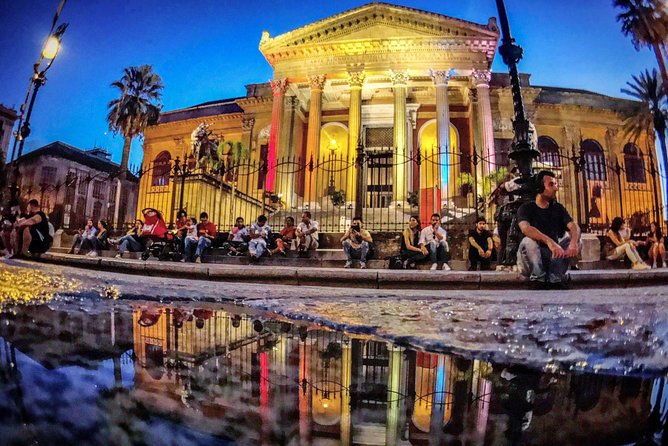
At Piazza Giuseppe Verdi, you meet beside Teatro Massimo, Palermo’s grand opera house. The opening stop lasts about 30 minutes and is a smart choice because the building connects popular culture, public identity, and the city’s attempt to move beyond decades of Mafia violence.
The theater is also known for its dramatic appearance in The Godfather III. Your guide uses that familiar reference as a doorway, then turns toward the real Palermo behind the screen. The important point is not the film location itself. It is the way Teatro Massimo has become a symbol of the city’s rebirth after years marked by Mafia violence.
This is a good place to ask questions and get the basic terms straight. You will be introduced to the Mafia’s influence in Sicily, the difference between movie images and local reality, and the role of anti-mafia work today. The stop is free, and the group remains outside rather than requiring an admission ticket.
Because this is the first long explanation, the quality of your guide matters here. A strong guide will give the rest of the walk a clear shape. If the opening feels slow, remember that the tour is setting up ideas that return at the wall, market, court, cathedral, and city hall.
The Wall of Legality and the faces behind the headlines
The next stop is the Wall of Legality, a 70-meter mural described as Italy’s longest wall painting. It portrays some of the best-known victims of the Mafia and forms part of an urban renewal project.
This is one of the most direct stops on the route. Names and dates can become hard to hold in your mind, especially when a guide is explaining several decades of events. A public mural gives those victims faces and helps you connect the story to a physical part of Palermo.
You have about 10 minutes here. That is enough time for an explanation and photographs, though the stop is not designed as a long art visit. Take a moment to look at the mural before reaching for your phone. The point is remembrance first, picture second.
I find this stop valuable because it counters the habit of treating Mafia history as entertainment. The people represented here were not characters. They were judges, prosecutors, officials, and others who lost their lives while confronting organized crime. The wall turns memory into something visible in the everyday city.
The old market and the cost of refusing pizzo
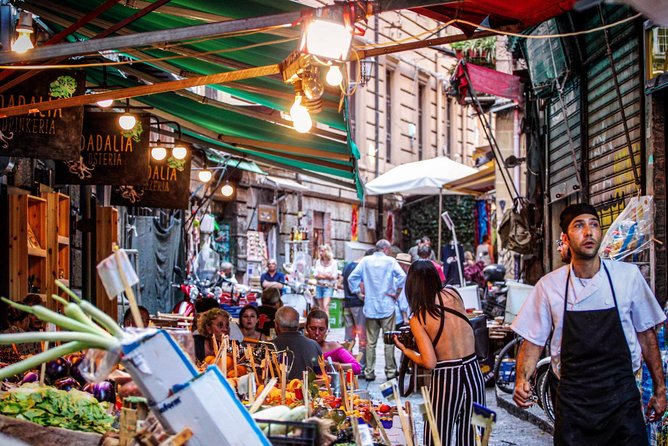
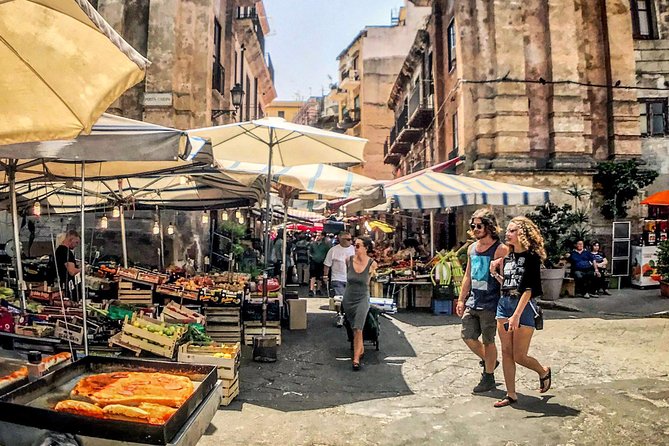
The route then enters one of Palermo’s colorful open-air markets. The market is loud, crowded, and practical, which makes it a fitting place to discuss how Mafia power affected ordinary shopkeepers.
Here, the subject moves from public figures to daily commerce. You learn about the relationship between the Mafia and market sellers, including the pressure to pay pizzo. This is the point where the tour’s civic message becomes especially concrete. Extortion is not just a matter for courtrooms. It can shape who runs a stall, what a shopkeeper pays, and how safe it feels to refuse.
The market also gives the walk some sensory variety. After the solemn mural and memorial stops, you are among food stalls, voices, and movement. Keep your belongings secure in any crowded market, and stay close enough to hear the guide. The group may pause while other people pass around it.
Do not expect a full food tour here. Lunch is not included, and the route does not promise tastings. You are seeing the market mainly as a working part of Palermo and as a place where the Mafia’s pressure on small businesses can be explained.
More Palermo walks with a guide:
- Palermo: Private Custom Walking Tour with Local Guide
★ 4.7 · 661 reviews - Palermo: Street Food Walking Tour with Local Guide & Tasting
★ 4.9 · 632 reviews - Palermo Walking Tour and Street Food
★ 5.0 · 617 reviews - Palermo: UNESCO World Heritage Sites Guided Walking Tour
★ 4.8 · 548 reviews
Palazzo di Giustizia and the Piazza della Memoria
At the Palermo courthouse, the tour visits Piazza della Memoria, a memorial to judges and prosecutors killed by the Mafia. The stop lasts about 15 minutes.
This part of the walk explains why courts and prosecutors became central to Sicily’s anti-mafia struggle. It also gives you a quiet pause from the market before the route returns to major public landmarks.
A memorial can look simple at first, especially if you arrive expecting a large museum or a formal indoor display. Its value comes from the guide’s explanation and from understanding why these legal figures mattered. The walk presents them as people who accepted personal danger while trying to enforce the law.
This is another stop where questions improve the experience. You can ask how the public response changed, how government efforts developed, or how the anti-mafia movement operates now. The exact detail you receive will depend on your guide, but the tour’s purpose is clear: to show the civic cost of organized crime and the courage required to oppose it.
Palermo Cathedral and the church’s uneasy connection
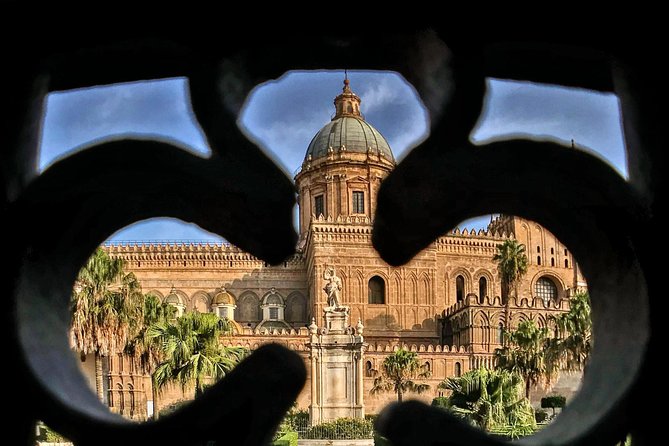
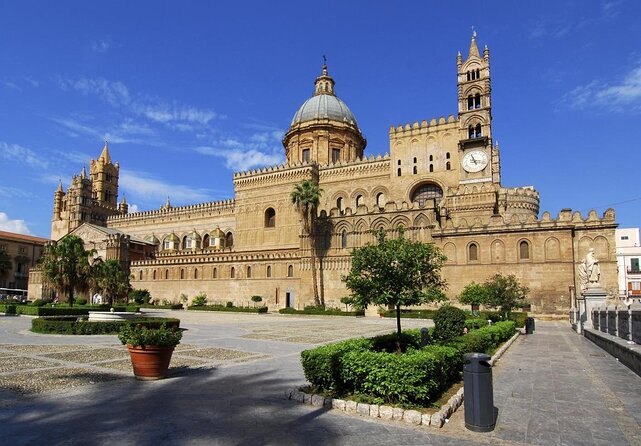
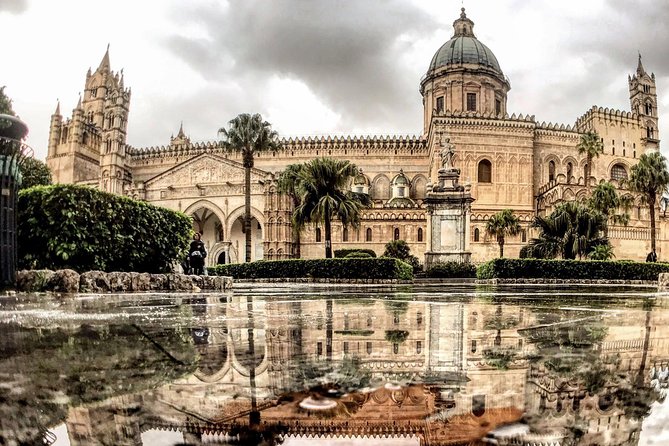
In front of Palermo Cathedral, you spend about 15 minutes discussing the relationship between the Catholic Church and the Mafia. The cathedral itself is one of Palermo’s major Arab-Norman sights, so this stop gives you a chance to see an important monument while considering the role of religious institutions in local life.
The tour does not present the cathedral as a full architectural visit. You are outside, listening to the guide, so plan a separate visit if you want to study the building in detail or go inside. That is both a limit and a useful feature. You get context without using the entire walking tour on art and architecture.
The church discussion adds an important layer to the tour’s message. The Mafia did not exist apart from society. Its influence touched institutions that held public trust, including religious communities. At the same time, the broader anti-mafia story includes people and institutions that challenged that influence.
The cathedral stop also helps break up the heavier memorial sections. You are still learning, but you are doing so in one of Palermo’s most recognizable public spaces.
Cappadonia Gelati and the meaning of an orange sticker
Along the Cassaro, the guide points out businesses marked by an orange sticker. These are shops that have said no to paying pizzo and joined Addiopizzo’s mafia-free critical consumption campaign.
Cappadonia Gelati is one of the featured stops. You can buy gelato there, though the purchase is not included. This is a small but memorable part of the walk because it turns a political idea into a simple action: you can support a business that has chosen not to pay extortion.
I like this stop for its practicality. The mural and memorial ask you to remember. The gelateria asks you to make a consumer choice. Buying something here does not solve a huge problem by itself, but it connects your visit to a local movement in a clear, visible way.
The stop lasts about 15 minutes. If you want gelato, allow for the possibility that the group will not wait through a long order or extended break. The tour’s focus remains the explanation of Addiopizzo and the wider anti-mafia campaign.
Palazzo Pretorio and the finish at Fontana Pretoria
The final main stop is Palazzo Pretorio, Palermo’s city hall, where you spend about 15 minutes. The building has been linked with both corrupt politicians and public officials who fought the Mafia.
This is a fitting ending because it brings the story back to government. The walk has moved through culture, public memory, commerce, justice, religion, and consumer action. At city hall, those threads meet in the question of how public institutions can either protect private interests or serve citizens.
The tour finishes at Fontana Pretoria, in the center of Palermo’s old town. From here, the guide offers suggestions for continuing your visit and finding Sicilian specialties. Since the ending is central, you can easily continue sightseeing afterward, though no onward transport or meal is included.
The finish also makes the tour useful as a first activity in Palermo. You get a basic sense of several central areas, then receive ideas for what to see and eat next. Just do not confuse that orientation with a full monument tour. The anti-mafia subject remains the priority.
What three hours and $39.30 really buy you
At about $39.30 per person, this is not the cheapest way to walk around central Palermo. It is also more than a simple guide-led introduction to the city’s sights. You are paying for a focused subject, an English-speaking local guide, a small group capped at 15 people, and a contribution to Addiopizzo.
The value is strongest if you want social and political context that you would not get from a standard cathedral or market tour. The route covers several major places without charging admission at the stops, but the free entry is not the main benefit. The main benefit is the interpretation connecting those places.
A three-hour walk requires a realistic pace. Some of the time is spent walking, and some is spent standing still while the guide speaks. One useful improvement for some visitors would be audio equipment that allowed the group to keep moving during longer explanations. If you dislike standing, have limited time, or want constant sightseeing, this may feel demanding.
The small group helps. With up to 15 people, you are more likely to hear the guide and ask a question than on a large city walk. Still, it is not a private tour, and the group’s interests will shape how much time goes to questions.
The experience is offered in English and uses a mobile ticket. Confirmation arrives when you book, and the tour is often reserved well ahead of time, with an average booking point about 24 days before the date. That does not guarantee you need to book that early, but it is sensible to reserve ahead if your Palermo dates are fixed.
Practical advice for a smoother walk
Wear comfortable shoes. Palermo’s central streets and public spaces are best handled on foot, and three hours is long enough for poor footwear to become a real nuisance.
Check the forecast. In rainy weather, you need an umbrella and a dry jacket. The tour is primarily outdoors, so rain can affect how comfortably you hear the guide and how long the group can pause at each stop.
There is no hotel pickup or drop-off, and lunch is not included. Meet at Piazza Giuseppe Verdi, 455, beside Teatro Massimo. You finish at Fontana Pretoria, Piazza Pretoria, in the old town center.
The route is near public transportation, and most people can take part. No special health restrictions are listed. Still, tell yourself the truth about a three-hour walk with repeated standing before you book.
Families can take part. One family completed the walk with a four-year-old and found it moving and manageable, but the subject includes violence, death, and corruption. Parents should decide if that tone suits their child.
Guides have included Sylvia, Valeria, Francesco, Federico, Ermes, Marienella, Laura, and Salvatore. You cannot choose a particular guide from the information provided, but the repeated praise for passion, clear English, and strong command of the subject suggests that guide quality is central to the experience.
Who should book the No Mafia tour?
Book it if you want to understand Palermo beyond food, churches, and film references. It suits you especially well if you care about civic movements, modern Italian history, ethical tourism, or the way organized crime affects ordinary businesses.
It is also a smart first-day choice. The route gives you a basic map of central Palermo, introduces several places you may want to revisit, and gives you useful context for Addiopizzo stickers you may notice elsewhere.
Think twice if you want a conventional historical walking tour. One part of the route is repetitive for some people, and the guide may return to the same anti-mafia message from several angles. That repetition is intentional, but it will not suit everyone.
The cancellation terms are simple: you can receive a full refund if you cancel at least 24 hours before the local start time. Cancellations or changes made later are not accepted.
Should you book it?
I would book this tour if you want the real Palermo behind the movie version. The best parts are the Wall of Legality, the courthouse memorial, the market discussion of pizzo, and the chance to support a business such as Cappadonia Gelati.
Go in expecting a serious three-hour civic walk, not a sightseeing sprint. If you wear good shoes, arrive ready to listen, and want an honest look at both Mafia influence and the people resisting it, the $39.30 price is fair. If your priority is architecture, food, or a broad survey of Palermo, choose a different tour and visit these sites on your own.
FAQ
How long does the Palermo No Mafia walking tour last?
The tour lasts approximately three hours.
Where does the tour begin?
It begins at Piazza Giuseppe Verdi, 455, 90133 Palermo, beside Teatro Massimo.
Where does the tour end?
It ends at Fontana Pretoria, Piazza Pretoria, in Palermo’s old town center.
What language is the tour offered in?
The tour is offered in English.
How large is the group?
The maximum group size is 15 people.
Is hotel pickup included?
No. Hotel pickup and drop-off are not included.
Is lunch included?
No. Lunch is not included in the tour price.
What should I wear?
Comfortable shoes are suggested. In rainy weather, bring an umbrella and a dry jacket.
Can I cancel for a full refund?
Yes. You can cancel at least 24 hours before the experience start time for a full refund. Changes or cancellations made less than 24 hours before the start time are not accepted.
Recently reviewed around Palermo
- Sicilian Cooking Class★ 5.0 · 289 reviews
- Discover Palermo in 3 hours. Art, history, markets and street food★ 5.0 · 352 reviews
- Palermo : Private Custom Walking Tour with a Local Guide★ 4.5 · 237 reviews
- Palermo’s Delight: Unleash the Secrets of Pizza and Gelato Making★ 5.0 · 497 reviews
- Palazzo Conte Federico★ 5.0 · 650 reviews
- Night Street Food Tour of Palermo with a Local -For real foodies!★ 5.0 · 486 reviews
- Wanna be Sicilian: Palermo Cooking Class and Market Tour★ 5.0 · 197 reviews
- Palermo Half Day Boat Tour with Palermo Experiences★ 5.0 · 224 reviews
Walking Tours, compared.

Guided Walking Tour & Last Supper Visit with Ticket
Read our review →
Rialto Bridge & Offbeat Unusual Venice Walking Tour
Read our review →
Private 3 hrs Venice Tour: St Mark’s, Walking tour & Boat tour
Read our review →

Skip the line: Uffizi and Accademia Small Group Walking Tour
Read our review →
Trastevere & Campo de Fiori Street Food Walking Tour
Read our review →Browse the lists this tour appears in