
Review · SELF-GUIDED TOURS
Agrigento: Valley of the Temples Ticket & App Audioguide
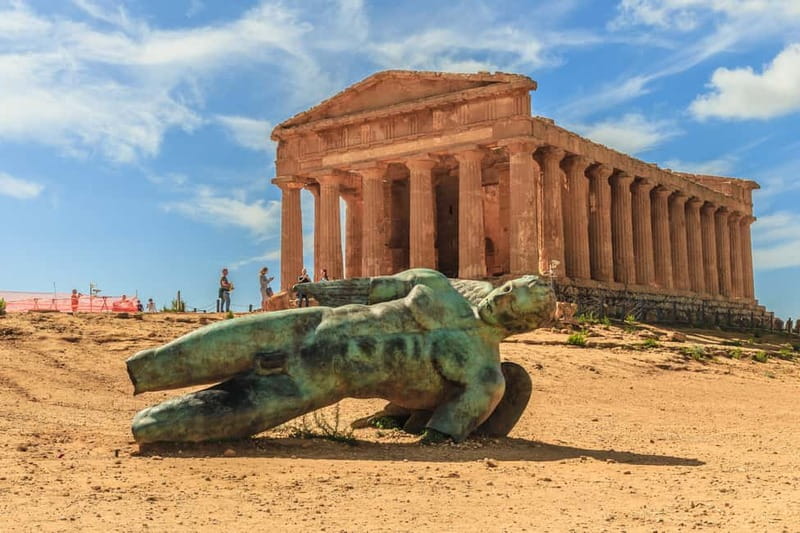
Agrigento’s Valley of the Temples is one of Sicily’s great outdoor sights: a long ridge of ancient Doric monuments set above open countryside and the sea. The core of the site follows the remains of Akragas, founded in the 6th century BC, and the Temple of Concordia is remarkably well preserved for a building nearly 2,500 years old.
I like the freedom to walk at your own pace, and the fast-track ticket can save time during busy periods. I also like the option of visiting near sunset, when the temples shift from warm stone to softly lit monuments. The catch is that fast-track does not always mean instant entry: you must exchange your voucher for a paper ticket at the Temple of Juno office, and the app audioguide has not worked smoothly for everyone.
In This Review
- Key points to know before you go
- What the $19 ticket actually gets you
- Getting in at the Temple of Juno
- The ancient route through Akragas
- Temple of Concordia, the star of the visit
- Juno, Zeus, and Heracles
- Aqueducts, terraces, and the gymnasium
- The app audioguide: useful idea, uneven execution
- Sunset, heat, and the best time to visit
- Pemcards and the exhibition
- Who should book this experience?
- Should you book the Agrigento Valley of the Temples ticket?
- FAQ
- Where do I exchange the voucher?
- Is transportation included?
- Is a live guide included?
- How long is the ticket valid?
- Can I enter more than once?
- Is the site wheelchair accessible?
- Do I need identification?
- Is the I Tesori d’Italia exhibition included?
- Can I cancel the booking?
Key points to know before you go
- Start at the Temple of Juno office: This is the only place where you can exchange your voucher for entry.
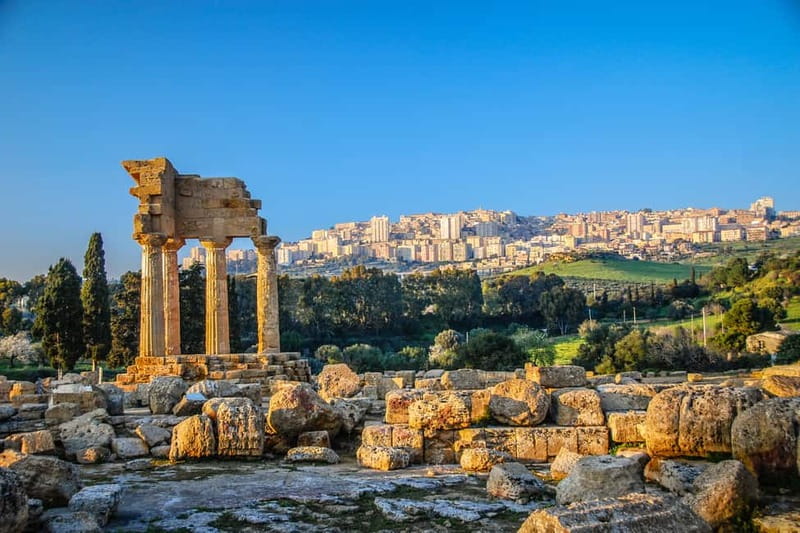
- See four major temple areas: The route includes Juno, Concordia, Zeus, and Heracles, along with aqueducts and a gymnasium.
- Plan for a real walk: The archaeological zone is enormous, although the main temple route is manageable and not especially strenuous.
- Choose your timing carefully: Early morning avoids much of the heat, while a late afternoon visit can lead into sunset and evening lighting.
- Treat the audioguide as a bonus, not the main reason to book: Some people found the app helpful, while others had trouble accessing it or found it weak.
- Compare the price: At $19 per person, this is convenient, but the standard ticket can be cheaper, and a combined museum ticket may offer better value.
What the $19 ticket actually gets you
The ticket gives you one entry to the Valley of the Temples for a single day. It includes skip-the-line access, a digital audioguide, and entry to the I Tesori d’Italia exhibition through December 31, 2025.
That sounds simple, but the price needs a little thought. Several people found the ticket useful during a busy period, yet others arrived when there was no queue and saw little practical gain from paying through an advance platform. One especially important point: the voucher is not your final admission ticket. You must take it to the Temple of Juno ticket office and exchange it for the paper ticket.
The standard admission price was reported as about €13, so $19 is not automatically a bargain. The difference may be worthwhile if you are visiting at a crowded time, want the convenience of booking ahead, or need flexible cancellation. It is less attractive if you arrive in a quiet season, qualify for free or reduced admission, or want the museum included.
Children may qualify for free entry under the site’s own rules, and one person with a disability was reported as allowing two accompanying admissions at no cost. Because those conditions can affect the total, check the official admission rules before paying for every member of your party.
The ticket also allows only one entry. You cannot leave for lunch and return later on the same admission, so bring water, use the facilities when convenient, and plan your route before you pass through the gate.
More Sicily trips worth a second look
- Taormina: Ancient Theater Skip-the-Line Ticket & Audio Guide
★ 4.5 · 1,701 reviews - Agrigento: Valley of the Temples Entry Ticket & Audio Guide
★ 4.1 · 268 reviews - Rome: Colosseum & Forum with Audio Guide App -Optional Arena
★ 4.2 · 24,770 reviews
Getting in at the Temple of Juno
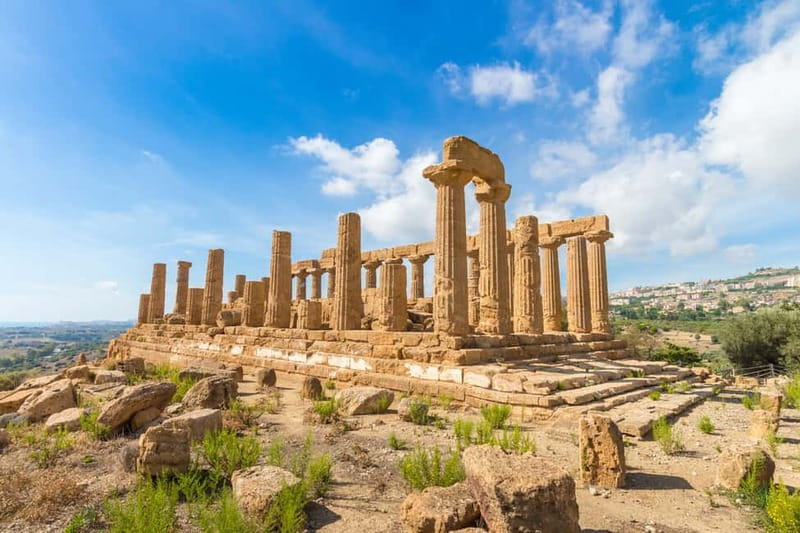
The meeting point is the Temple of Juno ticket office on Via Panoramica Valle dei Templi, near the Temple of Juno. This is not just a suggested starting place. It is the only entrance where you can exchange the voucher.
Allow extra time for that step. The fast-track arrangement may shorten the regular ticket queue, but it does not remove the voucher exchange. You will also pass through a security check before entering.
The site is wheelchair accessible, though the area is large and includes outdoor paths between monuments. Anyone with limited mobility should think about distance and heat as much as the formal accessibility label. A shuttle service has been reported at the site for an additional charge, including a ride between the entrance and the temples, but that service is not part of this ticket.
There is no transportation included. You must make your own way to Agrigento and to the archaeological area. If you arrive by train in Agrigento, a taxi to the site has been reported at roughly €10 to €15. Drivers can use the site’s parking areas, with parking described as good value in one account.
The ancient route through Akragas
Akragas was founded in the 6th century BC and became one of the largest Greek cities on the Mediterranean. The Valley of the Temples preserves the public and religious center of that old city, spread across terraced ground rather than contained in a compact museum courtyard.
That scale changes the visit. You are not simply moving from one building to the next. You walk through open Sicilian scenery, past broken walls, aqueducts, temple foundations, and broad views. The ruins feel connected to the land around them, which helps you picture the ancient city as a functioning place rather than a collection of isolated stones.
The route can be straightforward with a map, but signs are not always as detailed as you might want. The audioguide is meant to add context, yet I would also read the information panels carefully. The written signs may be more useful than the app for travelers who want quick facts without managing a phone while walking.
Temple of Concordia, the star of the visit
The Temple of Concordia is the site’s great showpiece. Its long colonnade and strong Doric form are still easy to read, making it one of the most impressive ancient Greek temples outside Greece.
This is where the comparison with Greece becomes clear. The columns, proportions, and pale stone create a familiar classical setting, but Agrigento adds a distinctly Sicilian backdrop. You see the monument across open ground rather than in a dense urban ruin, and the views give the stop a sense of space.
Take your time here. Walk around the exterior, look at the surviving columns from different angles, and pay attention to how the temple sits on its terrace. The most memorable photographs often come from stepping back rather than standing directly beside the columns.
There is limited shade across much of the park. In summer, the stone and open paths can make the afternoon feel hotter than expected. Early morning is the sensible choice for comfort, while late afternoon offers softer light.
A different way to spend the day, same part of Italy:
- Catania: Mount Etna Morning or Sunset Day Trip with Tasting
★ 4.8 · 4,028 reviews - Mount Etna: Guided Volcano Summit Hiking Tour with Cable Car
★ 4.7 · 3,784 reviews - Palermo: NO Mafia Walking Tour
★ 4.8 · 2,431 reviews - Palermo: Hop-on Hop-off Bus Tour 24-hour Ticket
★ 3.9 · 2,410 reviews
Juno, Zeus, and Heracles
The Temple of Juno is both a monument and your practical starting point. Near the ticket office, it gives you an immediate sense of the scale and age of the sanctuary before you continue along the main route.
The Temple of Zeus is another major stop, though the experience is different from Concordia. Here, you are looking at a larger and more fragmentary complex, with fallen architectural pieces that help show how vast the original construction was. It is a place where a good explanation matters, since the remains do not speak as clearly for themselves.
The Temple of Heracles, also called the Temple of Heracles or Eracle, adds another layer to the walk. Its remains are less complete, but the broken columns and foundations show the long passage from monumental Greek building to archaeological ruin.
The temples are not all equally intact, and that is worth knowing before you arrive. If you expect a row of complete buildings, you may find parts of the route less dramatic. If you enjoy reconstructing the past from fragments, the variety makes the walk stronger.
Aqueducts, terraces, and the gymnasium
The archaeological site is said to cover roughly 1,300 hectares, although you will focus on the main area open to the public. Even within that core, the walk is substantial. You should expect steady walking rather than a strenuous hike.
The terraced levels are important because they reveal how the area once worked as a center of public life. The aqueducts add a practical side to the visit. They are not as instantly famous as the temples, but they show the engineering that supported the ancient city.
The gymnasium is another useful stop. This was a place for athletic, educational, and recreational activity, so it helps widen your picture of Akragas beyond worship and monumental architecture. A temple gives you a dramatic photograph; the gymnasium gives you a better sense of daily civic life.
I recommend moving at a relaxed pace rather than trying to cover every corner. The site is best experienced as a sequence of major monuments, open views, and smaller remains. Rushing from temple to temple can turn an exceptional place into a hot checklist.
The app audioguide: useful idea, uneven execution
A self-guided visit is a good match for this site. You can pause for photographs, stop at the temples that interest you, and avoid being tied to a group schedule. The digital audioguide should add the stories and historical setting that signs cannot always provide.
In practice, the audio element appears to be the least dependable part of the package. Some people found it poor, while others had trouble getting the QR code to work for more than one person. There were also complaints about the confusing process of exchanging the voucher, then dealing with the audio service separately.
For a group, check the app before you start walking. Make sure every person who wants audio can access it, and do not assume one successful scan covers everyone. If it fails, the site’s own paid audioguide, reported at about €5, may be an alternative, though that would add to your cost.
You can also visit without audio. The maps and information panels provide a workable base, especially if you have read a little about Akragas beforehand. I would not book this ticket solely for the app.
Sunset, heat, and the best time to visit
Timing can shape the entire experience. An afternoon visit may be uncomfortable in the warmer months, with little shade along the open route. Early morning is better if you want cooler conditions and fewer people.
Late afternoon has its own reward. A 6 p.m. visit can begin in daylight, move into sunset, and finish with the temples lit after dark. That changing light gives you three different views of the site in one visit, though you should check the available starting time and allow enough time to complete the route.
Spring can add another small pleasure: almond trees may be in bloom, with their scent noticeable along the paths. That detail will not define the visit, but it is a reminder that Agrigento is more than ruins in a field.
Bring plenty of water. Drinking fountains have been available, though not every fountain has worked. A café partway along the route can help families and anyone who needs a break, but do not count on refreshment stops as a substitute for carrying water.
Pemcards and the exhibition
The ticket includes access to the I Tesori d’Italia exhibition through the end of 2025. The supplied information does not describe its exact displays, so treat it as an extra indoor or interpretive stop rather than the main purpose of your visit.
Pemcards offers a digital photo that can be turned into a real postcard and sent anywhere in the world. It is a charming idea, especially after photographing the temples in evening light.
The practical problem is finding the Pemcards stand. Some people could not locate it, and staff did not always know where it was. If you want to use the postcard feature, ask about it early, not at the end when you are tired and ready to leave.
Who should book this experience?
This suits you if you want independent sightseeing, prefer to set your own pace, and value advance booking during a busy period. It is also a good fit if a live guide is not important to you and you are comfortable using a phone for audio and entry details.
Families can enjoy the open-air setting, but the distance and heat require planning. Bring water, consider the shuttle if needed, and avoid the hottest part of the day. People who use wheelchairs should note that the site is wheelchair accessible, while still allowing for the size and outdoor character of the grounds.
This is not the best choice if you want a guided explanation from a person. A live guide is not included. It may also be poor value if you qualify for reduced or free admission, arrive when queues are short, or want a combined ticket with the museum.
Should you book the Agrigento Valley of the Temples ticket?
Book it if convenience and timing matter more to you than getting the absolute lowest admission price. The Valley of the Temples itself is extraordinary, with preserved Doric architecture, wide Sicilian views, aqueducts, and a route that makes a strong half-day outing.
Before paying, compare the $19 price with the on-site ticket and any combined museum option. Confirm that you can reach the Temple of Juno office, exchange the voucher, and manage the audio access. If you do book, choose early morning or the hours before sunset, carry water, and treat the audioguide as a helpful extra rather than a guarantee.
FAQ
Where do I exchange the voucher?
Exchange it at the Temple of Juno ticket office near the Temple of Juno on Via Panoramica Valle dei Templi. This is the only location where the voucher can be exchanged.
Is transportation included?
No. Transportation to and from the Valley of the Temples is not included.
Is a live guide included?
No. The experience includes a digital audioguide, but not a live guide.
How long is the ticket valid?
The ticket is valid for one day. Check the available starting times when booking.
Can I enter more than once?
No. The ticket allows a single entry into the Valley of the Temples.
Is the site wheelchair accessible?
Yes, the activity is listed as wheelchair accessible. The archaeological area is very large, so distance and outdoor paths should still be considered.
Do I need identification?
Bring valid identification if you selected a reduced-price ticket.
Is the I Tesori d’Italia exhibition included?
Yes. Access is included through December 31, 2025.
Can I cancel the booking?
You can cancel up to 24 hours in advance for a full refund. A reserve-now-and-pay-later option is also available.
Recently reviewed around Sicily
- Sicilian Cooking Class★ 5.0 · 289 reviews
- Discover Palermo in 3 hours. Art, history, markets and street food★ 5.0 · 352 reviews
- Palermo : Private Custom Walking Tour with a Local Guide★ 4.5 · 237 reviews
- Palermo No Mafia walking tour: discover the Anti-mafia culture in Sicily★ 5.0 · 1,011 reviews
- Palermo’s Delight: Unleash the Secrets of Pizza and Gelato Making★ 5.0 · 497 reviews
- Palazzo Conte Federico★ 5.0 · 650 reviews
- Night Street Food Tour of Palermo with a Local -For real foodies!★ 5.0 · 486 reviews
- Wanna be Sicilian: Palermo Cooking Class and Market Tour★ 5.0 · 197 reviews
Self-Guided Tours, compared.
Colosseum & Forum with Audio Guide App -Optional Arena
Read our review →
Pantheon Fast-Track Ticket and Official Audio Guide
Read our review →
Grand Canal Gondola Ride with App Commentary
Read our review →
La Fenice Opera House Entry Ticket with Audio Guide
Read our review →
Colosseum, Forum, Palatine Hill Entry & Audioguide App
Read our review →
St. Peter’s Basilica & Dome Entry Ticket & Audio Tour
Read our review →
Cathedral & Brunelleschi’s Dome Ticket & Audio App
Read our review →Browse the lists this tour appears in