
Review · WALKING TOURS
Palermo: UNESCO World Heritage Sites Guided Walking Tour
Palermo’s story is written in stone, marble, mosaic, and street life. This walking tour leads you through the city’s UNESCO heart, from the grand Teatro Massimo to the Cathedral, with stops at Baroque squares, Norman-Arab monuments, an old market, and the glowing mosaics of Martorana Church. The city’s mixed cultures are the main event.
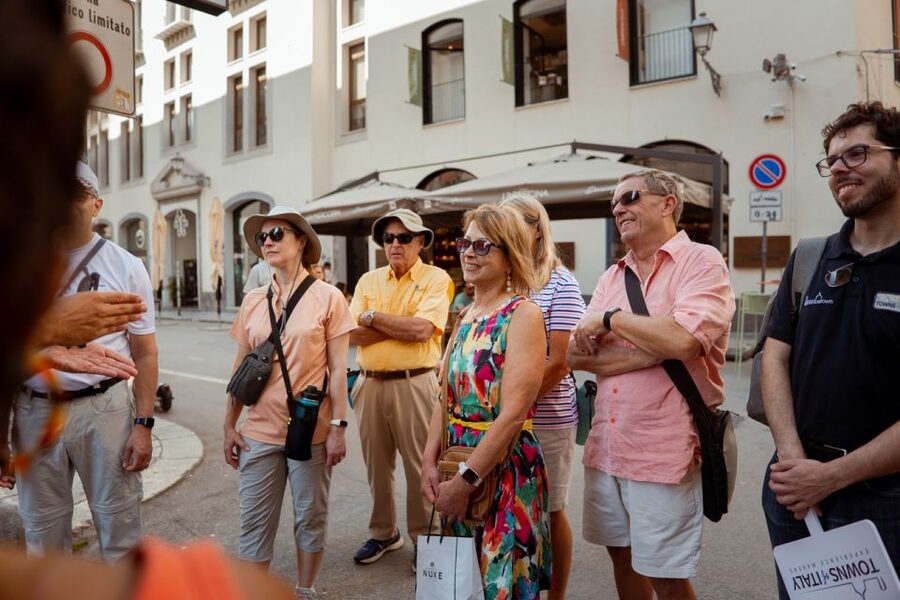
I like the way the tour combines major sights with everyday Palermo, especially the Vucciria Market and the chance to hear local stories from guides such as Renata, Simone, and Stefania. I also like the sweet Sicilian treat at the end, a small but fitting finish after three hours on foot. The main limitation is that most monuments are viewed from outside, and the Norman Palace and Palatine Chapel require the longer upgrade.
In This Review
- Key points
- Why Palermo Makes Such a Good Walking Tour
- Teatro Massimo Starts the Story
- Church of Saint Dominic and Palermo’s Grand Streets
- Vucciria Market Brings Palermo Down to Street Level
- Martorana Church and the Beauty of Byzantine Mosaics
- Piazza Pretoria and the Palazzo Pretorio
- Quattro Canti Turns Four Streets Into a Stage
- Inside Palermo Cathedral
- The Norman Palace and Palatine Chapel Upgrade
- The Guides Are the Main Strength
- Pace, Weather, and What to Bring
- Is $41 a Fair Price?
- Who Should Book This Palermo Walk?
- Should You Book It?
- FAQ
- How long does the Palermo UNESCO walking tour last?
- What languages are available?
- Is entrance to Palermo Cathedral included?
- Are the Norman Palace and Palatine Chapel included?
- Does the tour include hotel pickup and drop-off?
- Does the tour run in bad weather?
- Can I cancel for a full refund?
Key points
- Three hours on foot: A compact introduction to central Palermo that works well early in your stay.
- Cathedral entry included: You go inside Palermo Cathedral, while most other monuments are seen from the street.
- Many cultures in one route: Norman, Arab, Muslim, Christian, and Baroque influences appear within a short walk.
- Local guides make the difference: Renata, Simone, Stefania, Enrico, and others are praised for clear explanations, humor, and personal stories.
- Sicilian treat included: You may finish with a cannolo, granita, or another local sweet.
- Optional longer version: Add the Norman Palace and Palatine Chapel for a 3 to 5.5 hour experience.
Why Palermo Makes Such a Good Walking Tour
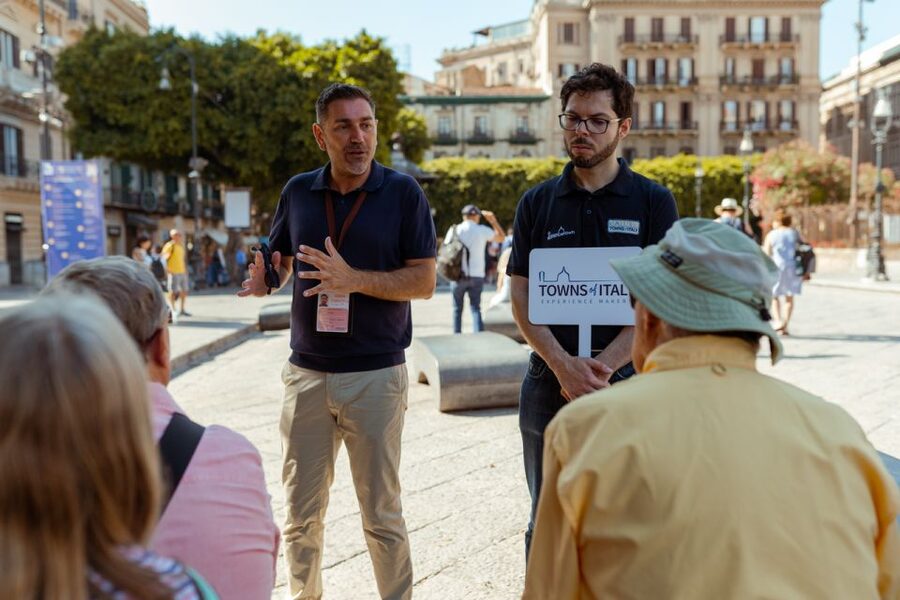
Palermo can feel confusing at first. The center is full of churches, palaces, markets, fountains, and layers of architecture that do not always explain themselves. A guided walk gives you a framework before you begin exploring on your own.
You will see evidence of Palermo’s many rulers and cultures without needing to cross the whole city. Norman forms sit beside Arab details. Christian churches contain Byzantine mosaics. Baroque facades frame streets that still feel thoroughly Sicilian.
That mixture is more useful to understand in person than from a guidebook paragraph. At each stop, your guide connects the building in front of you with the people, customs, and political changes that shaped it.
This is also a good orientation walk. Several people who took it early in their stay used the route to decide which places deserved a second visit. I would do it near the beginning of a Palermo trip, especially if you want context before visiting museums or larger historic sites.
The experience costs $41 per person. That is fair if you value a live guide, Cathedral entry, and three hours of focused sightseeing. It is less compelling if you only want to photograph buildings from outside and prefer to explore at your own pace.
More Walking Tours in Sicily
- Palermo: NO Mafia Walking Tour
★ 4.8 · 2,431 reviews - Palermo Original Street Food Walking Tour by Streaty
★ 5.0 · 2,105 reviews - Palermo: Street Food and History Walking Tour
★ 4.9 · 1,294 reviews
Teatro Massimo Starts the Story
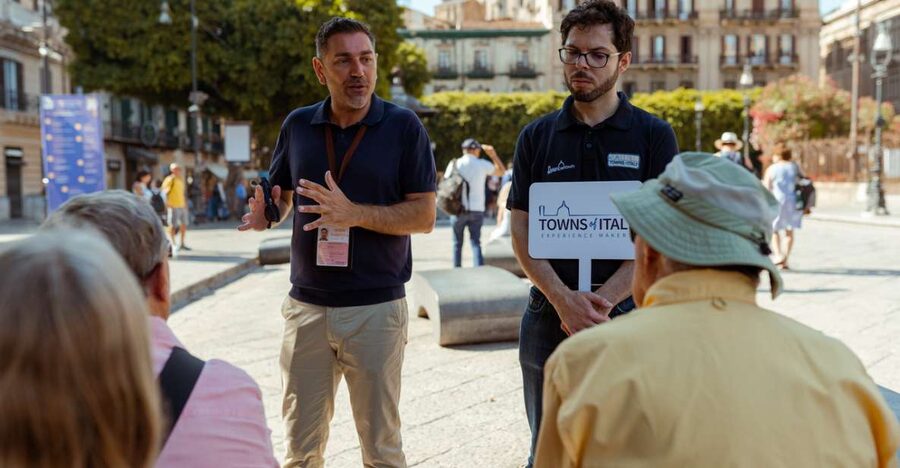
The route begins at the Towns of Italy Tourist Hub and Cooking School on Via Volturno, 40, unless your booking gives another starting point. From there, the group heads toward Teatro Massimo, Palermo’s famous opera house.
The theater is used mainly as a photo stop and guided exterior visit on this walk. Even from the street, it gives you an immediate sense of Palermo’s scale and ambition. Your guide sets the tone here, explaining the place within the city rather than treating it as a quick photograph.
A guide also helps you notice details you might otherwise pass without a thought. Several of the guides are praised for using anecdotes, humor, music, and personal memories to keep the history moving. Simone, in particular, is noted for mixing historical explanations with cinematic and musical references.
The tour is conducted in English or Spanish. An optional English audio guide is also listed, which may help if you have trouble hearing every word in a street setting.
Church of Saint Dominic and Palermo’s Grand Streets
The Church of Saint Dominic provides another look at Palermo’s religious architecture. Here, the guide continues the story of how churches and public spaces changed as different powers shaped the city.
The stop is primarily an exterior visit, so you should not expect a long interior examination. That is part of the tour’s rhythm: see the building, understand its role, take photographs, then continue through the center.
This format keeps the walk moving, but it also means you should adjust your expectations. You are getting a guided introduction rather than a series of full church visits. If you want to study every chapel, painting, and side altar, you will need to return independently.
I like this approach for a first visit. Palermo has too many significant buildings to cover in detail during one short walk. A good guide helps you sort the city into places to revisit and places that make more sense as part of the wider street scene.
Vucciria Market Brings Palermo Down to Street Level
The Vucciria Market changes the mood. After grand theaters and churches, you move into a setting shaped by commerce, food, noise, and local routine.
The supplied description emphasizes the scent of fresh pastries, the chatter of vendors, and the warmth of the Sicilian sun. Those details matter because Palermo is not only a city of monuments. Its markets help you see how the historic center functions as a living neighborhood.
The market stop is listed as a photo stop and guided sightseeing visit. You are not promised a full food tour or a meal here, so think of it as a cultural pause rather than a major tasting session.
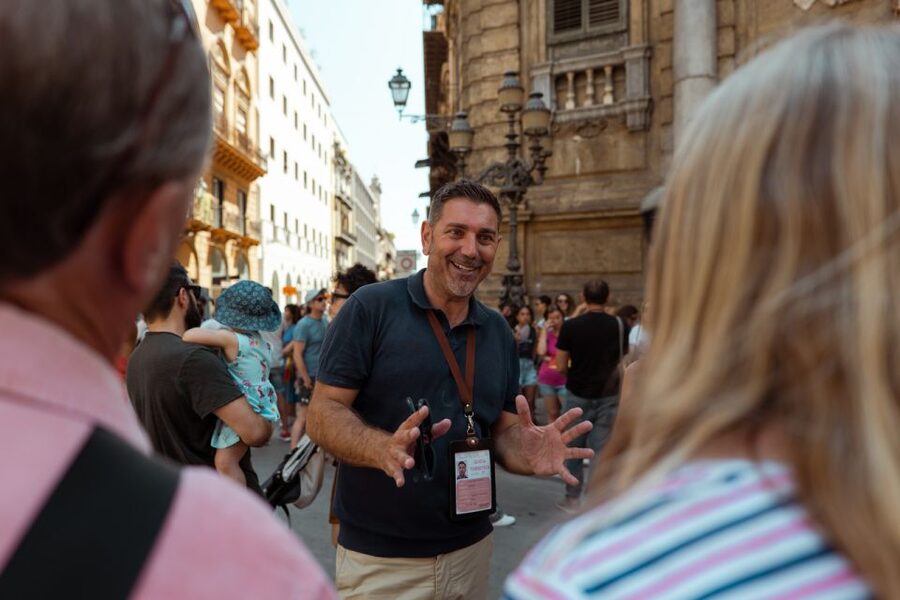
This is one of the reasons I prefer this tour to a route that only links famous buildings. The market gives your guide a chance to talk about daily life, customs, and modern Palermo. Several guides are praised for doing exactly that, adding advice about local areas and things to do after the walk.
More history-led days around Palermo:
- Palermo: Walking Tour of Historic Markets and Monuments
★ 4.9 · 478 reviews - Discover Palermo in 3 hours. Art, history, markets and street food
★ 5.0 · 352 reviews - Venice: St. Mark Basilica Ticket, Audioguide+History Gallery
★ 3.9 · 4,780 reviews - Venice’s Best: Basilica, Doge’s Palace, Gondola & History Gallery
★ 4.5 · 2,478 reviews
Martorana Church and the Beauty of Byzantine Mosaics
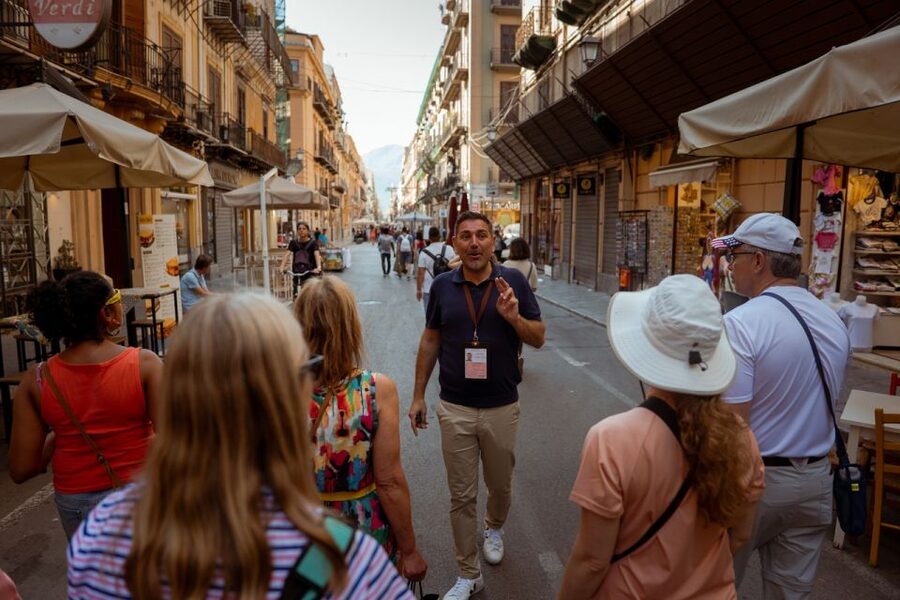
Martorana Church is one of the visual highlights. Its golden mosaics show how Palermo’s religious art reflects more than one tradition, with Byzantine workmanship appearing in a city shaped by Norman and Arab influences.
The church is presented as a sightseeing stop, with the tour focusing on its exterior and guided explanation. The main included interior visit is Palermo Cathedral, so confirm your booking details if entering Martorana is especially important to you.
Even without a long interior visit, the stop has real value. A guide can explain why the mosaics matter and point out the cultural exchange behind the decoration. One guide used a laser pointer to help the group follow complicated ceilings and high architectural details. That kind of simple tool can make a major difference when you are standing below a large facade or looking upward inside a church.
The route’s theme becomes clear here: Palermo cannot be neatly labeled Norman, Arab, Italian, or Christian. Its appeal comes from the way those influences overlap.
Piazza Pretoria and the Palazzo Pretorio
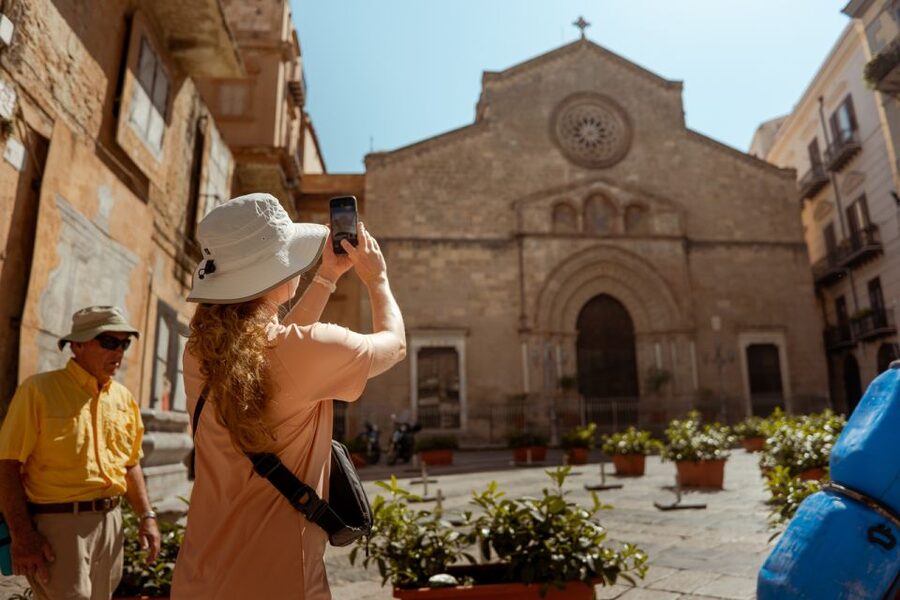
Piazza Pretoria is one of the tour’s strongest outdoor stops. The square is dominated by its marble fountain and rows of sculpted figures. The Baroque setting can feel theatrical, even before your guide explains what you are seeing.
The fountain is a good example of why guided interpretation helps. A quick photograph tells you that the place is ornate. A clear explanation gives you a better sense of its role in Palermo’s public life and the way the square relates to the surrounding buildings.
The Palazzo Pretorio, also called the Praetorian Palace, has housed Palermo’s Town Hall since the 14th century. The tour takes you past and around this civic landmark, with the guide explaining its importance from the outside. You may even catch a glimpse of city officials going about their work, although that is simply a possibility, not part of the promised program.
I like the contrast here. The church stops show private devotion and ceremony. Piazza Pretoria adds government, public display, and civic power. You see how Palermo’s center was built for both worship and authority.
Quattro Canti Turns Four Streets Into a Stage
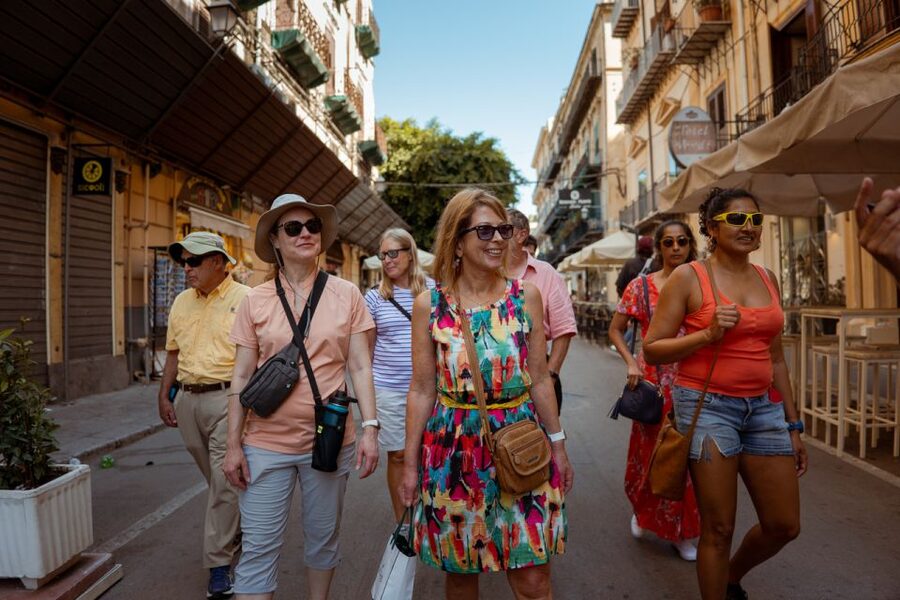
Quattro Canti is one of Palermo’s most recognizable intersections. Four curved Baroque facades face one another across the crossing, creating a carefully designed urban room.
It is a quick stop to understand from a map, but much easier to appreciate when you are standing in the middle of it. Your guide can show how the four corners frame the streets and explain the religious and civic symbolism built into the decoration.
This is also a practical navigation point. Once you know Quattro Canti, the center becomes easier to read. You can use it as a reference when returning to the Cathedral, Martorana Church, Piazza Pretoria, or the market.
The intersection can be busy, and the group needs to stay together. Guides are praised for managing the pace and keeping everyone informed. On hot days, some have deliberately sought shade and allowed time for water or photographs. That care is useful because Palermo’s sun can make a three-hour walk feel longer than expected.
Inside Palermo Cathedral
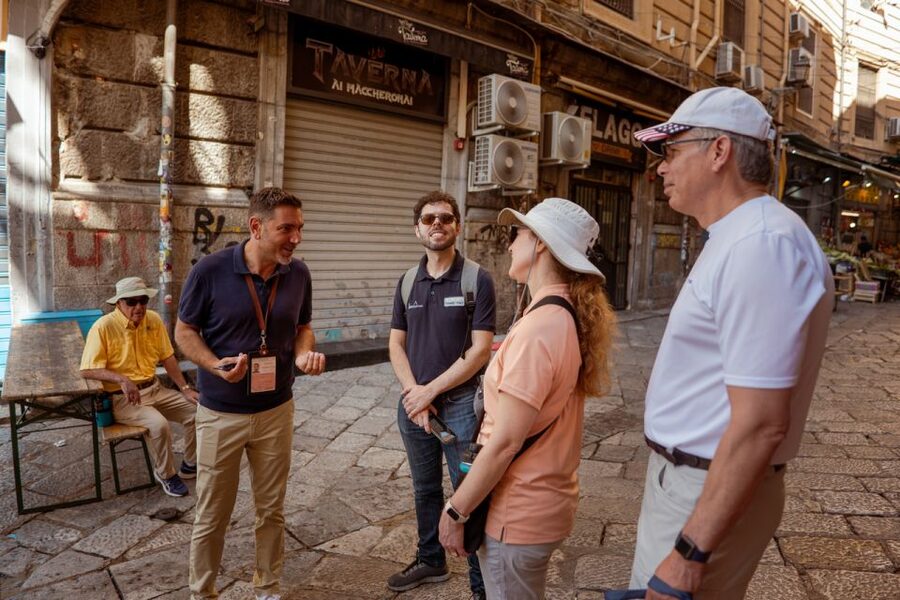
The Cathedral is the one clearly included interior visit. Its architecture reflects Palermo’s long sequence of cultural and political changes, with Muslim, Norman, and Christian influences visible in its forms, additions, and decoration.
Do not expect one perfectly unified style. The Cathedral is interesting because it developed over time. Its facade, towers, arches, and details create a visual record of different periods rather than a single design statement.
Your guide leads the visit and gives you a way to read what you are seeing. Some guides use pointers or careful positioning to help the group notice high ceilings and architectural details. That is especially useful in a large building where it is easy to look around without knowing what deserves attention.
The Cathedral visit is also where the tour’s limits are most noticeable. Three hours is not enough to enter every major church or examine every monument in full. One practical advantage is that your guide can suggest places to return to later, giving you a plan rather than trying to fit everything into one rushed visit.
If interior art and architecture are your main reason for booking, check the exact version of the tour and the visit conditions on your date. The standard experience includes Cathedral entry, while the other principal monuments are generally viewed from outside.
The Norman Palace and Palatine Chapel Upgrade
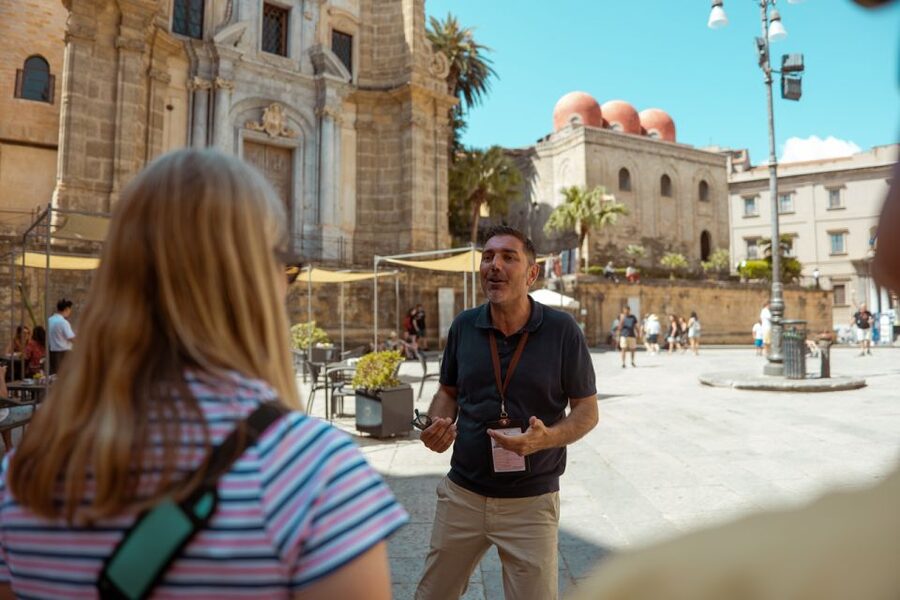
The basic route passes by the Palace of the Normans. You get a guided view and an explanation, but the palace and Palatine Chapel are not included in the standard walking tour.
The optional version combines the city walk with a guided visit to the Norman Palace and the Palatine Chapel. It lasts between about three and 5.5 hours, depending on the option and schedule, and uses two different meeting points.
This upgrade makes sense if you want a fuller look at Palermo’s Norman legacy and the famous Palatine Chapel mosaics. It is also the better choice if you dislike seeing an important building from the outside and then arranging a separate visit yourself.
The tradeoff is time and logistics. You need to check the meeting points carefully because the two parts do not necessarily begin in the same place. If your day is tight, the shorter walking tour may be easier. If Palermo’s historic monuments are a central reason for your trip, the longer option gives you more substance for the extra time.
The Guides Are the Main Strength
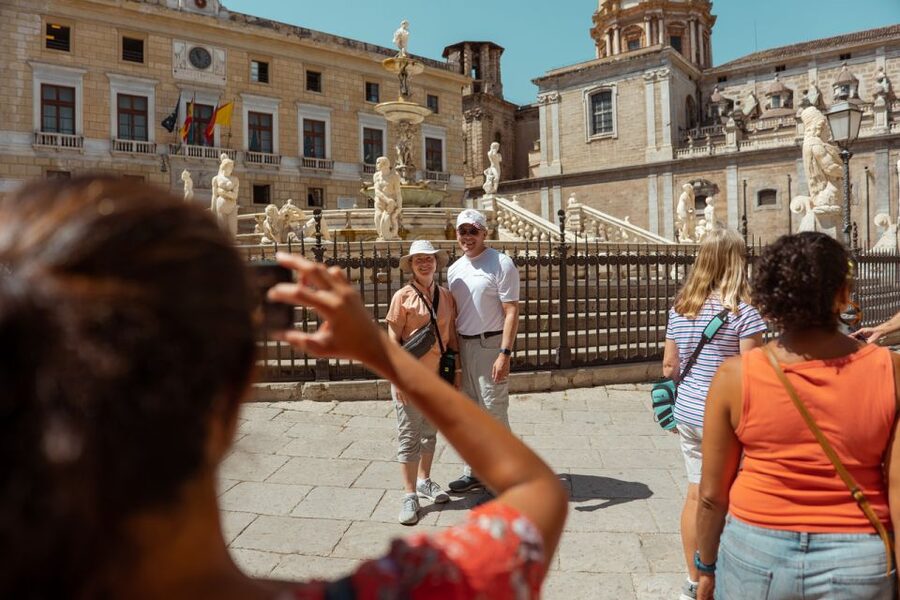
The route is solid, but the guide determines how much you take away. The most praised guides include Renata, Simone, Stefania, Enrico, Laura, Valeria, Fabio, Debbie, and others. The exact guide depends on the date and language.
The strongest pattern is not simply factual ability. It is the way the guides connect buildings with life in Palermo. Renata is repeatedly described as passionate about her home city. Simone is praised for humor, local insight, and lively storytelling. Stefania is noted for answering questions, adjusting the pace, and looking for shade on a hot day.
Enrico added a cannolo or granita at the end for one group. Other guides have shared local stories, practical suggestions, and personal memories, including brief comments about how Palermo’s social history affected their own childhoods.
The tour uses a small-group format, though the exact group size is not provided. A working audio system has been useful for some groups, and an optional English audio guide is available. If you have hearing or mobility needs, tell the operator in advance. The company says it will do its best to accommodate you.
Pace, Weather, and What to Bring
This is a real walking tour, not a bus route. You will spend roughly three hours moving between sights, with time for explanations, photographs, and occasional pauses.
The pace is generally described as manageable. One guide adjusted the walk for a tired participant, while another kept a comfortable rhythm for a 76-year-old guest. Still, the route runs rain or shine, and Palermo can be very warm. Wear comfortable shoes, carry water, and bring sun protection.
The tour does not include hotel pickup or drop-off. The listed drop-off points are the Norman Palace or the Towns of Italy Tourist Hub and Cooking School, depending on the option. Pets are not permitted because of allergy concerns and group comfort.
A Sicilian sweet is included during the experience. The exact item can vary, with cannolo and granita both mentioned. It is a modest inclusion, but it adds a taste of place and gives the walking tour a pleasant close.
Is $41 a Fair Price?
At $41, this is good value for someone who wants a guided introduction to Palermo rather than a self-guided checklist. You receive a licensed English or Spanish speaking guide, the walking route, explanations at the main monuments, and entry to the Cathedral.
The price is less attractive if you plan to spend most of the time inside churches and palaces. The standard tour does not include the Norman Palace or Palatine Chapel, and most major sites are viewed from the outside.
I would compare the cost with your priorities. For first-time visitors, the tour can save time and help you understand what you are looking at. For repeat visitors who already know Palermo’s center, a self-guided walk may offer more freedom.
The free cancellation policy allows a full refund when you cancel at least 24 hours ahead. You can also reserve and pay later, which helps if your schedule is still changing.
Who Should Book This Palermo Walk?
I would recommend it to first-time visitors, history fans, cruise or short-stay visitors, and anyone who wants a useful introduction before exploring alone. It suits people who enjoy stories, architecture, local customs, and a steady walk through city streets.
Families and older visitors may find the pace workable, but remember that this remains a three-hour walk. Anyone with limited mobility should share their needs in advance so the operator can try to help.
You should choose the longer option if the Norman Palace and Palatine Chapel are high on your list. Choose the standard walk if you mainly want orientation, Cathedral entry, and an overview of Palermo’s central sights.
Should You Book It?
Book this tour if you want Palermo to make sense quickly. The route links Teatro Massimo, Saint Dominic, Vucciria Market, Martorana Church, Piazza Pretoria, Quattro Canti, the Cathedral, and the Norman Palace area without wasting time figuring out the city alone.
I especially recommend booking it near the start of your stay. The guide’s suggestions can help you decide where to return, and the mix of monuments and street life gives you a better feel for Palermo than a purely architectural tour.
Skip it if you prefer complete independence, long interior visits, or a slow pace at each church. Otherwise, $41 buys a well-focused introduction, a Cathedral visit, local conversation, and a taste of Sicilian sweetness.
FAQ
How long does the Palermo UNESCO walking tour last?
The standard experience is described as about three hours. Depending on the option selected, the total duration can range from three to 5.5 hours.
What languages are available?
The live guide is available in English or Spanish. An optional English audio guide is also listed.
Is entrance to Palermo Cathedral included?
Yes. Entrance to Palermo Cathedral is included in the walking tour.
Are the Norman Palace and Palatine Chapel included?
They are not included in the standard walking tour. You can book the optional Walking Tour plus Norman Palace and Palatine Chapel version.
Does the tour include hotel pickup and drop-off?
No. Hotel pickup and drop-off are not included. The listed drop-off points are the Norman Palace or the Towns of Italy Tourist Hub and Cooking School, depending on the option.
Does the tour run in bad weather?
Yes. The tour runs rain or shine.
Can I cancel for a full refund?
Yes. You can cancel up to 24 hours in advance for a full refund. You can also reserve now and pay later.
More Walking Tours in Palermo
- Palermo No Mafia walking tour: discover the Anti-mafia culture in Sicily
★ 5.0 · 1,011 reviews - Palermo: Private Custom Walking Tour with Local Guide
★ 4.7 · 661 reviews - Palermo: Street Food Walking Tour with Local Guide & Tasting
★ 4.9 · 632 reviews - Palermo Walking Tour and Street Food
★ 5.0 · 617 reviews
Recently reviewed around Palermo
- Sicilian Cooking Class★ 5.0 · 289 reviews
- Discover Palermo in 3 hours. Art, history, markets and street food★ 5.0 · 352 reviews
- Palermo : Private Custom Walking Tour with a Local Guide★ 4.5 · 237 reviews
- Palermo No Mafia walking tour: discover the Anti-mafia culture in Sicily★ 5.0 · 1,011 reviews
- Palermo’s Delight: Unleash the Secrets of Pizza and Gelato Making★ 5.0 · 497 reviews
- Palazzo Conte Federico★ 5.0 · 650 reviews
- Night Street Food Tour of Palermo with a Local -For real foodies!★ 5.0 · 486 reviews
- Wanna be Sicilian: Palermo Cooking Class and Market Tour★ 5.0 · 197 reviews
Walking Tours, compared.

Guided Walking Tour & Last Supper Visit with Ticket
Read our review →
Rialto Bridge & Offbeat Unusual Venice Walking Tour
Read our review →
Private 3 hrs Venice Tour: St Mark’s, Walking tour & Boat tour
Read our review →

Skip the line: Uffizi and Accademia Small Group Walking Tour
Read our review →
Trastevere & Campo de Fiori Street Food Walking Tour
Read our review →Browse the lists this tour appears in