
Review · WALKING TOURS
Syracuse: Ortigia and Neapolis Guided Walking Tour
Syracuse makes its long story easy to read in stone. This private walk links the Neapolis Archaeological Park with Ortigia, the lime-white island at the city’s heart, so you see both the grand Greek monuments and the streets where Syracuse still lives today. I like the smart pairing of the Greek Theater, Roman Amphitheater, and Paradise Latomia with the Cathedral and Temple of Athena. I also like the small-group format, which gives you room to ask questions instead of simply following a flag.
The strongest guides, including Anna, Giuseppe, Marcelo, Laura, and Rosanna, bring energy to the ancient stones and explain how Greek, Roman, Arab, and Spanish rule shaped the city. The main consideration is cost: at $317.20 for up to five people, this makes better financial sense for a family or group than for a solo visitor. Monument entrance fees are extra, and the tour covers a lot of ground in three hours.
In This Review
- Key points to know before booking
- Why this Syracuse pairing works so well
- Starting at Neapolis Archaeological Park
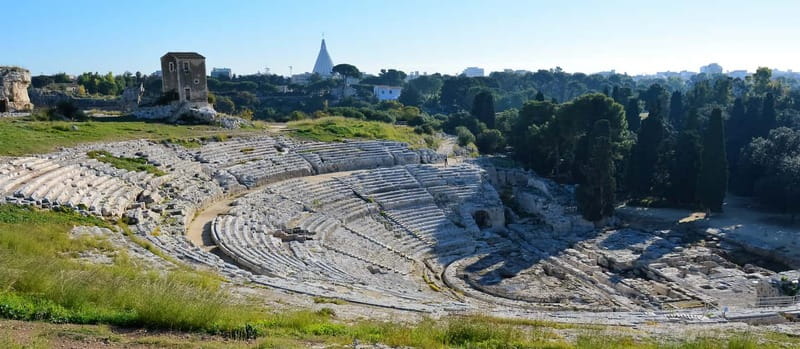
- Greek Theater and the view toward the Ionian Sea
- Paradise Latomia and the Ear of Dionysius
- The Roman Amphitheater and Syracuse’s changing rulers
- Ortigia and the Temple of Apollo option
- Syracuse Cathedral and the Temple of Athena
- The guides make the difference
- What the $317.20 group price buys you
- Family groups, mobility, and weather
- Is this Syracuse tour worth booking?
- FAQ
- How long does the Syracuse and Ortigia tour last?
- Where does the tour start?
- Can the tour start at the Temple of Apollo?
- Where does the tour end?
- Are monument entrance fees included?
- Is transportation included?
- How many people can join the private tour?
- Which languages are available?
- Can children or wheelchair users join?
Key points to know before booking
- Two sides of Syracuse in one walk: See the archaeological park and historic Ortigia rather than choosing between them.
- The Cathedral contains a Greek temple: Syracuse Cathedral incorporates the ancient Temple of Athena, creating one of Sicily’s most unusual religious buildings.
- Private groups up to five: You can ask questions, slow down for children, or spend more time on the sites that interest you most.
- Greek Theater and Ionian Sea views: The park combines major monuments with an open, scenic setting.
- Headsets are provided: You should be able to follow the guide more easily around busy or open-air sites.
- Bring water and a hat: Comfortable shoes matter, since this is a walking tour through archaeological grounds and old streets.
Why this Syracuse pairing works so well
Many city tours force you to choose between ancient ruins and the historic center. This one gives you both. The Neapolis Archaeological Park explains Syracuse as a major Greek power, while Ortigia shows how later centuries reused, altered, and built around that earlier city.
I like the historical range. You are not looking at isolated ruins with no connection to modern life. The guide can tie religious practice, theater, warfare, architecture, and daily life together as you move from the park to the island.
The private format matters here. Ancient Syracuse raises plenty of questions: Why was a pagan temple built into a Christian cathedral? What was the Ear of Dionysius used for? How did the city change under Roman, Arab, and Spanish rule? With only your own group, you can ask as you go.
The tour is advertised at three hours, though some private visits have lasted three and a half to four hours when the guide and group continued through both areas. Treat three hours as the planned time, not a promise that the walk will always run longer. If you have a firm lunch booking, train, or ship departure, allow extra time.
More Walking Tours in Sicily
- Palermo: NO Mafia Walking Tour
★ 4.8 · 2,431 reviews - Palermo Original Street Food Walking Tour by Streaty
★ 5.0 · 2,105 reviews - Palermo: Street Food and History Walking Tour
★ 4.9 · 1,294 reviews
Starting at Neapolis Archaeological Park
The meeting point is the Biglietteria Parco Archeologico Neapolis on Via Luigi Bernabò Brea in Syracuse. Your guide meets you at the ticket office holding a sign with the local partner’s name. A second listed starting option is the Temple of Apollo, so check your confirmed meeting details carefully rather than assuming you should wait at Ortigia.
The park is the serious opening chapter of the tour. You begin among the remains of ancient Syracuse, where the scale of the site helps explain why the city was once a major Mediterranean capital. The guide’s job is especially useful here because the ruins do not always explain themselves. A good explanation turns broken walls, carved stone, and excavated spaces into a picture of public life and religious practice.
Entrance tickets are not included in the tour price. A recent booking detail put the archaeological park admission at about 13 euros per person, but you should confirm the current fee when reserving. The tour includes a licensed guide and headsets, not monument admission, food, drinks, transport, or hotel pickup.
Greek Theater and the view toward the Ionian Sea
The Greek Theater is one of the park’s main rewards. You can see how the site used its natural setting, and the view toward the Ionian Sea adds something a museum cannot provide. This is a place where the guide’s explanation of ancient performances and civic life gives the stone seating a human purpose.
Bring your camera, but do not let the photo stop become the whole visit. The theater is best understood as part of Syracuse’s public world, not only as a scenic overlook. Ask your guide about how Greek theater fitted into religious festivals and city life. The supplied tour description specifically connects the walk with early Greek history, architecture, and religious customs.
The open-air setting also means sun can become a factor. Wear a hat and bring water, as requested in the practical instructions. Comfortable shoes are important throughout the park, even though the activity is listed as wheelchair accessible.
Paradise Latomia and the Ear of Dionysius
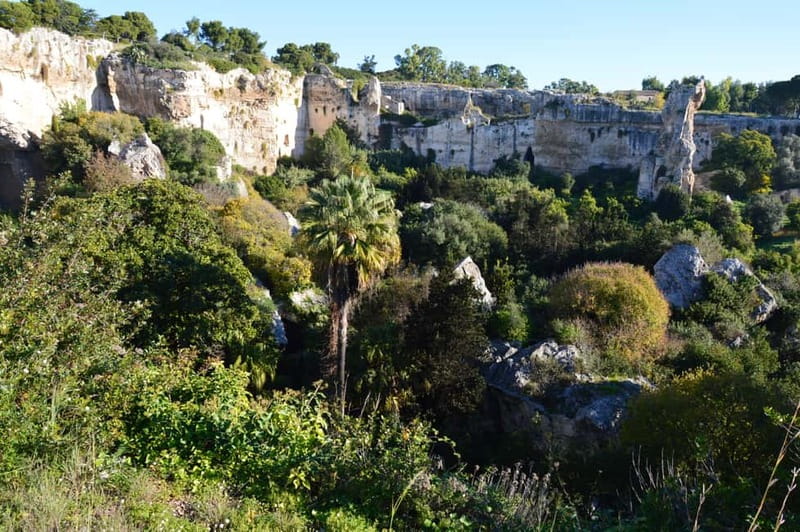
The route continues to Paradise Latomia, a large ancient stone quarry, and the Ear of Dionysius. These places add a darker note to the tour. The quarry was not simply a source of building material. It also helps you think about prisoners, labor, and the harsher side of ancient power.
The Ear of Dionysius is particularly memorable because its shape encourages stories about sound and surveillance. This is a good point to ask your guide which details are supported by history and which belong to later tradition. Guides such as Giuseppe and Marcelo have been praised for using legends and colorful stories while still giving the larger historical setting.
This part of the park benefits from a live explanation. On your own, you may see an impressive cavern and move on. With a guide, you get a clearer sense of how the quarries fit into Syracuse’s military and civic story. If you are touring with teenagers, this is one of the places most likely to hold their attention because the setting feels physical and dramatic.
More Sicily walks with a guide:
- Palermo No Mafia walking tour: discover the Anti-mafia culture in Sicily
★ 5.0 · 1,011 reviews - Catania: Heart of the City Guided Walking Tour
★ 4.6 · 708 reviews - Catania: City Highlights Walking Tour
★ 4.7 · 666 reviews - Palermo: Private Custom Walking Tour with Local Guide
★ 4.7 · 661 reviews
The Roman Amphitheater and Syracuse’s changing rulers
The Roman Amphitheater shows that Syracuse did not end with Greek rule. The city was later shaped by Rome and by Arab and Spanish control, and the tour follows that long sequence instead of presenting Syracuse as a single-period site.
The guide can help you compare the Roman monument with the Greek Theater. The two spaces reflect different public traditions and different political eras. That comparison is more useful than seeing each ruin as an unrelated stop.
The tour description calls out two ancient theaters, referring to the Greek Theater and the Roman Amphitheater. Expect the guide to explain their contrasting roles and periods. The park is broad enough that your walking pace matters, particularly if someone in your group moves slowly. One private group specifically appreciated having a guide who adjusted to older walkers, so mention mobility needs when arranging the visit.
Ortigia and the Temple of Apollo option
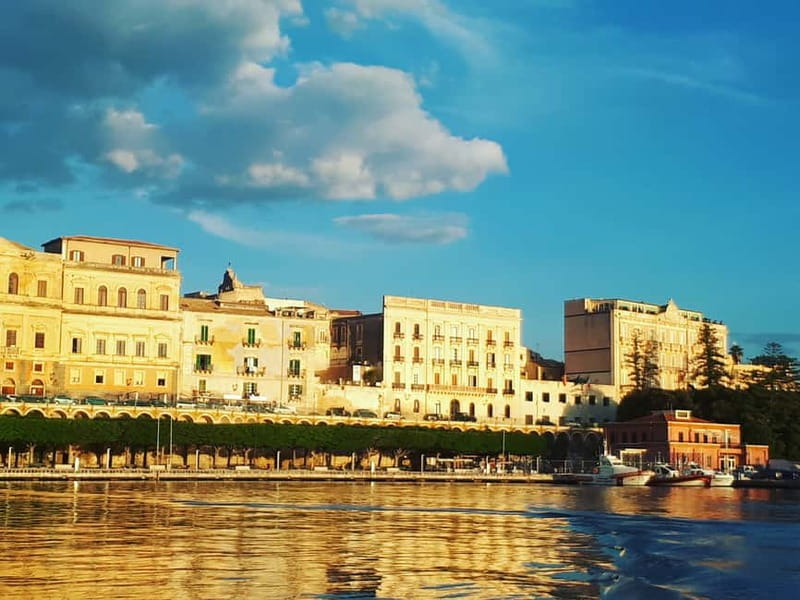
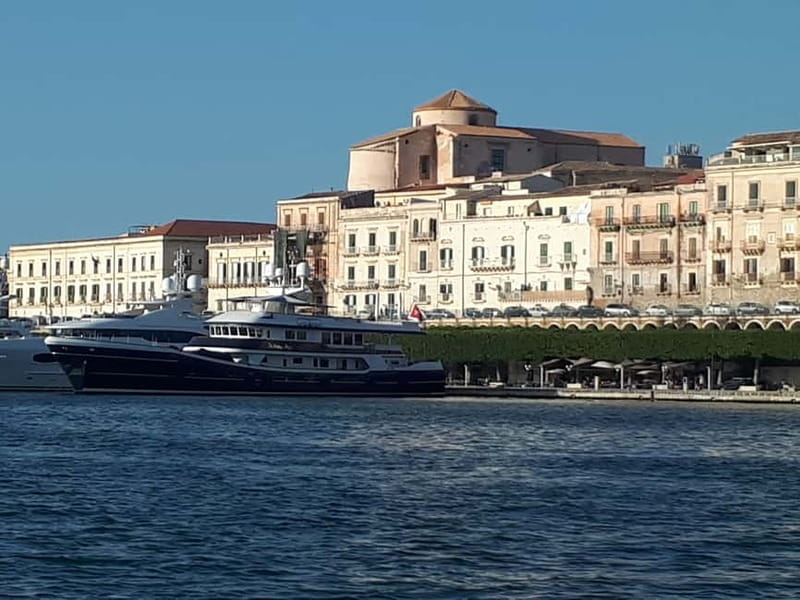
After the archaeological park, the experience shifts to Ortigia. The island is compact, pale, and full of old lanes, but the point is not simply to wander pretty streets. The guide uses the route to show how Syracuse’s historic center grew over earlier layers.
The Temple of Apollo is listed as one possible starting point and is also a useful reference for understanding Ortigia’s ancient past. Depending on the confirmed route and meeting arrangement, you may encounter this area at the beginning or as part of the transition into the island. Confirm the day’s exact sequence with the local partner.
Ortigia’s streets can feel like a maze, which is precisely why a guide helps. You will not need to spend your limited time constantly checking a map. Instead, you can pay attention to the details around you and ask how the island’s Greek, Roman, Arab, and Spanish periods affected its buildings and identity.
The tour ends with two listed drop-off possibilities, Ortigia or the Neapolis Archaeological Park. The general meeting information also says the activity ends back at the meeting point. Since those details do not perfectly match, confirm your end point before booking onward transport. Some private groups have used a short taxi ride between the park and Ortigia, but pickup and drop-off are not included.
Syracuse Cathedral and the Temple of Athena
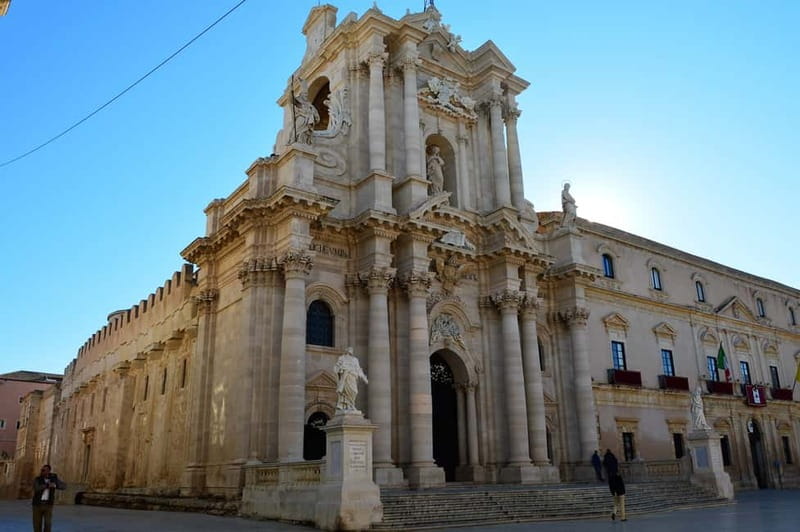
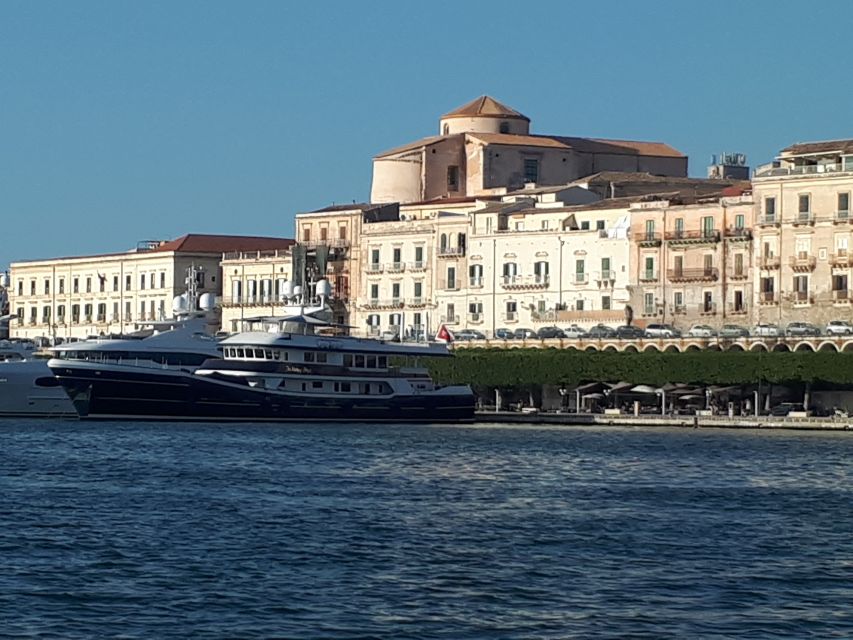
The Cathedral of Syracuse is the architectural centerpiece of the Ortigia portion. Its most striking feature is not just its pale stone facade or interior. The building incorporates the pagan Temple of Athena, so you can see ancient Greek columns and later Christian construction joined in one place.
That combination makes the Cathedral more than a standard church visit. It gives you a direct lesson in how cities reuse older sacred spaces. The guide is expected to explain the building’s different architectural styles and the shift from pagan worship to Christianity.
I would give this stop time for questions. Ask your guide to point out which elements belong to the ancient temple and which came later. The supplied tour information does not state that Cathedral admission is included, and monument entrance fees generally are not part of the price, so check what your visit requires.
The guides make the difference
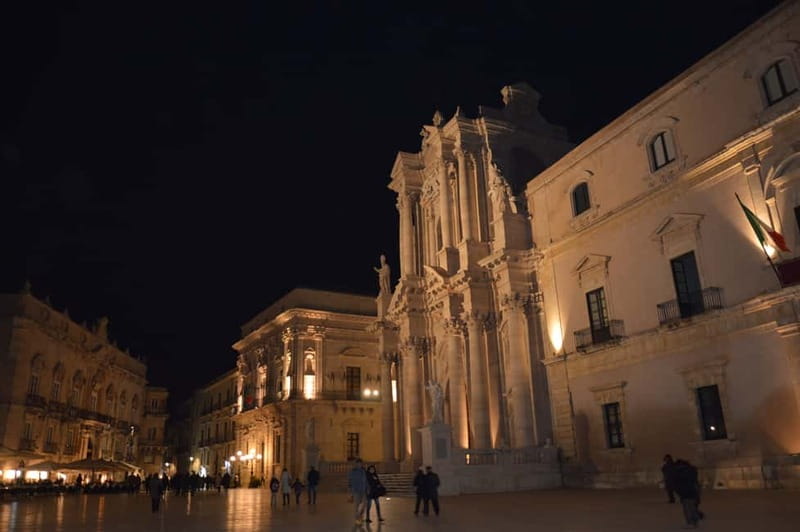
The tour assigns a licensed guide, with live guiding available in English, French, Italian, Russian, Spanish, and German. Guide quality matters greatly on an archaeological walk, and the strongest named guides have clear strengths.
Anna is described as both organized and lively, with strong knowledge of local history, architecture, and art. She has also been praised for confirming the meeting time in advance, adapting to children, and keeping the pace smooth in poor weather.
Giuseppe brings enthusiasm, stories, and a strong command of Syracuse’s past. He has guided groups through both the park and Ortigia, answered a steady stream of questions, and kept his energy even when rain arrived in the island portion. If you have teenagers, his interactive storytelling may be a good fit.
Marcelo has a particular interest in archaeology and has covered Syracuse from its Greek beginnings through Roman, Arab, and Spanish periods. Laura is described as friendly and open to questions, while Rosanna brings attention to the city’s continuing Greek identity.
You cannot usually choose a specific guide with certainty, so book this experience for the private structure and subject rather than for one individual by name. Still, the repeated praise for Anna and Giuseppe gives you a useful sense of the guiding style to expect: personal, story-based, and ready to adjust to questions.
What the $317.20 group price buys you
The price is $317.20 per group of up to five people. For five people, that works out to roughly $63.44 each before entrance fees. For two people, the per-person cost is much higher, so the value depends heavily on your group size.
You are paying for a private licensed guide, a focused route, and the ability to shape the conversation around your own interests. That is worthwhile if you want history explained clearly, have children or older relatives, or are short on time in Syracuse.
You are not paying for park tickets, food, drinks, or transportation. Add those costs to your planning. The tour also does not include hotel pickup or drop-off. If you are arriving by ship or train, confirm the meeting point and allow time to reach the park ticket office.
The booking terms are useful for uncertain plans. You can reserve now and pay later, and cancellation is free up to 24 hours before the tour for a full refund. Check availability for starting times, since the exact schedule varies.
Family groups, mobility, and weather
Children of all ages can join. The guide is expected to involve both parents and children, and the private setting makes it easier to pause or change the level of explanation. A family with curious teenagers may especially enjoy the theaters, quarry, and Ear of Dionysius.
Wear walking shoes, a hat, and water. That advice is simple but important in an exposed archaeological park followed by old urban streets. A sudden rainstorm can also affect the Ortigia portion, so a light rain layer is sensible even though one is not listed as required.
The activity is marked wheelchair accessible. Since the route includes archaeological grounds, old streets, and historic monuments, confirm the exact route and any access needs in advance. The private format gives the guide more room to respond to your group, but it does not change the physical character of the sites.
Is this Syracuse tour worth booking?
I would book this tour if you want the ancient park and Ortigia explained as one connected story. It is especially useful for families, groups of up to five, first-time visitors, and anyone who values the chance to ask a local guide detailed questions.
I would think twice if you are traveling alone on a tight budget, want only a quick look at the ruins, or dislike paying separately for admission. The $317.20 price is easier to justify when divided among four or five people.
The best booking strategy is to confirm the start location, end point, current entrance fees, and available language before paying. Bring water, wear sensible shoes, and keep a little flexibility in your schedule. With those details settled, this is a strong way to connect Syracuse’s Greek Theater and quarries with Ortigia’s Cathedral, Temple of Athena, and winding streets.
FAQ
How long does the Syracuse and Ortigia tour last?
The planned duration is three hours. Some private visits have lasted three and a half to four hours, but you should plan around the stated three-hour schedule.
Where does the tour start?
The main meeting point is the Biglietteria Parco Archeologico Neapolis on Via Luigi Bernabò Brea, 96100 Siracusa. Your guide meets you at the ticket office with a sign showing the local partner’s name.
Can the tour start at the Temple of Apollo?
The activity lists two possible starting locations, including the Temple of Apollo. Check your confirmed booking details for the exact meeting location.
Where does the tour end?
The listed drop-off options are the Island of Ortigia and Parco Archeologico Neapolis. The meeting information also says the activity ends back at the meeting point, so confirm the exact end point before arranging transport.
Are monument entrance fees included?
No. Entrance fees are not included in the tour price. A booking detail specifies about 13 euros per person for the archaeological park, but confirm the current admission cost.
Is transportation included?
No. Pickup and drop-off are not included, and food and drinks are also excluded. A short taxi ride has been used between the archaeological park and Ortigia by some private groups, but you arrange and pay for transport separately.
How many people can join the private tour?
The price covers a private group of up to five people.
Which languages are available?
Live guiding is available in English, French, Italian, Russian, Spanish, and German.
Can children or wheelchair users join?
Children of all ages can join, and the guide will involve both parents and children. The activity is listed as wheelchair accessible. Contact the provider in advance to discuss the route and your specific access needs.
Recently reviewed around Sicily
- Sicilian Cooking Class★ 5.0 · 289 reviews
- Discover Palermo in 3 hours. Art, history, markets and street food★ 5.0 · 352 reviews
- Palermo : Private Custom Walking Tour with a Local Guide★ 4.5 · 237 reviews
- Palermo No Mafia walking tour: discover the Anti-mafia culture in Sicily★ 5.0 · 1,011 reviews
- Palermo’s Delight: Unleash the Secrets of Pizza and Gelato Making★ 5.0 · 497 reviews
- Palazzo Conte Federico★ 5.0 · 650 reviews
- Night Street Food Tour of Palermo with a Local -For real foodies!★ 5.0 · 486 reviews
- Wanna be Sicilian: Palermo Cooking Class and Market Tour★ 5.0 · 197 reviews
Walking Tours, compared.

Guided Walking Tour & Last Supper Visit with Ticket
Read our review →
Rialto Bridge & Offbeat Unusual Venice Walking Tour
Read our review →
Private 3 hrs Venice Tour: St Mark’s, Walking tour & Boat tour
Read our review →

Skip the line: Uffizi and Accademia Small Group Walking Tour
Read our review →
Trastevere & Campo de Fiori Street Food Walking Tour
Read our review →Browse the lists this tour appears in