
Review · NAPLES & POMPEII TOURS
Naples: San Lorenzo Maggiore and Neapolis Sotterrata Ticket
Naples keeps its oldest city under your feet, and this visit lets you walk down into it. Ten meters below San Lorenzo Maggiore, an ancient road leads through the remains of Neapolis, including the old Macellum market. Above ground, Gothic rooms, Franciscan frescoes, and a museum carry the story forward into the nineteenth century. The underground market is the star.
I like the contrast between the cool, shadowy ruins and the bright decoration upstairs. I also like the modest price: at $10, you get the cloister, Chapter Hall, Sisto V Hall, museum, and underground site, while the basilica is free. The main caution is scale. Neapolis Sotterrata is fascinating but fairly limited, so do not expect the larger underground network shown in some Naples tours.
In This Review
- Key points at a glance
- Why San Lorenzo Maggiore is worth your time
- Finding the entrance at Piazza San Gaetano
- The cloister and the medieval rooms
- The free basilica and Franciscan decoration
- Descending into Neapolis Sotterrata
- Why the guided option may be worth €2
- The museum, from classical Naples to the nineteenth century
- How long should you allow?
- Who will enjoy this visit most?
- Price, practical value, and small cautions
- Should you book San Lorenzo Maggiore?
- FAQ
- Where does the San Lorenzo Maggiore visit begin?
- How much does the ticket cost?
- What does the ticket include?
- Is the Basilica of San Lorenzo Maggiore included?
- How far underground does the route go?
- What can I see at Neapolis Sotterrata?
- Is a guide included?
- Which languages are available?
- How long is the ticket valid?
- Is the activity wheelchair accessible?
- Can I cancel the booking?
Key points at a glance
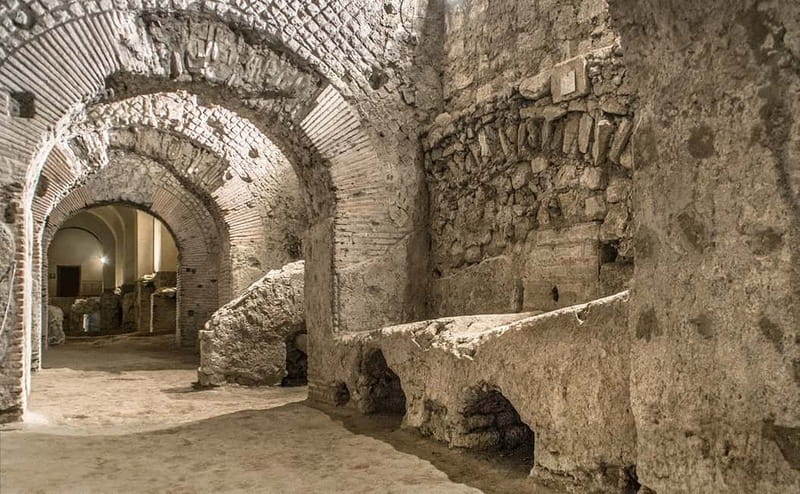
- Ten meters below street level: Walk along an ancient road and see the remains of the Greek-Roman city founded in 470 B.C.
- The Macellum market: The old commercial center gives the underground visit its clearest sense of place.
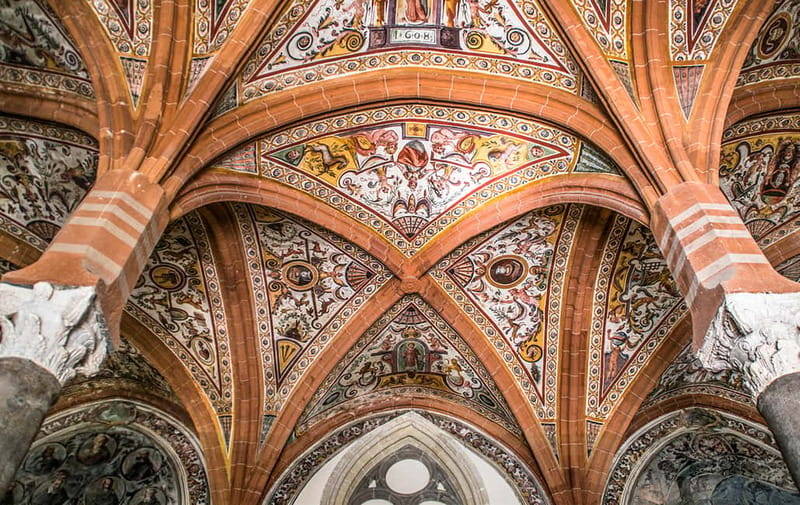
- Franciscan art upstairs: Sisto V Hall has striking ceiling frescoes, while the Chapter Hall keeps its late-fourteenth-century Gothic character.
- A useful museum stop: Exhibits trace Naples from the classical age to the nineteenth century, with old relics and a detailed cross-section of the city’s past.
- Independent or guided: A free audio guide is available to download on site, and a guided tour costs an extra €2.
- Good rainy-day choice: The complex offers enough indoor material for a worthwhile afternoon, with a cool underground section on hot days.
Why San Lorenzo Maggiore is worth your time
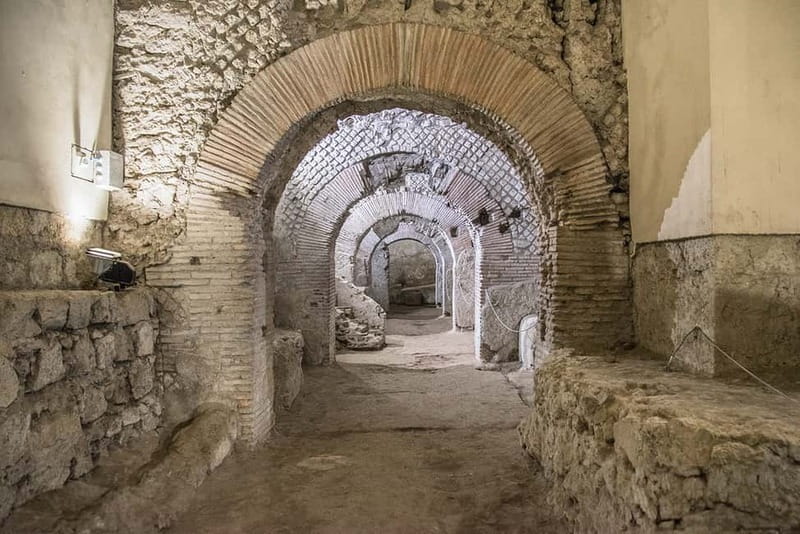
The appeal here is not one grand monument. It is the physical layering. You begin in the historic center of Naples, enter a Franciscan religious complex, pass through medieval rooms, and then descend beneath the church into a much older city.
That change happens quickly. One moment you are looking at frescoes and Gothic stonework. Soon after, you are beside ancient masonry and an old commercial street. I find that kind of progression more useful than a museum label alone because you can see how Naples was built one period over another.
The $10 admission is good value if you want several smaller sights in one stop. The underground ruins alone may take around half an hour, depending on your pace, but the ticket also covers the cloister, Chapter Hall, Sisto V Hall, and museum. Plan on giving the full complex more time than the underground section requires.
The basilica itself is free to enter, so you can also see the church without buying the full ticket. The paid admission makes most sense if you want the archaeological area and the rooms of the complex rather than only a quick look inside the church.
More Naples & Pompeii trips worth a second look
- Naples: Naples Underground Entry Ticket and Guided Tour
★ 4.4 · 21,781 reviews - Pompeii: Entry Ticket and Guided Tour with an Archaeologist
★ 4.8 · 19,459 reviews - Pompeii: Entry Ticket with Optional Audio Guide
★ 4.2 · 12,360 reviews
Finding the entrance at Piazza San Gaetano
The entrance is at Piazza San Gaetano, 316, in the center of Naples. This detail matters because navigation apps may guide you past the entrance instead of directly to it. I would use the stated address and look carefully for the entrance to the complex rather than trusting GPS alone.
The activity begins and ends at the same place. There is no transportation included, so you make your own way to the piazza. Since the ticket is valid for one day, you have some flexibility around your visit time, but you should check availability for the available starting times when booking.
The listed host languages are English and Italian. The visit can be done independently, and a free audio guide is available to download on site. That is a useful option, but allow a little patience with the download process. If it does not work on your phone, you can still walk through the site, though the underground remains are much easier to understand when someone explains what you are seeing.
For a clearer interpretation, consider the guided tour available on site for €2. That small extra cost can make a real difference in the archaeological section, where ancient walls and foundations are not always self-explanatory.
The cloister and the medieval rooms

Start above ground, where the complex gives you a sense of its religious and architectural character. The cloister provides a calmer transition from the busy city outside. It is not just a passage to the excavation. It helps you understand that this is a working historic complex with several periods gathered together.
The Chapter Hall has a late-fourteenth-century Gothic portal. Look for the shape and stone detail of the entrance before moving inside. The Gothic character here is a useful counterpoint to the Roman remains below. You are seeing the medieval layer of Naples rather than only its ancient one.
The room is sometimes referred to as the Chamber Hall in descriptions of the complex, while the Chapter Hall is identified by its Gothic portal. Either way, the point is the same: give the room more than a quick walk-through. The architecture is one of the quieter pleasures of the visit.
You will also pass through the Sisto V Hall, where Franciscan decoration takes over. The ceiling frescoes are among the strongest visual moments in the complex. Their color and scale offer a sharp contrast to the plain, weathered surfaces underground.
The hall is especially worthwhile for people who enjoy the connection between art and religious institutions. You are not looking at isolated paintings in a gallery. The frescoes remain tied to the building and its former use, which gives them a stronger sense of place.
The free basilica and Franciscan decoration
The Basilica of San Lorenzo Maggiore has free entry, while the ticket covers the wider complex and archaeological site. I would take advantage of that distinction and visit the church as part of the same stop.
The basilica adds another layer to the experience. You can look at the Franciscan setting before or after the paid rooms, then compare the church’s atmosphere with the Sisto V Hall and the underground excavation. The visit works best when you treat these areas as connected parts of Naples rather than separate attractions.
Do not rush straight to the stairs leading below. The above-ground rooms explain why the site matters as a complex. Ancient Naples is important, but so are the later communities that built over it, worshipped here, and decorated the rooms you see today.
A different way to spend the day, same part of Italy:
- Pompeii: Small Group Tour with an Archaeologist
★ 4.8 · 12,264 reviews - From Naples: Pompeii Ruins & Mount Vesuvius Day Tour
★ 4.3 · 11,459 reviews - From Naples: Sorrento, Positano and Amalfi Full-Day Tour
★ 4.6 · 10,988 reviews - From Naples: Sorrento, Positano & Amalfi Coast – Small Group Tour
★ 5.0 · 8,643 reviews
Descending into Neapolis Sotterrata
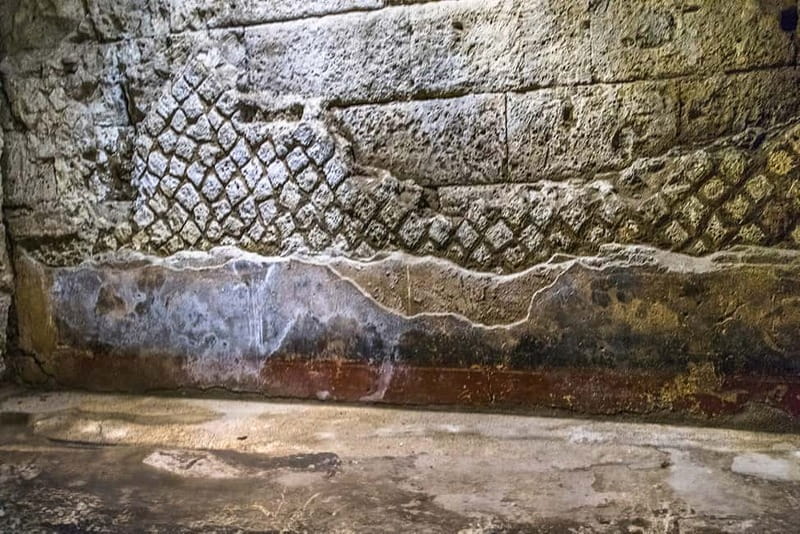
The biggest moment comes when you go about 10 meters underground. Here you reach the remains of Neapolis, the old Greek-Roman city founded in 470 B.C. The change in atmosphere is immediate: the archaeological section is cooler, darker, and more stripped back than the decorated rooms above.
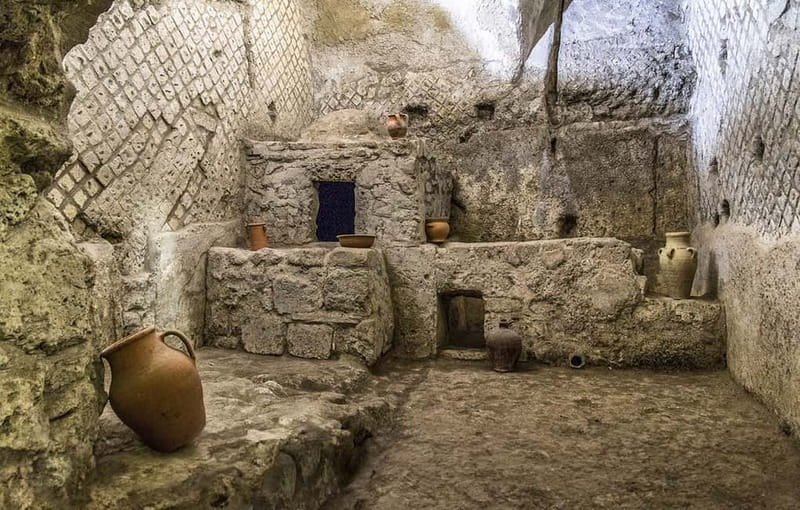
The route includes an ancient road and the remains of the Macellum, the commercial heart of the old city. A market is easier to picture than an anonymous foundation, and that is why this section has such appeal. You are not only looking at scattered stones. You are following the footprint of a place where goods were sold and daily city life took place.
The Roman market is described as more than a thousand years old, but the site’s story reaches back to the Greek foundation of Neapolis and continues through later Roman use. That long time span is what makes the descent worthwhile. The stones below are not a single frozen moment.
Keep your expectations sensible. This is not the full underground Naples experience, and you will not see every major ancient structure associated with the city. In particular, the amphitheatre is not part of this route. The archaeological area is limited in size, but it has enough detail to reward a careful walk.
Some of the best moments come from small discoveries: the line of the road, the layout of the market, and recovered artefacts that help fill in the picture. Without an audio guide or explanation, those details can look like ordinary ruins. With context, they become evidence of how the old city functioned.
Why the guided option may be worth €2
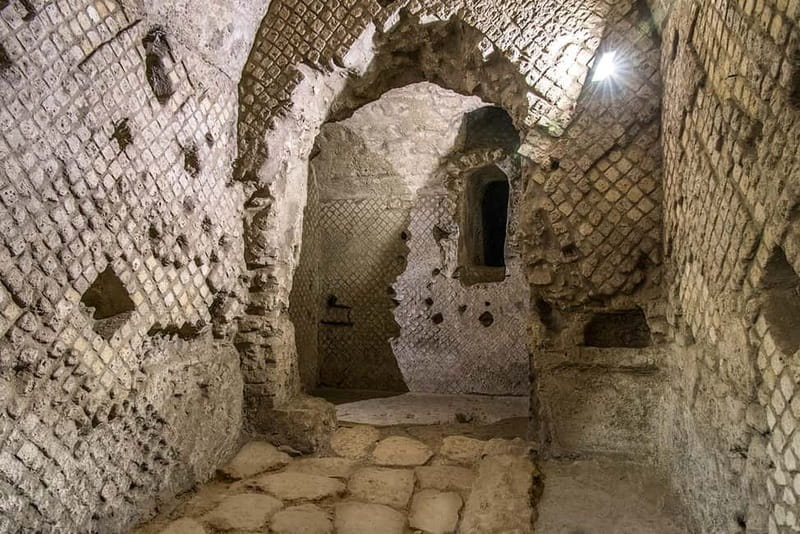
The standard ticket lets you explore independently, and the free audio guide is a practical way to add context. Still, I would seriously consider paying the extra €2 for the guided tour if an English-language session is available and convenient.
The archaeological site is not always obvious at first glance. A guide can point out what was part of the market, explain the ancient road, and connect the underground remains to the city above. That is especially helpful if you have little background in Greek or Roman urban planning.
The quality of the spoken explanation may depend on the guide and language session available. English interpretation has not always been equally clear, so check that you can follow comfortably before committing to the add-on. If you prefer to set your own pace, take the audio guide instead.
You can also combine the two approaches in spirit: move slowly, read every available description, and use the downloadable guide if your phone accepts it. Bring comfortable shoes and clothes, since the visit includes stairs and a change in temperature underground.
The museum, from classical Naples to the nineteenth century
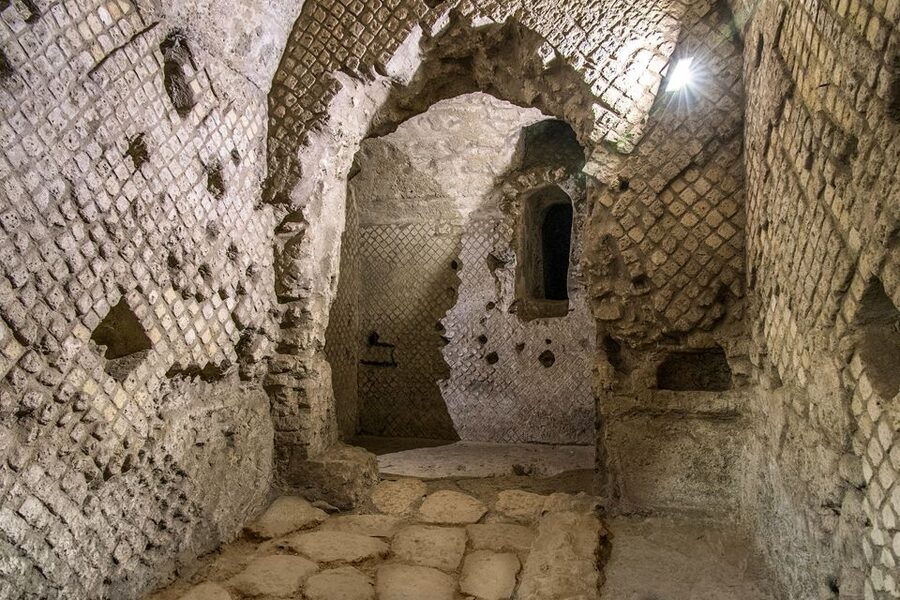
Save time for the museum. It is easy to treat it as an afterthought once you have seen the market below, but it provides the broadest view of the city’s long story.
The collection presents Naples from the classical age through the nineteenth century. That range helps connect the ancient ruins to the later buildings, religious spaces, and urban life you have just encountered. Old relics give you objects to focus on, while the wider displays show how the city changed over roughly two thousand years.
The museum is also a good place to slow down after the underground section. The archaeological area can feel compact and visually dense. The museum gives you time to absorb what you saw and place it within a larger sequence.
Set aside more time here than you might expect. If you only want the underground market, you can finish quickly. If you want the full ticket’s value, the museum is essential rather than optional.
How long should you allow?
The ticket is valid for one day, but the supplied duration is not a fixed guided itinerary. Your timing depends on whether you join the €2 tour, use the audio guide, and stop to study the museum and frescoes.
For a quick visit, you might focus on the underground ruins and main rooms. For a more satisfying visit, allow a relaxed afternoon. One useful strength of the complex is that it can fill a rainy day without requiring outdoor movement from one sight to another.
The underground area is also a welcome break in hot weather. The cooler conditions below are pleasant, though you still want shoes that are comfortable for walking over an archaeological route and clothes that allow easy movement.
Because the activity returns to the same meeting point and does not include transport, it is easy to fit into a day in central Naples. You can visit the basilica and complex as one stop, then continue with other nearby plans.
Who will enjoy this visit most?
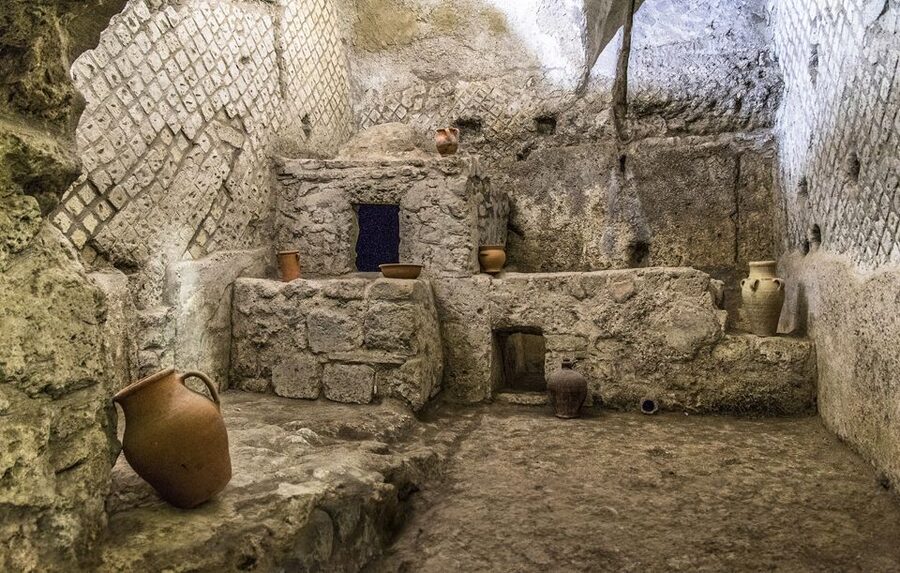
I would recommend San Lorenzo Maggiore to you if you like archaeology but prefer a compact site with several historical periods in one place. It suits people who want to see how Greek, Roman, medieval, Franciscan, and later Naples overlap.
It is also a strong choice for art lovers who want more than ruins. The Sisto V Hall and Chapter Hall give the visit visual variety, while the museum provides a wider historical frame.
Families and independent sightseers may appreciate the short, flexible format. You can move at your own pace, use the audio guide, or add the brief guided tour. The site is wheelchair accessible, though the underground route and its physical layout may still be worth confirming with the venue if you have specific mobility needs.
I would be less likely to recommend it as your only Naples archaeology experience if you want a large underground network or a long, highly theatrical tour. The ruins are rewarding, but they do not cover every famous ancient feature beneath the city.
Price, practical value, and small cautions
At $10 per person, the ticket offers solid value because it combines several areas rather than charging only for the excavation. The cloister, two historic halls, museum, and Neapolis Sotterrata give you different kinds of experience within one complex.
The basilica’s free entry improves the value further. You can see the church without adding another fee, then decide if the paid sections match your interests.
The main weakness is not price but expectation. The phrase underground Naples can suggest a much larger, partly flooded subterranean tour. This ticket is specifically for the ancient city beneath San Lorenzo Maggiore, including the market and road. Know that distinction before booking, and you are more likely to appreciate the site for what it offers.
The audio guide is free, but downloading it on site may not work smoothly for every phone or browser. If interpretation matters to you, ask about the €2 guided option or prepare to read the site information carefully.
Free cancellation up to 24 hours before the visit and reserve-now-pay-later booking make the ticket easier to fit into a changing Naples schedule. Those policies are useful, but the real decision is whether you want a compact archaeological stop or a much longer underground tour.
Should you book San Lorenzo Maggiore?
Book it if you want a reasonably priced, varied visit in central Naples. The ancient market is the main reason to come, but the Gothic portal, Franciscan frescoes, cloister, basilica, and museum make the ticket far more worthwhile than a short look at ruins alone.
I would add the €2 guided tour when possible, especially if you are unfamiliar with ancient Roman markets. If you prefer independence, download the free audio guide on site, but leave enough time for the museum and do not rely on GPS to find the entrance.
Skip it only if your priority is a much larger underground route or a dramatic amphitheatre experience. For an intimate look at the city below San Lorenzo, followed by art and architecture above it, this is a smart and flexible Naples stop.
FAQ
Where does the San Lorenzo Maggiore visit begin?
The entrance is at Piazza San Gaetano, 316, in Naples. The activity ends back at the same meeting point.
How much does the ticket cost?
The listed price is $10 per person.
What does the ticket include?
It includes the San Lorenzo Maggiore Complex, the cloister, Chapter Hall, Sisto V Hall, museum, and entry to Neapolis Sotterrata.
Is the Basilica of San Lorenzo Maggiore included?
Entry to the basilica is free. The paid ticket covers the wider complex and underground archaeological site.
How far underground does the route go?
The route descends 10 meters underground.
What can I see at Neapolis Sotterrata?
You can walk along an ancient road and see the remains of the Macellum, an old Greek-Roman market and former commercial center of the city.
Is a guide included?
A free audio guide is available to download on site. A guided tour can be booked on site for €2.
Which languages are available?
The listed languages are English and Italian.
How long is the ticket valid?
The ticket is valid for one day. Check availability for the available starting times.
Is the activity wheelchair accessible?
Yes, the activity is listed as wheelchair accessible.
Can I cancel the booking?
You can cancel up to 24 hours in advance for a full refund. Reserve-now-pay-later booking is also available.
Recently reviewed around Naples & Pompeii
- Pompeii Skip-the-line Tour with Archaeologist Guide★ 5.0 · 559 reviews
- Sharing Tour of Pompeii★ 5.0 · 487 reviews
- Skip the Line Guided Tour of Pompeii led by an Archaeologist★ 5.0 · 703 reviews
- Visit in Pompeii – Pompeii Private Tour with Ada★ 5.0 · 436 reviews
- Pompeii Private Tour with an Archaeologist and Skip The Line★ 5.0 · 391 reviews
- Private Day Tour to Vesuvius, Herculaneum & Pompeii with Pick Up★ 5.0 · 279 reviews
- Pompeii Private Tour with an Archaeologist and Skip The Line – 3 hours★ 5.0 · 564 reviews
- Pompeii Vineyard Escape: Private Wine Tasting & Lunch★ 5.0 · 329 reviews
Naples & Pompeii Tours, compared.
Naples Underground Entry Ticket and Guided Tour
Read our review →
Entry Ticket and Guided Tour with an Archaeologist
Read our review →



Sorrento, Positano and Amalfi Full-Day Tour
Read our review →
Sorrento, Positano & Amalfi Coast – Small Group Tour
Read our review →
Catacombs of San Gennaro Entry Ticket & Guided Tour
Read our review →Browse the lists this tour appears in