
Review · POMPEII & VESUVIUS TOURS
Herculaneum: Tickets & Tour with a Local Archaeologist
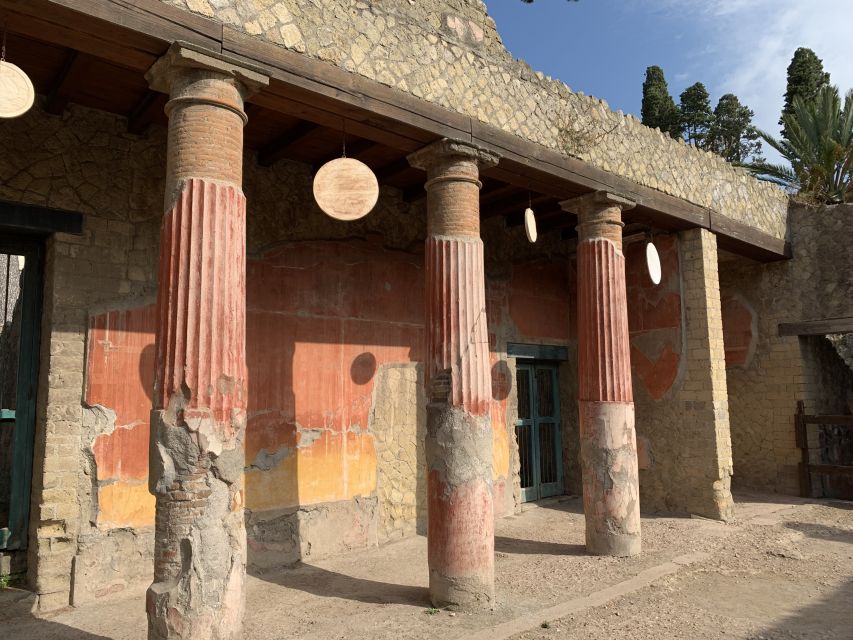
Herculaneum gives you something Pompeii often cannot: an ancient Roman town that still feels almost startlingly whole. Wooden doors, furniture, carbonized food and upper floors survived here, sealed by the eruption of Mount Vesuvius in 79 AD. A local archaeologist helps you read those remains as a real neighborhood, not just a field of broken walls.
I like the tour’s small-group feel and its sharp two-hour route through the site’s best-preserved houses. I also like the human focus, especially at the boat houses, where skeletons reveal the final moments of people seeking safety. The main drawback is pace: two hours is enough for a strong introduction, but not for every corner, and a busy site can make it hard to hear unless you stay close to the guide.
In This Review
- Key points to know before you book
- Why Herculaneum feels different from Pompeii
- Meeting at Biglietteria Ercolano
- Casa dei Cervi and the feel of a Roman villa
- Casa di Nettuno ed Anfitrite and household decoration
- The Sacellum of the Augustales and public life
- House of Skeletons and the human cost of the eruption
- Casa dell’Albergo and the scale of the town
- Public baths, shops and the engineering behind daily life
- Two hours on site: what the pace really means
- Is $58 a fair price?
- Who should choose this Herculaneum tour?
- Final call: book it if you want the ruins to make sense
- FAQ
- Where does the Herculaneum tour meet?
- How long does the tour last?
- Is entrance to Herculaneum included?
- Which languages are available?
- Does the tour include hotel transportation?
- Is the tour suitable for wheelchair users?
- Can I cancel the booking?
Key points to know before you book
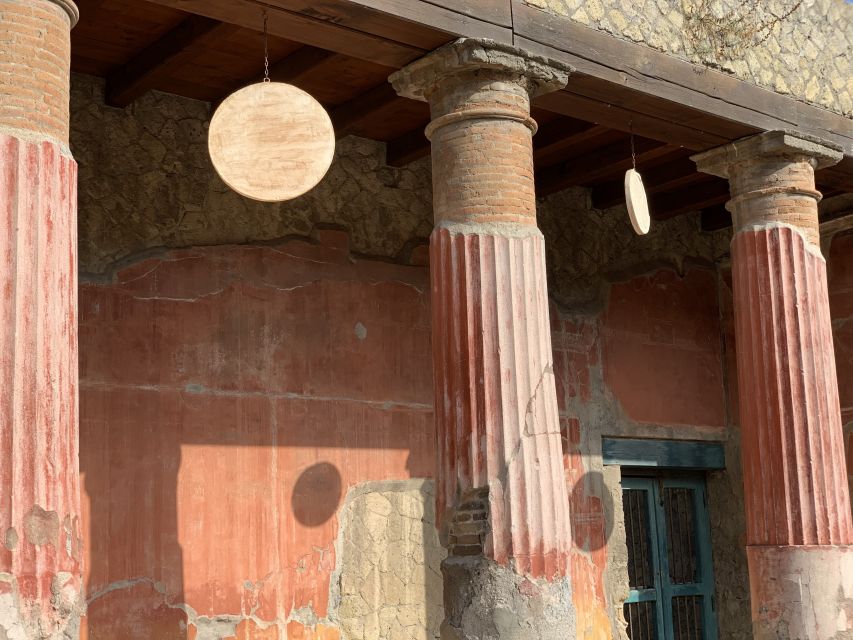
- The upper floors are the star: Herculaneum’s surviving architectural details make ancient homes easier to picture than at many Roman sites.
- The boat houses add a solemn note: The skeletons are an important archaeological detail, but this part of the visit may be upsetting for some children.
- Raffaele, Riccardo, Enrica and other guides have led this route: The assigned guide varies, but the tour is built around a licensed local expert.
- The two-hour plan is focused: You visit major houses, baths, shops and public buildings without wandering aimlessly.
- Late afternoon can be especially pleasant: One 4 pm visit found the site quiet enough to hear the guide clearly.
- This is not a wheelchair-accessible tour: The paths and stairs rule it out for wheelchair users, and electric wheelchairs are not permitted.
Why Herculaneum feels different from Pompeii
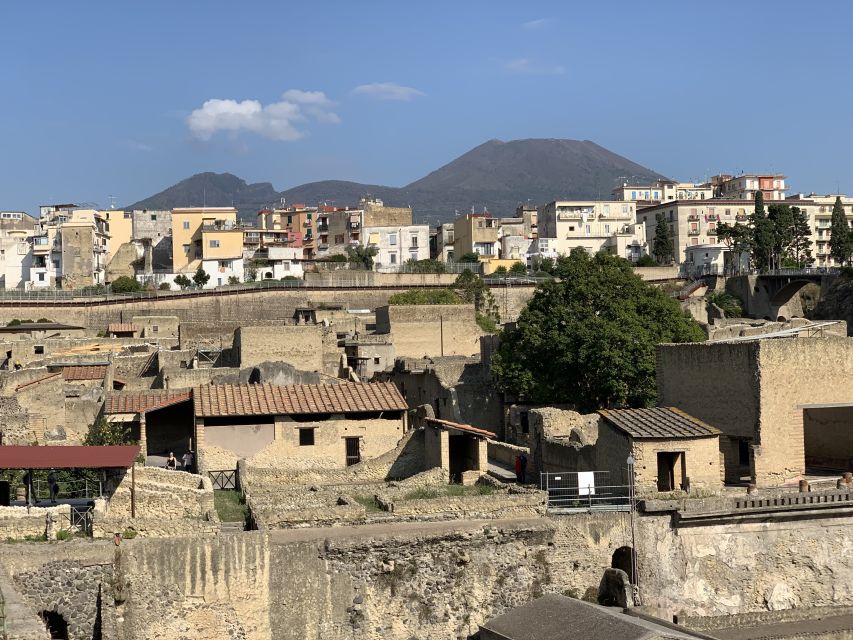
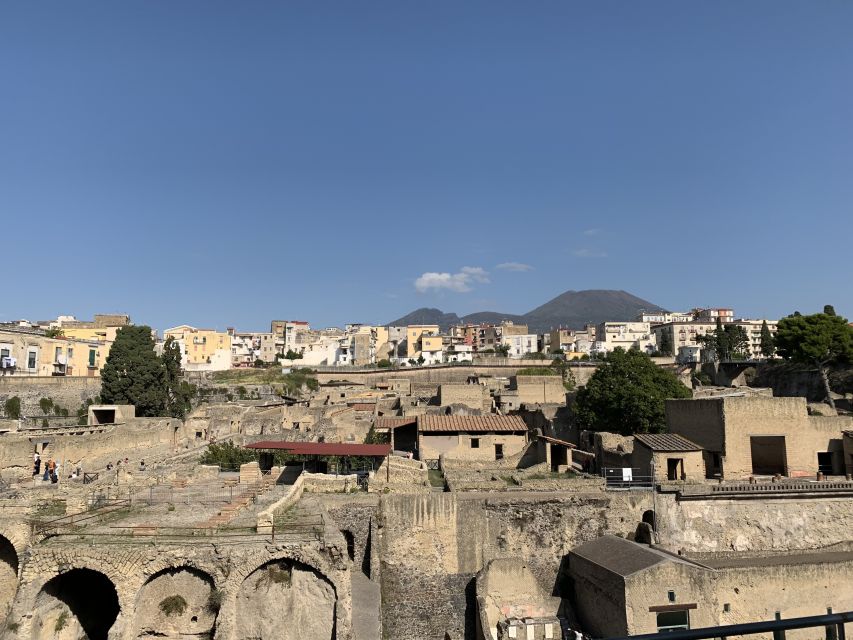
Herculaneum was a Roman seaside town smaller than Pompeii, and its remains have a more intimate scale. You can walk along original cobbled streets and look into homes where walls, floors and household fittings survive with unusual clarity.
The difference comes from the eruption. Pompeii was covered mainly by falling ash and pumice, while Herculaneum was buried under very hot volcanic material. That material sealed the town quickly and, in many places, preserved organic objects that normally vanish: wood, beds, doors, furniture and food.
That does not make Herculaneum simply a better Pompeii. Pompeii is much larger and gives you a broader sense of an ancient city. Herculaneum offers something more concentrated. In two hours, you can grasp how houses were arranged, how public spaces worked and how ordinary life ended in an instant.
A guide matters here because the best details are not always the biggest ones. A door hinge, a water channel, a shop counter or a patch of wall paint can tell you more about daily life than a grand monument. Guides such as Raffaele, who has advanced archaeological training, and Riccardo, praised for connecting Roman word roots to modern language, have been especially good at turning small details into useful stories.
More Naples & Pompeii trips worth a second look
- Naples: Naples Underground Entry Ticket and Guided Tour
★ 4.4 · 21,781 reviews - Pompeii: Entry Ticket and Guided Tour with an Archaeologist
★ 4.8 · 19,459 reviews - Pompeii: Entry Ticket with Optional Audio Guide
★ 4.2 · 12,360 reviews
Meeting at Biglietteria Ercolano
You meet at the ticket office, called Biglietteria Ercolano, and should arrive 10 minutes before the scheduled start. The tour does not include hotel pickup or drop-off, so you arrange your own way to the site.
This meeting point is practical because the guide can handle the entrance process and lead you directly into the archaeological area. Skip-the-line entry saves time, though you should still allow a few minutes to find the ticket office and get settled before the group moves.
Bring water and a passport or ID card. Food and drinks are not included, and the site involves walking over old streets and uneven paths. Wear shoes that feel secure underfoot. The tour information does not promise seating or shade, so water is a sensible addition, especially in warm weather.
The tour is offered in English, Spanish, Italian and French. A private group option is available. For larger groups, headsets are supplied when there are more than 11 people, though one recent experience noted that noise sometimes made parts of the talk difficult to hear. Stay near the guide and ask for a repeat if needed.
Casa dei Cervi and the feel of a Roman villa
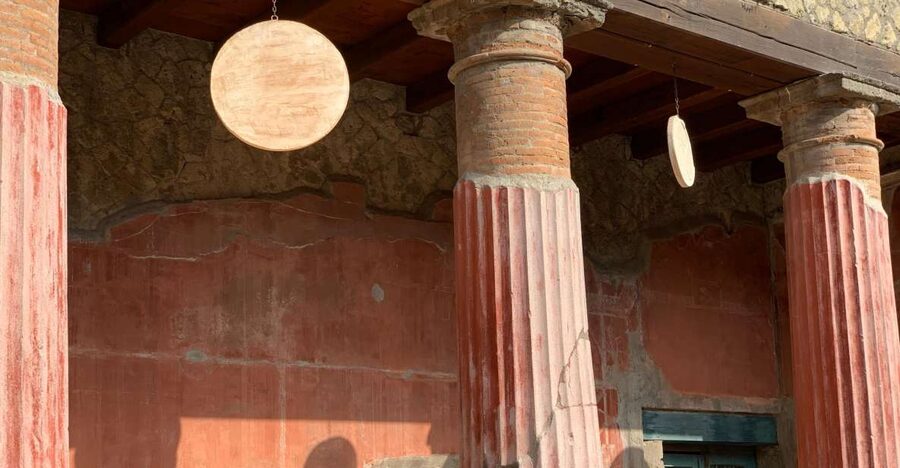
The first major stop is the Casa dei Cervi, or House of the Deer. This elegant residence helps explain why Herculaneum was more than a working town. The name comes from its deer sculptures, and the house is associated with a spacious, refined style of Roman living.
Here, you begin to see why the site rewards a guide. An archaeologist can point out how the rooms relate to one another, where a home opened toward light and air, and how decoration signaled the owner’s social position. Without that help, you might notice beautiful walls and floors but miss the way the house functioned.
This is also a good place to listen for the guide’s approach. The strongest guides on this experience use stories about residents and their routines rather than reciting long strings of dates. Enrica, Carlo, Giovanni, Livio and Ornella have all been praised for friendly, lively explanations, but your guide will depend on the day.
The house is visually rewarding, yet it is still a ruin under conservation rules. You do not stroll freely through every room or touch the surfaces. The tour gives you a selected view, which keeps the visit moving but means you may want extra time afterward if the site is open for independent exploring.
Casa di Nettuno ed Anfitrite and household decoration
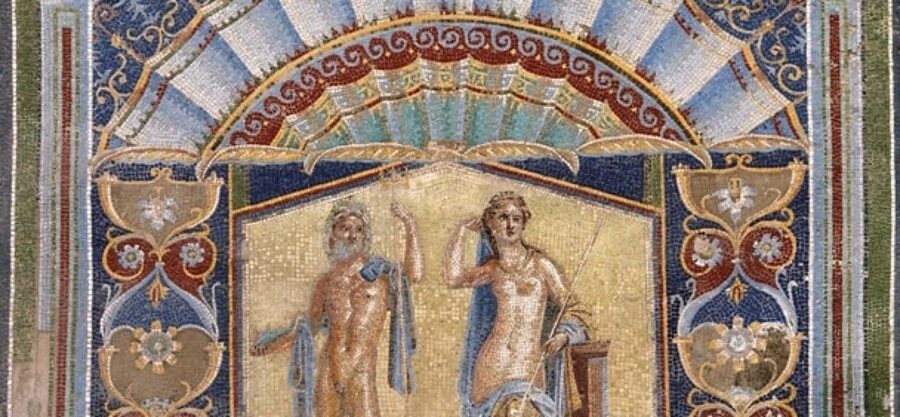
The Casa di Nettuno ed Anfitrite, or House of Neptune and Amphitrite, is one of the route’s most memorable stops. Its name refers to its striking wall decoration, including a mosaic associated with Neptune and Amphitrite.
This is where Herculaneum’s preservation becomes easy to understand. The colors and patterns offer a clearer sense of Roman taste than a bare foundation ever could. You can look at the walls and floors and imagine a home designed to impress, not merely shelter its occupants.
A guide can also explain the difference between what you are seeing in place and what has been removed for protection or display elsewhere. That context helps you avoid a common mistake at archaeological sites: judging an ancient building only by its surviving decoration.
One practical point is that art quality varies across both Pompeii and Herculaneum. If you visit Pompeii first, you may find some of Pompeii’s frescoes more impressive. Herculaneum’s strength is not that every painting is the finest Roman artwork you will see. Its strength is the combination of decoration, intact architecture and household detail.
A different way to spend the day, same part of Italy:
- Pompeii: Small Group Tour with an Archaeologist
★ 4.8 · 12,264 reviews - From Naples: Pompeii Ruins & Mount Vesuvius Day Tour
★ 4.3 · 11,459 reviews - From Naples: Sorrento, Positano and Amalfi Full-Day Tour
★ 4.6 · 10,988 reviews - From Naples: Sorrento, Positano & Amalfi Coast – Small Group Tour
★ 5.0 · 8,643 reviews
The Sacellum of the Augustales and public life
The Sacellum of the Augustales was linked to the Augustales, a group connected with the worship of the emperor. This stop shifts the story from private homes to public and civic life.
It is a useful contrast with the villas. Herculaneum was made up of households, but it also had shared institutions and public rituals. The building gives you a glimpse of how religion, local status and Roman politics could overlap.
This is also a place where an archaeological guide can prevent confusion. Ancient religious spaces do not always look like the grand temples modern visitors expect. A short explanation of the building’s purpose makes its surviving walls and decoration far easier to read.
The tour’s route works well because it moves between different kinds of evidence: a wealthy home, a decorated residence, a civic building and later the baths and waterfront. You are not asked to spend two hours looking at one type of ruin.
House of Skeletons and the human cost of the eruption
The House of Skeletons brings the visit closer to individual lives. Its name refers to human remains found at the site, and the stop helps explain why Herculaneum can feel more immediate than a typical ruin.
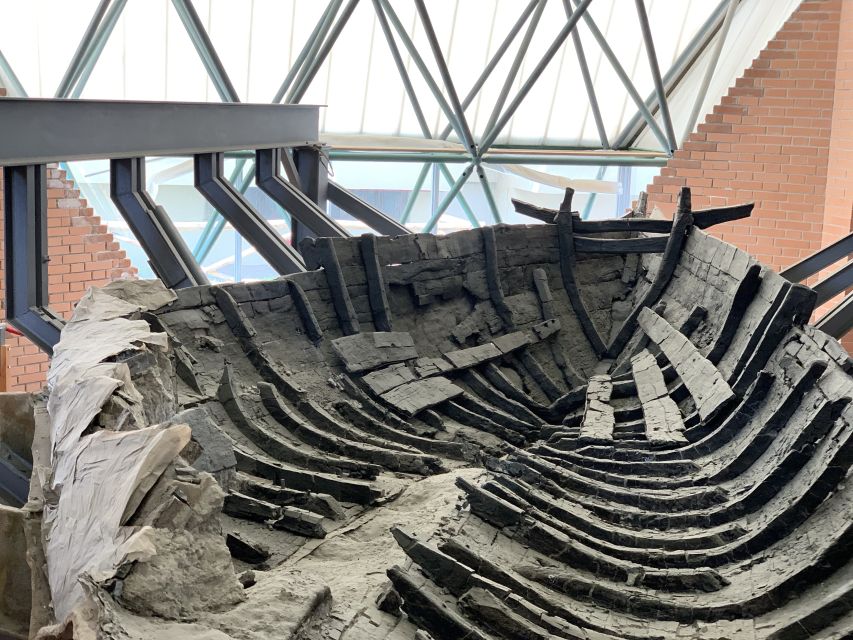
The most haunting evidence appears at the boat houses near the ancient shoreline. People had sought refuge there during the eruption, but the volcanic surge reached them. The skeletons remain a solemn reminder that this was not an abstract disaster recorded only in texts. Families and individuals were caught in it.
I appreciate the fact that this part of the visit calls for a quieter tone. You may also notice the contrast with Pompeii, where plaster casts of bodies often draw crowds and cameras. At Herculaneum, the remains can feel less theatrical and more difficult to process.
This stop may not suit every child. The tour is family-friendly in its storytelling, and one family with children aged 11 and 15 found the site captivating, but younger visitors may need a calm explanation before seeing human remains. The guide can provide the archaeological setting without turning the scene into spectacle.
Casa dell’Albergo and the scale of the town
Casa dell’Albergo is another important residence on the route. Its name can lead to confusion, since the building is not simply a modern-style hotel. The guide helps place it within the town’s housing and social pattern.
By this point, you should have a better sense of how Herculaneum’s homes differed in size and status. Some were built for comfort and display, while others reveal more modest arrangements. That contrast is one reason a guided visit works better than a quick photo stop.
Look for the relationship between the street and the building interior. Roman homes were not sealed off from public life in the way you might assume. Doorways, shops and work areas brought commercial and social activity close to domestic space.
The route does not promise every famous room in the site, so you should treat Casa dell’Albergo as part of a larger picture rather than a single grand climax. The value lies in seeing how the town fits together.
Public baths, shops and the engineering behind daily life
The itinerary also includes the public baths, shops and taverns that once gave Herculaneum its daily rhythm. These places can be easy to skip on your own, since they may lack the immediate visual pull of a painted villa.
Do not rush past them. The baths show Roman engineering at work, including water management and the systems that supported bathing. Shops and taverns reveal how people bought food, met one another and carried out ordinary business.
This is where guides often add their best practical detail. They can point out plumbing, counters, room layouts and marks of use that do not look important until someone explains them. One of the strongest features of this experience is the connection between archaeology and modern life, including links between Roman words and language used today.
You also get a better sense of class. A wealthy house is impressive, but a town’s shops, baths and water systems show how a wider community operated. They give the tour social range.
Two hours on site: what the pace really means
Two hours is a good length for a first visit. It is long enough to cover the main route without making the ancient streets feel like a full-day endurance test. One family of five found that the time allowed them to cross the site and understand the town during its Roman heyday.
Still, the schedule has limits. If your guide spends extra time answering questions or adapting the route to your interests, you may see fewer locations. A small group makes that flexibility possible, and several guides have adjusted explanations for the group’s level of knowledge, but it can also mean a slower pace.
If you want to inspect every mosaic, photograph every doorway or read every sign, plan to remain afterward if site rules and opening hours allow. The guided portion gives you a framework. Independent time lets you linger.
Timing may affect the experience as much as the guide. A late afternoon start, such as 4 pm, can be quieter than the busiest part of the day. That makes it easier to hear, take photographs and pause at the waterfront remains. Starting times vary, so check availability when booking.
Is $58 a fair price?
At $58 per person, this is not the cheapest way to enter Herculaneum. You are paying for skip-the-line admission and two hours with a licensed archaeologist, not just a ticket.
I consider the price reasonable if this is your first visit or if ancient sites tend to blur together for you. Herculaneum has many details that are hard to interpret from a printed description. A guide can explain why a room matters, what a feature may have been used for and how the eruption changed the evidence.
The value is strongest for couples, families and small groups who want to ask questions. It is also a good choice if you have already visited Pompeii and want help understanding the differences between the two sites.
The value is weaker if you prefer slow, solitary exploration or already have strong archaeological training. In that case, you may resent the fixed two-hour route. You are also paying for a guide whose quality matters greatly, even though the overall record of this experience has been very strong. Names frequently associated with especially effective tours include Raffaele, Riccardo, Carlo, Enrica, Livio, Giovanni and Ornella, but no specific guide is guaranteed.
The reserve-now, pay-later option can help if your Campania schedule is still shifting. Free cancellation is available up to 24 hours before the tour for a full refund, according to the booking terms.
Who should choose this Herculaneum tour?
I would choose this experience for:
- First-time visitors who want the site explained clearly
- Families with older children and teenagers
- Anyone visiting Pompeii and wanting a smaller, better-preserved contrast
- People interested in daily Roman life, not only emperors and monuments
- Visitors who value stories, context and the chance to ask questions
- Travelers with a tight schedule who want a focused introduction
I would look for another format if you use a wheelchair, since the tour is not suitable for wheelchair users and electric wheelchairs are not allowed. I would also think twice if you dislike uneven paths, stairs or walking for two hours.
Language should not be a concern if you need English, Spanish, Italian or French. If a strong accent makes it hard for your children to follow, stay close, use the headset when supplied and ask the guide to repeat key points.
Final call: book it if you want the ruins to make sense
Book this tour if you want Herculaneum to feel like a lived-in town rather than a collection of preserved walls. The best part is not simply seeing a mosaic or a Roman street. It is learning how the pieces fit together, from water systems and public baths to family homes and the people who fled to the shore.
At $58, the tour earns its price through expert interpretation and efficient entry. Just remember that two hours offers a well-shaped introduction, not an exhaustive study. If you want a quiet visit with time for every detail, go at a less crowded hour and stay on after the guide finishes. If you want the clearest first look at Herculaneum, this is a strong choice.
FAQ
Where does the Herculaneum tour meet?
The meeting point is the Biglietteria Ercolano ticket office. You should arrive 10 minutes before the tour begins.
How long does the tour last?
The guided experience lasts two hours. Starting times vary, so check availability for your chosen date.
Is entrance to Herculaneum included?
Yes. The price includes skip-the-line entrance tickets and a guided tour with a licensed guide.
Which languages are available?
The live tour guide is available in English, Spanish, Italian and French.
Does the tour include hotel transportation?
No. Hotel pickup and drop-off are not included, so you must make your own way to and from the meeting point.
Is the tour suitable for wheelchair users?
No. The experience is not suitable for wheelchair users, and electric wheelchairs are not allowed.
Can I cancel the booking?
You can cancel up to 24 hours in advance for a full refund. A reserve-now, pay-later option is also available.
Recently reviewed around Naples & Pompeii
- Pompeii Skip-the-line Tour with Archaeologist Guide★ 5.0 · 559 reviews
- Sharing Tour of Pompeii★ 5.0 · 487 reviews
- Skip the Line Guided Tour of Pompeii led by an Archaeologist★ 5.0 · 703 reviews
- Visit in Pompeii – Pompeii Private Tour with Ada★ 5.0 · 436 reviews
- Pompeii Private Tour with an Archaeologist and Skip The Line★ 5.0 · 391 reviews
- Private Day Tour to Vesuvius, Herculaneum & Pompeii with Pick Up★ 5.0 · 279 reviews
- Pompeii Guided Group Tour with Entry Ticket and Archaeologist★ 4.5 · 269 reviews
- Pompeii Private Tour with an Archaeologist and Skip The Line – 3 hours★ 5.0 · 564 reviews
Pompeii & Vesuvius Tours, compared.

Entry Ticket and Guided Tour with an Archaeologist
Read our review →




Pompeii Small Group Tour with an Archaeologist
Read our review →
Pompeii, Amalfi Coast and Positano Day Trip from Rome
Read our review →Browse the lists this tour appears in