

Review · POMPEII & VESUVIUS TOURS
PompeiI Exclusive Tour with your Archaeologist in a Small Group
Pompeii is easier to understand when someone can explain why a building mattered, how archaeologists identified it, and what daily life looked like before Vesuvius erupted. This two-hour walk with an archaeology guide moves through the city’s main public spaces, homes, shops, baths, and theater without asking you to figure out the ruins alone.
I like the small-group format, which allows time for questions and keeps the guide close. I also like the focus on interpretation: guides such as Ricardo, Raffaele, Antonio, and Ornella have been praised for explaining evidence, Roman customs, and excavation work rather than simply naming buildings.
The main catch is price clarity. The $30.25 tour fee does not include the €19 adult admission ticket to Pompeii, and some visitors have found the ticket arrangement confusing. The two-hour route also leaves out major areas, such as the amphitheater and brothels on some departures.
In This Review
- Key points to know before booking
- Why a guide helps at Pompeii
- Meeting at Porta Marina Superiore
- The western entrance and Pompeii’s sacred heart
- The Forum, Jupiter, and the view toward Vesuvius
- The Macellum and Pompeii’s plaster casts
- Forum Baths and the thermopolium
- The House of the Faun and changing access
- Via dell’Abbondanza and the theater
- What the two-hour route covers, and what it does not
- Price, ticket details, and practical value
- Who should book this Pompeii walk?
- Should you book it?
- FAQ
- Is the Pompeii entrance ticket included?
- Where does the tour meet?
- How long does the experience last?
- Is the tour offered in English?
- How large is the group?
- Can I cancel for a full refund?
Key points to know before booking
- An archaeologist leads the walk: Guides including Ricardo, Raffaele, Antonio, Ornella, and PierLuigi are noted for clear explanations and lively storytelling.
- The route begins at Porta Marina Superiore: Meet outside the park at Via Villa dei Misteri 1, looking for the Pompeii Vip sign.
- The Forum anchors the tour: You’ll visit the temples, basilica, Macellum, baths, and main square that formed Pompeii’s public center.
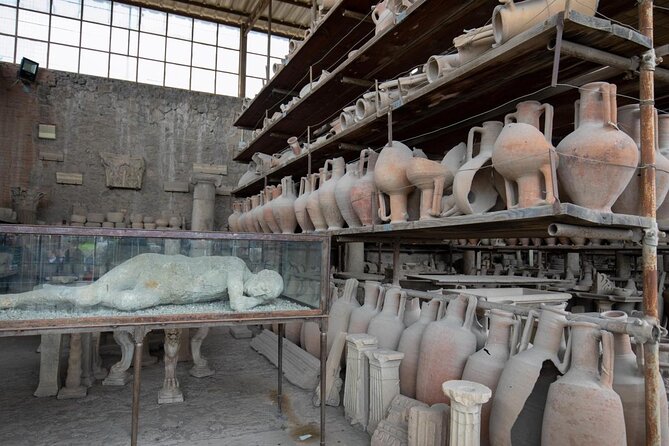
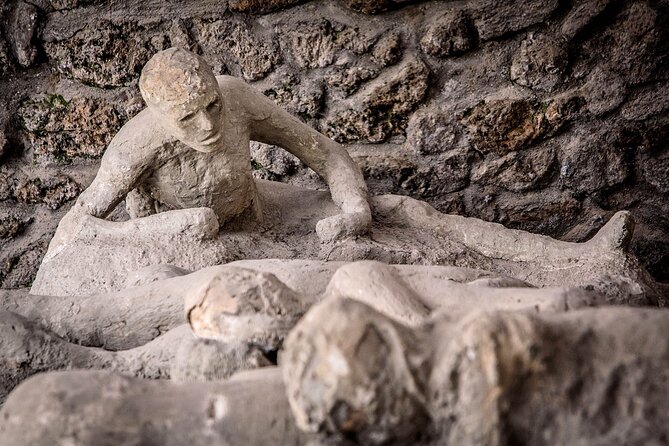
- Plaster casts may be part of the visit: At the Macellum, you can see casts made from cavities left by victims of the eruption.
- The group can include up to 15 people: That is smaller than a large coach tour, but it is not a private tour.
- Bring practical footwear and allow extra time: Pompeii’s uneven streets call for comfortable shoes, and you may want time before or after the tour to explore independently.
Why a guide helps at Pompeii
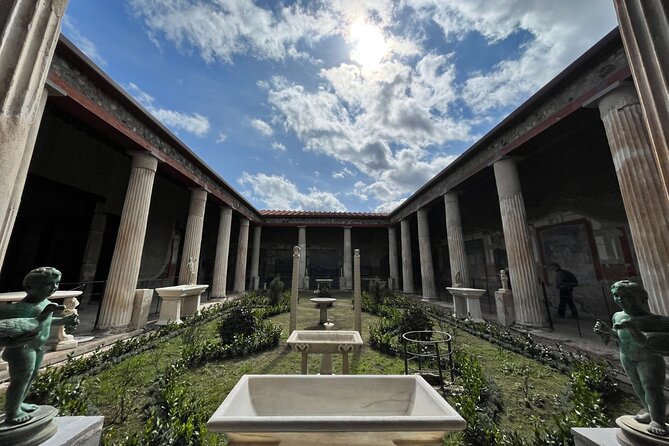
Pompeii can look like a field of broken walls if you arrive without context. The city is large, many buildings are partly ruined, and access to individual houses can change with seasonal openings and closures. A good guide gives you a clear route and helps turn fragments into a picture of Roman life.
This tour is led by an authorized guide with expertise in archaeology. The strongest part of that setup is not simply knowing the names of temples. It is being able to explain how archaeologists work out a building’s purpose, how plaster casts were made, and what details reveal the habits of people who lived here.
Ricardo is praised for connecting words and customs to Latin, Greek, and Roman culture. Raffaele is noted for mixing clear facts with humor. Antonio has been especially good at adjusting the final part of the walk to group interests, while Ornella has received praise for storytelling that brings ordinary Roman life into focus.
The guide normally speaks directly to the group, and one review specifically appreciated not having to rely on distorted earphones. Still, equipment can vary. One visitor reported a faulty earpiece that was not replaced, so tell the guide at once if you cannot hear.
Other Naples & Pompeii days travellers weigh against this one:
- Naples: Naples Underground Entry Ticket and Guided Tour
★ 4.4 · 21,781 reviews - Pompeii: Entry Ticket and Guided Tour with an Archaeologist
★ 4.8 · 19,459 reviews - Pompeii: Entry Ticket with Optional Audio Guide
★ 4.2 · 12,360 reviews
Meeting at Porta Marina Superiore
The meeting point is outside Pompeii Archaeological Park at Via Villa dei Misteri 1, 80045 Pompei. The guide waits by Porta Marina Superiore with a sign reading Pompeii Vip.
This western gate once connected the city with the road toward the sea. That detail gives the entrance a useful starting point: Pompeii was not an isolated ruin but a working town tied to roads, trade, public business, religion, and food supply.
The tour has a separate priority line arrangement, but the park admission is still extra. The tour fee is the payment for joining the guided experience, not the entrance ticket. The afternoon before your visit, the operator sends a link for buying the skip-the-line park ticket online, or you can buy the ticket on site with assistance.
You should confirm that you have the correct ticket before entering. Adults pay €19, while admission is free for visitors under 18. That makes the advertised $30.25 price look attractive at first, but an adult should budget for both charges.
The western entrance and Pompeii’s sacred heart
From Porta Marina, the route moves toward the city’s public center. The first major stop is the Temple of Venus, dedicated to Pompeii’s patron goddess. Its position near the entrance helps show how religion and civic identity were linked.
Next comes the Basilica, one of the Forum’s grandest buildings. It was used for business and the administration of justice, so it offers a useful counterpoint to the temples. Here, the guide can help you picture Pompeii as a place of contracts, disputes, commercial deals, and public decisions, not just a collection of old stones.
The Sanctuary of Apollo follows. It was among Pompeii’s oldest places of worship and occupied a strategic point on the road from Porta Marina to the Forum. This is a good moment to notice the way the city’s main roads guided people toward its civic center.
The Forum, Jupiter, and the view toward Vesuvius
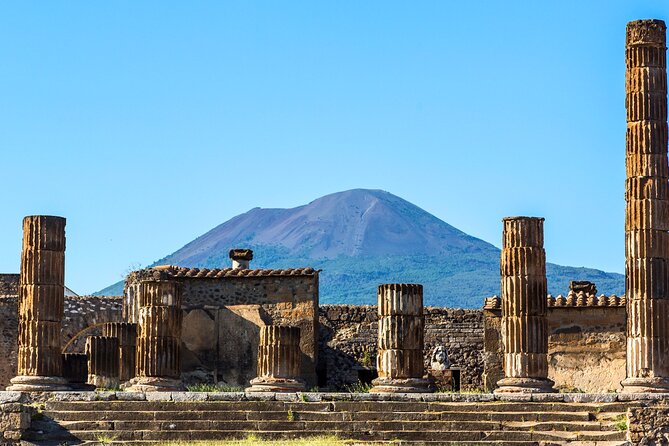
The Forum was the center of daily life in Pompeii. It was surrounded by important religious, political, and commercial buildings, and it remains one of the clearest places to understand the city’s layout.
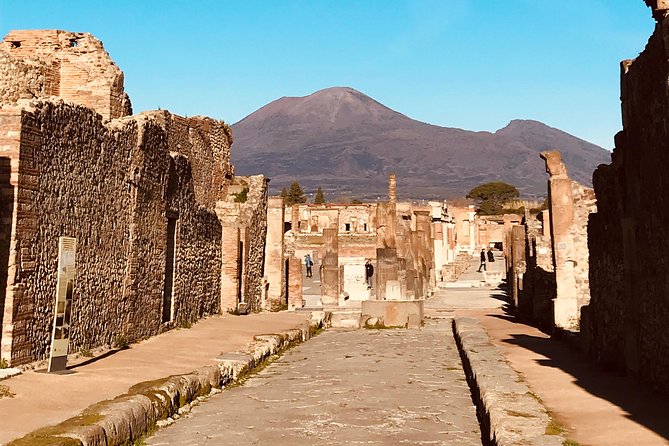
The Temple of Jupiter dominates the northern end of the square. Behind it, Vesuvius rises dramatically, a view that links the ancient city with the eruption that buried it. Your guide can give the setting meaning, but you should also pause for your own photographs here.
The route spends roughly ten minutes at each listed stop. That keeps the walk moving, but it also means you should not expect a long, detailed visit inside every building. The value is the connected story: sacred buildings, legal business, public space, food markets, bathing, homes, roads, and entertainment.
A different way to spend the day, same part of Italy:
- Pompeii: Small Group Tour with an Archaeologist
★ 4.8 · 12,264 reviews - From Naples: Pompeii Ruins & Mount Vesuvius Day Tour
★ 4.3 · 11,459 reviews - From Naples: Sorrento, Positano and Amalfi Full-Day Tour
★ 4.6 · 10,988 reviews - From Naples: Sorrento, Positano & Amalfi Coast – Small Group Tour
★ 5.0 · 8,643 reviews
The Macellum and Pompeii’s plaster casts
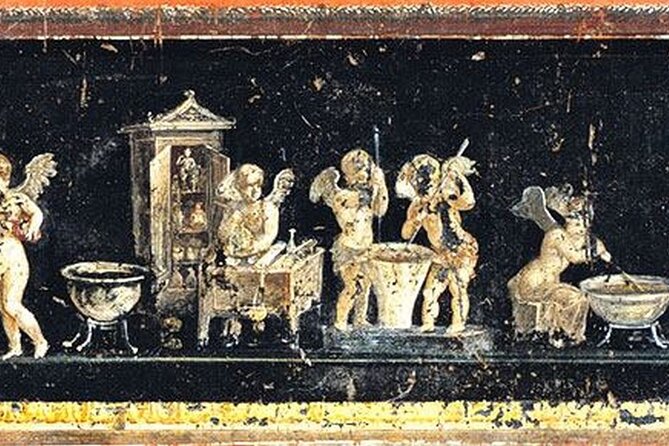
The Macellum was a monumental food market where people bought daily supplies and consumer goods. It is one of the stops that helps you see the practical side of Pompeii. Ancient cities ran on regular shopping, food preparation, and small transactions, and this building reflects that routine.
The Macellum may also include plaster casts of bodies. These are not preserved bodies in the usual sense. Archaeologists made casts by filling cavities left in the hardened volcanic material after organic remains decomposed. The result can show the position and form of people caught during the eruption.
This is an emotionally serious part of the visit. A guide can explain the method and the limits of what the casts tell us, rather than turning them into a quick spectacle. If this subject matters to you, ask questions here. The archaeology-led approach is particularly useful at this stop.
Forum Baths and the thermopolium
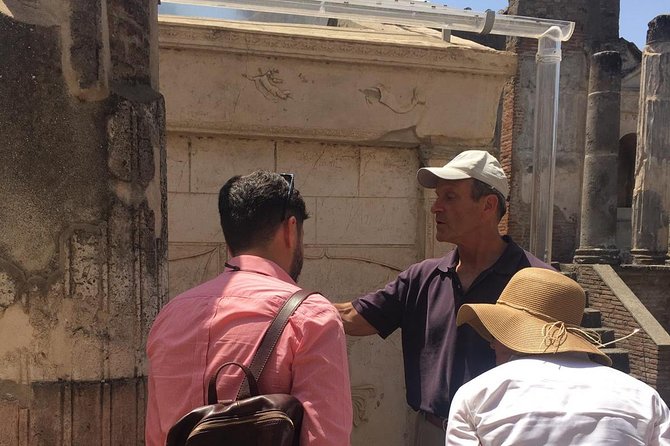
The Forum Baths are among the best-preserved parts of Pompeii. Men’s and women’s areas had separate entrances, a detail that helps explain how a public bath complex was organized.
The bath visit also gives you a look at Roman engineering and social life. These were places for washing, exercise, conversation, and routine public contact. You will not spend hours examining every room, but the guide can point out the layout and help you understand how the complex functioned.
The Thermopolium of Vetuzio Placido was an ancient diner or refreshment shop. Its presence along the route adds a welcome change from temples and formal buildings. You can begin to imagine people stopping for food and drink during an ordinary day, long before Pompeii became an archaeological site.
The combination of baths and diner works well. One shows a public service tied to hygiene and social life. The other shows how food was sold to people who might not cook every meal at home.
The House of the Faun and changing access
The House of the Faun is one of Pompeii’s largest residences. Its sidewalk carries the Latin greeting HAVE, a small but memorable detail that shows how written messages appeared in everyday spaces.
The House of the Vettii is another important residence, once among the city’s wealthiest and most famous homes. It was placed under the protection of Priapus, a god associated with prosperity. Both houses are subject to seasonal opening and closing, so you should not treat access as guaranteed on every date.
This is one reason a guided visit can help. The operator can shape the route around what is open, while the guide explains the significance of the homes you can enter. If one residence is closed, the tour does not lose all its value, since the route includes many other public and commercial buildings.
Still, if your main goal is to see a particular house, confirm its current opening status before booking. This experience is designed around key sights, not guaranteed access to every famous building.
Via dell’Abbondanza and the theater
Via dell’Abbondanza was Pompeii’s main street, the ancient decumanus maximus. Walking along it gives you a sense of scale and movement. Streets here were part of the city’s structure, not empty paths between monuments.
Look for the relationship between road, shopfront, home entrance, and public building. Even when a particular shop is closed, the street helps connect the separate parts of the visit.
The final listed stop is the Teatro Grande, where comedies and tragedies were performed in the Greco-Roman tradition. It is a fitting end because the theater shifts attention from work and worship to leisure and performance.
The route ends back at the meeting point. Depending on the group and the conditions, you may have time to ask for suggestions about what to see next. One guide also helped with practical advice about visiting Mount Vesuvius and suggested places to eat, though those extras are not a guaranteed part of the product.
What the two-hour route covers, and what it does not
Two hours is a sensible length for a first look at Pompeii. The site can be hot, exposed, and tiring, while the streets are uneven. A focused tour lets you understand the main areas without spending half a day following a long lecture.
The tradeoff is coverage. You will see the Forum, major temples, the basilica, market, baths, thermopolium, selected homes, main street, and theater. You may not see the amphitheater or brothels, and the entire archaeological park is far too large to cover in this time.
I would treat the tour as an orientation walk. Afterward, you can decide if you want to continue on your own. One useful feature is that the guide may ask what you would like to see or learn more about during the final part of the visit, but this depends on the guide and group.
The advertised maximum is 15 people. That is small enough for questions and personal attention, yet large enough that it is not a private outing. One account described a group of about 12 as ideal, while another reported roughly 20 people despite a smaller stated maximum. If a strict group size matters to you, confirm it before departure.
Price, ticket details, and practical value
The guided experience costs $30.25 per person. Add the €19 adult park ticket, and the total is notably higher than the headline price. Entry is free for children under 18, but the tour fee still applies unless the booking terms say otherwise.
For the right visitor, the extra cost is justified by the explanation. Pompeii rewards context. A house, bath, market, or temple can be easy to pass without recognizing its function, construction, or place in city life. An archaeologist-led walk gives you a framework that an audio guide may not provide.
The value is weaker if you want a private route or a full-day examination of the ruins. You are paying for a compact introduction, not complete coverage. The separate ticket process also requires attention, since the booking confirmation for the tour is not the same as admission to the park.
Wear comfortable walking shoes. Take water, protect yourself from the weather, and allow time for photographs. The tour can operate in poor weather only if conditions allow, and cancellations caused by bad weather or failure to meet the minimum group size offer a different date or a full refund.
Free cancellation is available up to 24 hours before the start time. Cancellations or changes made inside that window are not refunded or accepted.
Who should book this Pompeii walk?
I would recommend it to a first-time visitor who wants the major sights explained in clear English. It also suits families and mixed-age groups, since guides have kept younger visitors interested and have made room for questions.
It is a good choice if you are coming from Naples and want a structured introduction rather than a self-guided wander. It also works well in the off-season, when cooler weather and smaller crowds can make the open-air site easier to handle.
History fans may appreciate the archaeology angle, especially at the Macellum and the plaster casts. The tour is also useful if you want to understand how archaeologists know what they know, rather than simply hearing dates and dramatic eruption stories.
You may want another option if your priority is the amphitheater, brothels, or a specific house. You should also think twice if you dislike group tours, need guaranteed private attention, or want to explore at a slow photographic pace.
Should you book it?
Book this tour if you want Pompeii to make sense quickly. The strongest reasons are the archaeology-based explanations, the manageable two-hour route, and the chance to ask questions in a group of up to 15.
Do not book it expecting the entire park or a private custom itinerary. Budget separately for the €19 admission ticket, confirm the entry arrangements, and wear proper shoes. For most first visits, I think the guide adds real value, especially at a site where impressive ruins can otherwise leave you unsure what you are seeing.
FAQ
Is the Pompeii entrance ticket included?
No. The $30.25 tour price does not include admission to the Archaeological Park. Adult admission is €19, and entry is free for visitors under 18.
Where does the tour meet?
Meet outside the archaeological park at Via Villa dei Misteri 1, 80045 Pompei, by Porta Marina Superiore. The guide waits with a Pompeii Vip sign.
How long does the experience last?
The guided experience lasts about two hours and ends back at the meeting point.
Is the tour offered in English?
Yes. The tour is offered in English.
How large is the group?
The stated maximum is 15 people. The experience is intended to be a small-group tour, but it is not a private tour.
Can I cancel for a full refund?
Yes, if you cancel at least 24 hours before the local start time. Cancellations or changes made less than 24 hours before the start time are not refunded. If poor weather or an insufficient number of bookings cancels the experience, you are offered another date or a full refund.
Recently reviewed around Naples & Pompeii
- Pompeii Skip-the-line Tour with Archaeologist Guide★ 5.0 · 559 reviews
- Sharing Tour of Pompeii★ 5.0 · 487 reviews
- Skip the Line Guided Tour of Pompeii led by an Archaeologist★ 5.0 · 703 reviews
- Visit in Pompeii – Pompeii Private Tour with Ada★ 5.0 · 436 reviews
- Pompeii Private Tour with an Archaeologist and Skip The Line★ 5.0 · 391 reviews
- Private Day Tour to Vesuvius, Herculaneum & Pompeii with Pick Up★ 5.0 · 279 reviews
- Pompeii Guided Group Tour with Entry Ticket and Archaeologist★ 4.5 · 269 reviews
- Pompeii Private Tour with an Archaeologist and Skip The Line – 3 hours★ 5.0 · 564 reviews
Pompeii & Vesuvius Tours, compared.

Entry Ticket and Guided Tour with an Archaeologist
Read our review →




Pompeii Small Group Tour with an Archaeologist
Read our review →
Pompeii, Amalfi Coast and Positano Day Trip from Rome
Read our review →Browse the lists this tour appears in