
Review · POMPEII & VESUVIUS TOURS
Pompeii Ruins Private Tour with Optional Skip-the-Line Entry
Pompeii is best understood from street level, where worn paving stones, shop fronts, temples, and houses reveal how ordinary Romans lived before Vesuvius buried the town in 79 AD. This private two-hour tour gives you a guide’s story instead of a confusing walk through a huge field of ruins.
I like the chance to ask questions and shape the pace around your group. I also like the express entry option, since the site can draw long lines. The main drawback is time: two hours covers the highlights, not all of Pompeii, and some visitors have found the pace brisk.
In This Review
- Key points to know
- Why a private guide helps at Pompeii
- Meeting at Porta Marina and getting inside
- Porta Marina and Pompeii’s ancient street plan
- The Forum, temples, and public life
- Homes, shops, and ordinary Roman routines
- The plaster casts and the human cost of Vesuvius
- What two hours can and cannot cover
- Guide quality and language choices
- Is $254.89 good value for up to eight?
- Who should book this Pompeii tour?
- FAQ
- How long does the Pompeii tour last?
- Is this a private tour?
- What languages are available?
- Are Pompeii entrance tickets included?
- Where does the tour start?
- What places are included in the route?
- Can I bring luggage?
- What should I bring?
- Is Pompeii free on the first Sunday of the month?
Key points to know
- Porta Marina and the Forum anchor the visit: You see the city’s main entrance and civic center before moving into daily Roman life.
- A private guide makes the ruins readable: Guides explain how to spot homes, shops, temples, courts, and public spaces.
- The experience suits families: Julia and Alexandra, among other guides, have been especially good at keeping teenagers engaged.
- Archaeology adds useful detail: Guides such as Lucia, Francesca, and Carmen have an archaeology background and can explain small clues in the ruins.
- Ticket choice matters: The express entry ticket is included only with selected options. On the first Sunday of each month, free entry cannot be reserved in advance.
- Plan for walking carefully: Pompeii has uneven ancient streets, and large bags or luggage are not allowed.
Why a private guide helps at Pompeii
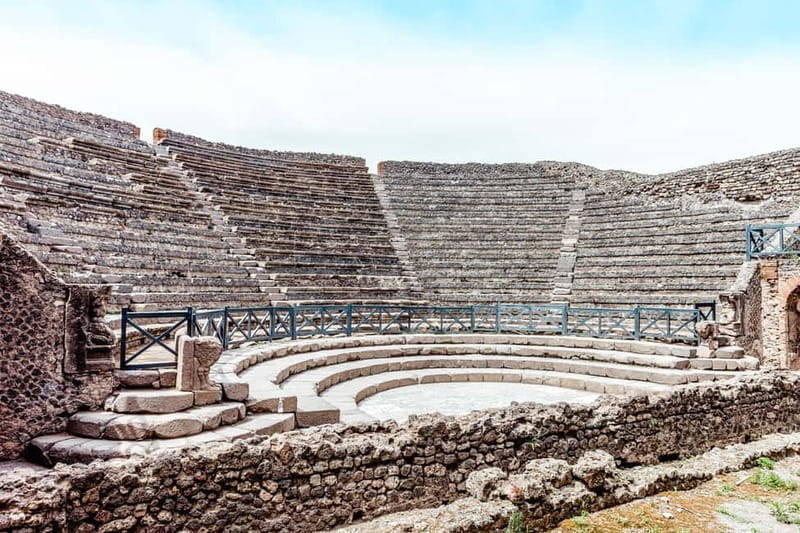
Pompeii is not a single monument. It is a large Roman town, with streets, homes, businesses, public buildings, temples, fountains, theaters, and gardens spread across a broad archaeological area. On your own, it is easy to see impressive walls without understanding what they were used for.
A private guide gives those remains a human scale. You learn how people moved through the city, where business took place, how houses were arranged, and what the Forum meant to public life. The best guides also point out clues that are easy to miss, such as the difference between a private home and a shop based on the doorway and street layout.
That personal format matters in a group of up to eight. You can ask why a building looks different from the one next door, pause for a better explanation, or request more information about Roman food, work, family life, or religion. A large group tour rarely gives you the same freedom.
The guide also helps you make choices. Pompeii contains far more than you can see in two hours, so a well-planned route is more useful than trying to cover every corner. Guides such as Daniela, Imma, Marina, and Rossella have been praised for mixing solid historical detail with stories and everyday examples rather than delivering a dry lecture.
More Naples & Pompeii trips worth a second look
- Herculaneum: Skip-the-Line Guided Tour with Archaeologist
★ 4.8 · 3,439 reviews - Mount Vesuvius: Skip-the-Line Ticket and Smart Digital Guide
★ 4.2 · 2,780 reviews - From Naples: Pompeii Skip-the-Line Entry Ticket and Tour
★ 4.4 · 2,753 reviews
Meeting at Porta Marina and getting inside
The exact meeting point depends on the option you book. Pay close attention to the instructions, because the guide may meet you at the tour company office outside the ruins rather than inside the archaeological park. One visitor expected to begin inside the site and found the outside office detail important, so allow a little time to locate the correct spot.
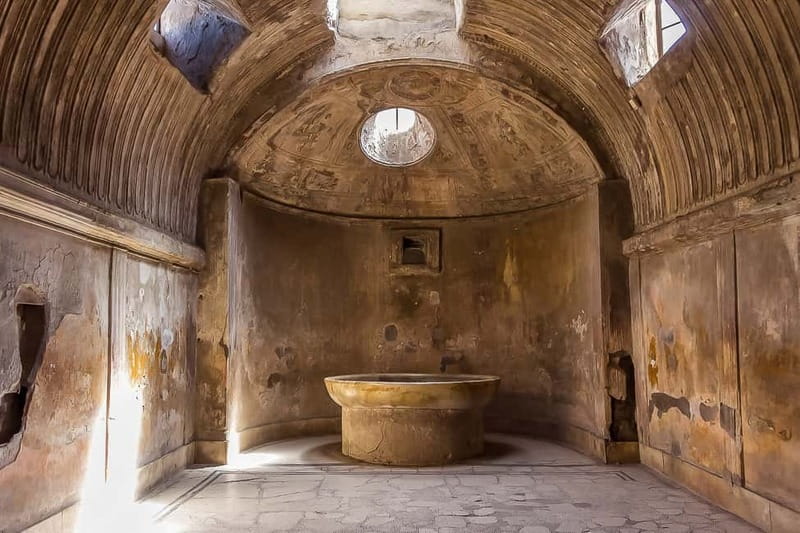
The tour includes access through Porta Marina, one of Pompeii’s original entrances. This is a fitting place to begin. You are not entering a museum arranged in neat rooms. You are walking through an old city gate and into the streets where people once arrived, traded, worshiped, worked, and went home.
If you choose the option with the express ticket, the long ticket line can be avoided. Check the exact booking choice carefully, because the no-ticket option requires you to arrange admission separately. The price of $254.89 is for a private group of up to eight, not one person, so the value improves when several people share the cost.
Bring your passport or identity card. Large bags and luggage are not allowed, and free parking is available only if space permits. These are small details, but sorting them out before arrival keeps the short tour from losing time.
Porta Marina and Pompeii’s ancient street plan
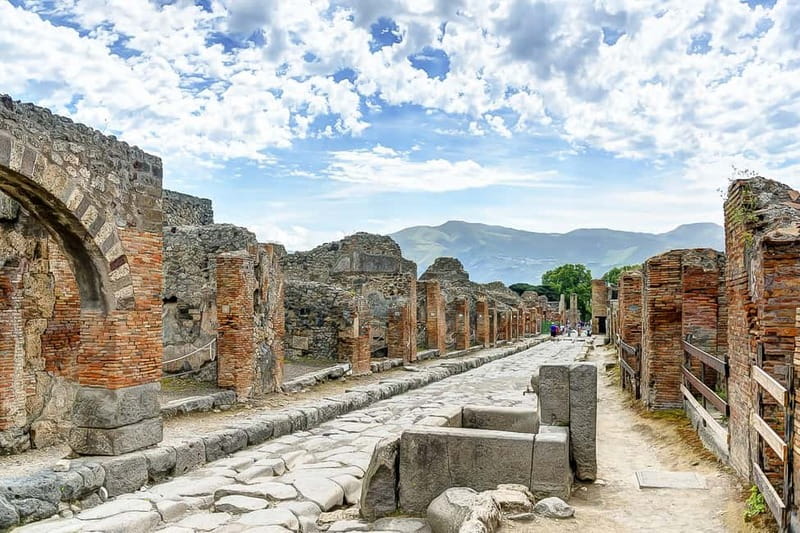
Once inside, the guide begins to make sense of the roads. Pompeii’s streets are a practical introduction to Roman town planning, with buildings pressed close to routes that carried people, carts, goods, and news.
You will walk on ancient paving and see how the city was built around public and private spaces. The road itself becomes evidence. Doorways, thresholds, walls, and shop openings help explain who used a building and how it connected to the street.
This is one of the tour’s strongest features. A guide can turn a plain wall into a useful question: Was this a house, a shop, or a public building? What did its entrance tell you? Where would customers stand? How did people move between the street and the interior?
The route can also help you avoid wasting time. Pompeii is large, and a private guide can keep the visit focused on important buildings instead of sending you on a long, aimless walk. That is particularly helpful during hot weather, when shade and rest breaks matter.
Still, the roads are not modern sidewalks. Ancient paving can be uneven, and one visitor reported a serious fall after losing balance. Wear practical shoes, watch your footing, and do not assume that a fast-moving group is suitable for everyone. If you have a knee problem or need a slower pace, say so clearly before the tour begins and repeat it if necessary.
The Forum, temples, and public life
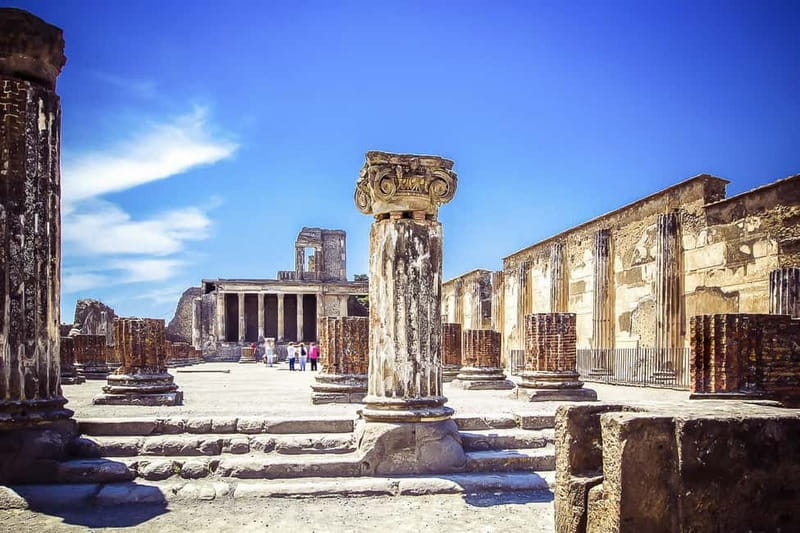
The Forum is the natural center of the visit. This main square was the civic heart of Pompeii, surrounded by temples, porticoes, and law courts. Here, your guide can explain how religion, politics, commerce, and public business shared the same urban space.
The Forum is also where the town’s scale becomes clear. Pompeii was a provincial Roman city with about 20,000 residents. The ruins are not simply a collection of elite villas. They represent an active town where many people worked, worshiped, sold goods, raised families, and met in public.
A guide’s explanation makes the surrounding buildings easier to separate in your mind. The temples were not just decorative ruins. The porticoes framed public movement and shelter, while the law courts connected the square to civic administration. Even if only fragments remain, the layout shows how Roman public life was organized.
This part of the tour works well for adults who want historical context, but it can also work for children if the guide keeps the discussion concrete. Julia and Giada, for example, have been praised for presenting the subject clearly to groups that included children, teenagers, and adults at the same time.
You should not expect a full lecture on every structure. The guide has only two hours, and the Forum is one part of a much larger site. The benefit is a clear framework: after seeing the civic center, you can better understand the homes, businesses, and streets that follow.
A different way to spend the day, same part of Italy:
- Naples: Naples Underground Entry Ticket and Guided Tour
★ 4.4 · 21,781 reviews - Pompeii: Entry Ticket and Guided Tour with an Archaeologist
★ 4.8 · 19,459 reviews - Pompeii: Entry Ticket with Optional Audio Guide
★ 4.2 · 12,360 reviews - Pompeii: Small Group Tour with an Archaeologist
★ 4.8 · 12,264 reviews
Homes, shops, and ordinary Roman routines
The most memorable part of Pompeii is often not the grandest building. It is the evidence of routine life. A doorway, counter, wall painting, household object, or narrow side street can say more about daily habits than a long list of dates.
Your guide explains how people lived, loved, worked, and played. That wording is broad, but the value comes from the small observations. Carmen, for instance, has used details such as door openings to help distinguish a normal residence from a shop. Those details give you a way to read the ruins after the tour ends.
You may also hear about the social variety of the town. Pompeii was not frozen as a perfect Roman postcard. It was a working city with different types of homes, businesses, public spaces, and residents. The guide’s job is to connect these pieces without pretending that every question has a certain answer.
This is where a private format earns its keep. If your group is fascinated by Roman kitchens, household arrangements, commerce, or social customs, you can ask for more. If younger family members lose interest in architecture, the guide can shift toward stories about people and daily routines.
The experience can be especially useful for families with teenagers. Alexandra and Julia have been singled out for keeping information manageable, adding humor, and making the ancient city easier to follow. A private guide can also adjust examples for different ages instead of speaking to an anonymous crowd.
The plaster casts and the human cost of Vesuvius
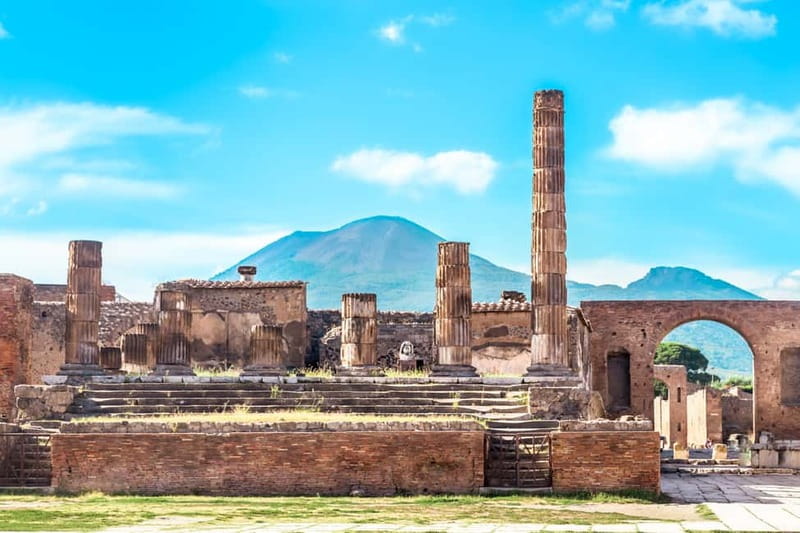
Pompeii was covered by layers of ash and pumice during the eruption of Mount Vesuvius in 79 AD. The town remained buried for roughly 1,700 years, preserving an unusual record of an everyday Roman community.
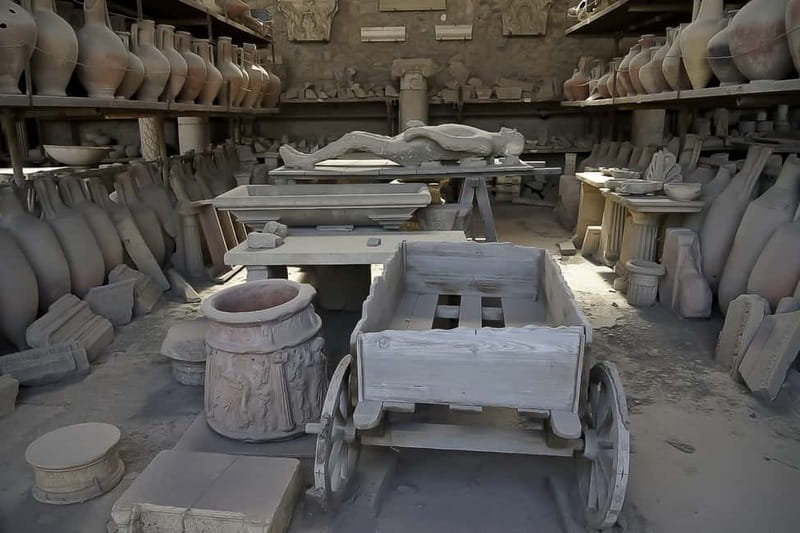
The most difficult sights are the plaster casts of people and animals caught in the disaster. These are not ordinary statues. They are stark reminders that Pompeii was a living town when the eruption struck. The casts can be upsetting, especially for children, so you may want to prepare your group before reaching them.
A good guide gives this section the right tone. The point is not shock for its own sake. The casts help connect the grand Forum and ancient roads to the people who used them. You are no longer looking only at architecture. You are thinking about families, workers, pets, and a community caught in a sudden catastrophe.
The tour does not turn the entire visit into a disaster story. It balances the eruption with the city’s earlier life, which is important. Pompeii is valuable because it shows both the ordinary rhythms of Roman society and the event that interrupted them.
What two hours can and cannot cover
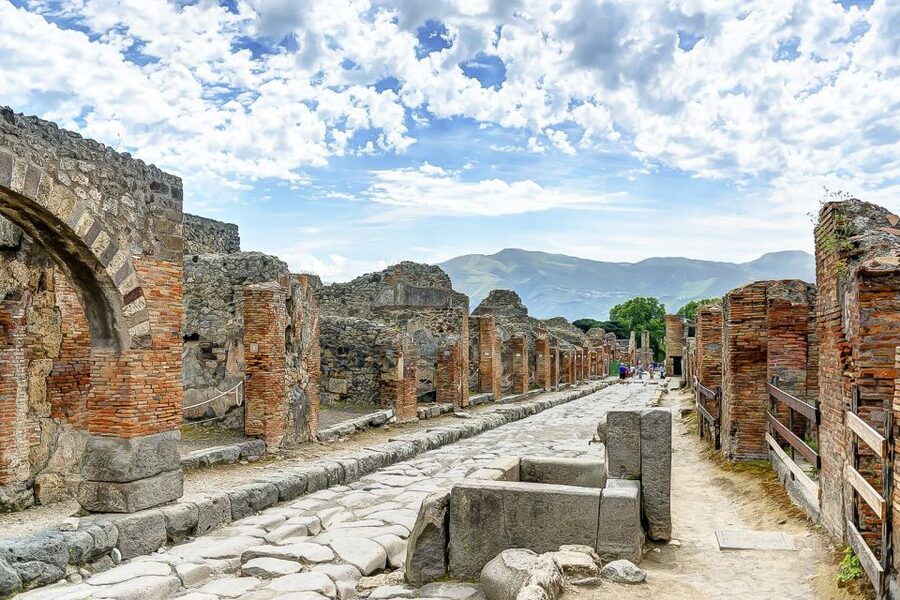
Two hours is enough for a strong introduction, but Pompeii is too large for a complete visit in that time. The tour focuses on important areas such as Porta Marina, the Forum, surrounding temples, porticoes, law courts, and selected streets and buildings.
I see this as a sensible choice if Pompeii is one stop in a busy Campania itinerary. You get a guided structure, learn how to read the site, and can continue exploring alone afterward if you have a suitable ticket and enough energy.
Some guides can end at a useful internal location. Julia, for example, has adapted a route to finish near the Cassina dell’Aquila, allowing the group to rest and refresh before continuing independently. Do not assume every guide or booking includes that exact ending, but it is worth asking if you want extra time after the formal tour.
If you want the Villa of the Mysteries or other outlying sections, confirm what your admission allows and plan extra time. One family bought a Pompeii Plus ticket separately to visit the Villa of the Mysteries after the guided portion. The key point is simple: do not expect a two-hour highlights tour to include every major building.
The pace also varies by guide and group. Many guides keep things moving so they can show as much as possible, while others allow more time for questions. If you prefer a slower visit, have mobility concerns, or are traveling with small children, mention that when arranging the tour.
Guide quality and language choices
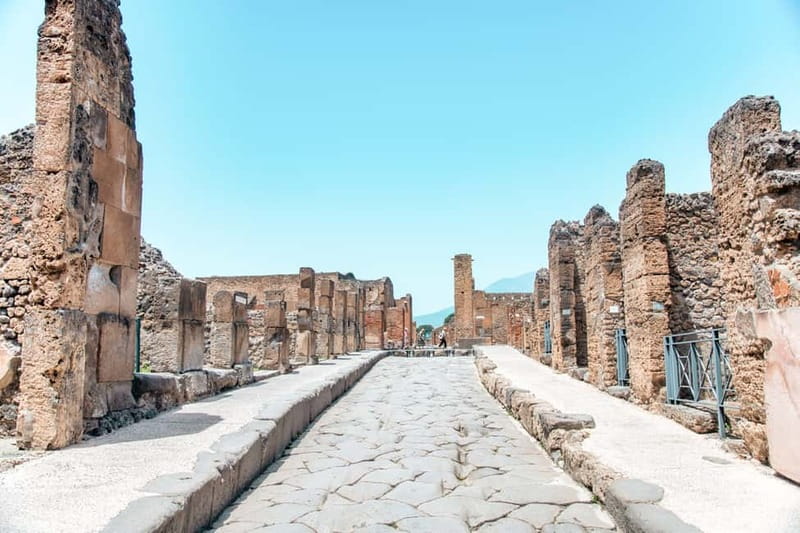
The tour is offered in English, Spanish, French, Italian, and German. The guide assigned to you can shape the experience more than any individual building, so choose your language carefully and make sure the booking details match your needs.
Several guides have an archaeology background, including Lucia, Francesca, and Carmen. Their training can be valuable when you want more than dates and famous names. An archaeology-trained guide may help explain how excavations work, how buildings are interpreted, and why some conclusions remain uncertain.
Other guides have earned praise for warmth, humor, patience, and clear delivery. Marina has been described as making the ancient city feel alive, while Rossella has combined scholarly detail with entertaining stories in both English and French. Imma has focused on small background details, and Mele has been generous with time and questions.
No booking can guarantee a particular guide unless the operator confirms one in advance. Still, the range of strong guides associated with this experience is a good reason to choose the private format. You are paying for interpretation, not simply a walk between ruins.
Is $254.89 good value for up to eight?
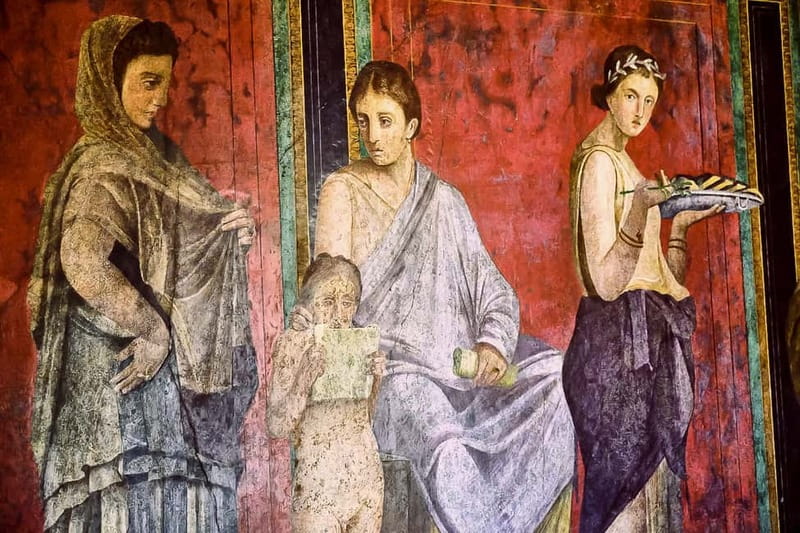
At $254.89 per group of up to eight, this is expensive for one or two people but more reasonable when divided among a family or group of friends. For eight participants, the cost works out to about $32 per person before considering the ticket option. For two people, the per-person cost is much higher.
The price pays for a private guide and, with the selected option, an express entry ticket. That can be worthwhile when your schedule is tight or when you want to avoid spending part of the day in a ticket line. It also gives you a tailored explanation, which is more useful at Pompeii than at a compact monument with clear signs.
I would hesitate if you are happy to wander alone, have a full day for the site, and already understand Roman archaeology. In that case, a self-guided visit may cost less and allow a slower pace.
I would spend the money for a first visit, a family group, or anyone arriving by train with limited time. Pompeii’s size makes the guide’s route planning valuable, and the private setting lets you ask the questions that turn ruins into a city.
Free cancellation up to 24 hours before the activity and a reserve-now, pay-later option make planning less rigid. On the first Sunday of each month, admission is free, but tickets cannot be reserved ahead of time and entry is not guaranteed. That date is not ideal if you have a fixed schedule.
Who should book this Pompeii tour?
Book it if you want a clear introduction, a private guide, and a focused route through the city’s main remains. It is particularly suited to families, small groups, first-time visitors, and people who want historical context rather than a silent walk past walls.
It is also a good match for travelers who value questions and flexibility. You can ask about Roman homes, shops, religion, public life, and the eruption without waiting for a large group to move on.
Think twice if your priority is covering every corner of Pompeii. You will need more than two hours, and you may prefer to add independent time before or after the tour. Bring your identity document, leave luggage behind, wear steady shoes, and confirm the meeting point outside the ruins.
For most first-time visitors, I would book the option that includes the express entry ticket. The guide’s route and explanation are the main reasons to go, but avoiding a long wait protects the short two-hour schedule. The tour will not show you all of Pompeii, but it can give you the tools to understand much more of it.
FAQ
How long does the Pompeii tour last?
The guided tour lasts two hours. Starting times vary, so check availability for the date you want.
Is this a private tour?
Yes. It is offered as a private group experience for up to eight people.
What languages are available?
Live guiding is available in English, Spanish, French, Italian, and German.
Are Pompeii entrance tickets included?
The express skip-the-line ticket is included only with the option that specifies tickets. The option without tickets requires you to arrange admission separately.
Where does the tour start?
The meeting point may vary by booking option. The guide may meet you at the tour company office outside the ruins, so read the meeting instructions carefully.
What places are included in the route?
The tour includes access through Porta Marina and covers key areas such as the Forum, surrounding temples, porticoes, law courts, streets, and selected buildings.
Can I bring luggage?
No. Luggage and large bags are not allowed.
What should I bring?
Bring a passport or identity card. Practical shoes are also wise because the ancient streets can be uneven.
Is Pompeii free on the first Sunday of the month?
Entrance is free on the first Sunday of each month, but tickets cannot be reserved ahead of time, so entry is not guaranteed.
Recently reviewed around Naples & Pompeii
- Pompeii Skip-the-line Tour with Archaeologist Guide★ 5.0 · 559 reviews
- Sharing Tour of Pompeii★ 5.0 · 487 reviews
- Skip the Line Guided Tour of Pompeii led by an Archaeologist★ 5.0 · 703 reviews
- Visit in Pompeii – Pompeii Private Tour with Ada★ 5.0 · 436 reviews
- Pompeii Private Tour with an Archaeologist and Skip The Line★ 5.0 · 391 reviews
- Private Day Tour to Vesuvius, Herculaneum & Pompeii with Pick Up★ 5.0 · 279 reviews
- Pompeii Vineyard Escape: Private Wine Tasting & Lunch★ 5.0 · 329 reviews
- Pompeii Guided Group Tour with Entry Ticket and Archaeologist★ 4.5 · 269 reviews
Pompeii & Vesuvius Tours, compared.

Entry Ticket and Guided Tour with an Archaeologist
Read our review →




Pompeii Small Group Tour with an Archaeologist
Read our review →
Pompeii, Amalfi Coast and Positano Day Trip from Rome
Read our review →Browse the lists this tour appears in