
Review · POMPEII & VESUVIUS TOURS
Pompeii: Skip-the-Line Tickets and Tour with Archaeologist
Pompeii makes more sense when someone helps you read it. An archaeologist guide such as Lello, Italo, or Raffaele can turn a broken wall, bakery oven, or marble dining room into a clue about Roman life in 79 AD. This tour gives you skip-the-line entry and a focused two-hour route through the vast ruins.
I like the small-group setup, which makes it easier to hear the guide and ask questions. I also like the human scale of the storytelling: gladiators at the gymnasium, politicians in the Forum, bread rising from ovens, and diners reclining at a triclinium. The main drawback is simple: two hours is only an introduction to Pompeii.
In This Review
- Key points to know before booking
- Why an archaeologist changes the Pompeii visit
- Meeting at Porta Marina Inferiore
- Walking the original volcanic streets
- Villas, dining rooms, and Roman home life
- Bakeries, shops, and the practical city
- The Forum and the public side of Pompeii
- Gymnasium, baths, and the social city
- What two hours can and cannot do
- Is $105 a fair price?
- Who will enjoy this Pompeii tour
- My verdict on the guided Pompeii experience
- FAQ
- How long does the Pompeii tour last?
- Where do I meet the guide?
- Is admission included in the price?
- What language is the tour conducted in?
- What should I bring to Pompeii?
- Can I cancel the booking?
Key points to know before booking
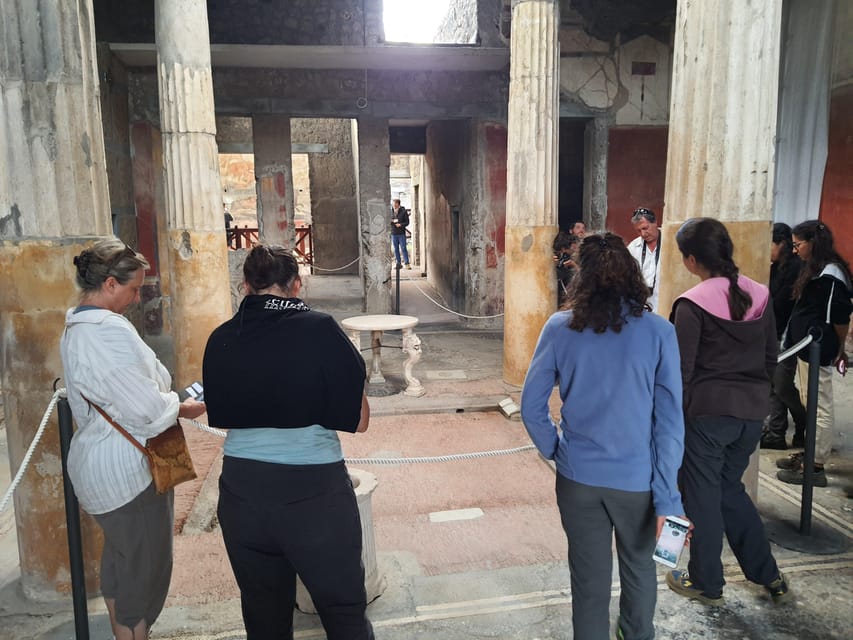
- Meet at Coffee Shop Vittoria: The meeting point is by the Porta Marina Inferiore entrance, close to the archaeological site.
- Enter through a separate line: Skip-the-line access saves time, especially when crowds gather at the entrance.
- Follow an archaeologist guide: Guides such as Lello, Italo, Leonardo, Anna, and Raffaele have received especially strong praise for clear, lively explanations.
- Walk original Roman streets: Expect uneven volcanic stone pavement, open-air ruins, sun, and a fair amount of walking.
- Stay after the tour: The guided route covers only part of Pompeii, but the guide can point you toward other areas to see on your own.
- Bring the basics: Comfortable shoes, water, a hat, and sunscreen matter more here than fancy camera equipment.
Why an archaeologist changes the Pompeii visit
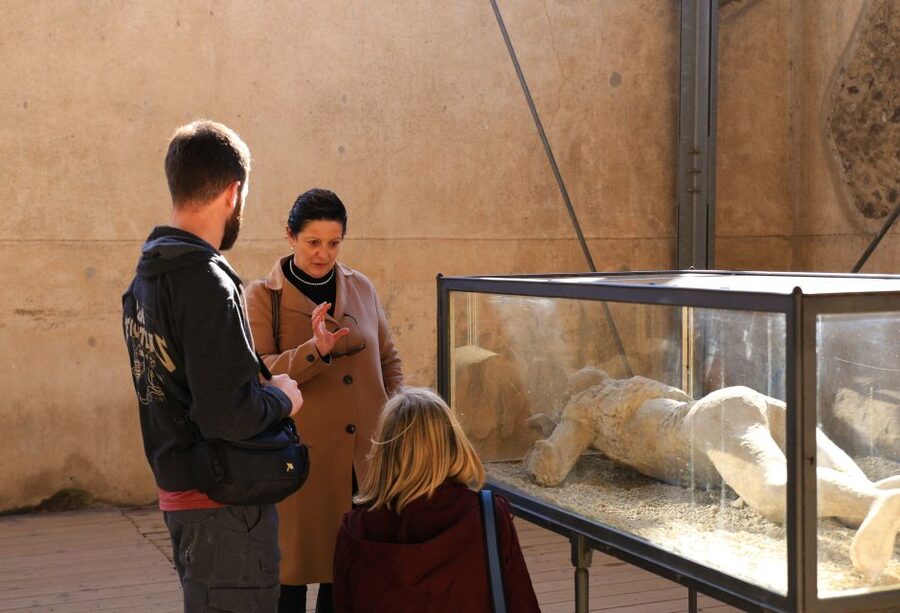
Pompeii is not a single monument that you admire from one viewpoint. It is a full city, with streets, homes, public buildings, shops, baths, bakeries, and gathering places spread across a huge archaeological area.
That scale is exciting, but it can also be confusing. Without context, you may walk past a row of stones and see only rubble. A trained guide can explain how the street worked, what a building was used for, and what its surviving details tell us about the people who lived there.
The best part of this tour is the attention to ordinary life. The guide does not focus only on emperors and battles. You learn how Roman citizens moved through the city, where they bought food, how they gathered for public affairs, and how homes were arranged for meals and social life.
Several guides have become especially popular with families because they use humor, questions, and stories rather than delivering a dry lecture. Lello is often praised for drawing children into the subject. Italo is known for explaining how to interpret the ruins, which helps you continue exploring after the official tour ends.
The English-language format is useful for international visitors. Headsets have been used on this tour, allowing you to hear the guide without standing shoulder to shoulder in every narrow street. That matters when the site is crowded.
More Naples & Pompeii trips worth a second look
- Herculaneum: Skip-the-Line Guided Tour with Archaeologist
★ 4.8 · 3,439 reviews - Mount Vesuvius: Skip-the-Line Ticket and Smart Digital Guide
★ 4.2 · 2,780 reviews - From Naples: Pompeii Skip-the-Line Entry Ticket and Tour
★ 4.4 · 2,753 reviews
Meeting at Porta Marina Inferiore
You meet at the entrance of Coffee Shop Vittoria, close to Porta Marina Inferiore. Give yourself enough time to find the café and identify the guide before the scheduled start.
This is a practical meeting point because you are close to the archaeological entrance. You do not need hotel pickup, so getting to Pompeii is your responsibility. The tour price includes admission, but it does not include transportation, food, or drinks.
At the entrance, the skip-the-line arrangement is a real time saver. Pompeii attracts large numbers of visitors, and standing in a long queue under the Campanian sun is a poor use of your morning or afternoon. A separate entrance helps you get to the important part sooner: the ruins themselves.
Bring the names and last names of everyone in your booking exactly as they appear on identification documents. A passport or ID card is specifically required for children. This is the sort of small administrative detail that can cause trouble if ignored.
Walking the original volcanic streets
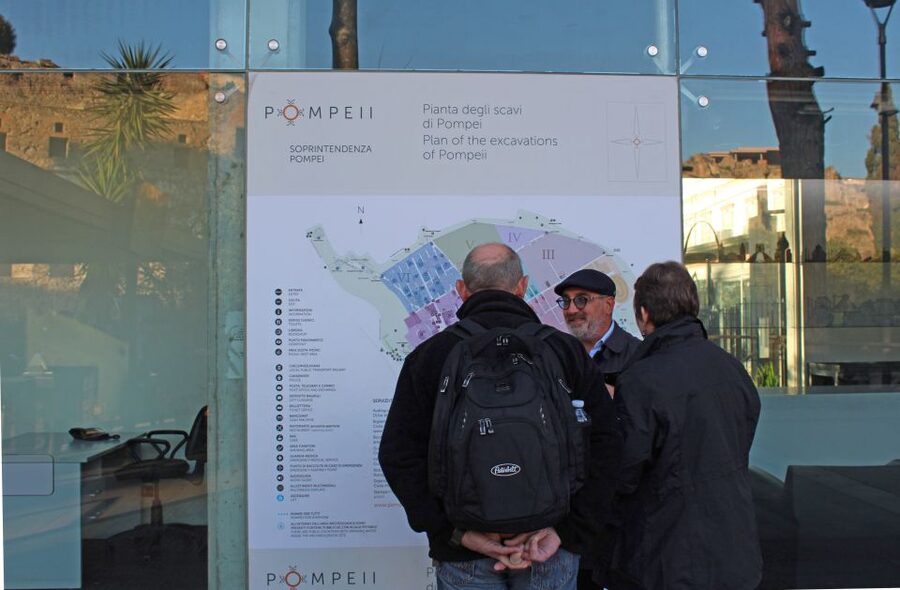
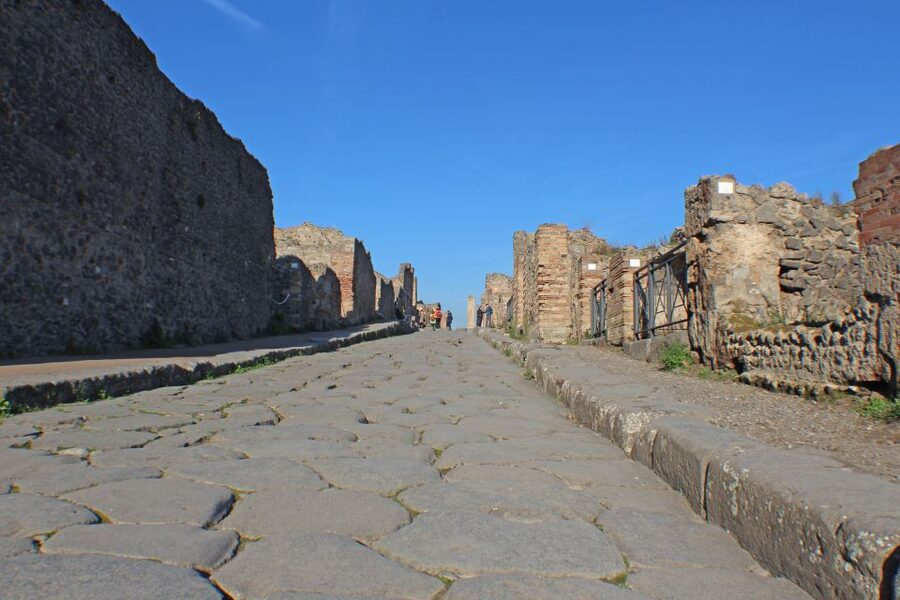
Once inside, the tour begins to feel less like a museum visit and more like a walk through a city grid. You follow the original streets, stepping over uneven volcanic paving stones and passing walls that once enclosed homes, businesses, and public buildings.
Wear shoes with firm soles. Pompeii is not a smooth promenade, and loose sandals or thin footwear can make the walk tiring. You should also expect limited shade, so a sun hat, sunscreen, and water are sensible choices.
The guide helps you notice how the city functioned. Street layout, doorways, building fronts, and pavement all become part of the story. You are not simply looking at old structures. You are learning how to ask what each space was for and who used it.
That method is one reason a guided visit offers good value. Pompeii is full of visual detail, but the site does not always explain itself. A guide gives you a framework, then you can use that framework when you wander alone.
Villas, dining rooms, and Roman home life
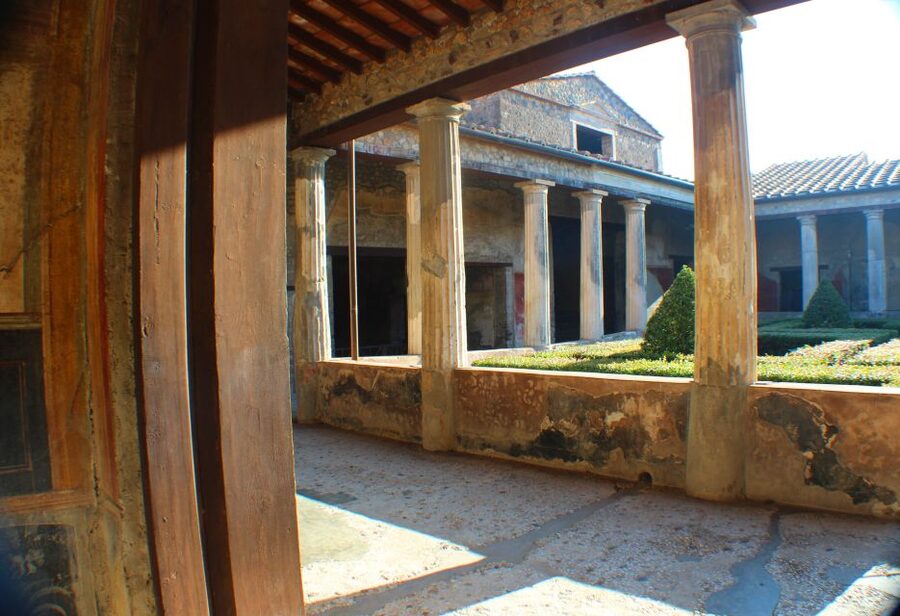
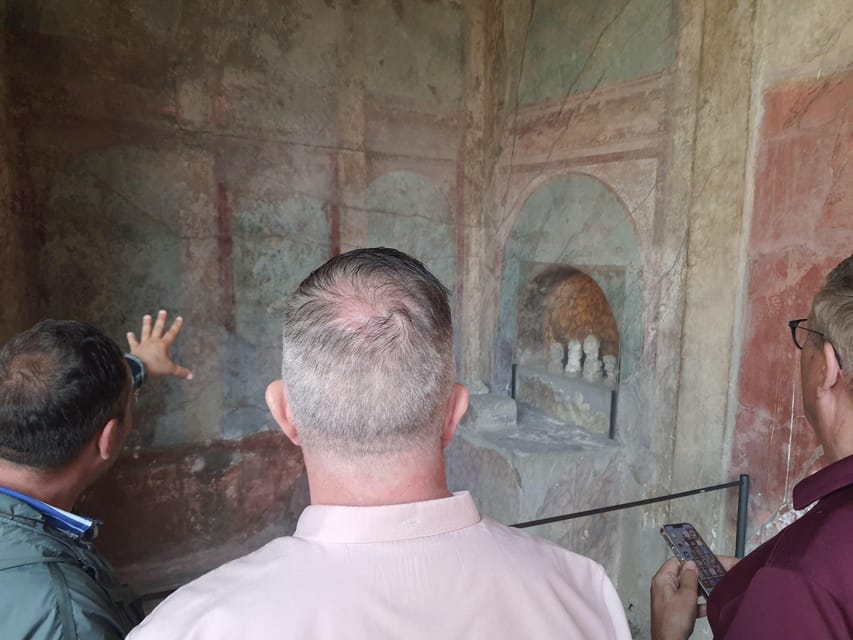
The route includes residential areas where the preserved remains offer clues about status and daily habits. The tour brings attention to marble triclinia, the reclining dining rooms used for feasts, as well as the decoration and layout of Roman homes.
Here, storytelling works particularly well. Instead of hearing only that a room was a dining area, you can picture how guests reclined, how food was served, and how social rank shaped a meal. The point is not to turn the visit into a theatrical show. It is to connect the surviving room with the people who once used it.
The guide also explains the gap between what you see and what once existed. Excavated ruins are incomplete. Walls may survive while roofs, furniture, textiles, and much of the color have disappeared. A careful archaeological explanation helps you imagine the original space without pretending that every detail is certain.
This is also where a strong guide can make the visit accessible to different ages. Families with children have found the combination of stories, humor, and physical remains easier to follow than a long list of dates.
A different way to spend the day, same part of Italy:
- Naples: Naples Underground Entry Ticket and Guided Tour
★ 4.4 · 21,781 reviews - Pompeii: Entry Ticket and Guided Tour with an Archaeologist
★ 4.8 · 19,459 reviews - Pompeii: Entry Ticket with Optional Audio Guide
★ 4.2 · 12,360 reviews - Pompeii: Small Group Tour with an Archaeologist
★ 4.8 · 12,264 reviews
Bakeries, shops, and the practical city
Pompeii becomes especially vivid around commercial spaces. Ancient bakeries and shops show that the city was not built only for wealthy households and public ceremonies. People needed bread, meals, services, and places to conduct business.
The tour uses these remains to explain routine activities. You might hear about ovens, food preparation, markets, and the movement of people through the streets. The smell of fresh bread is long gone, of course, but the surviving ovens provide a direct link to the work that kept the city fed.
These details are valuable because they correct the usual picture of ancient Rome. Pompeii was not only a city of grand villas and dramatic tragedy. It was also a working place where people bought food, made goods, met friends, and managed everyday tasks.
A guide can also point out lesser-known areas that you might pass without noticing. The tour cannot cover every shop or house, but it gives you enough examples to recognize similar features elsewhere on the site.
The Forum and the public side of Pompeii
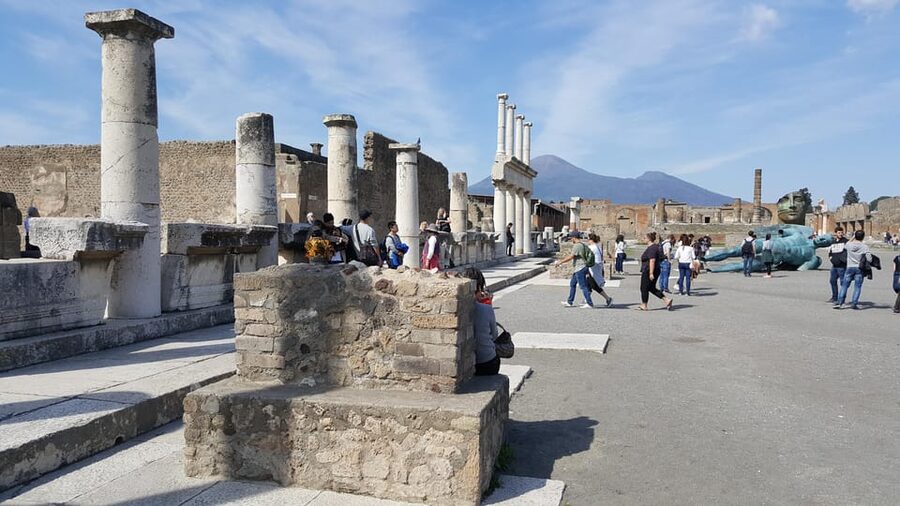
The Forum was the city’s major public gathering area. This is where political life, commerce, religion, and public ceremony came together.
The guide explains how citizens used this space and how politicians addressed the public. That context helps you see the Forum as more than a large open area surrounded by columns. It was part of the city’s daily rhythm and a place where public influence was displayed.
This section also gives you a useful contrast with the private homes. In the villas, the focus is on family life, status, meals, and domestic space. In the Forum, you are looking at the shared city and the public world of Roman citizens.
The route aims to include major sights without rushing from one landmark to the next. Still, crowd levels can affect the pace. Your guide may adjust the order or steer the group toward less crowded sections, a practical advantage when popular buildings are packed.
Gymnasium, baths, and the social city
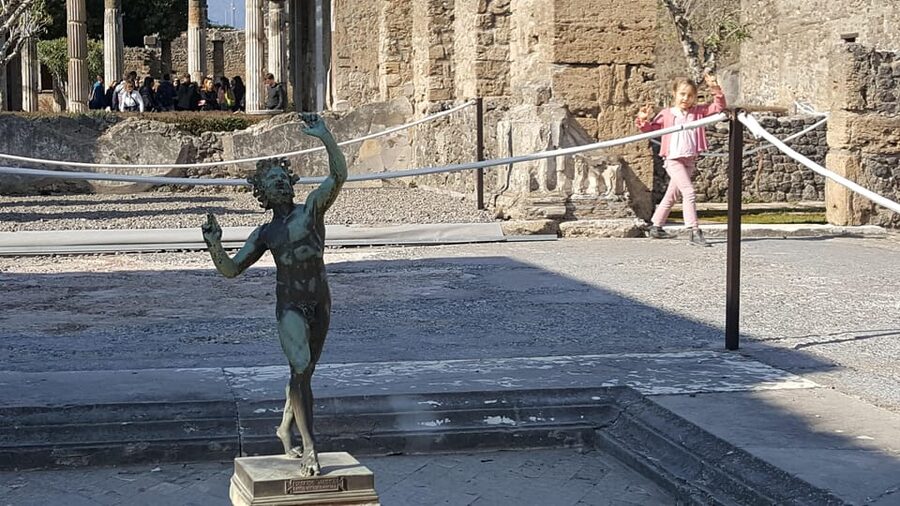
The itinerary also brings in spaces connected with exercise and bathing. The gymnasium helps explain the physical training associated with gladiators and other athletic activity. Baths show how Romans combined washing, exercise, relaxation, and social contact.
These buildings can be easy to misunderstand if you visit without help. A guide gives you the basic function of each area and describes the habits connected with it. You begin to see public buildings as social centers rather than isolated ruins.
The tour’s strongest guides add anecdotes and comparisons with modern life while keeping the focus on the ancient evidence. Italo, Lello, Anna, and others have been praised for making technical material clear and entertaining. Raffaele, identified as an archaeologist guide, has been especially appreciated for detailed explanations.
Expect the guide to cover a lot of ground. One group completed the route in about two and a half hours, though the advertised duration is two hours. Your exact timing may depend on the start time, crowding, questions, and the pace of the group.
What two hours can and cannot do
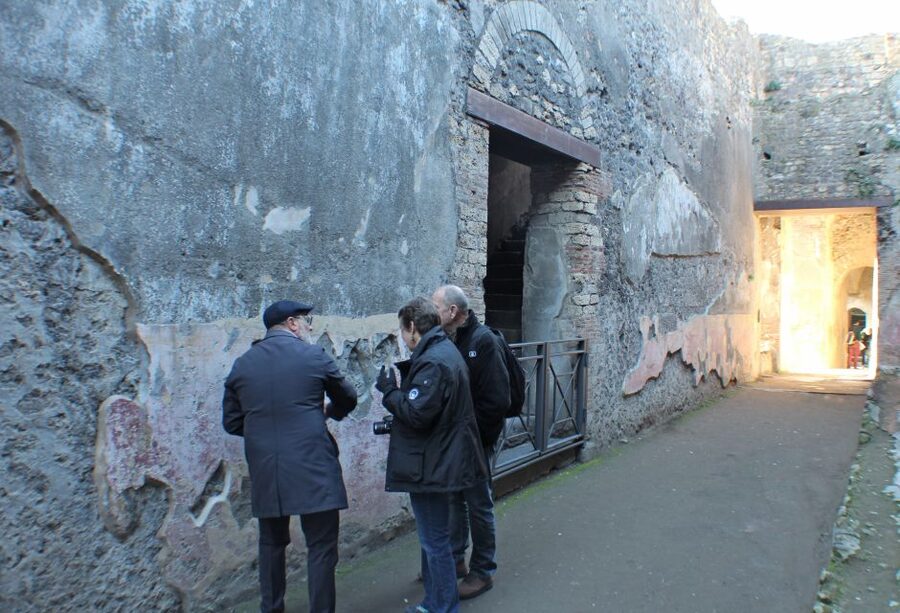
Two hours is long enough to build a clear picture of Pompeii. You can see key public spaces, examples of homes and businesses, original streets, and several important types of building. You also gain a map in your head, which makes independent exploration afterward much easier.
Two hours is not long enough to see the entire archaeological area. Pompeii is large, and many sections will remain outside the guided route. Some people will find that frustrating, especially if they have come primarily for a particular villa or building not included on that day.
I see the limited duration as both a strength and a weakness. It keeps the experience manageable in hot weather and gives first-time visitors a solid introduction. If you want to examine mosaics, read every plaque, or explore distant quarters at leisure, plan extra time after the tour.
The guide can suggest additional places to visit once the official walk ends. That is useful because the site can feel overwhelming without a plan. You can continue at your own pace rather than trying to absorb the entire city during the guided portion.
Is $105 a fair price?
At $105 per person, this is not the cheapest way to enter Pompeii. You are paying for admission, priority access, and a professional English-speaking guide in a small group.
The value depends on how you travel. If you are comfortable studying a map, reading site information, and accepting that some buildings will remain mysterious, a basic ticket may be enough. If you want to understand what you are seeing and avoid wasting time at the entrance, the added cost makes more sense.
I think the price is easier to justify for a first visit, a family trip, or a short stay in Campania. Pompeii is too large for casual wandering to guarantee that you will find the most meaningful areas. The guide’s explanations also help you notice details that would otherwise blend into the stonework.
For repeat visitors, the decision is more personal. One returning visitor found the guided visit much more useful than a first visit alone because the archaeological explanations revealed a new way to read the site. If you already know Pompeii well, you may prefer a ticket and a self-guided route focused on specific buildings.
The flexible booking terms help reduce the risk. You can cancel up to 24 hours ahead for a full refund, and the reserve-now, pay-later option lets you hold a place without paying immediately.
Who will enjoy this Pompeii tour
This tour suits you best if you want historical context without spending an entire day in a formal lecture. It is also a good match for families, since guides such as Lello have kept children and teenagers involved through questions, humor, and stories.
Choose it if you are visiting Pompeii for the first time, arriving by train, or working with a tight schedule. The skip-the-line entrance is especially useful during busy periods, and the guide helps you cover the essential sights efficiently.
You should think twice if you dislike group tours or want complete control over your pace. The route is shared, and two hours may feel too short if your main goal is detailed photography or quiet study.
Do not bring luggage, large bags, baby strollers, or umbrellas. These restrictions can shape your day, so arrange storage or leave bulky items elsewhere before arriving. Comfortable shoes, sun protection, and water are much more useful companions.
My verdict on the guided Pompeii experience
I would book this tour for a first visit, especially if you have only a few hours. The strongest part is not simply getting through the entrance faster. It is learning how to read Pompeii as a functioning Roman city, from its bakeries and homes to its Forum, baths, and gymnasium.
The guide quality appears to be a major part of the experience. Lello, Italo, Leonardo, Anna, Raffaele, and other guides are praised for warmth, humor, clear explanations, and a serious respect for the archaeology. Guide assignments can vary, so you should not assume a particular person will lead your group.
Book it if you want the ruins to make sense and you value lively storytelling. Skip it if you would rather spend a full day roaming alone and already have a firm plan for what you want to see. Either way, keep extra time available if possible. Pompeii rewards a slower second look after the guide has shown you where to start.
FAQ
How long does the Pompeii tour last?
The advertised duration is two hours. Some tours may run closer to two and a half hours depending on the group, questions, and conditions at the site.
Where do I meet the guide?
Meet at the entrance of Coffee Shop Vittoria, close to the Porta Marina Inferiore entrance of the Pompeii archaeological site.
Is admission included in the price?
Yes. The professional guide and admission ticket to the archaeological site are included.
What language is the tour conducted in?
The live tour guide speaks English.
What should I bring to Pompeii?
Bring comfortable shoes, a sun hat, and sunscreen. Water is also a sensible choice for the outdoor walking route.
Can I cancel the booking?
You can cancel up to 24 hours in advance for a full refund. The reserve-now, pay-later option also lets you keep your plans flexible.
Recently reviewed around Naples & Pompeii
- Pompeii Skip-the-line Tour with Archaeologist Guide★ 5.0 · 559 reviews
- Sharing Tour of Pompeii★ 5.0 · 487 reviews
- Skip the Line Guided Tour of Pompeii led by an Archaeologist★ 5.0 · 703 reviews
- Visit in Pompeii – Pompeii Private Tour with Ada★ 5.0 · 436 reviews
- Pompeii Private Tour with an Archaeologist and Skip The Line★ 5.0 · 391 reviews
- Private Day Tour to Vesuvius, Herculaneum & Pompeii with Pick Up★ 5.0 · 279 reviews
- Pompeii Vineyard Escape: Private Wine Tasting & Lunch★ 5.0 · 329 reviews
- Pompeii Guided Group Tour with Entry Ticket and Archaeologist★ 4.5 · 269 reviews
Pompeii & Vesuvius Tours, compared.

Entry Ticket and Guided Tour with an Archaeologist
Read our review →




Pompeii Small Group Tour with an Archaeologist
Read our review →
Pompeii, Amalfi Coast and Positano Day Trip from Rome
Read our review →Browse the lists this tour appears in